A Knight of the Seven Kingdoms: The Rise of a New Legend in Westeros
Experience A Knight of the Seven Kingdoms as a new legend unfolds in Westeros, following Ser Duncan the Tall and Egg on an unforgettable adventure.
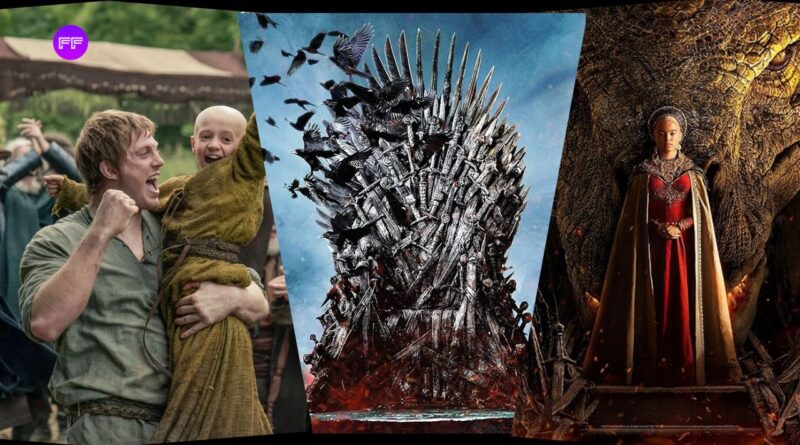
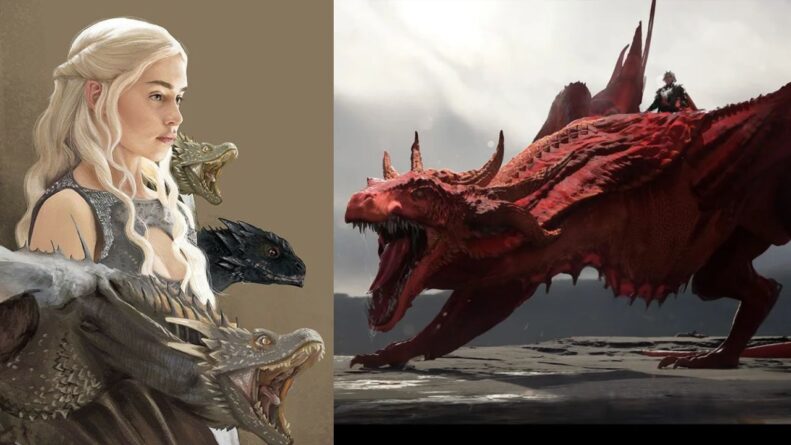
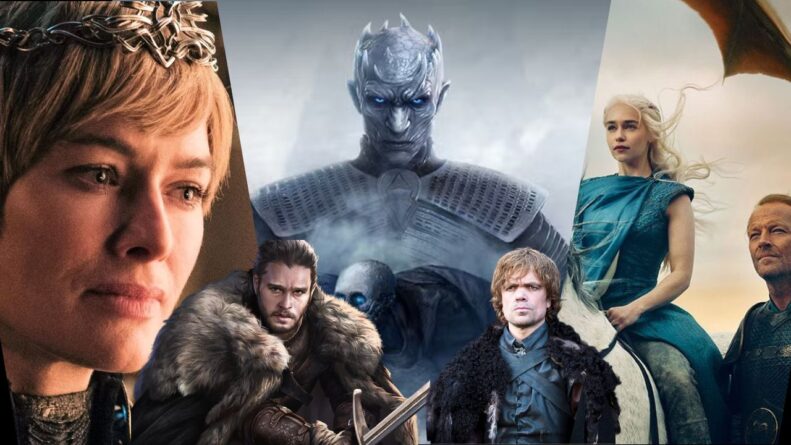
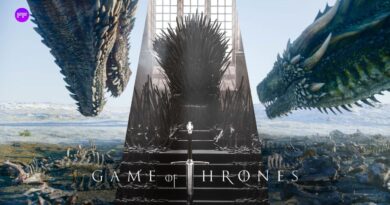
What we know about Westeros is the night king, brutal politics, and dragons burning the cities to conquer the throne. With HBO’s adaptation of A Knight of the Seven Kingdoms, the television landscape is shifting its lens. The story of Ser Duncan the Tall and Egg—a duo whose travels across Westeros looks smaller in front of the chaos of Game of Thrones but it’s arguably much larger in heart.
There’s no world wars over the throne or world-changing conflicts, if you have read George R.R. Martin’s Tales of Dunk and Egg novellas then you already know what makes these stories special.
Let’s break through the duo’s journey which gives this series a new perspective to breath rather than battles and political spectacles.
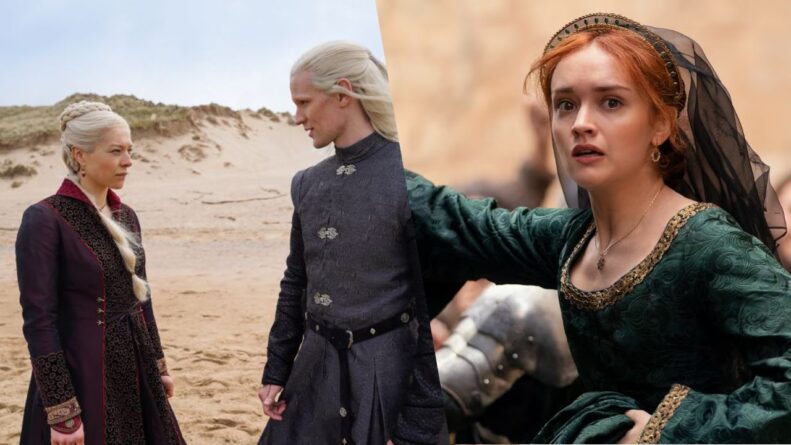
Both Game of Thrones and House of the Dragon gave us high-stakes narratives but they focus only on lords, queens, and power over the ordinary people; they view smallfolk as collateral damage. That view has changed with the entry of duo — Dunk and Egg.
The series unfolds in the era where Targaryens ruled over the peaceful era by sitting at their Iron Throne and their greatest challenges are often personal rather than apocalyptic.

There are no constant betrayal, bloody wars, and ruthless power struggles, but a jousting tournaments, roadside inns drama which proves that even the smallest journeys can carry just as much emotional weight than world-ending threats.
That’s the trick of this story. It doesn’t need spectacle because it has a genuinely lovable hero which is something far better.
Read More 👉 What’s Next for Marvel After the Multiverse Saga? Future Plans Explained
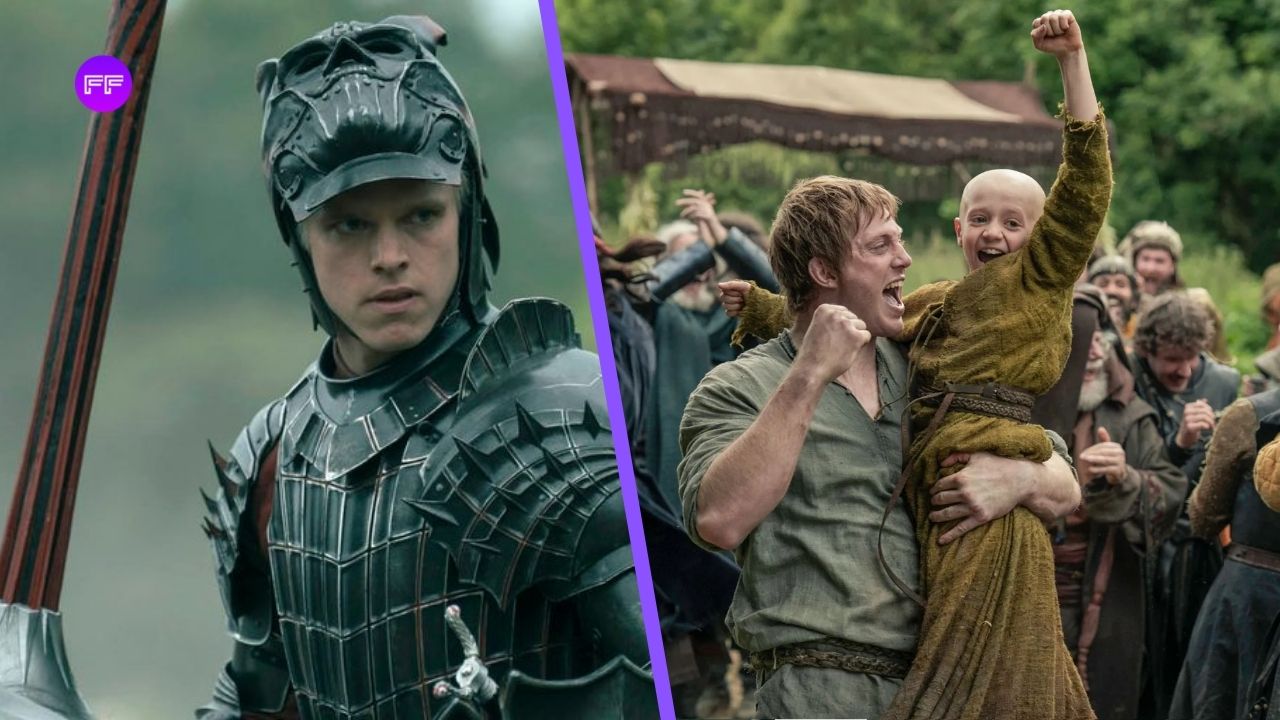
Ser Duncan the Tall — Dunk to everyone who knows him is not your typical Westerosi hero. He’s enormous, untrained in courtly manners, dirt poor, and painfully honest in a world that rewards lying. He isn’t a highborn lord fighting for an inheritance. He inherited nothing except the armor and name of the knight who took him in off the streets and then died, leaving Dunk to figure out knighthood on his own.

Dunk isn’t a brilliant strategist or a flawless swordsman then what makes him so compelling. It’s his stubborn decency. In a world where the old virtues of chivalry are generally a lie told by cruel men, he still tries to do the right thing. He thinks that it is a knight’s duty to stand up for the defenseless, and he just keeps paying. Westeros doesn’t usually reward people like Dunk. That’s exactly why watching him succeed even a little feels like such a win.
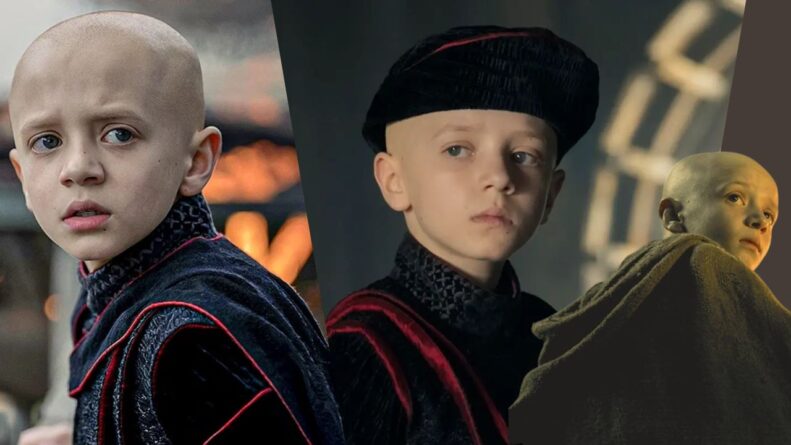
Then there’s Egg. Small, clever, oddly confident for a stable boy, and clearly hiding something. Sharp-eyed fans (and anyone who’s read the books) will recognize him almost immediately as Aegon Targaryen — the future King Aegon V. But within the story, he’s traveling in disguise, learning what it means to be a person before he ever has to learn what it means to rule.

The dynamic between Dunk and Egg is really the soul of this whole story. Dunk gives Egg something he’s never had: distance from the throne and a chance to be ordinary. Egg gives Dunk loyalty without conditions. Their friendship depends on taking care of each other when the world is against them.
Read More 👉 House Of The Dragon Season 3: Release Date, Plot Details Explained, Cast & Characters
If you’re a Targaryen history nerd, this is where things get interesting. Aegon V’s reign is remembered fondly precisely because of the values he carries into kingship — fairness, humility, a genuine concern for smallfolk. Seeing his journey begin here, as a kid sneaking around with a knight who has no idea who he really is, adds depth to everything we already know takes place later in the timeline of the Targaryens.

What Game of Thrones taught us was whoever got the power got corrupted but A Knight of the Seven Kingdoms shows a more gentler version of power. Dunk always believed on his virtue:
“A hedge knight must hold to his honor. Without it, he is no knight at all. He is only a robber with a sword.”
It suggests that the people who end up doing the most good are often shaped by ordinary kindness long before they’re handed any power at all.
Read More 👉 Game of Thrones Expands Again: New “Mad King” Prequel Brings Focus Back to Ned Stark
The plot is set about ninety years following the events of House of the Dragon, and a century before the birth of Daenerys Targaryen. A Knight of the Seven Kingdoms isn’t trying to out-shock Game of Thrones. It’s not interested in shocking anyone. It is Westeros in its twilight golden age, and the kind of low-stakes adventure that still manages to matter because we care about the people involved.
The tone shifts from royalties and war into the more calmer and ordinary lives where Dunk and Egg struggling to survive without a penny. The story feels more human than anything we got in the original series.
HBO’s adaptation A Knight of the Seven Kingdoms follows Martin’s dry humor and the warmth of Westeros without disturbing the other two series. The early hype suggests the series is more leaning towards folk-tale narrative than an epic fantasy saga.

That tonal shift might surprise viewers expecting another Game of Thrones-style political thriller. But it’s also exactly what makes the source material special. Martin originally wrote these novellas almost as a palate cleanser between the dense political maneuvering of the main series. They’re meant to feel lighter, funnier, and more personal — and if the show holds onto that spirit, it could end up being one of the most charming entries in the entire Westeros universe.
The knights we’ve seen as monsters like Gregor Clegane and sociopaths like Joffrey Baratheon wear the trappings of knighthood while committing unimaginable crimes. These are the ones who govern and torment one another with the ultimate nightmare for the throne. On the other hand, Dunk faced a choice between staying quiet and protecting his own skin, or standing up against a royal prince to defend a defenseless commoner, and he always chose to defend without thinking about himself.

He earned this reputation with his courage and kindness, not lighting up his sword. Ser Duncan the Tall isn’t remembered as some forgotten hedge knight. He’s remembered as one of the most respected men to ever serve the Kingsguard. A Knight of the Seven Kingdoms is essentially the origin story of that legend — the messy, broken, unglamorous beginning that nobody could have predicted would lead somewhere so significant.
If you came to Westeros for dragons and death, well, you’re not going to get that here. It’s an age of Westeros at peace, but boiling with untended grievance. A Knight of the Seven Kingdoms could become one of the most satisfying stories this universe has ever told.
It’s not about who sits on the throne. It’s about who deserves to stand beside it.
And honestly? After everything Westeros has put us through, a story about decency winning even in small, quiet ways feels like exactly what this world needed next.
Read More 👉 Game of Thrones Movie Could Revive Iconic GOT Scenes
A Knight of the Seven Kingdoms proves that the world of Westeros needs a brave knight like Ser Dunk who shows kindness and warmth even when he has to sacrifice himself. The story isn’t about dragons, massive battles, or endless political betrayals which fans already watch in Game of Thrones and House of the Dragons. Instead, it is a character-driven adventure that captures George R.R. Martin’s storytelling at its most heartfelt.
The rise of the legends – Dunk and Egg in Westeros sets centuries before the Daenerys Targaryen era. The story is worth watching which reminds us that sometimes the greatest legends begin not on the throne, but a journey on a dusty road with two unlikely companions.
Fandomfans delivers the theories and details directly from the sources. Dive deeper into the world of movies, series and celebrities.
Discover how A Knight of the Seven Kingdoms keeps the world of Westeros alive with new characters, rich storytelling, and a legacy that bridges the past and future.

For a franchise that ended one story by burning half a continent to ash, Westeros has an odd talent for making you care about small things again. That is exactly what A Knight of the Seven Kingdoms pulls off. After Game of Thrones gave us prophecy and mass destruction, and House of the Dragon gave us a family tearing itself apart over a chair, HBO’s newest entry in George R.R. Martin’s world does slow down and give us a dynamic.
There is no war council plotting the fate of nations here. Instead, the story follows a hedge knight with more honor than money, a young squire whose identity is hidden from everyone that could change everything if it is revealed. And a path leading them into conflict again and again which neither of them asked for. Let’s dive into the deeper details of the quieter tale of the Game of Thrones franchise.
A Knight of the Seven Kingdoms is adapted from Martin’s Tales of Dunk and Egg, a set of novellas he began writing decades ago, long before Fire & Blood or House of the Dragon existed as ideas anyone outside his head could see. The show picks up roughly a century before the events of the original series and about 77 years after the House of the Dragon timeline closes, when the Targaryens still sit the Iron Throne and dragons have only just vanished from living memory.
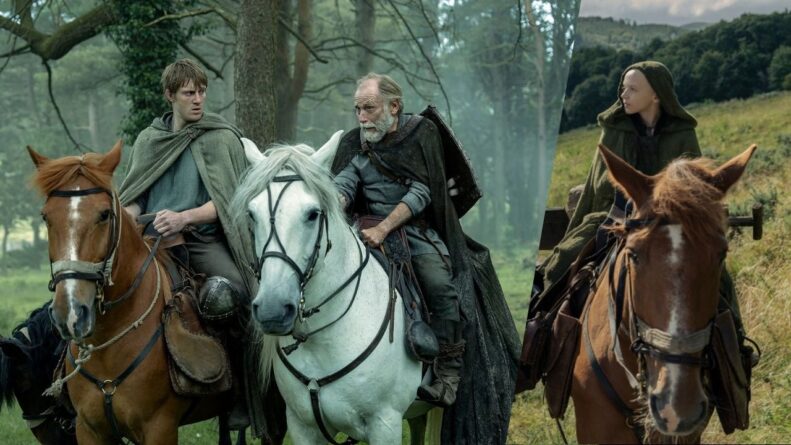
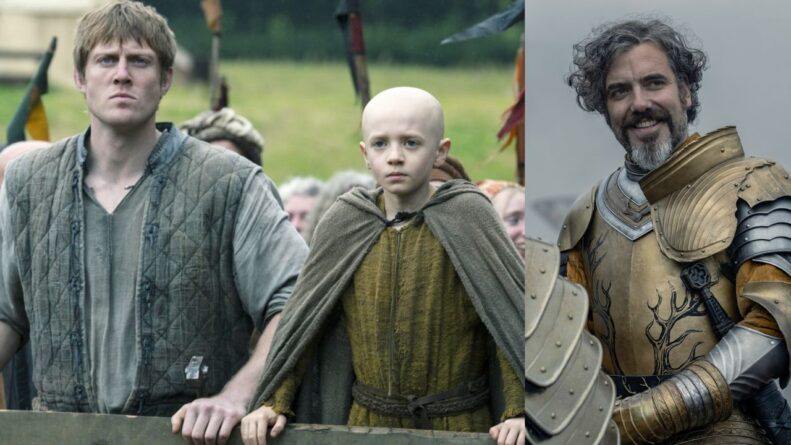
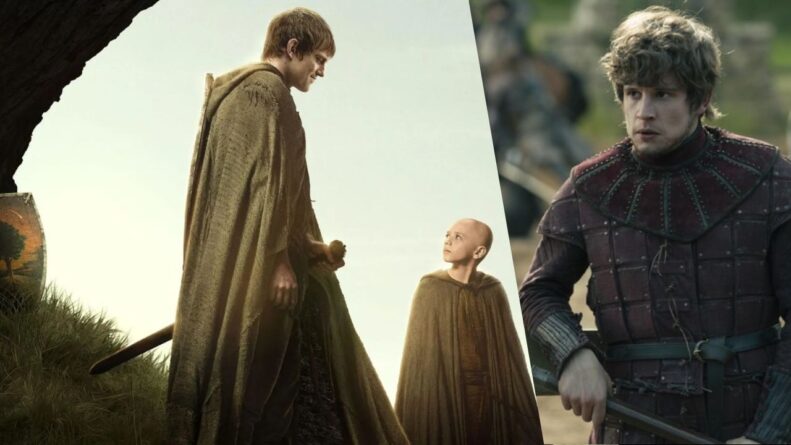
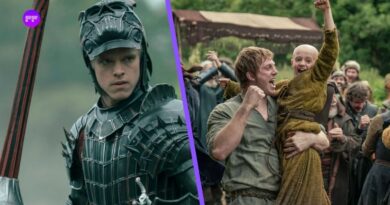
Ser Duncan the Tall, played by Peter Claffey, is a hedge knight in the truest sense of the word — landless, largely broke, and defined less by his birth than by the code he refuses to abandon. His friend, Egg, a character played by Dexter Sol Ansell disguises himself as a clever, bald young boy who is actually a Prince Aegon Targaryen on a journey through the seven kingdoms. Rather than the Game of Thrones-style storyline involving deception and the pursuit of power, A Knight of the Seven Kingdoms finds its drama between two friends trying to defend to do the right thing in a world that rarely favors honor.
Read More👉 A Knight of the Seven Kingdoms: The Rise of a New Legend in Westeros
HBO could have easily tried to recreate the big spectacle that made Game of Thrones a worldwide phenomenon. But showrunner Ira Parker went with a more low-key, character-driven tact that paid off. Its six episodes in the first season is a refreshing change of pace — they’re around 30 to 40 minutes instead of the feature-length episodes fans have come to expect. Parker has spoken about how freeing that structure was, saying it meant the writers did not have to stretch a story that was never built for ten episodes in the first place. Rather than stretch a fairly compact story out into a long season.

That discipline shows in the storytelling. Tournaments, taverns and dust roads are envied by dragon war and politics room. The stakes are personal, not civilizational that somehow makes them hit the land harder. When Dunk defends a stranger for whom he stands to gain nothing, it matters because the show has made you believe he really has nothing to gain.
A Knight of the Seven Kingdoms caught the lost audience of GOT and silently reached their hearts after a few days of its release in January. The series received critical appreciation for its intimate storytelling and outstanding performance of actors that received a 94% approval rating on Rotten Tomatoes based on over 170 reviews. The scale suggests that returning to Westeros through a more gentle, emotional, character-driven narrative is better rather than high-stakes drama on kings landing.
A few days post-release, HBO announced millions of U.S. viewers, and as the season reached its finale, the show was averaging around 14 million viewers per episode domestically and approximately 26 million globally, making it one of the most successful series premieres in HBO Max’s history. For a story about a hedge knight with no land and a squire nobody was supposed to notice, that is a significant statement.
What makes the title of this piece more than just a clever hook is that Westeros genuinely is not finished expanding. The series was renewed by HBO for a second season prior to the premiere of the first, with the next chapter to adapt The Sworn Sword and to be expected in 2027. Martin has also stated that he provided the show’s producers outlines for 12 unpublished Dunk and Egg stories, well beyond the three novellas that have been officially released. The plan, at least as it stands, is big, complicated, and at least for the moment ambitious: The published material first, then using that as a base to expand the saga over the next 20 years.

That’s a lot of runway from a show that came out of the gate asking its audiences to care about a knight that no one else in his own world seemed to care about. It is also further confirmation that the franchise doesn’t require dragons flying in the sky or armies battling at the eye of the gate to capture an audience. A decent man just trying to keep his word is sometimes enough.
A Knight of the Seven Kingdoms does not try to replace what came before it. It simply reminds you why Westeros was worth returning to in the first place.
A Knight of the Seven Kingdoms showed us a different side of Westeros where dragons, wars, or the Iron Throne doesn’t define it. Instead, the story follows the two companions Dunk and Egg —- their choices, their flaws, and the values they cling to when the odds are stacked against them.
HBO has been able to come up with a new way to grow the franchise and keep the series going with a second season. As A Knight of the Seven Kingdoms Season 2 reminds us that in a kingdom plagued by fixation on its crowns and conquests, the most memorable champions are oftentimes the ones simply opting to do the right thing.
Dive deeper into the details of movies, series, and celebrities with Fandomfans to get the latest updates and theories.
Explore why A Knight of the Seven Kingdoms is the Game of Thrones story fans didn’t know they needed, with rich lore, memorable characters, and timeless adventures.

People were expecting to see political conflicts and brutal wars in Westeros when the announcement was made to release A Knight of the Seven Kingdoms Season 1. But this series honors the franchise core dynamic value of centuries before the dragons. A story of a hedge knight and his squire, both wandering around the streets and arguing about coin and honor. And now it seems that this is exactly the story which fans needed to watch.
An Adaptation of George R.R. Martin’s Tales of Dunk and Egg novellas, follows a different narrative-style than cruel noble families of Game of Thrones or House of the Dragon, that’s the main reason of receiving success.
The series is set long before the Daenerys Targaryen era or dragons war, so long before the time of Robert Rebellion. Martin wrote the different side of Westeros where the story explores the lives of ordinary people instead of just queens, and noble families. So he built a story from the ground up instead, borrowing heavily from the class tensions and chivalric culture of 14th-century England under Edward III.
At the center of it all is Ser Duncan the Tall — a hedge knight, meaning he’s technically part of the martial nobility but has none of the money, land, or status that usually comes with it. He has his squire, Egg, a noble prince Aegon Targaryen who keeps his real identity hidden and disguises himself as an ordinary boy by removing his silver-gold hair.
This duo is capturing attention with a unique plot of friendship and their mutual understanding to keep standing for the right thing.
The story has shown us one best thing that truly wins the audience’s hearts, it shows the hard life of someone like Duncan. He does not belong to any noble families but he is also not a poor farmer. He is just an ordinary person who is trying to survive and wants to do the right thing like a true knight, even though he could barely afford his armour. It shows that a single man who has decency is more deserving than an armoured man to be a hedge knight. And hedge knights are paid mostly in food, a roof for the night, and the occasional coin.
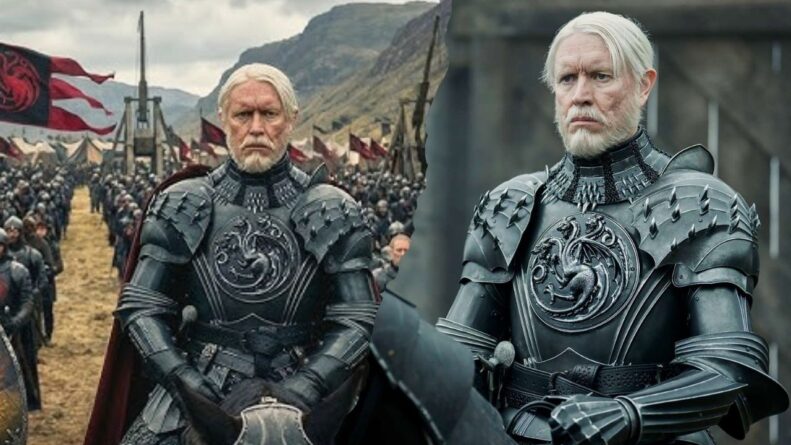
When the fighting stops, lords forget their names fast. There’s a moment early on where Duncan’s old mentor, Ser Arlan of Pennytree, is barely remembered by the lords he once served — his years of loyalty erased the second he stopped being useful.
That precariousness is the engine behind almost everything that happens to Duncan. It’s why so many hedge knights slide into banditry during hard winters. That’s also what makes every tournament feel like a bet he can’t lose. And that’s why when he finally does break the rules, the repercussions could have been deadly.
Read More 👉 Westeros Is Not Done Yet: A Knight of the Seven Kingdoms Brings a New Legacy
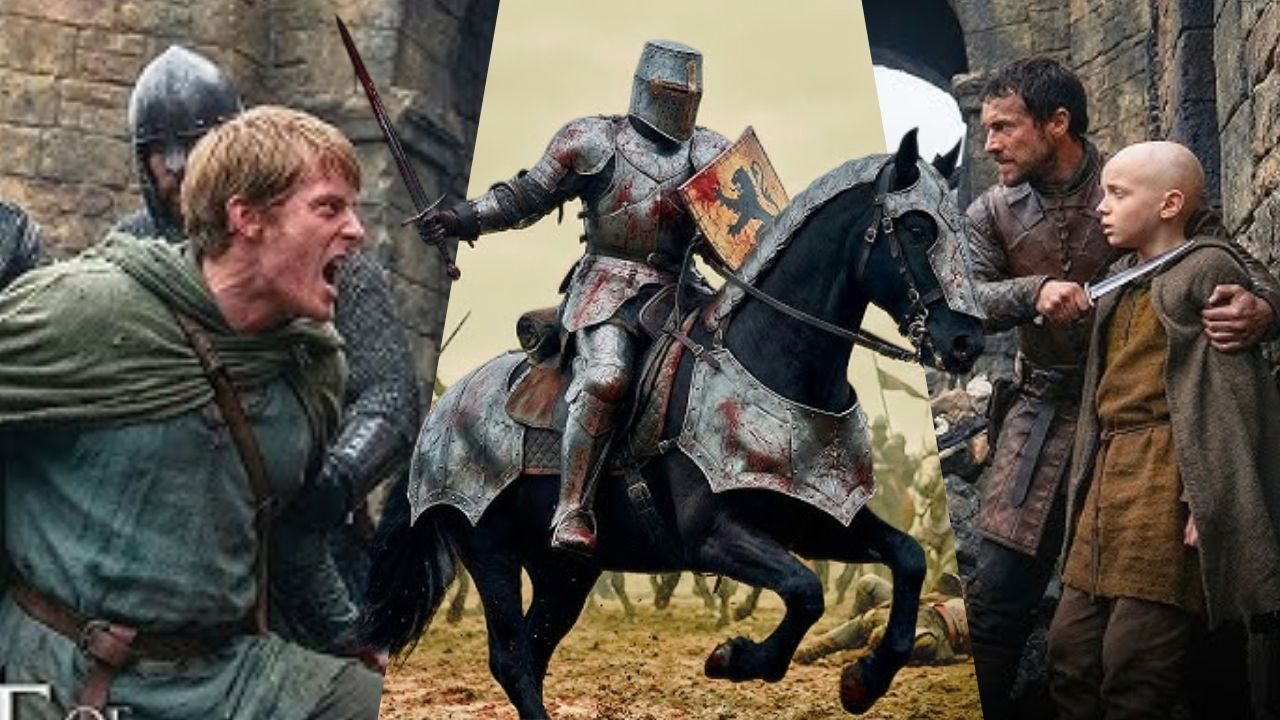
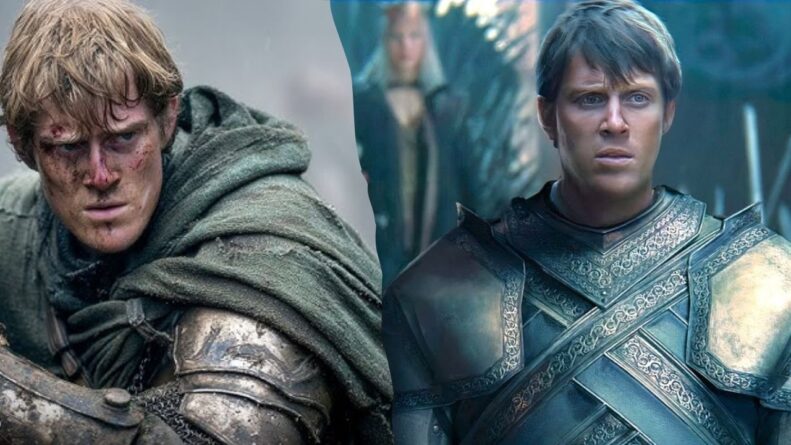
The turning point of the first novella comes when Prince Aerion Targaryen — a genuinely cruel, unstable young royal — assaults a puppeteer named Tanselle simply because her performance wounded his pride. He breaks her fingers without a second thought, and nobody so much as blinks, because that’s simply how impunity works for the highborn in Westeros.
Duncan doesn’t let it go. He strikes back, physically, against a prince — an act that would normally cost a commoner a hand and a foot. He only survives because he happens to be an anointed knight, and stripping a knight of his right to trial by combat would set a precedent no noble house wants to set. In other words, Duncan isn’t saved by justice. He’s saved by the fact that the system needs to protect its own rules, even when applying them to a hedge knight it otherwise treats as disposable.
That single legal technicality kicks off the Ashford Tourney arc, which culminates in something called a Trial of Seven — a full melee of seven champions per side instead of a simple duel. Duncan’s side is built entirely out of people who’ve been wronged in one way or another by the system Aerion represents, while Aerion’s side is stacked with sycophants and men bound by obligation rather than conviction. It becomes less a fight over one puppeteer’s broken fingers and more a referendum on what chivalry is actually worth in this world.
The real gut-punch of the Ashford storyline is Prince Baelor Breakspear’s decision to champion Duncan. Baelor is, by every account, the best possible future king Westeros could ask for — capable, fair, diplomatically gifted. And he dies in that melee, killed accidentally by his own brother’s mace.
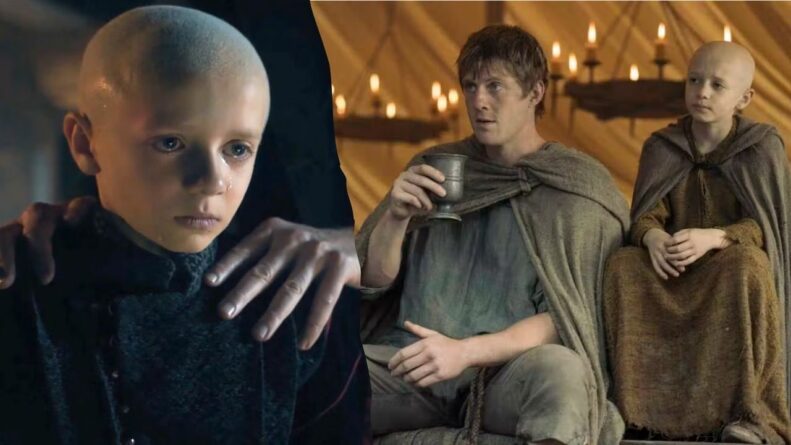
It’s a brutal reminder of something Martin does again and again across his work: doing the honorable thing doesn’t guarantee a good outcome. Baelor’s death, followed soon after by the loss of his two sons to sickness, throws the line of succession into chaos and eventually hands the crown to the scholarly, disengaged Aerys I. That single vacuum in leadership opens the door to decades of instability, a rising surveillance state, and the eventual Blackfyre Rebellions that haunt the rest of the timeline. One knight’s decision to stand up for a hedge knight quietly reroutes the fate of an entire kingdom.
The Sworn Sword is the second novella that follows the royal court swaps for the impoverished countryside, and it’s arguably even bleaker. Westeros is in the grip of the Great Spring Sickness, a plague reminiscent of the Black Death, along with an exhausting several-year drought. Regions that closed their borders early, like Dorne and the Vale, come through mostly unscathed. Places that kept trade routes open, like King’s Landing, lost tens of thousands of people, including the king himself.
Against that backdrop, a feud breaks out between Ser Eustace Osgrey and Lady Rohanne Webber — the “Red Widow” — over the damming of a river called the Chequy Water. What starts as a genuine dispute about water and survival slowly curdles into pure aristocratic ego, two noble houses squaring off more over pride than over anything the smallfolk actually need. It takes Duncan, once again the outsider who actually understands what’s at stake for ordinary people, to defuse things — this time by taking the violence onto his own body in a judicial duel rather than letting untrained villagers be dragged into a pointless fight.
Both stories run beneath the shadow of the Blackfyre Rebellion, where a line of legitimized Targaryen bastards tried to seize the throne — a conflict that echoes the real Jacobite uprisings against the British crown. What makes this thread so compelling isn’t just the war itself, but how people remember it afterward.
Ser Eustace Osgrey, a defeated Blackfyre loyalist, spends the second novella romanticizing that lost cause, sanding down its brutality into a noble legend. At one point he keeps misremembering the name of a peasant executed for sheep-stealing — swapping it for someone else entirely while somehow remembering every detail of the rebellion’s “finest” moments with total clarity. It’s a quietly devastating look at how the losing side of a war rewrites its own history to survive the loss.
By the time The Mystery Knight rolls around, that old rebellion is trying to reignite itself at a wedding tourney, with conspirators attempting to manufacture a myth around a weak claimant by rigging the jousting brackets in his favor. Duncan ends up unraveling the whole scheme, and the man secretly investigating everything from the inside — disguised as another hedge knight — turns out to be Lord Brynden “Bloodraven” Rivers, the Hand of the King and de facto ruler of the realm through fear, informants, and rumored dark magic. It’s a chilling look at a surveillance state that’s brilliant at crushing internal dissent and completely blind to real external threats, like the Ironborn raids happening on the coast the entire time.
Read More 👉 A Knight of the Seven Kingdoms: The Rise of a New Legend in Westeros
For all the political scheming, the real reason people fall for this story is the relationship between Duncan and Egg. A future king being mentored not by scholars or septons, but by a giant, penniless hedge knight who insists he sleep in ditches and groom horses like anyone else — that’s the whole thesis of the series in one image. Duncan wants Egg to actually understand what hardship feels like, unlike his brothers, who were ruined by growing up with nothing but comfort.
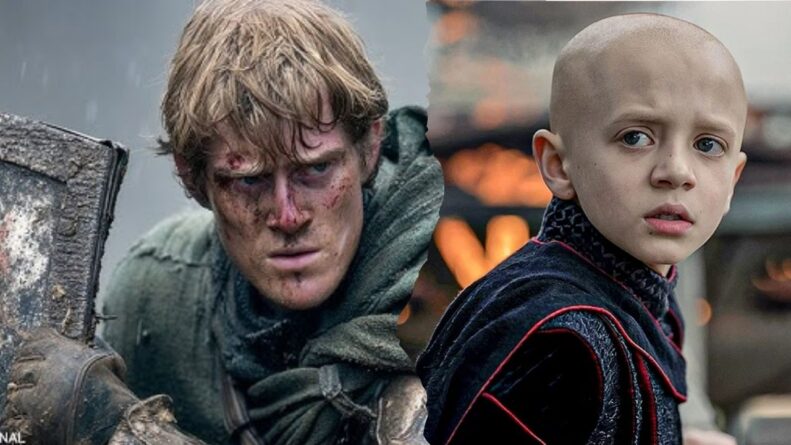
Egg eventually becomes King Aegon V, and his attempts to implement reforms that benefit the smallfolk will be met with fierce resistance that drives him to the tragedy at Summerhall. The fire that kills both him and Duncan. That knowledge sits quietly under every lighthearted moment in these stories, lending even the most hilarious moments a tinge of melancholy.
HBO’s adaptation, created by Ira Parker with Martin, premiered on January 18, 2026, and it leans fully into that smaller, character-first scale rather than fighting it. No CGI dragons, no continent-spanning battles — just the kind of mismatched-pair road trip energy that made early seasons of Game of Thrones so memorable.
Peter Claffey plays Duncan with a sincerity that carries the whole show, while Dexter Sol Ansell brings a sharp, watchful intelligence to Egg. Finn Bennett’s Aerion is quietly unsettling, and Bertie Carvel gives Baelor exactly the gravitas his tragic arc needs. The first season adapts The Hedge Knight across six episodes, taking its time with Duncan’s financial desperation before shifting gears into a tense political thriller as the Ashford melee approaches.
The response has been so positive that HBO renewed the show for a second season prior to the premiere of the first, with The Sworn Sword anticipated in 2027 and The Mystery Knight in 2028. Maze, while Martin is said to have provided full outlines for completely new narratives, including a Stark succession crisis in the North and a Riverland feud (between Houses Bracken and Blackwood) where Egg is said to meet his future wife.
For a series that once seemed all about scale, A Knight of the Seven Kingdoms shows that Westeros can be worth watching even when it’s not at war. Sometimes it’s enough to have a down-on-his-luck knight, a prince in disguise, and a road that never really takes you somewhere safe.
Read More 👉 House Of The Dragon Season 3: Release Date, Plot Details Explained, Cast & Characters
A Knight of the Seven Kingdoms succeeds by telling a quieter, more personal story. It follows the friendship of a hedge knight who can do anything for the right and Egg who disguises himself as a bald boy and hides his noble identity. The series explores the lives of ordinary people, the struggles of hedge knights, and the political tensions that shape Westeros long before the events of Game of Thrones.
This refreshing new perspective of Westeros led A Knight of the Seven Kingdoms to prepare for season 2 to release soon.
Dive deeper into the plot details of new movies, series and characters at Fandomfans.