Daredevil: Born Again Season 2 Ep7 Turns The Story Arc Into More Gritty Netflix Era
Daredevil: Born Again Season 2 Ep7 “The Hateful Darkness” delivers a darker, gritty Netflix era with shocking returns, deaths, and major MCU Phase 6 stakes.
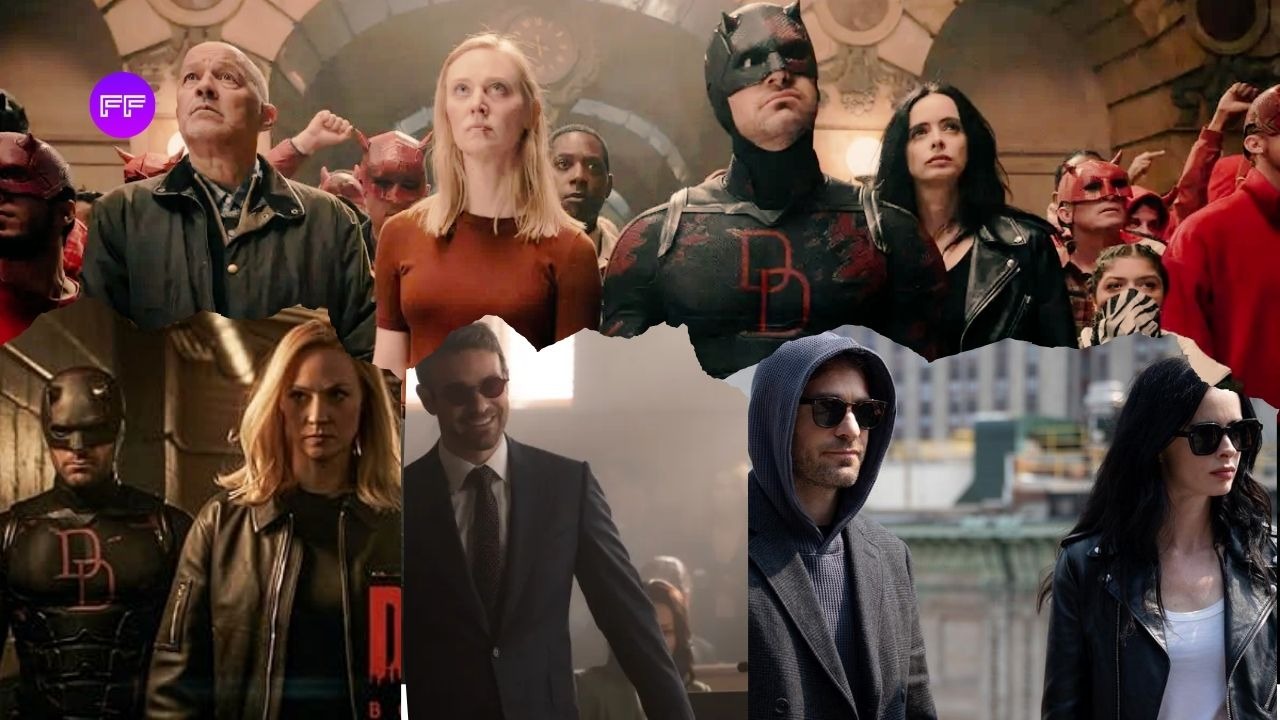
Daredevil: Born Again Season 2 Ep7, ominously titled “The Hateful Darkness,” just dropped on Disney+, and it didn’t just shift the chess pieces on the board for next week’s blockbuster finale — it upended the whole table. Upending despairing character deaths with triumphant returns to the courtroom, this penultimate episode was essentially a love letter to the gritty Netflix era, padded out by the larger, high-stakes politics of the Marvel Cinematic Universe Phase 6.
As Matt Murdock (Charlie Cox) limps toward an explosive showdown with Mayor Wilson Fisk (Vincent D’Onofrio), the showrunners packed this hour so full of lore, comic-book history and sly callbacks that you almost certainly missed a few while shouting at your tv.
Let’s dive deep into the streets of Hell’s Kitchen in Daredevil: Born Again Season 2 Ep7 for a darker finale.
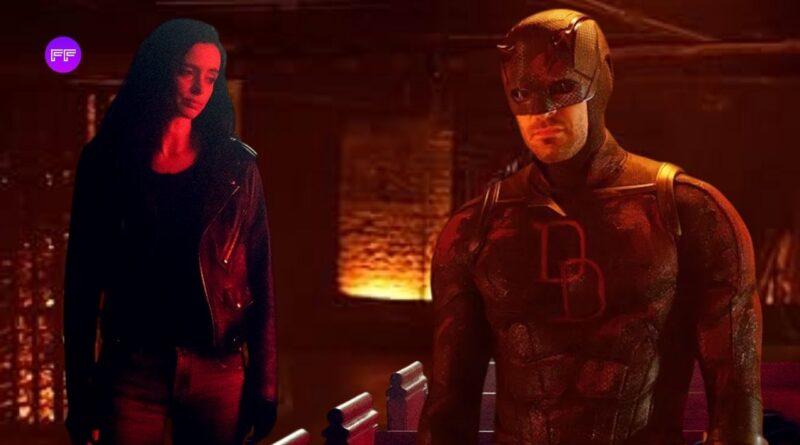
Let’s start with the loudest moment of Daredevil: Born Again Season 2 Ep7. The final image of Matt Murdock, injured and hopeless, praying in the red-lit pews of Clinton Church was cinematic perfection. But then, Krysten Ritter’s Jessica Jones emerges from the darkness. It is the jaw dropping moment for everyone.
But the true Easter egg is in the dialogue at the beginning of the episode. When Mr. Charles is talking about Jessica’s case, we get explicit mention of her husband, Luke Cage, and the fact that she has to shield her daughter, Danielle.
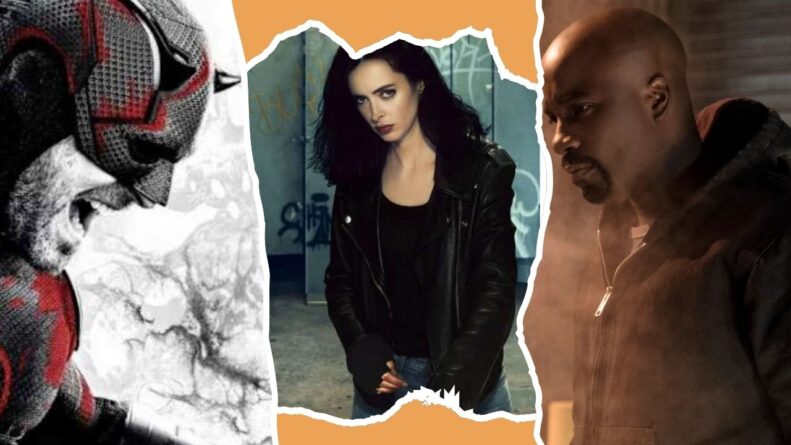
Danielle, a daughter of Luke Cage and Jessica Jones and named in honor of his fathers’s best friend Danny aka Iron Fist. This isn’t some throwaway name-drop for laughs, it solidifies the lives of our street-level superheroes after the Defenders as canon.
It makes clear that as Matt has been struggling on his own in a one-man battle, the other members of the Defenders have been establishing families. It escalates the stakes for Jessica’ return and she’s not just battling for New York any more, now she’s fighting for her kid.
We’ve observed Matt working under the cover of darkness for nearly a full season, watching as his alter ego, the vigilante, dominated, while Matt Murdock, Attorney at Law, played second fiddle. But when Karen Page (Deborah Ann Woll) is tossed into the legal meat grinder by the Anti-Vigilante Task Force (AVTF), Matt at last emerges into the light.
Making his way into the courtroom this time as co-counsel with Kirsten McDuffie (Nikki M. James) was a huge full-circle moment. It’s a direct thematic callback to his charming, sunlit cameo in She-Hulk: Attorney at Law. But here, the tone is reversed. There’s no wacky super power law puns. This is the dark, stifling legal rot in Fisk’s New York.
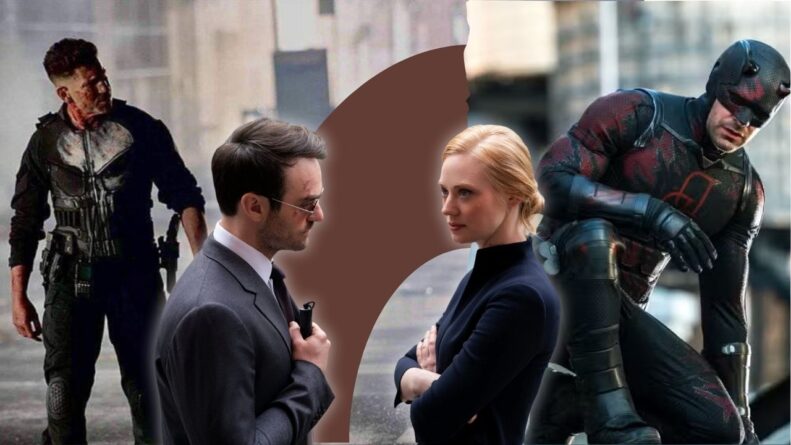
It perfectly echoes his defense of Frank Castle (The Punisher) in Netflix’s Season 2. Matt turns the courtroom not only to defend his client but to also use it as a platform from which to try the system itself.
Maybe the most soul-sapping sequence in “The Hateful Darkness” is Matt’s fraught chat with Benjamin Poindexter, a.k.a Bullseye (Wilson Bethel). Matt frees his mortal adversary, exhorting him to perform “one good deed” to balance the cosmic scales — by rescuing Governor McCaffrey from assassination.
In that exchange Matt specifically mentions the killings of Foggy Nelson and Father Lantom. If you saw Season 3 of the original Netflix run, Father Lantom died after he took a baton to the chest that Dex threw at Karen. And the heartbreakingly tragic death of Born Again’s Foggy is the wound that still fuels every reckless choice Matt makes.
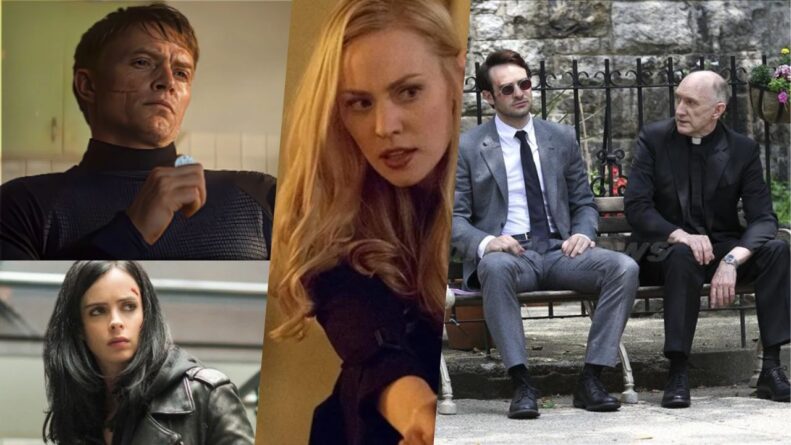
Matt telling his arch enemy how much he hates him but a shred of his Catholic soul wants to forgive him is lifted directly from the moral ambiguity of Frank Miller’s iconic comics. It’s Matt Murdock at his most self-destructive, placing the city above his own need for vengeance.
We need to pour one out for Daniel Blake. Michael Gandolfini has been putting in incredible work this season as the ambitious, swaggering administrator who got way too deep into Fisk’s regime. But in Daredevil: Born Again Season 2 Ep7, his luck finally runs out.
Daniel is savagely clubbed and then killed by the cold-blooded Buck Cashman (Arty Froushan) for deciding to shield BB Urich (Genneya Walton). BB’s last name is Urich. Like, Ben Urich — the tenacious reporter who was viciously garrotted by Wilson Fisk in Season 1 of the Netflix show.
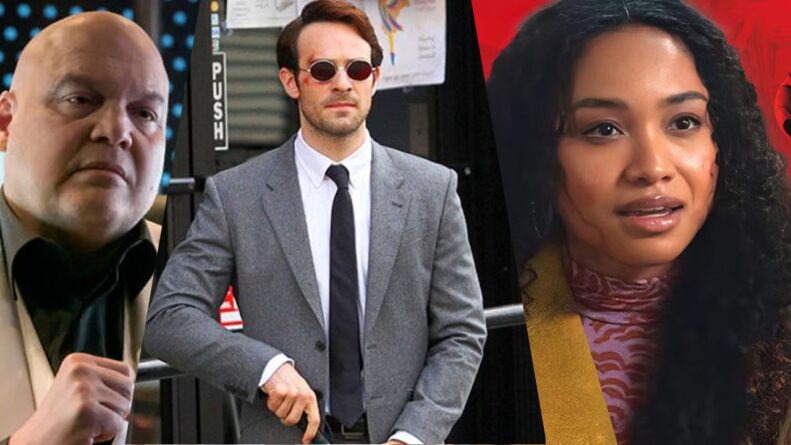
Daniel being killed while defending an Urich from Fisk’s enforcers is a vicious rhyme in the Daredevil poetry. It is a reminder that even though the corporate branding of Fisk’s empire has changed, it still eats anyone who tries to protect the truth. The common mob-movie trope of a gangster “digging his own grave” was completely turned on its head here; Daniel got his soul back right before he lost his life.
When Cherry (Clark Johnson) discloses he has an “inside man” who is watching over Karen Page up at the precinct, fans who have been around since the beginning took a collective breath-hold. And the show delivered: it was none other than Detective Brett Mahoney (Royce Johnson).
Brett Mahoney has been the unsung hero of the street-level MCU since the beginning. He’s a repeat helper in Daredevil, Jessica Jones and The Punisher.
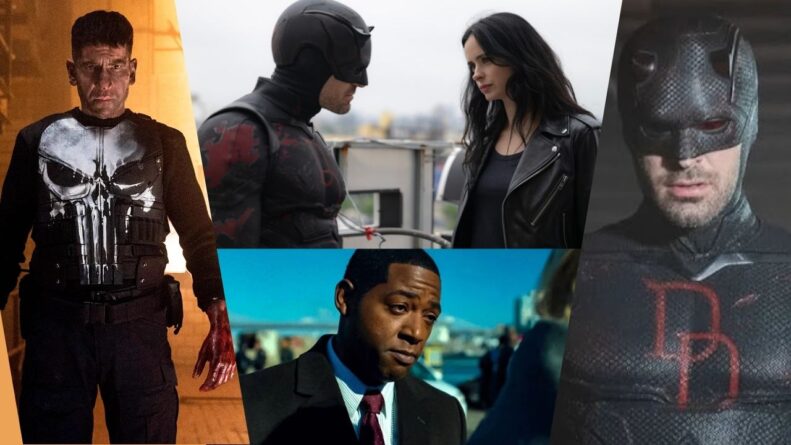
Watching Brett sneak Karen out the back door for a secret rendezvous with Matt reminds us that for all Fisk’s AVTF, and the pervasive corruption in the NYPD, the OG Hell’s Kitchen good cops still want to be your sweethearts. It anchors the over-the-top superhero spectacle in believable, procedural fealty.
Let’s talk about cinematography and Catholic guilt—the pillars upon which Matt Murdock’s whole being rests.
After moving vigilantly through a parking-garage slaughterhouse, Matt is shot in the leg and barely manages to crawl to Clinton Church. He pleads with the Seminarian to pray to Saint Jude for “courage in my cowardice and consolation for my tribulations.”
Saint Jude is the advocate for the hopeless and things are indeed hopeless now. You just can’t get a better metaphor for Matt’s crusade against Fisk these days.
As Matt is bowed in prayer, the shot is awash in a thick, bloody, neon red light. That’s not an accident. It’s a very visual reference to the quintessential hallway battles and shadowy lighting of the first Netflix series. It informs viewers, with no need for a word of conversation, that Matt has been driven to the ends of his bodily and soul limits.
Wilson Fisk is a man of impeccable discipline, frightening regimens and violent rages. The first few seconds of Daredevil: Born Again Season 2 Ep7 depict Fisk getting dressed, and he sees that one of Vanessa’s earrings has gone missing.
It sounds like it’s just a tiny continuity nod. But for Fisk, Vanessa is his tether to his own sanity. In Netflix’s Daredevil Season 1 and 3, whenever Vanessa found herself in peril, was absent or figuratively compromised, the polished Fisk mask would crack, revealing the monstrous “Kingpin” beneath.
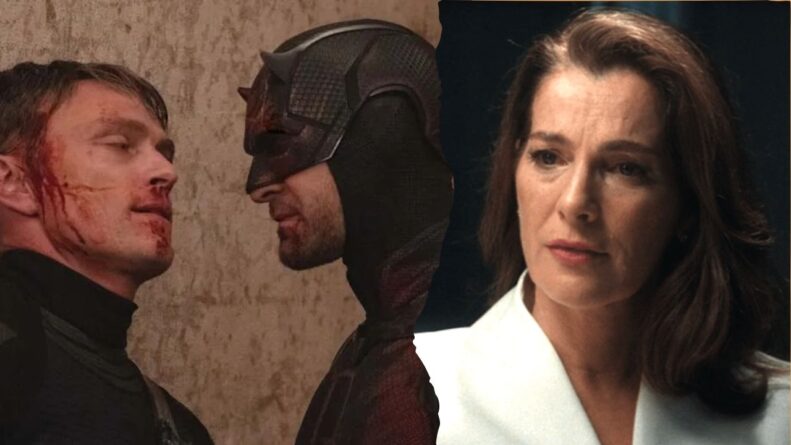
When the director dwells on the missing earring, it signals to the viewers that Fisk is slipping in terms of control. His later conversation with Karen in her cell where he chokes her while telling her he is “bringing back order” — establishes that the missing earring is a sign of his quickly disintegrating mind.
Daredevil: Born Again takes place on the streets of New York, but Daredevil: Born Again Season 2 Ep7 made it clear we’re solidly in Phase Six of the Marvel Cinematic Universe.
In a conversation, Mr. Charles drops a titanic global bomb: The U.S. government does not consider Mayor Wilson Fisk to be a “useful ally.” This clears the path for Governor McCaffrey (Lili Taylor) to come in and try to oust Fisk.
The MCU is currently navigating a fraught political climate, with actors like President Ross, the Thunderbolts, and the Department of Damage Control holding the board. In this context, it’s natural the government would view a strong, authoritarian NYC mayor who goes after vigilantes as a threat. Fisk just got over the line too much, and now these government bodies are at last getting involved.
The parking garage ambush was easily the the most exciting action set piece of the Daredevil: Born Again Season 2 Ep7. The Anti-Vigilante Task Force (AVTF) attempts to eliminate Matt and Kirsten, but are defended by Cherry and Angie Kim (Ruibo Qian), the “unspoiled” cops of the precinct.
This is more than just a neat fight scene; it’s a thematic extension of the narrative strand that began way back in 2015. Daredevil has always been intrigued by the war for the soul of the NYPD.
From Detectives Blake and Hoffman being on Fisk’s payroll in Season 1, to the FBI being completely infiltrated by Kingpin in Season 3, this franchise loves to examine systemic corruption.
The garage scuffle was raw, unrefined and intimate, and it was great to see the stunts that brought fame to this franchise in the first place.
Daredevil episodes don’t often have throwaway titles, they’re usually heavily thematic or taken directly from comic book arcs.
The ‘Hateful Darkness’ is the space Matt Murdock now finds himself in. He’s turned his friends into enemies, allied himself with his greatest enemy (Bullseye), and watched the city decay all around him. The “darkness” is not just Fisk’s regime; it is the hate that festers within Matt himself.
Kirsten McDuffie in her opening statement in court (explaining what the real definition of vigilante is to ADA Hochberg) exemplifies this perfectly. Matt is trying to battle the darkness, but his “self-defeating brand of heroism” (as critics have rightly pointed out) continues to drag his friends into the line of fire. Daniel Blake dies, Karen is beaten in a cell, and Matt bleeds in a church. The dark hatred is winning.
If Daredevil: Born Again Season 2 Ep7 served as the table setting, Season 2 finale will be an absolute earth-shattering event. Now we have Matt Murdock and Jessica Jones back together and ready to go to war. We have Bullseye on the loose with a warped mission for “redemption.”
We have Kingpin pushed into a political corner, his mayoral mask slipping away to reveal the full-blown mob-boss brutality beneath. And we have Karen Page at the heart of it all, poised to see if the legal system will rescue her or destroy her.
Read More:- Euphoria Season 3 Episode 3 Recap: “The Ballad of Paladin” Turns Out a Bloody Wedding
Daredevil: Born Again hasn’t just made it through the jump to Disney+ with episodes like “The Hateful Darkness” it has shown that it can pay homage to its Netflix roots while crafting an adult, shatteringly tragic, and deeply engrossing new narrative. With these gritty moments of Daredevil: Born Again Season 2 Ep7 shows Marvel Cinematic Universe is headed to Phase 6.
Dive deeper into the cinematic world with Fandomfans to get more latest and deep details from series, movies, and celebrities.

Also included in Sony ’s CinemaCon 2026 presentation for Spider-Man: Brand New Day was a disheartened Peter Parker, returning antagonists, and Sadie Sink.
Sony Pictures just went all out at CinemaCon 2026, sharing the biggest scoop about Tom Holland’s much-anticipated comeback in the Marvel Cinematic Universe in Spider-Man: Brand New Day. Holland himself was seen only in a video message, but his statement that the film is the “most emotional” and “most grown-up” Spider-Man story yet was heavily backed up by the footage screened to the audience.
Synopsis of the exclusive CinemaCon footage features a very secluded Peter Parker dealing with the consequences of Doctor Strange’s spell that wiped his memory. From cringing run-ins with his ex-besties to savage jail brawls and the casting of newcomers Sadie Sink and Eman Esfandi, Phase 6 is assembling a street-level war.
Let’s dive deep into the description of the exclusive Spider-Man: Brand New Day footage, its biggest theories for the MCU’s upcoming July blockbuster.
One of the biggest shocks from the footage is where we find Ned Leeds after Spider-Man: No Way Home. From the footage of Spider-Man: Brand New Day, Ned appears to have a wall of Spider-Man research and has even created an app called “Spidey-tracker” to report sightings of the wall-crawler. He currently suspects that either his former teacher or Flash Thompson is the man behind the mask.
From afar, it looks classic and humorous Ned Leed but he is obsessed and a total red flag. As he forgets about Peter Parker, he has no attachment to him which makes him a repulsive man. To Ned, Spider-Man is just a puzzle to be solved.
Ned’s tech skills and his obsession will also make him powerful enough to uncover the truth of Spider-Man. It also makes him a target, crime bosses like Tombstone will use him right after discovering that a brilliant MIT student has an app tracking Spider-Man’s movements. This dangerous inquisitiveness is the ideal narrative accelerant to send Ned careening down a sinister road. If Ned accidentally causes people harm or gets kidnapped and brainwashed by the mob—the trauma could break his mind, paving the way for his tragic comic-book destiny as the Hobgoblin.
The emotional heart of the footage is Peter Parker spying on his former friends. He observes Ned in a store, tails him to a party, and finally meets MJ. The exchange is heartbreaking: Peter gives MJ flowers and reluctantly tells her his name is “Maynard.”
The selection of the name “Maynard” is a deliberate if subconscious nod to his deceased Aunt May. It illustrates how traumatized Peter is, how completely alone he is – he can’t even make up a fake name without referencing his grief. The most interesting part of this interaction though is what MJ says. She thinks that something big is waiting for her so she turns down his job offer.
Peter Parker’s existence is erased by Doctor Strange’s spell, he is being erased from everyone’s life but emotional attachment is still there somewhere. MJ still has the sense that she’s waiting on something or someone — so the spell is imperfect. Her soul remembers what her mind has forgotten.
This star-crossed love story gets more complicated with the entry of Eman Esfandi’s character, who kisses MJ and refers to her as “his girl.” Fans are speculating Esfandi might be playing a civilian, but it seems more likely he has been cast as an MCU version of Harry Osborn, or even Paul, a massively divisive figure in recent Spider-Man comics who was paired with MJ. After watching MJ with someone else pushed Peter into the darker and violent state of Spider-Man.
The lens abruptly turns from teen drama to high-octane action showing Spider-Man doing stretches before weaving through bullets shot by heavily armed prison guards. That’s a major change of pace. Spider-Man is usually friendly with law enforcement, so clashing with prison guards shows he’s running completely outside the law.
We’ve got Michael Mando back as Mac Gargan (Scorpion) and Marvin Jones III as the menacing crime lord Tombstone. In addition, Jon Bernthal officially returns as Frank Castle, the Punisher.
Spider-Man is not really battling the guards—he’s attempting to infiltrate. He is located in a secret underground complex, such as the Raft, a Damage Control installation, or a detention center. And why is that? He needs to reach Mac Gargan before everyone else.
With Kingpin presumably sitting on the throne as New York’s Mayor (courtesy of Daredevil: Born Again), its prisons could be under his influence. Tombstone may be running his crime empire with political immunity. While the Punisher is currently on a spree wiping out street-level kingpins such as Tombstone and Scorpion, Peter may have to bust a guy out of jail to prevent Frank Castle from killing them, landing Spider-Man in the middle of crooked cops, a deadly vigilante and a pair of lethal supervillains.
An unexpected addition to the cast list is Mark Ruffalo as Bruce Banner. Spider-Man and the Hulk have never been given much time to interact, so Banner’s inclusion is a big question mark for this street-level story. But Spider-Man: No Way Home post-credit scenes have already answered this question.
Eddie Brock left a small piece of Venom Symbiote in Mexico while returning to his own universe and this alien will grow into the city of New York. We are surely going to see this Venom symbiote at the time Brand New Day starts.
Peter Parker will recognize this alien life form with more advanced abilities as he is a brilliant scientist and engineer, but he doesn’t have access to Stark Industries tech. So, he needs a top radiation and biology guy to explain it to him.
Peter, maybe still going by “Maynard,” will probably turn to Bruce Banner for science advice. Banner, not realizing he is speaking to a former Avenger, may end up helping Peter connect with the Black Suit. The venom symbiote is always searching for a host who has an isolated, heartbroken mindset, which Peter Parker considered is the best option for now.
Read More:- Star Wars: ‘Maul – Shadow Lord’ Redefines What It Means to Be a Sith
Sadie Sink (Stranger Things’s Actress) role is still a mystery, Marvel and Sony keeping it a secret but the footage revealed the theme of Spider-Man: Brand New Day which hinting towards the iconic character: Felicia Hardy, a.k.a. The Black Cat.
The dominoes have been lined up flawlessly for the introduction of Black Cat in the MCU. Peter Parker is totally gone into a state of depression, seeing his love MJ moved on with someone else in front of him, and completely cut off from his civilian life. He is burying his pain by spending all his time as Spider-Man.
Felicia Hardy is different from MJ and she loves Spider-Man, the reckless, exhilarating superhero whereas MJ loved only Peter Parker. Felicia doesn’t care about Peter’s everyday problems. If Sadie Sink is cast as Black Cat then she is also going to be the greatest temptation for Peter. She tells him to give up his miserable human life and truly live as the mask. A romance with Black Cat, a down and dirty version of the alien symbiote suit, would be exactly the “grown-up” and emotionally layered story Tom Holland promised.
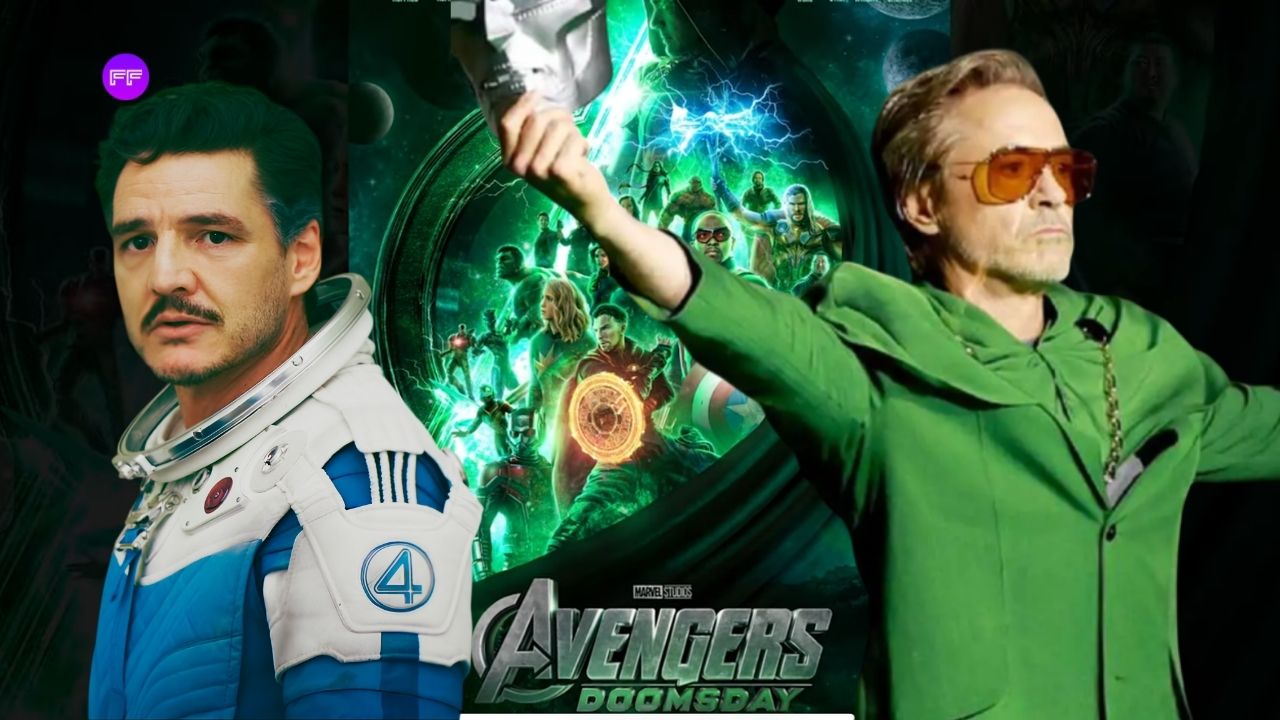
Spider-Man: Brand New Day may be the last single movie of Spider-Man before the biggest crossover in Avengers: Doomsday and Avengers: Secret Wars. Sony Pictures and Marvel Studios are undoubtedly using this July debut to reduce Peter Parker to his barest essence.
By placing him in the proximity of deadly street-level threats (Tombstone and Scorpion), holding up the brutal worldview of the Punisher to him, and shattering his heart with MJ’s new life, the MCU is pushing Spider-Man to limits it’s never explored before. Whether he succumbs to the darkness of the symbiote or rises above it, the CinemaCon footage makes it clear that Peter Parker’s new day will be his darkest day.
Spider-Man: Brand New Day will set on screens on July, 31.
Fandomfans is an entertainment platform where you can get reviews and updates from movies, series and celebrities.
Delve into the way Daredevil: Born Again Season 2 blurs the lines of fiction & reality with its politics, Matt Murdock’s transformation, and Fisk’s ascension.
There is a point in the narrative when the fiction becomes part of the real world and even the makers of the story are left breathless. And that’s exactly where Daredevil: Born Again is set to be as it gears up to debut for its highly anticipated second season on Disney+. What was once a meticulously planned storyline about Wilson Fisk’s rise to power in politics has evolved into something much more terrifying — a show that now seems to be chronicling current events, not just predicting them.
Recently, Dario Scardapane, the showrunner, had the chance to talk about scenes that were written and shot over a year ago and then watch near-identical scenes play out on the evening news. The Anti-Vigilante Task Force that Mayor Fisk unleashes in season 2 — all-black agents, nondescript vans, detention facilities looks and feels like the Immigration and Customs Enforcement (ICE) raids that have dominated headlines as of late. The resemblance is not by chance, and not by accident. Instead it is a creative team who went to the history books for inspiration and found , much to their mutual frustration, that history was about to do just that.
“We were attempting to construct a narrative of a rise to power and a resistance, and it was less about the headlines and more about looking back in history, Now did we know that the imagery we captured would be on the news in two months? No. It’s humbling. It’s chilling. You derive no pleasure from that.” Scardapane said in a recent interview with USA Today.
That sense, both unsettling and humbling and strange unfulfillment creatively, are the perfect encapsulation of what it feels like to put out politically charged art in 2018. We live in an era when the distinction between fiction and reality seems more blurred than ever. It hasn’t seemed like the cast and crew of Born Again that they’ve been forecasting the future—more that they’ve been coming to terms, a little uncomfortably, with the fact that the modes of authoritarian control aren’t all that different, even across centuries.
As Marvel Television started working on the second season of Daredevil: Born Again, showrunners were intent on wrapping up the Mayor Fisk arc that kicked off in season one and carried over from the Echo series. Fisk’s martial law and he-war on vigilantes gave way to a classic resistance gestalt—albeit one with foundations that could be traced all the way back to the dawn of superhero genre storytelling. What they didn’t expect was how the aesthetic language of that resistance would connect with today’s audiences.
Executive producer Sana Amanat has been open about the show’s political nature, describing the story as a study on how authoritarian leaders use institutional power to target marginalized communities. In a chat with Entertainment Weekly, Amanat and Scardapane admitted they knew people were going to “make comparisons” between the Anti-Vigilante Task Force and today’s immigration enforcement tactics. The black uniforms, the paramilitary-style raids, the rounding up of people with no due process — it all builds a visual lexicon that reads like it was plucked from recent news, even though it predates them by several months.
Scardapane has been especially vocal on the historical roots of the parallels. He doesn’t pretend to know what the future holds, only what the past has shown before, citing historical personages such as Nero, Pinochet and Franco as leaders who “follow a script” when they gain power. The series also includes nods to real history such as the 1974 Turkish invasion of Cyprus tying its fictional disputes to real-world, documented instances of authoritarianism. “You tend to get ‘History repeating itself,” noted the creative team, implying what feels topical is actually timeless — the same mechanisms of control and resistance playing out in different times and places.
That’s a tightrope to balance for Marvel. The studio, on the other hand, has embraced the political implications of the source material, recognizing that superhero stories have always functioned as stand-ins for real-world wars. The X-Men were born out of the civil rights movement, Captain America was beating up Nazis in World War II, and the Black Panther books tackled colonialism and its fall-out. Daredevil: Born Again is part of that tradition, in depicting how the engines of power can be taken over by those who would rule, not serve.
Conversely, there’s the danger of simplification of political complexities into a superhero pageantry. The ICE parallels, while powerful visually and emotionally, also risk compressing the particular lived experiences of immigrant communities into a generic “resistance” narrative. The show’s creative team appears to have a sense of this push and pull, with Scardapane stating that their object was never to make a statement on any particular current-day policies, but rather to look at the “timeless power dynamics — corruption, and the moral resistance.”
The political climate of Season 2 isn’t just for show — it serves as a substantial catalyst for Matt Murdock’s journey. As of “Street” at the close of Season 1, Matt was still struggling to balance his two identities, still attempting to play by the rules even as the system was being used as a weapon against him. But for Season 2, he is in a very, very different place.
Matt is officially a “missing person” after his apartment is bombed, and he can no longer go about as an ordinary lawyer. The very identity he’d been desperately clinging to for much of the first season — Matt Murdock, blind attorney and crusader for justice — has been taken from him by circumstance. Now, he’s Daredevil full-time, a fugitive living in the shadows, hunted not only by Fisk’s Anti-Vigilante Task Force but by his friends.
Charlie Cox, who has played Matt Murdock for more than ten years across the Netflix and now Disney+ version of the character, summed up this evolution with an oddly mundane comparison. “Does that come to mind for you when you were losing your baby teeth and there was one tooth that was wobbly for what felt like a decade and it just wouldn’t go?” Cox asked in a recent interview. “It was just a constant irritation and a pain in your mouth, and it wouldn’t go. That’s how Matt feels about Wilson Fisk. He’s inhabited this man, and he can’t get away from this person.”
This aching body is a reflection of what Matt has actually become is the mind-shattering psychological reality of his new reality. Previously he had been able to go back to his law practice, to his friendships with Foggy Nelson and Karen Page, to the relative normalcy of Hell’s Kitchen living, but now there’s just the mission. The suit is more than just a costume, it is a second skin, which both characters wear in almost every scene – a practical challenge for Cox that results in an emotional weight for the role.
One especially moving scene in season 2 captures this erosion of self. When Karen Page asks Matt if he ever misses “being Matt Murdock,” the query lands with the emotional power of the iconic final scene in The Graduate—that moment of lucidity following the adrenaline rush, when the leading man realizes that winning and losing are indistinct. “It’s a fun thing to be able to be the full Daredevil and almost forget who Matt Murdock is and what he is and how he operates,” Cox said, balancing both the freedom and tragedy of that evolution.
This is the same arc in Fisk’s own story that we are seeing play out in this character evolution. Where Matt has been forced to lean into his darker identity, Fisk is now letting his real self as the Kingpin peel back the layers of Mayor Wilson Fisk. Vincent D’Onofrio who portrays a menacing yet pitiable Fisk has called the dynamic between the two characters symbiotically obsessive for “a piece of corn stuck in his teeth” which Fisk nervously picks at.
Mentions to both heroes and villains are a constant in the show runner aana Amanat, who describes them as having “spent a lot of the first season in denial of who they were” before Season 2 where they are “finally wearing their suits” – both literally and figuratively. This symmetry throws into relief how the Daredevil/Kingpin battle has left straight hero/villain war behind: it is now a mirror-match, two men who have embraced their natures, both for good and evil.
Daredevil: Born Again would be as empty as if not for Season 1: Foggy Nelson dies and presses this-jawbiting madness home. From the time the original Netflix show debuted in 2015, Elden Henson’s character has been Matt’s best friend, law partner, and his moral compass. His death in the first few minutes of the Disney + reboot makes clear right away that this is going to be a very different Daredevil tale — one that’s personal, permanent, and catastrophic.
Season 2 picks up after that loss for Matt, who is now dealing with grief and PTSD that impact not only how he feels but also the tactical choices he makes on the battlefield, how he works with his team, and even how he suits up as Daredevil. “He will never be the same again,” Cox said emphatically. “There will be not a day in his life when he doesn’t think about him and think about what he did.” From an actor’s point of view it’s kind of a dream, because it just gives it so much texture.”
The reappearance of Foggy Nelson in Season 2 teased in trailers and confirmed by Henson’s inclusion in marketing materials opens up all sorts of questions about how the show will address this mourning. Flashbacks? Dream sequences? Or something more metaphysical? Against all odds what’s matters the most is Foggy is a presence that reminds Matt with other methods to what he’s lost and what he’s still fighting for.
That emotional core is what grounds the political allegory of Season 2 in personal stakes. The crusade against Fisk is not an abstraction—it is about keeping people from losing their lives in the way that has defined Matt’s life. The Anti-Vigilante Task Force is not only a metaphor for institutional overreach, but also a real threat to the community Foggy risked everything to save.
While the Season 2 political thriller has been dominating headlines, the season also serves as a send-off of Marvel Television’s Netflix legacy as Krysten Ritter returns as Jessica Jones. The hard-drinking, super-powered PI, who had three seasons on her own show, teams up with Matt in his fight against Fisk, bringing them together in a reunion fans have been longing for since the original Defenders miniseries.
Scardapane has been effusive about Ritter rejoining the fold, describing it as “top of the checklist” for the season. “I love the work that Melissa [Rosenberg] did in Jessica Jones,” he told GamesRadar+. “It’s one of the best genre television shows you’ll ever see. Krysten has created an amazing character,”I think she’s done an amazing job.”
This comeback is a multipurpose one. It’s for those viewers who have been along for the ride through the Netflix Marvel universe, a confirmation of that continuity and a reward for their investment in these characters. In terms of the Born Again story, Jessica is a different kind of hero – a less burdened by catholic guilt and legal ethics, more pragmatic and self-preserving. Her interactions with Matt, who has wrestled with the ethics of vigilantism, will certainly give both of them some tension and unexpected camaraderie.
Amanat emphasized that Jessica’s return was “a desire we’ve had right from the beginning,” suggesting that the creative team sees the Netflix characters not as orphaned IP, but rather as integral elements of the Marvel landscape. “It’s exciting to see where she is now many years later,” Amanat said, teasing how time and experience have altered the character since we last saw her.
Maybe the biggest among the recent Scardapane interviews is what it revealed not about S2, but what lies beyond it. The Mayor Fisk arc, which has been the spine of Born Again and its related series, will reach its “inevitable conclusion” at the end of the second season. This political phase of Daredevil’s life is drawing to a close, and the series has planted its feet to shift course for Season 3.
“The playbook is pretty well established,” Scardapane told SFX Magazine. “So when we were writing this stuff we’re like, ‘This is what he does.’ The anti-vigilante taskforce is the comic book. And we built them and costumed them from the comics.”
Yet, while the political thriller aspects have been fun to delve into, Scardapane has said she’d like to bring the character back to his roots. “Going into politics, New York politics, Game of Thrones back-stabbing, allying, and betraying behind the scenes. That’s a good bit of fun, but when it starts to become almost too topical, it feels like it’s moving away from the big, mythological genre stuff,” he observed. “So as we wind down the Mayor Fisk run in season 2, as that story arc comes to its inevitable end, what we’re doing going forward has definitely more of a [Frank] Miller-era comics feeling to it. So yeah, I had a good time playing in the world of politics, but I prefer something a little more street level, personally.”
That is a very brazen artistic declaration. Frank Miller’s 1980s Daredevil is the definitive, dangedest, noirest, morally questionable version of the character we’ve seen more enmeshed in the world of Hell’s Kitchen organized crime than the political machinations at City Hall. Miller introduced Elektra, turned the Kingpin into a Daredevil rather than a Spider-Man villain, and established the visual and thematic lexicon that the Netflix series and now Born Again have borrowed from.
A return to Miller-era storytelling provides a number of intriguing options for season 3. The addition of Bullseye – Wilson Bethel’s Benjamin Poindexter made an appearance in the original Netflix series and is expected to return – would go hand in hand with this aesthetic. I would say that Elektra showing up is just as fitting and one could even see Elodie Yung return. And for what it’s worth, Scardapane hasn’t ruled anything out, and given the Miller era’s penchant for bold narrative gambits, that means there’s at least a chance that Foggy Nelson’s demise might not have been as final as it seemed.
At its core, the change in tone is an admission that Daredevil is at his best when telling a street-level crime story, as opposed to a political thriller. The character’s powers — enhanced senses, martial arts expertise, legal understanding — are really best suited for smaller-scale skirmishes, rather than big political movements. The Netflix series got that, earning its reputation on grounded storytelling about crime, morality and the boundaries of what’s legal. Born Again has opened things up to city-wide politics, but Season 3 is set to bring the focus back down to the neighborhoods and the criminal organizations and personal vendettas that have always been the truest home for Daredevil.
The creative choices confronting Daredevil: Born Again are symptomatic of wider pressures within super hero storytelling in the 2020s. This is not to say these characters have not always been political—Superman took on corrupt landlords in his first ever stories, Captain America whose first cover appearance is punching Hitler, the X-Men function, since their very inception, as allegories for marginalized groups. To suggest that superhero narratives play out in a political void is to deny both their past, and their power.
But there is storytelling wise a difference between timeless allegory and then and there commentary. When you tie superhero stories too closely to narrow, specific current events, they have a tendency to age poorly, alienate some of their audiences, and oversimplify complex political matters into good guy/bad guy dynamics. The ICE analogues in Born Again Season 2 straddle that line, quite literally by invoking historical patterns of authoritarian conduct while inevitably engaging with the present.
Scardapane’s declared desire for “something a little more street level” reflects an understanding that Daredevil is at its best when the politics are implied rather than shouted when the narrative fixates on the human toll of corruption and violence over the nuts and bolts of political power. The Miller-era comics on which Season 3 will be based were undoubtedly political, but their politics was rooted in character and atmosphere rather than explicit statements on the politics of the day.
That doesn’t say Born Again will eschew its discussions of real-world concerns. The finest crime tales from the comics, movies or television always reveal something about the culture that spawned them. But, in retaking the streets of Hell’s Kitchen as its setting, the show can address those concerns in terms of character and community, rather than the spectacle of political confrontation.
As Daredavil: Born Again Season 2 is coming out on 24 March, 2026, this series stands at a mid-point. The political thriller aspects that have defined this chapter of the character are coming to an end, making way for a return to the noir-tinged street-level stories that have always been Daredevil’s best meat and potatoes. The ICE analogs, which have become the focus of so much pre-release discussion, will give way to new antagonists maybe including Bullseye, Elektra, and the criminal underworld that has long been the true battlefield for Matt Murdock’s soul.
What stays the same, though, is the core connection between Matt Murdock and Wilson Fisk, a feud that has now defined a decade of television narrative. Charlie Cox and Vincent D’Onofrio have matured in these roles, discovering new layers in a rivalry that could well have stale in lesser hands. The two actors still are able to mine new angles out of this dynamic — they compare it to wobbly teeth and corn kernels indicates there’s still life left in their antagonism even as the political storyline winds down.
To the viewer, the promise of a Frank Miller-run Season 3 feels like the best possible compromise: political nuance that has ultimately defined Born Again-era Marvel and street-level grit that made the original Netflix run a must-watch. If Scardapane and his team can pull off this transition, they’ll have proven that Daredevil is still one of Marvel’s most flexible and enduring characters able to talk to the political moment and be grounded in the timeless themes of justice, corruption, and what it costs to fight for what’s right.
That’s what superhero stories do best, in the end. They don’t so much forecast the future or provide direct comment on the present as remind us of the patterns that shape human experience — the ascent of authoritarianism, the resistance of the downtrodden, the personal toll of moral engagement. Daredevil: Born Again has serendipitously become a topical series, but its real power is in rising above those concerns to locate in its very particular Hell’s Kitchen disputes something universal about the battle between power and justice.
Read More:- The Sinister Six That Never Was: How a Cyberattack Killed Drew Goddard’s Spider-Man Dream
As the series leaves behind the Mayor Fisk era and returns to the streets, it has the heft of that political experiment — the acknowledgment that even when we take our cues from history, we’re confronted with the present. The Anti-Vigilante Task Force is a comic book invention, but the anxieties it embodies are real. And Daredevil’s superhuman will improbable as it is speaks to something just as real: the tenacious, unyielding belief that one man can take on the system, that the devil of Hell’s Kitchen can still make a dent in a world that more and more seems to be throwing up its hands.
Fandomfans delivers deeper details from your favorite movies, series and characters directly to you.