The End of Star Trek on Paramount+: A Bittersweet Goodbye to a Streaming Era
The Star Trek on Paramount+ run ends with Strange New Worlds and Starfleet Academy. Here’s What the Hell Is Going On and Where the Franchise Is Headed.
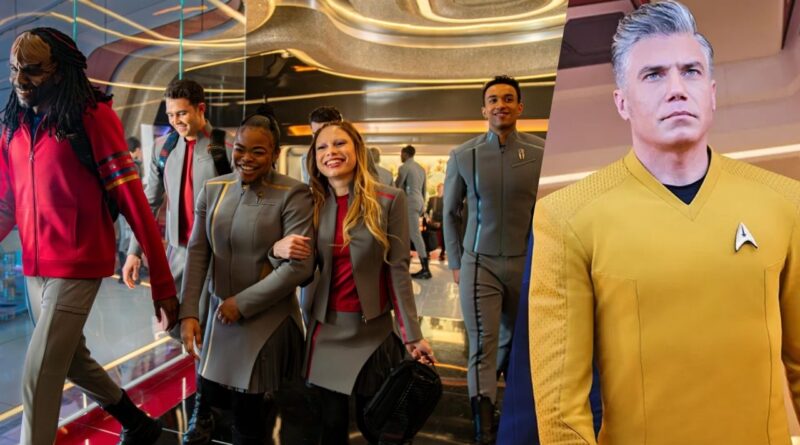
If you’re a Star Trek fan, you have a pretty good idea that It is a deeply sad time for our fandom because the end of the current franchise on Paramount+ isn’t just a rumor anymore—it is officially happening. There are no more Star Trek series. That big experiment in bringing the final frontier into the streaming era is now at a standstill. At this moment, that means it’s truly over for the last two shows still hanging on: Star Trek: Starfleet Academy and Star Trek: Strange New Worlds.
Getting to watch the entire universe get its plug pulled all at once — that’s a lot to take in. Let’s discuss how we came to be here, what these final seasons are doing, and how we might handle the ending of an incredible run.
What made the blow all the more devastating was how suddenly everything changed. It had been a long time since it felt like we were in the midst of a Star Trek golden age. There was such a profusion of content, such excitement – we were truly spoiled.
At one point, we were producing five different TV series all at once for Paramount+. We had Discovery pioneering, going beyond where we’ve ever been in the future. There was Picard, giving us the nostalgia closure we didn’t know we needed. We had Lower Decks, whose brilliant, affectionate parody had us laughing so hard our sides hurt.
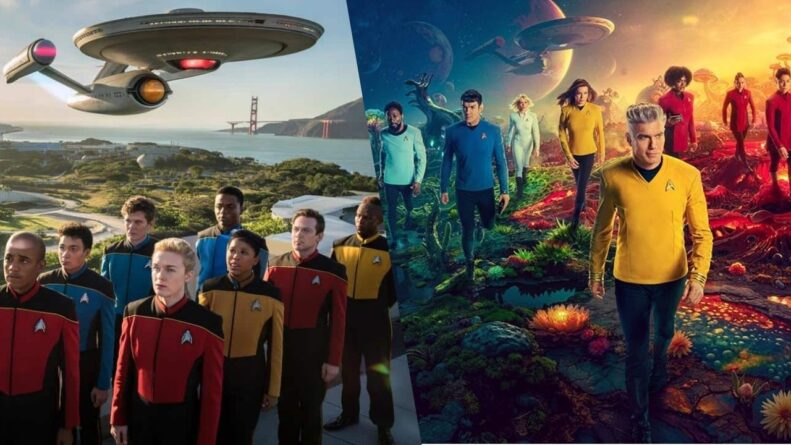
We got Prodigy, which brought the concept of Star Trek: Starfleet Academy to a whole new generation of kids. And then there’s Strange New Worlds, which returns to the classic episodic format that made Star Trek so iconic to begin with.
There was a day when Star Trek fans could rely on the release of a new episode nearly every week of the year. The franchise seemed unstoppable. The universe was expanding in all directions — live action, animation, stories set in the past and present as well as the far future. It signaled a huge, interconnected world that would engage fans for decades.
And then, Star Trek: Starfleet Academy came to the line-up in January 2026. It was going to be the next big chapter. It was meant to be the show that took the torch. Rather, it was one of the last to go in a sudden, savage wash of cancellations.
Let’s start with Star Trek: Strange New Worlds, because this one really hurts. To many fans it seemed the best-placed jewel in the streaming age’s current crown. The series maintained the charm, optimism and sense of seeing the world and adventure that the original 1960s series embraced, along with a host of modern visual language and complex rich layered characters.
Captain Christopher Pike, Spock, Number One, Uhura, La’an, Nurse Chapel — this crew felt like family. We saw them solve the unsolvable, sing their hearts out in a musical (nothing happens before or after as it did at the end of last season’s musical episodes) and even cross over with animated characters. They restored happiness to a series that had sometimes strayed a little too far into darkness and grime.
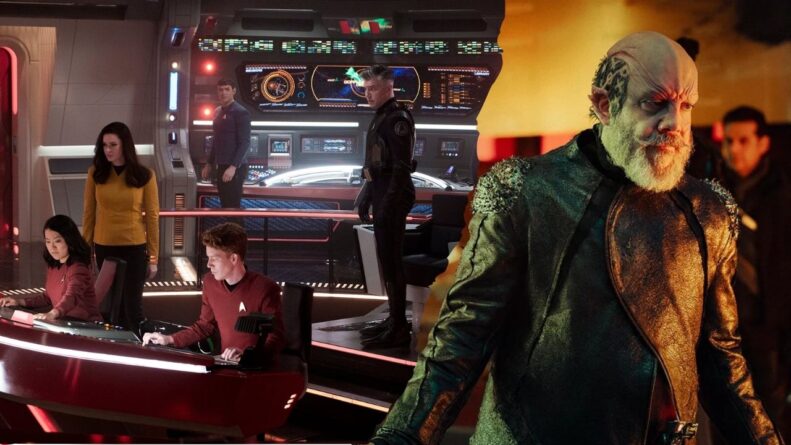
If you want to call it the bright side, is that we are getting a very satisfying ending. Star Trek: Strange New Worlds will start production on its fifth and final season in the fall of 2025. The cast and crew wrapped officially just before Christmas.
The Strange New Worlds’s Season 5 being already done and dusted gives me a bit of comfort. It’s probably safe to assume that the writers and the producers were aware their time was drawing to an end and as such could write some sort of send-off for the crew of the USS Enterprise. We get to see one last batch of episodes. We get to fly with Captain Pike one last time. Then again, the sets have been struck and the costumes locked up for good? That’s hard to swallow.
The end of Star Trek: Starfleet Academy is a series of jolts, and the end of Strange New Worlds is a sleepy, romantic adieu to a familiar face.
This show literally just got here! It premiered in January 2026, and offered a new look focusing on the young, idealistic cadets trying to make a place for themselves in Starfleet. There was a different vibe — a little more coming-of-age, and a little more focused on the difficulties of being a student in a vast, high-stakes universe. Fans were only beginning to learn the characters’ names, only beginning to choose their favorite cadets, and only beginning to speculate on where the story was going.
Then the hammer-pound came. About two weeks after the first season finale aired, Paramount+ made the decision to cancel Star Trek: Starfleet Academy.
It’s an unbelievably quick turnaround for a network to dump a sci-fi flagship series. It had barely time to get on its feet, or develop word-of-mouth.
But that is the oddest, most turbulent part of the whole affair. Because of modern television production practices, networks sometimes shoot consecutive seasons back to back to take advantage of economies in set and actor contracts. So even though it was canceled a mere two days after the first season wrapped up airing, Star Trek: Starfleet Academy had already completed filming its second – and final – season by the end of February.
That means Star Trek: Starfleet Academy Season 2 here we come. We’re going to be watching a second season, entirely finished, fully produced of a show that’s already dead. It’s going to be a very bittersweet viewing experience.
The narrative ends at that point, even if our cadets manage to figure out the puzzle, or win. There is no Star Trek: Starfleet Academy Season 3, and any cliffhangers from Season 2 that were left hanging will most likely remain unresolved.
Although we don’t have the full information from behind the curtain yet, the output has been predictable for some time. The streaming world is evolving rapidly. Just a few years ago, all the big entertainment companies were pouring billions of dollars into their own streaming platforms, eager to emerge victorious in the “streaming wars” and build a subscriber base. They approved everything. Budgets were enormous.
But then the bubble burst. Enterprises began to realize that producing huge, movie-quality sci-fi shows each and every week is hugely expensive, and the numbers were not adding up. Wall Street began to demand profits, not just subscriber growth. Paramount+, among many other streaming platforms, has been experiencing massive reorganizations, budget cuts, and corporate shake-ups.
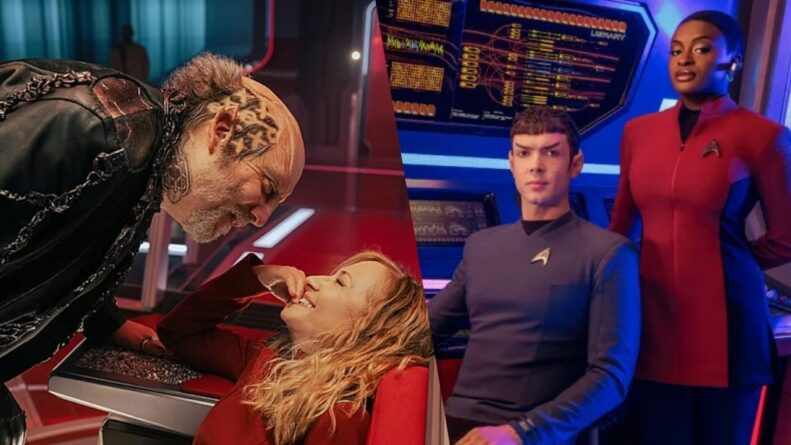
Star Trek is a beautiful franchise but it is not cheap to produce. The intricate sets, the alien makeup, the state-of-the-art visual effects, the huge casts — it all runs to millions of dollars an episode. When the corporate compressing started, big-bucks sci-fi shows were the easiest targets to be cut.
It’s frustrating because it seems like those decisions were made in a conference room by people looking at spreadsheets, not people looking at the rabid fanbase. But sadly, that’s the way the TV biz is. It is business first and art second.
If there is any solace to be found in this enormous letdown, it’s that we aren’t getting the full dark today. The Paramount+ Star Trek era is ending, but a veritable cornucopia of fresh episodes awaits before the lights go out for good.
And through it all, one thing remains the same—we are a united front. The Star Trek fanbase is easily one of the friendliest, most passionate and creative communities you will ever come across. The shows come and go, but the spirit never does.
And then there’s the phantom second season of Starfleet Academy. It’s the end, but we still get one more season with those cadets. We get to see the labor of those actors, writers and visual effects artists in those final episodes.
I am going to highly encourage us all as a fandom to not just rage quit these final seasons. Let’s watch them. Let’s celebrate them. Let’s let the these creators know their work meant something to us, even if the executives above didn’t see value in continuing the stories.
It’s not the first time Star Trek has been “canceled.” The Original Series was notoriously canceled after only three seasons in the 1960s. People thought it was over. But the fans rallied together, the show gained a new life in syndication, and it ultimately spawned a massive movie franchise.
Then we proceeded through the golden age of the 90s with The Next Generation, Deep Space Nine, and Voyager. But then the tiredness of the franchise set in, and Star Trek: Enterprise was axed without ceremony in 2005. For more than ten years, there was no Star Trek on television. It seemed like that was the end of the line back then, too.
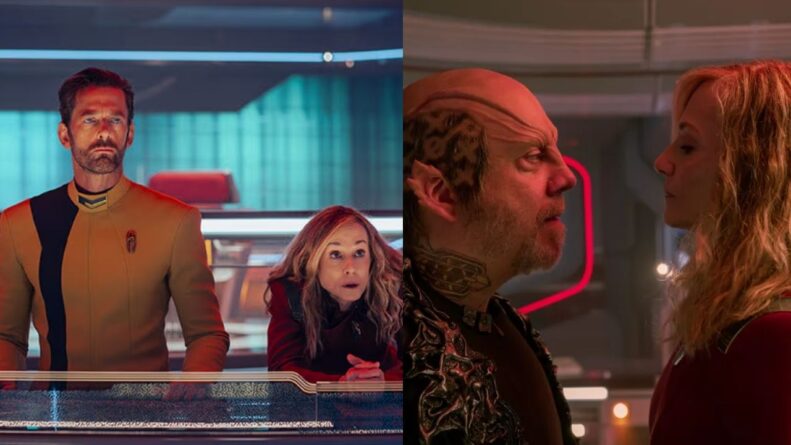
But Star Trek always returns. It is simply too large, too iconic and too culturally significant to be allowed to remain dead for all time. The ideals of the Federation — hope, diversity, scientific curiosity, and an optimistic view that humanity can build a better future are things that people will always crave. We need Star Trek, particularly when times are tough.
The Paramount+ era is coming to a close. The streaming experiment is done for the time being. The vessels are headed back to spacedock and the lights are going out. We may also have to wait for a few years before we get another new series. It could be a matter of waiting for a new corporate owner, a new network, or a new approach to the franchise.
But somebody will look up at the stars and decide it’s time to go — boldly, once again.
Read More:- Star Wars: Maul – Shadow Lord: Darkest Chapter Is Only Getting More Dangerous
The great thing about the streaming era is that now, we have an endless supply of Star Trek at our fingertips. We now have permission to binge The Original Series. We can binge The Next Generation. And if we haven’t, we can now do that too without having to wait. The legacy is still there.
There aren’t many genres that are as welcoming, passionate, or creative as Star Trek fandom. There are series, but the spirit cannot be truly killed, not even with series. Cosplay evolves, new fan fiction runs rampant, and cons tend to attract fans. At the end of the day, it’s the debates, the arguments, the friendships that really keep this universe going, that are at the core of everything.
We said goodbye to Strange New Worlds, a show that had a sting of home about it. We say goodbye to Starfleet Academy, a series that just didn’t take off. We are ending an era of television science fiction that was extraordinary.
But the final frontier is here to stay. It’s waiting underneath for the next leaders of the pack.
Get all the latest updates from movies, series, and celebrities. Stay connected with Fandomfans to get all the details.

Supergirl 2026 brings a dark space-western flavor to the DCU. Find out Milly Alcock’s groundbreaking role, cosmic setting, and why it upends superhero movie.
Supergirl 2026 is the biggest piece of element in the movie history which is going to change the genre of superhero fatigue for decades. This time not on earth, the fight moves to space and expands its narrative. Non-comic enthusiasts should know that the Supergirl movie is gonna change the heart of its superhero genre. Milly Alcock is portrayed as an aggressive, bold and cynic Supergirl.
If you’ve gone to the movies at all in the last five years, you know the drill. A luminous portal melts open in the air, a CGI legion descends upon a major metropolitan city, and a cadre of soldiers of fortune must punch its way through to the building to save the world. It is a formula which has entertained us for over a decade, but recently, it seems we have been dining on the same dish on repeat.
Audiences seem eager for a new take. They expect new themes and stories which push the limits of genre rather than same stakes. James Gunn’s revamped DC Universe (DCU) and one of its most closely watched projects: Supergirl: Woman of Tomorrow (2026).
If you are thinking about Supergirl from the CW TV show, then you have a surprise this time because she is not just Superman’s younger cousin but a surviving girl who won’t suppress her identity. The Supergirl 2026 film will bust all of those expectations. There’s no tale about a girl making the rounds in high school or keeping her powers under wraps at an office job. No, instead we are getting a dark, gritty, brooding sci-fi spectacle.
So let’s jump into why Supergirl 2026 is going to be the breath of fresh air that the superhero genre so badly needs and why this story of grief and redemption across galaxies that’s a leap for the character will be unlike anything we’ve ever seen before.
Batman has Gotham, Spider-Man has New York, and Superman has Metropolis to call home. They’re usually tasked with making sure citizens are safe from threats closer to home. But what if a hero has no love for Earth, or feels no earthly connection at all?
Supergirl: Woman of Tomorrow is pulling the superhero out of the city and into the cold, uncaring darkness of outer space.
Rather than a “save the world” narrative, the film is being shaped up as a Cosmic Odyssey or more specifically, a Space-Western. Think of the rugged, survival themes of a classic John Wayne or Clint Eastwood flick, but against the backdrop of colorful alien worlds, weird cosmic creatures and neon-drenched galactic dive bars. Kara Zor-El isn’t on the beat watching for bank robbers, she’s racing across the galaxy on a mission deeply personal.
This change of locale is a huge visual and narrative feast for the viewers. Space is a blank canvas, so go crazy. We are not going to see the same gray skyscraper getting bashed. We’re going to see alien worlds, strange suns, alien cultures that take the DCU way beyond the bounds of our solar system.
It lifts the film above the standard superhero fare and turns it into a grand sci-fi adventure. You can glimpse hints of Dune and Star Wars in its world-building, but at the center, it’s all about a man with nearly god-like power.
The original story led us to understand the level of effect this movie is going to give. The film is a loose adaptation of Tom King and Bilquis Evely’s celebrated comic book miniseries, bearing the same name. Without going too far into spoilers, King’s comic rebuilt Kara around the fundamental thing that separates her from Superman: their trauma.
Superman had been sent to Earth when he was just an infant. He was raised by adoptive parents in the rolling plains of Kansas. He is a being of hope because he only knew love.
That’s what it comes down to emotionally in Supergirl 2026. Kara’s not okay. She’s weighed down by grief of losing her world, survivor’s guilt, and rage. She’s not working from Superman’s sunny disposition. We catch her in this tale as adrift. She’s celebrating her 21st birthday in an alien bar, trying to drink away the sorrow of a life that’s been one tragedy after another.
Kara, however, was a teenager at the time of Krypton’s destruction. She lived her entire life the first fourteen years as a refugee on a floating fragment of her shattered home world, she saw all she had loved starve, suffer, and die until she was at last sent to Earth.
A space trip isn’t only to find and kill her enemy but to find herself. When she comes across a young alien girl whose father has been killed and who is looking for revenge, she must face her trauma. In a roundabout way, helping this girl is what Kara has to do to help herself.
That emotional element is what makes the story so fundamentally “human.” It’s a beautiful paradox: The most powerful alien in the universe is grappling with the most down-to-earth, relatable human feelings — depression, purposelessness, and the challenging path of recovery.
Ignoring the repetitive stories of the superhero genre, Supergirl 2026 is delivering something different to the cinema that feels wholly original. Here is a primer on why this method is exactly what today’s audience wants:
No Secret Identities: There is no Clark Kent-like clowning alter ego in this. Kara doesn’t put on glasses and masquerade as a mild-mannered reporter. She doesn’t pretend or hide to make humans comfortable. Kara Zor-El, being a proud Kryptonian, takes out the repetitive “keeping my secret from my friends” subplot that drags down so many superhero movies, allowing the story to concentrate on her real path and development.
The Emotions Are Genuine and Imperfect: For decades, female superheroes were expected to be paragons of virtue – always on the right side of ethics, eternally patient, and nearly flawless. This narrative deviates in Supergirl 2026 from that ideal and allows them to feel more human. Kara breaks that mold. She is flawed, swears, angry and a drunkard who is trying to forget. Superhero with anger can shape the different kinds of character development, this is something new and acceptable. Reviving from grief, surviving on her own by being different is an ideal approach for the fresh narrative.
A Different Kind of Superhero Movie: As noted above, this isn’t your typical capes and cowls flick. It is a survival drama. Out in deep space, beneath a red sun, Kara forfeits her powers. She can bleed. She can freeze. She can die. Not solving every problem with god-like power and laser vision makes the stakes feel real. Combining sci-fi, survival narrative and the superhero genre keeps viewers excited and more real with these characters.
So the moment James Gunn revealed that Milly Alcock (best known for her breakout role as the young Rhaenyra Targaryen in HBO’s House of the Dragon) had been cast as Kara, the internet went full send on approval. Alcock possesses a very particular, uncommon on-screen aura. She has a keen sense of how to portray a character who is both regal and fiercely independent while weighed down by legacy and harboring a quiet, simmering, dangerous fury.
She’s not the classic, bubblegum-pop superhero look – she has the steely gaze of someone who’s watched empires fall. She is the absolute perfect choice to play Tom King’s complicated version of Kara.
Then there’s Krypto, the Superdog. Yes, Supergirl is now traveling the galaxy with a dog in Supergirl 2026. But leave behind any cartoonish preconceptions you may have. In this world, Krypto isn’t a goofy sidekick designed to move toys. Krypton was destroyed by a nuclear war, and he is a ruthless, hyper-aggressive Kryptonian dog who died with their planet and with whom Kara is the last surviving member of her race. He’s her protector, her best friend and the only link she has to the lost home for which she pines.
It’s a lot of what you see in the opening of this film, which is the relationship between Kara — hardened and scarred and carrying a whole lot of hurt and her super-powered dog, loyal to the end. And really, don’t be shocked if Krypto steals the show every time he pops up.
Read More:- Star Trek History Sparks lighting on “Trials and Tribble-ations” After Leonard Nimoy’s Simple Response
The first chapter of the new James Gunn DCU is “Gods and Monsters.” woman of tomorrow, then it’s no surprise that Supergirl 2026 leans very heavily into the “monsters” side of that equation. It’s not the monsters she’ll encounter in space, but also the demons and emotional fights she has inside herself.
Supergirl 2026 is really a huge moment for the DCU. It’s proof the franchise has no interest in just playing it safe anymore. From its full-throttle Space-Western vibe to putting emotional depth rather than merely physical peril front-and-center, to letting its protagonist be genuinely flawed, DC is declaring a new era of comic book movie.
Supergirl 2026 is more than just a ho-hum sci-fi/fantasy industry-dreck superhero spin-off. It’s a gorgeous and emotional bass line of a story about a girl and her dog making it in a hostile cosmos. It’s a tale about how to have a purpose after your world ends. And in a movie world where there’s no shortage of heroes trying to save the world, a hero trying to save herself might be the most thrilling ride of all.
Dive into the entertainment world with Fandomfans to get the latest update from movies, series, and celebrity news with deeper details.
Explore where Maul Shadow Lord timeline in Star Wars canon, from Clone Wars to Crimson Dawn and Solo timeline. Full breakdown & timeline guide. Read more visit!
Maul Shadow Lord timeline Star Wars stories have always been like individual tiles in a mosaic, but few fan contributions have captured the collective imagination of the fandom quite like Maul: Shadow Lord. In an age when high-budget official releases occasionally feel safe, this series came out of nowhere with gritty, hyper-stylized animated visuals that seem like a tribute to the Clone Wars heritage while going to much darker levels.
The “Shadow Lord” stage is a Maul we’ve seen but never fully dwelt with—the crime lord who isn’t just a Sith castaway, but a crime boss. There’s nothing new about the hyperactive swordplay of Episodes 1 and 2; the reason for the craze is more about the mood. It is moody, it’s visceral and it really answers a “Maul-shaped” hole in the timeline that fans have been itching to explore for years.
To get an idea of when Maul Shadow Lord timeline starts, all you have to do is see where “Official” Maul ended in The Clone Wars Season 7. We last glimpsed Maul at his most desperate and deadliest. Captured by Ahsoka Tano and barely surviving the Siege of Mandalore, Maul’s world and his vision for the future was obliterated by Order 66.
He escaped from the Venator-class Star Destroyer Tribunal in the middle of an explosion of kinetic energy, a trail of dead clones and shattered bulkheads left behind him. But he’s more than just running from the Empire, he’s running into a void. He had no army, no master, and no clear path forward. This change is key. Maul went from a galactic player with a seat at the Mandalore throne to a ghost in the shadows.
The trauma of Sidious’s betrayal and the rise of the Empire left him with a singular, cold realization: if he could not rule the galaxy through the Force then he would rule its sewers through fear and commerce. This brings you to the Crimson Dawn period, the era Shadow Lord so vividly gives full expression to.
Maul Shadow Lord timeline is set during what many lore historians consider to be Year 1 of the Empire. That era was an unruly nightmare of galactic events. The Jedi are gone, the Senate is a vacant shell, and the Imperial war machine is still in its “aggressive expansion” period. Darth Vader is off pursuing the last Jedi survivors, but the criminal underworld is now seeing a huge power vacuum.
Now in this era Maul is no longer “Darth Maul.” He has renounced the Sith title, considering them his greatest enemies. But he’s not a hero. He is laying the groundwork for Crimson Dawn.
During this first year, Maul is traveling the Outer Rim, consolidating power in the absorption of smaller syndicates often through extreme violence. The sobriquet “Shadow Lord” is quite fitting: he is a specter lurking at the edges of the Empire. He fills in the gaps, areas where the Stormtroopers have yet to arrive, and he can make lawless worlds into his own private realms.
It’s a time to rebuild, not just a criminal empire, but his own shattered soul. He is adapting his fighting style, moving more towards his mechanical nimbleness and double-bladed saber expertise, playing a long game against the Emperor.
The Maul – Shadow Lord Episode 1 and 2 welcome us to the planet Janix, and frankly it’s all that we could ask for from a Star Wars underworld environment. Janix is the ideal microcosm for the “Shadow Lord” period. It’s not a bright core world or a lush forest moon; it’s a rough, hard-edged industrial frontier that could feel like a mix of Blade Runner and a Western.
Janix is a center for the “under the table” economy. It is the dumping ground for the Empire’s waste, and where the most desperate people in the galaxy go to vanish. In Maul Shadow Lord timeline, Janix is a city of changeable loyalties. Maul’s being on Janix isn’t only a question of concealment; it’s a question of power.
The series takes advantage of grim up-north to trace Maul’s transformation into a mastermind. He doesn’t just walk into a room and kill everyone (he certainly can, but that’s not his specialty), he plays the local politics. The worldbuilding is layered here and reveals to us the predicament of the common people living in the looming boot of the Empire and the iron fist of the Maul: Shadow Lord.
The Debut of Devon Izara as Maul’s apprentice is attracting lot of fans because of the relevant experience with the apprenticeship in the star wars story, (mainly among fans comparing her Darth Talon hailing from the Star Wars Legends)
Although Devon Izara has the same “lethal warrior” aesthetic as Talon, she is more grounded in the current canon. She’s not a Sith in the old style sense because Maul is no longer a Sith. She embodied Maul’s desire for a legacy that was not tied to Sidious. She embodies Maul’s ambition to have a legacy that wasn’t connected to Sidious.
Talon was the blade of a cult, and Devon a creature of the Empire’s cruelty—a survivor who carved-out a mentor in the galaxy’s most lethal man. Her dynamic with Maul is fascinating because it’s laid on a shared disdain for the way things are, so she is a far more “humanized” antagonist than the near-robotic devotion seen in Talon in the comics.
In Star Wars now, Maul’s bounce up and down trajectory is pretty predictable. He flees to Mandalore in the final days of the war in The Clone Wars Season 7, and this signifies a major turning point for him. In Maul Shadow Lord timeline, he is at the height as he attempts to exert influence through the fledgling Crimson Dawn crime syndicate while the Empire is establishing its presumed worldwide reach.
By the time of Solo: A Star Wars Story, Maul is the dark power behind the curtain as the secret leader of the Crimson Dawn. The much more chaotic and desperate Star Wars Rebels sees Maul stranded on Malachor, where he fights his final battle with Obi-Wan Kenobi. For one thing, this timeline makes it clear when in the timeline Maul’s saga took place within the Star Wars universe.
So Maul Shadow Lord timeline is set post-Clone Wars, but way pre-Solo. It is set before the Obi-Wan Kenobi series. In Shadow Lord, Maul is still the absolute physical pinnacle, in both power and ambition. He’s not the broken hermit of Malachor yet, John is a shark in the water, carving his kingdom while the galaxy is distracted by the transition from Republic to Empire.
Read More:- Disney’s ‘Paradise Season 2’ is the Sci-Fi Thriller You Need to Binge This Weekend
Maul Shadow Lord timeline illustrates the strength of a Dark Side-focused narrative, especially when accompanied by breathtaking artwork. Taking place between the prequels and the original trilogy, the show redefines Maul — he’s as lethal and intense as ever, but also multi-dimensional and unexpectedly relatable.
Whether it opens the door to more official tales delving into the galaxy’s shadowy depths or is simply held aloft as a beacon for fan creations, one thing is clear: Maul Shadow Lord timeline has made a lasting impression on Star Wars.
Dive deeper with Fandomfans to get theories on the latest series of the biggest franchise of movies, series, and celebrities.