Will AI Actress Tilly Norwood Replace Hollywood’s Biggest Stars?
AI star Tilly Norwood, created by Eline Van der Velden’s Xicoia studio, is drawing major Hollywood talent agencies—reshaping the future of acting.
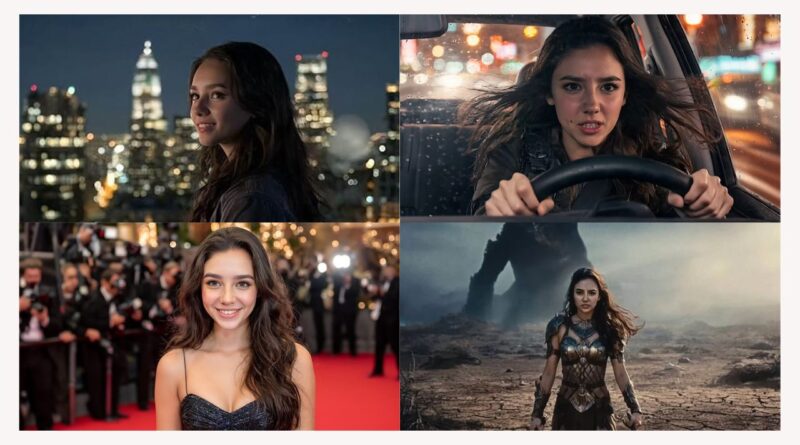
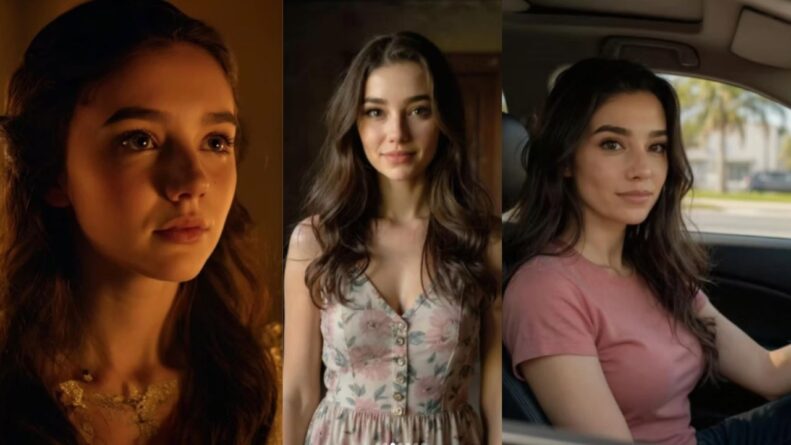
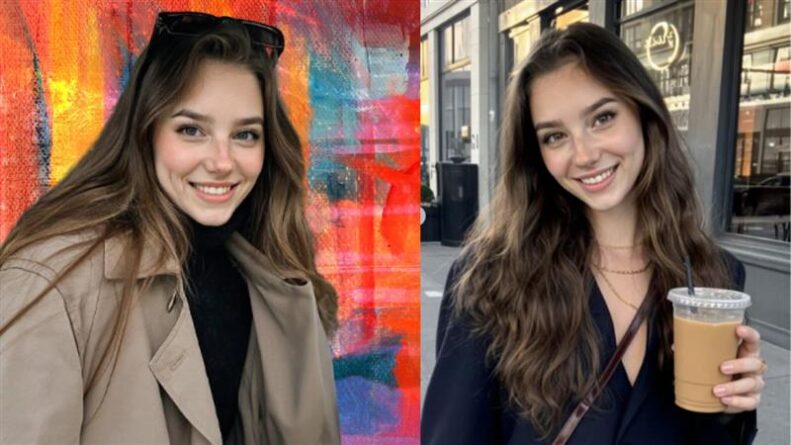
Meet Tilly Norwood – Hollywood’s First “Fake Real” Star introduced by Dutch comedian-producer Eline van der Velden through her AI studio Xicoia. According to Variety, Norwood “has drawn the interest of several talent agents” after being debuted at industry-targeted Zurich Film Festival summit. Van der Velden informed the Zurich Summit panel that studios – early doubters of AI actors in early 2025 – are now “moving quietly ahead with AI projects,” and that she anticipates an imminent announcement of which agency will have Norwood as their client. And lo and behold, some talent agents are already swooping around her.
Her debut? An all-AI comedy sketch called AI Commissioner — from script to performance, it was all generated. Eline even went on to state that she wishes Tilly to become “the next Scarlett Johansson or Natalie Portman.” Daring, isn’t it?
News of Norwood’s agency buzz triggered swift backlash from working actors. Hollywood stars publicly criticised on social media, asking how a computer-generated “actress” would fill the role of actual actors. The Wrap covers –
Actress Melissa Barrera (In the Heights) took to Instagram: “Hope all actors repped by the agent that does this, drop their a$. How gross, read the room.”
Others sarcastically predicted that contracting an AI “actress” would be a PR debacle at best, a catastrophe at worst. The Independent’s report included similar zingers by stars such as White Lotus’s Lukas Gage: “She was a nightmare to work with!!!!”.
Van der Velden compares AI to previous technologies such as animation or CGI – “a new brush, a new paintbrush” – that enhance storytelling without doing away with live performance. She underlines that “nothing – certainly not an AI character – can take away the craft or joy of human performance”.
Overall, some people think that it can jeopardize the real talent of real performance and their careers too but some believe that this is an experimental creative tool of Norwood.
Tilly Norwood’s appearance has fueled controversy for the classic acting roles in the future. Critics caution that if studios or agencies start dealing with AI characters as commodities, human actors may see fewer opportunities, stated by Deadline. The 2023 SAG-AFTRA agreements already contain firm safeguards (negotiated under union pressure) to avoid unapproved AI use of actors’ likenesses. Union officials have maintained that any application of a performer’s digital double needs to be affirmatively approved and paid for. On the agency front, some reps may consider an AI actor to be a publicity stunt worthy of consideration — industry speculation about an agency inking Tilly to garner press attention has been out there – but most agents are cautious.

According to Hollywood Reporter, agencies that try to sign Norwood could destroy confidence: “If your agent does this, drop their a$.” Practically speaking, even if Norwood or other AI talent land the occasional job (commercials, voiceovers, background), big stars will continue to be required for bankable leads, and productions will need to work with union rules.
In the short term, Norwood’s case has placed agencies on notice that AI is a “hot” issue – agents can softly scout for AI talent or ignore the trend, but they risk blowback either way.
The Hollywood studios seem cautiously interested in generative AI. At the Zurich panel, Van der Velden saw a change in studio mindset from skepticism (“this is nothing”) early in 2025 to interest (“we need to do something”) mid-year. Industry analysts point out that studios might view AI tools as means to reduce costs and speed content production (e.g., automating background extras, pre-visualization, or editing). Experts have indicated that AI may allow even smaller studios to “make high-end content at a fraction of the expense,” possibly expanding competition.
The Deadline reports that the web’s leading “digital influencer,” Lu do Magalhães, boasts more than 8 million fans despite being a complete computer simulation. This pairing demonstrates that although mainstream cinema audiences first refuse to accept blatant deepfakes, younger or more computer-literate audiences occasionally accept or indeed prefer artificial celebrities on the web.
As van der Velden contends, if Norwood can provide compelling performances, audiences may be more concerned about story than she is machine. But at least for now, many industry observers believe AI actresses like Tilly will remain curiosities rather than genuine replacements for popular live performers.
Tilly Norwood is only one example of AI’s growing footprint in entertainment. Industry analysts are forecasting that AI tools will become widespread in production pipelines (storyboarding, visual effects, language dubbing, etc.), though leadership in creativity will still be human-driven in the near term. Some believe AI will unleash a deluge of cheap content (offering regulation or curation), while others envision it as fueling indie innovation. What is certain is that Hollywood will incorporate AI increasingly – though cautiously.

As the case of Tilly Norwood shows, studios and tech companies might chase “AI actors” as an experiment, but mass acceptance will depend on how audiences respond and union negotiations. If Norwood is successful at finding employment and garnering eyeballs, it will inspire more AI productions; if she crashes or incites consumer hostility, the market will tap the brakes.
As Variety and others point out, the controversy surrounding Tilly Norwood illustrates broader issues of whether AI is merely “another tool” for directors or a force that might disrupt conventional acting work. The long-term direction will depend on the degree to which Hollywood harmonizes progress with art and labor considerations – and a chapter that continues to be written.
Keira Knightley voices Umbridge in the new Harry Potter audiobook. She responds to the Rowling-Watson controversy, urging respect and understanding among fans.

Keira Knightley is also among the voice cast of the Audible “Harry Potter: The Full Cast Audio Editions,” in which she voices Professor Umbridge. The initial audiobook, Harry Potter and the Sorcerer’s Stone, will be released on 4 November 2025 exclusively on Audible, with the rest of the series becoming available monthly thereafter. Variety noted about the statement of Knightley after the Harry Potter actress Emma Watson and Rowling fueling disagreements on trans rights hit around.
In the Harry Potter movies, Umbridge (Imelda Staunton) is far more “normal” and straight-laced in appearance. The film features her character as a double faced lady, she looks innocent in a girly pink attire, even more attractive that no one can think of her as extremely vindictive and evil. It hits the harsh reality from the most cruel character.
The audiobook version, with Keira Knightley as Umbridge, is a vocal performance only. The voice acting is able to convey the tone, cruelty and emotional layers of Umbridge’s character in a way that visual exaggerations in the book or the normalized cinematic look do not allow.
Overall, The movie shows Umbridge as superficially normal looking but cold and callous, the book describes her physical features in a way that makes her look sickening to highlight how evil she is and the audiobook utilizes voice acting to represent her character without the visual aspect, making for an experience that is more open to interpretation.

The full-cast productions includes more than 200 voices including other well known actors such as Kit Harington as Professor Lockhart, James McAvoy as Mad-Eye Moody and Simon Pegg as Arthur Weasley.
In recent interviews, Keira Knightley has said she was unaware of the fan-organised boycott of the Harry Potter franchise (based on the comments of author J.K. Rowling regarding trans issues), prior to taking on the role of narrator in the series of audiobooks. Knightley said she hoped people could respect one another despite having opposing viewpoints.
She added, We all have our own points of view but respect is important in that. Maybe if we can just listen to one another a little more the world would seem a bit less fractured. Let’s all hope we can figure this out, together!
Read More :- Peacemaker Season 2 Finale Explained: Why Jennifer Holland Calls the Ending “Heartbreaking in Retrospect”
J.K. Rowling recently responded to Emma Watson after the actress gave her opinion in a rare interview. Watson said that she could “still treasure” Rowling despite their disagreements over trans rights. Rowling responded with a dig at Watson, insinuating that she has “never known adult life uncushioned by wealth and fame.” It looks like the rivalry between the two still rumbles on, with their contrasting views continuing to divide fans and members of the public.

After J.K. Rowling expressed her approval of the UK Supreme Court ruling that trans women are not women in law, there was a bit of an outcry. Over 400 people have signed a letter calling for support for trans rights, including Paapa Essiedu, who is now playing the iconic role of Professor Snape in the upcoming Harry Potter series from HBO Max.
Deadline previously shared that she was involved in the pitch process for Warner Bros., with HBO Chairman and CEO Casey Bloys addressing the controversy surrounding J.K. Rowling’s comments. Bloys explained that the situation is “very nuanced and complicated” but emphasized that their main focus is on what’s being brought to the screen. He highlighted that the Harry Potter story itself is a celebration of love, self-acceptance, and positivity, which remains the core of the franchise.
Keira Knightley’s presence on Harry Potter: The Full Cast Audio Editions offers a fresh and unique take on one of the series’ most notoriously unpleasant villains, Professor Umbridge. In her nuanced performance, fans will have a new way to “see” the magic, not through visuals, but through tone, emotion and imagination. In addition to the audiobook, her participation also reopens discussions about the continuing rift between J.K. Rowling and Emma Watson, and how the wizarding world still ends up mirroring real-world debates on respect and understanding of trans rights and lives.
Keanu Reeves and Alex Winter reunite on Broadway, sparking excitement as they tease the long-awaited Bill & Ted 4. Fans can’t wait for this iconic return!

The surprise pairing of Keanu Reeves and Alex Winter on the hallowed stage of Broadway — not as Bill S. Preston, Esq. and Ted “Theodore” Logan, but as the philosophical hoboes Vladimir and Estragon — has come into focus with the future of their beloved time-traveling franchise. Their joint venture into Samuel Beckett’s absurdist classic, Waiting for Godot, has not only reinforced their decades-long friendship, but has also served as the perfect, lofty-art soapbox to announce that a fourth movie venture is in the works: Bill & Ted 4.
Thirty-five years since they first prompted the world to “Be excellent to each other and party on, dudes,” Keanu Reeves and Alex Winter return as our spotlighted guides through space and time, swapping their time traveling phone booth for the desolate stage of the Hudson Theatre in New York. The impetus for the latest resurgence of affection for the Bill & Ted franchise is their critically lauded Broadway revival of Waiting for Godot.
The reunion itself is a “crazy, inspired idea” dreamed up by Reeves, marking his Broadway debut and Winter’s first time back on stage in 40 years. Playing Vladimir (Winter) and Estragon (Reeves), the pair represents yet another set of lifelong friends desperately waiting for a fate that may we see ahead, a thematic resonance observers characterized as feeling “like ‘Bill and Ted’ on steroids”. Variety Shared, Winter recognized that the association was inescapable, saying, “We are inextricably Bill and Ted. So there’s going to be an element of that in there, because that’s who we are.”

While the Broadway reunion is a cultural landmark event, the real adjustment fans need to know about is around the back. Alex Winter has now delivered the most definitive confirmation to date on the possibility of a future film in the series, indicating that a fourth film is “slowly but surely happening”. More importantly, Winter confirmed that original screenwriters Chris Matheson and Ed Solomon have written a pitch for the sequel.
People catch longtime friends, Winter has confirmed the concept is indeed “really good, obvious really good.” while still keeping the plot under wraps. This caginess sets the creative tone of actors In The Room Clearly They Know What They Are Doing. Winter has stated that the films “have never been cash grab movies,” and they make them ” sincerely from a place of love and interest,” that is a bar they expect to clear for any further entries.
The lifelong friendship and professional partnership that Keanu Reeves and Alex Winter cultivated is essential to the continued viability of the Bill & Ted IP. The two actors reunited for the TV movie Bogus Journey in 1991 and then for a third time in 2020’s Face the Music. The lasting quality of their relationship, which has spanned over 30 years now, is the real emotional heart that grounds the often-absurd science fiction conceit of the movies.
The current project, the Broadway revival of Samuel Beckett’s Waiting for Godot, has been a conscious decision for the actors to reunite, this time outside of the well-formed characters of Bill and Ted. Previews began September 13th for the, production was led by Reeves, who came to Winter with the “crazy, inspired idea” of doing the monumental play, leading one’s debut on Broadway and here for Winter after four decades.
Read More :- Elizabeth Olsen’s MCU Return: The Truth Behind the Headlines
Using Godot as the reunion mechanism operates as a sly, brainy hook to a potential sequel. The overarching fear in Bill & Ted Face the Music was failure: the now-middle-aged pair still hadn’t written the world-saving song foretold in the first films. Their constant nervous, procrastinated fate-perversion — waiting for inspiration, waiting for success — is a direct reflection of Vladimir and Estragon’s long, agonizing wait in Godot.

In staging a play about which the whole point is to wait for salvation, Reeves and Winter are making a conscious, profound statement about their characters’ mythology, and laying the psychological foundation for a fourth film about whether Bill and Ted ever really fulfilled their destiny.
The reunion of Keanu Reeves and Alex Winter on Broadway is the cultural and psychic engine powering the next chapter of the Bill & Ted saga. The friendship, boosted up by Waiting for Godot’s gravitas, not only reaffirms their unique connection, but reveals a mutual willingness to risk going further creatively.
The participation of Bill & Ted series stars Reeves and Winter as well as original writers Matheson & Solomon means that Bill & Ted 4 will be a strong, idea-led concept, and that it will live up to the high standards the fans expect and demand.
There is plenty of “real” friendship and proven digital profitability plus renewed artistic collaboration of the three leads to suggest that a third film is a matter of when, not if. The upcoming episode is set to capitalize on the digital market and offer the very particular cocktail of hopefulness and the absurd that people seem to keep wanting more of from Bill and Ted.