Michelle Randolph’s Big Break: From Landman Fan Favorite to Amazon MGM’s Holiday Rom-Com Lead
Michelle Randolph’s Big Break is landing a big film co-starring role for the first time and it’s a real career moment.
Published: January 10, 2026, 7:56 am

Michelle Randolph’s Big Break is landing a big film co-starring role for the first time and it’s a real career moment.

Michelle Randolph is officially stepping into the light. After making a name for herself with her breakout roles in Taylor Sheridan’s hit dramas, the up-and-coming actress has been cast as the female lead in Amazon MGM Studios’ holiday rom-com, Clashing Through the Snow. She stars opposite The Summer I Turned Pretty favorite Christopher Briney in her first major feature film role. This is a major career moment for Randolph and fans can’t wait to see what she does next.
When Randolph made a splash in 1923, a spinoff of Yellowstone, opposite Hollywood legends Harrison Ford and Helen Mirren, she was an unknown herself. Her performance as a determined young woman finding her way through the social-political landscape of the post-war era won her critical praise and a devoted following.
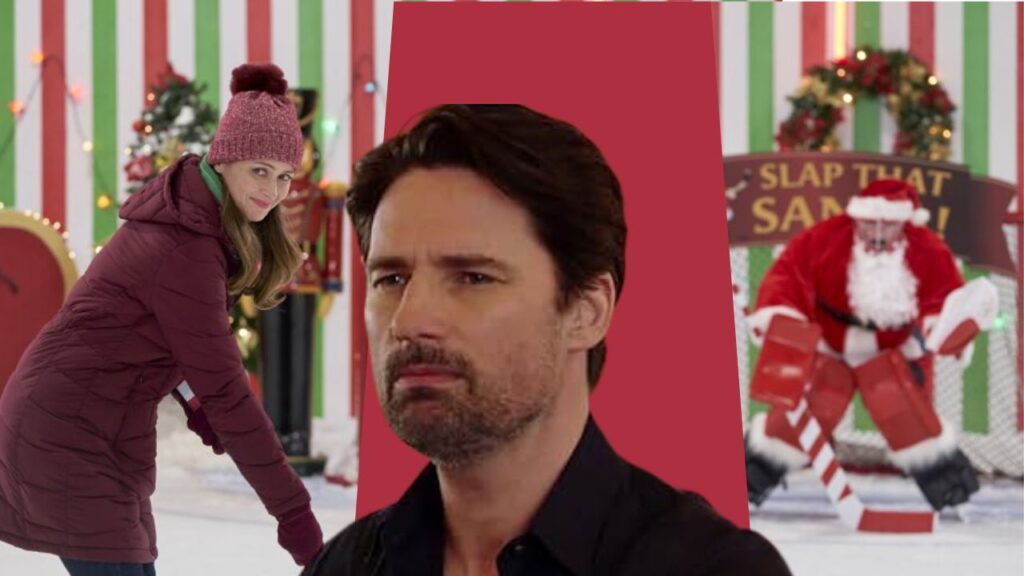
That success led directly to her booking Landman-here she’s the rebellious, beguiling Ainsley Norris, the daughter of the character played by Billy Bob Thornton. The series became Paramount+’s largest global premiere week for originals, with Randolph’s character becoming an instant fan favorite.
The thing that’s most incredible about Randolph’s journey isn’t even the roles she’s landed, it’s the confidence she’s gotten along the way. She’s also been refreshingly candid in recent interviews about battling impostor syndrome while appearing alongside some of Hollywood’s most venerable veterans.
“I have worse imposter syndrome,”
—she confessed
Though she’s getting better about being less hard on herself when she sees that actors whose work is the most celebrated in this industry have doubts like hers. This vulnerability is one of the reasons she has gone on to be beloved by viewers who find her refreshingly real in a business often characterized by meticulously constructed personas.
Directed by Carlson Young (the lovely rom-com Upgraded), the film is set to give you a treat. Amazon is presenting Clashing Through the Snow as Planes, Trains and Automobiles for the new age—a contemporary take on the classic 1987 John Hughes film that starred Steve Martin and John Candy. Written by Love Hard’s Daniel Mackey and Rebecca Ewing, the script combines smart, relatable banter with genuine feeling, all framed by a festive holiday setting.
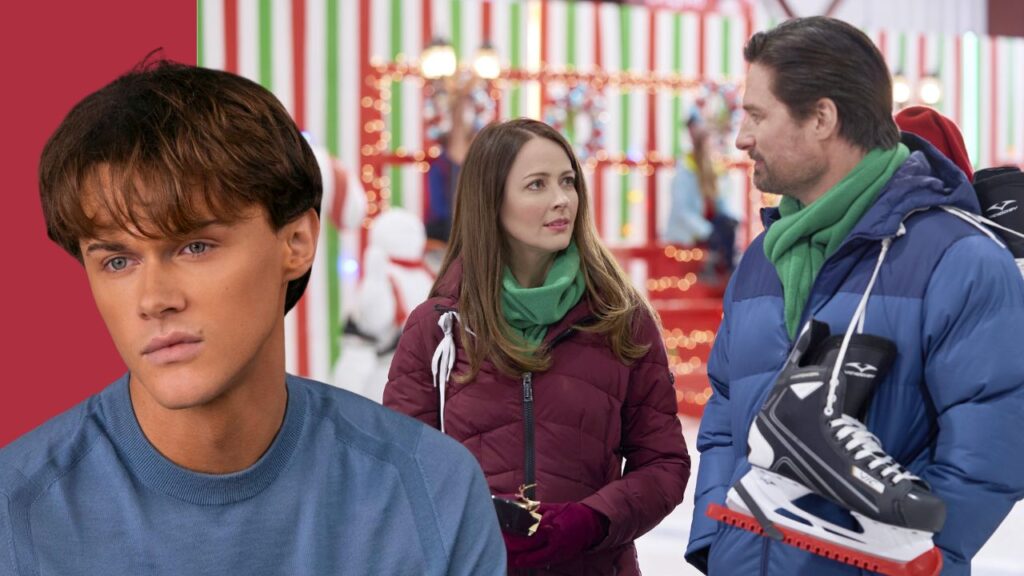
Christopher Briney is at a turning point in his career with the age-appropriate lead role, after breaking through as Conrad Fisher in the hit series The Summer I Turned Pretty. After enchanting young viewers for three seasons, Briney is now taking on different projects, eager to prove his versatility outside of the darling teen romance series. His casting opposite Randolph has also created a buzz, with fans looking forward to their on-screen chemistry.
Read More:- Priyanka Chopra Jonas’ ‘The Bluff’ Inspired From The Real Life Pirate Queens
Production will begin in February for a planned holiday 2026 release ― which is just right for audiences looking for some good vibes around the winter holidays. This is a big step career-wise for both leads, but especially for Randolph, whose trajectory from unknown to co-starring in a major streaming holiday movie demonstrates the power of steady, captivating work.
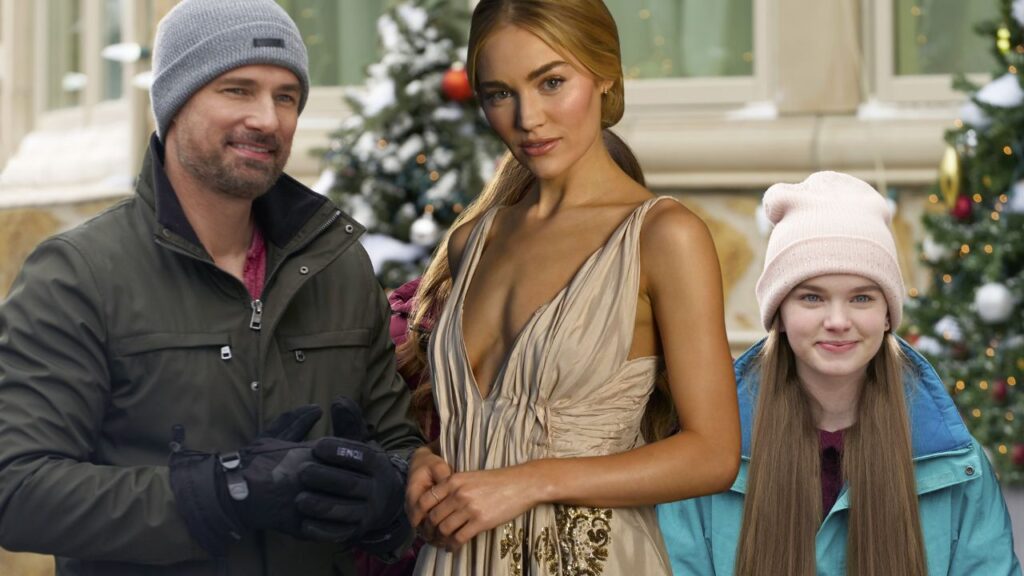
As the landscape of entertainment shifts, Michelle Randolph is a testament to the fact that those performers who are truly able to be both strong and vulnerable will eventually have their moment. Crashing Through the Snow seems to belong to her.
The path Randolph’s taken seems less like a sudden ascendant storyline, and more the culmination of an incredible amount of hard work. From competing with iconic attorneys in 1923 to becoming a Landman favorite, she has earned straight-faced, hardened, and genuine connections with audiences.
Clashing Through the Snow is more than just another holiday rom-com—it’s a pointed signal that Randolph can carry a story, not just support one.
Dive into the cinema world with Fandomfans to get the latest update from your favorite celebrities.

Discover the hidden struggles of The Vampire Diaries cast—from casting battles and on-set tension to pay gaps and physical pain that shaped the iconic series.
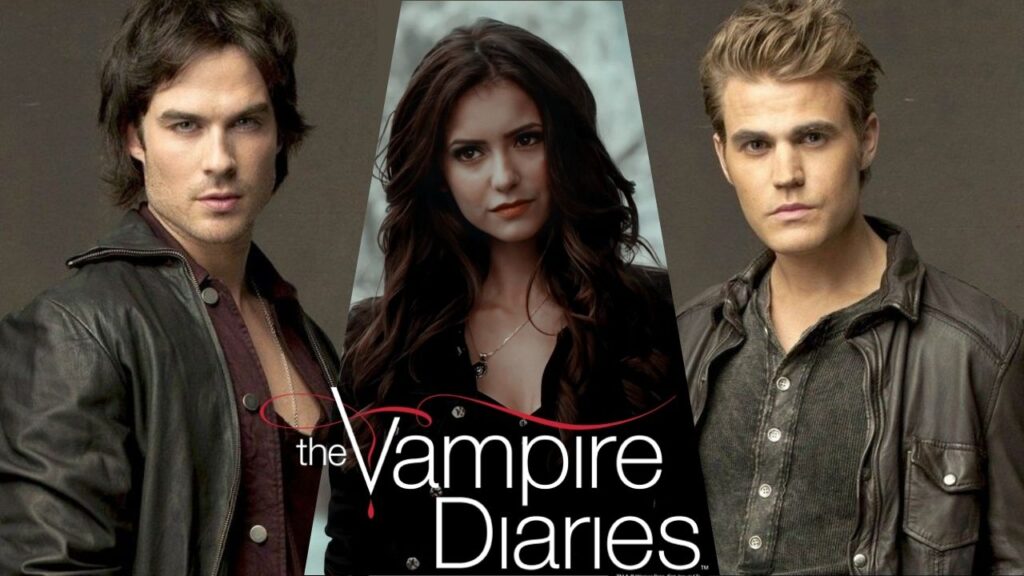
If we were to look back at the late 2000s television was dominated by a particular thirsty appetite. It was the era of supernatural frenzy, when vampires stop being terrifying monsters and become tragic, romantic anti-heroes. But cut through the barrage of genre hits and there was The Vampire Diaries (TVD), a rarity, a high-concept mythology that felt understated and more like a character-driven drama.
To the audience, the magic of Mystic Falls was seamless. We observed the fierce, magnetic tension between Elena Gilbert and the Salvatore brothers and took it as fate caught on film. But when you view the series as a business – considering the cost-cutting, the negotiating, and the personality power plays – a different tale emerges. The indestructibility of The Vampire Diaries was not magic, it was the result of an exhausting, frenetic, and sometimes painful process of architecture by three young actors on the brink.
The series simply wouldn’t be the same without the core three — Nina Dobrev, Paul Wesley and Ian Somerhalder. The makeup of this cast, though, was almost conceived on an entirely different plane.
Back then, the network prioritizing immediate marketability was aggressively pushing for big-name pop stars. There were major discussions about casting Ashlee Simpson or Ashley Tisdale as Elena Gilbert. The studio wanted to follow the source material’s description of a “blonde-haired, blue-eyed” protagonist, a demographic type that was considered key to success then.
Technically, Nina Dobrev’s entry into this equation was a failure. Battling a rare disease during her initial audition, she turned in what co-creator Julie Plec harshly called an “unmemorable” performance. It was only by dint of Dobrev’s sheer professional determination – sending in a self-taped audition from home afterwards, that she made the studio change its mind. She didn’t just win the role, she recalibrated the character entirely.
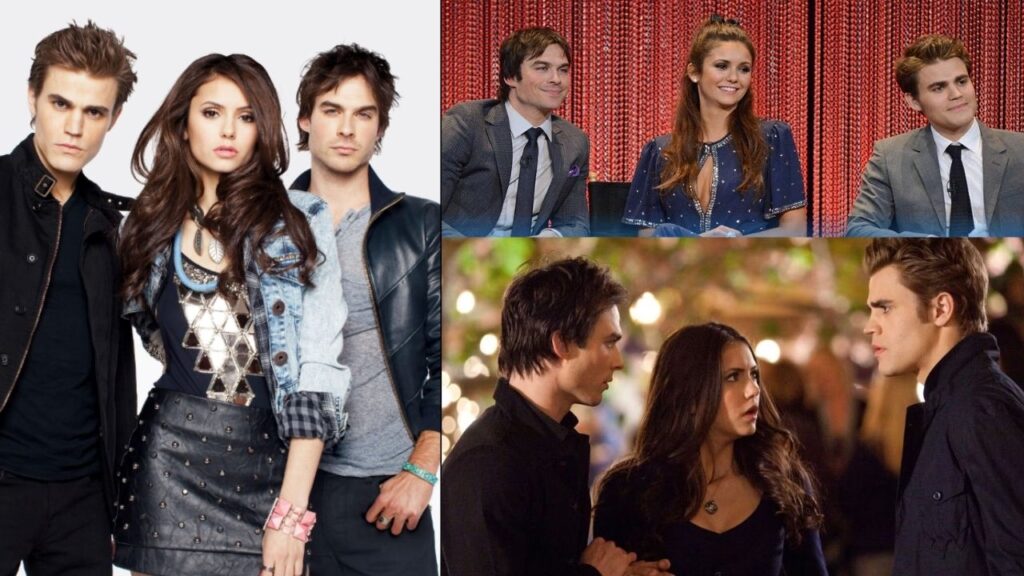
Paul Wesley had to endure almost fifteen auditions before he was told no, the reason was literally that he was “too old.” He landed the part of Stefan after his chemistry test with Nina Dobrev won over the creators. Ian Somerhalder was also iffy – he was so nervous during the network test that he nearly lost the role of Damon.
Nailing this trio had an immediate effect. The series finale drew in 4.9 million viewers, the most ever for The CW. But under this success, everything was not so calm.
There’s a pervasive myth within TV Fandom that romantic chemistry on screen can only be achieved through romantic affection behind the scenes. The first season of TVD is the ultimate rebuttal to this.
Nina Dobrev and Paul Wesley, the anchors of the show’s central love story, antagonized each other during the first five months of shooting. Dobrev has admitted that they ”despised each other” at times. This wasn’t simply a personality clash, this was the tension of eighteen-hour days and the burden of carrying a franchise.
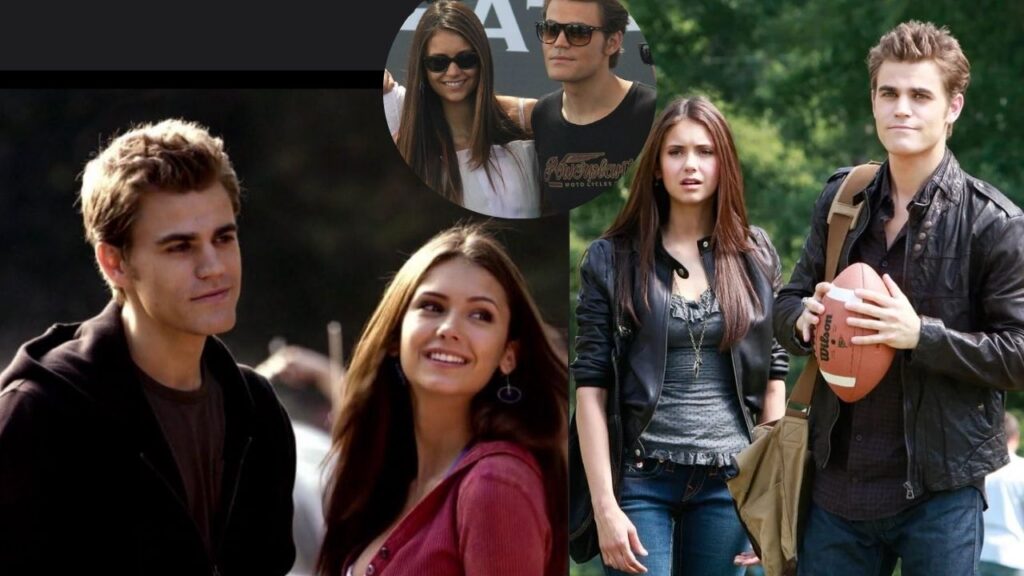
Yet, from the professional side, this disdain became a motivator. They had a lot of technical discipline, so they were able to direct their frustration into what Dobrev referred to as “a very thin line between love and hate.” The crowd interpreted this tension as deep passion. It is a credit to their acting that they can make love while playing against the absence of a personal connection.
Ironically, Wesly had foreseen the result of this tension. During the pilot, he told Dobrev that they would be best friends in ten years. He was right: the two have since forged a “marriage-like” professional relationship, demonstrating that the most powerful partnerships in Hollywood are sometimes formed in the heat of initial discord.
Read More 👉 Welcome to Derry : Makes the Same Horror Mistake That Nearly Killed the Franchise
As the actors battled with one another, they also battled the writers. Ian Somerhalder fought an interesting creative battle for the soul of Damon Salvatore.
Somerhalder guarded Damon’s volatility. During Season three when the writers started “softening” Damon to make him a potential love interest for Elena, Somerhalder was so unhappy he considered quitting the series. He was concerned that the character was turning into a “one-trick pony” of love rather than the scary thing the audience adored.
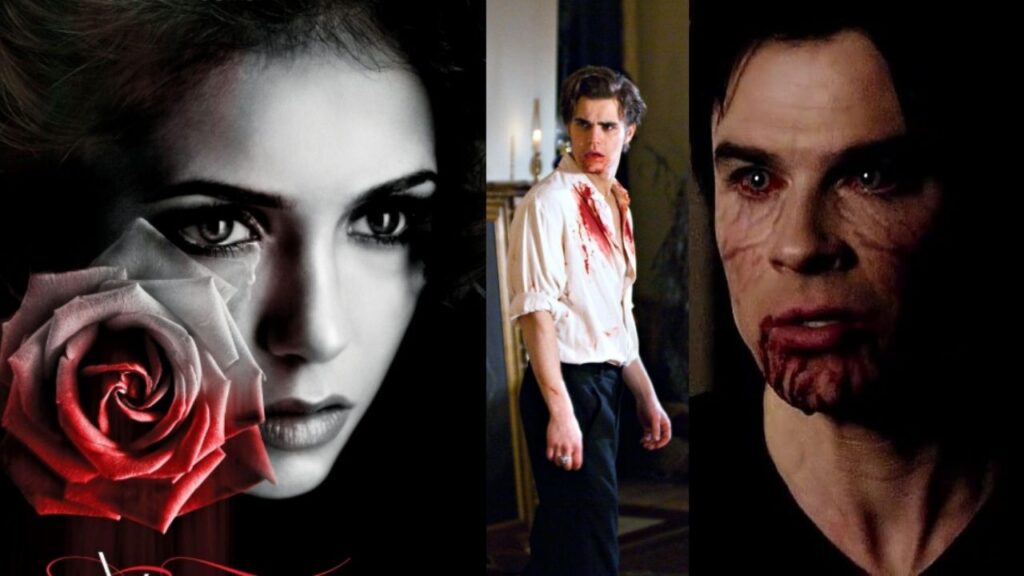
That all came to a head during the shooting of the death of the character Rose. Somerhalder battled “tooth and nail” with showing Damon’s humanity because he felt it would diminish the character’s edge. Yet that sequence — when Damon offers Rose a tranquil, manipulated dream as she dies — was one of the actor’s favorite moments.
It demonstrated the kind of character development (necessary for a show to last eight seasons) that represents the balance an actor must find between their own urge to protect the character, and the show runner’s vision for that character on a longer arc.
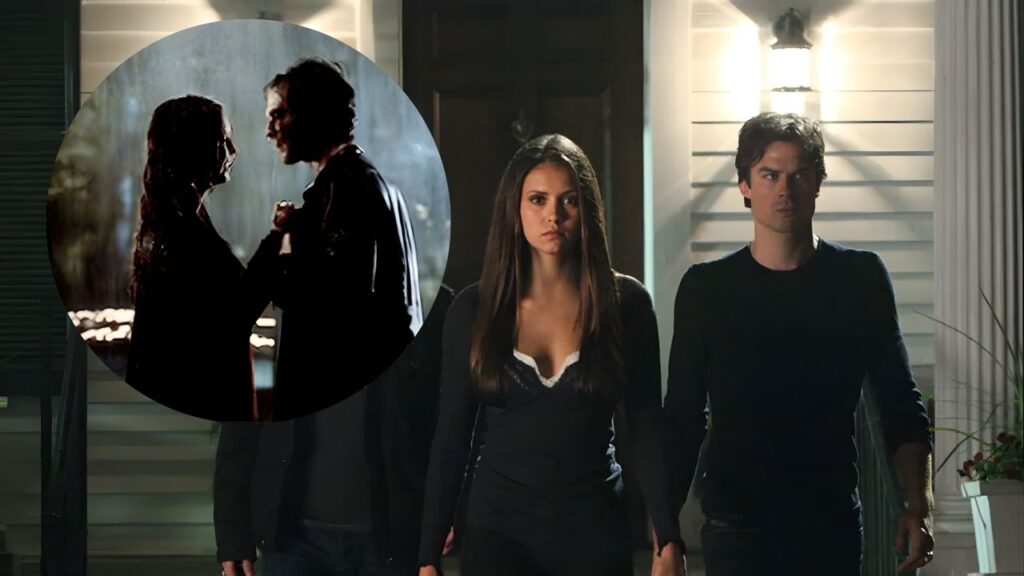
Among the most overlooked aspects of The Vampire Diaries is how uncomfortable filming really was, even when the scenes looked magical on screen. The iconic ”Delena Rain Kiss,” one of the series’ most romantic moments, is a prime example of this dichotomy.
The scene was shot in Georgia, in freezing temperatures. The rain machines were basically spraying icy water. Ian Somerhalder later shared that his jaw muscles froze so tightly he could barely speak and Nina Dobrev got sick right after the shoot.
Then there’s the weather, and the actors are really out there. Wesley shot in a medical boot for a twisted ankle, necessitating stunt doubles for simple carrying scenes. Dobrev, who had to play both Elena and her doppelganger Katherine Pierce, created the “Binder Method” – carrying different heavy binders to maintain the psychological consistency of two separate characters at the same time.
And that brings us to the most crucial professional realization: the economics of stardom. Although she has the strain of two workloads and is the main protagonist, Dobrev received lower pay than her male co-stars for most of her tenure. The studio declined to match her salary “on principle.” This systemic nonrecognition of her work was one of the motivations for her leaving after Season 6.
She didn’t get pay parity until the series ended, and even then she had to turn down the first low-ball offer to get it. It was a fitting, if sobering reminder that in the Hollywood system, value is often something that has to be grabbed, hard.
Read More 👉 The Unexpected Recasting Drama Behind ‘The Last of Us’ Season 3
Nina Dobrev’s exit necessitated the show to transform itself structurally. The original plan, according to Julie Plec, was for both Salvatore brothers to die saving Elena, seeing her live a human life as ghosts.
However, reality intervened. With Dobrev’s departure, the narrative center of gravity moved away from the romantic triangle and toward the fraternal bond shared by Stefan and Damon. The change saved the show. By the time the finale, “I Was Feeling Epic,” was broadcast, the actors had become less adversarial and more cooperative. Paul Wesley advocated for Stefan’s death in order to have his redemption arc completed, and Somerhalder campaigned not to have the last romantic reunion over the brothers.
The Vampire Diaries isn’t a legacy just because of its plot twists or its shipping wars. It’s a case study in how to keep working professionally. It is the tale of three actors who survived physical hypothermia, creative infighting and systemic pay inequity to create a pop culture juggernaut.
When we watch old episodes today, we can see that chemistry and glamour. Yet the real blueprint for its immortality is in the muck, in the negotiations, and the onerous, all-too-human labor that went down off camera. They didn’t just play vampires who lived forever, they built a legacy that will.
Dive deeper into your favorite TV shows character with Fandomfans. Our goal is to provide simple conclusions on series & movies.
Fallout Season 2 Release Date begins December 16, 2025 on Prime Video. Check release schedule, New Vegas story twists, cast news and BTS news! visit website!
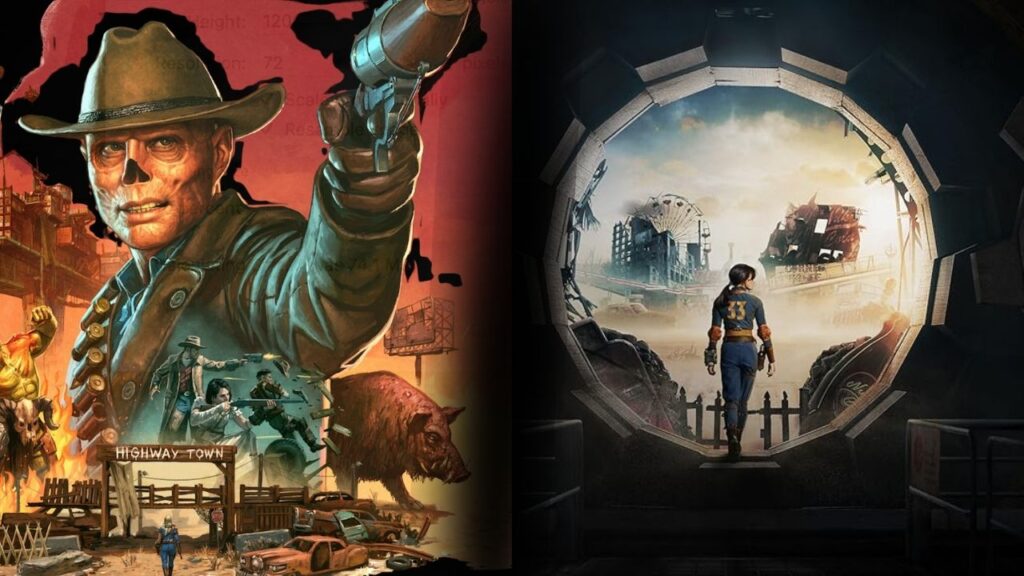
The availability of Fallout Season 2 Release Date will not only define the series, but also Amazon MGM Studios’ long-range franchise plan. Following a breakout first season that brought critical acclaim, 17 Emmy nominations and a reported audience of over 100 million viewers, the pressure is enormous on the sophomore season. Season 2 is being framed as more than a follow-up — it’s a “course correction,” doubling down on scale, ambition, and industrial intent.
Initially scheduled for December 17, 2025, the premiere has been moved up to Tuesday, December 16, 2025, 6:00 p.m. PT. While this sounds like a small change, it’s part of a strategic effort to capture the pre-holiday media cycle and ring in the most immediate eyeballs across U.S. time zones. Prime Video, meanwhile, has also shifted from releasing the entire first-season all at once to a weekly release, stretching viewer engagement until early 2026.
The promotional Season 2 campaign is just as brash and audacious. In a non-traditional manner, the new premiere date was announced by Amazon with a large scale activation at the Las Vegas Sphere. The building was turned into a post-apocalyptic snow globe containing Lucy MacLean, Maximus, and The Ghoul, which leads to the reveal of a massive Deathclaw and a Radscorpion swooshes away the old date and replaces it with December 16.
The stunt accomplished a number of things, most notably that it tied the marketing directly to the show’s new New Vegas locale, generated serious social media buzz and confirmed that some of the series’ most iconic creatures are making their way back.
Distribution-wise Fallout Season 2 follows the model of global release day-and-date. The first episode will debut worldwide at the exact same time, 6:00 p.m. meaning international audiences will see the episode on December 17 due to time zone differences. After the season premieres, episodes will be made available weekly on Wednesdays through February 4, 2026, with the season consisting of eight episodes.
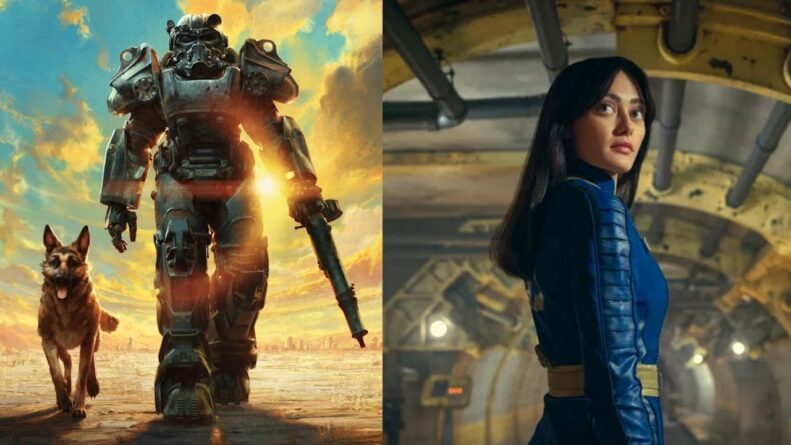
In fact, Episode 2 and 3 will be released on Christmas Eve and New Year’s Eve respectively, indicating that Amazon is expecting the series to be big holiday counter-programming.
Read More 👉 Agatha Harkness’s Narrative Evolution Take Kathryn Hahn to Marvel Cinematic Universe
Season 2 takes a sharp turn narratively, moving from the ruins of Los Angeles to the Mojave Wasteland and New Vegas, where it confronts the legacy of Fallout: New Vegas. The designers use a “Fog of War” mentality to traverse the game’s many endings yet not negate player choice. No single faction’s triumph clearly marks the present after fifteen years following the events of the game.
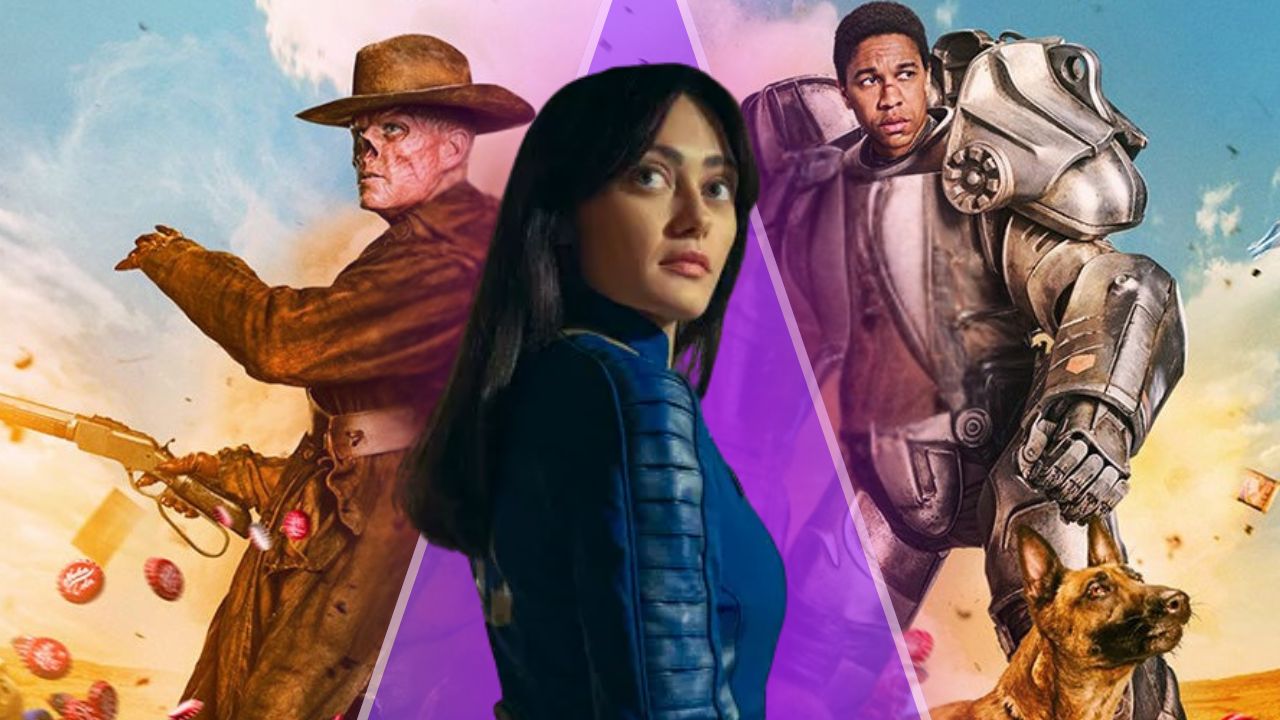
Image Credit: Fandomfans
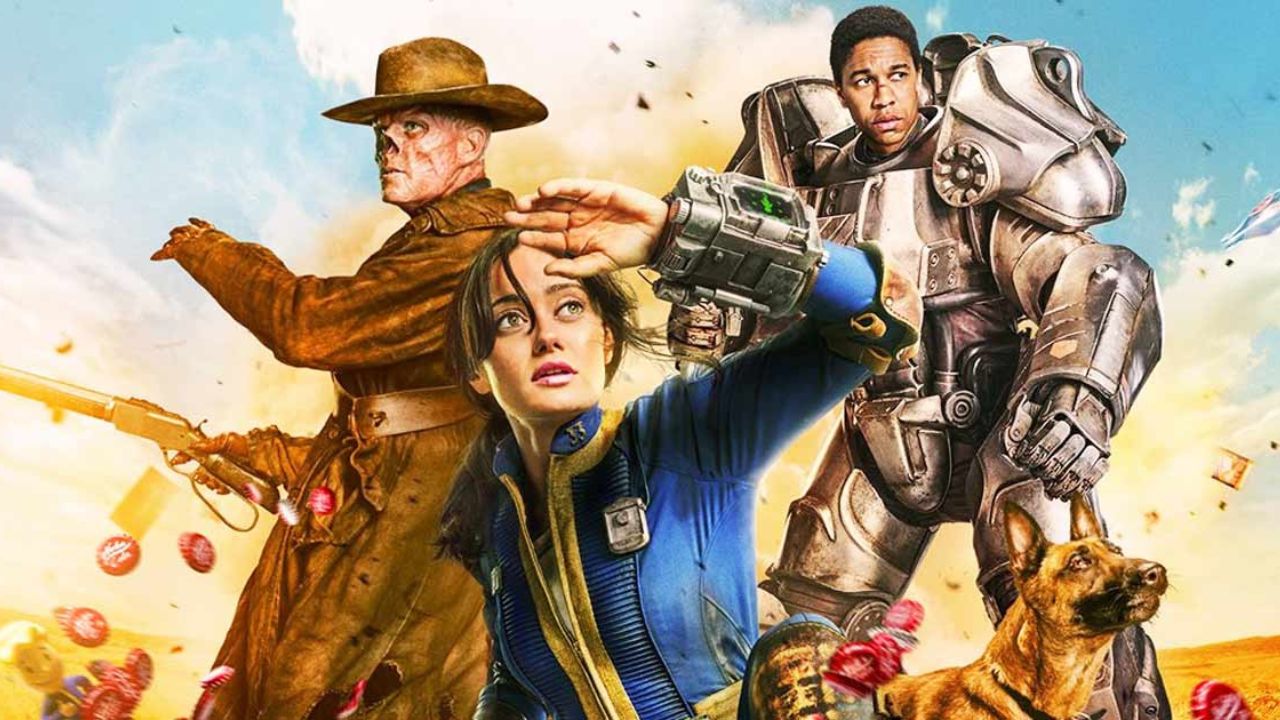
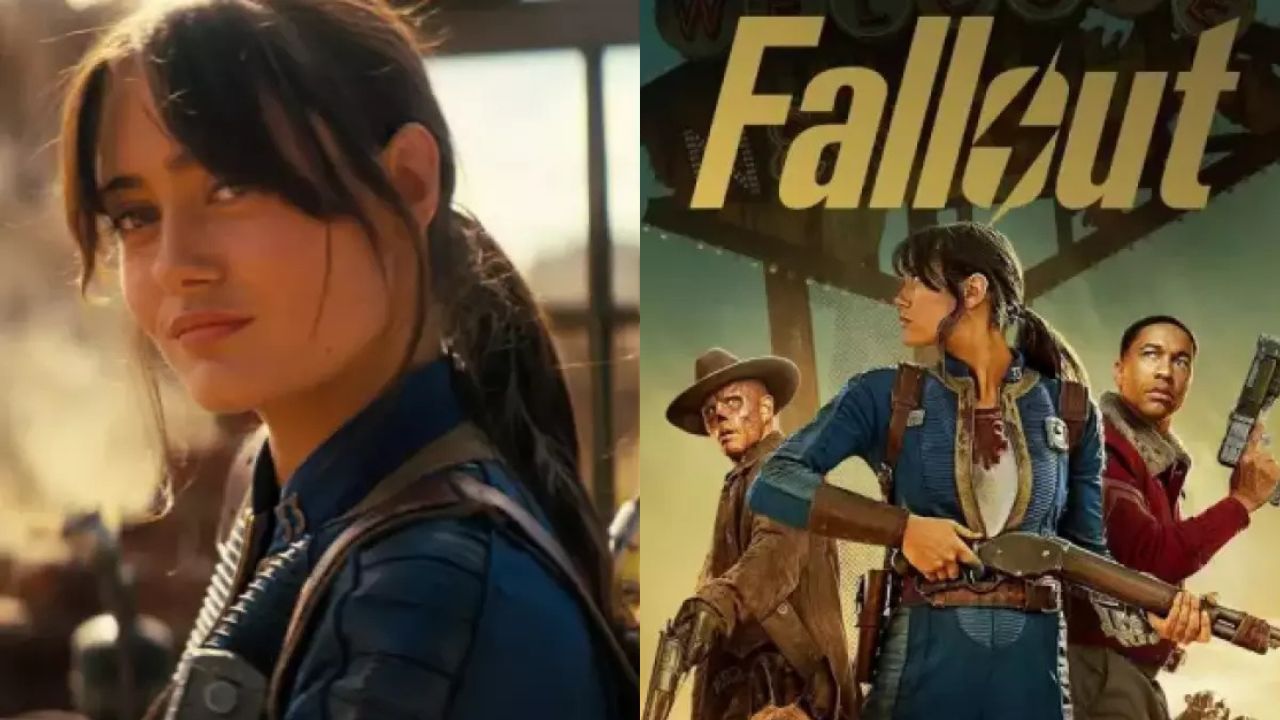
Image Credit: Fandomfans

Image Credit: Fandomfans

Ella Purnell in Fallout Season 1 | Credit: Prime Video
Rather, the Mojave is a fragmented, chaotic place where every faction imagines it has already won—and is now battling to reassert control. This setting creates an intricate political environment. Robert House, the Old World technological autocrat, is back, this time portrayed by Justin Theroux.
“That scene happened, but there’s a lot more in the pipeline from that moment until the bombs fall.”
—Wagner said
Caesar’s Legion arrives as a violent, tightly ideological force, with Macaulay Culkin cast as a “mad genius” type character. Cold Fusion technology enables the Brotherhood of Steel to be torn apart by civil war, meanwhile the New California Republic is a shadow of its former glory after previous destruction.
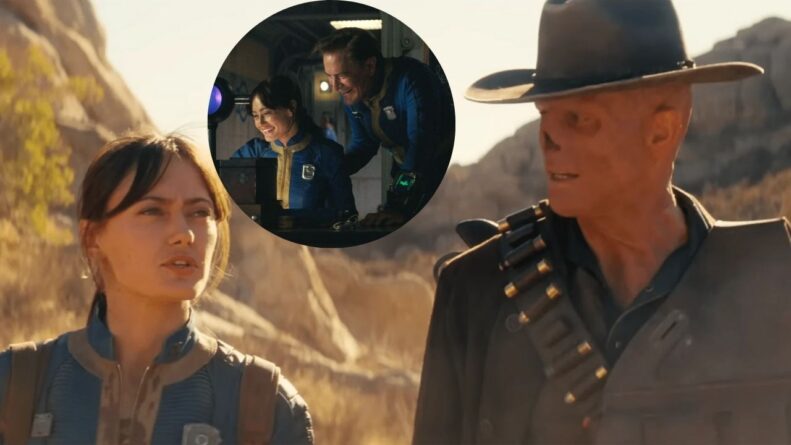
The core cast returns with evolved arcs. Lucy MacLean tries to cling to her moral “Golden Rule” in a harsher world. The Ghoul maintains a balancing act of cynicism and buried humanity, Maximus is disillusioned within the Brotherhood.
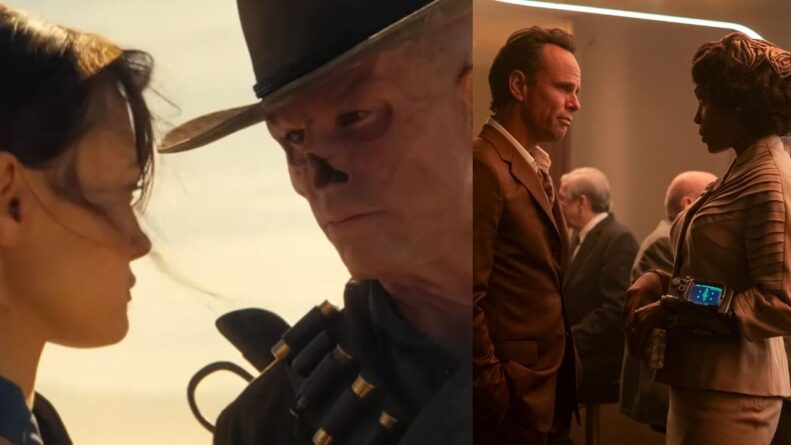
Hank MacLean’s story line connects the Vault-Tec conspiracy directly to New Vegas, and Norm is still in Vault 31, finding deeper institutional secrets.
Read More 👉 HBO Hard Launches 2026: Euphoria S3, House of the Dragon S3, Dune: Prophecy & More
Manufacturing was moved to California to take advantage of tax credits and film in Mojave-like terrain for enhanced visual authenticity. Despite concerns that devastating wildfires could interrupt work, the group persevered and brought forth their most visualized effort—including the much anticipated Deathclaw.
“Showrunner Geneva Robertson-Dworet revealed that a number of crew members were displaced by the fires, but kept going to finish the season.”
Fallout Season 2 is a tightly controlled-event. With its savvy scheduling, brazen marketing, its weekly storytelling, and its planned grand narrative, the series has made clear that it intends to be a long-term cultural and commercial force. As the narrative progresses into New Vegas, it returns to the franchise’s central question: In a world where everyone thinks they have already won, what do survival and rebuilding mean when war never changes?
Fandomfans is focusing on series, new episodes, narrative and cast members to provide you every detail you need to know.