‘Breaking Bad’ Creator Vince Gilligan’s Release a New Sci-Fi Series ‘PLURIBUS’ Trailer
Watch the trailer for Pluribus, a thrilling sci-fi drama from Breaking Bad creator Vince Gilligan. Starring Rhea Seehorn, streaming on Apple TV+from Nov, 2025.
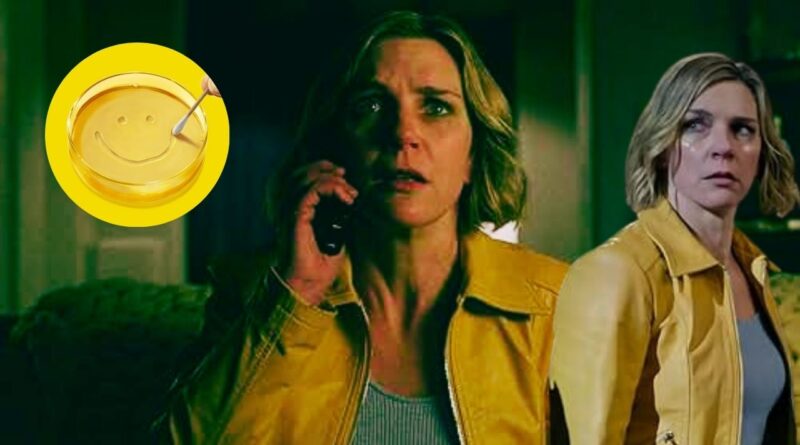
Apple TV+ has posted the trailer for PLURIBUS, the much anticipated new series from the Emmy Award-winning creator of Breaking Bad and Better Call Saul, Vince Gilligan. The nine-episode sci-fi drama, which is Gilligan’s first big project outside of the Breaking Bad universe in 17 years, will debut on November 7, 2025, and is already causing a stir within the US entertainment industry.
The two-minute official trailer, debuting October 21, 2025, gives a peek at an incredibly disturbing world revolving around Carol Sturka (Rhea Seehorn), who’s “the most miserable person on Earth” and has to “save the world from happiness.” The trailer shows that Carol is the only who appears to be immune to the virus, which has turned the entire global population into perpetually content, optimistic and unnervingly cheerful individuals.
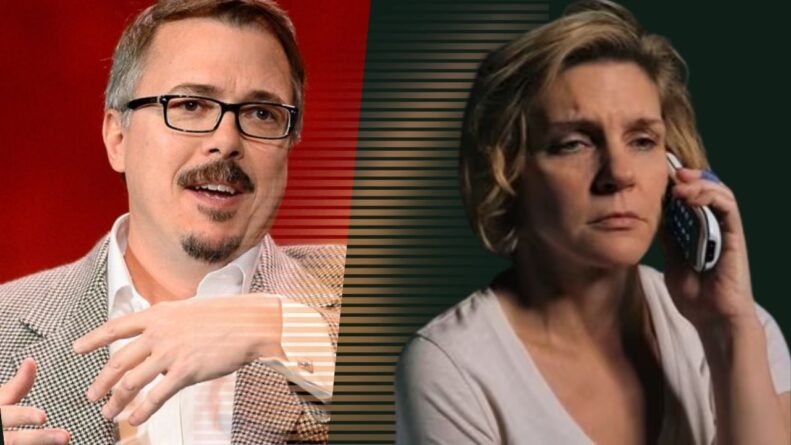
The trailer shows the environment around Carol is unrealistic, everyone is enjoying an ultra level of joy and helpfulness that covers the entire horrible psychology under the wrap of positivity. US President (Peter Bergman) reaches out to Carol through television to turn her into one of them because she is the only one who wasn’t affected by the virus.
As Deadline reports, the series is full of action with explosions, plane crashes, dead bodies, and chaos of marching hordes. The most captivating scene occurs in the 2 minute trailer — Carol asked for a grenade, bazooka, and tank from one of the DHL workers and he said “Oh, sure”.
Carol is alone in her misery and trying to reverse all of this but her head is full of confusing thoughts. It’s the kind of thing that messes with your head but keeps you hooked with its dark humor and sci-fi suspense.
Bob Odenkirk is Gilligan’s trusted partner in crime, and the one who plays the great Saul Goodman in Breaking Bad and Better Call Saul. Screenrant mentioned Odenkirk told The Hollywood Reporter in an interview: “I don’t know a goddamn thing. But I know it’s going to be massive. Giant! It’s going to be the biggest thing, well, since sliced bread, but really since Game of Thrones.”
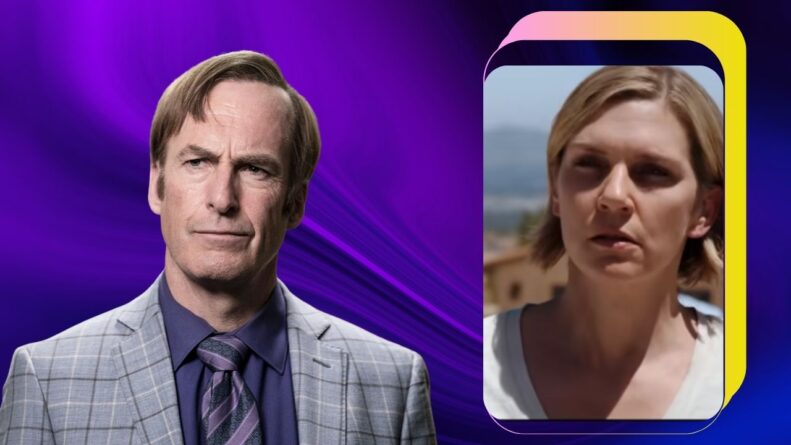
Odenkirk also compared PLURIBUS to the Apple TV+ prestige hit Severance, saying, “I think that [PLURIBUS] is going to be the next big show, and I can’t wait”.His excitement is especially interesting as he is not involved with the project at all, which implies honest belief in Gilligan’s vision.
IndieWire also raved on Gilligan’s turn to Twilight Zone – and it asks if happiness is “actually a good thing when it’s universal and unquestioned. The series delves into themes of coerced conformity, the worth of genuine feeling and if the uniform happiness removes the need for humanity.
Read More 👉 Keanu Reeves Constantine 2 Still Hasn’t Got Confirmation From James Gunn
Critics have praised the trailer as it delivers fascinating, strange sequences in the series. It shows the level of Gilligan’s signature cinematography once again after Breaking Bad.
Gilligan revealed the conceptual origins of PLURIBUS with Entertainment Weekly, Gilligan said the concept initially confused him: “I’m still not exactly sure what it means.” But the relevance of the concept to the divided society we live in today was obvious to him: “There’s no question that we live in a very divided nation. What I love about this series and that potential is the hope that people watching may say, ‘What would that be like, if we all got along?’ There’s probably an element of wish fulfillment in that idea.”
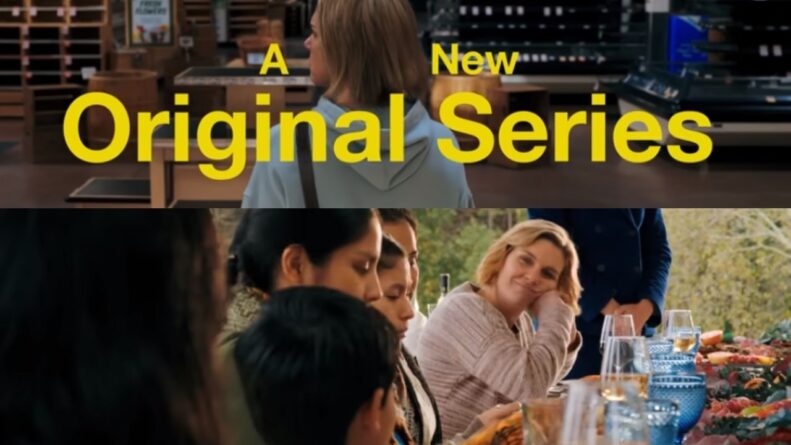
Apple TV+ had already ordered two seasons prior to premiere—a rare move demonstrating extraordinary confidence in Gilligan’s vision. The early renewal can be taken as a sign that Apple sees PLURIBUS as a potential flagship show in the vein of Ted Lasso and Severance.
“When you smile the whole world smiles with you— and Rhea Seehorn is finding out the reverse is also true.” This inversion of optimism into terror marks PLURIBUS as perhaps Gilligan’s most philosophically daring episode to date, posing the question of whether a reality devoid of suffering, strife and genuine feeling is one that deserves salvation—or if, through Carol, misery makes her the last real human being on the planet.
This series will air on 7 November, 2025 on Apple TV with a total of nine episodes in one season. Rhea Seehorn, Karolina Wydra, and Carlos Manuel Vesga are lead actors in the series who take this one on the top of the list.

Derry Review assesses IT Chapter Two, in which CGI fright tactics supplant the psychological terror that rendered Pennywise so haunting and memorable.
When IT: Welcome to Derry aired on HBO at the end of 2024, fans of the genre thought it was going to be a new version of Stephen King’s horrifying world. But in its opening episode, the series offered something else — a very familiar (and not in a good way) experience. The very thing that made IT (2017) a triumph is what turns the prequel’s opening moments into a warning: the misapplication of horror principles that plagued IT: Chapter Two. And if you’re wondering where things went haywire, strap in — because it’s a lesson the franchise should have gotten the first time around.
“Young Matty Clements” The Original Story begins on the night of a snowstorm, a boy called Matty Clements running from his abusive father with nothing else but hope, young Matty Clements. He is taken in by a seemingly warm family, and for a fleeting moment the audience experiences genuine relief for him. Then everything goes horribly wrong. A grotesque, computer generated, winged thing explodes out of the car in a welter of blood. It’s supposed to echo Georgie’s death in the original movie — a chilling first taste of Pennywise’s real form. But here is the problem: it couldn’t be more wrong.
Compare with Georgie’s’s iconic death in IT (2017). Director Andy Muschietti choreographed that scene with surgical precision. Bill Skarsgård’s Pennywise was this chillingly intimate, yet threateningly expansive. The Georgie and clown talk gained genuine dread through conversation and psychology rather than spectacle. Every second seemed well-earned, every shock felt intimate. Pennywise took advantage of Georgie’s particular weakness — his faith in strangers, his wish to get back his boat. That’s efficient terror.”
That’s when it gets frustrating. IT: Chapter Two (2019) in particular was derided for eschewing the psychological horror that made the 1990 version so effective. The sequel padded itself out with a two-hour-and-forty-nine-minute running time, repetitive solo missions for every Loser Club member, and most damningly a dependence on cartoonish CGI monster moments. Critics were not shy about it—the attack on the Paul Bunyan statue, the grotesquerie creature designs, the visual spectacle that is not actually scary. It was like someone told the filmmakers: Bigger means better, and they darted off blindly downhill.
Chapter Two’s Rotten Tomatoes rating fell 23 points from the original. Box office receipts plummeted by more than $230 million. The message from the crowd was plain: we don’t want spectacle, we want atmosphere.
So what Welcome to Derry accomplishes in its first few minutes? It’s the exact same error. That demon baby on the fly, that horrific beast bursting out of the family vehicle, the extended gore set piece — it’s all Chapter Two’s playbook, dusted off and amazon prime-ready. The scene goes on uncomfortably long, giving up slow-building suspense for cheap scares.The winged creature reappears at the end of the episode and that moment works better narratively, though it can still not come close to the real terror of the opening of the original film.
Read More 👉 Fallout Season 2 Episode 2 Breakdown: Shady Sands’ Death & the Mojave’s Brutal New Rules
This isn’t just one badly staged scene. It’s a matter of philosophy.” IT worked because it knew something fundamental: Pennywise is scariest when horror feels close and personal. The warped Judith painting that plagues Stan, the leper that represents Eddie’s hypochondria, Georgie’s guilt-induced visions — these are mental terrors sculpted around each character’s unique fears.
Welcome to Derry had the formula for greatness. It was allowed to roam in the characters, new traumas, and the societal canvas of ’60s Derry, free from the constraints of a single Stephen King novel. It got a chance to fix Chapter Two’s mistakes. Instead, it fell all over itself, hurrying for a big monster moment without cultivating the mood of dread that makes Pennywise really scary.
Welcome to Derry has already made beats of learning this lesson in later episodes. Hallucination sequences customized to characters’ fears, atmosphere-building scenes using lighting and suspense, and sequences that prey on mental fragility have far outperformed those big CGI set pieces.
If the show continues on this path – sacrificing spectacle to pummel us with character-specific horror – maybe it’ll break its cycle for once. Because the big lesson isn’t that bigger is better. It’s that personal psychological terror will always stand the test of time over a computer-generated creature, no matter how cool it looks on screen.
IT: Welcome to Derry doesn’t come up short for lack of concepts, it wavers because it abandons what made IT so terrifying to begin with. The franchise was at its weakest when Pennywise ballooned into giant CGI monstrosities; it was at its best when fear tiptoed in silently, cloaked in guilt, trauma, and anxieties so personal they couldn’t be named. Instead of building suspense, the series starts with spectacle in what briefly amounts to the exact mistake that undermined IT: Chapter Two.
That’s not to say the show is irredeemable. Its succeeding episodes point to a more comprehensive approach to psychological horror derived from building atmosphere, character-based dread and the gradual disintegration of safety. If Welcome to Derry keeps playing to those strengths, it can still do right by Stephen King’s legacy instead of watering it down. Because Pennywise, at the end of the day, does not need wings, or blood sprays, or extra run time in order to be frightening — he just needs to get close enough to whisper.
Dive deeper into the cinematic world with Fandomfans to get all the details from your favorite genre.
T.L. The role of Sam Elliott as Norris Landman brings deep emotion and family drama to Season 2, shaping Tommy's journey and raising the stakes in powerful year
Landman’s return for Season 2 certainly promises more of that high-stakes dustbowl drama Taylor Sheridan fans have come to crave, but the real fireworks this season don’t come from a new well or a corporate takeover. It comes in the form of one man: Sam Elliott as T.L. Norris, the estranged father of Billy Bob Thornton’s explosive lead character Tommy Norris. According to Collider, “Death and a Sunset,” his debut in the premiere, makes it clear right away that the corporate endgame for the Norris family will not be itself but deeply, painfully personal.
The introduction to Sam Elliott is a lesson in minimalism. T.L. is first shown sitting outside an assisted living home in Texas, in a wheelchair, as he watches the sun go down. This delicate pause in reflection is so different from the usual frenetic West Texas life Tommy lives and is quickly interrupted by utter despair. T.L. is informed his wife, Dorothy, passed away peacefully while in memory care.
Elliott anchors T.L.’s arrival on the scene in a gritty, bare-bones melancholy. The iconic actor does not go for melodrama, he just lets the staggering weight of loss permeate the scene. At one point, an employee offers a platitude that Dorothy is in a “better place,” and T.L.’s response is humorously unflinching, being a window into his morose outlook on life:
“If I do, that means I’m in hell, too”.
This moment serves as an emotional anchor for the scene, signaling that Season 2 will require as much soul excavation as any drilling operation. The audience is immediately brought to a man defeated by life, proving T.L. is what broke the family, not took part in it.
Image credit: IMDb
The opening provides a trope-defining line that encapsulates the whole premise of T.L., and the thematic stakes for this season are set by it. Looking back at his life, the elder Norris laments with soul-crushing despair that,
“I wasted 60 years on hope”.
This admission is the character’s aching thesis. T.L. isn’t just rueful about a few missteps, he laments the act of having placed faith in a brighter horizon.
This radical cynicism is based on well-defined, deep-lying failure. T.L. is a failed father, emotionally distant from his remaining children after losing one at a young age. He possesses both the physical limitation of the wheelchair and glimpses of a violent, wild nature, as he has been seen throwing punches.
In an era when the world cannot get enough of chasing the next great big boom, T.L. is a reminder of how hollow that chase has increasingly become. He’s not a wise sage, but an anti-mentor, someone who exemplifies the worst-case scenario, a lifetime of trying that ends with nothing but loneliness and regret.
T.L.’s presence guarantees that Tommy’s rise in the corporate world will be upended by a personal disaster. When Tommy gets the call that Dorothy has been killed just cutting off what is obviously a tender moment with Angela and the message is clear: the past is here, and it wants its due.
As reports suggests, The showdown between father and son is coming, and it’s been years in the making. Their relationship has been one of profound avoidance for an extended period of time, a painful dance of silence now must come to an end. The terrifying but valid honesty that is necessary Tommy himself understands the required fearsome truth:
“We’ve been lying by omission to one another for ages. Let’s not begin.”
Sam Elliott confirmed that T.L. is looking for “a way back” into the family, and said his relationship with Tommy will have a “real arc”. This path to rapprochement will make Tommy face what his own ambition “really cost emotionally” and make him “make peace with the broken man that made him.”
T.L. Norris is not only a fresh face to the cast list but he’s the excruciating impetus that compels the Norris family to sever the walls they’ve built around their pain and generational trauma that’s lain buried beneath the West Texas soil.
Read More 👉 No Next Life: The K-Drama That Turns Midlife Chaos into Courage
Sam Elliott’s T.L. Norris is not a throwaway character to get some exposition or comic relief in, he is the motivating psychological centerpoint for Landman Season 2. And so Righteous Thieves takes shape, refocusing the series’ perspective, now grounding the weight of drama from all corporate survival to the toll the West Texas oil life takes on a person inside.
Representing deep regret and a generation of trauma not yet healed, T.L pushes Tommy Norris to come to terms with the fact that attaining success in the professional world means nothing if your personal life is one of emotional neglect. The M-Tex fight, in the end, is a sideshow to the real one: the painful, painstaking work it takes for father and son to finally stop running from the truth and discover, in a world defined by volatility and unforgiving landscapes, a way to come home to one another. T.L.’s presence guarantees the highest stakes in Season 2 aren’t the price of oil, but the price of the soul.
Welcome to Fandomfans — your source for the latest buzz from Hollywood’s creative underworld. Here, we explore the introduction of T.L. transforms Landman from high-stakes industry drama, into the element of generational trauma. T.L. is purpose-built to be the embodiment, physically and emotionally, of everything Tommy Norris has sought to escape.