Robert De Niro, Robert Pattinson & Michael B. Jordan Redefine Acting Brilliance
Robert De Niro gives a brilliant dual performance in "Alto Nights", proving once again why he is a timeless legend in American cinema.
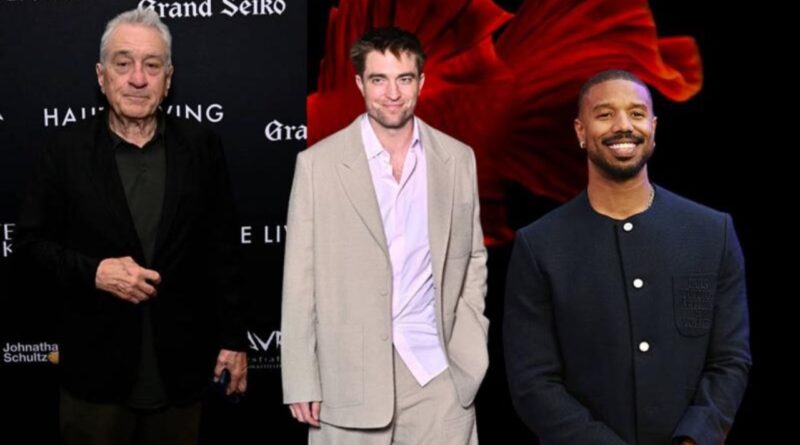
The year 2025 has turned out to be transformative for actors playing two roles — a craft that requires not only technical skill but the creative nimbleness to make each character distinct, memorable, and meaningful. Very few actors have ever pulled such a stunt with the confidence of Robert De Niro in “Alto Knights”, Robert Pattinson in Bong Joon Ho’s mind-bending “Mickey 17” or Michael B. Jordan in Ryan Coogler’s slick “Sinners.” Critics have praised all three performances, deeming them some of the greatest dual performances seen on screen in recent times.
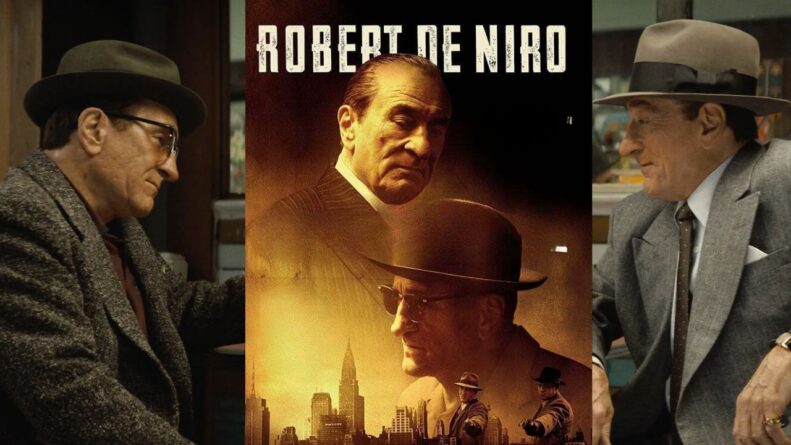
Robert De Niro’s place in American cinema is defined by his tendency to dwell so far into a character that the actor becomes indistinguishable from the role. In Alto Knights, the Barry Levinson film, De Niro brings this artistry to yet another dimension by playing not one but two legendary mob bosses: Frank Costello and Vito Genovese. This is not only a parade of makeup, costume, and accent changes, but an examination in fine shades of difference—each character is distinguished not just by voice and mannerism, but by the moral and social landscapes they occupy.
According to The Hollywood Reporter, The narrative tracks Costello and Genovese, old friends–turned enemies, as their aspirations collide in the changing landscape of 1950s New York. De Niro’s Costello is cool and calculating, monkishly business— a sharp suit, walnut-lined lobbies, and the weight of years spent scrabbling between politics and criminality. Genovese, on the other hand, is temperamental and paranoid, consumed with returning to his former position of power and testing the limits of violence and vice.
Critics note that Levinson’s direction is not a reinvention of the mob genre, and can be derivative at times, but it is De Niro’s talent to bring to life two very different characters that is what really gives the film its backbone. Even when the story stalls in exposition or tiresomely repeats mob lore, De Niro’s subtle work anchors “Alto Knights” as a showcase for his undiminished artistry.
That’s not the only exciting thing about Bong Joon Ho’s Mickey 17, which will also be a showcase for Robert Pattinson’s most extreme screen skills yet. USAToday mentioned, Adapted from the book by Edward Ashton, the movie depicts a future in which disposable laborers (dubbed “Mickeys”) are cloned and resurrected multiple times to provide humanity’s needs. Pattinson, who must portray a series of character variants of Mickey as the story progresses, embraces the challenge.
The American critics said Pattinson’s performance was “gonzo, gleefully deranged”, and that the fact each of his clones gives him a slight trace of individuality—somewhat hopeful, somewhat world-weary, makes the film both humorous and touching. Bong Joon Ho – who fuses biting social commentary with genre thrills – utilizes Pattinson’s liable performance to pose questions of identity, labor and what it means to have a soul.The actor’s comic abilities, physical energy, and readiness to infuse his character with a smidgeon of existential dread led to some of the most memorable and praised performances from “Good Time” and “The Lighthouse,” but “Mickey 17” is where his bravura range really converges.
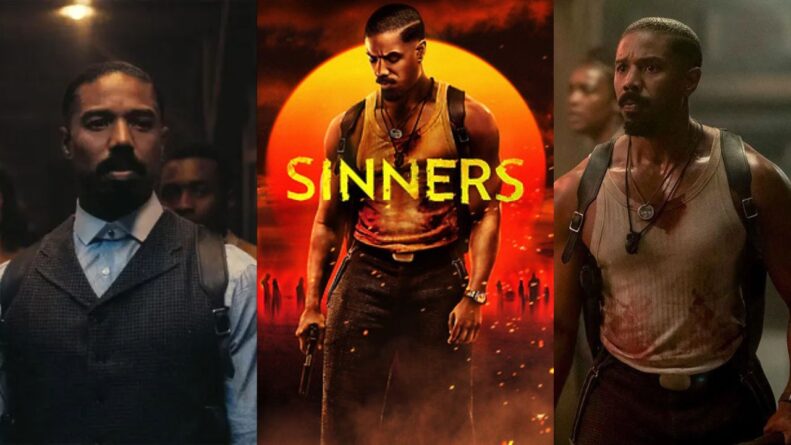
As NYpost, Michael B. Jordan doubles up in the drama “Sinners”—as Smoke and Stack, brothers divided by everything imaginable, caps a year that has seen him reach for the stars in terms of challenge and scope. Ryan Coogler’s script provides Jordan with ample material, telling a gothic Southern vampire story with a slick spin, but it is Jordan who elevates the movie.
Variety has praised Jordan’s unique talent to both physically and emotionally embody each twin. Smoke is all brooding menace, while Stack exudes a wounded charm—a divide not just of wardrobe and posture, but of energy, trauma, and hope. The skill involved in their interactions — fighting, arguing, even fleeting tenderness — pulls you into what seems like a genuine, lived experience between them. Jordan’s decisions do not trail off into the cliched, if anything they are careful in how both twins are made unique but symbiotic, amplifying the tragic sweep of the film and, occasionally, bringing it surprising grace.
What explains the outpouring of affection for these actors, aside from the basic fact that they’re all very big stars:
By 2025, the challenge of playing two roles has evolved from a cinematic feature to a crucible for the best actors in the world, a place where technical virtuosity can be measured against emotional profundity.
Read More 👉 Chris Hemsworth’s Extraction 3 Officially in the Works — Delay Reasons, Story Details & More
The triumphs of plugins such as “Alto Knights,” “Mickey 17,” and “Sinners” are already shaping a new generation of American filmmakers. The best sales agents, casting directors and studios now feel emboldened to take a chance on multi-role scripts, confident that modern visual effects and acting skill can create truly memorable storytelling. For fans and critics alike, these performances are a reminder of cinema’s ability to reinvent itself – even in genres that might feel otherwise spent.
This year has truly been the blast of the double act, but playing two parts in a film is more than just a cinematic trick — it’s a challenge that can say a lot about an actor’s courage and range. From Robert De Niro’s layered mob legends in Alto Knights to Robert Pattinson’s fearless experimentation in Mickey 17 and Michael B. Jordan’s emotional duality in Sinners, these performances are setting a new gold standard for what it means to be versatile in today’s cinema. As storytelling changes, such double performances serve as reminders that great acting is still at the core of unforgettable filmmaking.
Find out how Peacemaker Season 2 ends on a heartbreaking note. Jennifer Holland reveals the emotional finale that sets up James Gunn's new DC Universe.
Peacemaker Season 2 Episode 8 Full Nelson brought a rare achievement in genre TV, it provided a gratifying emotional payoff for the central characters that also ended with an apocalyptic, brink- of- war cliffhanger with ramifications for the entire DC Universe. This narrative paradox is exactly the reason why star Jennifer Holland, who plays Emilia Harcourt, referred to everything as “heartbreaking in retrospect”. Her appraisal captures the uneasy duality of James Gunn’s filmmaking in which real emotional breakthroughs are all too often punished by the brutal requirements of survival and franchise restructuring.
While the final episode was more focused on “smaller, character moments” that were designed to provide emotional closure, it also featured critical, major revelations that shaped the DCU. The perceived heartbreak is because Holland’s character, Emilia Harcourt, and her team, the “11th Street Kids” believe Chris Smith/Peacemaker (John Cena) gave himself up to A.R.G.U.S.. Holland later spoke about the emotional torment of this scenario, in particular discussing the “heartbreak of none of them knowing that Chris was kidnapped”.
The resulting effect is one of supreme narrative irony. The season expertly resolved the emotional complexity between Chris and Harcourt. Harcourt, who is defined by her trauma and fear of intimacy, actually exposed herself. But the external story cruelly supplants that hard won trust with the heavy gravity of perceived abandonment. The team manages to bail Chris out of prison, only to learn he’s already gone. They are to surmise that Chris went and left them immediately after their connecting on such an emotional level. This isn’t the grief of mourning a death, but the pain of a betrayal, maximizing the tragic payoff, and ensuring that Harcourt’s future arc will be driven by this unexpurgated pain and misunderstanding.
The near-fatal shooting Harcourt suffered in the Season 1 finale (during the battle with the Butterflies at Coverdale Ranch) left the character deeply scarred both physically and mentally, setting up her complicated return in Season 2. “The Harcourt and Peacemaker tension is very personal trauma,” Holland explained. After her near-death experience, Harcourt came back, according to Holland, “not operating the way she” was, still pushing people away as a mental defense mechanism. The whole of season 2 was about gradually tearing those walls down to nothing, so the final banishment is a particularly vitriolic reward for her emotional journey.
Read More 👉 Robert De Niro, Robert Pattinson & Michael B. Jordan Redefine Acting Brilliance
Now, in a flashback sequence, the storyline finally gave us the truth about the hinted-at “night on the boat,” which served as crucial motivation behind their secretive relationship. The sequence allowed Chris and Harcourt, as DC Comics rivals, to commiserate over professional frustrations at the DC Comics sandwich shop Big Belly Burger, and together they stumble upon a bizarre 90s rock trivia question: a “rock cruise” with the band Nelson. Two enjoyed what was called a “magical, world-shattering, panoramic kiss.” This was, without a doubt, a “pivotal turning point” for their relationship.
The finale’s structure was ultimately defined by the necessity of setting up DCU Chapter One: Gods and Monsters. Regarding a potential third season, Gunn was clear it was not planned “at the moment,” stating: “This is about the wider DCU and other stories this will play out right now.”
Gunn said the Season 2 finale specifically aims to “set up the world of the 2027 DCU cinematic feature, Man of Tomorrow“. As DC Studios co-CEO, Gunn said his focus is “propping up and maintaining and repositioning the big diamond properties that DC has,” like Batman and Superman, but also taking lesser-known characters such as Peacemaker — and creating new “diamond properties” within the franchise.
This demand was why the final episode felt like an “extended teaser” or “backdoor pilot for other DCU projects,” as some critics observed. The narrative goal of the end of Season 2 was assimilation, not resolution. Tying up the Salvation cliffhanger in a third season of the TV show may have conflicted with or undermined the timeline set out in the slate of movie. When they left Chris to perish, his rescue, and what that would mean for him, had to happen in a big DCU event, and that meant the TV series prologue to the films. Although Gunn is still tight-lipped on whether Peacemaker will make an appearance in Man of Tomorrow or Supergirl, he has dropped a hint that Chris Smith’s next outing in the cinematic universe is a safe bet.
Jennifer Holland’s characterization of the Peacemaker Season 2 finale as “heartbreaking in retrospect” is a wonderful encapsulation of the narrative needs the series is forced to cater to with the wider franchise restructuring. The heartbreak is not just the breach of physical separation between Peacemaker and Harcourt but that their emotional walls are torn down only for the new connection to be severed by perceived betrayal. While Peacemaker Season 3 is on hold, the characters’ narratives—now driven by Harcourt’s grief and resolve—are officially at the center of the upcoming cinematic universe.
The Tomb Raider actress lineup is expanding as Sigourney Weaver is in talks to join Amazon's new series, bringing depth, power and legacy to the franchise.
In Hollywood, few careers seem equally timeless and revolutionary. Sigourney Weaver’s Live journey stands amongst those rare exceptions. The news that she is in active negotiations to join Amazon Prime Video’s Tomb Raider series is more than casting buzz—it’s a moment of poetic symmetry. More than 40 years ago, Weaver redefined the screen. Now the modern female action hero’s original architect is poised to step into its world, as the franchise that once followed her blueprint gets ready for what may yet be its final reinvention.
For those brought up on Lara Croft, the link is impossible to miss. Even at a time when Croft wasn’t yet an icon of gaming culture in 1996, Ripley had already redefined what was expected of women in sci-fi and action. Weaver’s possible Tomb Raider return is a conversation between generations — the cinematic past and the streaming future, anchored by a performer who has never accepted limitations based on age, genre, or gender.
Weaver noted that being tall “absolutely kept me from working with conventional directors”
Born Susan Alexandra Weaver in 1949, the future Sigourney Weaver was already on her way to becoming a “weaver of wonders” at a young age. At fourteen, she felt the name “Susan” was too small for her frame and she adopted the name “Sigourney” from The Great Gatsby. It was an act of self-definition that shaped the rest of her life, one that foretold how she would never make herself smaller to meet expectations.
She’s one of the classic ‘you charted a different course to get where you are despite everything’ stories,” says The Guardian.
Her towering height proved to be a barrier in an industry hesitant to pair up tall women with male leads. Weaver would later call this “overt discrimination,” but it did send her inward, toward radical roles and visionary filmmakers who prioritised presence over convention.
Her educational background—Stanford University and then the Yale School of Drama was rigorous, but Yale was brutal. Professors dismissed her as untalented and cast her in insultingly small parts. Rather than shatter her, the rejection hardening a fearless self-reliance. Weaver ceased to seek validation and learned to trust her own judgment, a mentality that would make it possible for her to risk herself in films that were underestimated by others.
Aliens changed everything. The script was written without genders, and when Weaver was cast as Ellen Ripley, it covertly dismantled decades of Hollywood tradition. Ripley wasn’t decorative, emotional or lucky — she was capable, realistic and prickly when appropriate. Weaver portrayed her as a laboring every woman rather than a glory-seeking hero.
But the audiences were not ready for it. Ripley did not run through a nightmare in tears, she survived it. Weaver summed up Ripley’s attitude in two words: “What’s next?” That steely sangfroid would go on to underpin today’s female action hero.
With Alien (1986), Ripley went from survivor to soldier. James Cameron brought the story themes of motherhood, making Ripley the Alien Queen’s opponent in a battle of instinct and protection. Weaver received an Academy Award nomination for her portrayal — an extraordinary acknowledgement for a sci-fi action role. Drenched, bruised, and armed, Ripley obliterated the ‘damsel in distress’ archetype and paved the way for the likes of Sarah Connor and Lara Croft.
Ripley settled her legacy, Weaver’s longevity derived from range. She was hilarious in Ghostbusters. In “Galaxy Quest,” she took apart sci-fi gender stereotypes with knowing laughter. She was nominated for two Oscars in 1988, for Gorillas in the Mist and Working Girl, demonstrating her mastery of both stark drama and frosty ambition.
Her work with such directors as Ang Lee (The Ice Storm) also established her as a powerful interpreter of complex, emotionally repressed women. These parts defined the “steel-willed matriarch” type which now defines her later career.
Weaver’s long relationship with James Cameron has allowed her to remain at the forefront of filmmaking. In Avatar, she was scientist Grace Augustine—a mentor character whose defining traits were intelligence and moral certainty. Decades later, at age 73, Avatar: The Way of Water would see her defy expectations yet again by having her portray Kiri, a 14-year-old Na’vi girl. She refused to let her age dictate her physical limitations, stating,
“I didn’t want anyone to think, ‘Oh, she’s old, she can’t do this’
Her preparation was intense: breath-hold training, parkour and physical performance that “never considered my age” By drawing on memories of her own youth, Weaver demonstrated she can remove herself from a position of authority and also become vulnerable — a feat which underlines her relevancy in today’s, VFX-heavy franchises.
Read More 👉 The Hunting Wives Season 2 Gets a Star-Studded Makeover with John Stamos, Cam Gigandet, and Dale Dickey
Weaver’s decision to move up to television marks a recalibration. In The Lost Flowers of Alice Hart, she was June Hart, a painfully imperfect women’s advocate and executive producer. It gave her an opportunity to delve into moral ambiguity and the strength of women—traits she always looks for.
According to Deadline, Her relationship with Amazon MGM Studios began there, thus Tomb Raider is a natural homecoming. Alongside Sophie Turner’s Lara Croft and Phoebe Waller-Bridge’s sharp, subversive writing, Weaver lends gravitas, authority, and intergenerational depth to the project. As a mentor, a rival or an antagonist, her presence in this adaptation says it wants to go deeper as well as bigger.
The possibility of Sigourney Weaver in Tomb Raider is not nostalgia—it is progression. From a theater student informed that she had no talent to a Golden Lion winner who announced, “I want to roar,” her career is defined by denial – denial of growing old quietly, of playing small, and of being typecast.
She doesn’t just appear in franchises—she anchors them. With her turn as Tomb Raider, Weaver has come full cultural circle, connecting Ellen Ripley to Lara Croft and proving that strength, smarts and survival really are ageless. In space, jungles, or ancient ruins, Sigourney Weaver is cinema’s ultimate survivor.
Fandomfans is a platform where every entertainment enthusiast will find core details about their favorite celebrity or characters.