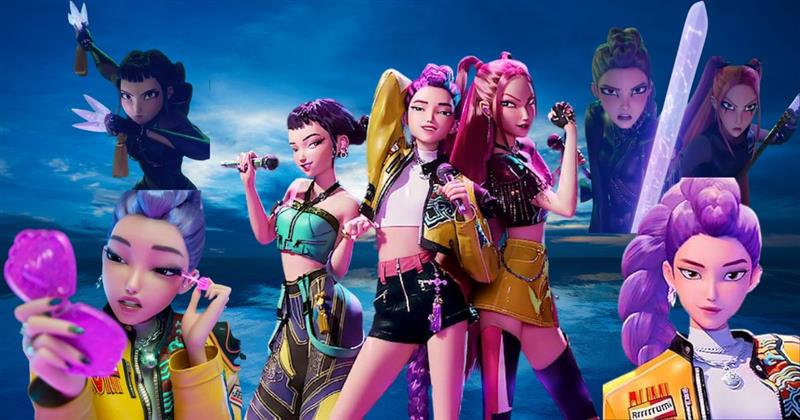
KPop Demon Hunters animated film is now a top trending on Netflix, listed in the most-watched movies of all time is a big achievement. This turning event of film after becoming a top five in English-language film noted at Cartoonbrewsurprised everyone including the film industry and worldwide audience.
From Quiet Release to Viral Sensation
Interestingly, the film did not really receive much audience on the day it released – 20 June 2025, but now it has become viral. According to data reported by TheWrap, KPop Demon Hunters got 158.8 million views in 90 days on Netflix. The number is huge from the viewers that led this film to list on the number four in most popular films. It slightly passed the big action movies like The Adam Project and Leave the World Behind.
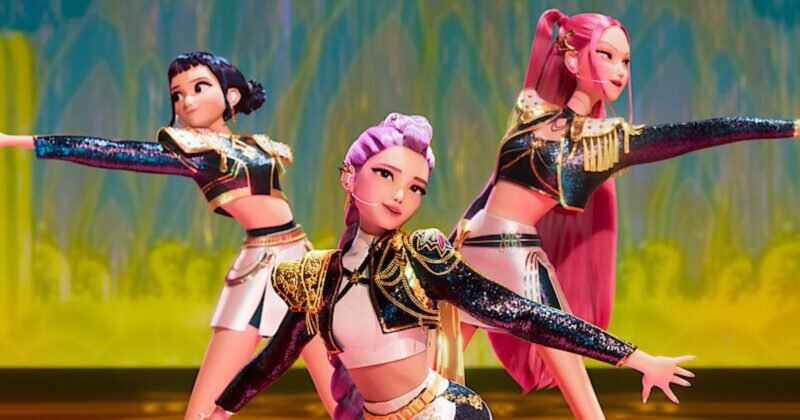
KPop Girl Group HUNTR/X with their Musical Numbers. Credit: Netflix
Consistent Growth in Viewership
Many other Netflix Originals which got massive surge in their first week of air but KPop Demon Hunters has become a consistent on the top films due to its week-over-week growth. The viewership pattern is making a remarkable success for the Sony Pictures Animation & Netflix. As noted by ScreenRant, the number of viewers started to increase from 20M to 25M views in its fifth week on the service that gives it a unique pattern of climbing up the all-time charts.
The film centers on a fictional K-Pop girl group, HUNTR/X, who are also skilled demon hunters. The mix of vibrant action, amazing storytelling, and incredible music are catching the hearts of the audience. According to TheWrap, The soundtrack took an important part in its groundbreaking success, the original song ‘Golden’ got at 1st rank on the Billboard Global Charts.
The film is getting great reviews not only from the audiences but critics also gave 97% rating on Rotten Tomatoes. KPop Demon Hunters seems to further become a No.1 on Netflix from the fourth position because the 90-day tracking period is still left to leave behind Red Notice (230.9 million views), Carry On (172.1 million), and Don’t Look Up (171.4 million). Publications like ScreenRantbelieve it could beat these movies and become the most-watched movie ever on Netflix.
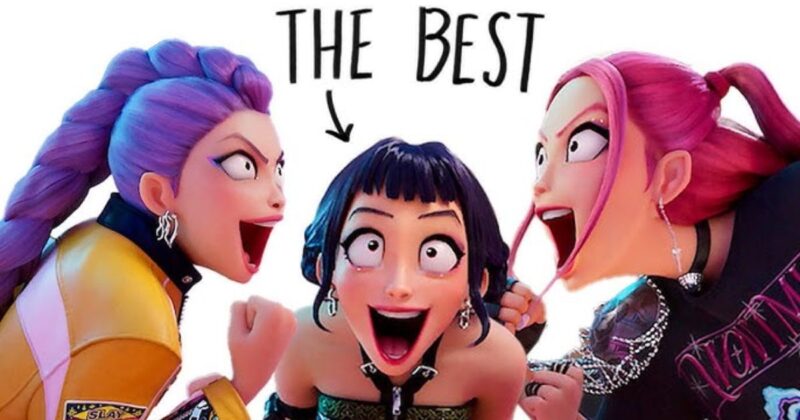
Best Demon Hunters from the KPop Demon Hunter Film, Credit: Youtube
The huge success of the film has led them to make the sequel and spin-off series. This is already happening and reports say that Netflix is considering to remake this in a live-action version. The success of the film has just started, fans are already demanding for its sequels. The story serves a powerful combination of compelling storytelling, fresh concept, and musical numbers.
The KPop Demon Hunters Shocks Netflix Viewers by Breaking Into Top 5 Most-Watched Movies, the number of viewers gave a massive success that led to its remake and spin-offs. The fanbase is increasing day-by-day along with the critics’ reviews. You can watch this animated film on Netflix.
Emma
Articles Published :
36
Emma Miller is an entertainment enthusiast who is focusing on crafting storytelling blogs across all genres. Her special focus is build up around superheroes, thrillers, & historical dramas and movies. Her experience of delivering sharp review analysis and interview podcasts is helping fans to get transparency about their favorite cinema.
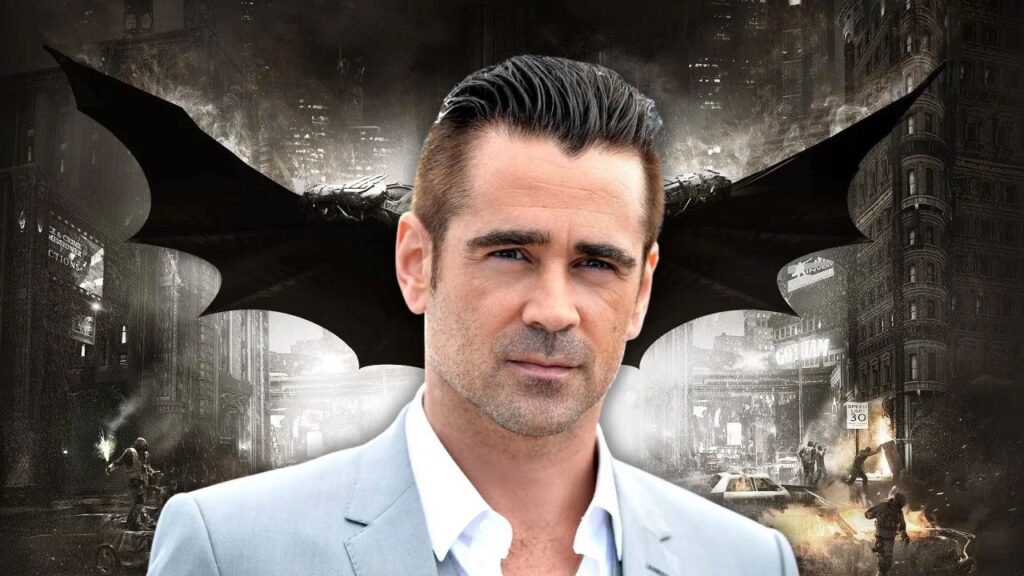
What Brings Colin Farrell Back to Matt Reeves’ Batman Universe
Colin Farrell returns to Matt Reeves' Batman universe as the Penguin in The Batman Part II, and shares the dark world of Gotham and his passion storytelling.
Colin Farrell has got us very excited to return to Gotham as The Penguin in The Batman Part II. Far from it being about getting action scenes right, or even stealing the show with the character’s arc. Farrel explained in a chat with Collider that what pulls him back are the people he gets to work with, and the “Matt Reeves immersive world that’s just very, very gritty.” There’s definitely a love for the vibe and the behind the scenes team it feels like. Farrell kept it real, he explained the camaraderie and new ways of working on set keep bringing him back, as he promotes the upcoming movie The Ballad of a Small Player releasing on 29 October 2025.
Colin Farrell delivered so many thoughts on his role in HBO’s massive hit The Penguin. So the experience evidently stuck with him for good. The series its eight-episodes run in late 2024. It garnered rave reviews, high ratings, and mentions for major awards like the Emmys and Golden Globes. Farrell really got to dive deep into the character, all of the intricate layers and psychological twists and turns that you can only explore in a long form series. Apparently the part allowed him to stretch his acting chops quite a bit, and fans seemed to get as much pleasure as he did. With all the buzz around the show, it is no surprise that The Penguin turned out to be one of HBO’s breakout hits.
The show ended up a huge success, attracting 5.3 million viewers across all platforms during its first weekend, marking the largest four-day debut for a tier one Max original since The Last of Us dusted off in January 2023. The show received rave reviews from critics with a 94% rating on Rotten Tomatoes, with many reviews referring to Colin Farrell’s performance as “transformative” and “a true tour de force.”
The Question is what brings Farrell back for The Batman Part II
It’s not so much ‘What do I do with this?, but I just want to be in that world and be with Robert and be with Jeffrey again and be brought by Matt Reeves,’ said Farrell. After a deeper exploration of the HBO series character, Farrell returning to the movie sequel isn’t about further expanding the Penguin’s story, instead rejoining the talented ensemble.
Colin Farrell shared his happiness by saying “I’m really excited to be back in that world, to just be around it,” he said as he contemplated joining such an unparalleled group of creatives once more.
Reliving The Childhood Dream
Farrell’s ties to the world of Batman are deeply embedded since he was a kid growing up in Dublin. He shared, he was raised watching Burgess Meredith’s legendary turn as the Penguin in the ‘60s Batman TV series when he was 5, and then Danny DeVito’s iconic performance in Tim Burton’s Batman Returns at around 11 or 12.
For the actor, the joy is a little simpler, just getting to play in a world “where a character called Bruce Wayne and Batman exist, is such a joy.” He admired how Reeves had “re-imagined a world that is unique enough and yet still honors the struggles of that city and the psychological struggles of the character of Bruce Wayne.”
Although Farrell has now confirmed that his part in The Batman Part II will be very small, a smaller appearance than in the first film. He has read the full script and described it as “extraordinary”. He hinted that THE BATMAN 2 is a much deeper plot, it means that Reeves is expected to be seen in scarier scenes and it will further keep the franchise as the stakes are bigger.
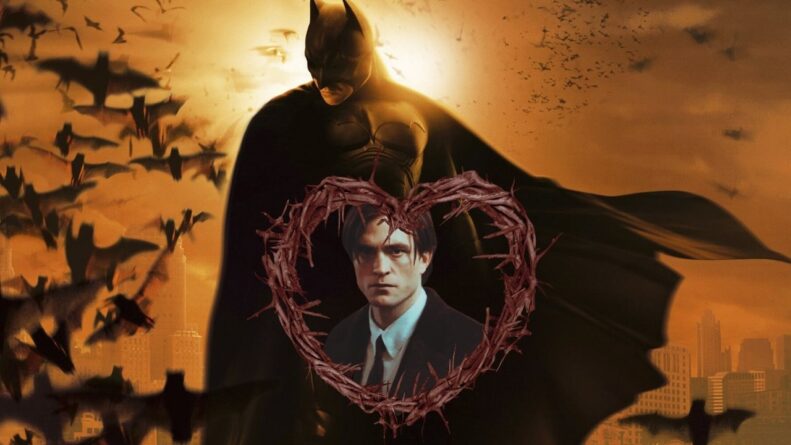
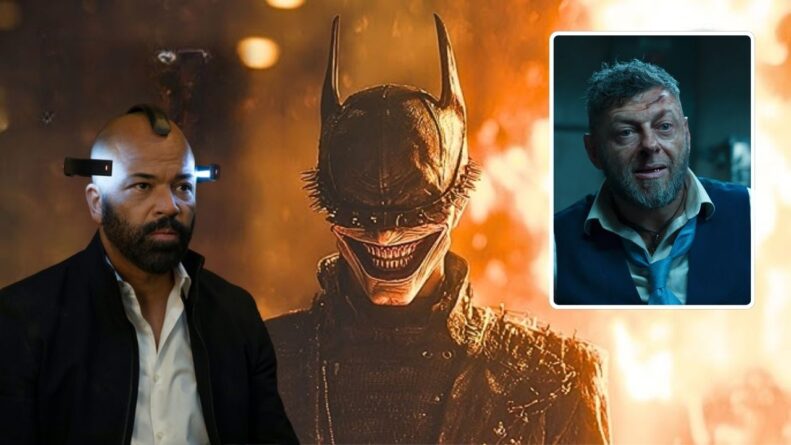
Filming for The Batman Part II is set to begin April 2026. Robert Pattinson, Jeffrey Wright, Andy Serkis and Colin Farrell are returning to their roles. Farrell seems doubtful about a second season of The Penguin. He said to Deadline, “I’ve heard some talk about it, but I don’t know if that’s a good idea. Part of me thinks we should just leave it as we got away with something special.”
Conclusion
For Farrell, being part of Matt Reeves’ Batman world is more than just another gig—it’s a dream come true from his childhood, and he’s surrounded by collaborators who are as passionate as he is about telling grounded, character-driven stories in the dark, complex reality of Gotham. The criminal underworld of Gotham City is once again ready to entertain their fans but Colin Farrell’s Penguin has made a permanent impact on the Batman mythos and his passion for this universe and the team behind it will keep him coming back for as long as they’ll have him.
Alpana
Articles Published :
164
Alpana is Fandomfans Senior Editor across all genres of entertainment. She evolved in the media industry since a very long time, she manages the content strategy and editing of all the blogs. Her focus on story development, review analysis, and research is well-equipped that ensures every article meets the standards of accuracy and depth.
Galactus and Lady Death: The Collision That Could Redefine the MCU Forever
Learn how Galactus and Lady Death could reshape the MCU with a cosmic Gothic era leading to Secret Wars, redefining Marvel's future beyond traditional villains.
If you feel the Marvel Cinematic Universe (MCU) was a bit all over the place lately, well, you’re not alone. With multiverse shenanigans, quantum realms and whatnot, things have become a bit messy. But there’s a pattern if you look at the Phase Six schedule along with Fantastic Four: First Steps and the latest spoilers in Agatha All Along. Marvel is turning its back on political thrillers and sci-fi brawls to focus on high-concept metaphysics and passion plays.
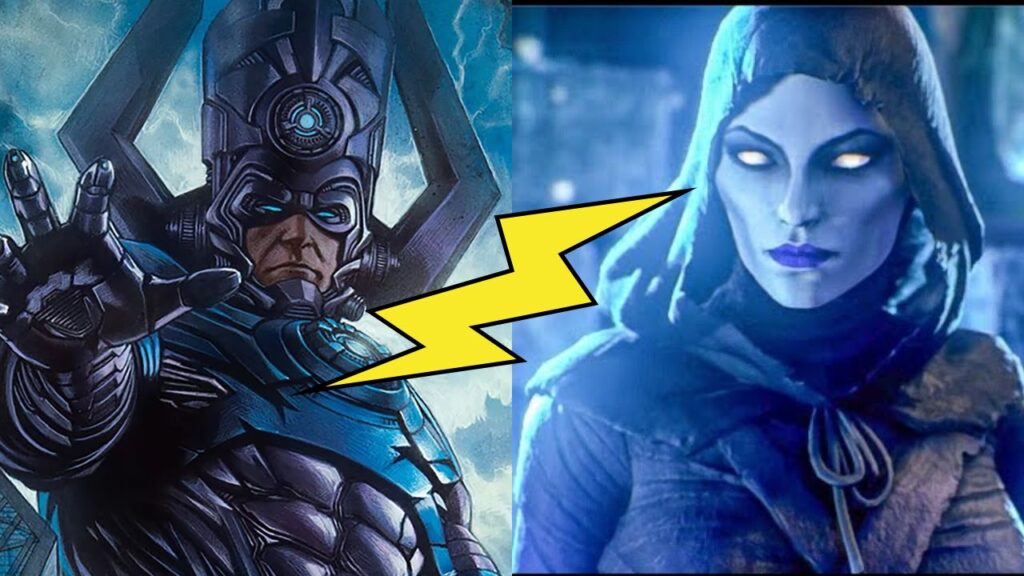
The two players at the center of this shift? Galactus, the Devourer of Worlds, and Mistress Death, now unveiled as the fierce and compelling Rio Vidal.
Casual fans might view them as two separate “Big Bads” (the first a sci-fi giant, the second a supernatural weird witch), but comic history and deep lore reports tell us they are really the “parents” of the next cosmic saga. If you want to know why their eventual encounter is going to change everything, read on!
Galactus & Death is More Than Just Villains
In order to understand why this matters, we need to examine the source material. Comics-wise, particularly the legendary Fantastic Four — the relationship of Galactus and Death is described in terms that boggle the mind.
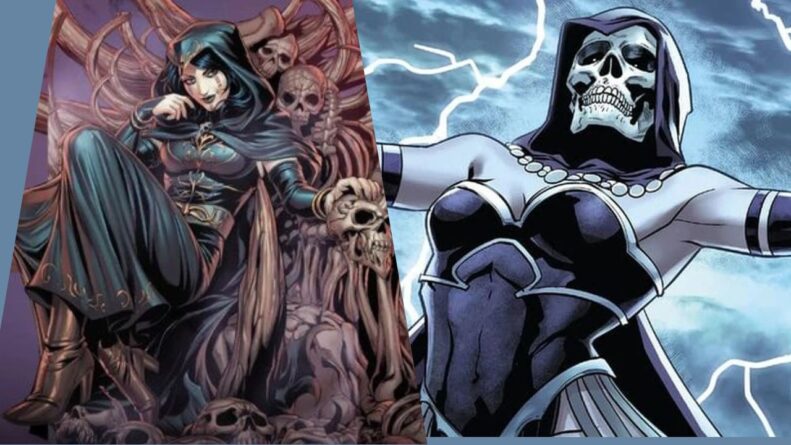
Death refers to Galactus as her “husband and father, brother and son.”
It seems like a contradiction, but it’s a statement of cosmic truth. They’re not enemies; they’re symbiotic. Galactus is the “Great Filter” of the universe. He isn’t randomly demolishing worlds because he’s malevolent; he’s doing it to tend the cosmic garden, so that life does not turn into a cancer on the face of existence.
Image credit: Fandomfans
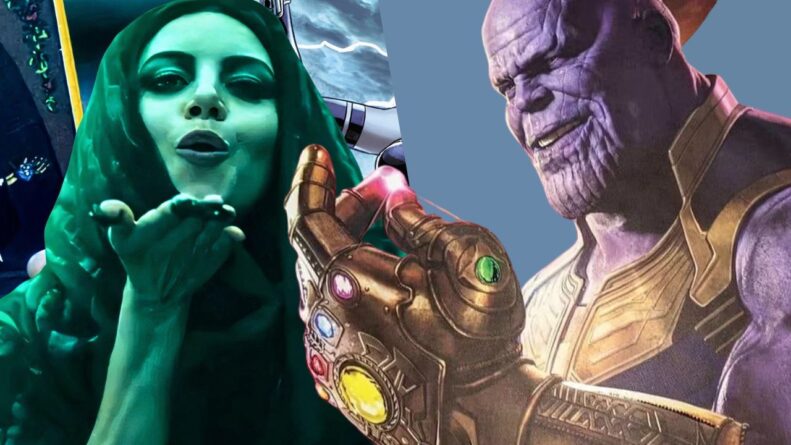
He makes the nutrition that feeds Death’s being. In an eternal, symbiotic dance, his job is to create and hers is to eat. They form a deep, quasi-sacred union, vastly more complex and profound than Thanos’s adolescent crush on Death that can best be described as a momentary juvenile fantasy.
The “Cosmic Gothic” Aesthetic
The MCU seems to be aiming for a particular aesthetic in this union: “Cosmic Gothic.” For one, we’ve got Ralph Ineson cast as Galactus. Known for his bone-chilling, folk horror work in The Witch, Ineson lends a weight that implies that Galactus will be more of an Old Testament god than a mechanical antagonist.
Image credit: Fandomfans
Then there’s Aubrey Plaza’s Rio Vidal. Rather than being the quiet skeleton featured in the comics, Plaza’s Death is loquacious, possessive, and chaotic. She is rooted in “Green Witch” tradition, seeing death as a natural return to the earth. When you combine Ineson’s golden, high-tech horror and Plaza’s rotting, totemic witchcraft, you end up with a cinematic mood we’ve never seen in Marvel.
The Franklin Richards Sparks This Theory
So how do they come together? The latest rumors about The Fantastic Four: First Steps suggest a particular catalyst: Franklin Richards.
Galactus is arriving on Earth not for a bite but to enslave the reality-warping son of Reed and Sue Richards as a long-term power source, according to leaks. The speculation is that Sue Storm dies to stop Galactus and then that Franklin uses his god-like powers to bring her back to life.
Image credit: Youtube
This is where Rio Vidal enters the chat. As established in Agatha All Along, Rio hates when people cheat death. If Franklin tears a soul back from her domain, he is an enemy of nature. So you’ve got a really interesting three-way battle forming here: Galactus wants the boy for energy, Death wants the boy stopped for violating her rules, and the Fantastic Four are in the middle.
From Fantastic Four To Secret Wars
In the end, the union of Galactus and Death is what leads to Avengers: Secret Wars. As the multiverse shatters through “incursions,” the universe requires a means by which to cull expiring timelines in order to preserve others. Galactus and Death are more than villains to beat up, they’re the cosmic immune system.
We’re beyond the age when heroes battled to save a city. We are now living in a time of modern mythmaking where the basic drivers of reality, Hunger and Entropy have faces, names and story lines. When Ralph Ineson’s Galactus and Aubrey Plaza’s Death at last share the screen, it won’t just be a crossover, it will be the pulse of the new Marvel Universe.
Lady Death and Galactus are far from just two scary forces – they are the core of what Marvel’s next cosmic era is going to be. Their clash lays the groundwork for a deeper, darker and more mythic MCU, one in which the fabric of reality bends, souls are traded, and the heroes we know go toe-to-toe with adversaries older than time itself. If Marvel honestly commits to this “Cosmic Gothic” era, the MCU could finally begin telling the ambitious, cohesive stories fans have been clamoring for.
Fandomfanskeep your energy exciting with your favorite movie characters’ breakdowns of the biggest moments in movies, TV, and pop culture.
Mariyam
Articles Published :
77
Mariyam Khan is Fandomfans Content Writer and providing reports and reviews on Movie Celebrities, and Superheroes particularly Marvel & DC. She is covering across multiple genres from more than 4+ years, experience in delivering the timely updates.