The End of Star Trek on Paramount+: A Bittersweet Goodbye to a Streaming Era
The Star Trek on Paramount+ run ends with Strange New Worlds and Starfleet Academy. Here’s What the Hell Is Going On and Where the Franchise Is Headed.
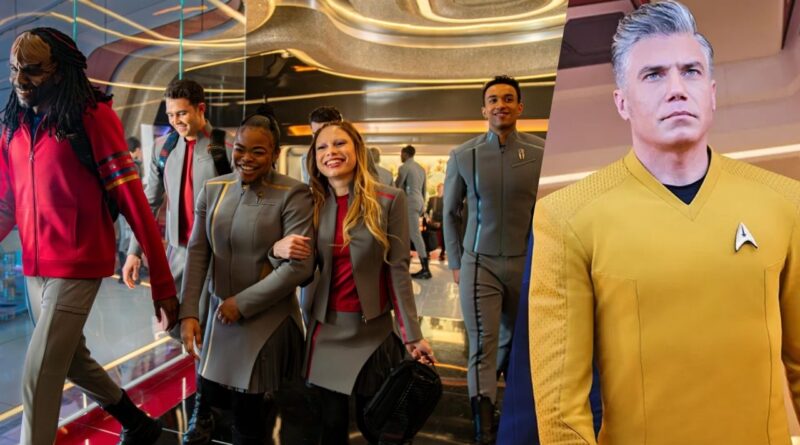
If you’re a Star Trek fan, you have a pretty good idea that It is a deeply sad time for our fandom because the end of the current franchise on Paramount+ isn’t just a rumor anymore—it is officially happening. There are no more Star Trek series. That big experiment in bringing the final frontier into the streaming era is now at a standstill. At this moment, that means it’s truly over for the last two shows still hanging on: Star Trek: Starfleet Academy and Star Trek: Strange New Worlds.
Getting to watch the entire universe get its plug pulled all at once — that’s a lot to take in. Let’s discuss how we came to be here, what these final seasons are doing, and how we might handle the ending of an incredible run.
What made the blow all the more devastating was how suddenly everything changed. It had been a long time since it felt like we were in the midst of a Star Trek golden age. There was such a profusion of content, such excitement – we were truly spoiled.
At one point, we were producing five different TV series all at once for Paramount+. We had Discovery pioneering, going beyond where we’ve ever been in the future. There was Picard, giving us the nostalgia closure we didn’t know we needed. We had Lower Decks, whose brilliant, affectionate parody had us laughing so hard our sides hurt.
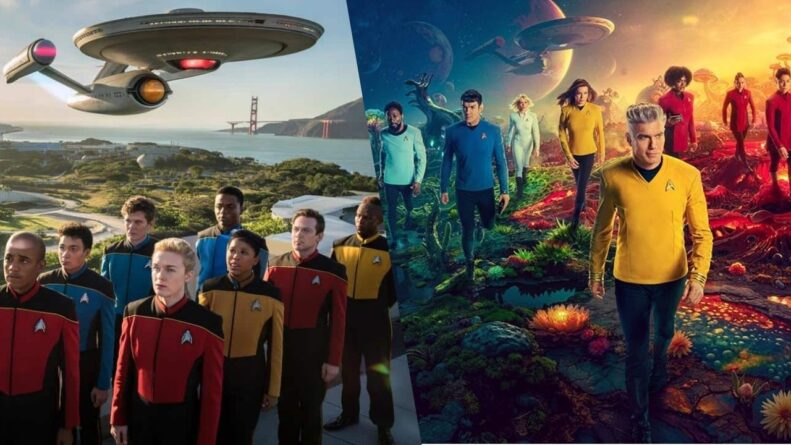
We got Prodigy, which brought the concept of Star Trek: Starfleet Academy to a whole new generation of kids. And then there’s Strange New Worlds, which returns to the classic episodic format that made Star Trek so iconic to begin with.
There was a day when Star Trek fans could rely on the release of a new episode nearly every week of the year. The franchise seemed unstoppable. The universe was expanding in all directions — live action, animation, stories set in the past and present as well as the far future. It signaled a huge, interconnected world that would engage fans for decades.
And then, Star Trek: Starfleet Academy came to the line-up in January 2026. It was going to be the next big chapter. It was meant to be the show that took the torch. Rather, it was one of the last to go in a sudden, savage wash of cancellations.
Let’s start with Star Trek: Strange New Worlds, because this one really hurts. To many fans it seemed the best-placed jewel in the streaming age’s current crown. The series maintained the charm, optimism and sense of seeing the world and adventure that the original 1960s series embraced, along with a host of modern visual language and complex rich layered characters.
Captain Christopher Pike, Spock, Number One, Uhura, La’an, Nurse Chapel — this crew felt like family. We saw them solve the unsolvable, sing their hearts out in a musical (nothing happens before or after as it did at the end of last season’s musical episodes) and even cross over with animated characters. They restored happiness to a series that had sometimes strayed a little too far into darkness and grime.
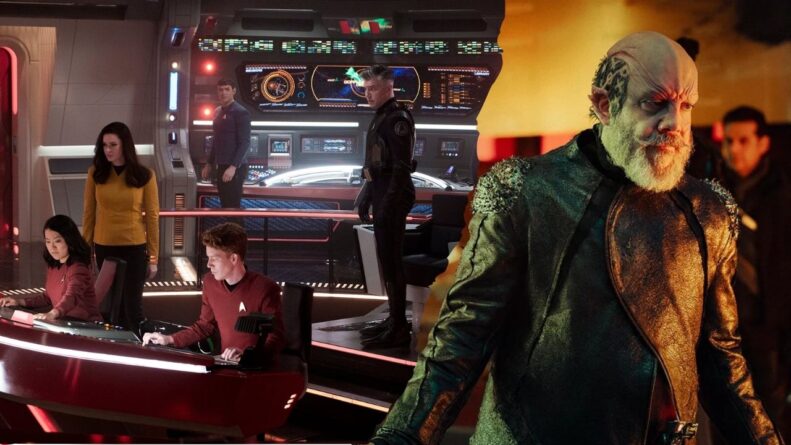
If you want to call it the bright side, is that we are getting a very satisfying ending. Star Trek: Strange New Worlds will start production on its fifth and final season in the fall of 2025. The cast and crew wrapped officially just before Christmas.
The Strange New Worlds’s Season 5 being already done and dusted gives me a bit of comfort. It’s probably safe to assume that the writers and the producers were aware their time was drawing to an end and as such could write some sort of send-off for the crew of the USS Enterprise. We get to see one last batch of episodes. We get to fly with Captain Pike one last time. Then again, the sets have been struck and the costumes locked up for good? That’s hard to swallow.
The end of Star Trek: Starfleet Academy is a series of jolts, and the end of Strange New Worlds is a sleepy, romantic adieu to a familiar face.
This show literally just got here! It premiered in January 2026, and offered a new look focusing on the young, idealistic cadets trying to make a place for themselves in Starfleet. There was a different vibe — a little more coming-of-age, and a little more focused on the difficulties of being a student in a vast, high-stakes universe. Fans were only beginning to learn the characters’ names, only beginning to choose their favorite cadets, and only beginning to speculate on where the story was going.
Then the hammer-pound came. About two weeks after the first season finale aired, Paramount+ made the decision to cancel Star Trek: Starfleet Academy.
It’s an unbelievably quick turnaround for a network to dump a sci-fi flagship series. It had barely time to get on its feet, or develop word-of-mouth.
But that is the oddest, most turbulent part of the whole affair. Because of modern television production practices, networks sometimes shoot consecutive seasons back to back to take advantage of economies in set and actor contracts. So even though it was canceled a mere two days after the first season wrapped up airing, Star Trek: Starfleet Academy had already completed filming its second – and final – season by the end of February.
That means Star Trek: Starfleet Academy Season 2 here we come. We’re going to be watching a second season, entirely finished, fully produced of a show that’s already dead. It’s going to be a very bittersweet viewing experience.
The narrative ends at that point, even if our cadets manage to figure out the puzzle, or win. There is no Star Trek: Starfleet Academy Season 3, and any cliffhangers from Season 2 that were left hanging will most likely remain unresolved.
Although we don’t have the full information from behind the curtain yet, the output has been predictable for some time. The streaming world is evolving rapidly. Just a few years ago, all the big entertainment companies were pouring billions of dollars into their own streaming platforms, eager to emerge victorious in the “streaming wars” and build a subscriber base. They approved everything. Budgets were enormous.
But then the bubble burst. Enterprises began to realize that producing huge, movie-quality sci-fi shows each and every week is hugely expensive, and the numbers were not adding up. Wall Street began to demand profits, not just subscriber growth. Paramount+, among many other streaming platforms, has been experiencing massive reorganizations, budget cuts, and corporate shake-ups.
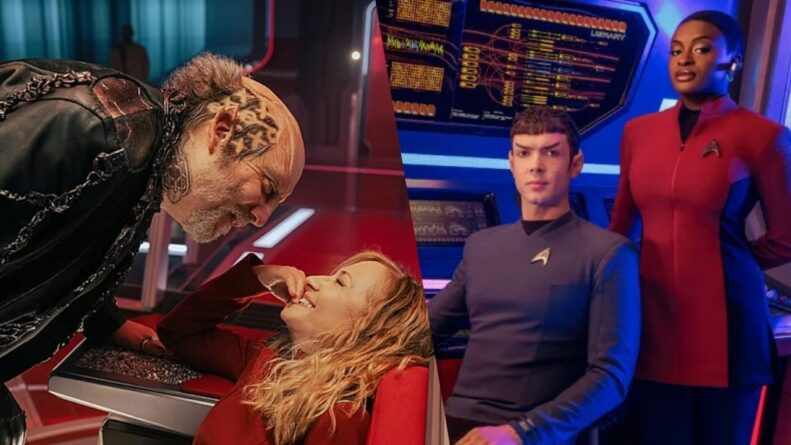
Star Trek is a beautiful franchise but it is not cheap to produce. The intricate sets, the alien makeup, the state-of-the-art visual effects, the huge casts — it all runs to millions of dollars an episode. When the corporate compressing started, big-bucks sci-fi shows were the easiest targets to be cut.
It’s frustrating because it seems like those decisions were made in a conference room by people looking at spreadsheets, not people looking at the rabid fanbase. But sadly, that’s the way the TV biz is. It is business first and art second.
If there is any solace to be found in this enormous letdown, it’s that we aren’t getting the full dark today. The Paramount+ Star Trek era is ending, but a veritable cornucopia of fresh episodes awaits before the lights go out for good.
And through it all, one thing remains the same—we are a united front. The Star Trek fanbase is easily one of the friendliest, most passionate and creative communities you will ever come across. The shows come and go, but the spirit never does.
And then there’s the phantom second season of Starfleet Academy. It’s the end, but we still get one more season with those cadets. We get to see the labor of those actors, writers and visual effects artists in those final episodes.
I am going to highly encourage us all as a fandom to not just rage quit these final seasons. Let’s watch them. Let’s celebrate them. Let’s let the these creators know their work meant something to us, even if the executives above didn’t see value in continuing the stories.
It’s not the first time Star Trek has been “canceled.” The Original Series was notoriously canceled after only three seasons in the 1960s. People thought it was over. But the fans rallied together, the show gained a new life in syndication, and it ultimately spawned a massive movie franchise.
Then we proceeded through the golden age of the 90s with The Next Generation, Deep Space Nine, and Voyager. But then the tiredness of the franchise set in, and Star Trek: Enterprise was axed without ceremony in 2005. For more than ten years, there was no Star Trek on television. It seemed like that was the end of the line back then, too.
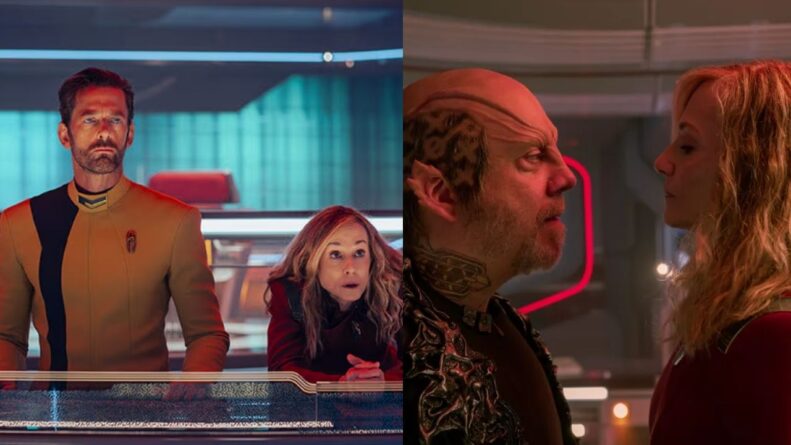
But Star Trek always returns. It is simply too large, too iconic and too culturally significant to be allowed to remain dead for all time. The ideals of the Federation — hope, diversity, scientific curiosity, and an optimistic view that humanity can build a better future are things that people will always crave. We need Star Trek, particularly when times are tough.
The Paramount+ era is coming to a close. The streaming experiment is done for the time being. The vessels are headed back to spacedock and the lights are going out. We may also have to wait for a few years before we get another new series. It could be a matter of waiting for a new corporate owner, a new network, or a new approach to the franchise.
But somebody will look up at the stars and decide it’s time to go — boldly, once again.
Read More:- Star Wars: Maul – Shadow Lord: Darkest Chapter Is Only Getting More Dangerous
The great thing about the streaming era is that now, we have an endless supply of Star Trek at our fingertips. We now have permission to binge The Original Series. We can binge The Next Generation. And if we haven’t, we can now do that too without having to wait. The legacy is still there.
There aren’t many genres that are as welcoming, passionate, or creative as Star Trek fandom. There are series, but the spirit cannot be truly killed, not even with series. Cosplay evolves, new fan fiction runs rampant, and cons tend to attract fans. At the end of the day, it’s the debates, the arguments, the friendships that really keep this universe going, that are at the core of everything.
We said goodbye to Strange New Worlds, a show that had a sting of home about it. We say goodbye to Starfleet Academy, a series that just didn’t take off. We are ending an era of television science fiction that was extraordinary.
But the final frontier is here to stay. It’s waiting underneath for the next leaders of the pack.
Get all the latest updates from movies, series, and celebrities. Stay connected with Fandomfans to get all the details.

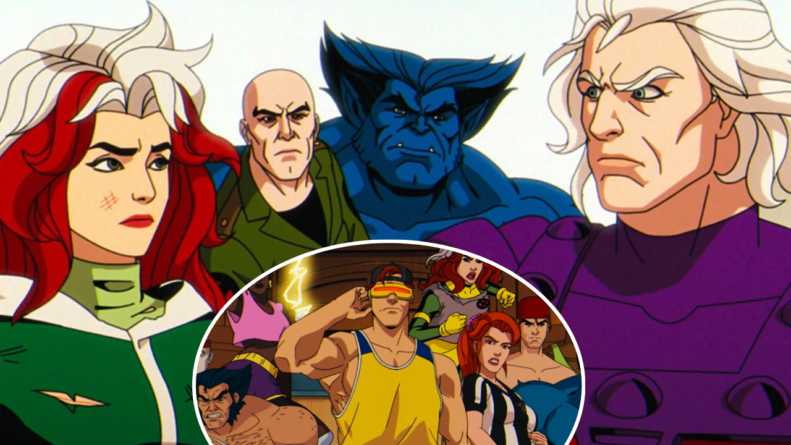
Discover every Marvel comic you need to read before and after XMen 97. Explore the essential storylines, characters, and iconic issues that inspired the series.

If you are currently watching XMen 97 and want to go deeper as it doesn’t come from nowhere. The show’s most exciting moments borrow straight from the Marvel comics, some of them are truly amazing. Writers take a comic arc that ran for a year and compress it into twenty minutes making it the most iconic show ever.
If you want to understand where this version of the XMen actually comes from, follow the list and start reading important XMen 97 comics in order. Everything started to make sense, but you must have patience for that.
This is the most essential comic that builds the character’s arc of Jean Grey, her transformation into the Phoenix that becomes the emotional backbone of the entire show. If you want to know which comic is still considered one of the greatest superheroes then pick Dark Phoenix Saga — Chris Claremont and John Byrne wrote this back in 1980.
The show brings back this story as unfinished business since fans didn’t like the original ending. This is what makes people go crazy about the show so read this first to know what happened to Jean on the moon.
This XMen epic collection is already running and introduced modern XMen before Dark Phoenix Saga even happens. This 70’s comic is the origin of Wolverine, Storm, and the team dynamic arc. Once you read it, you will understand why in the show they talk like they are the real family. Every relationship, joke, and grudge in XMen 97 was built here first.
God Loves, Man Kills is a short comic written by Claremont that actually gave the world the “mutants as a metaphor for prejudice” which every XMen adaptation follows and pulls back this tone and this one becomes a moral spine of the entire franchise from 1982.

XMen 97 pulls directly from this book’s tone whenever it deals with anti-mutant hysteria, and Magneto’s arc across the season only makes sense if you’ve read how his philosophy was originally built here.
The show’s early handling of Genosha as a haven for mutants, and everything that goes wrong there, has roots in a comic arc where the island nation was actually a slave state built on mutant labor. If you are watching the show then you should have been thinking that Genosha’s fate hit hard but if you read the comic the tone is darker.
The massive destruction of thousands of mutants on that island was a heartbroken tragedy that the show didn’t even fully present yet.
Read More 👉 Read Before You Watch: The Official XMen 97 Season 2 Comics Guide
Mister Sinister dispatches the Marauders to slaughter the Morlocks — a group of mutants living beneath the streets of New York City, resulting in one of the bloodiest massacres in XMen history. XMen 97 really doesn’t explain all the reasons why Mister Sinister is so scary. The storyline in this comic will tell you why. It reveals just how ruthless and dangerous he truly is rather than being a mysterious evil.
Take a time for this one because it is the bigger storyline, originally spanning four different comic series. XMen 97 draws on several elements from this crossover, it will help you fully understand about the time travel and Summers family legacy.

This narrative helps explain one of the more bewildering aspects of XMen mythos. If you’re looking for answers on exactly how Cable, Stryfe, Cyclops are related, this book has them. The epic feud between Cable and Stryfe culminates, and the convoluted, time-travel riddled past of the Summers family is revealed.
This story arc shocks everyone because it turned the both character’s arc. Since XMen 97 places so much emphasis on Magneto’s redemption, this arc gives a clear understanding on how low their trust goes that any chance of reconciliation becomes impossible. The moment where Magneto tears the adamantium from Wolverine’s skeleton marks the history in the entire franchise of XMen.
Based on how the first season of XMen 97 ends, everyone can guess that Onslaught will play a role in the future. The 1996 crossover event introduced Onslaught which created Xavier’s suppressed rage and trauma and became one of the most dangerous threats the XMen and Avengers have ever faced together.

If you want to understand how powerful Xavier’s psychology is, this one will surely help you. This is where the show is headed.
The entire essence of Bishop is that he has survived a mutant genocide in the future that hasn’t taken place yet and that fear is exactly what he brings to every encounter in the show. This is the arc where his history, as well as a fixation with stopping a specific kind of betrayal, are first described, and it puts a lot of his paranoia in the show into context.
A quick note for readers confused about Morph — the character barely existed in the comics under that name and role. Most of Morph’s presence in XMen 97 is original to the animated continuity, built from a character called Changeling who died early in Marvel history. There’s no single comic to point you to here, and that’s fine. Not every emotional gut-punch in the show has a comic-book receipt.
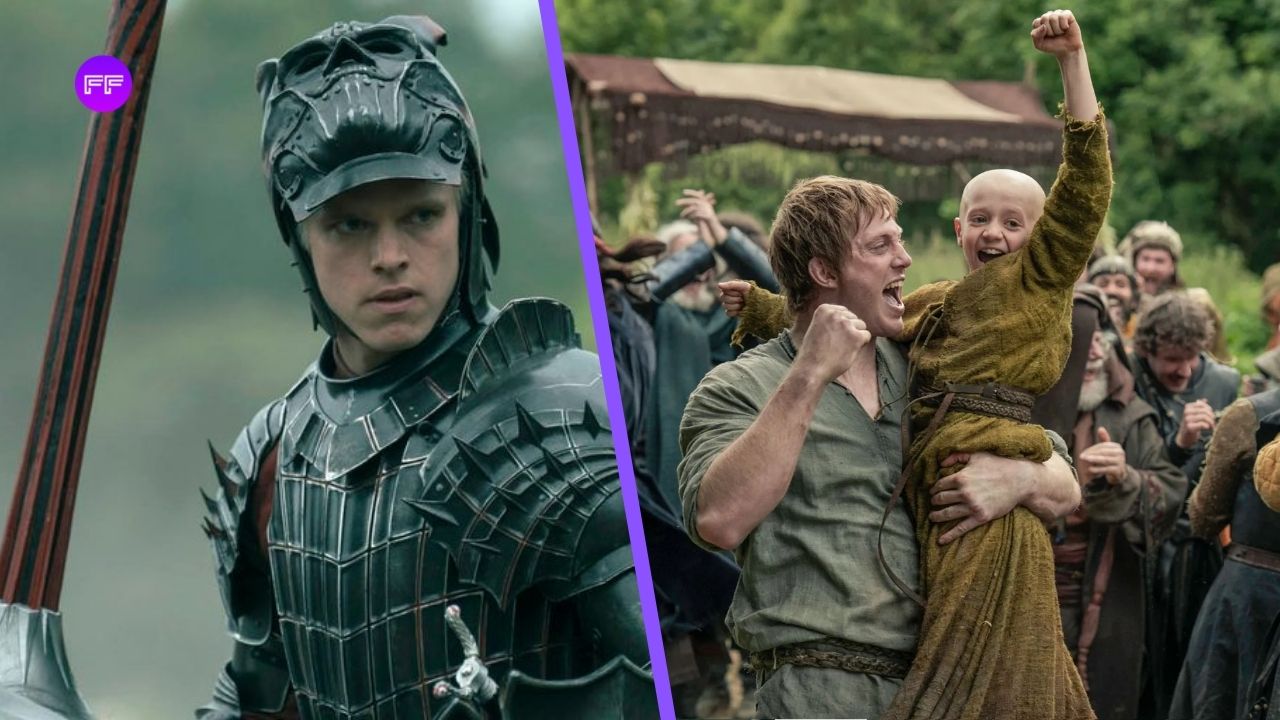
Read More 👉 A Knight of the Seven Kingdoms: The Story Fans Didn’t Know They Needed
The show is built to work without any comic knowledge at all. This guide is for viewers who finished an episode and wanted to go deeper, not a prerequisite. The most important comic is The Dark Phoenix Saga which is an absolute emotional and narrative center of the entire franchise.
This XMen 97 Marvel Comics guide will help you understand the deeper narrative that already lived in comics. You can read them one-by-one and they are all available on Amazon.
Stay tuned to Fandomfans for more guides and updates from movies, series, celebrities.
Star Wars' Ahsoka Tano replacement achieved something Anakin's former Padawan never could. Here's why this success changes Ahsoka's legacy forever.

There are some stories in Star Wars that never get a proper ending. Even our beloved characters’ victories become impossible due to the weight of canon. Ahsoka Tano Replacement succeeded where Ahsoka never could win. F won from her dark-side master but not without sacrifice. She is Anakin Skywalker’s most beloved, first and last Padawan in the entire franchise.
But before her sacrifice, F survived Order 66 then walked away from the Jedi Order but she failed to stop her fallen master and it’s devastating for her. The moment of confronting the darkness that consumed the man who trained her, always escapes from her hand. She was first introduced in Star Wars: Visions.
Star Wars brings a yellow-lightsaber-wielding Jedi from Star Wars: Visions to fulfill the fans wish which Ahsoka never could. Continue reading to know everything about Ahsoka Tano Replacement who meant a lot to Star Wars fandom.
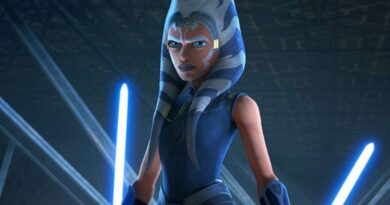
F is a Jedi Padawan who appears in Star Wars: Visions Volume 1 and Volume 3. It is one of the Disney+ anthology series that lets different animation studios tell unique Star Wars stories. F’s first appearance was in “The Village Bride,” then returned in episode “The Lost Ones.” She became the most loved character of the entire franchise and voiced by Karen Fukuhara.
Ahsoka Tano Replacement is not a canon character in the traditional sense — Visions occupies a unique space in the Star Wars universe, telling stories that are inspired by the galaxy far, far away without being bound to its continuity. But that creative freedom is exactly what makes F so fascinating.

We can see the similarities in both characters. Like Ahsoka, F also survived the fall of the Republic and the horror of Order 66. Like Ahsoka, she carries uniquely coloured lightsabers — yellow for F, white for Ahsoka. Like Ahsoka, she has an unconventional relationship with the Force and the Jedi Order itself. And the biggest pain they both had, their masters turned into darkness.
The difference is they didn’t end up the same.
F’s victory becomes so overrated that you must understand Ahsoka’s journey and burden to understand what raises the stakes.
Ahsoka Tano first look was in the 2008 Clone Wars animated film and there, her journey started as Anakin Skywalker’s apprentice. She grew in those seven years into something extraordinary — she was a bold and strong Jedi who walked away from the Jedi Order because they failed her first.
Order put her down by accusing her for bombing the Jedi Temple. Masters who were close to her stood by when she was on a trial for the crime she didn’t commit. And when she was finally exonerated, no one truly made it right. So she left.
That decision defined the rest of her story. Without the rank or title of a Jedi, Ahsoka navigated the Dark Times mostly alone. She became an operative of Rebel intelligence – Fulcrum. She didn’t even survive encounters with Inquisitors and Imperial forces, she also helped heroes like Kanan Jarrus and Ezra Bridger.
But the shadow of Anakin never fully lifted.
When she finally faced Darth Vader in Star Wars Rebels — in the iconic two-part episode “Twilight of the Apprentice” — the confrontation was everything fans had waited years to see. And yet, it wasn’t a victory. It wasn’t a defeat either, technically. Ezra Bridger pulled Ahsoka into the World Between Worlds and saved her life before the duel could reach its conclusion. Vader continued his reign of terror. Nothing changed.

Ahsoka never faced Vader again. He died in Return of the Jedi, redeemed by his son Luke Skywalker — not stopped by the apprentice who had known him longest.
Here’s where the structural problem becomes clear: Ahsoka could never defeat Vader because Star Wars’ own canon wouldn’t allow it.
If Ahsoka had stopped Vader, truly stopped him — the entire trajectory of the Original Trilogy would need to be rewritten. Anakin Skywalker’s redemption arc, Luke’s belief in the good in his father, the Emperor’s eventual fall — all of it hinges on Vader surviving until Return of the Jedi. Ahsoka was always playing within a story that had already been written. The ending was predetermined.
This isn’t a criticism of the storytelling. It’s actually a fascinating creative constraint. Ahsoka’s failure isn’t about weakness or lack of heart — it’s about the weight of continuity. She was a new character inserted into a timeline where the big beats were already fixed. She could grow, suffer, and inspire, but she could never change the central tragedy she was connected to.
The era she existed in made certain victories structurally impossible.
F didn’t have those limitations. Star Wars: Visions gave Ahsoka Tano Replacement something Ahsoka never had: a story with no predetermined outcome.
Because Visions exists outside the main continuity, F’s story could go anywhere. There were no downstream consequences to protect. No Original Trilogy to preserve. The writers could actually let her win — and in “The Lost Ones,” they did exactly that.
In the episode, F is helping refugees escape a planet being destroyed by uncontrolled carbonite gas clouds. When the Empire intercepts the refugee ship, F is handed over — and brought face to face with her former master, Shad-Rah, a Jedi who had turned to the dark side and was now working for the Empire.

The confrontation is everything the Rebels duel between Ahsoka and Vader could never fully be. There was no safety net, no time-travel escape hatch, no canon to protect. Just F, her yellow lightsaber, and a fallen master who had become something monstrous.
What makes F’s character so compelling is that she seems to have internalised lessons that Ahsoka was still wrestling with during her darkest moments. F clearly understands that the master she knew and the dark side servant standing before her are two different people. She thinks of Zero (her master’s former self) and Shad-Rah (what he became) as entirely separate — much like the distinction fans have always drawn between Anakin Skywalker and Darth Vader.
This clarity of perspective is something Ahsoka agonised over for years. The grief of losing Anakin to Vader was a wound that never fully healed. Ahsoka Tano Replacement, drawing on a similar tragedy, appears to have found a way to honour the person she loved without being paralysed by who that person became. That emotional maturity is what allowed her to act.
F lost the duel physically — Shad-Rah cut off three of her limbs in a moment that eerily echoes Anakin’s fate on Mustafar. But before she fell, she planted a carbonite bomb on him. He was frozen aboard a crashing star destroyer. He could never hurt anyone again. She didn’t use a blade to win but her ingenuity, determination, and reluctance to win.
Read More 👉 DC Chapter 2 Latest Update: What Is James Gunn’s New Plan?
One of the most emotional moments in all three volumes of Star Wars: Visions is “The Lost Ones” and it earned it. Why? Because it answers a question Ahsoka Tano’s story left unanswered.
What if Anakin’s Padawan had stopped him?
F’s victory is essentially an alternate telling of that story — one where the Padawan gets to do what the narrative of the main canon would never permit. Ahsoka faced Vader and walked away (or was pulled away) without resolution. F faced Shad-Rah and ensured he could never cause more suffering.
The emotional logic is airtight. Both women were trained by masters they loved. Both watched those masters fall. Both carried the grief of that fall across years of survival in a galaxy that had turned against the Jedi. But only one of them got a real ending to that chapter.
In a sense, F’s victory retroactively gives Ahsoka’s story a kind of emotional closure it could never have achieved in canon — not because it changes anything in the main timeline, but because it proves the arc was always possible. The Padawan facing the fallen master, and winning, is a story Star Wars was capable of telling. It just had to step outside its own continuity to do it.
“Twilight of the Apprentice” duel likely left an emotional impact on everyone and it still does. It’s one of the best and saddest scenes in all of Star Wars animation. It’s also one of the most heartbreaking, precisely because of how unresolved it is.
So when F’s story gave fans what Ahsoka never could, the response was quietly devastating — in the best possible way.
F doesn’t replace Ahsoka. Nothing in Visions pretends to be the “real” Star Wars. But by mirroring Ahsoka’s journey so deliberately — the survival, the yellow lightsaber, the fallen master, the unconventional relationship with the Jedi path — the story is clearly in conversation with everything Ahsoka represents.

F’s victory is, in a way, a tribute to Ahsoka. It says: here is what this kind of strength and love looks like when the story is free to go where it needs to go. Ahsoka Tano Replacement honors Ahsoka’s journey by imagining its most healing possible conclusion.
There is something profound about finally seeing a version of a story you’ve hoped for come true — even if it’s in a parallel continuity, even if it doesn’t “count.” For loyal fans, who have been following the storyline of Ahsoka since 2008 and hoping to see that growing annoying kid sidekick into one of the franchise’s greatest characters.
The grief was real. The frustration of the unresolved duel with Vader was real. And now, in a small anthology episode with a runtime of under 30 minutes, that grief was given something it rarely gets in franchise storytelling: an answer.
Read More:- Supergirl: Woman of Tomorrow’s Five Planets Explained: Every Alien World Kara Visits
The success of F’s story in Visions opens up a conversation about what Star Wars can do when it stops being afraid of its own continuity.
The main canon has always been cautious — understandably so. The Original Trilogy is sacred. The events leading up to A New Hope must play out in specific ways. Characters like Ahsoka exist in a creative strait-jacket, able to grow but never able to truly alter the course of the larger story.
But Visions has demonstrated something valuable: there is enormous emotional power available to Star Wars when it allows its stories to exist freely. F’s arc was only possible because the writers weren’t constrained by what had to happen next. That freedom produced storytelling of Ahsoka Tano Replacement that arguably hit harder than much of what the main canon has offered in recent years.
With Ahsoka Season 2 still in development and expected sometime in the latter half of 2026, there is renewed interest in whether the live-action series will give its lead character the kind of emotional resolution that canon has always denied her. F’s victory hasn’t changed what Ahsoka’s story is — but it may have changed what fans now dare to hope for.
Not everyone in the Star Wars community is entirely comfortable with the framing of F as Ahsoka’s “replacement” or “successor.” And honestly, that pushback has merit.
The main reason to be careful is that F comes from a non-canon anthology, so the comparison of both isn’t really equal as Ahsoka didn’t fail because she was weak or unwilling. She failed to stop Vader because she existed within a story that had already decided Vader’s fate. That’s a very different kind of failure than a character flaw.
There’s also the sheer volume of what Ahsoka accomplished that F has not. Ahsoka has been part of 17 years of Star Wars stories, across The Clone Wars, Rebels, The Mandalorian, and her own live-action series. A character so deeply embedded in the Star Wars mythos that for many fans, Ashley Eckstein’s voice is the true voice of Ahsoka. F has two episodes. The comparison, some argue, is fundamentally unfair in both directions.
And they’re not wrong. F’s victory is specific and extraordinary precisely because of the freedom Visions afforded. Transplant those same stakes into the main canon, and the narrative would have to find a way to preserve everything that comes after. The same victory would be impossible — not because F is somehow more capable than Ahsoka, but because the story surrounding her is different.
The most honest reading is this: F didn’t beat Ahsoka. F completed the story that Ahsoka’s narrative could never tell — and in doing so, she became something that stands alongside Ahsoka rather than above her.
Read More:- DC Chapter 2: The Future of Batman, Superman, and Wonder Woman
Star Wars has always been about the relationship between masters and apprentices — the passing of wisdom, the weight of legacy, and the tragedy of what happens when that chain of love and mentorship is broken by darkness. Ahsoka Tano’s story is the most human exploration of that theme the franchise has ever produced. And her inability to stop Vader — a man she called master, a man she loved is the wound at the centre of everything she is.
F’s story in Star Wars: Visions didn’t heal that wound for Ahsoka. Canon doesn’t bend that easily. But it showed that the healing was possible. That a Padawan who loses her master to the dark side, who carries that grief across years of hiding and survival, can face that fallen master and find a way to end the chapter. Ahsoka Tano Replacement is not really a replacement. It’s more like a reflection that lets others see the clarity.
Whether you become a fan of Ahsoka’s 2008 or live-action series, it succeeded with one of the most meaningful moments in a small anthology episode that served Star Wars history ever. Not because it changes anything. Because it proves that this kind of ending was always possible.
Ahsoka’s story isn’t finished yet. Season 2 is coming. And maybe the galaxy will finally give Anakin’s Padawan the ending she deserves.
Fandomfans delivers updates from movies, series, and celebrities. We focus on deeper theories on franchise.