The Green Lantern’s Guy Gardner Became the Heart of James Gunn’s New DC Universe
Find out how Guy Gardner emerges as the emotional heart of James Gunn’s new DC Universe and redefines the Green Lantern mythos in Superman 2025. Read more...!!
The availability of James Gunn’s Superman in 2025 did more than just give us a new Man of Steel, it flung wide the door to a sprawling, “lived-in” universe. Eschewing the slow-burn origin narratives of yore, this new era dubbed Chapter 1: Gods and Monsters slaps us unmistakably into a reality where superheroes aren’t simply myths, but elements of the geopolitical and corporate realm.
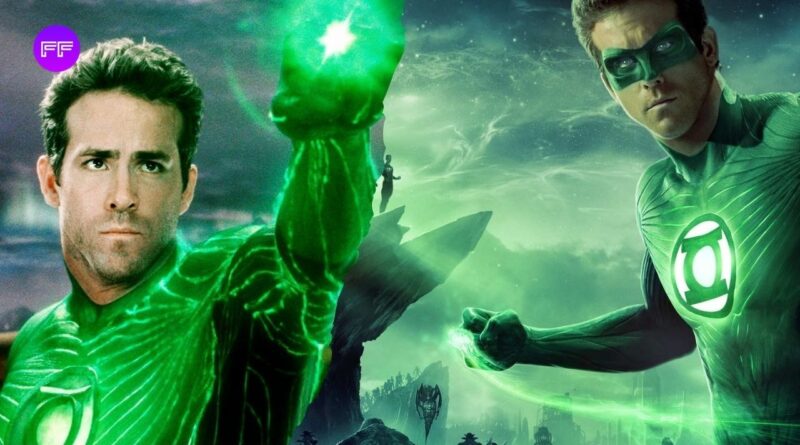
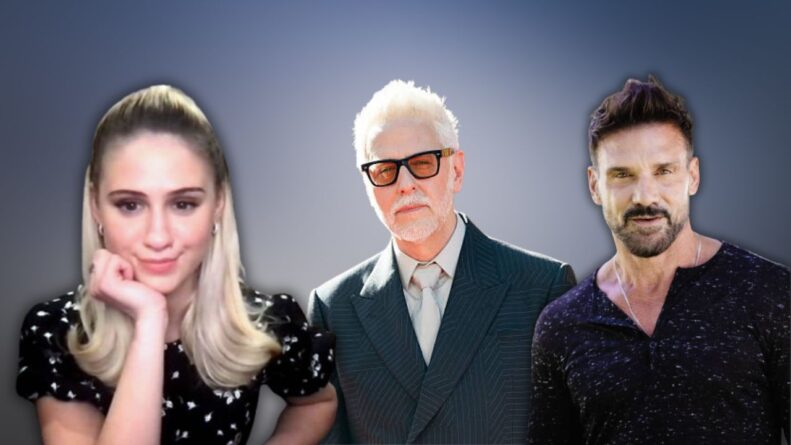
Making that interface between galactic and Earth-bound politics is a character who is the ideal entree into both: Guy Gardner, the Green Lantern. Played with a combination of arrogant charm and neurological instability by Nathan Fillion, Gardner’s inclusion in the film is transmedia genius. He’s not only a cameo, he is the ideological counterpoint to Superman and the connective tissue for the future of the DCU.
Superhero movies have eaten the same sorts of roles for years: the hero gets powers, the hero learns a lesson, and the hero puts on a suit in the last ten minutes. This is something with which Gunn’s Superman takes a particularly robust swing. David Corenswet’s Superman is already an established figure, and more crucially, he’s not the only one.
Instead of an exposition sequence explaining how these rings work, the movie establishes (through vet Guy Gardner) that “ring-slinging” Lantern is already up and running on Earth.
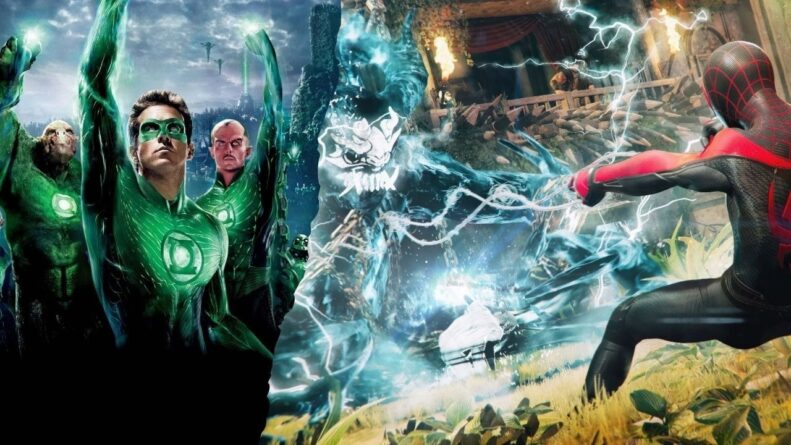
Equally, it’s allowed Green Lantern Corps to function as a kind of back-up law enforcement without becoming comic busy bodies.
Selecting Gardner instead of popular choices such as Hal Jordan or John Stewart was a strategic move. It keeps the “prestige” Lanterns available for the gritty, detective Lanterns series on HBO, and gives Superman a hero who can also stand as a powerful combatant and a source of friction. Gardner is the guy who has the most powerful weapon in the universe, but doesn’t have the social filter required to use it gracefully.
One of the most provocative topics of Gods and Monsters is the convergence of heroism and capitalism. In this dimension, there is no traditional Justice League, but rather the Justice Gang — a team financed and organized by billionaire industrialist Maxwell Lord through his company, LordTech.
Unlike Superman, who flies on the wings of altruism, the Justice Gang is a carefully curated PR machine. Their roster is as much about “brand alignment” as tactical superiority:
| Hero Identity | Corporate/Thematic Function |
| Green Lantern (Guy Gardner) | The Volatile Enforcer; provides “alien” legitimacy to a human corporation. |
| Mister Michael Terrific | The Genius; aligns with LordTech’s cutting-edge scientific branding. |
| Hawkgirl (Kendra Saunders) | The Aerial Combatant; provides tactical versatility and mythological ties. |
| Metamorpho—Rex | The Elemental; represents the boundaries of corporate-sponsored science. |
Guy Gardner’s cinematic appearance is a story in oppression. His suit prominently displays the “JL/I” logo which is a reference to the Justice League International comics but in this case it also symbolizes corporate ownership. Most notably, Gardner is seen wearing a jetpack or exoskeleton.
For a character whose ring lets him fly faster than the speed of light, this is a pretty glaring omission. It could be that LordTech requires the use of their hardware for “branding” purposes, or that Gardner’s use of the ring is being closely tracked and limited by his corporate masters.
To give Gardner some depth beyond just being a loudmouth, the DCU has drawn on a tragic part of his comic history: Traumatic Brain Injury (TBI).
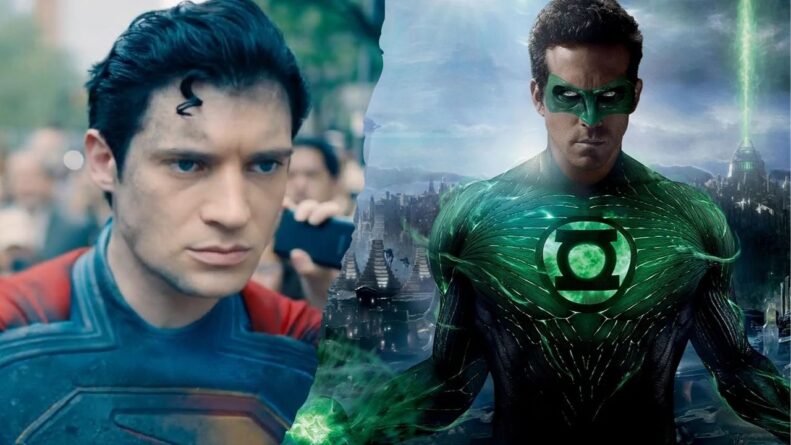
Nathan Fillion has said that his version of Guy Gardner was “flipped” after being hit by a metropolitan bus and falling into a coma. This brain damage removed his social filters and impulse control. It makes his arrogance not just a personality quirk but a clinical feature of his illness.
This makes him the ultimate contrast to Superman. While Clark Kent is the ideal of biological and moral perfection, Gardner is the gritty, broken human reality. A “Sophia Petrillo-esque” inclination to say what he’s really thinking means Lex is a potential PR catastrophe in heels — and a perfect pawn for Lex Luthor.
Luthor is tapping into Gardner’s abrasive, “local boy from Cincinnati” narrative to stoke xenophobia. Guy Gardner is, in Luthor’s telling, the “safe, human” face of the “alien, unpredictable” Superman.
The conflict of the 2025 Superman movie isn’t an alien invasion — it’s a territorial dispute between two fictional countries, Boravia and Jarhanpur. When Superman takes it upon himself to stop the killing, he breaks international law.
Gardner answers to two masters: the Guardians of the Universe (who preach neutrality) and LordTech (who fear liability). However, the cynical Guy Gardner’s shell is eventually broken when he witnesses Superman risk global condemnation to save lives. For him to disobey his corporate overlords and come join Superman in the mud is the heart of his emotional arc.
The DCU employs an “asynchronous timeline” much like Star Wars. So this is why in the new Lanterns title, Hal Jordan (Kyle Chandler) calls himself the “only human Lantern.”
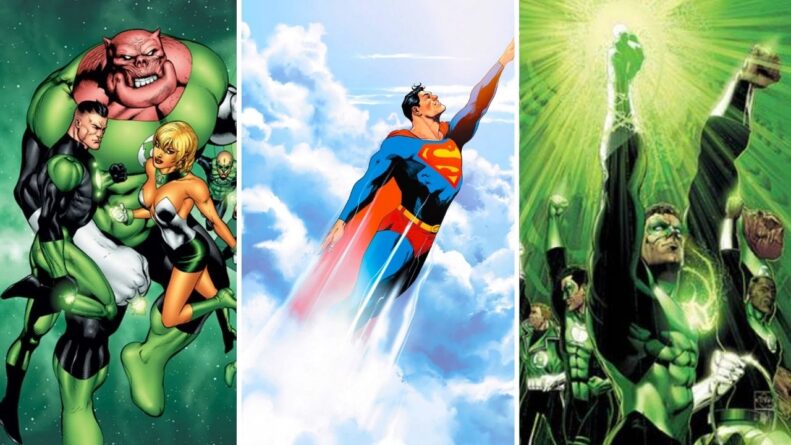
The Lanterns series is a prequel of sorts to Superman. It’s gritty, ‘True Detective’ style procedural where a younger Hal Jordan and rookie John Stewart team up to crack a terrestrial murder mystery that suggests a larger cosmic conspiracy.
This way, viewers can watch the development of the Green Lantern mythos — from Jordan and Stewart’s listen-to-your-color roots to the manic corporatized gamified era of Gardner.
Read More:- The Gosling Effect in Star Wars Starfighter – A New Era for Space Opera
Guy Gardner is the “powder keg” of the new DC Universe. He is a personification of the doubt, couldn’t-care-less attitude damage and crass commercialism of today’s world. By lining up Superman with a figure like Greer, Gunn is able to underscore why the Man of Steel is even necessary because it’s not just about nabbing the bruisers, but about encouraging the most fallen among us to remember their earliest vows.
Guy Gardner starts out as a corporate mascot with a short fuse but evolves through his interaction with Superman into a real hero. This integration means the Green Lantern mythos no longer sits as some space-only concept, but rather it has become a face that tells the human story in the DCU.
Fandomfans delivers entertainment updates from blockbusters movies, series, and amazing characters to you directly.

Explore new latest Hollywood movies to binge watch in 2026, including big blockbusters, independent jewels, thrillers, sci-fi and dramas that could earn Oscars.
Hollywood Movies: As we head into early 2026 the streaming and cinema slates are full of bonkers big budget spectacle, grim returns to form and those “is this real” biopics that everyone is arguing about online. There are long-awaited follow ups that did live up to the hype, and also indie surprises that just came out of nowhere.
This is your expertly curated guide to all the greatest and Latest Hollywood Movies that are worth your binge-watching hours right now.
Exhausted (in the best way) and tearful. After a career thrilling chase as Ethan Hunt, Tom Cruise has at last crossed the finish line, and honestly, he went out with a bang. This is not merely an action movie, it’s a victory lap.
The stunts are predictably insane — hold your breath for five minutes-level tension but what really sticks with you is the emotional punch of seeing this team for the last time. It’s the perfect movie to kick off a weekend marathon.
Stunning to look at, evocative, and very much of its unique Ryan Coogler spirit. Returning after conquering the Marvel universe, Coogler comes back with an original blockbuster that’s been racking up critical awards.
Featuring Michael B. Jordan (because of course), this genre-bending thriller plays like a classic while looking like the future. If you like your movies served with a heavy dollop of “What the hell did I just watch?” then this is best for you to watch.
Just raw, soy and existential dread adrenaline. Danny Boyle and Alex Garland are back to show that the “zombie” genre still has teeth.
This isn’t simply a sequel; it’s a reworking of the world they created in 2002. Gritty, it moves at breakneck pace and it’s truly scary in a way that a lot of modern horror forgets to be.
Rian Johnson transports Benoit Blanc (Daniel Craig) to a cult for the third Knives Out movie. It’s less “wacky satire” and more “introspective whodunit,” delving into the tension between strict dogma and true faith.
The dynamic between Blanc and Josh O’Connor’s “boxer-priest,” is the emotional pulse of the film.
The Safdie Brothers co-director’s first solo feature is a tense plunge into the realm of competitive ping-pong. Timothée Chalamet’s performance as Marty Reisman is being praised as the best of his career.
A24’s viral marketing (like turning the Vegas Sphere into a giant ping-pong ball) successfully converted a niche biopic into a “must-see” event.
Chloé Zhao offers a searing reflection on mourning. While the pacing is considered slow by some, Buckley’s portrayal of Agnes Shakespeare is an “emotional hammer blow” and the actress seems to have a Best Actress award waiting for her.
Just in time for the holiday, this movie poses the question: If you could pick one person to be with forever in the afterlife, who would that person be? It’s bureaucratic and romantic and “funny as hell.”
Edgar Wright has abandoned the Schwarzenegger side for Stephen King’s original bleak dystopia. Glen Powell, a charismatic leading man in his own right, stars in a world that doesn’t feel too far removed from our own surveillance-state reality.
“One Battle After Another” is a tough, suspenseful military simulation and strategy sub-genre that has found new life on the 2026 game and entertainment market.
As a current trend, this is a war-themed design ideology, in which narrative is relayed through constant conflict instead of cutscenes.
The Housemaid is the psychological fixation that has fully commandeered the digital charts. Coming off a theatrical release December 2025 and PVOD/Digital release on February 3, 2026, the “erotic thriller” based on Freida McFadden’s mega-bestseller has not only proven that the genre isn’t dead — it’s a box office powerhouse.
Read More:- Fallout Season 2 Ending Explained: How It Sets the Stage for Fallout Season 3
Early 2026 is shaping up to be one of those rare sweet spots where everything clicks. The blockbusters provide genuine spectacle and emotional payoffs, the auteurs are swinging for the fences with audacious ideas, and even niche concepts are finding huge audiences. From Ethan Hunt’s impeccably timed farewell to Ryan Coogler’s genre-bending reach, from existential horror to personal grief dramas and binge-worthy thrillers, this slate demonstrates that Hollywood Movies isn’t solely chasing algorithms — it’s still chasing stories that linger.
If you want jaw-dropping action, brainy mysteries, unsettling dystopian worlds, or quietly heartbreaking character studies, there’s something on this list for you (and for everyone arguing in your group chats). Delete your watchlist, cancel a few plans, and get comfortable — because 2026 is already shaping up to be a landmark year for Hollywood Movies.
Explore the ultimate 90s Movies List proving why 1999 was the best year for cinema, featuring The Matrix, Fight Club, Magnolia & more iconic films.
There is no question that 1999 was a blockbuster year for movies, with countless groundbreaking films that have defined popular culture. Here is 90s Movies List from the mind-boggling visual effects and philosophical musings of The Matrix to the shattering shock and surprisingly heartfelt emotional payoff of The Sixth Sense and the ferocious, anarchic spirit of Fight Club, each movie redefined the genre it was working in and spoke to its own particular audience. It was also a year in which directors and producers took a few chances and the final fruits of their risky labors continue to be enjoyed more than 25 years later. Truly, 1999 set a high bar for what cinema could be.
The last year of the last century was more than just a date on a calendar. It was a tectonic shift in Hollywood: the old guard of cinema collided with a new class of filmmakers who didn’t aren’t run the rulebook. Stanley Kubrick and Steven Spielberg still commanded respect (along with the likes of Francis Ford Coppola and Martin Scorsese), but a new generation was emerging — Spike Jonze, Sofia Coppola, M. Night Shyamalan, David Fincher, Paul Thomas Anderson — and rewriting what a movie could be. The year seemed like the zenith of everything the 1990s had been building toward — indie films gaining mainstream legitimacy, blockbusters getting smart, and moviegoers revved to engage with difficult, out-of-the-way tales.
And there was something else in the cultural air that year. The approaching millennium, and the year 2000, or Y2K, brought with it a sense of collective existential dread that many filmmakers sought to channel— albeit while celebrating the liberating spirit of the past. The upshot: it was a year that not only produced fine films, but fine films of, it seems, every possible genre and style.
When the Wachowskis’ The Matrix opened in March, they hadn’t simply made a movie — they’d changed the language of action cinema forever. Featuring revolutionary “bullet-time” visual effects and questions about the nature of reality, kung fu, science-fiction, and existential philosophy, The Matrix was like nothing anyone had seen before.
Keanu Reeves’ quietly assured turn as Neo has become iconic, with Laurence Fishburne and Carrie-Anne Moss also excellent. The film made $466 million worldwide and continues to inspire filmmakers today. What was remarkable wasn’t just the new technology — it was how that new technology allowed for the expression of high-level ideas about free will and reality that were easy to grasp.
M. Night Shyamalan made a striking debut with a psychological thriller that turned into a cultural touchstone. Bruce Willis, making a bid for dramatic respectability, was a perfect match for nine-year-old Haley Joel Osment in a movie that was really just a series of linked ghost tales. The movie’s legendary twist is one of film’s best kept surprises — an ending that rereads everything you’ve seen.
But the most important thing about the twist is that it didn’t come off as a cheap trick – it is earned, powerfully, through carefully-crafted screenwriting and emotional veracity. The Sixth Sense grossed $672.8 million worldwide to be the second-highest grossing film of 1999, and it still holds up as a tender thriller that’s all in suggestion, not blood.
David Fincher’s adaptation of Chuck Palahniuk’s novel was not only one of the most violently thought-provoking movies of the year. It was, paradoxically, one of its most rewarding experiences. What is discomfiting at first becomes addictive at second, third, and even fourth viewings. As the insomniac, crumbling narrator Edward Norton struggles not to fall under the spell of charismatic Tyler Durden, Brad Pitt dive bombs into a ferocious satire of consumerism, fragmented masculinity, and contemporary rebellion.
That film’s twist is quieter and morally ambivalent, and works by revealing a narrator’s split mind. With an IMDb rating of 8.8, Fight Club has risen above the backlash that it received at its release and has been seen as a film of true artistic merit masquerading as mindless entertainment that causes conversations about meaning and social critique.
Mendes (Bond) debuted behind the camera on features with the year’s Oscar darling, taking home five Academy Awards, among them Best Picture and Best Actor for Kevin Spacey. Darkly satirical about suburban American culture, the trend was immediately established – Mendes and screenwriter Alan Ball were revealing the emptiness behind Middle America’s perfectly trimmed lawns.
It was one of the rarest of things in Hollywood: a critics hit that also became a box office giant, raking in more than $350 million on an unassuming $15 million budget. That’s not to say that the film’s reputation hasn’t been reconsidered in recent years, though its impact on cinema is certainly undeniable.
The last film of Stanley Kubrick was meant to be his big comeback. What the viewers were offered was something much richer: a relationship drama hiding behind the trappings of a thriller, a farcical, sexual black comedy, and a reflective film on marriage and desire.
Tom Cruise and Nicole Kidman gave raw performances, and Kubrick’s obsessive direction turned a well-worn story line into something truly disturbing and thought-provoking .
Spike Jonze’s first feature film’s concept, a portal into the thoughts of actor John Malkovich might have been a novelty, but Jonze uses it to examine identity, obsession and the nature of consciousness itself. Cameron Diaz, John Cusack, and Catherine Keener give surprisingly profound performances in what easily could have been a straightforward comedy.
Toy Story 2 showed that animated sequels could say something artistically, rather than just being financial grabs. It helped establish Pixar as a studio that treats its adult intelligence and emotions—and it remains one of the most powerful films in Pixar’s entire library.
When it hit theaters in 1999, it revolutionized the horror genre with its use of found-footage style narration, minimal production costs, and a genius marketing strategy that obscured fact and fiction.
The Blair Witch Project become the excessive horror which success demonstrated that people could be entertained simply by a story and a mood, without elaborate special effects or movie stars.
Magnolia interlaces a number of connected stories throughout the day and night. At its heart, the film is about guilt, forgiveness, regret, trauma, coincidence and connection between people. The various characters’ lives intersect in small (and occasionally stunning) ways, leading up to one of the most-discussed finales in contemporary film.
Magnolia is now considered a cult classic, and is often regarded as one of the best films of 1999 and one of the best ensemble films ever. It’s flawed and difficult, and so human — all of which is why it continues to provoke discussion more than twenty years on.
The “Best Man” (1999), directed by Malcolm D. Lee, is a romantic comedy that rode the wave of popularity of the genre back then. With a predominantly Black cast, the movie is about a group of college friends coming back together for a wedding. Taye Diggs is a rising novelist whose latest book causes trouble — it’s a roman à clef that draws on their own lives.
Warm, funny and sexy, the film was a box office hit and managed to distinguish itself without crass commercial exploitation or without being too blatantly positioned as a “milestone” in Black representation. Executive produced by Spike Lee, who is also the director’s cousin, “The Best Man” continues to hold a treasured place in the romcom canon.
Read More:- Critics Choice Awards 2026 Honor Best Performances — Top Winner List
What is interesting is that 1999 itself was not universally hailed as the best year in the 90s Movies List. American Beauty took the Oscar, but Being John Malkovich was more highly lauded. Fight Club divided opinions upon its release. It was a long time before audiences and critics as a whole realized what they had experienced that year: They’d been treated to something extraordinary—an entire year in which the movies seemed vital, even dangerous, and endlessly inventive.
In an era when blockbuster culture reigns and original concepts have a hard time securing funding, 1999 stands as a powerful testament to what can be achieved. It was the year that arthouse brains met Hollywood brawn, when first-time filmmakers could become auteurs overnight, and when a movie didn’t have to come from a known property to become culturally significant. Looking back, 1999 was not just a great year for movies — it was the year that movies proved that they still mattered.
Dive into the world of 90s movie list with Fandomfans and get every detail from your movies, series and celebrity.