Supergirl: Woman of Tomorrow’s Five Planets Explained: Every Alien World Kara Visits

Explore the five alien worlds Kara Zor-El visits in Supergirl: Woman of Tomorrow and discover how each planet shapes her epic cosmic journey.

Published: June 10, 2026, 11:40 am

Supergirl: Woman of Tomorrow is the second film in DCU’s Chapter One: Gods and Monsters set entirely in outer space. Supergirl will be flying on five different planets rather than saving people on earth, something quite new from repeatedly origin stories of superheroes for decades. Fans want something new and exciting and Gunn fulfilled fan’s wishes. 

Director Craig Gillespie confirmed at Supergirl launch event that the story unfolds across five different planets, and every planet has its own environment (atmosphere, alien species, and visual identity). As Gunn himself put it, they are planning to restructure the big DC universe.

That’s a bold swing. And Supergirl: Woman of Tomorrow will be the first origin movie with a different narrative direction and an important bridge for Superman next movie. So — where does she go? What happens in each world? And why does it all matter for the future of the DCU? Here’s your complete travel guide to the five planets of Supergirl.

The Five Worlds of Kara Zor-El in Supergirl: Woman of Tomorrow

Krypton / Argo City– The world she never got to forget

Every Superman movie shows Krypton blowing up in the first five minutes and moves on. Supergirl refuses to let it go that quickly — because for Kara, it didn’t. Where Clark Kent was an infant rocketed away from a planet he never truly knew, Kara Zor-El watched her civilization die piece by piece, over years, while she was old enough to understand exactly what she was losing.

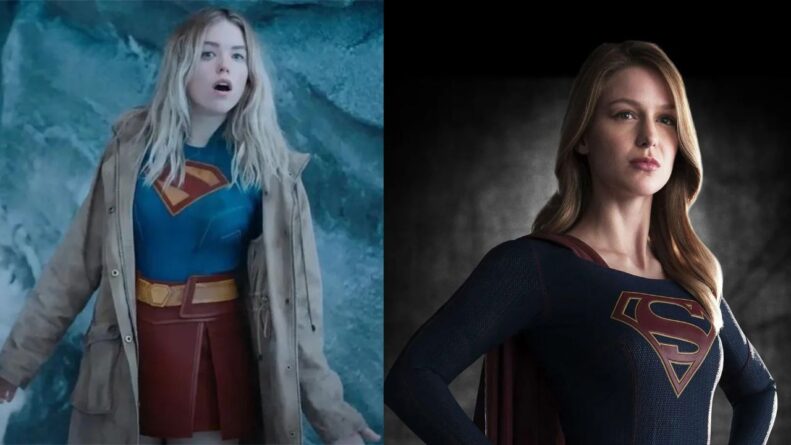
The trailers make this devastatingly clear. The trailer showed a moment where a large dome was formed over Argo City by Kara’s father. That Krypton shielded tiny protected city floated through space, its population clinging to survival on borrowed time. Kara’s mother, Alura In-Ze (Emily Beecham), is present in these flashbacks as well, though her role is a limited and haunting one — in the source comic, she dies from radiation poisoning before Argo’s final destruction, a consequence of yellow sunlight slowly changing the chemical composition of the rock beneath the city.
The Five Worlds of Kara Zor-El in Supergirl

This is the version of Krypton’s destruction that the Supergirl: Woman of Tomorrow showing, a prolonged, agonizing collapse rather than huge explosion. Kara firmly rejects the idea that Krypton died all at once when Ruthye questioned her homeland. It’s a line that reframes everything. Superman’s origin is tragic. Kara’s origin is traumatic. 

Eventually, Zor-El follows in his brother Jor-El’s footsteps, builds a rocket and sends Kara off into space. Kara left with a single piece of advice from her mother “be good.” Argo City sequences were filmed on the massive soundstages at Warner Bros. Studios Leavesden, where LED virtual production volumes recreated the dying Kryptonian cityscape with extraordinary detail.

Evely – Where Kara meets her unlikely companion

The planet Evely is where Kara’s actual story begins. Kara is living a directionless life ever since in this world, alone and drinking on her 23rd birthday, dancing by herself on Blondie’s “Call Me” to avoid her pain. Her life changes when a young alien girl named Ruthye Marye Knoll walks into her life.

Evely feels like a forgotten corner of the galaxy—rugged, worn down, and full of life that’s barely holding together. The teaser’s early shots of dirty streets and crumbling alien buildings seem to come from this planet, giving it the look of an old spaceport rather than a shining sci-fi city. It’s also where Kara is at her lowest point. This is where Kara is at her lowest, far from Earth, far from her cousin Superman, she is just surviving these days and trying not to die while her birthday feels like a reminder that she belongs nowhere.

It all begins when Ruthye’s father, Elias Knoll (played by Ferdinand Kingsley), is murdered by Krem of the Yellow Hills (Matthias Schoenaerts), the feared leader of the Brigands—a violent gang of space pirates and traffickers. Heartbroken and consumed by grief, Ruthye turns to Kara with one simple but dangerous request: help her hunt down the man who killed her father.

Ruthye isn’t asking for justice through any system, she wants direct, bloody revenge. And Kara, worn down and reckless, agrees. That decision sets both of them on a journey that will test their beliefs and change them in unexpected ways.

Read More 👉 DC Chapter 2: The Future of Batman, Superman, and Wonder Woman

The name Evely is a heartfelt tribute to Bilquis Evely, the artist who co-created Supergirl: Woman of Tomorrow alongside writer Tom King. Her stunning artwork gave the comic its unique identity, blending breathtaking sci-fi worlds with deep emotional storytelling. By naming a planet after her, the filmmakers are paying respect to the artist whose visuals helped shape this story.

To bring Evely to life on screen, the production used Iceland’s dramatic black sand deserts and ancient lava fields. These real-world landscapes already look like something from another planet, making them the perfect backdrop for Supergirl’s cosmic journey.

Holzherr — The most visually spectacular world in the galaxy

If Evely is where Kara hits rock bottom, Holzherr is where the universe opens up. This planet, confirmed by set visitors from the Screen Rant press trip to Leavesden, orbits three suns — each a different color — casting its skies in an extraordinary, trichromatic light that makes the world look like something out of a painting. It’s the kind of planet that stops you mid-sentence and makes you look up.
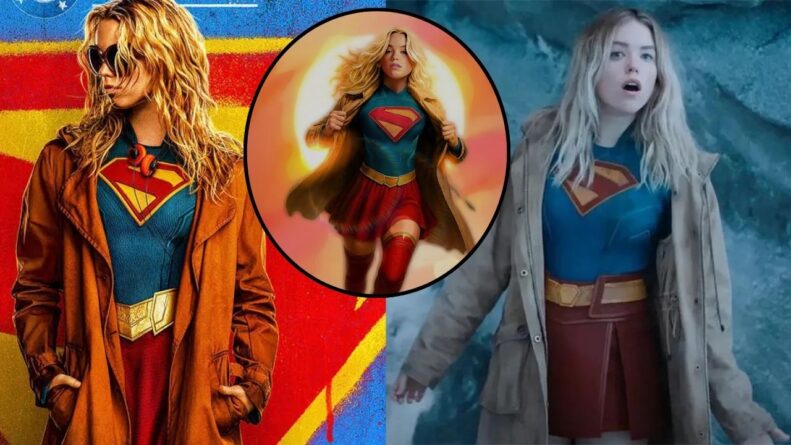
The Five Worlds of Kara Zor-El in Supergirl

The name “Holzherr” is another deeply intentional easter egg — it honors Brittany Holzherr, the DC editor who oversaw the publication of the Woman of Tomorrow comic and who reportedly influenced Tom King to make Supergirl the story’s protagonist rather than Lobo. Without Holzherr’s editorial guidance, the source material that inspired this entire film might have been a very different book. Naming a stunning alien world after her is a gesture of real gratitude from everyone involved.

Holzherr is also where the film’s visual ambition reaches its peak.Director Craig Gillespie filmed in real locations, including Scotland’s Highlands, and then used VFX to enhance them is the smart decision. The three-sun sky was achieved through a combination of on-location photography with visual effects that makes a breathtaking scene. 

Czarnia – Paradise lost by the man himself

Czarnia is where the story takes its sharpest tonal detour — and delivers its most outrageous character. In DC Comics lore, Czarnia was once a paradise planet: peaceful, prosperous, and entirely without war. Then Lobo was born. A single Czarnian committed genocide and killed every last member of his species expect himself. Only one man is responsible for this heartbreak killing is intergalactic bounty hunter with a wide grin and a steel chain who showed up in that January 2026 teaser.

Lobo’s connection to Czarnia is brought up in an official preview clip released just before the film’s release, where Kara and Ruthye cross his path at what appears to be an interplanetary rest stop. Ruthye’s description cuts right to it: “He’s an immortal with a god complex. Killed off his entire planet.” The scene is darkly comic — Ruthye is terrified, Kara is exhausted, and Lobo is delighted by both reactions.

Lobo was originally the protagonist of Tom King’s source comic — it was DC editor Brittany Holzherr’s guidance that redirected the story to center on Supergirl instead. Giving Lobo his own home planet and backstory is a smart storytelling choice. Czarnia represents a mirror image of Krypton. Where Krypton was destroyed by forces beyond anyone’s control, Czarnia was destroyed by one man’s choice. This emotional parallel makes a character more interesting and meaningful.

Read more 👉 DC Chapter 2 Latest Update: What Is James Gunn’s New Plan?

The Hunt World – Where Vengeance and justice collide

Every road trip has to end somewhere. For Kara and Ruthye, it ends in a world where Krem of the Yellow Hills has taken refuge — and where their months-long chase across the galaxy finally reaches its violent, emotionally charged conclusion. This is the film’s climax, and the trailers suggest it is spectacularly realized: vast, frozen landscapes, the kind of terrain that makes every fight feel enormous.

The critical detail here, pulled straight from the source comic, is the red sun. Beneath a red sun, Kara loses her Kryptonian powers. No heat vision. No super strength. No flight. This is where the film gets honest about what kind of hero Kara actually is — not an invincible god figure, but a person who has already survived the worst thing imaginable and is still standing. When Krem steals her ship mid-journey and she arrives powerless on this world, she doesn’t fold. She adapts.

Iceland’s glacier fields served as the primary real-world filming location for these sequences, providing the kind of bleak, expansive terrain that communicates danger even before a single punch is thrown. The production finished in May 2025, giving ILM and the VFX team a one year time to polish practical landscapes which already looked like they came from another galaxy. 

The journey doesn’t end with Krem’s defeat. It ends with Kara understanding what “be good” actually means when there are no easy answers. Ruthye came looking for revenge. In this final world both characters get matured and become what they are meant to be. Supergirl: Woman of Tomorrow is more deeper than a simple revenge.

What she finds — and what she narrates for the audience throughout the film — is something more complicated, more honest, and far more lasting than simple vengeance. This final world is where both characters earn the people they’re going to become.

Read More 👉 Clayface 2026 Horror Movie Plot, Trailer & DC’s Dark Horror Reboot Explained

Why Going Cosmic Was the Right Call

It would have been the safe, easy choice to bring Kara to Earth and let her share the screen with Superman in a familiar, grounded setting. James Gunn and Craig Gillespie made the exact opposite decision — and it’s the reason Supergirl has generated the kind of genuine anticipation that only comes when something feels genuinely new.

The DCU’s Earth-based stories have Superman, Batman (via Clayface, releasing October 2026), and the entire Green Lanterns mythology tethered to familiar soil. Supergirl gets the cosmos. She gets five worlds. She gets a story that unfolds like a space western written by someone who grew up reading both Ursula K. Le Guin and Walter Hill screenplays. That emotional toughness and adventure draws from Tom King and Bilquis Evely comic storyline and exactly what Gillespie set out to translate to IMAX.

Supergirl

Supergirl: Woman of Tomorrow using real locations of Scotland and Iceland as alien worlds and enhancing with VFX rather than building everything from scratch in a computer makes the planet look more real and grounded than heavy CGI effects. You can feel the cold. You can feel the distance. When Kara screams into the void of space, you understand why she had to go somewhere the sound wouldn’t destroy everything she loves.

What These Five Planets Mean for the DCU

Every planet Kara visits in Supergirl: Woman of Tomorrow is a building block for the DCU’s cosmic architecture. Argo City ties directly into the Brainiac mythology that Man of Tomorrow will explore in 2027. Czarnia introduces Lobo as a full-blown DCU character with room to grow. The alien civilizations glimpsed across Evely, Holzherr, and the Hunt World lay the groundwork for a universe that doesn’t revolve solely around Earth — one where Kara Zor-El is a hero of the galaxy, not just a backup to her more famous cousin.

James Gunn has already teased that Chapter One’s finale will involve a “much bigger story,” and it is increasingly clear that Supergirl will be at the center of it. She’s being set up not as an appendix to Superman’s story, but as a fully independent cosmic protagonist who has already seen more of the universe than any other DCU hero. 

Read  More 👉  Absolute Universe DC Comics Bombshells from ComicsPRO That Will Reshape 2026

Conclusion

Supergirl: Woman of Tomorrow is a cosmic adventure that uses five different alien worlds to shape Kara Zor-El’s journey. From Krypton to Hunt world, each planet adds a new layer of lesson for her. Instead of relying on familiar Earth-based settings, James Gunn embraces the emotional core of the film and focuses on stunning visuals to make it realistic for the audiences. If executed well, these alien worlds could make Supergirl: Woman of Tomorrow one of the most powerful entries in the new DC Universe. 

Supergirl: Woman of Tomorrow opens in theaters and IMAX on June 26. 

Follow Fandomfans to get more updates from your favorite movies and series. We deliver deeper details on upcoming movies.


Alpana

Articles Published : 125

Alpana is Fandomfans Senior Editor across all genres of entertainment. She evolved in the media industry since a very long time, she manages the content strategy and editing of all the blogs. Her focus on story development, review analysis, and research is well-equipped that ensures every article meets the standards of accuracy and depth.

Leave a Comment

Your email address will not be published.

Beyond Earth: Why ‘Supergirl 2026’ is Not Your Average Superhero Movie

Supergirl 2026 brings a dark space-western flavor to the DCU. Find out Milly Alcock’s groundbreaking role, cosmic setting, and why it upends superhero movie. 

Written by: Mariyam
Published: April 2, 2026, 12:49 pm
Supergirl 2026

Supergirl 2026 is the biggest piece of element in the movie history which is going to change the genre of superhero fatigue for decades. This time not on earth, the fight moves to space and expands its narrative. Non-comic enthusiasts should know that the Supergirl movie is gonna change the heart of its superhero genre. Milly Alcock is portrayed as an aggressive, bold and cynic Supergirl.

If you’ve gone to the movies at all in the last five years, you know the drill. A luminous portal melts open in the air, a CGI legion descends upon a major metropolitan city, and a cadre of soldiers of fortune must punch its way through to the building to save the world. It is a formula which has entertained us for over a decade, but recently, it seems we have been dining on the same dish on repeat. 

Audiences seem eager for a new take. They expect new themes and stories which push the limits of genre rather than same stakes. James Gunn’s revamped DC Universe (DCU) and one of its most closely watched projects: Supergirl: Woman of Tomorrow (2026)

If you are thinking about Supergirl from the CW TV show, then you have a surprise this time because she is not just Superman’s younger cousin but a surviving girl who won’t suppress her identity. The Supergirl 2026 film will bust all of those expectations. There’s no tale about a girl making the rounds in high school or keeping her powers under wraps at an office job. No, instead we are getting a dark, gritty, brooding sci-fi spectacle.

So let’s jump into why Supergirl 2026 is going to be the breath of fresh air that the superhero genre so badly needs and why this story of grief and redemption across galaxies that’s a leap for the character will be unlike anything we’ve ever seen before. 

From Earth’s Guardian to a Traveler of the Cosmos

Batman has Gotham, Spider-Man has New York, and Superman has Metropolis to call home. They’re usually tasked with making sure citizens are safe from threats closer to home. But what if a hero has no love for Earth, or feels no earthly connection at all? 

Supergirl: Woman of Tomorrow is pulling the superhero out of the city and into the cold, uncaring darkness of outer space. 

Rather than a “save the world” narrative, the film is being shaped up as a Cosmic Odyssey or more specifically, a Space-Western. Think of the rugged, survival themes of a classic John Wayne or Clint Eastwood flick, but against the backdrop of colorful alien worlds, weird cosmic creatures and neon-drenched galactic dive bars. Kara Zor-El isn’t on the beat watching for bank robbers, she’s racing across the galaxy on a mission deeply personal.

From Earth’s Guardian to a Traveler of the Cosmos

This change of locale is a huge visual and narrative feast for the viewers. Space is a blank canvas, so go crazy. We are not going to see the same gray skyscraper getting bashed. We’re going to see alien worlds, strange suns, alien cultures that take the DCU way beyond the bounds of our solar system. 

It lifts the film above the standard superhero fare and turns it into a grand sci-fi adventure. You can glimpse hints of Dune and Star Wars in its world-building, but at the center, it’s all about a man with nearly god-like power. 

Core Theme of Supergirl 2026: A Brutal Journey of Self-Discovery

The original story led us to understand the level of effect this movie is going to give. The film is a loose adaptation of Tom King and Bilquis Evely’s celebrated comic book miniseries, bearing the same name. Without going too far into spoilers, King’s comic rebuilt Kara around the fundamental thing that separates her from Superman: their trauma. 

Superman had been sent to Earth when he was just an infant. He was raised by adoptive parents in the rolling plains of Kansas. He is a being of hope because he only knew love.

That’s what it comes down to emotionally in Supergirl 2026. Kara’s not okay. She’s weighed down by grief of losing her world, survivor’s guilt, and rage. She’s not working from Superman’s sunny disposition. We catch her in this tale as adrift. She’s celebrating her 21st birthday in an alien bar, trying to drink away the sorrow of a life that’s been one tragedy after another. 

Kara, however, was a teenager at the time of Krypton’s destruction. She lived her entire life the first fourteen years as a refugee on a floating fragment of her shattered home world, she saw all she had loved starve, suffer, and die until she was at last sent to Earth. 

A space trip isn’t only to find and kill her enemy but to find herself. When she comes across a young alien girl whose father has been killed and who is looking for revenge, she must face her trauma. In a roundabout way, helping this girl is what Kara has to do to help herself.

A Brutal Journey of Self-Discovery

That emotional element is what makes the story so fundamentally “human.” It’s a beautiful paradox: The most powerful alien in the universe is grappling with the most down-to-earth, relatable human feelings — depression, purposelessness, and the challenging path of recovery. 

Why This Approach is So Refreshing for the Audience

Ignoring the repetitive stories of the superhero genre, Supergirl 2026 is delivering something different to the cinema that feels wholly original. Here is a primer on why this method is exactly what today’s audience wants:

No Secret Identities: There is no Clark Kent-like clowning alter ego in this. Kara doesn’t put on glasses and masquerade as a mild-mannered reporter. She doesn’t pretend or hide to make humans comfortable. Kara Zor-El, being a proud Kryptonian, takes out the repetitive “keeping my secret from my friends” subplot that drags down so many superhero movies, allowing the story to concentrate on her real path and development. 

The Emotions Are Genuine and Imperfect: For decades, female superheroes were expected to be paragons of virtue – always on the right side of ethics, eternally patient, and nearly flawless. This narrative deviates in Supergirl 2026 from that ideal and allows them to feel more human. Kara breaks that mold. She is flawed, swears, angry and a drunkard who is trying to forget. Superhero with anger can shape the different kinds of character development, this is something new and acceptable. Reviving from grief, surviving on her own by being different is an ideal approach for the fresh narrative.

A Different Kind of Superhero Movie: As noted above, this isn’t your typical capes and cowls flick. It is a survival drama. Out in deep space, beneath a red sun, Kara forfeits her powers. She can bleed. She can freeze. She can die. Not solving every problem with god-like power and laser vision makes the stakes feel real. Combining sci-fi, survival narrative and the superhero genre keeps viewers excited and more real with these characters. 

The Perfect Casting: Milly Alcock and The Goodest Boy in the Galaxy

So the moment James Gunn revealed that Milly Alcock (best known for her breakout role as the young Rhaenyra Targaryen in HBO’s House of the Dragon) had been cast as Kara, the internet went full send on approval. Alcock possesses a very particular, uncommon on-screen aura. She has a keen sense of how to portray a character who is both regal and fiercely independent while weighed down by legacy and harboring a quiet, simmering, dangerous fury. 

She’s not the classic, bubblegum-pop superhero look – she has the steely gaze of someone who’s watched empires fall. She is the absolute perfect choice to play Tom King’s complicated version of Kara. 

Milly Alcock and The Goodest Boy in the Galaxy

Then there’s Krypto, the Superdog. Yes, Supergirl is now traveling the galaxy with a dog in Supergirl 2026. But leave behind any cartoonish preconceptions you may have. In this world, Krypto isn’t a goofy sidekick designed to move toys. Krypton was destroyed by a nuclear war, and he is a ruthless, hyper-aggressive Kryptonian dog who died with their planet and with whom Kara is the last surviving member of her race. He’s her protector, her best friend and the only link she has to the lost home for which she pines. 

It’s a lot of what you see in the opening of this film, which is the relationship between Kara — hardened and scarred and carrying a whole lot of hurt and her super-powered dog, loyal to the end. And really, don’t be shocked if Krypto steals the show every time he pops up. 

Read More:- Star Trek History Sparks lighting on “Trials and Tribble-ations” After Leonard Nimoy’s Simple Response

Conclusion

The first chapter of the new James Gunn DCU is “Gods and Monsters.” woman of tomorrow, then it’s no surprise that Supergirl 2026 leans very heavily into the “monsters” side of that equation. It’s not the monsters she’ll encounter in space, but also the demons and emotional fights she has inside herself. 

Supergirl 2026 is really a huge moment for the DCU. It’s proof the franchise has no interest in just playing it safe anymore. From its full-throttle Space-Western vibe to putting emotional depth rather than merely physical peril front-and-center, to letting its protagonist be genuinely flawed, DC is declaring a new era of comic book movie.  

Supergirl 2026 is more than just a ho-hum sci-fi/fantasy industry-dreck superhero spin-off. It’s a gorgeous and emotional bass line of a story about a girl and her dog making it in a hostile cosmos. It’s a tale about how to have a purpose after your world ends. And in a movie world where there’s no shortage of heroes trying to save the world, a hero trying to save herself might be the most thrilling ride of all. 

Dive into the entertainment world with Fandomfans to get the latest update from movies, series, and celebrity news with deeper details.

Mariyam

Articles Published : 67

Mariyam Khan is Fandomfans Content Writer and providing reports and reviews on Movie Celebrities, and Superheroes particularly Marvel & DC. She is covering across multiple genres from more than 4+ years, experience in delivering the timely updates.

Leave a Comment

Your email address will not be published.

DC Film Zatanna Lost: Emerald Fennell’s Psychological Superhero Tragedy

DC’s Lost Zatanna movie hit the dust- find out what Emerald Fennell’s dark, chic take on the character was and why Warner Bros abruptly ended production.

Written by: Alpana
Published: February 14, 2026, 9:26 am
DC Film Zatanna Lost

A special kind of heartbreak is reserved for the “best movies never made.” We preoccupy ourselves with Jodorowsky’s Dune and Del Toro’s At the Mountains of Madness, speculating on how they might have altered the cinematic terrain. In 2026, with Emerald Fennell on the press trail for her raw adaptation of Wuthering Heights, a new identity was officially added to that tragic pantheon: Zatanna

For years, speculation has swirled about what the Oscar-winning writer/director of Promising Young Woman and Saltburn might do with DC’s best stage magician. Now, with Fennell’s recent frank interviews, we at last have a peek behind the curtain. 

“It wasn’t a superhero flick, it was a fairly deranged saga about a nervous breakdown.”
–She says

Rewriting the Superhero Origin Story

Fennell depicted Zatanna around the time of a very strong personal and professional transition. Immediately following her Academy Award win, she was catapulted into the high-gloss Hollywood movie star — a world she didn’t quite recognize.

Beyond the Cape

Beyond the Cape
Image Credit: Fandomfans

Feigen became the tool she used to filter her alienation through the script. Instead of a typical origin story in which a hero discovers how to use their powers to save the world, Fennell’s Zatanna is a woman coming undone. 

I had this very simple question: “How do I make a superhero movie that I’m comfortable watching with my kids and that personally speaks to me?” I was a woman having a breakdown.
— Emerald Fennell

This wasn’t just “gritty” like we’ve grown accustomed to from DC, it was psychological terror. For a character like Zatanna, who practices Logomancy (speaking backwards to affect reality), a broken mind is a frightening weapon. When the magician loses her grasp on reason, reality itself starts to distort. 

The “Demented” Aesthetic of Fennell’s Vision

If you’ve seen Saltburn, you’re aware Fennell doesn’t do “palatable.” Her take on Zatanna would almost certainly have swapped clean CGI energy blasts for something more tactile and grotesque. 

Feature The Traditional Heroine Fennell’s Zatanna (The Archetype)
Mental State Resilient & Stoic Fractured & “Hysterical”
Relationship to Power A Responsibility An Addiction/Burden
Aesthetic Clean & Heroic Grotesque & Baroque

This incarnation of the character was described as a “hard woman” — untidy, scary, and thoroughly human. It was a dismissal of the “cool girl” trope, instead dwelling on the bodily and cognitive toll of doing magic. 

Why Zatanna Was Never Made

  • Bad Robot Bottleneck: The movie was part of J.J. Abrams’ sprawling “Justice League Dark” universe. Despite a $500 million deal, films of John Constantine and Madame X stayed stuck in development purgatory for years, without so much as one frame being filmed.
Zatanna Was Never Made
Image Credit: Fandomfans
  • The WBD Merger: When WarnerMedia became Warner Bros. Discovery, the directive changed from “growth at any cost” to “debt reduction.” CEO David Zaslav began a “purge” of risky projects—most famously shelving the nearly finished Batgirl for a tax write-down.
  • The Gunn/Safran Reboot: In late 2022, James Gunn and Peter Safran assumed control of DC Studios with a charge to create a unified, optimistic “Gods and Monsters” arc. That”deranged” standalone movie about a woman breaking—down simply didn’t fit the new blueprint. 

The Legacy of the Unmade

The removal of Fennell’s Zatanna exemplifies an escalating anxiety in contemporary film: the struggle between auteur ambition and franchise security. While Zatanna probably will debut in the new DCU (if not before in James Mangold’s Swamp Thing), she will unquestionably be a more “stable” version of the character.

Auteur Vision vs Franchise Safety in Modern Blockbuster Cinema

Auteur Vision vs Franchise Safety
Image Credit: Fandomfans

Fennell’s “lost” script is still an intriguing “what if” — a souvenir from a moment when the superhero genre nearly gripped something decidedly raw, unsettling, and revolutionary. It appears that in today’s blockbuster economy there’s a lot of room for monsters, but precious little for meltdowns. 

Read More 👉  ‘Star Trek: Starfleet Academy’ Rebuilds Hope as Episode 6 is Turning Point

Conclusion

The still unproduced Emerald Fennell’s Zatanna is not merely a scrapped project, it’s an alarm that modern blockbuster cinema is too scared to ring. With all the sophistication as well as volatility of the mind, it tested safe franchise logic that was unthinking. What we lost was not a superhero movie, it’s a risk. And in today’s studio system, that may be a rarer magic than any other. 

Fandomfans is a platform where you can get all the deeper details from the DC franchise about characters and movies.

Alpana

Articles Published : 125

Alpana is Fandomfans Senior Editor across all genres of entertainment. She evolved in the media industry since a very long time, she manages the content strategy and editing of all the blogs. Her focus on story development, review analysis, and research is well-equipped that ensures every article meets the standards of accuracy and depth.

Leave a Comment

Your email address will not be published.