Star Wars’ Ahsoka Tano Replacement Succeeded Where Anakin’s Padawan Failed
Star Wars' Ahsoka Tano replacement achieved something Anakin's former Padawan never could. Here's why this success changes Ahsoka's legacy forever.
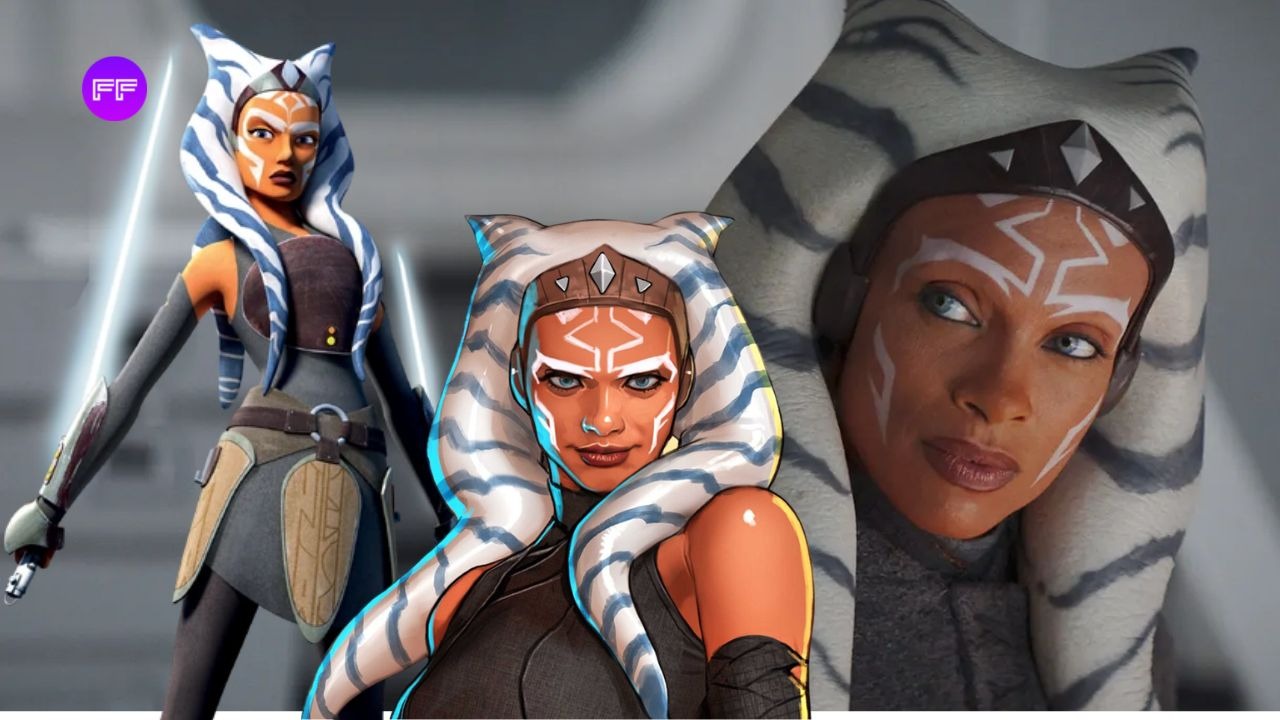
There are some stories in Star Wars that never get a proper ending. Even our beloved characters’ victories become impossible due to the weight of canon. Ahsoka Tano Replacement succeeded where Ahsoka never could win. F won from her dark-side master but not without sacrifice. She is Anakin Skywalker’s most beloved, first and last Padawan in the entire franchise.
But before her sacrifice, F survived Order 66 then walked away from the Jedi Order but she failed to stop her fallen master and it’s devastating for her. The moment of confronting the darkness that consumed the man who trained her, always escapes from her hand. She was first introduced in Star Wars: Visions.
Star Wars brings a yellow-lightsaber-wielding Jedi from Star Wars: Visions to fulfill the fans wish which Ahsoka never could. Continue reading to know everything about Ahsoka Tano Replacement who meant a lot to Star Wars fandom.
F is a Jedi Padawan who appears in Star Wars: Visions Volume 1 and Volume 3. It is one of the Disney+ anthology series that lets different animation studios tell unique Star Wars stories. F’s first appearance was in “The Village Bride,” then returned in episode “The Lost Ones.” She became the most loved character of the entire franchise and voiced by Karen Fukuhara.
Ahsoka Tano Replacement is not a canon character in the traditional sense — Visions occupies a unique space in the Star Wars universe, telling stories that are inspired by the galaxy far, far away without being bound to its continuity. But that creative freedom is exactly what makes F so fascinating.
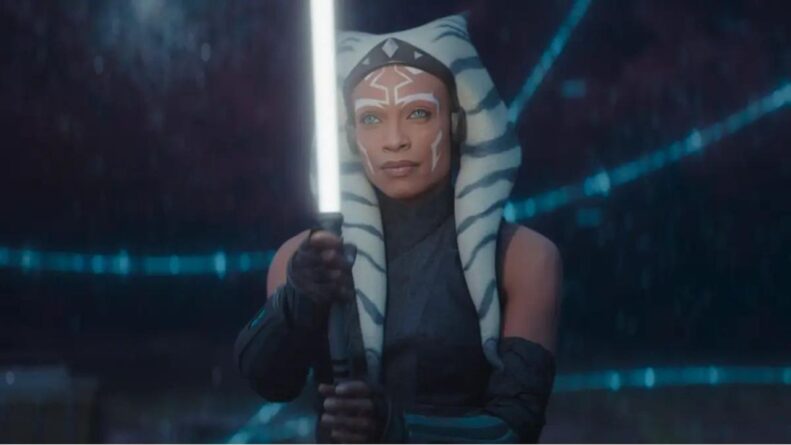
We can see the similarities in both characters. Like Ahsoka, F also survived the fall of the Republic and the horror of Order 66. Like Ahsoka, she carries uniquely coloured lightsabers — yellow for F, white for Ahsoka. Like Ahsoka, she has an unconventional relationship with the Force and the Jedi Order itself. And the biggest pain they both had, their masters turned into darkness.
The difference is they didn’t end up the same.
F’s victory becomes so overrated that you must understand Ahsoka’s journey and burden to understand what raises the stakes.
Ahsoka Tano first look was in the 2008 Clone Wars animated film and there, her journey started as Anakin Skywalker’s apprentice. She grew in those seven years into something extraordinary — she was a bold and strong Jedi who walked away from the Jedi Order because they failed her first.
Order put her down by accusing her for bombing the Jedi Temple. Masters who were close to her stood by when she was on a trial for the crime she didn’t commit. And when she was finally exonerated, no one truly made it right. So she left.
That decision defined the rest of her story. Without the rank or title of a Jedi, Ahsoka navigated the Dark Times mostly alone. She became an operative of Rebel intelligence – Fulcrum. She didn’t even survive encounters with Inquisitors and Imperial forces, she also helped heroes like Kanan Jarrus and Ezra Bridger.
But the shadow of Anakin never fully lifted.
When she finally faced Darth Vader in Star Wars Rebels — in the iconic two-part episode “Twilight of the Apprentice” — the confrontation was everything fans had waited years to see. And yet, it wasn’t a victory. It wasn’t a defeat either, technically. Ezra Bridger pulled Ahsoka into the World Between Worlds and saved her life before the duel could reach its conclusion. Vader continued his reign of terror. Nothing changed.
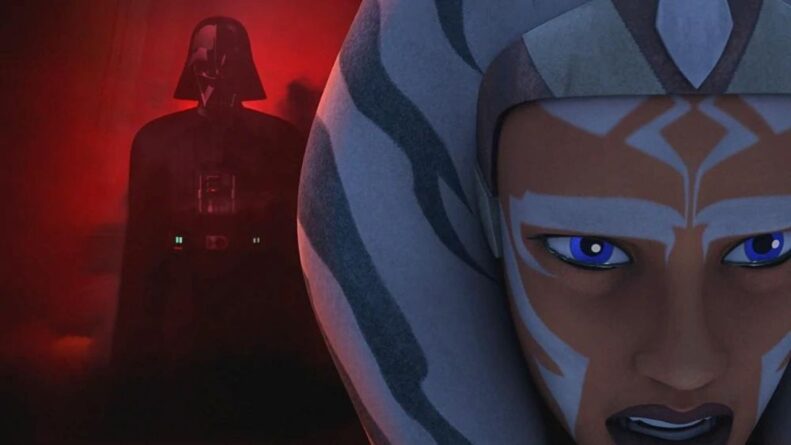
Ahsoka never faced Vader again. He died in Return of the Jedi, redeemed by his son Luke Skywalker — not stopped by the apprentice who had known him longest.
Here’s where the structural problem becomes clear: Ahsoka could never defeat Vader because Star Wars’ own canon wouldn’t allow it.
If Ahsoka had stopped Vader, truly stopped him — the entire trajectory of the Original Trilogy would need to be rewritten. Anakin Skywalker’s redemption arc, Luke’s belief in the good in his father, the Emperor’s eventual fall — all of it hinges on Vader surviving until Return of the Jedi. Ahsoka was always playing within a story that had already been written. The ending was predetermined.
This isn’t a criticism of the storytelling. It’s actually a fascinating creative constraint. Ahsoka’s failure isn’t about weakness or lack of heart — it’s about the weight of continuity. She was a new character inserted into a timeline where the big beats were already fixed. She could grow, suffer, and inspire, but she could never change the central tragedy she was connected to.
The era she existed in made certain victories structurally impossible.
F didn’t have those limitations. Star Wars: Visions gave Ahsoka Tano Replacement something Ahsoka never had: a story with no predetermined outcome.
Because Visions exists outside the main continuity, F’s story could go anywhere. There were no downstream consequences to protect. No Original Trilogy to preserve. The writers could actually let her win — and in “The Lost Ones,” they did exactly that.
In the episode, F is helping refugees escape a planet being destroyed by uncontrolled carbonite gas clouds. When the Empire intercepts the refugee ship, F is handed over — and brought face to face with her former master, Shad-Rah, a Jedi who had turned to the dark side and was now working for the Empire.
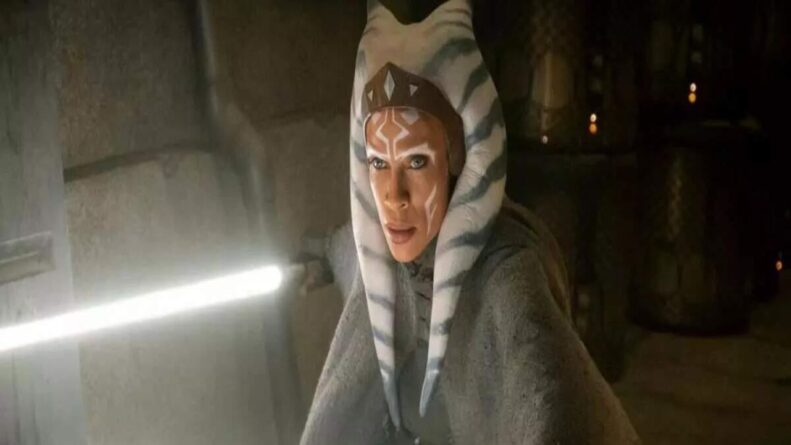
The confrontation is everything the Rebels duel between Ahsoka and Vader could never fully be. There was no safety net, no time-travel escape hatch, no canon to protect. Just F, her yellow lightsaber, and a fallen master who had become something monstrous.
What makes F’s character so compelling is that she seems to have internalised lessons that Ahsoka was still wrestling with during her darkest moments. F clearly understands that the master she knew and the dark side servant standing before her are two different people. She thinks of Zero (her master’s former self) and Shad-Rah (what he became) as entirely separate — much like the distinction fans have always drawn between Anakin Skywalker and Darth Vader.
This clarity of perspective is something Ahsoka agonised over for years. The grief of losing Anakin to Vader was a wound that never fully healed. Ahsoka Tano Replacement, drawing on a similar tragedy, appears to have found a way to honour the person she loved without being paralysed by who that person became. That emotional maturity is what allowed her to act.
F lost the duel physically — Shad-Rah cut off three of her limbs in a moment that eerily echoes Anakin’s fate on Mustafar. But before she fell, she planted a carbonite bomb on him. He was frozen aboard a crashing star destroyer. He could never hurt anyone again. She didn’t use a blade to win but her ingenuity, determination, and reluctance to win.
Read More 👉 DC Chapter 2 Latest Update: What Is James Gunn’s New Plan?
One of the most emotional moments in all three volumes of Star Wars: Visions is “The Lost Ones” and it earned it. Why? Because it answers a question Ahsoka Tano’s story left unanswered.
What if Anakin’s Padawan had stopped him?
F’s victory is essentially an alternate telling of that story — one where the Padawan gets to do what the narrative of the main canon would never permit. Ahsoka faced Vader and walked away (or was pulled away) without resolution. F faced Shad-Rah and ensured he could never cause more suffering.
The emotional logic is airtight. Both women were trained by masters they loved. Both watched those masters fall. Both carried the grief of that fall across years of survival in a galaxy that had turned against the Jedi. But only one of them got a real ending to that chapter.
In a sense, F’s victory retroactively gives Ahsoka’s story a kind of emotional closure it could never have achieved in canon — not because it changes anything in the main timeline, but because it proves the arc was always possible. The Padawan facing the fallen master, and winning, is a story Star Wars was capable of telling. It just had to step outside its own continuity to do it.
“Twilight of the Apprentice” duel likely left an emotional impact on everyone and it still does. It’s one of the best and saddest scenes in all of Star Wars animation. It’s also one of the most heartbreaking, precisely because of how unresolved it is.
So when F’s story gave fans what Ahsoka never could, the response was quietly devastating — in the best possible way.
F doesn’t replace Ahsoka. Nothing in Visions pretends to be the “real” Star Wars. But by mirroring Ahsoka’s journey so deliberately — the survival, the yellow lightsaber, the fallen master, the unconventional relationship with the Jedi path — the story is clearly in conversation with everything Ahsoka represents.
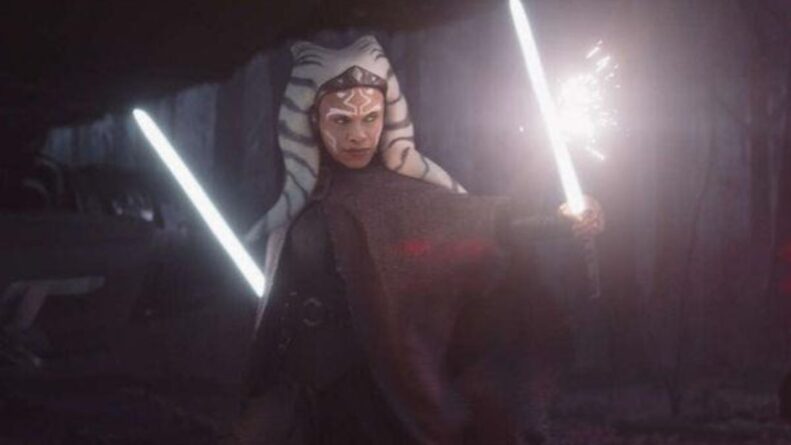
F’s victory is, in a way, a tribute to Ahsoka. It says: here is what this kind of strength and love looks like when the story is free to go where it needs to go. Ahsoka Tano Replacement honors Ahsoka’s journey by imagining its most healing possible conclusion.
There is something profound about finally seeing a version of a story you’ve hoped for come true — even if it’s in a parallel continuity, even if it doesn’t “count.” For loyal fans, who have been following the storyline of Ahsoka since 2008 and hoping to see that growing annoying kid sidekick into one of the franchise’s greatest characters.
The grief was real. The frustration of the unresolved duel with Vader was real. And now, in a small anthology episode with a runtime of under 30 minutes, that grief was given something it rarely gets in franchise storytelling: an answer.
Read More:- Supergirl: Woman of Tomorrow’s Five Planets Explained: Every Alien World Kara Visits
The success of F’s story in Visions opens up a conversation about what Star Wars can do when it stops being afraid of its own continuity.
The main canon has always been cautious — understandably so. The Original Trilogy is sacred. The events leading up to A New Hope must play out in specific ways. Characters like Ahsoka exist in a creative strait-jacket, able to grow but never able to truly alter the course of the larger story.
But Visions has demonstrated something valuable: there is enormous emotional power available to Star Wars when it allows its stories to exist freely. F’s arc was only possible because the writers weren’t constrained by what had to happen next. That freedom produced storytelling of Ahsoka Tano Replacement that arguably hit harder than much of what the main canon has offered in recent years.
With Ahsoka Season 2 still in development and expected sometime in the latter half of 2026, there is renewed interest in whether the live-action series will give its lead character the kind of emotional resolution that canon has always denied her. F’s victory hasn’t changed what Ahsoka’s story is — but it may have changed what fans now dare to hope for.
Not everyone in the Star Wars community is entirely comfortable with the framing of F as Ahsoka’s “replacement” or “successor.” And honestly, that pushback has merit.
The main reason to be careful is that F comes from a non-canon anthology, so the comparison of both isn’t really equal as Ahsoka didn’t fail because she was weak or unwilling. She failed to stop Vader because she existed within a story that had already decided Vader’s fate. That’s a very different kind of failure than a character flaw.
There’s also the sheer volume of what Ahsoka accomplished that F has not. Ahsoka has been part of 17 years of Star Wars stories, across The Clone Wars, Rebels, The Mandalorian, and her own live-action series. A character so deeply embedded in the Star Wars mythos that for many fans, Ashley Eckstein’s voice is the true voice of Ahsoka. F has two episodes. The comparison, some argue, is fundamentally unfair in both directions.
And they’re not wrong. F’s victory is specific and extraordinary precisely because of the freedom Visions afforded. Transplant those same stakes into the main canon, and the narrative would have to find a way to preserve everything that comes after. The same victory would be impossible — not because F is somehow more capable than Ahsoka, but because the story surrounding her is different.
The most honest reading is this: F didn’t beat Ahsoka. F completed the story that Ahsoka’s narrative could never tell — and in doing so, she became something that stands alongside Ahsoka rather than above her.
Read More:- DC Chapter 2: The Future of Batman, Superman, and Wonder Woman
Star Wars has always been about the relationship between masters and apprentices — the passing of wisdom, the weight of legacy, and the tragedy of what happens when that chain of love and mentorship is broken by darkness. Ahsoka Tano’s story is the most human exploration of that theme the franchise has ever produced. And her inability to stop Vader — a man she called master, a man she loved is the wound at the centre of everything she is.
F’s story in Star Wars: Visions didn’t heal that wound for Ahsoka. Canon doesn’t bend that easily. But it showed that the healing was possible. That a Padawan who loses her master to the dark side, who carries that grief across years of hiding and survival, can face that fallen master and find a way to end the chapter. Ahsoka Tano Replacement is not really a replacement. It’s more like a reflection that lets others see the clarity.
Whether you become a fan of Ahsoka’s 2008 or live-action series, it succeeded with one of the most meaningful moments in a small anthology episode that served Star Wars history ever. Not because it changes anything. Because it proves that this kind of ending was always possible.
Ahsoka’s story isn’t finished yet. Season 2 is coming. And maybe the galaxy will finally give Anakin’s Padawan the ending she deserves.
Fandomfans delivers updates from movies, series, and celebrities. We focus on deeper theories on franchise.
Explore where Maul Shadow Lord timeline in Star Wars canon, from Clone Wars to Crimson Dawn and Solo timeline. Full breakdown & timeline guide. Read more visit!

Maul Shadow Lord timeline Star Wars stories have always been like individual tiles in a mosaic, but few fan contributions have captured the collective imagination of the fandom quite like Maul: Shadow Lord. In an age when high-budget official releases occasionally feel safe, this series came out of nowhere with gritty, hyper-stylized animated visuals that seem like a tribute to the Clone Wars heritage while going to much darker levels.
The “Shadow Lord” stage is a Maul we’ve seen but never fully dwelt with—the crime lord who isn’t just a Sith castaway, but a crime boss. There’s nothing new about the hyperactive swordplay of Episodes 1 and 2; the reason for the craze is more about the mood. It is moody, it’s visceral and it really answers a “Maul-shaped” hole in the timeline that fans have been itching to explore for years.
To get an idea of when Maul Shadow Lord timeline starts, all you have to do is see where “Official” Maul ended in The Clone Wars Season 7. We last glimpsed Maul at his most desperate and deadliest. Captured by Ahsoka Tano and barely surviving the Siege of Mandalore, Maul’s world and his vision for the future was obliterated by Order 66.

He escaped from the Venator-class Star Destroyer Tribunal in the middle of an explosion of kinetic energy, a trail of dead clones and shattered bulkheads left behind him. But he’s more than just running from the Empire, he’s running into a void. He had no army, no master, and no clear path forward. This change is key. Maul went from a galactic player with a seat at the Mandalore throne to a ghost in the shadows.
The trauma of Sidious’s betrayal and the rise of the Empire left him with a singular, cold realization: if he could not rule the galaxy through the Force then he would rule its sewers through fear and commerce. This brings you to the Crimson Dawn period, the era Shadow Lord so vividly gives full expression to.
Maul Shadow Lord timeline is set during what many lore historians consider to be Year 1 of the Empire. That era was an unruly nightmare of galactic events. The Jedi are gone, the Senate is a vacant shell, and the Imperial war machine is still in its “aggressive expansion” period. Darth Vader is off pursuing the last Jedi survivors, but the criminal underworld is now seeing a huge power vacuum.
Now in this era Maul is no longer “Darth Maul.” He has renounced the Sith title, considering them his greatest enemies. But he’s not a hero. He is laying the groundwork for Crimson Dawn.

During this first year, Maul is traveling the Outer Rim, consolidating power in the absorption of smaller syndicates often through extreme violence. The sobriquet “Shadow Lord” is quite fitting: he is a specter lurking at the edges of the Empire. He fills in the gaps, areas where the Stormtroopers have yet to arrive, and he can make lawless worlds into his own private realms.
It’s a time to rebuild, not just a criminal empire, but his own shattered soul. He is adapting his fighting style, moving more towards his mechanical nimbleness and double-bladed saber expertise, playing a long game against the Emperor.
The Maul – Shadow Lord Episode 1 and 2 welcome us to the planet Janix, and frankly it’s all that we could ask for from a Star Wars underworld environment. Janix is the ideal microcosm for the “Shadow Lord” period. It’s not a bright core world or a lush forest moon; it’s a rough, hard-edged industrial frontier that could feel like a mix of Blade Runner and a Western.
Janix is a center for the “under the table” economy. It is the dumping ground for the Empire’s waste, and where the most desperate people in the galaxy go to vanish. In Maul Shadow Lord timeline, Janix is a city of changeable loyalties. Maul’s being on Janix isn’t only a question of concealment; it’s a question of power.
The series takes advantage of grim up-north to trace Maul’s transformation into a mastermind. He doesn’t just walk into a room and kill everyone (he certainly can, but that’s not his specialty), he plays the local politics. The worldbuilding is layered here and reveals to us the predicament of the common people living in the looming boot of the Empire and the iron fist of the Maul: Shadow Lord.
The Debut of Devon Izara as Maul’s apprentice is attracting lot of fans because of the relevant experience with the apprenticeship in the star wars story, (mainly among fans comparing her Darth Talon hailing from the Star Wars Legends)
Although Devon Izara has the same “lethal warrior” aesthetic as Talon, she is more grounded in the current canon. She’s not a Sith in the old style sense because Maul is no longer a Sith. She embodied Maul’s desire for a legacy that was not tied to Sidious. She embodies Maul’s ambition to have a legacy that wasn’t connected to Sidious.

Talon was the blade of a cult, and Devon a creature of the Empire’s cruelty—a survivor who carved-out a mentor in the galaxy’s most lethal man. Her dynamic with Maul is fascinating because it’s laid on a shared disdain for the way things are, so she is a far more “humanized” antagonist than the near-robotic devotion seen in Talon in the comics.
In Star Wars now, Maul’s bounce up and down trajectory is pretty predictable. He flees to Mandalore in the final days of the war in The Clone Wars Season 7, and this signifies a major turning point for him. In Maul Shadow Lord timeline, he is at the height as he attempts to exert influence through the fledgling Crimson Dawn crime syndicate while the Empire is establishing its presumed worldwide reach.
By the time of Solo: A Star Wars Story, Maul is the dark power behind the curtain as the secret leader of the Crimson Dawn. The much more chaotic and desperate Star Wars Rebels sees Maul stranded on Malachor, where he fights his final battle with Obi-Wan Kenobi. For one thing, this timeline makes it clear when in the timeline Maul’s saga took place within the Star Wars universe.
So Maul Shadow Lord timeline is set post-Clone Wars, but way pre-Solo. It is set before the Obi-Wan Kenobi series. In Shadow Lord, Maul is still the absolute physical pinnacle, in both power and ambition. He’s not the broken hermit of Malachor yet, John is a shark in the water, carving his kingdom while the galaxy is distracted by the transition from Republic to Empire.
Read More:- Disney’s ‘Paradise Season 2’ is the Sci-Fi Thriller You Need to Binge This Weekend
Maul Shadow Lord timeline illustrates the strength of a Dark Side-focused narrative, especially when accompanied by breathtaking artwork. Taking place between the prequels and the original trilogy, the show redefines Maul — he’s as lethal and intense as ever, but also multi-dimensional and unexpectedly relatable.
Whether it opens the door to more official tales delving into the galaxy’s shadowy depths or is simply held aloft as a beacon for fan creations, one thing is clear: Maul Shadow Lord timeline has made a lasting impression on Star Wars.
Dive deeper with Fandomfans to get theories on the latest series of the biggest franchise of movies, series, and celebrities.
Star Wars’ Maul Shadow Lord breaks tradition with a villain-led story. Explore how this bold series challenges redemption and reshapes the galaxy’s future.

Maul Shadow Lord, a beat of Star Wars storytelling that fans have come to anticipate after almost six decades. The hero’s journey. The down and up that even the blackest hearts can find their way to the light, and that everyone has the potential to be redeemed. It runs through every trilogy, spin-off and animated escapade as the franchise’s lifeblood. Anakin Skywalker becomes Darth Vader and back to Anakin. Having annihilated all he loves, Kylo Ren finds himself through Rey. Boba Fett – the former ruthless bounty-hunter, turned protective daimyo.
Enter Maul Shadow Lord, The Star Wars Galactic Battlegrounds fans are at a loss for words with this absurdly ambitious project. This isn’t just a story about how a homeopathic bad guy is actually quite charming all things considered. This is something else entirely — a plunge into raw, unadulterated villainy, and a challenge to all Star Wars has taught us about good, evil, and the space between.
Maul Shadow Lord set right after Revenge of the Sith, the title character finds himself at an interesting crossroads. The new Galactic Empire has exiled Darth Maul, the former Sith apprentice of Darth Sidious.

He is no longer a Sith Sidious replaced him with Count Dooku, and now Anakin Skywalker — but he is not done. Instead, Maul is building a new power base, a space crime syndicate built around his vendettas against Obi-Wan Kenobi and the Jedi Order, which he holds responsible for destroying his life.
The premise is not revolutionary. We’ve had crime stories in Star Wars before, like The Book of Boba Fett and Solo: A Star Wars Story.

What makes Shadow Lord so revolutionary is that it keeps Maul’s immorality intact. This is a man who comes into the series as a villain and will leave as one. No final minute change of heart. No sentimental conclusion to his error of judgement. No sacrifice by the good guys to save the day and receive condolences in death. Maul is already despicable when we get to know him, and he’ll always be despicable.
That likely goes without saying for those who have ventured far enough beyond the confines of the comic book and superhero film bubble. It doesn’t have to all be about redemption. There are bad guys who are just bad and looking at that mentality can be as fun as seeing them evolve. But Star Wars has never worked that way.

The franchise is themed around hope — it’s literally the title of the first anthology film. The notion that darkness can be defeated, that people can change, that the light side always finds a way to prevail isn’t just a thematic element; it’s the structural keystone of Star Wars storytelling.
Maul Shadow Lord is tearing that foundation down for good, and the possibilities are most interesting.
You have to understand how central DNA redemption narratives are in Star Wars to know why this matters. Anakin Skywalker’s fall and redemption was the central theme of George Lucas’s original story. Whereas the original trilogy suggested the monster had some decency, the prequels reveal how a nice guy became a monster. The trip was game-changing not just for one character – it set the bar.
The sequel trilogy repeated this pattern with Kylo Ren, whose whole arc was a meditation on whether the Skywalker bloodline’s darkness could indeed be broken. Escape even the pull of redemption, it seems, is rare for villains of a lesser sort. Asajj Ventress, Dooku’s assassin, is now an unwelcome ally to the Jedi. Boba Fett, the bounty hunter who hands Han Solo to Jabba the Hutt becomes a crime boss you can believe in with a code of honor.

First Order officer General Hux becomes a traitor in order to save himself and his ally the Resistance. Even Grand Admiral Thrawn, in recent stories, has been presented with a sufficient degree of ambivalence that fans wonder if he is truly evil or merely peddling an alternate view of order.
The anthology Maul Shadow Lord Tales on Disney+ has started to buck this trend. Tales of the Jedi provided us with the origin story for Count Dooku without justifying his crimes. Tales of the Empire traced Morgan Elsbeth’s descent into radicalisation but offered her no salvation. Tales of the Underworld dealt with Cad Bane’s cold-blooded professionalism without dumbing down his character.
But these were six-episode miniseries, and crucially, these tales were split between villains and heroes. Dooku’s episodes were paired with Ahsoka Tana’s. Elsbeth’s narrative paralleled Barriss Offee’s redemption. The balance remained intact.
Maul Shadow Lord tosses the balance out the window.
The selection of the protagonist here is important. Darth Maul has always held a special place in star wars fiction. Introduced in The Phantom Menace as a mute, frightening henchman—more tool than personality—he was apparently killed off right in his first outing, bisected by Obi-Wan Kenobi and plummeting down a reactor shaft. It was The Clone Wars that brought him back to life, in every sense of the word, gave him depth. We learned of his brutal upbringing on Dathomir, his connection to his brother Savage Opress, his hatred for Obi-Wan that buoyed him through the power of will.
However The Clone Wars (and later Star Wars Rebels) established one crucial fact: Maul is always a villain. He has moments of vulnerability. He makes real connections, especially with Ezra Bridger on Rebels, where he’s briefly a dark mentor type. He suffers loss and pain that humanize him. Yet he never turns into a hero.

His final moments in Rebels, dying in Obi-Wan’s arms on Tatooine after their final duel, are utterly without redemption. He dies still seeking vengeance, still consumed with hatred, still basically the same broken thing who came out of the darkness of Naboo so many years ago.
Shadow Lord occupies a place in between those timeline points – where Maul’s criminal empire is established, but before his ultimate defeat. We know where he ends up. Maul Shadow Lord isn’t baiting us with transformation. Rather than that, it is giving us something far rarer: a character study of someone who cannot change, and a rumination on the significance of that pain.
This is a bet on Star Wars. It was all in the — family-friendly, inherently optimistic heaving and inspiring. Maul Shadow Lord about an irredeemable villain who is building a criminal empire, driven entirely by revenge and personal ambition, challenges that identity. It wonders if Star Wars can support actual darkness without the crutch of eventual light.
It’s not the first time that has happened in other media. Breaking Bad mapped Walter White’s descent from everyman teacher to monster drug kingpin, without turning away. None of Tony’s violence was ever excused by The Sopranos, but it made us care about his mind—and his family’s.
Jimmy McGill’s transformation into Saul Goodman was documented in Better Call Saul. These were tales of characters going down the dark path, not upward — and both were widely praised television of their day.
But Star Wars is not prestige cable ding-dong drama. It is space opera, mythic storytelling, crafted to function for kids as well as adults. The issue isn’t whether a story centered on a villain could work—it obviously can. The question is, can it still feel like Star Wars when it abandons the franchise’s central philosophical tenet.

It appears the creative team has that tension in mind. The animation style, said to be similar in look to The Clone Wars and Rebels, retains visual continuity with the series’ most emotionally nuanced storytelling. The emphasis on Maul’s criminal empire makes possible a kind of world-building that enlarges the galaxy’s underbelly without demanding moral about-face from its hero. And the revenge plot on Sidious — Maul’s former master who discarded him — adds narrative drive that doesn’t rely on character growth.
Read More:- Robert Picardo’s Emotional Farewell Highlights Uncertain Future
If Maul Shadow Lord works, it opens up avenues. Star Wars has been hampered in recent years by a feeling of déjà vu, as if every story must eventually turn on the same themes of family, redemption and the light side’s ultimate triumph. Such a test case for really villainous protagonists would be as varied storytelling as you could imagine.
When I say just “Tarkin,” think young Grand Moff Tarkin working his way up the Imperial chain, ruthless, brilliant, never sympathetic, but always compelling. And a crime drama within the Hutt cartels, where political expediency is the reality of all the players, and salvation is not something any of these people expect, or even want. And maybe in the future, a tale that takes place when the Sith are at their peak, exploring the philosophy of the dark side without the narrative need that it must end up failing.
Maul Shadow Lord is a test of whether Star Wars can be big enough for both. In a series that has always assured that things will improve, it has the nerve to introduce us to a person for whom they never could. It’s not Just a narrative play – It’s a creative faith statement: Star Wars can grow larger and still be Itself.
So we will see if that confidence was justified when the series premieres on April 6. But whatever the result, it is the effort that matters. After telling us “there is no one that can’t be redeemed” for close to 50 years, Star Wars is now curious about what happens when someone is. In a galaxy that has always signaled hope, Shadow Lord dares to say: understanding without forgiveness, empathy without salvation, and a villain who stays villainous until the very end.
Sometimes the most interesting narratives aren’t about how people change. They’re about how they don’t.
Fandomfans delivers latest updates from movies, series, and celebrities directly to you.