Home > Celebrity News > Tomb Raider actress Sigourney Weaver Stardom: From Lara..
Tomb Raider actress Sigourney Weaver Stardom: From Lara Croft to Amazon TV series
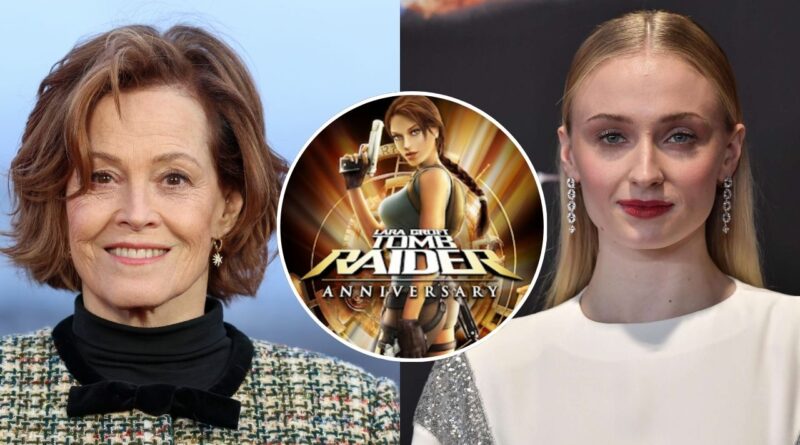
The Tomb Raider actress lineup is expanding as Sigourney Weaver is in talks to join Amazon's new series, bringing depth, power and legacy to the franchise.
In Hollywood, few careers seem equally timeless and revolutionary. Sigourney Weaver’s Live journey stands amongst those rare exceptions. The news that she is in active negotiations to join Amazon Prime Video’s Tomb Raider series is more than casting buzz—it’s a moment of poetic symmetry. More than 40 years ago, Weaver redefined the screen. Now the modern female action hero’s original architect is poised to step into its world, as the franchise that once followed her blueprint gets ready for what may yet be its final reinvention.
For those brought up on Lara Croft, the link is impossible to miss. Even at a time when Croft wasn’t yet an icon of gaming culture in 1996, Ripley had already redefined what was expected of women in sci-fi and action. Weaver’s possible Tomb Raider return is a conversation between generations — the cinematic past and the streaming future, anchored by a performer who has never accepted limitations based on age, genre, or gender.
Sigourney Weaver’s Early Life, Rejection, and the Roles Hollywood Wouldn’t Offer
Weaver noted that being tall “absolutely kept me from working with conventional directors”
Born Susan Alexandra Weaver in 1949, the future Sigourney Weaver was already on her way to becoming a “weaver of wonders” at a young age. At fourteen, she felt the name “Susan” was too small for her frame and she adopted the name “Sigourney” from The Great Gatsby. It was an act of self-definition that shaped the rest of her life, one that foretold how she would never make herself smaller to meet expectations.
She’s one of the classic ‘you charted a different course to get where you are despite everything’ stories,” says The Guardian.
Her towering height proved to be a barrier in an industry hesitant to pair up tall women with male leads. Weaver would later call this “overt discrimination,” but it did send her inward, toward radical roles and visionary filmmakers who prioritised presence over convention.
Her educational background—Stanford University and then the Yale School of Drama was rigorous, but Yale was brutal. Professors dismissed her as untalented and cast her in insultingly small parts. Rather than shatter her, the rejection hardening a fearless self-reliance. Weaver ceased to seek validation and learned to trust her own judgment, a mentality that would make it possible for her to risk herself in films that were underestimated by others.
How Ellen Ripley Changed Science Fiction Forever
Aliens changed everything. The script was written without genders, and when Weaver was cast as Ellen Ripley, it covertly dismantled decades of Hollywood tradition. Ripley wasn’t decorative, emotional or lucky — she was capable, realistic and prickly when appropriate. Weaver portrayed her as a laboring every woman rather than a glory-seeking hero.
But the audiences were not ready for it. Ripley did not run through a nightmare in tears, she survived it. Weaver summed up Ripley’s attitude in two words: “What’s next?” That steely sangfroid would go on to underpin today’s female action hero.
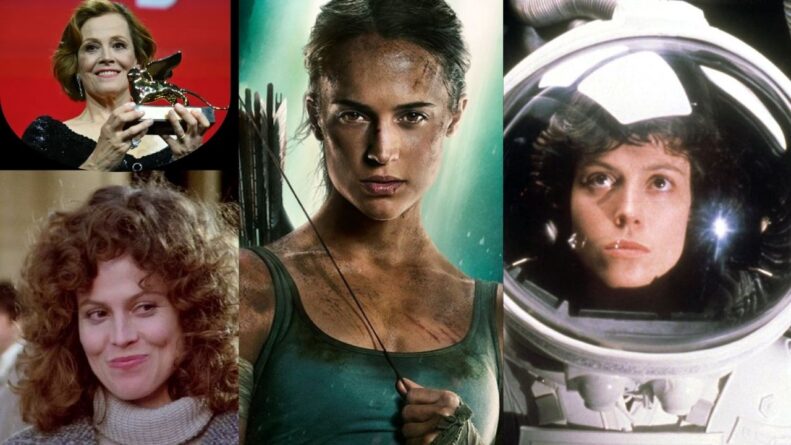
Weaver being an Anchor for Alien & Lara Croft
Anchor for Alien & Lara Croft | Image Credit: Fandomfans
With Alien (1986), Ripley went from survivor to soldier. James Cameron brought the story themes of motherhood, making Ripley the Alien Queen’s opponent in a battle of instinct and protection. Weaver received an Academy Award nomination for her portrayal — an extraordinary acknowledgement for a sci-fi action role. Drenched, bruised, and armed, Ripley obliterated the ‘damsel in distress’ archetype and paved the way for the likes of Sarah Connor and Lara Croft.
Sigourney Weaver’s Range as an Actor
Ripley settled her legacy, Weaver’s longevity derived from range. She was hilarious in Ghostbusters. In “Galaxy Quest,” she took apart sci-fi gender stereotypes with knowing laughter. She was nominated for two Oscars in 1988, for Gorillas in the Mist and Working Girl, demonstrating her mastery of both stark drama and frosty ambition.
Her work with such directors asAng Lee (The Ice Storm) also established her as a powerful interpreter of complex, emotionally repressed women. These parts defined the “steel-willed matriarch” type which now defines her later career.
Avatar and the Long Partnership with James Cameron
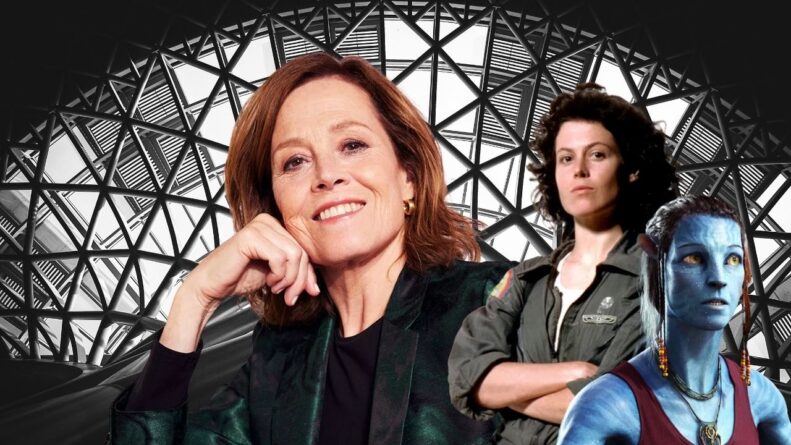
Image Credit: Fandomfans
Weaver’s long relationship with James Cameron has allowed her to remain at the forefront of filmmaking. In Avatar, she was scientist Grace Augustine—a mentor character whose defining traits were intelligence and moral certainty. Decades later, at age 73, Avatar: The Way of Water would see her defy expectations yet again by having her portray Kiri, a 14-year-old Na’vi girl. She refused to let her age dictate her physical limitations, stating,
“I didn’t want anyone to think, ‘Oh, she’s old, she can’t do this’
Her preparation was intense: breath-hold training, parkour and physical performance that “never considered my age” By drawing on memories of her own youth, Weaver demonstrated she can remove herself from a position of authority and also become vulnerable — a feat which underlines her relevancy in today’s, VFX-heavy franchises.
Sigourney Weaver and Sophie Turner: Generational Power Shift
Weaver’s decision to move up to television marks a recalibration. In The Lost Flowers of Alice Hart, she was June Hart, a painfully imperfect women’s advocate and executive producer. It gave her an opportunity to delve into moral ambiguity and the strength of women—traits she always looks for.
According to Deadline, Her relationship with Amazon MGM Studios began there, thus Tomb Raider is a natural homecoming. Alongside Sophie Turner’s Lara Croft and Phoebe Waller-Bridge’s sharp, subversive writing, Weaver lends gravitas, authority, and intergenerational depth to the project. As a mentor, a rival or an antagonist, her presence in this adaptation says it wants to go deeper as well as bigger.
Conclusion
The possibility of Sigourney Weaver in Tomb Raider is not nostalgia—it is progression. From a theater student informed that she had no talent to a Golden Lion winner who announced, “I want to roar,” her career is defined by denial – denial of growing old quietly, of playing small, and of being typecast.
She doesn’t just appear in franchises—she anchors them. With her turn as Tomb Raider, Weaver has come full cultural circle, connecting Ellen Ripley to Lara Croft and proving that strength, smarts and survival really are ageless. In space, jungles, or ancient ruins, Sigourney Weaver is cinema’s ultimate survivor.
Fandomfansis a platform where every entertainment enthusiast will find core details about their favorite celebrity or characters.
Alpana
Articles Published :
156
Alpana is Fandomfans Senior Editor across all genres of entertainment. She evolved in the media industry since a very long time, she manages the content strategy and editing of all the blogs. Her focus on story development, review analysis, and research is well-equipped that ensures every article meets the standards of accuracy and depth.
Jennifer Aniston’s Transformation: From Rachel Green to The Morning Show Success
Jennifer Aniston's stunning transformation from Rachel to The Morning Show has fans amazed. Check out her fitness, fashion and fearless role selections to date.
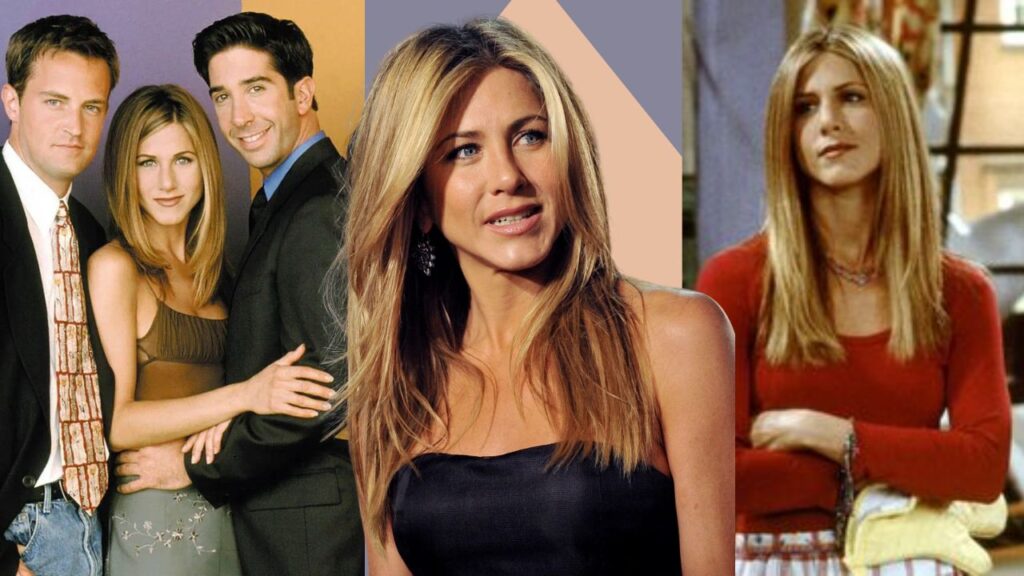
Aniston played Rachel Green on ‘Friends’ for ten seasons from 1994 to 2004, a character whose mannerisms, hairstyle, and love interests defined what it meant to be a 20-something woman around the world. The actress could not be disentangled from the character, it’s hard for everyone to recognize Aniston in other characters. Rachel Green was everywhere, on lunch boxes, in syndication, and in the cultural lexicon.
Aniston noted that she — “Couldn’t get over from the shadow of Rachel Green ever in my life”
describing the experience as “exhausting”. The character was a “poor little rich daddy’s girl”, a specific archetype that afforded little room for the darkness or grit required of dramatic acting. Aniston admitted to fighting with herself and her identity in the industry “forever,” constantly trying to prove
She was “more than that person”. —Aniston said
FRIENDS Could have Lost Jennifer Anniston at First
Jennifer Aniston’s whole Friends run nearly never happened because she was at that time already committed to a CBS sitcom titled Muddling Through back in 1994. Because she was “only in second position” for Friends, NBC was worried that they might have to recast Rachel if the CBS show was a hit, and speculated about shooting multiple episodes, only for CBS to pick it up and they’d have to do reshoots.
Courteney Cox & Jennifer Anniston in FRIENDS | Image credit: IMDb
Aniston got her big break when Muddling Through was cancelled, and that led to her being cast on Friends – which just goes to show how precarious a career in Hollywood can be, and how one cancellation can make way for the series that takes an actor global and defines their stardom.
Aniston’s The Good Girl, Horrible Bosses, & Cake break the FRIENDS curse
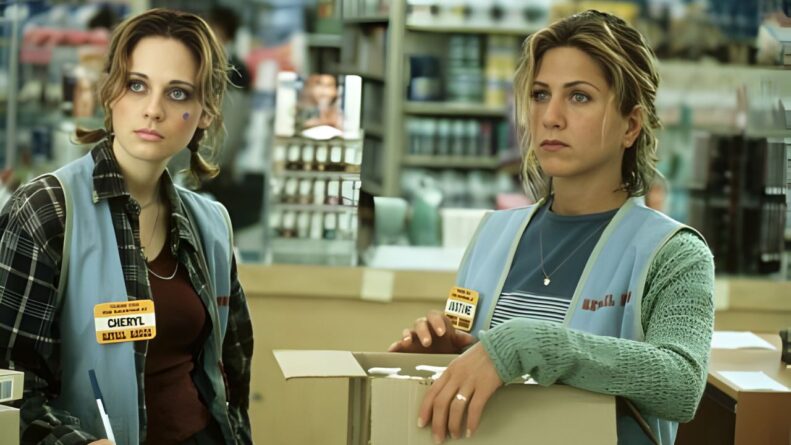
Helmed by Miguel Arteta, the film stars Aniston as Justine Last, a dour employee at a mall shoe store who has a clandestine relationship with a younger coworker (Jake Gyllenhaal). The choice to accept the part was nerve-racking.
“Panic that set over me,” thinking, “Oh God, I don’t know if I can do this? Maybe they’re right”. —Aniston recalls
The film was an independent production, lacking the safety net of a major studio marketing budget or a laugh track. It required Aniston to perform “without a net” in front of the world. The success of The Good Girl and the critical acclaim she received—provided the “relief” necessary to continue pursuing dramatic work. It was the proof of concept that she could exist outside the “purple walls” of the sitcom apartment.
Jennifer Anniston in The Good Girl | Image credit: IMDb
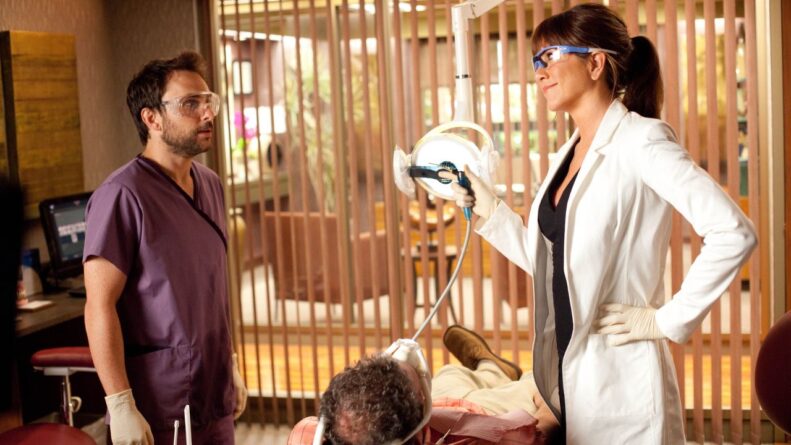
If The Good Girl proved she could be sad, Horrible Bosses proved she could be predatory. The appeal lay in the “black comedy” element. Aniston argued that “Comedy is a necessity,” but she expressed a preference for the “craziness” of the Horrible Bosses universe over the gentler comedy of Friends.
“Maybe everybody else is seeing something I’m not seeing, which is you are only that girl in the New York apartment with the purple walls”.
This quote speaks to the psychological complexity of the curse—it wasn’t only that she believed producers wouldn’t hire her but she was afraid she wasn’t capable of doing the work.
Breaking the curse required exposure therapy. By performing in independent films like The Good Girl and Cake, where the safety nets of budget and ensemble were removed, Aniston forced the industry to recalibrate its perception of her utility.
Image credit: IMDb
Cake is the ultimate punishment to shatter the curse. In this film, Aniston portrays Claire Bennett, a woman struggling with crippling chronic pain and addiction. Aniston quit exercising and wearing makeup. She studied friends with chronic pain to get a sense of what the condition felt like physically.
She allowed the role to “hurt” her, noting that during physical scenes, she “didn’t prepare” in the traditional sense but rather let the physical discomfort generate a real reaction.
The Morning Show – The Strong New Chapter For Jennifer Aniston
The morning show era (TMS), Executive produced and co-created by Reese Witherspoon is the shift from Aniston the Actress to Aniston the Mogul. The show is more than just an acting vehicle, it’s a platform for industry commentary and power play.
The partnership with Witherspoon’s Hello Sunshine production company created an environment of “understanding, compassion and consideration” that Aniston notes
“Doesn’t always exist amongst the dudes”.
Alex Levy is the culmination of Aniston’s post-Friends evolution. She is a morning news anchor, but she shares no DNA with Rachel Green. Alex is “complex, vulnerable, controlled, lonely, enraged, self-serving”.
Image credit: Fandomfans
In Season 4 (2025), Alex has transcended the anchor desk to become a corporate executive. She is no longer fighting for a contract; she is fighting for the soul of the network. Critics have praised Aniston’s performance in this era as
“It is the best of her performances and able to perform mature characters”
noting her ability to portray moral conflict without the melodrama that sometimes plagued her earlier dramatic attempts. The role gives Aniston a chance to examine issues of power, complicity and growing older in a way Friends never did.
Conclusion
By 2025, she’s at a place very few could have predicted back in 2004: she’s the boss. On The Morning Show, she plays a character who runs the network, much like in real life, where she’s a producer on the show. She swapped the “purple walls” of the Friends apartment for the glass walls of the UBN executive suite. Jennifer Aniston has now shown beyond a shadow of a doubt that she is, in fact, “more than that person.”
Find out celebrities, movies, and web series updates on Fandomfanswhich is delivering every entertainment buzz to you.
Alpana
Articles Published :
156
Alpana is Fandomfans Senior Editor across all genres of entertainment. She evolved in the media industry since a very long time, she manages the content strategy and editing of all the blogs. Her focus on story development, review analysis, and research is well-equipped that ensures every article meets the standards of accuracy and depth.
Pierce Brosnan Teaming Up With His Son in an Art Exhibition at Art Basel
Pierce Brosnan joins his son for an art exhibition at Art Basel, showcasing their creative collaboration and family bond through the world of contemporary art.
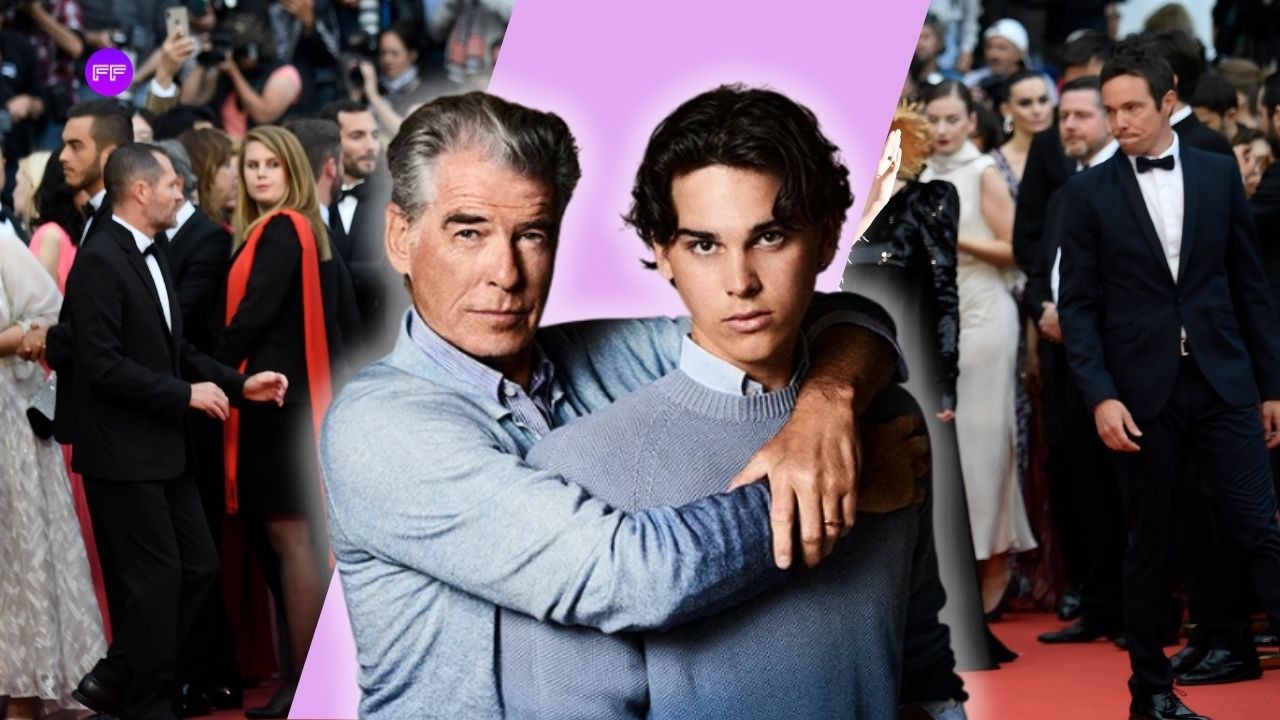
Pierce Brosnan and Paris Brosnan have painted side by side and now they are going to exhibit their painting at Art Basel, the art world’s biggest stage. Pierce Brosnan and his wife Keely Shaye Smith shared their love of painting for years.
Brosnan’s love for painting isn’t just a hobby but a way to process the loss of his first wife, Cassandra Harris, to ovarian cancer. The painting became public in 2023, five of his paintings hung at Art Miami during the same week his film Fast Charlie premiered, and a solo show called “So Many Dreams” put decades of that private work on a gallery wall in Los Angeles.
Paris grew up watching that process happen in real time. Canvases set up beside his father’s became, in Brosnan’s own words, one of the family’s core ways of connecting — not a hobby borrowed from dad, but something built together from childhood. Paris has since built his own exhibition history around it too, including a live-painting demonstration on the hood of a BMW E30 at Aqua Art Miami in 2024 and a collection called “Familiar Friends” shown that same week.
“Paris was born with an artistic streak” — Pierce said.
Paris already has a film degree, a modeling career, and a father who played James Bond. None of that is what he says he actually needs. What he wants next is an MFA in art — specifically so his résumé stops leaning on his dad’s name and starts standing on its own evidence.
That’s a notably unglamorous ambition for someone with his level of access. It would be easy to skip the degree and lean on the surname to get gallery placements — plenty of nepo-baby art careers have run on exactly that. Paris is naming the privilege directly instead of pretending it isn’t there, and then adding a credential on top of it rather than substituting one for the other.
In 2023, while Brosnan was filming the Western The Unholy Trinity in Montana — a cast that also included Samuel L. Jackson and David Arquette — the director asked if Brosnan’s sons wanted small parts. Paris and his brother Dylan ended up on screen as cowboys, and Paris landed a death scene his father has since pointed to as the moment it was clear his son genuinely liked being in front of a camera.
Brosnan’s response to that wasn’t a warning to stay away from acting because of how it might look. He politely said:
“If it’s what Paris wants, he should train properly and do the work, rather than treat the family name as a shortcut past both.”
The interesting thing is that Paris is building a gallery show under his own name starting in 2021, a second MFA on top of a film degree, and now a stated plan to show new work at one of the only art fairs whose name people outside the art world actually recognize. The Sunday Times Magazine interview didn’t specify a date or location beyond “Art Basel.”
If it happens, it won’t just be a nice father-son photo op. It’ll be the first time Paris’s work sits in the same room as his father’s under a shared premise instead of a separate one which is exactly the kind of comparison he says he’s trying to earn the right to survive.
Alpana
Articles Published :
156
Alpana is Fandomfans Senior Editor across all genres of entertainment. She evolved in the media industry since a very long time, she manages the content strategy and editing of all the blogs. Her focus on story development, review analysis, and research is well-equipped that ensures every article meets the standards of accuracy and depth.