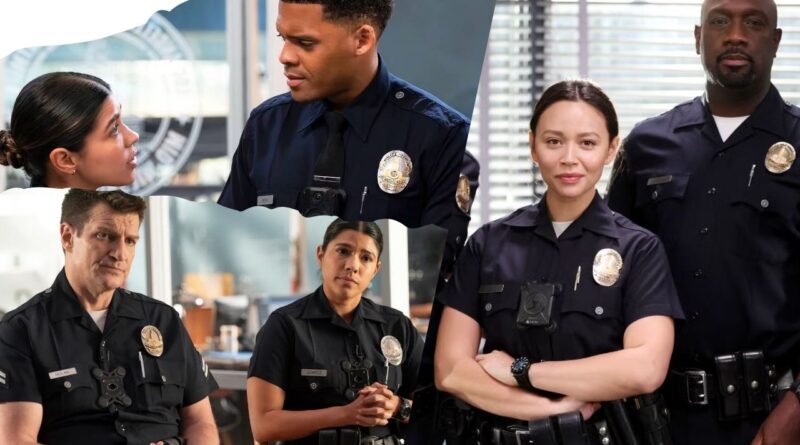
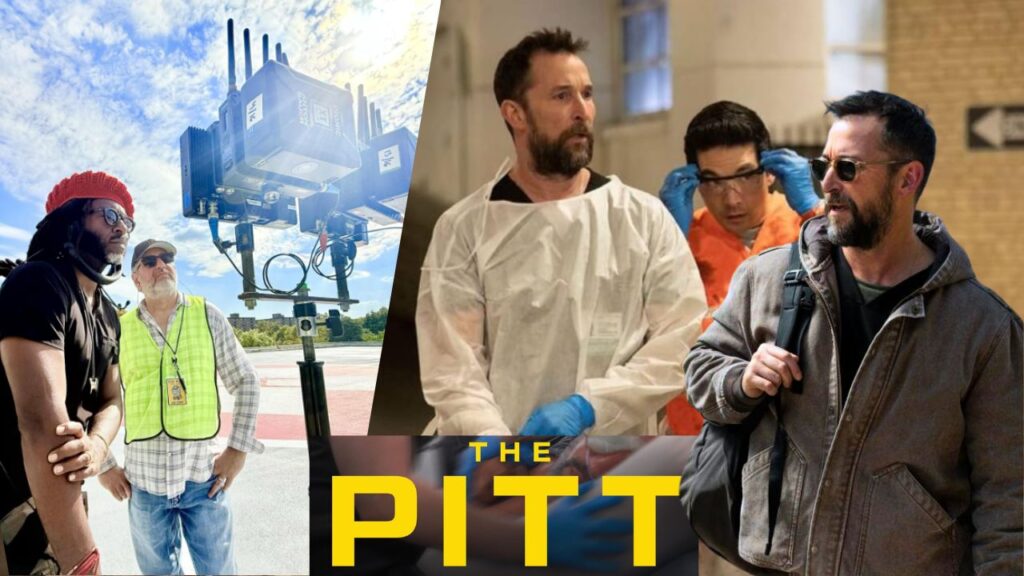
The Rookie Season 8 Episode 10 Review: “His Name Was Martin” Goes Full Zombie Horror
The Rookie Season 8 Episode 10 “His Name Was Martin” delivers zombie-style horror, Lucy Chen’s emotional trauma, and shocking twists in a bold mid-season climax.
The Rookie Season 8 Episode 10 titled as “His Name Was Martin” with the opening from grounded procedural to powerhouse series. Analyzing the “zombie” outbreak at Westview Hospital, the psychological trauma of Lucy Chen, and the increasingly bizarre espionage storylines, we can determine how the show keeps its hold on the 2026 media environment.
Having been written and directed by series creator Alexi Hawley alone among the Broadway related episodes, and overseen by a true old-school production team consisting of Mark Gordon, Nathan Fillion, Michelle Chapman, Jon Steinberg, Terence Paul Winter, and Rob Bowman, Rookie Season 8 takes the procedural format and stretches it to the absolute, maximalist edge.
John Nolan’s character study as an oldest rookie in the LAPD is what started an incredible story. The Rookie Season 8 Episode 10, “His Name Was Martin” is a definitive signpost of this development. Through a mash-up of horror conventions, domestic melodrama and international espionage, showrunner Alexi Hawley has fashioned a “maximalist” TV experience that values viral engagement over realism.
This structural division shows The Rookie Season 8 Episode 10 “His Name Was Martin” as a peak mid-season climax episode shattering the status quo and launching the characters into “Aftermath,” series name of their trauma and mission overreach.
| Episode Number | Episode Title | Original Broadcast Date | Primary Narrative Focus and Thematic Catalyst |
| Season 8, Ep. 1 | Czech Mate | 6/January/2026 | Season Premiere; introduction of new interpersonal dynamics. |
| Season 8, Ep. 2 | Fast Andy | 13/January/2026 | Standard procedural case focus. |
| Season 8, Ep. 3 | The Red Place | 20/January/2026 | Final Tuesday broadcast prior to the network scheduling pivot. |
| Season 8, Ep. 4 | Cut and Run | 26/January/2026 | First Monday night broadcast; integration of new audience flow. |
| Season 8, Ep. 5 | The Network | 3/February/2026 | Escalation of serialized criminal underworld arcs. |
| Season 8, Ep. 6 | Burn 4 Love | 9/February/2026 | Character-centric relationship developments. |
| Season 8, Ep. 7 | Baja | 26February/2026 | Action-oriented procedural; suspension of Officer Penn. |
| Season 8, Ep. 8 | Grand Theft Aircraft | 23/February/2026 | High-stakes logistical crime sequence. |
| Season 8, Ep. 9 | Fun and Games | 2/March/2026 | Revelation of Luna’s emotional affair; Harper’s demotion. |
| Season 8, Ep. 10 | His Name Was Martin | 9/March/2026 | Zombie outbreak; Lucy’s lethal force trauma; Pentagon espionage. |
| Season 8, Ep. 11 | Aftermath | 16/March/2026 | Lucy returns to duty; Liam Glasser case hindered. |
| Season 8, Ep. 12 | Spy Games | 23/March/2026 | Continuation of Bailey’s covert Pentagon plot. |
| Season 8, Ep. 13 | The Thinker | 30/March/2026 | Procedural escalation and end-of-season positioning. |
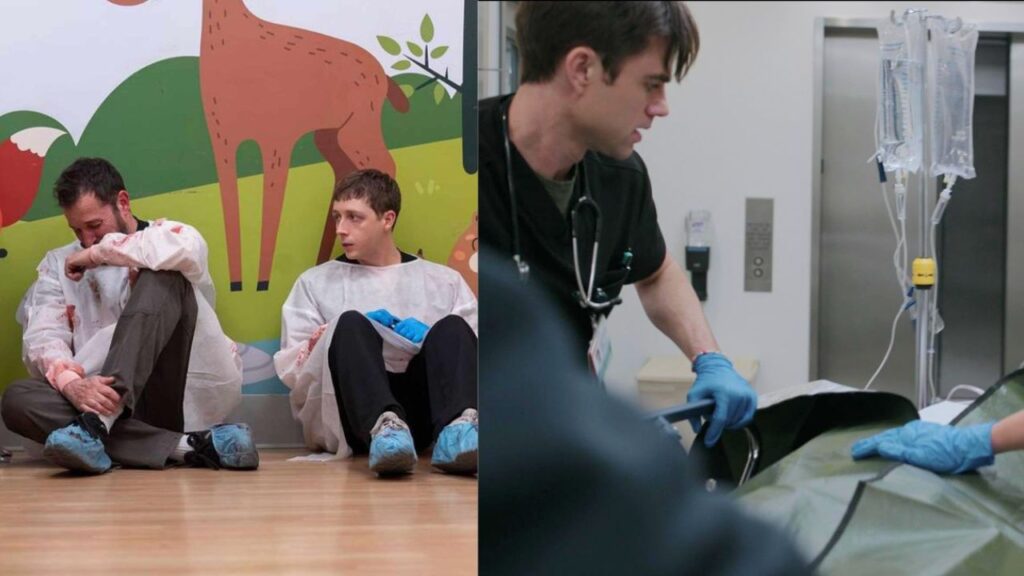
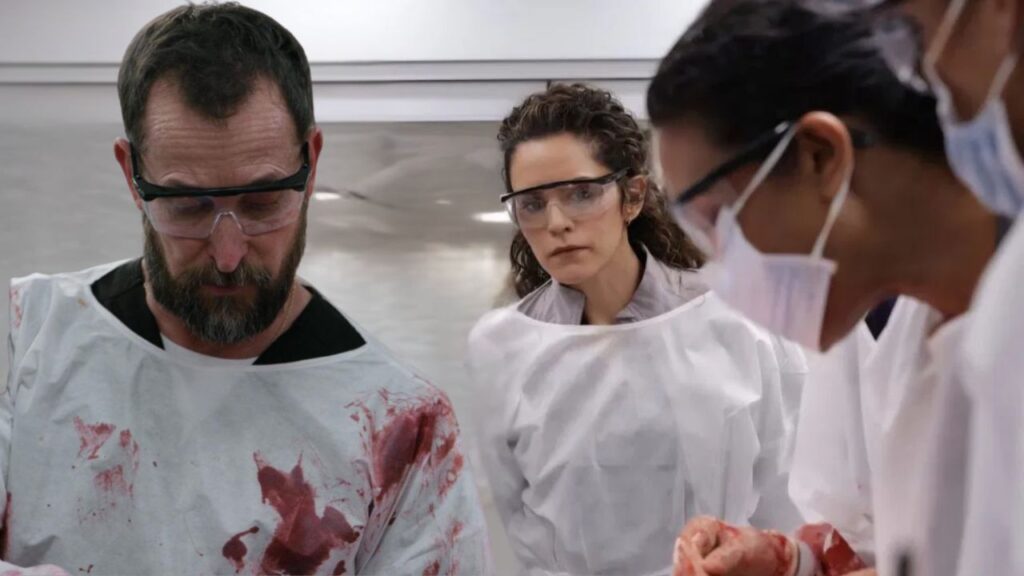
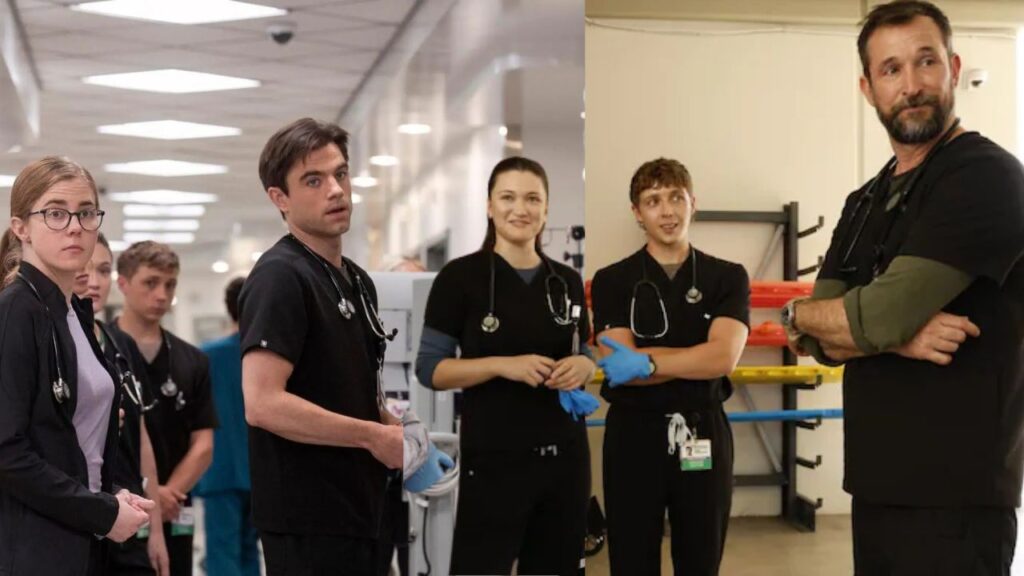
The main story of ‘The Rookie Season 8 Episode 10’ His Name Was Martin is survival horror tinged on the edge of police procedural. Stuck in the deserted Westview Psychiatric Hospital, Officers Nolan, Harper and Penn are bombarded by men, women and children who have been driven by a new psychotropic drug to a feral psychosis.
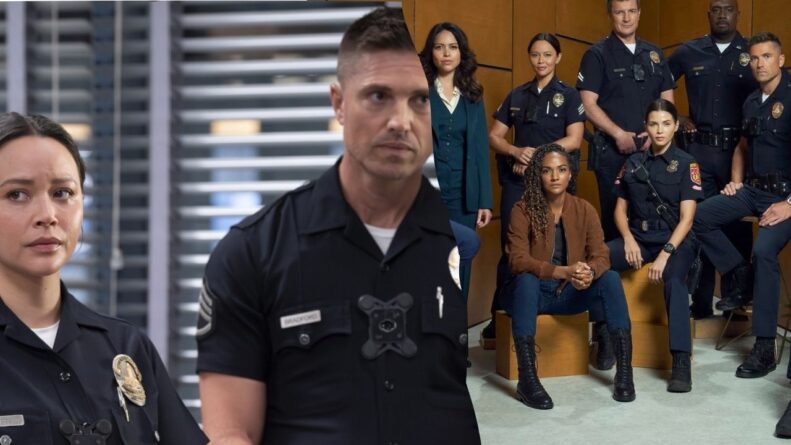
The episode begins like any police procedural with a “routine welfare visit” to a deserted mental hospital. Instead, it swiftly deteriorates into nightmare territory when the police are overwhelmed by feral, violent assailants. To prevent the series from becoming full-on sci-fi, the writers went with a pharmacological explanation: the “zombies” are really people on a horrific new psychotropic drug. That means the series can experiment with supernatural scares while technically existing in a world that’s grounded in reality.
It is not surprising that The Rookie Season 8 Episode 10 is a unique entry of the series in terms of tone and style. Gone is the polished sheen you’d normally expect from a network TV drama – the episode adopts a much rougher, found-footage aesthetic. It’s raw and immersive almost like something out of a video game or an episode of The Walking Dead.
The series has a character, Dash, a civilian ride-along, geek who nerds out on the tech, that gives us a handheld, subjective camera perspective.
Dash’s role is even more intriguing given the amount of composure he maintains as he films it all. Even as the world falls apart, he’s still cataloguing it for “content.” It seems like a cheeky nod to our present-day practice, especially among Gen Z, of documenting everything for the world to see even when things might be getting a little heated, or hazardous.
The choreography departs from traditional arrests and crescendos into “brutal survival mode.”
Best Scene: John Nolan (Nathan Fillion) winds up in a “yucky” deserted hospital pool, getting into a raw, up-close-and-personal scrap with an infected adversary.
The Vibe: Complete with spooky tipsy clay props like deserted clown dolls and a 40-minute “twisted game of tag” on the wards, the installment goes full-blown “freak flag.”
What starts with the first 30 minutes as a wild “zombie” action-movie-adaptation, the b-story pivots into a very different – and towards the end of the episode much darker and emotional – line. It’s about Lucy Chen and an experience that traumatises her and the audience quite a bit.
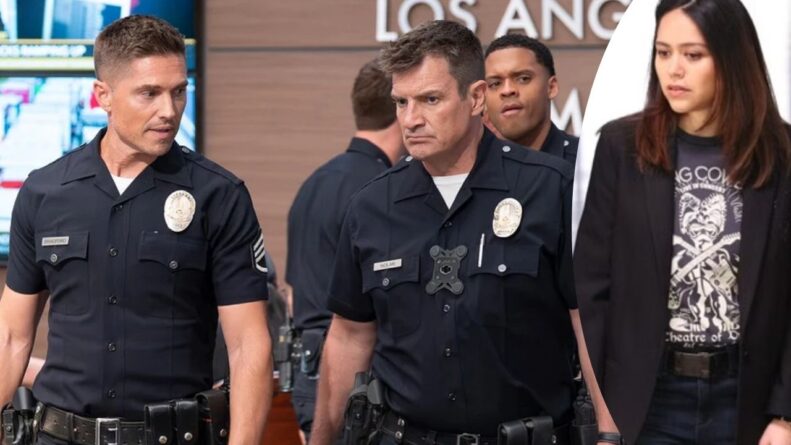
The title of the episode is taken from the man that Lucy is forced to kill. Lucy is alone from the rest of them during a tense hospital raid, and attacked brutally in the dark. That’s not TV bullying, that’s a dark, cramped brawl to stay alive. Martin repeatedly slams her head against a metal grid, and Lucy, thinking that she might get killed by him, has no other option but to shoot him.
The gut-punch? Martin was an innocent victim. He wasn’t a gangster; he was a civilian caught up in the same drug underground that was creating the “zombie” plague. This makes a legal act of self-defense into a “moral injury”, a profound emotional wound that occurs when you do something that runs contrary to your very soul.
Melissa O’Neil (Lucy) delivers an MVP level performance, particularly in the last scene where she arrives home battered and broken and has a complete emotional meltdown on her couch. Fans and critics didn’t let go empty, the debate unleash:
In 8 seasons, Lucy has been kidnapped, trapped underground in a box, and dispatched on dangerous undercover jobs. Reviews of reversing the trend: “Are the Blind Writers Over-Utilising ‘Lucy’s Trauma’?” Too Much?”
If ‘This Is Us’ doesn’t lighten up soon, it might not have a next season. It’s been noted that there’s a bit of a plot hole — Lucy has a degree in psychology. A lot of people thought she should have been the most prepared to handle a drug-induced breakdown and not be a victim of one.
The Rookie Season 8 Episode 10 explores the distance between Lucy and Tim, and features a heartbreaking sequence which is dividing opinions among viewers. Now that Tim has chosen to honor Lucy’s wish for distance and not hassle her, the decision has divided opinions. Some audience members consider it a grown-up choice — a genuine attempt to honor her limits and provide her with the space she requested. Others, though, say that putting distance between them entirely can only exacerbate her feeling of isolation, particularly since she’s already suffering trauma.
That tug and pull of emotion is literally what’s driving the story in such a compelling way for audiences. It poses a tricky question: when do you really respect someone’s wishes, and when do you show up for them in case they might want support — even if they say they just want to be left alone?
This isn’t a “case closed” matter. Martin’s death turns out to be the beginning of a wider enigma, as the department discovers his secret history. It’s going to be a long road to recovery for Lucy, which will probably come to a head in the next installment, fittingly entitled “Aftermath.”
The density of the episode’s structure had several divisive subplots that generated a large amount of discussion within the online fandom.

Wade Grey’s ultimatum to his wife, Luna, to leave your job or I’ll consider it an emotional affair has been termed as “toxic.” This storytelling decision would break up one of the show’s most stable and fan-favorite pairings for the purposes of contrived melodrama.
Probably the most reviled element is the “shoehorning” in of Bailey Nune into a Pentagon spy ring. The idea of a local firefighter getting dispatched by a police lieutenant to do secret missions for the Department of Defense is a complete abandonment of procedural realism.
Read More:- This One Prequel You Must Read Before Watching Darth Maul’s New Star Wars Series
The Rookie Season 8 Episode 10 ‘His Name Was Martin’ is a microcosm of The Rookie’s survival mechanism in the era of streaming: bare-knuckled genre-mashing. And if you’re a fan of the “zombie” thrills or if you’re not a fan of the “espionage” leaps in logic, the episode accomplished its main aim, it generated a lot of talk, keeping the series fresh in the increasingly crowded marketplace.
Fandomfans is delivering the updates on movies, series, and celebrities to keep you entertain.

Jennifer Aniston's stunning transformation from Rachel to The Morning Show has fans amazed. Check out her fitness, fashion and fearless role selections to date.
Aniston played Rachel Green on ‘Friends’ for ten seasons from 1994 to 2004, a character whose mannerisms, hairstyle, and love interests defined what it meant to be a 20-something woman around the world. The actress could not be disentangled from the character, it’s hard for everyone to recognize Aniston in other characters. Rachel Green was everywhere, on lunch boxes, in syndication, and in the cultural lexicon.
Aniston noted that she —
“Couldn’t get over from the shadow of Rachel Green ever in my life”
describing the experience as “exhausting”. The character was a “poor little rich daddy’s girl”, a specific archetype that afforded little room for the darkness or grit required of dramatic acting. Aniston admitted to fighting with herself and her identity in the industry “forever,” constantly trying to prove
She was “more than that person”.
—Aniston said
Jennifer Aniston’s whole Friends run nearly never happened because she was at that time already committed to a CBS sitcom titled Muddling Through back in 1994. Because she was “only in second position” for Friends, NBC was worried that they might have to recast Rachel if the CBS show was a hit, and speculated about shooting multiple episodes, only for CBS to pick it up and they’d have to do reshoots.
Aniston got her big break when Muddling Through was cancelled, and that led to her being cast on Friends – which just goes to show how precarious a career in Hollywood can be, and how one cancellation can make way for the series that takes an actor global and defines their stardom.
Helmed by Miguel Arteta, the film stars Aniston as Justine Last, a dour employee at a mall shoe store who has a clandestine relationship with a younger coworker (Jake Gyllenhaal). The choice to accept the part was nerve-racking.
“Panic that set over me,” thinking, “Oh God, I don’t know if I can do this? Maybe they’re right”.
—Aniston recalls
The film was an independent production, lacking the safety net of a major studio marketing budget or a laugh track. It required Aniston to perform “without a net” in front of the world. The success of The Good Girl and the critical acclaim she received—provided the “relief” necessary to continue pursuing dramatic work. It was the proof of concept that she could exist outside the “purple walls” of the sitcom apartment.
If The Good Girl proved she could be sad, Horrible Bosses proved she could be predatory. The appeal lay in the “black comedy” element. Aniston argued that “Comedy is a necessity,” but she expressed a preference for the “craziness” of the Horrible Bosses universe over the gentler comedy of Friends.
“Maybe everybody else is seeing something I’m not seeing, which is you are only that girl in the New York apartment with the purple walls”.
This quote speaks to the psychological complexity of the curse—it wasn’t only that she believed producers wouldn’t hire her but she was afraid she wasn’t capable of doing the work.
Breaking the curse required exposure therapy. By performing in independent films like The Good Girl and Cake, where the safety nets of budget and ensemble were removed, Aniston forced the industry to recalibrate its perception of her utility.
Cake is the ultimate punishment to shatter the curse. In this film, Aniston portrays Claire Bennett, a woman struggling with crippling chronic pain and addiction. Aniston quit exercising and wearing makeup. She studied friends with chronic pain to get a sense of what the condition felt like physically.
She allowed the role to “hurt” her, noting that during physical scenes, she “didn’t prepare” in the traditional sense but rather let the physical discomfort generate a real reaction.
Read More 👉 Wake Up Dead Man Review: A Bold Mystery but Missing the Knives Out Spark
The morning show era (TMS), Executive produced and co-created by Reese Witherspoon is the shift from Aniston the Actress to Aniston the Mogul. The show is more than just an acting vehicle, it’s a platform for industry commentary and power play.
The partnership with Witherspoon’s Hello Sunshine production company created an environment of “understanding, compassion and consideration” that Aniston notes
“Doesn’t always exist amongst the dudes”.
Alex Levy is the culmination of Aniston’s post-Friends evolution. She is a morning news anchor, but she shares no DNA with Rachel Green. Alex is “complex, vulnerable, controlled, lonely, enraged, self-serving”.
In Season 4 (2025), Alex has transcended the anchor desk to become a corporate executive. She is no longer fighting for a contract; she is fighting for the soul of the network. Critics have praised Aniston’s performance in this era as
“It is the best of her performances and able to perform mature characters”
noting her ability to portray moral conflict without the melodrama that sometimes plagued her earlier dramatic attempts. The role gives Aniston a chance to examine issues of power, complicity and growing older in a way Friends never did.
By 2025, she’s at a place very few could have predicted back in 2004: she’s the boss. On The Morning Show, she plays a character who runs the network, much like in real life, where she’s a producer on the show. She swapped the “purple walls” of the Friends apartment for the glass walls of the UBN executive suite. Jennifer Aniston has now shown beyond a shadow of a doubt that she is, in fact, “more than that person.”
Find out celebrities, movies, and web series updates on Fandomfans which is delivering every entertainment buzz to you.
Pluribus Episode 5 Review: “Got Milk,” offers up sharp humor and complexity as Carol Sturka takes a daring solo turn that reimagines the Apple TV+ sci-fi show.
Pluribus Episode 5 Review, “Got Milk,” which is, without a doubt, the most unsettling and pivotal installment of the Apple TV+ sci-fi series yet. While the entire premise hinges on the glorious misery of anti-hero Carol Sturka, this episode stripped away her supporting cast. Got Milk is not only a great hour of television, but it is the fulcrum upon which the entire series revolves. It took the nebulous, disquieting tone of the series and distilled it into something frighteningly tangible.
The first big transformation is structural. In the show’s first half, the cast has been reacting to the oddness of the Hive as a group. This episode rips that safety net away, as noted by The A.V. Club
weary of Carol’s “surly, chaotic energy” .
By dividing Carol from the rest of the cast, the writers have forced her to grow. She’s no longer merely a foot soldier in the mystery; she is driving the investigation on her own.
A wave of fear and unease surrounds this seclusion. Seeing Carol lead this world without reinforcements cranks the tensions up right away. We understand that if she fumbles, there’s no one to hold things together. It’s a narrative master-stroke that ratchets up the tempo just when the season needed a kick in the teeth.
Hello Carol “I just need some space after everything that happened”
—-Carol received a recorded message
It’s a bizarre development. The woman who spent four episodes railing against forced happiness is finally alone, free of the oppressive, upbeat gaze of the collective. But instead of relief, we get an intensified sense of isolation. As Collider summarized, demonstrating a stunning range from existential dread to determined obsession. In one darkly comedic moment that speaks volumes about her state, she reaches for a book– Agatha Christie’s classic, And Then There Were None.
Read More 👉 Netflix’s The Sinner Remains the Ultimate Binge for Existential Dread
The loneliness, however, proves to be a catalyst, forcing Carol to go “full detective mode,” as aptly described by Winter is Coming. Her investigation begins not with grand philosophy, but with the mundane horror of a post-human world– wolves trying to dig up her wife Helen’s grave and the massive piles of garbage left behind.
Following the mundane trash trail leads to the episode’s major breakthrough. Carol discovers an enormous, unexplained concentration of empty milk cartons from a local dairy. Her paranoia, which the Others always dismissed as misplaced anger, finally proves useful. She breaks into the dairy and finds that the facility isn’t producing cow’s milk at all, but a “strange fluid created from a bagged crystalline substance”
According to the plot details reported by Screenrant, this disturbing discovery suggests the hive mind is sustained not by harmony, but by a very physical, very secret resource—potentially a synthesized nutrient or “psychic glue” required to maintain the collective consciousness.
Read More 👉 Benedict Cumberbatch in The Thing With Feathers and the Future of the MCU
This turn of events redefines the question at the centre of the show. The argument is no longer “Is it worth it to be happy rather than have the misery of freedom?” which was an interesting, but very abstract, type of question raises in a carol mind’s—
“Can the sanctity of human life withstand the onslaught of mechanized efficiency?”
The writers have us cornered, brilliantly so. The Hive works. It brings peace. It addresses hunger. People just need to cross a couple of lines, a couple of moral lines, and lots of people are willing to do just that to keep the lights on.
It’s a “non-malicious absolute moral compromise,” and that is an order of magnitude more terrifying than a monster jumping out of your closet.
By the end of “Got Milk,” Carol Sturka is no longer just the world’s most miserable person, she is humanity’s reluctant, paranoid, and highly caffeinated last hope. She has uncovered a flaw in the collective’s seemingly perfect system. Now that she knows what the Others need, the question posed by this pivotal hour is clear for her —
“Will the cure for happiness be found in a repurposed milk carton?”
Going into the final half of Season 1, the tone has permanently shifted. The games are done, we have a definition of the Hive now. The last few episodes are lined up not to explore but to escalate. Carol is aware, and the ethical imperative of the situation has reached a fever pitch.
“Got Milk” is a clinic on how to do a mid-season twist. It didn’t only push the narrative forward, It altered the genre of the series, from a psychological thriller into a survival horror movie where the adversary is efficient itself.