William Zabka Net Worth: How the Cobra Kai Star Built His Fortune
William Zabka Net Worth has grown through his successful acting and producing career. Discover how the Cobra Kai star built his fortune from......
Published: June 15, 2026, 10:30 am

William Zabka Net Worth has grown through his successful acting and producing career. Discover how the Cobra Kai star built his fortune from......

That antagonist kids love to hate, the iconic rival in The Karate Kid (1984), Johnny Lawrence, has made an iconic comeback with his Cobra Kai series. He quietly worked in the background to make not only his wealth but a career that became a legacy. William Zabka Net Worth is estimated at $4 million from his on-screen performances and production.
Zabka is not only an actor but a producer and director too who made Oscar-nominated production work and his successful Cobra Kai revival. He spent years being remembered as the classic movie bully then he built a career defined by resilience and reinvention. Take a closer look at his net worth breakdown, biography, and life journey.
Most people met William Zabka as the enemy. Blond hair, black gi, sneer locked in place — Johnny Lawrence walked into The Karate Kid (1984) and immediately became the face every ’80s kid loved to hate. But that role nearly destroyed his career before it ever really started. And what he did next — across thirty quiet years of struggle, reinvention, and sheer stubborn patience is far more interesting than the movie that made him famous.
William Zabka is an American actor, writer, and director with an estimated net worth of $4 million — built not on a single lucky break, but on decades of grinding through Hollywood’s forgetting machine and coming out the other side.
William Zabka’s family have a strong connection to the entertainment industry as his father was a director and mother was a stage performer. In New York, Zabka was born on October 20, 1965, and grew up in this cultural environment, watching his father working behind the scenes of The Tonight Show. He began to love arts from a young age.
Zabka studied film from California State University, Northridge, but left early when his acting career began to take off. Travelling from California to New York and vice versa was included in his daily routine so he observed these two different creative worlds very deeply.

The entertainment industry wasn’t a dream for young William, it was just Tuesday at home. That background gave him something most child actors lack, how the system works behind the scene.
What it didn’t give him was a martial arts background. When the first role offered by showrunner of The Karate Kid, William Zabka did not know karate. He learned and practiced at the age of 18 and carried the entire antagonist weight of a film.
In 1984, The Karate Kid became a cultural earthquake. Daniel LaRusso was the heart. Mr. Miyagi was the soul. And Zabka’s role of Johnny Lawrence was the wall every kid in the audience wanted demolished. The film worked because Johnny’s character played by Zabka was genuinely threatening and became a global evil face card.
He also worked in other films including 1985 Just One of the Guys and 1986 Back to School. But mostly known for his breakthrough character Johnny Lawrence. Every casting director who looked at him saw the bully, Antagonist. The guy audiences root against. For an actor with real range, that’s a cage.
Read More 👉 Why Star Wars Needed an Ahsoka Tano Replacement Season 2
Rather than chase roles that weren’t coming, Zabka did something smart — he went behind the camera. He directed music videos. He wrote and produced them too. He built skills instead of waiting for the roles to come, that’s the reason he built himself at this level.
He also made a short film Most in 2004 (both co-produced and acted by himself) that earned him an Academy Award nomination. An Oscar nomination. Not for acting in a blockbuster but for a short film he helped make because he refused to wait for Hollywood to remember him.
He also made guest appearances on various TV shows, including a notable role as himself in How I Met Your Mother — a self-aware wink at his own pop culture status that showed Zabka had developed the ability to laugh at his own mythology.
Cobra Kai released on a global platform (YouTube) in 2018 where it got full exposure and received a large number of audience for its story. They put this series later on Netflix and it became a cultural event. The premise was audacious — flip the original film’s morality. Explore Johnny Lawrence not as a villain, but as a broken man trying to find redemption. Give the bully a soul.
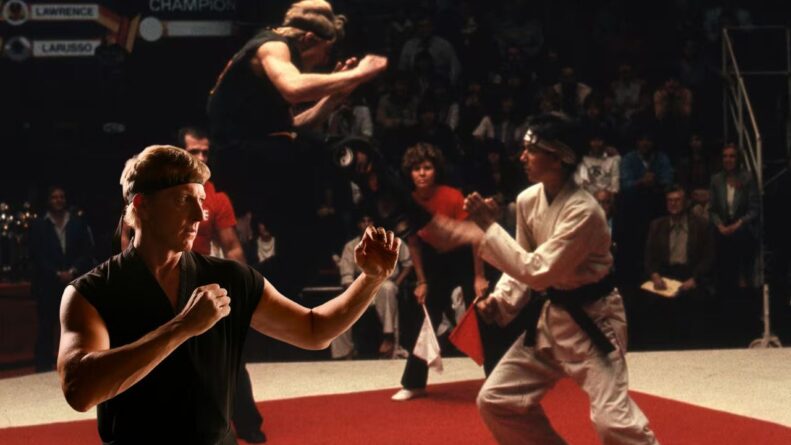
Zabka reportedly earned $100,000 per episode for seasons 1 and 2, with undisclosed increases for later seasons. With six seasons and 60 total episodes, the math on his Cobra Kai earnings alone is significant.
But what Zabka brought to this wasn’t just acting — he was also a co-executive producer. He shaped the show’s direction. He understood that Johnny Lawrence’s redemption required exploring the character’s foundational trauma — specifically the parking lot incident from The Karate Kid Part II where sensei Kreese physically attacked Johnny. Zabka noted this became “the thorn in Johnny’s soul” that explained 30 years of failure.
Current estimates put William Zabka’s net worth at around $3 million to $4 million as of 2025–2026, with some sources (Celebrity Net Worth) citing approximately $4 million.
Acting income — Working in the Hollywood industry for years, from The Karate Kid franchise which made a blockbuster success at that time to recent episodes Cobra Kai that receive massive paychecks around $100K-per-episode, form the foundation that lasted forever.
Production and writing — His behind-the-scenes work on Cobra Kai as co-executive producer added a revenue stream most actors never develop.
Real estate — Zabka real estate is worth around $1 million which he bought in 1996 for $256,000 in Burbank, California. He also owned another home in Brentwood, Tennessee, he paid $1.025 million for a home six years ago.
The hard part — In January 2025, Zabka lost a house in the LA area Palisades/Eaton fires — a painful real-world blow that likely impacted his asset portfolio significantly.
His $3–4 million net worth is modest by A-list Hollywood standards, but it reflects something more valuable: sustainability. He built a career that lasted, not one that flared and faded.
Read More 👉 Star Wars: Maul – Shadow Lord: Darkest Chapter Is Only Getting More Dangerous
In 2008, Zabka started a family by marrying Stacie Zabka and brought two children together into this world. But he always kept his family away from the media or controversies which is a very conscious choice that speaks to his character off-screen.
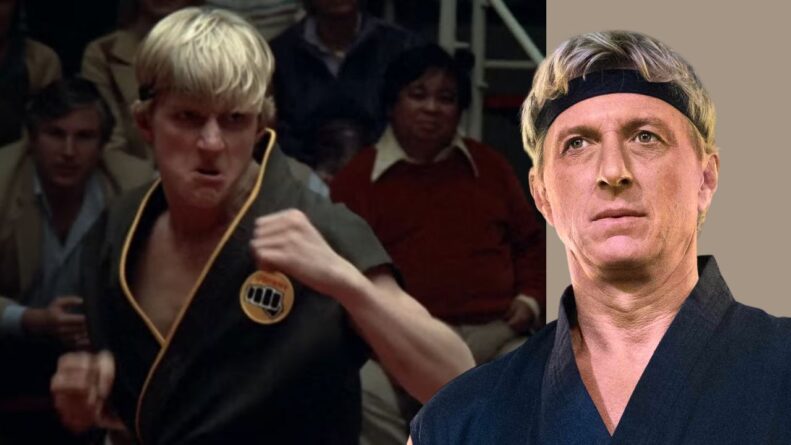
He’s close friends with Ralph Macchio, his on-screen nemesis turned genuine ally. Their real-life camaraderie is the emotional engine that made Cobra Kai work — two men who spent decades being defined by a single film together, choosing to reclaim it on their own terms.
Zabka most recently starred in and co-produced the final season of Cobra Kai and continues to work in film, directing and developing new projects. With Cobra Kai concluded after six seasons, he steps into the next chapter carrying something most actors spend entire careers chasing — genuine creative credibility, on both sides of the camera.
William Zabka Net Worth of $4 million net worth is the outcome, not the story. The real story is started by The Karate Kid’s Johnny Lawrence whose face becomes a horror to many kids in high school. That evil face card earned a lot of hate but he owned that one-dimensional villain role at 18, refused to let that be his whole biography, spent two quiet decades building skills Hollywood never asked him for, and then waited until the culture was ready to see his character differently.
He didn’t reinvent himself. He deepened himself and gave the audience another page of the story of the same villain who they hated for years in Cobra Kai. That something quite bigger for a single character, like a redemption. And from that journey he made a fortune of millions.
Stay connected with Fandomfans to get details from movies, series and celebrities of the biggest entertainment industry.

Robert De Niro gives a brilliant dual performance in "Alto Nights", proving once again why he is a timeless legend in American cinema.
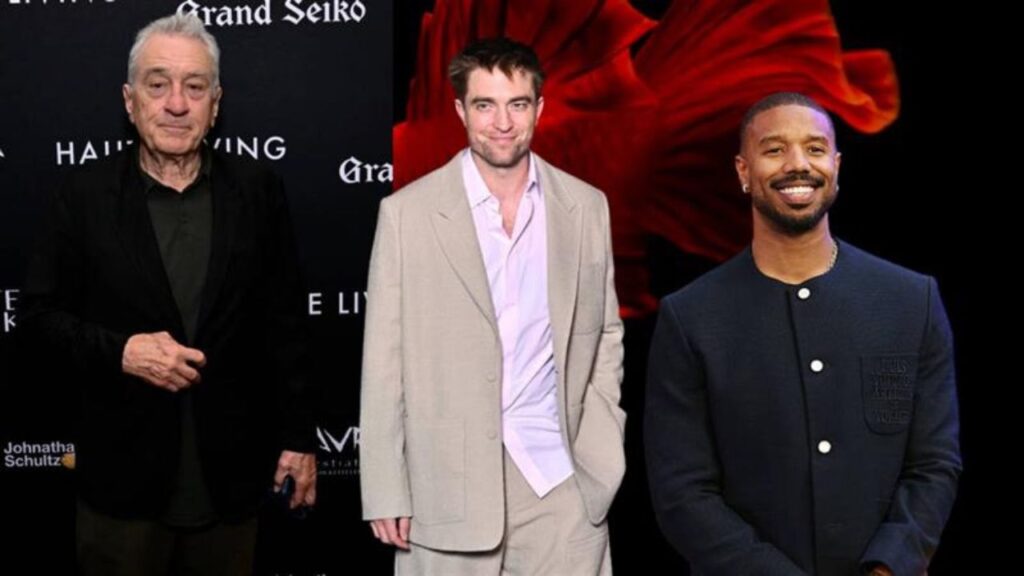
The year 2025 has turned out to be transformative for actors playing two roles — a craft that requires not only technical skill but the creative nimbleness to make each character distinct, memorable, and meaningful. Very few actors have ever pulled such a stunt with the confidence of Robert De Niro in “Alto Knights”, Robert Pattinson in Bong Joon Ho’s mind-bending “Mickey 17” or Michael B. Jordan in Ryan Coogler’s slick “Sinners.” Critics have praised all three performances, deeming them some of the greatest dual performances seen on screen in recent times.
Robert De Niro’s place in American cinema is defined by his tendency to dwell so far into a character that the actor becomes indistinguishable from the role. In Alto Knights, the Barry Levinson film, De Niro brings this artistry to yet another dimension by playing not one but two legendary mob bosses: Frank Costello and Vito Genovese. This is not only a parade of makeup, costume, and accent changes, but an examination in fine shades of difference—each character is distinguished not just by voice and mannerism, but by the moral and social landscapes they occupy.
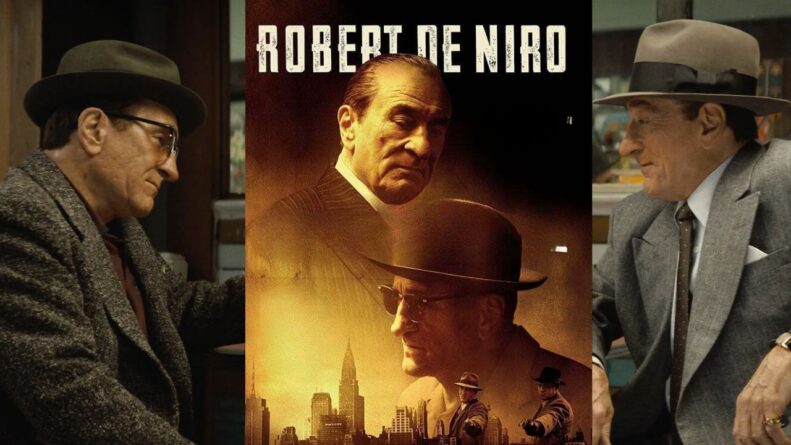
According to The Hollywood Reporter, The narrative tracks Costello and Genovese, old friends–turned enemies, as their aspirations collide in the changing landscape of 1950s New York. De Niro’s Costello is cool and calculating, monkishly business— a sharp suit, walnut-lined lobbies, and the weight of years spent scrabbling between politics and criminality. Genovese, on the other hand, is temperamental and paranoid, consumed with returning to his former position of power and testing the limits of violence and vice.
Critics note that Levinson’s direction is not a reinvention of the mob genre, and can be derivative at times, but it is De Niro’s talent to bring to life two very different characters that is what really gives the film its backbone. Even when the story stalls in exposition or tiresomely repeats mob lore, De Niro’s subtle work anchors “Alto Knights” as a showcase for his undiminished artistry.
That’s not the only exciting thing about Bong Joon Ho’s Mickey 17, which will also be a showcase for Robert Pattinson’s most extreme screen skills yet. USAToday mentioned, Adapted from the book by Edward Ashton, the movie depicts a future in which disposable laborers (dubbed “Mickeys”) are cloned and resurrected multiple times to provide humanity’s needs. Pattinson, who must portray a series of character variants of Mickey as the story progresses, embraces the challenge.
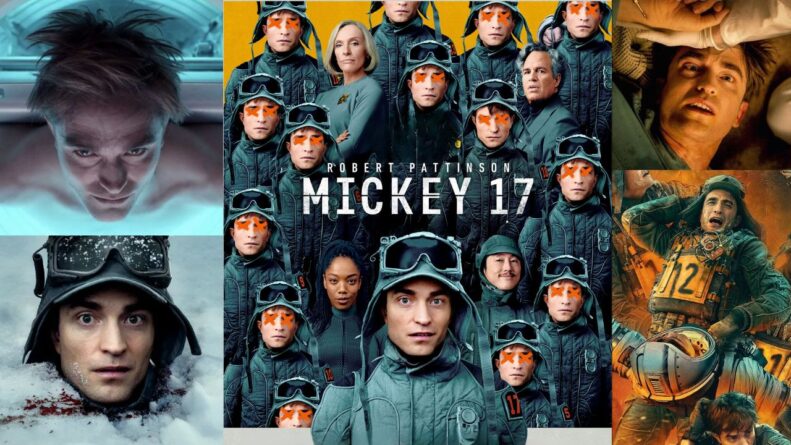
The American critics said Pattinson’s performance was “gonzo, gleefully deranged”, and that the fact each of his clones gives him a slight trace of individuality—somewhat hopeful, somewhat world-weary, makes the film both humorous and touching. Bong Joon Ho – who fuses biting social commentary with genre thrills – utilizes Pattinson’s liable performance to pose questions of identity, labor and what it means to have a soul.The actor’s comic abilities, physical energy, and readiness to infuse his character with a smidgeon of existential dread led to some of the most memorable and praised performances from “Good Time” and “The Lighthouse,” but “Mickey 17” is where his bravura range really converges.
As NYpost, Michael B. Jordan doubles up in the drama “Sinners”—as Smoke and Stack, brothers divided by everything imaginable, caps a year that has seen him reach for the stars in terms of challenge and scope. Ryan Coogler’s script provides Jordan with ample material, telling a gothic Southern vampire story with a slick spin, but it is Jordan who elevates the movie.
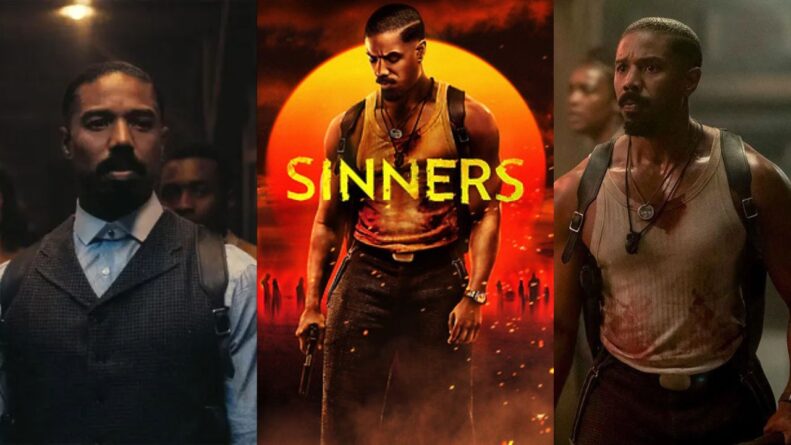
Variety has praised Jordan’s unique talent to both physically and emotionally embody each twin. Smoke is all brooding menace, while Stack exudes a wounded charm—a divide not just of wardrobe and posture, but of energy, trauma, and hope. The skill involved in their interactions — fighting, arguing, even fleeting tenderness — pulls you into what seems like a genuine, lived experience between them. Jordan’s decisions do not trail off into the cliched, if anything they are careful in how both twins are made unique but symbiotic, amplifying the tragic sweep of the film and, occasionally, bringing it surprising grace.
What explains the outpouring of affection for these actors, aside from the basic fact that they’re all very big stars:
By 2025, the challenge of playing two roles has evolved from a cinematic feature to a crucible for the best actors in the world, a place where technical virtuosity can be measured against emotional profundity.
Read More 👉 Chris Hemsworth’s Extraction 3 Officially in the Works — Delay Reasons, Story Details & More
The triumphs of plugins such as “Alto Knights,” “Mickey 17,” and “Sinners” are already shaping a new generation of American filmmakers. The best sales agents, casting directors and studios now feel emboldened to take a chance on multi-role scripts, confident that modern visual effects and acting skill can create truly memorable storytelling. For fans and critics alike, these performances are a reminder of cinema’s ability to reinvent itself – even in genres that might feel otherwise spent.
This year has truly been the blast of the double act, but playing two parts in a film is more than just a cinematic trick — it’s a challenge that can say a lot about an actor’s courage and range. From Robert De Niro’s layered mob legends in Alto Knights to Robert Pattinson’s fearless experimentation in Mickey 17 and Michael B. Jordan’s emotional duality in Sinners, these performances are setting a new gold standard for what it means to be versatile in today’s cinema. As storytelling changes, such double performances serve as reminders that great acting is still at the core of unforgettable filmmaking.
Margot Robbie & Colin Farrell’s A Big Bold Beautiful Journey draws mixed reviews. Stunning visuals but weak chemistry and poor box office hurt its success.

Director Kogonada’s new movie A Big Bold Beautiful Journey receives mixed reviews from critics. It shows a story which is blended with romance, fantasy, and personal insight in a style that feels like a fairy tale. Margot Robbie and Colin Farrell first collaboration brings Academy Award nomination. The romantic fantasy film story is written by Seth Reiss.
Kogonada is famous for his thoughtful movies including “Columbus” and “After Yang.” while Seth Reiss is previously scripting for “The Menu”. A Big Bold Beautiful Journey was shot in California with a production budget of $45 million. Joe Hisaishi scored and was his first time for a Western film with additional songs by Laufey and a Mitski cover.
The film gets mixed reactions from critics. This film scores 55% rating on Rotten Tomatoes and Metacritic gave a 42/100 rating to this film as Kogonada’s skill for making this film with high quality material and the strong acting from the leads. Despite the best directorial work, they are concerned about the script’s execution.
Critical Concerns is about tone mismatches and uneven pacing from the actors. Variety noted that “Farrell and Robbie seem remote and oddly flat, even in moments of deep intimacy and vulnerable feelings.” The New Yorker‘s Richard Brody suggested about directorial talent and pointing it to going in a wrong way. Rolling Stone hit hard, calling it a “disaster” which shows very tough pinching on director’s talent and actors’ wrong choice by taking this movie.
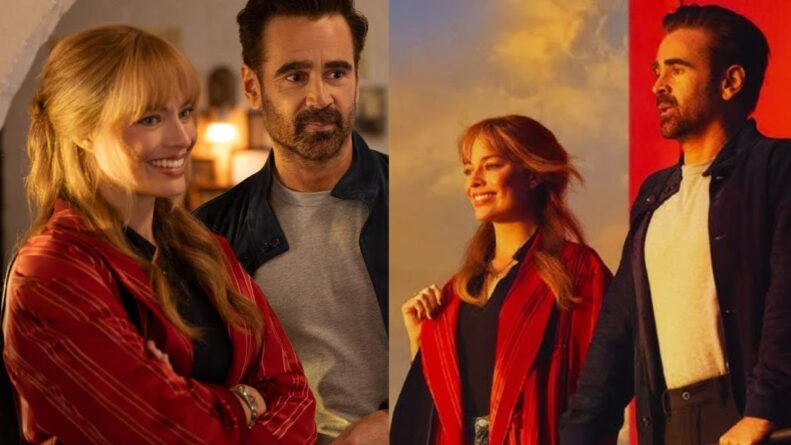
Overall, the film’s cinematography and theme is fantastic which received good reviews. Peter Bradshaw of The Guardian rated it 3/5 stars. He also suggests that film needs to polish its work of art and let go of doubts. Little White praised Kogonada’s “singular, warm sensibility which is worth the ride for fans of its soft emotions, and gave 80/100.
As Deadline noted, Unfortunately, the film faced big troubles at the box office. A Big Bold Beautiful Journey was released on 19 September, 2025 in 3330 theatres and earned only $3.5 million in opening. With a $45 million budget production film received just $8.9 million worldwide is a disaster.
This represents a sharp difference from Margot Robbie’s last hit film, “Barbie.” which earned about $70.5 million on its opening day. A Big Bold Beautiful Journey” 98% lower, the poor performance led to rapid decline in theatrical run.
Read More:- The Diplomat Season 3: Trailer Reveals Shocking Twists and Rising
NPR says, The story follows Sarah (Margot Robbie) and David (Colin Farrell), two single strangers met at their mutual friend’s wedding. Both characters are suffering from their past relationships and not ready for commitment. This movie is inspired from films like “Eternal Sunshine of the Spotless Mind” and “Howl’s Moving Castle“, these movies are a blend fantasy of characters who deep dive into love, sorrow, faithfulness. The reflection of these movies are shown in A Big Bold Beautiful Journey.
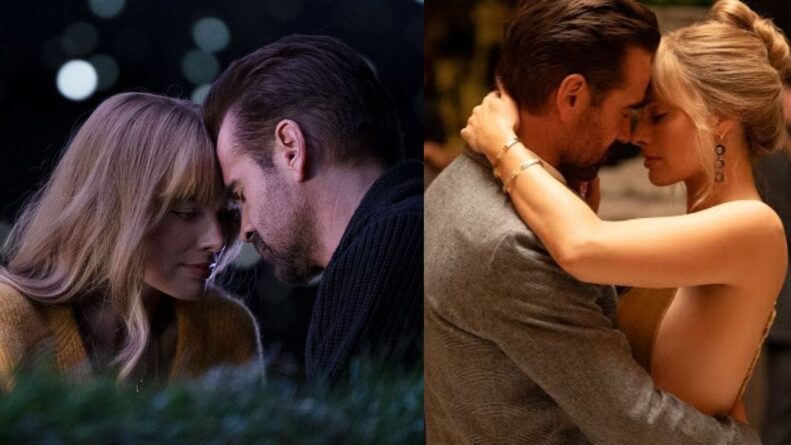
The Hollywood Reporter mentioned, Kogonada’s unique way of shooting stands out in every scene. He uses neat frames and bright colors. The movie’s dramatic feel, like a stage production, reflects its exploration of performance and realistic love bond.
A Big Bold Beautiful Journey is receiving positive and negative reviews from critics and audiences. Positive review received for the film’s visual and blend of fantasy, and introspection but criticized for Actors low energy in some shots and Direction of Kogonada. The critical concern impacted the movie’s further theatrical run. Margot Robbie as Sarah and Colin Farrell as David performed well but seems too distant at the point which makes romantic fantasy film score less. Overall, the movie is still liked by some viewers, as the emotional comedy and artistic ambitions.