Home > Movies > ‘Wake Up Dead Man’ Review: A Bold Mystery..
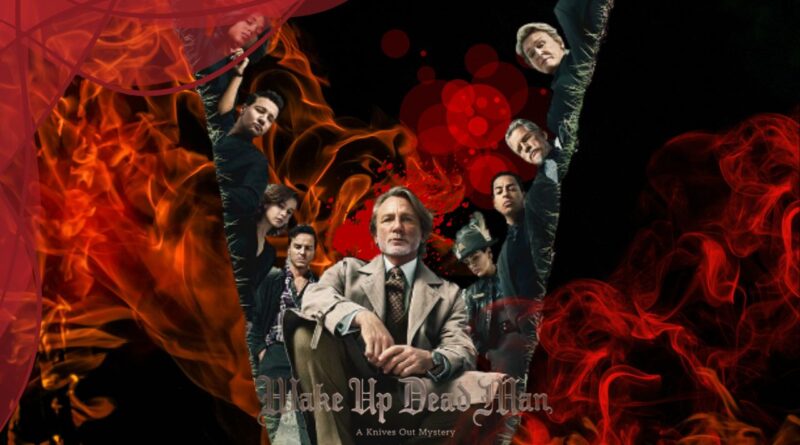
‘Wake Up Dead Man’ Review: A Bold Mystery but Missing the Knives Out Spark
"Wake Up Dead Man review: Superb performances and a bold storyline, but this Knives Out follow-up lacks the complex twists of the originals." Learn more..!
The late 2025 launch of Wake Up Dead Man: A Knives Out Mystery is a high-stakes moment for one of the greatest IPs in modern moviemaking. Taking its place as the crown jewel amongst writer-director Rian Johnson’s body of work, the Knives Out franchise hasn’t simply breathed new life into the “whodunit” genre, it has transformed it into a tool for sharp social commentary, adapting the warm tropes of Agatha Christie to unpack the unsettling realities of 21st-century American class relations.
Coming off the sleeper theatrical success of Knives Out (2019) and the opulent, streaming-centered cultural moment of Glass Onion (2022), this third entry arrives with the weight of an inherently high-stakes legacy and the burdensome $450 million payday by Netflix.
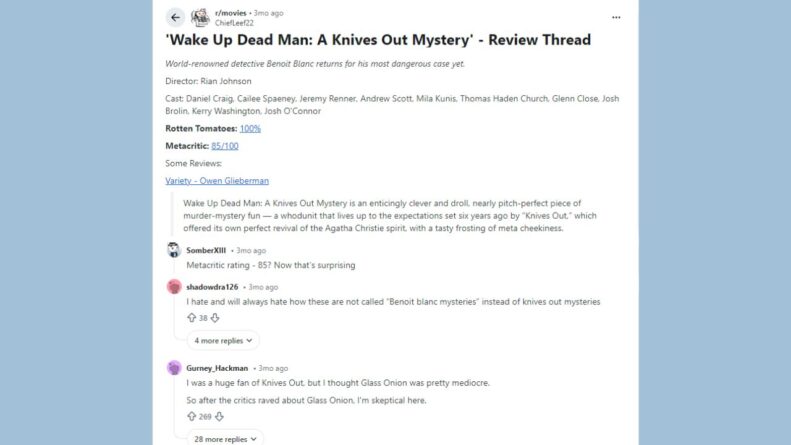
Although the film has received overwhelmingly positive ratings—for example, it currently has a Rotten Tomatoes rating of 96% to 100% in the wake of its premiere at the Toronto International Film Festival—a close read of the reviews reveals a series struggling to find new energy in its satirical bite and its narrative mechanics.
The biggest departure in Wake Up Dead Man and the cause of most critical dissent is its bold structure. Johnson seeks to destabilize the standard whodunit paradigm not in the question of who did it, but in the mode of storytelling.
Bold Structural Shift: Blanc Arrives Too Late
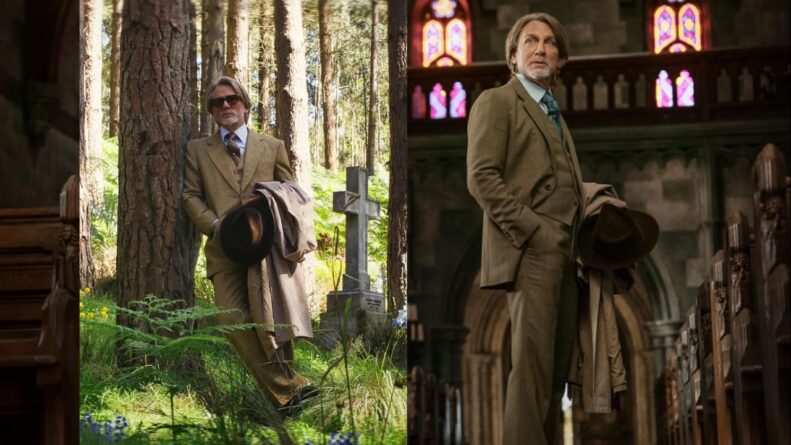
Everything has been turned on its head in what is being called a “subversive” and “harmful” marketing move: The franchise centerpiece, Benoit Blanc (Daniel Craig), does not show up until the 45-minute mark. This decision in narrative style changes the whole DNA of the whodunit.
Image credit: IMDb
The movie devotes its whole first act to introducing the “victim,” Monsignor Jefferson Wicks (Josh Brolin), and the main protagonist/suspect, Father Jud Duplenticy (Josh O’Connor). The viewer is so deeply ensconced in the personalities of the Chimney Rock group, the history of the church and even the philosophical divide between Jud and Wicks that the arrival of law enforcement feels intrusive. The point of this construction is to give the mystery an emotional charge — the murder is not simply a brainteaser, but a tragedy involving characters the audience has come to know.
Reviewers said the first two reels of the film are slow. By the time the detective, Blanc, finally makes his appearance, most of the puzzles are already set on the table, so he’s not quite as active and important as he was in previous entries. He’s more like a “buddy cop” partner to Father Jud than the main engine of the narrative.
Image credit: IMDb
With Blanc arriving so late, the first act becomes a drama — nicely acted, but lacking the strong mystery “hook” that normally pulls audience in. That’s why they thought it was “far too long” to get truly started.
Classic Locked-Room Mystery With Predictable Twists
The movie borrows from a classic play, “the locked room” mystery, in which a murder takes place inside a church during a service and only the congregants could be suspects. The premise is entertaining — a seemingly impossible murder with no weapon or assailant in sight, inspired by old-school authors like John Dickson Carr.
Reviewers enjoyed the classic Christie-style tone, but many thought the answer was both a little too complex and still too easy to guess. Since the killer could be identified by the audience rather early on, the mystery was not very surprising and some considered the film to have lost the unpredictable energy that made the previous Knives Out films so exciting.
The film’s primary antagonist Monsignor Wicks is a gaunt, terrorized priest who wields religion as a tool of oppression, placing him among the more blatant political extremism and faith abuse in the stacked deck of the film. The movie even sets him up against the gentler Father Jud to illustrate the difference between poisonous institutions and real spirituality. But manyreviewers found the satire too on the nose and “safe.”
The portrayal of Wicks is made so blatantly villainous that the satire feels toothless and uninspired, especially when compared to the cutting, dangerous satire of the earlier Knives Out films. It makes the criticism feel routine and less hard-hitting.
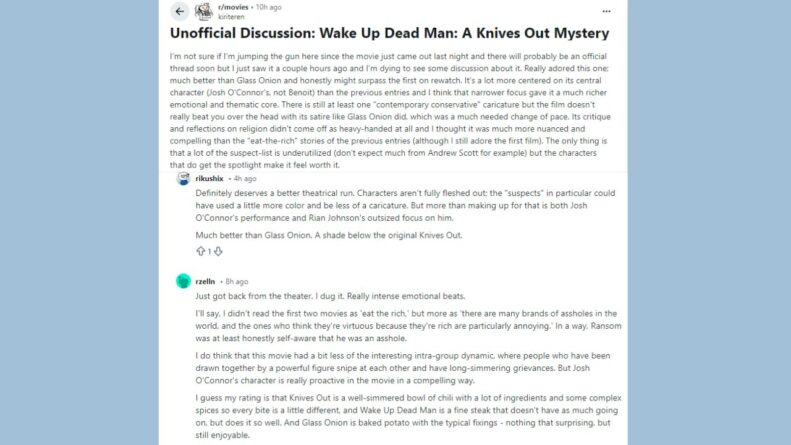
Reviews say the movie is bigger than Knives Out but not as sharp as Glass Onion, and many feel it doesn’t have the tight, focused writing of the first film. It also plays it safe, leaning on well-worn mystery tropes rather than attempting to surprise or outsmartits audience.
Although the storyline can appear to be baffling at the beginning, the twists are quite predictable, which causes the mystery to be foreseeable and less emotional. Without a clever, mind blowing reveal, the ending just feels mundane.
Conclusion
Wake Up Dead Man is a “safe” triumph—a film that refines the form but loses the anarchic, punk-rock energy that made Knives Out a sensation. It’s a mystery that insists on being watched for its craft, if not one that will be viewed again and again as its antecedents have been.
Moving forward with the franchise, Johnson has a choice— he can continue his journey toward introspection and “cinema,” or he can come back to the tight, aggressive storytelling that made the original a searing experience. The “Knives” may still be out, but this time, they seem a little less sharp.
Fandomfans is an entertainment source which delivers consistently every movie reviews analysis and audience reception for a Wake Up Dead Man movie.
Mariyam
Articles Published :
77
Mariyam Khan is Fandomfans Content Writer and providing reports and reviews on Movie Celebrities, and Superheroes particularly Marvel & DC. She is covering across multiple genres from more than 4+ years, experience in delivering the timely updates.
Andrew Stanton’s ‘In the Blink of an Eye’ Might Be the Most Important Sci-Fi Film of the Decade
At Sundance 2026, Andrew Stanton’s In the Blink of an Eye debuts with a bold multi-timeline sci-fi tale examining human emotion in the past, present and future.
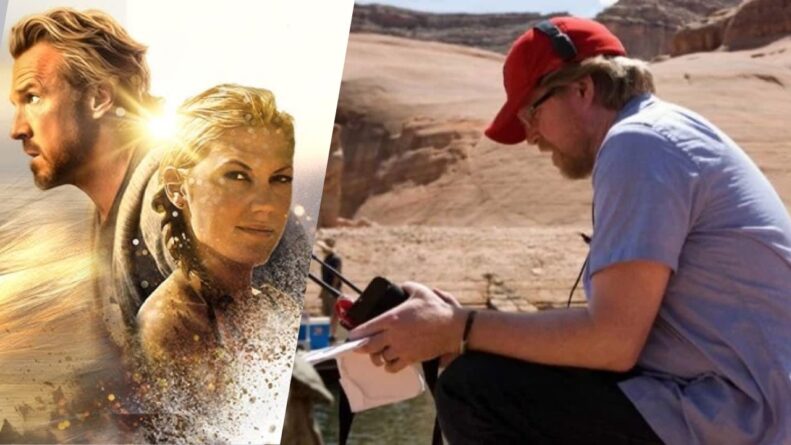
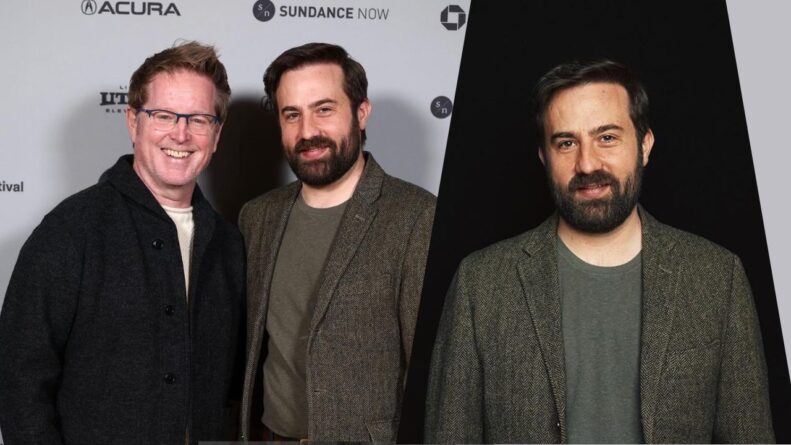
If you have been keeping up with the Sundance Film Festival 2026, you may have found yourself wondering what Andrew Stanton is doing these days. The Whiz behind Wall-E has at long last arrived back on live-action soil and he is doing so with uncertainty, not caution. His new film In the Blink of an Eye is not only a return to form it is a high concept, mindbending thrill ride.
In the Blink of an Eye at a Glance
Feature
Details
Movie Title
In the Blink of an Eye
Director
Andrew Stanton
Writer
Colby Day
Genre
Science Fiction / Drama
Narrative Style
Triptych (3 interconnected stories)
Time Periods
45,000 BC (Neanderthals), Present Day, and Far Future
Core Theme
Human connection across time, evolution, and technology
Story Approach
Visual storytelling & behavior over heavy dialogue
Structure
Non-linear and multi-timeline
Editing Style
Using “Emotional Sync Points” to link different eras
Premiere
Sundance Film Festival 2026
Vibe
Thought-provoking, Sci-Fi With Emotional Depth
Standout Factor
Skips the “Hero’s Journey” to focus on shared human feelings
Andrew Stanton’s Bold Return to Live-Action Sci-Fi
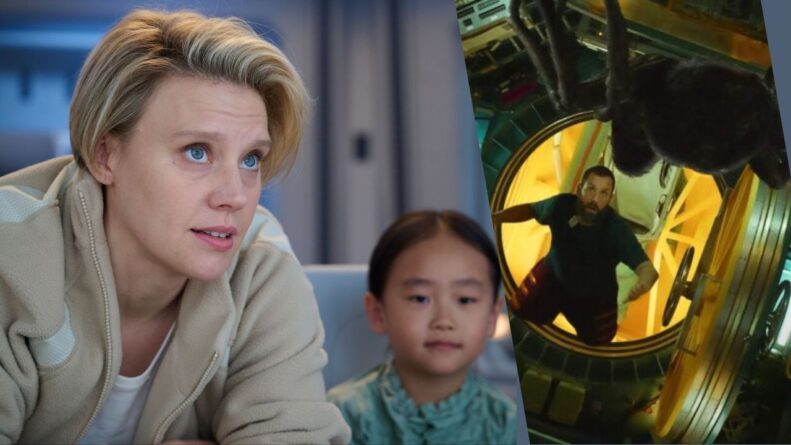
So, what’s the deal? That’s not your average “aliens destroy the White House” science-fiction movie. It’s a triptych — which is just a fancy way of saying that it tells three separate stories that are all interconnected.
A Typical Alien Story Told Across Millennia
It is a narrative that leaps randomly back and forth over the course of thousands of years, from ancient Neanderthals to the current day, and then to the future.
It’s ambitious, it’s a little experimental, and it’s trying to suss out what really makes us “human” from era to era.
A Triptych Narrative That Spans From Neanderthals to the Future
Visual Storytelling Over Dialogue
Andrew Stanton had long been working on big shows such as Stranger Things, 3 Body Problem, and he spent that time ‘hand-picking’ his dream team. He’s also leaning heavily on his animation roots.
Andrew Stanton’s biggest takeaway is the importance of imagination. He thinks the presence of a character — an expression, a movement, or maybe a choice can say more than dialogue ever could. The end product is a movie meant to make you feel first, leading emotion with images rather than explaining everything in words.
Image Credit: Fandomfans
Rejecting the Hero’s Journey for Something Riskier and Richer
The author, Colby Day, confessed he was a little tired of the typical movie structure we get applied to everything. Rather than tracking a single protagonist on a familiar trajectory, he wanted to “blow up the world” and change the rules. He was inspired by films such as Cloud Atlas — those “big swings” that might be a little messy but way more interesting than a “safe” blockbuster.
Image Credit: Fandomfans
How Editing Three Timelines Finds One Shared Human Emotion
Just think about what it would be like to edit three separate films into one. The editor Mollie Goldstein said they had to find “sync points.” They’re moments when a character in 45,000 BC is experiencing exactly what someone in the future is. It’s the emotional glue that holds the whole thing together.
Why Emotional Connection Is Replacing Spectacle in Sci-Fi
Connectedness is the new spectacle: The age of hollow, effects-laden action-movies is waning. In the Blink of an Eye caters to a burgeoning demand for narratives with emotional connections — demonstrating that no matter how far technology evolves or centuries elapse, what really resonates is how intimately we are linked to one another.
Image Credit: Fandomfans
The Comeback of Big, Risky Ideas in Modern Filmmaking
The Comeback of the “Big Idea”: For a time, it seemed like movies were made by committee. This feels like a personal project and a risk. If this works, studios will once again trust directors with strange, “unfilmable” scripts.
What the Film Says About Being Human
Universal Struggles: By featuring Neanderthals, the film makes us aware that even as our phones evolve, our hearts don’t. We’re all still coming to grips with the same primal fears and loves that people had thousands of years ago.
Darkly In The Blink of an Eye is a quiet rebellion against all the sci-fi that has played it safe for far too long. Rather than pursuing bigger explosions and louder stakes, it looks inward – across centuries, across species, across futures – to consider what actually endures.
When the film connects Neanderthals, modern humans and future societies through shared feelings, it tells us our survival is not dependent on wiping out the other; rather it magnifies our humanity. If this movie sticks the landing like it promises, it won’t just be a standout at Sundance — it may indicate a turn toward even braver, more emotionally intelligent sci-fi, where connection matters more than spectacle.
Dive into the world of entertainment with Fandomfans to get deeper details from directors, stars, and industry insiders.
Mariyam
Articles Published :
77
Mariyam Khan is Fandomfans Content Writer and providing reports and reviews on Movie Celebrities, and Superheroes particularly Marvel & DC. She is covering across multiple genres from more than 4+ years, experience in delivering the timely updates.
The Batman: Part II – Matt Reeves Brings Emmy-Winning Designer Luke Hull to Rebuild Gotham
The Batman: Part II brings together Matt Reeves and Emmy-winner Luke Hull to redesign Gotham City with a darker, more realistic style starring Robert Pattinson.
Matt Reeves’ hotly anticipated The Batman: Part II has reached an exciting new high with the reveal of its production designer, an Emmy-winning artist whose lineages in cinematic world-building is unparalleled. As the city of Gotham prepares for another trip to the theater, the film’s scope has been expanded to include Luke Hull, known for his revolutionary work on Disney+’s Andor and HBO’s Chernobyl.
Bringing Hull Showrunner Matt Reeves on board to direct, Reeves looks to create more grounded and immersive Gotham. According to Collider, He’s known for his meticulous attention to large, practical sets. He built entire worlds for Andor using a blend of traditional Japanese designs, minimalist Nordic styles and rugged Scottish strongholds. This fusion breathed new life into the Star Wars landscapes. His acclaimed sets for Chernobyl constructed an entire power plant. He emphasized gritty, authentic details that would add substance to the story’s emotions and themes.
What This Means for ‘The Batman: Part II’
Fans in DC and Star Wars communities have already been singing praises of Hull’s casting. They appreciate his knack for making locations into important characters.
Gotham is at the heart of Batman’s story. It will darken and become more deeply felt inside. Hull’s previous work indicates a city that depicts Bruce Wayne’s battle against its decay and moral drop.
Returning Cast and Production Details
Besides this major offscreen change, the film also brings back the core cast: Robert Pattinson as Batman, Colin Farrell as Oz Cobblepot/The Penguin, Jeffrey Wright as Commissioner Gordon, and Andy Serkis. Production is set to begin in January next year. The script is done.
The story begins immediately following the hit HBO max series The Penguin. It provides a consistent pace and intensity for fans of the original film and the complete Gotham narrative.
Visual Style Differences Between The Batman and The Batman Part II
In comparing the look of The Batman to that of the forthcoming The Batman: Part II, there are notable differences in the production design, as well as in Gotham City’s artistic direction. Part II wants to take world-building even further and perhaps embrace more traditional comic book iconography while the first film is celebrated for its mood, desaturated, neo-noir look.
The Batman (2022)
The Batman: Part II (2027)
Palette of Colors and Atmosphere: Muted/desaturated to the extreme on all levels, consisting of a very limited desaturated palette composed mainly by dusty deep tones with occasional pops of red, or orange.
Color Scheme and World-Building: There will be deeper colours, with more shades, but a dark intention. This is the plain and old-fashioned places of Hull. Gotham’s architecture will be more defined: There will be windows, and roofs on some of the buildings, as CBR says.
Cinematography: A close, tactile camera feel was achieved through the use of Arri ALFA lenses. It focused on harsh reality and silhouette imagery a-la Roger Deakins.
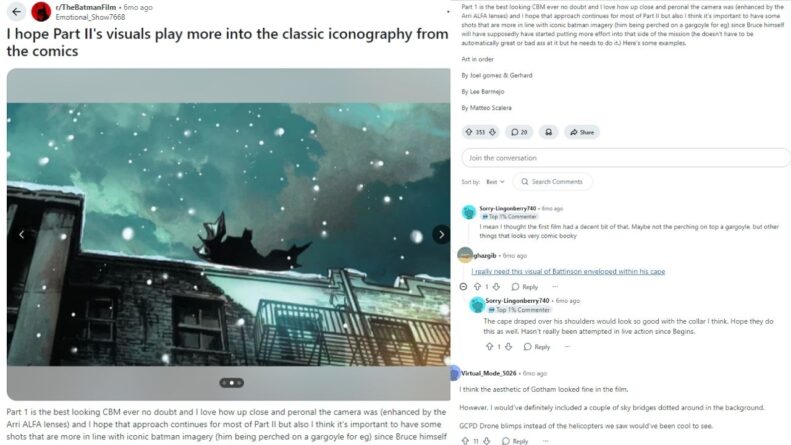
Visual Ideas: Initial discussions on Reddit are that the next movie will be even more strongly influenced by vintage Batman comics. There are also shots of him on gargoyles and grand, bold scenes. The camera is close and intimate but non-pornographic.
Urban Environment: The streets always appeared wet, to suggest perpetual rain and a somber mood. The city pressed down hard and felt harsh. Night scenes gave Gotham a gritty feel and Bruce Wayne’s secretive nature.
Production Designer Swap: Andor and Chernobyl’s Luke Hull takes over duties from James Chinlund. Everything He Touches Turns to Real, Physical Space He excels at creating real, tangible, physical worlds, with sets you can touch. This transformation gives a whole new perspective to the buildings, and overall feel, in Gotham.
Symbolism: It conveyed desolation and little optimism, at times portraying Batman as a creature of the darkness. Warm orange from the flares lightened the colors only in a few places, such as the end. This was hope arising out of loss.
Comic Tribute: Sequel looks to snatch iconic comic book panels for Batman’s look. That against the muted truth of the first film in picked classic poses.
Riffing: Some of your crew spots may change, but Matt Reeves keeps close-to-the-vest stories and tailspin tone. Hull’s elegant set pieces will elevate it.
In Short, The Batman is distinguished by its muted colors, wet surfaces, and urban stress forged in shadows.
The Batman: Part II is to expand upon Gotham’s style through Luke Hull’s immersive, practical sets. It could be a tribute to vintage comic illustrations too. This gives a fresh spin which remains just as moody for the cape-wearing hero.
Conclusion
The fact that Matt Reeves went out and hired Luke Hull means that Matt Reeves wants literally every person in Gotham to be filled with the inner pain and dark thoughts that is at the core of Batman’s world. Hull has demonstrated that he can make locations come to life on the page in stories such as Star Wars’ Chandrila or the Chernobyl plant, where setting is integral to plot.
His Gothamville is in decline and ready to roar on October 1, 2027 as the making of the film starts in 2026. The Batman: Part II holds the promise of a film trip that the long wait will make all too right.
Welcome to FandomFans — your source for the latest buzz from Hollywood’s creative underworld. Here, we explore the art of filmmaking, knowing about how visionary directors, designers, and actors shape the worlds we escape into. Today we break down Matt Reeves’ ambitious direction for The Batman: Part II, Emmy-winner Luke Hull (Andor, Chernobyl) steps in to reinvent Gotham’s shadowy skyline for its next cinematic evolution.
Alpana
Articles Published :
167
Alpana is Fandomfans Senior Editor across all genres of entertainment. She evolved in the media industry since a very long time, she manages the content strategy and editing of all the blogs. Her focus on story development, review analysis, and research is well-equipped that ensures every article meets the standards of accuracy and depth.