Lanterns Episode 1 Ending Explained: Who Killed Hal Jordan?
Lanterns Episode 1 ending explained: Discover who killed Hal Jordan, what the shocking twist means, and how it sets up the mystery for the series.
Published: August 22, 2026, 8:24 am

Lanterns Episode 1 ending explained: Discover who killed Hal Jordan, what the shocking twist means, and how it sets up the mystery for the series.
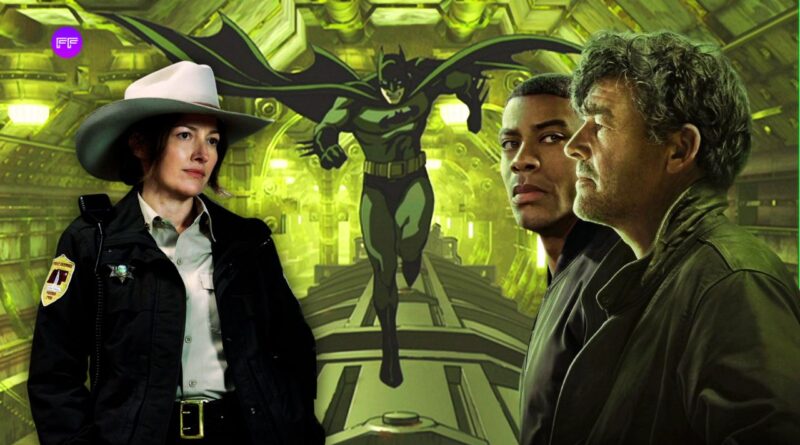
Hal Jordan is dead before Lanterns even makes it to episode two, and HBO isn’t in a hurry to say who did it. That’s the whole show now — not “will the Green Lantern Corps show work,” but “who put a bullet in a war-hardened intergalactic cop and left him on a Nebraska football field.”
Lanterns splits its runtime across three timelines — a brief 1996 stretch establishing who Hal Jordan is, a 2016 arc where a burned-out Hal is training rookie John Stewart (Aaron Pierre) through an incident in Rushville, Nebraska, and a 2026 present-day thread that’s barely started.
Episode 1 spends most of its runtime in 2016. Then, in its final minutes, it jumps forward a decade: John, now a full Green Lantern with a decade of hardening on him, gets pulled back to Rushville by Sheriff Kerry (Kelly Macdonald). She takes him to the bleachers of the same football stadium where their 2016 case played out. Hal Jordan is sitting there. Dead.
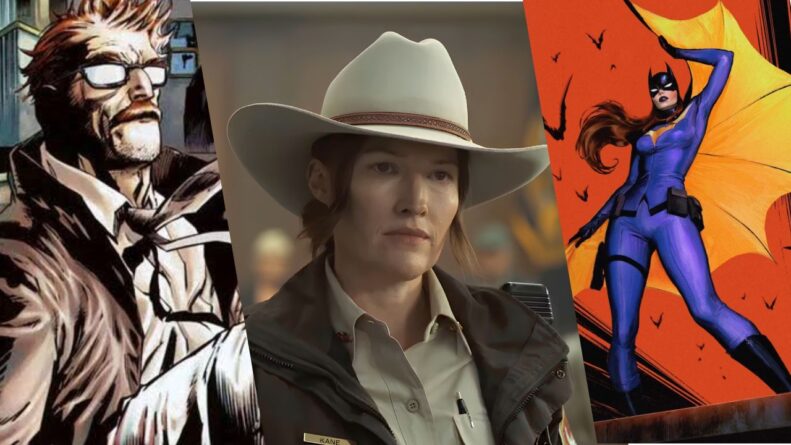
Nobody’s been named on-screen, so treat everything below as tracking, not prediction.
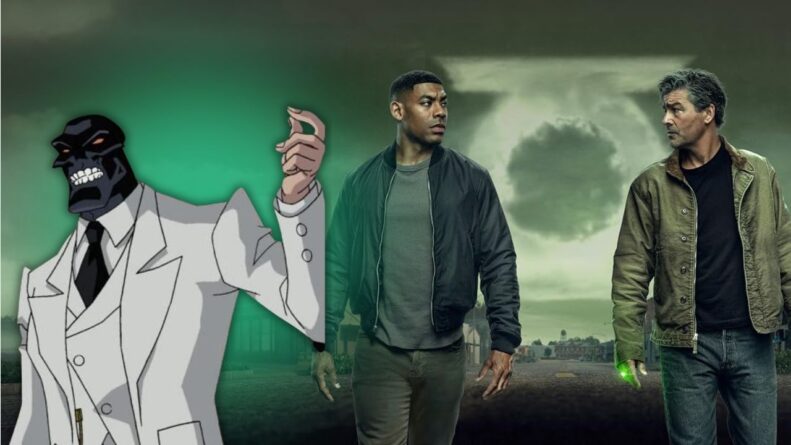
Read More 👉 Why Supergirl Could Be DC’s Biggest 2026 Movie
The ring’s absence is the detail I’d watch closest. If Green Lantern mythology is playing straight, the ring should have already found a new bearer near the body which raises the question of why Guy got it in a different city entirely, on a different timeline than John finding the corpse.
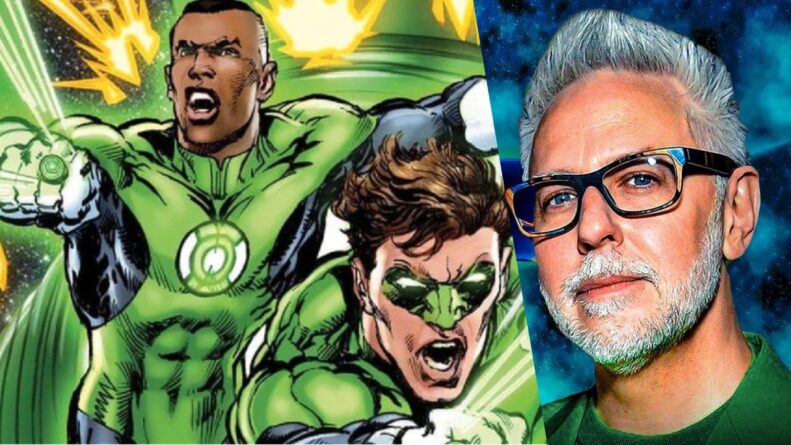
Something happened between the ring leaving Hal and it landing on Guy, and the show hasn’t shown us any of it.
Read More 👉 Tom King Has Broken Fans’ Hearts By Suggesting Hal Jordan’s Death in Lanterns
Lantern has already made Hal Jordan’s death the biggest mystery of the season, but Lanterns Episode 1 intentionally leaves viewers with more questions than answers. The Rushville tie, the missing power ring, Sinestro’s appearance and John’s mysterious fall from Green Lantern recruit to civilian all point to Hal’s death being connected to something far bigger than just a simple murder.
For now, the safest thing to do is to watch the clues rather than fixate on one suspect. Lanterns Episode 2 ought to start to fill the gap and perhaps tell us what happened to Hal from 2016 to 2026.
Get all the latest updates for every episode context and theories from series on Fandomfans.

DC’s bold R-rated Clayface 2026 body horror film featuring a tragic Batman villain. Discover how it became the best Reboot, cast, plot details, and teaser breakdown of this dark psychological thriller.
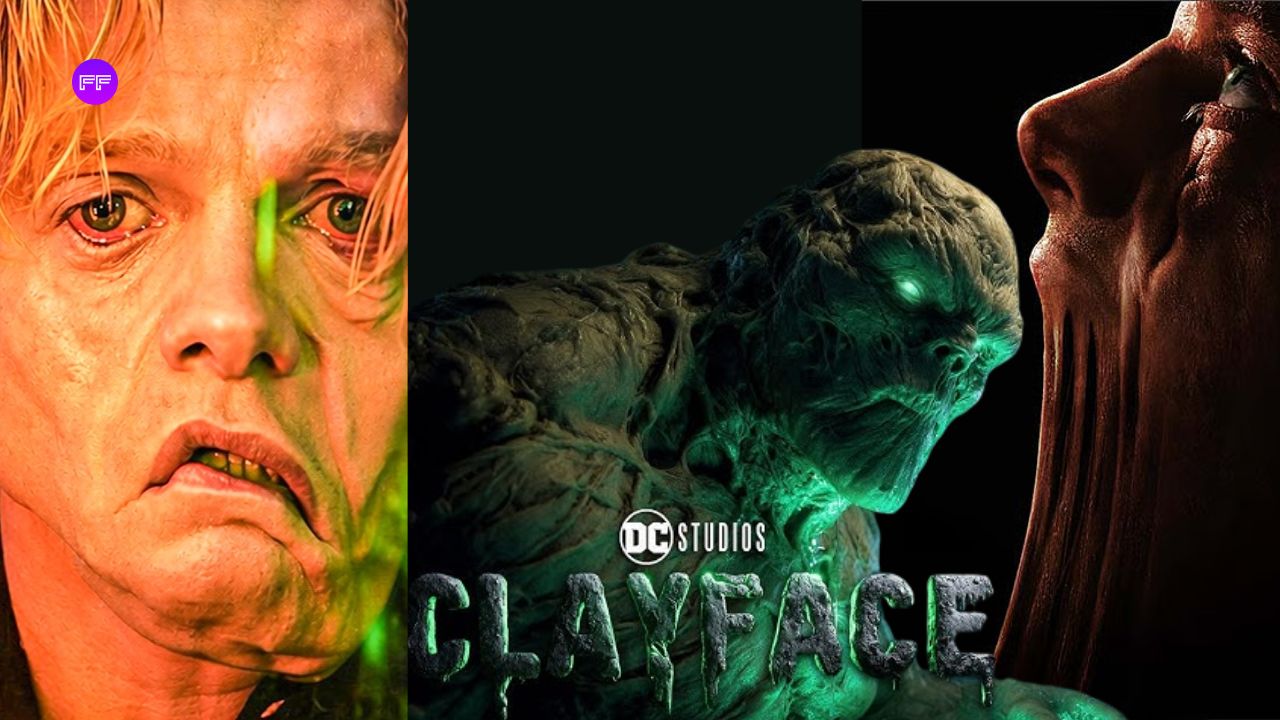
We’ve waited for one of the most eagerly awaited films in the new DC Universe to be an R-rated, full-on body horror movie about a giant mud-man. And here we are. It’s April 2026 the Clayface 2026 teaser trailer just dropped and it’s completely, utterly and terrifyingly sold.
It’s pretty clear that the new DC Universe being overseen by James Gunn and Peter Safran isn’t looking to tiptoe. Centering on a classic Batman villain after Superman and Supergirl with a dark, psychological thriller is a massive swing. But given the pedigree of the filmmakers and the disturbingly intense footage we just saw, Clayface 2026 could be exactly the jolt of energy the comic book movie breed needs right now.
Are you ready? Because we’re diving into everything you need to know about the Clayface 2026 movie.
From the brilliant modern horror mind of Mike Flanagan (The Haunting of Hill House, Doctor Sleep) and Hossein Amini’s comes the fantastic script for the Clayface movie.
Myth is that Gunn didn’t even have a Clayface film on his DCU whiteboard. But when Flanagan came calling with a tragic, terrifying, stand-alone horror movie, Gunn just couldn’t say no. Although Flanagan is not directing – that duty goes to James Watkins, the director of the disturbing English-language remake of Speak No Evil – this is unmistakably Flanagan.
Peter Safran has likened it to David Croneberg’s cult 1986 film The Fly, suggesting that the producers are indeed leaning into the body horror aspect. It’s unpredictable, what could make you feel ill at ease from the start if that doesn’t. This is no campy CGI slugfest. It’s a down to earth, visceral, and downright soul-crushing psychological spiral of madness.
From what you describe, Clayface 2026 movie sounds like nothing but the classic “A Feat of Clay” that aired on ‘Batman: The Animated Series’ should have been extended into a movie. It’s evidently a visually gorgeous and heartbreaking story about Matt Hagen, a former up and comer in Hollywood whose life takes a nosedive when he is disfigured in an attack by a mobster.
His frenzied attempts to recover himself scientifically come in the form of Dr. Caitlin Bates, a revolutionary and mysterious woman whose brilliance is only matched by the contentious nature of her practices.
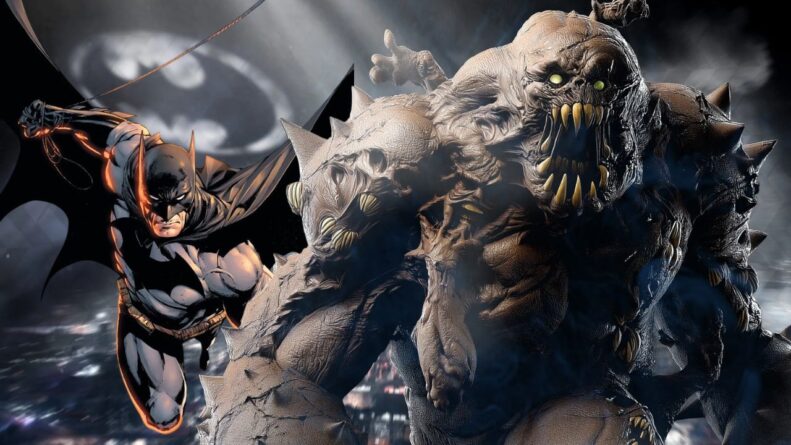
This arrangement is poised to yield an intriguing blend of tragedy, transformation, and moral ambiguity while paying homage to the spirit of the original series with a touch more cinematic flair.
Hagen is a human test subject for her experimental drug. And, predictably, horror-style, things go very wrong. The procedure goes horribly wrong and not only does it dehumanize Hagen, it alters his entire cell makeup, turning him into a clay-like being who can assume any form.
Rather than a conventional origin where the character learns to use their powers for good, Clayface is a tragedy about a man losing himself, becoming a casualty of unhealthy love, and eventually turning into a monster hellbent on revenge.
The cast of Clayface 2026 is full of heavy-hitters with real cred, rather than your typical blockbuster A-list, which works perfectly for the movie’s lean, $40 million indie-horror style budget.
Tom Rhys Harries will portray Matt Hagen / Clayface in the upcoming series. The trailer of Clayface 2026 already shows him expressing panic and anger at a high level so we know we are going to genuinely care about this guy right before his terrifying transformation.

Naomi Ackie as Dr. Caitlin Bates: Ackie is the “fringe” scientist that activates Hagen’s mutation. And, interestingly, she’s also framed as Hagen’s love interest, bringing a majorly twisted, co-dependent dynamic to the creation of the monster.
Max Minghella as a Gotham City Detective: Minghella is a detective who is dating Dr. Bates. You need not be a screenwriting major to know that this love triangle is going to end in the biggest disaster.
Rounding out the cast: There are also some fantastic character actors Eddie Marsan and David Dencik in as of yet undisclosed roles.
This is when casual fans definitely become confused, but the studios have made it surprisingly clear. Clayface 2026 is 100% absolutely in the mainline James Gunn DCU. It is the third film in the series, lined up with David Corenswet’s Superman.
However Matt Reeves (The Batman) is also heavily involved as a producer. It’s like a joint effort. By bringing Clayface into the core DCU, it also opens the door for Tom Rhys Harries’ terrifying monster to one day face off with the DCU’s next Batman (whoever that ends up being in The Brave and the Bold).
If you didn’t catch the Clayface 2026 CinemaCon short trailer that released online yesterday, go watch it right now.
The trailer has no talk. With foreboding, bass-tinged music and truly repellent horror soundtracks, it’s a masterclass in visual storytelling. Hagen’s Hollywood heyday, the savage alley beating that disfigures his face and the torturous sojourn he spends under the ministrations of Dr. Bates are all fleetingly and shockingly revealed to us.
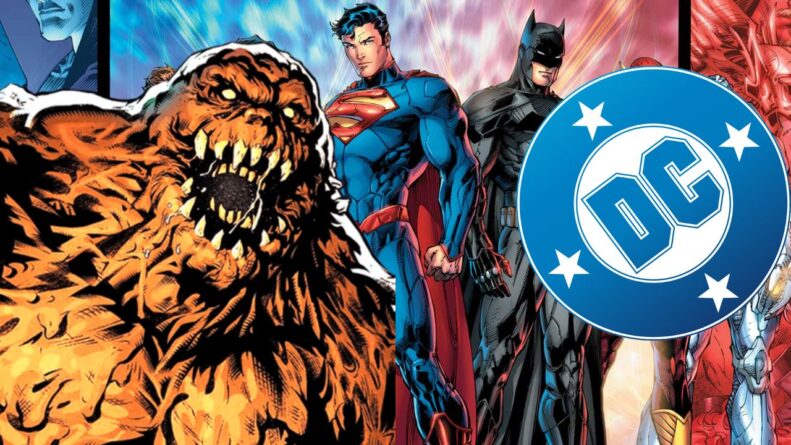
Then, the money shot was a brief, shadowy view of Hagen in an alley. His face is very malleable, melting and contorting in the dark before he transforms his fist into a huge, lead mace and smashes it onto someone off screen. It’s brutal. It’s raw. It shows that DC isn’t just going to hand us a guy with a little bit of goo on his face; they’re going full monster.
Villain solo movies in comic books are dreadful right now. From the stunning box office flop of Joker: Folie à Deux to Sony’s puzzling Spider-Man-less villain universe (Morbius, Madame Web), the notion of putting a bad guy front and center in a film is wearing out audiences. The problem? Studios are just too scared to let their villains actually be villains.
They’re always making them into sympathetic anti-villains who are in some ways worse than the villain, or who are fighting an even worse villain.
Clayface 2026 looks hell-bent on making that mistake right. From all the statements made so far by Gunn, Safran and Watkins, Matt Hagen is not a secret hero. He is a very flawed, violent, traumatized person who runs full speed into his dark side once the clay takes hold. By rooting the film in the horror world, the filmmakers have the flexibility to allow the villain to be the monster within his own tale.
Read More:- Game of Thrones Expands Again: New “Mad King” Prequel Brings Focus Back to Ned Stark
Mark your calendars, horror fans and nerds of all kinds. Clayface 2026 will hit theatres and IMAX on October 23, 2026.
To put out a genuine comic book body horror movie smack dab in the middle of the Halloween season is just brilliant marketing. It’s a giant tonal shift from the bright, hopeful skies of Superman, showing us that this new DC Universe is going to be enormous, diverse and unpredictable.
If you’re a hardcore Batman comic reader or just a fan of no-holds-barred cinema, Clayface 2026 is turning out to be one of the most compelling experiments in recent Hollywood history. Marvel, it’s your turn.
Fandomfans deliver the latest updates of upcoming movies and series, get all the details from us.
ComicsPRO 2026 Absolute Universe DC reveals game-changing new developments, bold stories, character twists, and plans for the future of the multiverse DC.
Absolute Universe DC Comics made big news for Absolute Universe at the February 2026 ComicsPRO meeting. The company demonstrated that it is finished playing it safe. Instead, DC announced plans to overhaul how it produces comics across three distinct categories of books. These changes will be for both new readers and veteran Absolute Universe DC fans.
The conference was held February 19-22 in Glendale, California. This is the news that comic book stores get when they find out what the publishers hold for the next year. DC took the opportunity to prove it has a plan solidified for growth after sweeping changes in late 2024 and 2025.
DC has three ways to publish comics in 2026:
Different strategies appeal to different readers. Taken together, they demonstrate that DC is intent on expanding its fans and fitting the hobbies of existing fans better.
The Absolute Universe started as an experiment. The concept was straight forward: Take well-known DC heroes, and take away all of their advantages. Batman doesn’t have money. Superman was not raised in Kansas. Wonder Woman has no royal family.
This world has previously sold more than eight million copies. Readers love watching heroes rise from zero in a world where villains already rule.
The villains in ‘this world’ had their own “Justice League.” This team includes:
These baddies are on the lookout for newfound super folks through means of something called the “Mirror World.” They also take a few new recruits along. In this world, Lex Luthor is just a happy farmer. Hawkman betrayed his fellow heroes to the government in the 1950s.
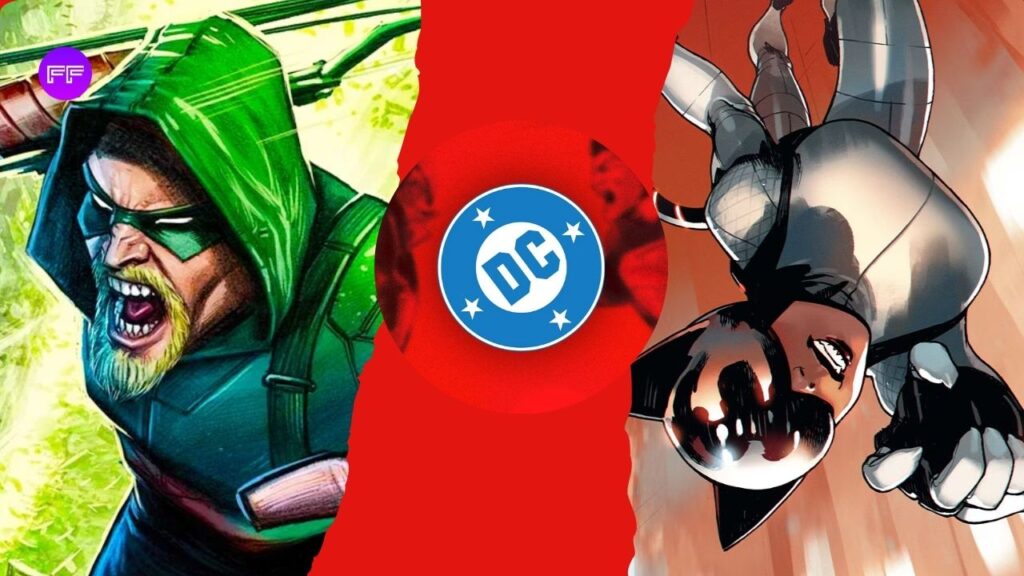
Absolute Green Arrow debuts on May 20, “experimental” is a major understatement. Pornsak Pichetshote winner of The Sandman Universe: Nightmare Country Eisner-pairs off with Rafael Albuquerque to deliver what DC is literally calling I Know What You Did Last Summer for billionaires. But somebody slasher isn’t the baddie here. Or is he?
Here’s the delicious twist: Oliver Queen is already dead. Murdered. The green-arrow wielding “Absolute Hunter” who eliminates corrupt billionaires could be a successor, an apparition, or who knows what. Dinah Lance is now reworked as an “executive protection specialist” as opposed to a costumed crime-fighter that must track a cadre of archers, all linked to the late Queen, through her list of suspects. No trick arrows. No fortune. Just urban horror and class warfare clothed in hunter’s green.
Then it’s Absolute Catwoman on June 10th, and DC are just playing a whole different game. Batman and Superman are the underdogs in this world and Selina Kyle came out on top. She’s the “Absolute Apex Predator,” the greatest thief of all time and who has access to technology that makes Batman’s gadgets look like kid’s toys.Scott Snyder co-writes with Che Grayson and Selina is the establishment figure while Bruce Wayne is the guy living on the fringes. The reversal in power is so delicious it ought to be illegal.
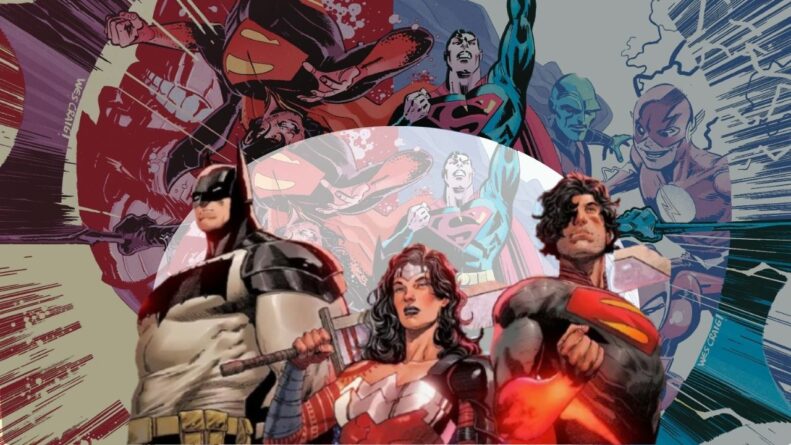
Absolute Universe DC also revealed the first big event in the Absolute Universe. It is scheduled for release in late 2026. The story will be a crossover with Absolute Wonder Woman, Absolute Superman and Absolute Batman.
The event is designed to be accessible without needing to buy other books. Fans have speculated the heroes may also create their own team to battle the villain “Justice League.” Some speculate they call themselves the Legion of Doom. This is the book most likely to be the big seller of the holiday season.
Condensing what the Absolute Edition was offering up to readers new to the material, “DC Next Level” = pure obsessiveness excellence. This is the victory lap for Scott Snyder and Joshua Williamson — a creator-firstline where talent gets to pick its characters, not the other way around.
The idea is pretty straightforward: Let amazing creators pick the characters they love, even if those characters are relatively obscure. Snyder described these books as “big swings” and “passion projects.”
The March rollout gave us a taste of this with Lobo by Skottie Young (cosmic violence meets psychological evaluation), Batwoman by Greg Rucka’s triumphant return to Kate Kane, and Deathstroke: The Terminator by Tony Fleecs. But the summer announcements? That’s where things get genuinely disruptive.
Barbara Gordon: Breakout may well be the most politically resonant superhero comic set for 2026. Mariko Tamaki (just fresh off her Eisner win) is sending Barbara to Supermax. Not as a visitor. As an inmate.
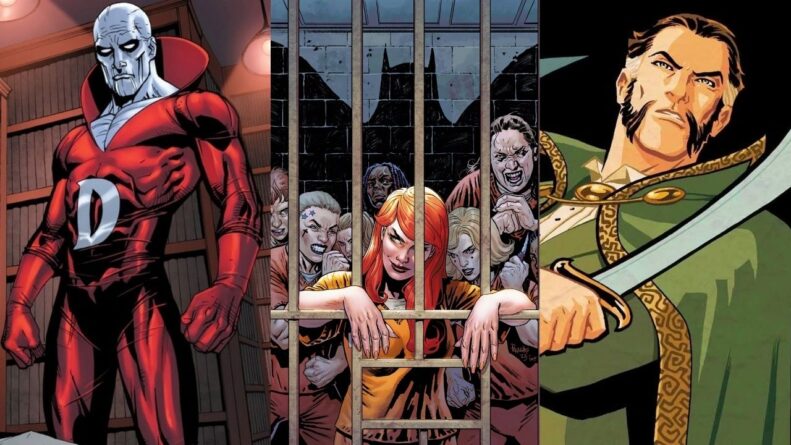 Commissioner Vandal Savage (let that title roll off the tongue) has constructed a prison for Gotham’s vigilantes and babs is trapped inside, without her tech and surrounded by criminals she helped capture. Orange Is the New Black meets The Shawshank Redemption as Oracle tries to make it through on brainpower. The survival thriller structure is so perfect for Barbara’s skill set that you wonder why no one did it sooner.
Then there is The Deadman, which wins my subjective prize for “comic I am most likely to reread on the spot.” W. Maxwell Prince and Martín Morazzo, the creators of the existential terror masterpiece Ice Cream Man are now bringing their unique vision to Boston Brand in a six-issue miniseries about “ghostly derangement.” The DC K.O. event broke down walls between the living and the dead (comic book events have the best collateral damage), and now souls are stuck in spirals of spiritual turbulence. Deadman must inhabit humans and metahumans alike in a race to repair the afterlife before the fabric of reality tears apart. If you know Ice Cream Man you are aware that Prince writes horror that whispers in your ear long after the last page.
Essentially DC saying: “Sure, we can do Vertigo-quality horror in the mainline universe.”
Kyle Higgins and Daniele Di Nicuolo, the creator and illustrator team that revolutionized the Power Rangers comics are taking the franchise to a place it’s never been. Jason Todd runs the show meaning Red Hood is heading the Teen Titans.
Not Dick Grayson giving wholesome guidance or Damian Wayne putting on a team-player front. This is Jason Todd lethal, traumatized, controversial investigating a plot surrounding disappeared superpowered teens and rounding up a team of “plugged-in, hyper-capable young heroes” to blow open systemic lies.
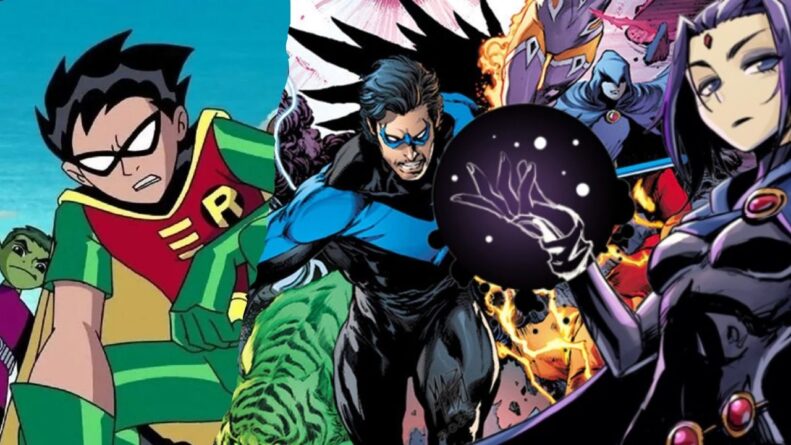
The lineup features Cheshire Cat, Flatline and Fairplay – as well as two mysterious new characters including what looks like a Gen-Z construction worker with powers related to building.
This isn’t your nostalgia-bait Titans This is Absolute Universe DC realizing the coolest stories come from breaking the toys, then giving them to creators willing to play from a different place.
Hiding in the big blockbuster announcements was possibly DC’s most culturally significant move and bringing back the Vertigo imprint in full. Not as a nostalgia line, but as a destination for mature readers with real creative freedom.
What is salient here is that Vertigo was not simply a label—it was a mindset. Sandman, Preacher, Transmetropolitan, Y: The Last Man — these were comics that showed the medium could be literature for grownups without the spandex. 2026 DC’s slate suggests they’re taking a page from that lesson.
While no specific Vertigo titles were mentioned in the ComicsPRO presentation, the dedication to ”mature-reader demographics” and the hiring of talent such as Prince and Morazzo definitely signals intent. The Deadman mini-series is really Vertigo horror dressed up in DC costume. Look for announcements at San Diego Comic-Con that will get the literary comics crowd talking.
For years the publisher seemed caught between pursuing after Marvel’s cinematic synergy and placating a direct market that was terrified of change. The 2026 slate is a different animal—three distinct publishing strategies working in tandem, each with clear creative mandates and focuses.
Absolute Universe are the onboarding ramps: continuity-free, high concept, visually arresting entry points for readers who have lapsed from the mainline or for newcomers. DC Next Level is the love project nursery, where familiar creators can get weird with underutilized characters. Vertigo (or whatever the mature line transforms into) is your prestige level, your evidence that comics can hold its own with HBO dramas and literary fiction.
A refined understanding that the direct market is not dying—it is just starving for more worthwhile products to collect. Those tiered prices for Absolute Catwoman aren’t greedy, they’re smart. They understand that comic book collecting is now experiential retail, where the tactile experience matters as much as the story on the inside.
All of this took its cues from the DC K.O. story arc. This concludes the five-issue mini-series of March 2026. A new “King Omega” will be established for this cosmic battle tournament to face Darkseid.
The aftermath of that event is a shattered world of Absolute Universe DC Next Level. Spiritual realms are in disarray. Hero teams are fragmented. This allows writers to tell all kinds of new stories without negating what came before.
Read More 👉 ‘Spiderman 4’ Official Synopsis Revelation of Theme of “Peter Parker is no more”
Absolute Universe DC Comics started 2026 with its intentions clear. The company has stopped waiting for Hollywood movies to make its characters popular. DC is producing comics worth paying attention to on their own terms.
From horror-tinged Green Arrow stories to prison survival tales with Barbara Gordon, from Jason Todd leading the Titans to Deadman fixing the afterlife, these books take chances. They trust readers to keep up with weird ideas.
DC’s three-tier approach is Absolute for newcomers, Next Level for fans, Vertigo for adults that suggests Absolute Universe DC knows its buyers. The company recognizes that its readers are not all the same. DC wants to do both — grow by adding to those disaffected consumers while keeping existing readers happy.
2026 may be the year when Absolute Universe DC demonstrates that audacious comics can capture massive audiences. The plans are set. The creators are hired. Now the books must deliver on these big promises.
Get all the updates on Fandomfans from your favorite franchise and movies/series and celebrity news. Our goal is simple, focusing on the marvel and dc theories to provide you stories.