Home > Movies > Johnny Depp Returns to Hollywood With a Dark..
Johnny Depp Returns to Hollywood With a Dark Gothic Comeback
Johnny Depp has made a powerful return to Hollywood with the dark Gothic reimagining of A Christmas Carol, marking a major comeback in his acting career.
In the world of Hollywood, nothing is more seductive than a comeback. For Johnny Depp, that moment has now come at a grand scale. The actor’s evolution from European art house cinema to a big studio production such as Paramount’s “Ebenezer: A Christmas Carol” is a remarkable twist in his career, combining his artistic roots with broad commercial appeal.
Set for theatrical release on November 13, 2026, the movie claims that it’s a “riveting, terrifying reimagining” of Charles Dickens’ 1843 classic novella. This version explores the eerie supernatural origins of the traditional tale and turns it into a thriller ghost tale somewhat reminiscent of more traditional holiday the theatre narratives.
A Darker Shade of Scrooge
From Ti West, the visionary behind the acclaimed atmospheric horror gems X, Pearl, and MaXXXine, comes this take that is sure to be a “technicolor nightmare.” West’s talent for infusing psychological terror into period pieces makes him the ideal auteur to reimagine Victorian London as a desolate, alien, and horrifying place.
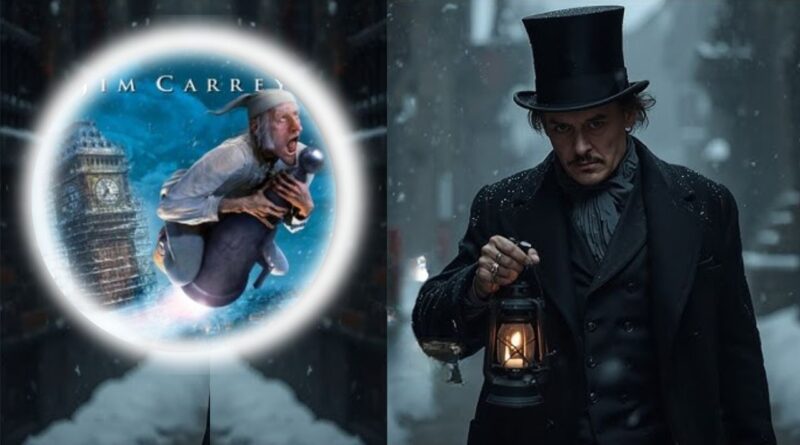
Image Credit: Fandomfans
Depp is set to take on the role of Ebenezer Scrooge, a character he has been a longtime fan of, particularly Alastair Sim’s 1951 version. But sources say Depp has a “different angle” in mind, emphasizing the internal haunting rather than the external, and the emotional heft of a “night of reckoning.”
The Powerhouse Ensemble
Paramount isn’t just banking on Depp’s “bankability”; they’ve surrounded him with a “who’s who” of franchise royalty that it will surely cover all demographic bases.
Rupert Grint (Harry Potter): as Bob Cratchit. After his chilling turns in Servant, Grint will be bringing a more nuanced, possibly even desperate, version of the struggling clerk.
Daisy Ridley (Star Wars): In an undisclosed high-profile role (rumors are that she’ll be playing Belle, Scrooge’s lost love).
Sam Claflin (The Hunger Games): With Depp for the first time in three years. There’s minutes’ with Don.
Andrea Riseborough: The Oscar nominee lends her transformative presence in some of the film’s moodier moments.
The timing of this release is a lesson in studio politics. Releasing in mid-November, Paramount sidesteps the December “family film” stampede and gives this supernatural thriller a chance to build a long-term presence on the box office. It also makes Depp’s return perhaps the key event of the 2026 awards season.
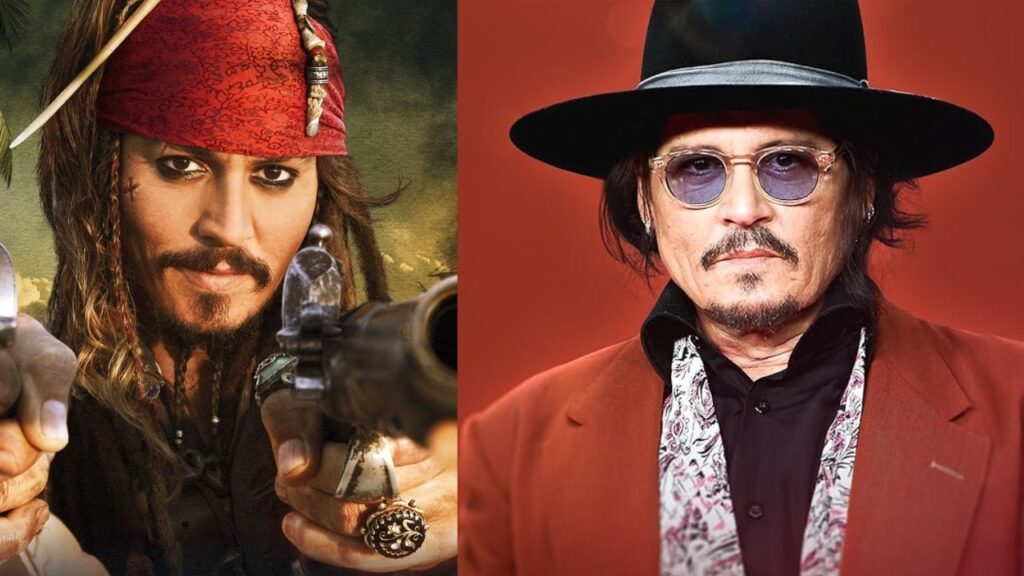
Image Credit: Fandomfans
Strangely, this will set up a “Scrooge Showdown,” as Warner Bros. is said to be working on its own shadowy version with Robert Eggers (The Witch). Yet with West’s gift for “elevated horror” and a screenplay by Nathaniel Halpern, Paramount takes the bait as the “thriller” audience to catch.
The “Meta-Redemption” Narrative
The story of Ebenezer Scrooge’s turnaround feels especially powerful when taken alongside Johnny Depp’s career trajectory. It’s a curious layer to the film’s overall appeal, as moviegoers may be swept into a compelling fictional redemption arc while Depp makes a real-world career comeback, merging storytelling with the actor’s personal and professional revival. This two-faced approach not only adds narrative depth but also gives the marketing strategy an extra layer of tactical complexity.
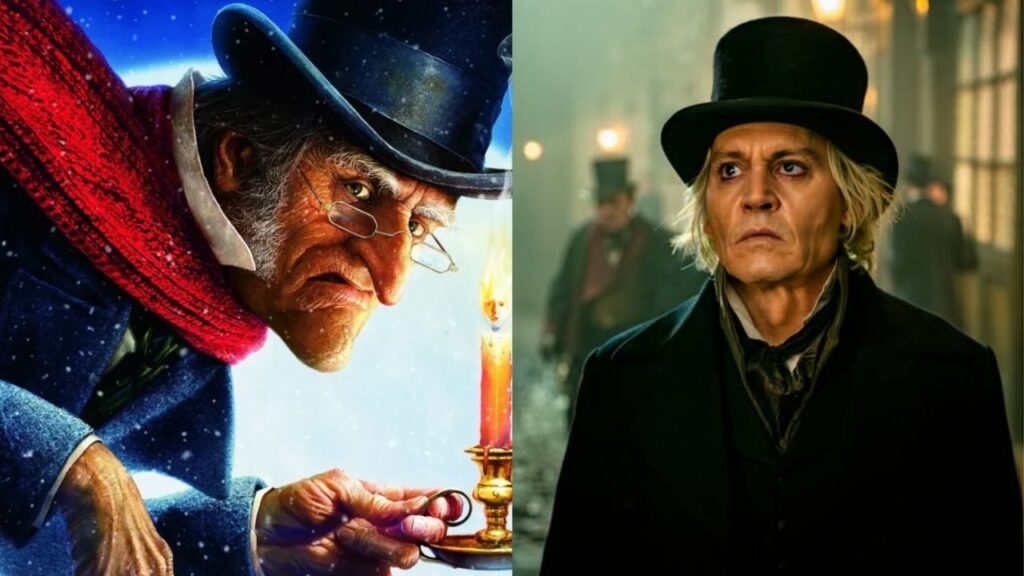
Image Credit: Fandomfans
Depp has a busy schedule and Ebenezer has only one date. He just finished the Lionsgate thriller Day Drinker with Penélope Cruz and the makers of his directorial effort, Modi, are seeing the light of theaters.
Conclusion
Ebenezer: A Christmas Carol doesn’t have the feeling of being a routine adaptation, as much as that can be said about any retelling of that story. In bringing together Johnny Depp’s long-promised return to studio filmmaking with Ti West’s unsettling vision, Paramount is going to go with atmosphere over nostalgia, and introspection over sentimentality.
The film’s darker perspective along with the prestige-laden cast and strategically timed release makes the film a commercial risk and an awards season conversation piece.
More to the point, it turns a well-worn ghost story into something deeply resonant and of the moment — a story of reckoning, isolation, and second chances. If it sticks, it won’t just be Depp’s comeback, it could be a way of reimagining how classic literature can be adapted for modern, thrill-seeking audiences.
Fandomfans is providing celebrity updates on their upcoming movies, our goal is to focus on film story and cast.
Mariyam
Articles Published :
76
Mariyam Khan is Fandomfans Content Writer and providing reports and reviews on Movie Celebrities, and Superheroes particularly Marvel & DC. She is covering across multiple genres from more than 4+ years, experience in delivering the timely updates.
The Batman: Part II – Matt Reeves Brings Emmy-Winning Designer Luke Hull to Rebuild Gotham
The Batman: Part II brings together Matt Reeves and Emmy-winner Luke Hull to redesign Gotham City with a darker, more realistic style starring Robert Pattinson.
Matt Reeves’ hotly anticipated The Batman: Part II has reached an exciting new high with the reveal of its production designer, an Emmy-winning artist whose lineages in cinematic world-building is unparalleled. As the city of Gotham prepares for another trip to the theater, the film’s scope has been expanded to include Luke Hull, known for his revolutionary work on Disney+’s Andor and HBO’s Chernobyl.
Bringing Hull Showrunner Matt Reeves on board to direct, Reeves looks to create more grounded and immersive Gotham. According to Collider, He’s known for his meticulous attention to large, practical sets. He built entire worlds for Andor using a blend of traditional Japanese designs, minimalist Nordic styles and rugged Scottish strongholds. This fusion breathed new life into the Star Wars landscapes. His acclaimed sets for Chernobyl constructed an entire power plant. He emphasized gritty, authentic details that would add substance to the story’s emotions and themes.
What This Means for ‘The Batman: Part II’
Fans in DC and Star Wars communities have already been singing praises of Hull’s casting. They appreciate his knack for making locations into important characters.
Gotham is at the heart of Batman’s story. It will darken and become more deeply felt inside. Hull’s previous work indicates a city that depicts Bruce Wayne’s battle against its decay and moral drop.
Returning Cast and Production Details
Besides this major offscreen change, the film also brings back the core cast: Robert Pattinson as Batman, Colin Farrell as Oz Cobblepot/The Penguin, Jeffrey Wright as Commissioner Gordon, and Andy Serkis. Production is set to begin in January next year. The script is done.
The story begins immediately following the hit HBO max series The Penguin. It provides a consistent pace and intensity for fans of the original film and the complete Gotham narrative.
Visual Style Differences Between The Batman and The Batman Part II
In comparing the look of The Batman to that of the forthcoming The Batman: Part II, there are notable differences in the production design, as well as in Gotham City’s artistic direction. Part II wants to take world-building even further and perhaps embrace more traditional comic book iconography while the first film is celebrated for its mood, desaturated, neo-noir look.
The Batman (2022)
The Batman: Part II (2027)
Palette of Colors and Atmosphere: Muted/desaturated to the extreme on all levels, consisting of a very limited desaturated palette composed mainly by dusty deep tones with occasional pops of red, or orange.
Color Scheme and World-Building: There will be deeper colours, with more shades, but a dark intention. This is the plain and old-fashioned places of Hull. Gotham’s architecture will be more defined: There will be windows, and roofs on some of the buildings, as CBR says.
Cinematography: A close, tactile camera feel was achieved through the use of Arri ALFA lenses. It focused on harsh reality and silhouette imagery a-la Roger Deakins.
Visual Ideas: Initial discussions on Reddit are that the next movie will be even more strongly influenced by vintage Batman comics. There are also shots of him on gargoyles and grand, bold scenes. The camera is close and intimate but non-pornographic.
Urban Environment: The streets always appeared wet, to suggest perpetual rain and a somber mood. The city pressed down hard and felt harsh. Night scenes gave Gotham a gritty feel and Bruce Wayne’s secretive nature.
Production Designer Swap: Andor and Chernobyl’s Luke Hull takes over duties from James Chinlund. Everything He Touches Turns to Real, Physical Space He excels at creating real, tangible, physical worlds, with sets you can touch. This transformation gives a whole new perspective to the buildings, and overall feel, in Gotham.
Symbolism: It conveyed desolation and little optimism, at times portraying Batman as a creature of the darkness. Warm orange from the flares lightened the colors only in a few places, such as the end. This was hope arising out of loss.
Comic Tribute: Sequel looks to snatch iconic comic book panels for Batman’s look. That against the muted truth of the first film in picked classic poses.
Riffing: Some of your crew spots may change, but Matt Reeves keeps close-to-the-vest stories and tailspin tone. Hull’s elegant set pieces will elevate it.
In Short, The Batman is distinguished by its muted colors, wet surfaces, and urban stress forged in shadows.
The Batman: Part II is to expand upon Gotham’s style through Luke Hull’s immersive, practical sets. It could be a tribute to vintage comic illustrations too. This gives a fresh spin which remains just as moody for the cape-wearing hero.
Conclusion
The fact that Matt Reeves went out and hired Luke Hull means that Matt Reeves wants literally every person in Gotham to be filled with the inner pain and dark thoughts that is at the core of Batman’s world. Hull has demonstrated that he can make locations come to life on the page in stories such as Star Wars’ Chandrila or the Chernobyl plant, where setting is integral to plot.
His Gothamville is in decline and ready to roar on October 1, 2027 as the making of the film starts in 2026. The Batman: Part II holds the promise of a film trip that the long wait will make all too right.
Welcome to FandomFans — your source for the latest buzz from Hollywood’s creative underworld. Here, we explore the art of filmmaking, knowing about how visionary directors, designers, and actors shape the worlds we escape into. Today we break down Matt Reeves’ ambitious direction for The Batman: Part II, Emmy-winner Luke Hull (Andor, Chernobyl) steps in to reinvent Gotham’s shadowy skyline for its next cinematic evolution.
Alpana
Articles Published :
156
Alpana is Fandomfans Senior Editor across all genres of entertainment. She evolved in the media industry since a very long time, she manages the content strategy and editing of all the blogs. Her focus on story development, review analysis, and research is well-equipped that ensures every article meets the standards of accuracy and depth.
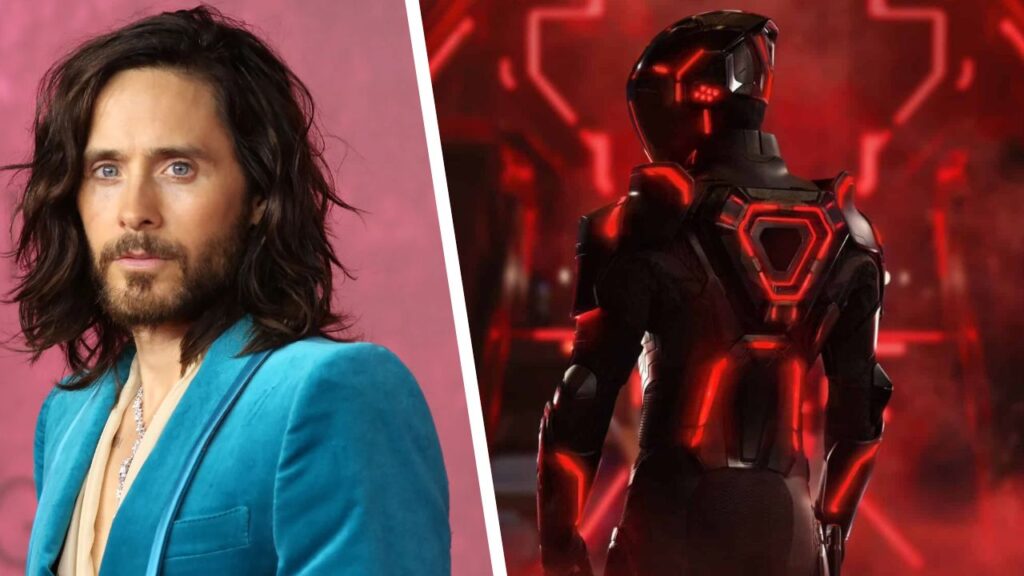
Tron: Ares’ Box Office Failure Marks a Turning Point in Jared Leto’s Career
Tron: Ares' box office flop stuns Hollywood. Learn why Jared Leto's passion project failed, its $33 million debut, and how it changed his career forever.
The November 2025 release of Disney’s long-awaited sequel, Tron: Ares, fizzled at the box office after a gross that trade observers called a disaster and an “IP-killing event”. The Joachim Rønning directed film made a lackluster domestic debut of $33.2 million to $33.5 million, well below its estimated opening gross by $10 million or more. The opening fell just shy of $60 million worldwide, ranging from $60.2 million to $60.5 million.
Ares not hitting the $100m mark in its opening weekend against its sizable budget made for an early and likely impossible-to-recover-from financial loss for Disney. With the failure, Report said that it is very likely that Disney will “retire the franchise from the big screen” for the foreseeable future, signaling to investors a continued reluctance to finance risky.
Jared Leto’s Star Power Comes Under Fire Once Again
The box office doom of Tron: Ares, according to MovieWeb, once again raised and intensified doubts about Jared Leto’s bankability as a star who could anchor a major studio tentpole. The seeds for this industry skepticism were planted three years earlier with the collapse of Sony’s Morbius (2022).
This recurring pattern of financial failure has consolidated a trade consensus that sees Leto as an actor who can’t reliably bring in box office for similar big Intellectual Property (IP) tentpole projects. Industry reports have indicated that “the big paydays Leto received for Ares might well be over,” as studios are increasingly shying away from the actor as a dependable male star draw.
Controversies During the Tron: Ares Press Cycle
In today’s Hollywood, star viability is inexorably linked to public perception and promotability, more so for those who headline massive franchises for corporations like Disney. Leto also has considerable baggage, including several sexual misconduct allegations (which his representatives deny) that surfaced just prior to the Tron: Ares press cycle.
The allegations posed significant challenges for Disney’s marketing team, with industry executives wondering how the actor could “shoulder the pressure of selling two theatrical movies while dancing around the damning claims”. The controversies had an immediate effect on possible promotional opportunities, creating uncertainty as to whether prominent media outlets would allow him to participate in the usual press routines to help market a blockbuster, making him a major-risk.
Industry Frustration Over Leto’s On-Set Behavior
Industry peers is also pointed out his self-serving spectacle and unprofessional distraction after his extreme behavior on set including mailing eccentric gifts to Suicide Squad co-stars or walking around on crutches for Morbius. The perceived expense of working with the actor’s process wasn’t anymore worth the result. This professional reputation of being a “pain in the ass” who wastes time, combined with his inability to open wide films makes him a uniquely risky bet for studios that want to run-efficient production and clean PR.
According to People, The flop of Tron: Ares is far more than a box office number, it’s the shattering of an actor’s sincere passion against the cold, hard financial calculations of contemporary Hollywood. For years, Jared Leto was spearheading the movie, leveraging his celebrity and producer credit, dating back to 2017, to bring Disney’s long-dormant sci-fi franchise out of development purgatory. His commitment was authentic; he was a fan of the original film and its tech, and playing the digital warrior Ares was a very personal goal for him.
A Strategic Rebrand: From Digital Warrior to Skeletor
The broad consensus in the business is that Leto’s way out is would be to turn on a dime and not be the lead vehicle for a big-budget franchise movie. The most obvious sign of that strategic recalibration: his next role is as Skeletor in Amazon MGM’s Masters of the Universe.
Reports say, This casting is generally regarded as a potential career booster for the actor. Adopting the role of the main villain, Leto once again places the financial weight solely on the IP and the hero, enabling him to focus on crafting a memorable performance. The campy villainous role of Skeletor is a dream role for Leto, and one that lends itself perfectly to his style of transformative acting where he utilises heavy makeup and theatricality (see House of Gucci). How well this transition works will depend on his ability to strike the right balance of “menace and camp,” and keep critics away from dismissing the performance as too silly, a perception that has dogged both his Paolo Gucci and Joker performances.
Conclusion
Leto and his team’s main professional challenge is to manage the promotional risk. Any future promotions around the film will have to strategically separate the actor from the success of the project, downplaying those risky stunts or conversations about method acting that come from set, and instead just talk about the character and the spectacle of the film. The twin flop of Morbius and Tron: Ares have cemented that Jared Leto is simply no longer considered bankable enough to weather the scrutiny and controversy that comes with carrying a mega-budget franchise.
Alpana
Articles Published :
156
Alpana is Fandomfans Senior Editor across all genres of entertainment. She evolved in the media industry since a very long time, she manages the content strategy and editing of all the blogs. Her focus on story development, review analysis, and research is well-equipped that ensures every article meets the standards of accuracy and depth.