Home > Movies > Michael Biopic Trailer is Released: Most Long-Awaited Biopic..
Michael Biopic Trailer is Released: Most Long-Awaited Biopic of the King of Pop
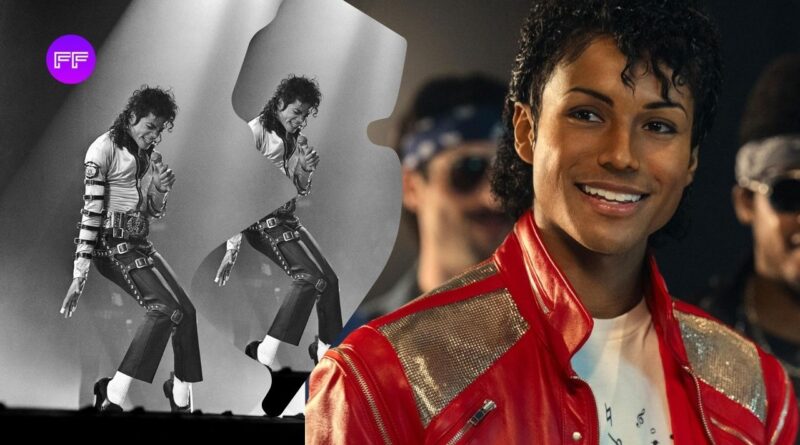
The Michael biopic trailer is out. Jaafar Jackson stars in the film, which follows Michael Jackson's ascent, his challenges, his music legacy and iconic shows.
Michael Biopic Trailer the long-awaited biopic of the King of Pop, and this is the first Lionsgate world paused for a moment as Lionsgate finally released the official trailer for Michael, the eagerly anticipated biopic of the King of Pop.
For decades, fans have muttered, speculated, and debated whether anyone could really go toe-to-toe with the lightning-in-a-bottle magic that was Michael Jackson. The answer to that seems to be an overwhelming “yes.”
The Michael’s trailer introduces us to Jaafar Jackson, Michael’s nephew in real life, and whose likeness and vocals so chillingly accurate has set the internet alight.
This is not merely a movie – it’s a worldwide event that’s guaranteed to take us back to the moonwalks, the glove and the man behind the myth.
Michael Jackson’s Movie Release Date
Save the date and get your glitter gloves ready. Michael will light up the big screen on 24 April. The film will open wide, with a giant IMAX rollout, so that the concert scenes and larger-than-life music numbers will be seen and heard at full blast.
Theme of the Movie
The film is solidly grounded in the musical biopic and drama genres, covering decades of music history. From the soulful, gritty streets of Gary, Ind., the Jackson 5 were formed, to the breathtaking stadiums of the Bad and Dangerous world tours, the locale is as thrilling as the man himself. The key theme delves into the dualities of genius – the public superstar and the private (and often isolated) person.
Director, Writer & Creative Team
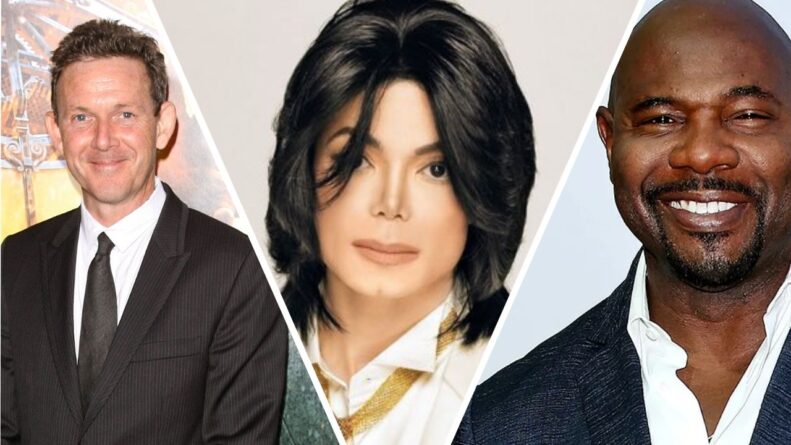
Antoine Fuqua (Training Day, The Equalizer) directs, who is renowned for gritty, intimate storytelling. Writing the screenplay is three-time Oscar nominated John Logan (Gladiator, The Aviator), the narrative is anticipated to be a true story beyond a Wikipedia page.
Image Credit: Fandomfans
Gary King of GK Films is producing the film, the producer who brought us the chart topping Bohemian Rhapsody, which certainly guarantees the musical numbers will be spectacular.
Michael the Long-Awaited Biopic Plot Details
Michael Biopic Trailer is an attempt to bring a breathtakingly honest and riveting portrayal of the charismatic, complex man who became the King of Pop. The trailer suggests a full arc, from the authoritarian hand of his father Joe Jackson to the stratospheric success of the Jackson 5 all the way to Michael’s domination of global pop culture. It claims to lift the curtain on his artistic process and personal pain, humanising a man who is often idolised or vilified.
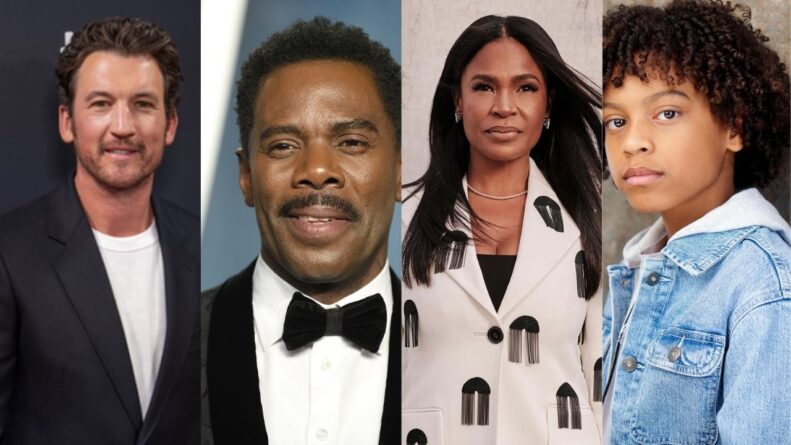
Jaafar Jackson as Michael Jackson (whose performance is already generating Oscar buzz).
Colman Domingo as the complicated patriarch, Joe Jackson.
Image Credit: Fandomfans
Nia Long is the warm but firm Katherine Jackson.
Miles Teller as Michael’s longtime manager and attorney, John Branca.
Juliano Krue Valdi as the young Michael, captures his early innocence and raw talent.
Michael Trailer Showed Us Highlights
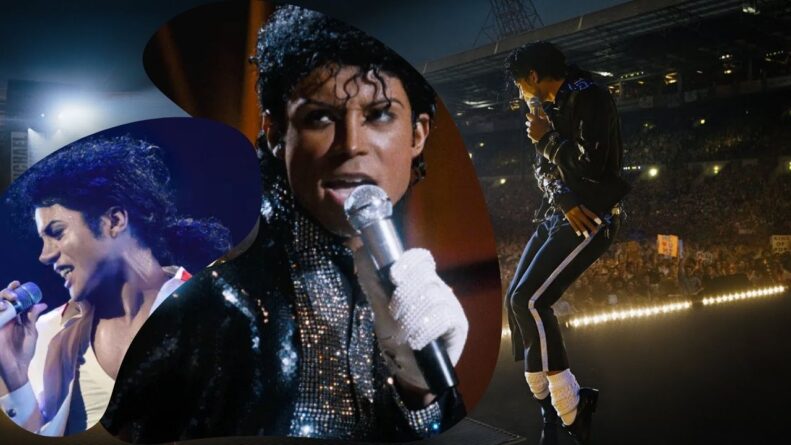
Probably the biggest team-up is that of the Michael Jackson Estate. The partnership allowed the producers unprecedented access to Michael’s music, clothing and personal archives. Among the highlights of the trailer are re-creations of the iconic “Thriller” video, the Motown 25 moonwalk and “Man in the Mirror” – all executed with historical accuracy.
Production Details
Production filmed throughout California and other significant locations in MJ’s life on an estimated $155 million budget. The production design and costumes are designed to represent the specific period of time in Michael’s life and runs from 70s afros and bell-bottom jeans to 90s military-style jackets.
Film’s Availability and Ratings Expectations
Although the official rating is now TBA, vanilla industry speculation is that it will be rated PG-13. This would keep the film available to younger audiences while dealing with the dark and violent subjects of Michael’s later years.
Image Credit: Fandomfans
Distribution & Platform Details
Universal is distributing in the US globally, Lionsgate in the US domestically. The film will head to major streaming platforms (perhaps Starz or Peacock first) once its theatrical run ends, no dates have been announced.
Audience Expectations from Michael
Expectations are stratospheric. The Michael Biopic Trailer has now shattered record viewership numbers for a biopic, showing that the demand for Michael Jackson’s story is as strong as ever worldwide. For the more than 40,000 people who are likely to see the concerts but also want to learn about the man being watched under the most rigorous microscope in history, it can help to comprehend what they are hoping for beyond tribute concerts.
Michael Biopic Trailer is shaping up to be the movie event of the year. Moonwalker devotees and casual film fans alike, Antoine Fuqua and Jaafar Jackson appear intent on once again Michael Biopic Trailer showcasing to the world why Michael Jackson is the greatest entertainer of all time. Be ready to watch this film in theatres on April 24.
Fandomfans gather reports to deliver conclusions from upcoming movies directly to you. Get more updates from here.
Mariyam
Articles Published :
76
Mariyam Khan is Fandomfans Content Writer and providing reports and reviews on Movie Celebrities, and Superheroes particularly Marvel & DC. She is covering across multiple genres from more than 4+ years, experience in delivering the timely updates.
Star Wars Character Kylo Ren’s Iconic Line That Changed the Skywalker Legacy Forever
Kylo Ren's memorable The Last Jedi line changed Star Wars, upending the Skywalker legacy and how fans would engage with the franchise moving forward. Read more!
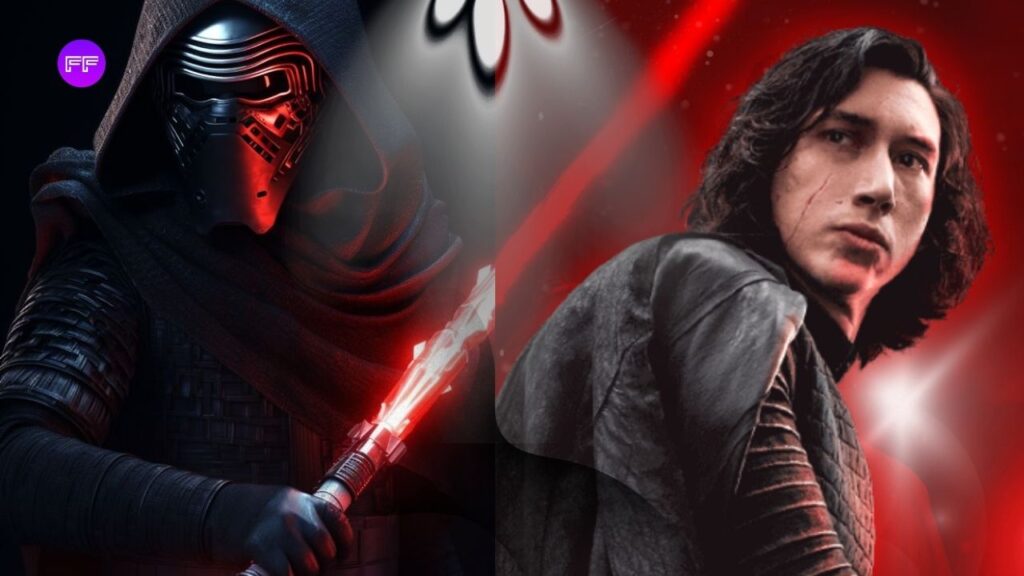
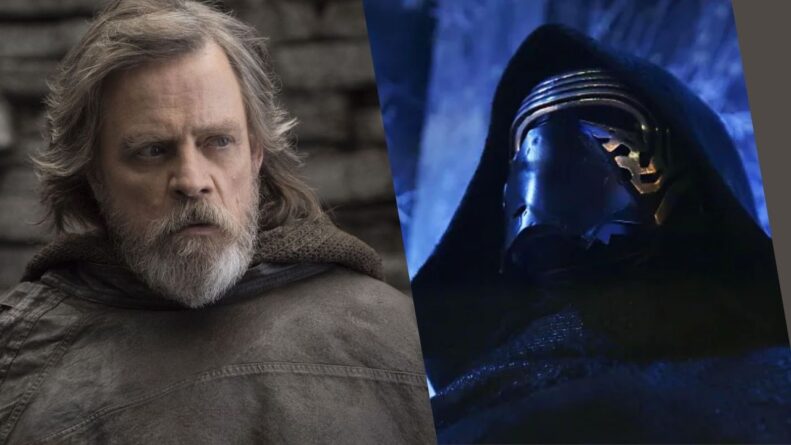
Kylo Ren uttered a line in 2017 that still makes the fan community go berserk: “Let the past die. Hide it under a rock, if that’s what you need to do. That’s the only way to become what you are meant to be.” We thought he was just a broody dark-sider having a mid-thirties crisis. Looking back on how the Star Wars sequels flailed their way to solid footing, it turns out Ben Solo wasn’t just a villain — he was a saving grace for the franchise.
For nearly half a century, the Star Wars “Skywalker Saga” has been the gravity well of Star Wars. But if it’s going to survive for another half-century, the franchise will need to get away from this Earth. We’re finally coming into an age where movies and games aren’t just ‘side stories’ to Luke’s lineage — they’re a statement of independence.
When Star Wars Skywalker Legacy Becomes Limitation
The sequel trilogy needed to push the continuity forward; yet it found itself anchored all too firmly to the Original Trilogy (OT). This isn’t to say legacy characters are bad; instead, narratives can’t lean on them as a primary structural crutch.
Image Credit: Fandomfans
Reaction to Luke Skywalker showing up in the Mandalorian wasn’t universally positive, among fans. A lot of people embraced it, while others dismissed it as “nostalgia bait” — a digital mask to hide an absence of narrative risk. Box office sales wise, playing it safe by making movies about known IP is a guaranteed winner for studios: 100% of the 10 highest grossing Star Wars films have a Skywalker, or a tie to the 1977-1983 era. But the critical exhaustion is tangible. For Star Wars to expand, it has to show it can be without a Skywalker on the credits.
Star Wars’ Big-Screen Escape from the Skywalker Era
The new film slate marks the most significant departure in franchise history. While The Mandalorian & Grogu will certainly placate the “Filoni-verse” fans with some familiar faces, the real meat is in the unknown:
Image Credit: Fandomfans
A Galaxy Without Legends
It’s been five years since the chapter (Rise of Skywalker) ends, and now here we are. Rumors are that there is no legacy character. If it gets that lived-in feel just right — without a single lightsaber ignite or a “hello there” — it could very well shift what the industry thinks Star Wars is.
Before Jedi, Before Sith: The Birth of the Force
Mangold is skipping ahead 25,000 years, so by doing so he’s not only stepping around legacy characters, he’s stepping around the entire notion of the Force as we understand it. No Sith, no Jedi Council—just the raw excavation of the galaxy’s mystic energy. This is the “Godfather of the Force” story we’ve been waiting for.
Rebuilding Without Repeating
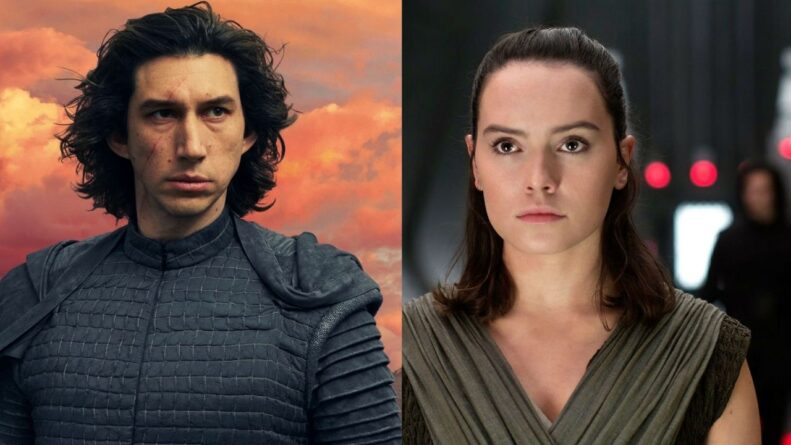
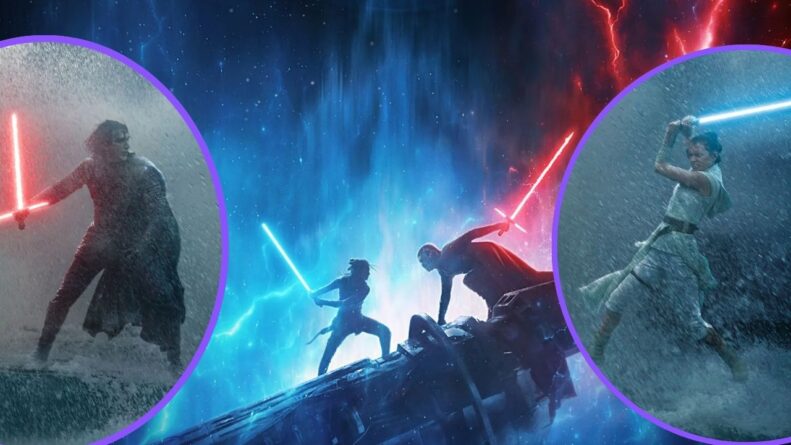
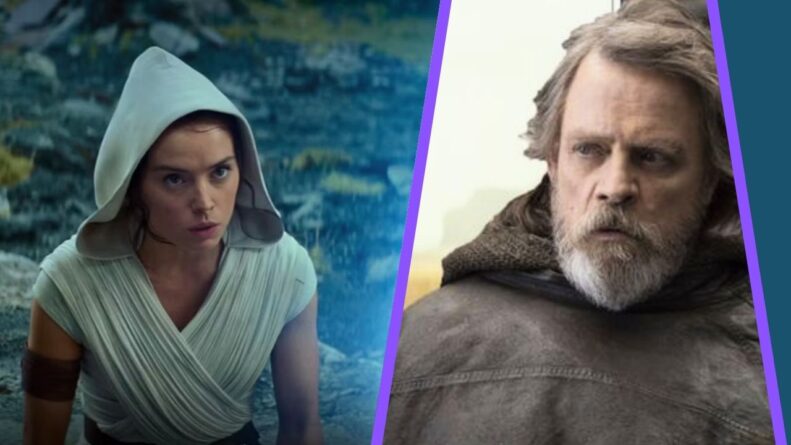
This is the precarious balancing act. Rey may have assumed the Skywalker name, but in order for the franchise to grow, she needs to construct something that isn’t just a mirror image of the failed Academy of the past. If she’s for the entire film talking to Luke’s Force Ghost, we haven’t gotten anywhere, we’ve just switched out the window dressing.
Image Credit: Fandomfans
The Soul of Star Wars Without the Surnames
Waititi has said he wants to “broaden out” the world. If his film evokes the cheerful, “used-future” style of the OT without relying on a single legacy cameo, it will demonstrate that the feeling of Star Wars is more powerful than the names in Star Wars.
Beyond Films: How Games Are Redefining the Star Wars Universe
The films have been wary, but Star Wars games have long been the point of experimental narrative storytelling. The future roadmap indicates a full separation from the “Vader-era” crutch:
Project
Era
Legacy Risk
Star Wars: Zero Company
Late Clone Wars
Moderate. Anakin and Rex are still active here.
Star Wars: Galactic Racer
Post-OT
Low. Focused on the underworld and speed.
Star Wars: Eclipse
High Republic
Low. Set 200 years before The Phantom Menace.
Fate of the Old Republic
Old Republic
Zero. More than a millennium before the films.
When the Force Becomes a Cage
Star Wars Jedi Fallen is the offender right now for taking “Vader-as-a-boogeyman.” For the third game to really connect, Cal Kestis needs to stop being a footnote in the Rebellion’s shadow. He needs a destiny that doesn’t finish with him being “too busy” to give Luke a hand in Episode IV.
How Real Storytelling Saves a Galaxy: The “Andor” Blueprint
If there is one thing the new age should learn, it is the Andor Lesson. Andor showed you can have legacy characters (Mon Mothma, Saw Gerrera, K-2SO) without them feeling like cameos. They didn’t exist because the marketing department wanted a trailer clip, they existed because the plot needed them there.
Star Wars, to its credit, has sometimes been skewered for having precisely no diversity of viewpoint, concerned consistently with a fantasy 1% of the galaxy (the Jedi and the High Command).
Image Credit: Fandomfans
In fact the Star Wars audience is diverse: roughly 40% of the active fanbase is female, and international audiences now represent more than half of the box office. Stepping away from the Skywalkers, the saga can tell stories that speak more to this broad, modern audience: tales about smugglers and soldiers and civilians who just happen to not have magic coursing through their veins.
Kylo Ren was right, but with a caveat: we don’t owe the past “killing,” we just have to stop residing in its basement. As it jets to the High Republic, the distant future, and the distant past, Lucasfilm is at last giving the galaxy some room to breathe. Star Wars’ Future Begins Where the Skywalkers (Masterpiece) End.
Dive into the world of entertainment with FandomFans to get every update from your favorite franchise.
Alpana
Articles Published :
156
Alpana is Fandomfans Senior Editor across all genres of entertainment. She evolved in the media industry since a very long time, she manages the content strategy and editing of all the blogs. Her focus on story development, review analysis, and research is well-equipped that ensures every article meets the standards of accuracy and depth.
The Green Lantern’s Guy Gardner Became the Heart of James Gunn’s New DC Universe
Find out how Guy Gardner emerges as the emotional heart of James Gunn’s new DC Universe and redefines the Green Lantern mythos in Superman 2025. Read more...!!
The availability of James Gunn’s Superman in 2025 did more than just give us a new Man of Steel, it flung wide the door to a sprawling, “lived-in” universe. Eschewing the slow-burn origin narratives of yore, this new era dubbed Chapter 1: Gods and Monsters slaps us unmistakably into a reality where superheroes aren’t simply myths, but elements of the geopolitical and corporate realm.
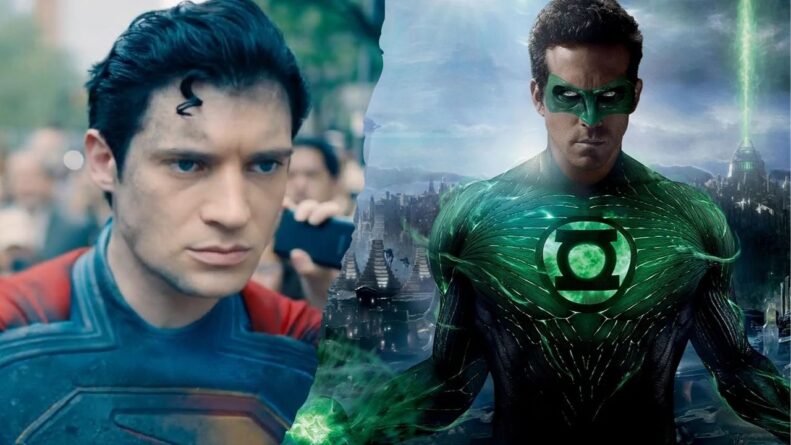
Making that interface between galactic and Earth-bound politics is a character who is the ideal entree into both: Guy Gardner, the Green Lantern. Played with a combination of arrogant charm and neurological instability by Nathan Fillion, Gardner’s inclusion in the film is transmedia genius. He’s not only a cameo, he is the ideological counterpoint to Superman and the connective tissue for the future of the DCU.
The Death of the Traditional Superhero Origin Story
Superhero movies have eaten the same sorts of roles for years: the hero gets powers, the hero learns a lesson, and the hero puts on a suit in the last ten minutes. This is something with which Gunn’s Superman takes a particularly robust swing. David Corenswet’s Superman is already an established figure, and more crucially, he’s not the only one.
A World Where the Green Lanterns Already Exist
Instead of an exposition sequence explaining how these rings work, the movie establishes (through vet Guy Gardner) that “ring-slinging” Lantern is already up and running on Earth.
Equally, it’s allowed Green Lantern Corps to function as a kind of back-up law enforcement without becoming comic busy bodies.
Why Guy Gardner Was the Perfect Choice
Selecting Gardner instead of popular choices such as Hal Jordan or John Stewart was a strategic move. It keeps the “prestige” Lanterns available for the gritty, detective Lanterns series on HBO, and gives Superman a hero who can also stand as a powerful combatant and a source of friction. Gardner is the guy who has the most powerful weapon in the universe, but doesn’t have the social filter required to use it gracefully.
When Heroism Meets Corporate Branding
One of the most provocative topics of Gods and Monsters is the convergence of heroism and capitalism. In this dimension, there is no traditional Justice League, but rather the Justice Gang — a team financed and organized by billionaire industrialist Maxwell Lord through his company, LordTech.
The Justice Gang Line-Up
Unlike Superman, who flies on the wings of altruism, the Justice Gang is a carefully curated PR machine. Their roster is as much about “brand alignment” as tactical superiority:
Hero Identity
Corporate/Thematic Function
Green Lantern (Guy Gardner)
The Volatile Enforcer; provides “alien” legitimacy to a human corporation.
Mister Michael Terrific
The Genius; aligns with LordTech’s cutting-edge scientific branding.
Hawkgirl (Kendra Saunders)
The Aerial Combatant; provides tactical versatility and mythological ties.
Metamorpho—Rex
The Elemental; represents the boundaries of corporate-sponsored science.
The Meaning Behind Gardner’s Costume
Guy Gardner’s cinematic appearance is a story in oppression. His suit prominently displays the “JL/I” logo which is a reference to the Justice League International comics but in this case it also symbolizes corporate ownership. Most notably, Gardner is seen wearing a jetpack or exoskeleton.
Why a Green Lantern Needs a Jetpack
For a character whose ring lets him fly faster than the speed of light, this is a pretty glaring omission. It could be that LordTech requires the use of their hardware for “branding” purposes, or that Gardner’s use of the ring is being closely tracked and limited by his corporate masters.
Guy Gardner’s Traumatic Brain Injury that Shaped His Personality
To give Gardner some depth beyond just being a loudmouth, the DCU has drawn on a tragic part of his comic history: Traumatic Brain Injury (TBI).
Nathan Fillion has said that his version of Guy Gardner was “flipped” after being hit by a metropolitan bus and falling into a coma. This brain damage removed his social filters and impulse control. It makes his arrogance not just a personality quirk but a clinical feature of his illness.
The Perfect Opposite of Superman
This makes him the ultimate contrast to Superman. While Clark Kent is the ideal of biological and moral perfection, Gardner is the gritty, broken human reality. A “Sophia Petrillo-esque” inclination to say what he’s really thinking means Lex is a potential PR catastrophe in heels — and a perfect pawn for Lex Luthor.
Luthor is tapping into Gardner’s abrasive, “local boy from Cincinnati” narrative to stoke xenophobia. Guy Gardner is, in Luthor’s telling, the “safe, human” face of the “alien, unpredictable” Superman.
Geopolitics Conflict in Superman 2025
The conflict of the 2025 Superman movie isn’t an alien invasion — it’s a territorial dispute between two fictional countries, Boravia and Jarhanpur. When Superman takes it upon himself to stop the killing, he breaks international law.
The Moment Guy Gardner Finally Chooses a Side
Gardner answers to two masters: the Guardians of the Universe (who preach neutrality) and LordTech (who fear liability). However, the cynical Guy Gardner’s shell is eventually broken when he witnesses Superman risk global condemnation to save lives. For him to disobey his corporate overlords and come join Superman in the mud is the heart of his emotional arc.
Bridging the Gap: The “Lanterns” HBO Series
The DCU employs an “asynchronous timeline” much like Star Wars. So this is why in the new Lanterns title, Hal Jordan (Kyle Chandler) calls himself the “only human Lantern.”
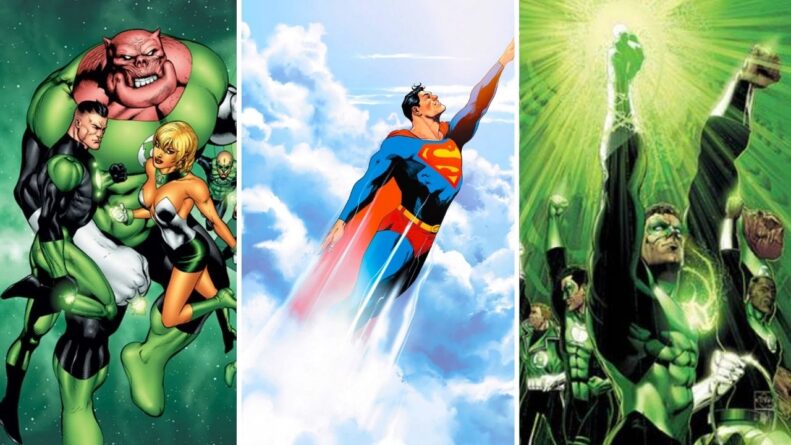
The Evolution of the Green Lantern Legacy
The Lanterns series is a prequel of sorts to Superman. It’s gritty, ‘True Detective’ style procedural where a younger Hal Jordan and rookie John Stewart team up to crack a terrestrial murder mystery that suggests a larger cosmic conspiracy.
Lanterns (Past/Present) Hal and John uncover the dark side of Earth’s place in the cosmos.
Superman (Future): The world is now flooded with heroes such as Guy Gardner, who have achieved celebrity status as.
This way, viewers can watch the development of the Green Lantern mythos — from Jordan and Stewart’s listen-to-your-color roots to the manic corporatized gamified era of Gardner.
Guy Gardner is the “powder keg” of the new DC Universe. He is a personification of the doubt, couldn’t-care-less attitude damage and crass commercialism of today’s world. By lining up Superman with a figure like Greer, Gunn is able to underscore why the Man of Steel is even necessary because it’s not just about nabbing the bruisers, but about encouraging the most fallen among us to remember their earliest vows.
Guy Gardner starts out as a corporate mascot with a short fuse but evolves through his interaction with Superman into a real hero. This integration means the Green Lantern mythos no longer sits as some space-only concept, but rather it has become a face that tells the human story in the DCU.
Fandomfans delivers entertainment updates from blockbusters movies, series, and amazing characters to you directly.
Mariyam
Articles Published :
76
Mariyam Khan is Fandomfans Content Writer and providing reports and reviews on Movie Celebrities, and Superheroes particularly Marvel & DC. She is covering across multiple genres from more than 4+ years, experience in delivering the timely updates.