Home > Movies > Johnny Depp Returns to Hollywood With a Dark..
Johnny Depp Returns to Hollywood With a Dark Gothic Comeback
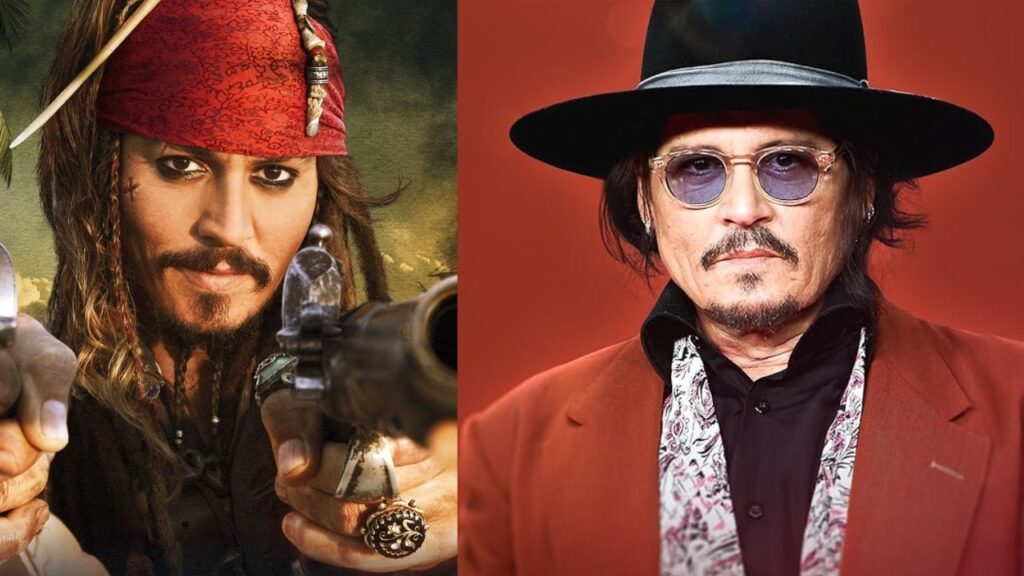
Johnny Depp has made a powerful return to Hollywood with the dark Gothic reimagining of A Christmas Carol, marking a major comeback in his acting career.
In the world of Hollywood, nothing is more seductive than a comeback. For Johnny Depp, that moment has now come at a grand scale. The actor’s evolution from European art house cinema to a big studio production such as Paramount’s “Ebenezer: A Christmas Carol” is a remarkable twist in his career, combining his artistic roots with broad commercial appeal.
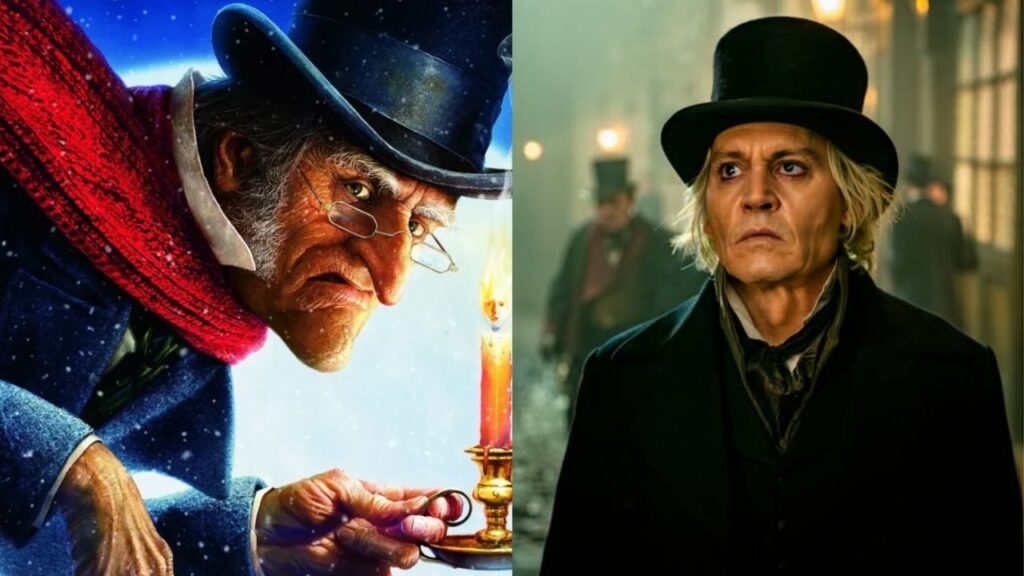
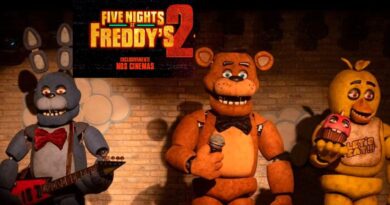
Set for theatrical release on November 13, 2026, the movie claims that it’s a “riveting, terrifying reimagining” of Charles Dickens’ 1843 classic novella. This version explores the eerie supernatural origins of the traditional tale and turns it into a thriller ghost tale somewhat reminiscent of more traditional holiday the theatre narratives.
A Darker Shade of Scrooge
From Ti West, the visionary behind the acclaimed atmospheric horror gems X, Pearl, and MaXXXine, comes this take that is sure to be a “technicolor nightmare.” West’s talent for infusing psychological terror into period pieces makes him the ideal auteur to reimagine Victorian London as a desolate, alien, and horrifying place.
Image Credit: Fandomfans
Depp is set to take on the role of Ebenezer Scrooge, a character he has been a longtime fan of, particularly Alastair Sim’s 1951 version. But sources say Depp has a “different angle” in mind, emphasizing the internal haunting rather than the external, and the emotional heft of a “night of reckoning.”
The Powerhouse Ensemble
Paramount isn’t just banking on Depp’s “bankability”; they’ve surrounded him with a “who’s who” of franchise royalty that it will surely cover all demographic bases.
Rupert Grint (Harry Potter): as Bob Cratchit. After his chilling turns in Servant, Grint will be bringing a more nuanced, possibly even desperate, version of the struggling clerk.
Daisy Ridley (Star Wars): In an undisclosed high-profile role (rumors are that she’ll be playing Belle, Scrooge’s lost love).
Sam Claflin (The Hunger Games): With Depp for the first time in three years. There’s minutes’ with Don.
Andrea Riseborough: The Oscar nominee lends her transformative presence in some of the film’s moodier moments.
The timing of this release is a lesson in studio politics. Releasing in mid-November, Paramount sidesteps the December “family film” stampede and gives this supernatural thriller a chance to build a long-term presence on the box office. It also makes Depp’s return perhaps the key event of the 2026 awards season.
Image Credit: Fandomfans
Strangely, this will set up a “Scrooge Showdown,” as Warner Bros. is said to be working on its own shadowy version with Robert Eggers (The Witch). Yet with West’s gift for “elevated horror” and a screenplay by Nathaniel Halpern, Paramount takes the bait as the “thriller” audience to catch.
The “Meta-Redemption” Narrative
The story of Ebenezer Scrooge’s turnaround feels especially powerful when taken alongside Johnny Depp’s career trajectory. It’s a curious layer to the film’s overall appeal, as moviegoers may be swept into a compelling fictional redemption arc while Depp makes a real-world career comeback, merging storytelling with the actor’s personal and professional revival. This two-faced approach not only adds narrative depth but also gives the marketing strategy an extra layer of tactical complexity.
Image Credit: Fandomfans
Depp has a busy schedule and Ebenezer has only one date. He just finished the Lionsgate thriller Day Drinker with Penélope Cruz and the makers of his directorial effort, Modi, are seeing the light of theaters.
Conclusion
Ebenezer: A Christmas Carol doesn’t have the feeling of being a routine adaptation, as much as that can be said about any retelling of that story. In bringing together Johnny Depp’s long-promised return to studio filmmaking with Ti West’s unsettling vision, Paramount is going to go with atmosphere over nostalgia, and introspection over sentimentality.
The film’s darker perspective along with the prestige-laden cast and strategically timed release makes the film a commercial risk and an awards season conversation piece.
More to the point, it turns a well-worn ghost story into something deeply resonant and of the moment — a story of reckoning, isolation, and second chances. If it sticks, it won’t just be Depp’s comeback, it could be a way of reimagining how classic literature can be adapted for modern, thrill-seeking audiences.
Fandomfans is providing celebrity updates on their upcoming movies, our goal is to focus on film story and cast.
Mariyam
Articles Published :
76
Mariyam Khan is Fandomfans Content Writer and providing reports and reviews on Movie Celebrities, and Superheroes particularly Marvel & DC. She is covering across multiple genres from more than 4+ years, experience in delivering the timely updates.
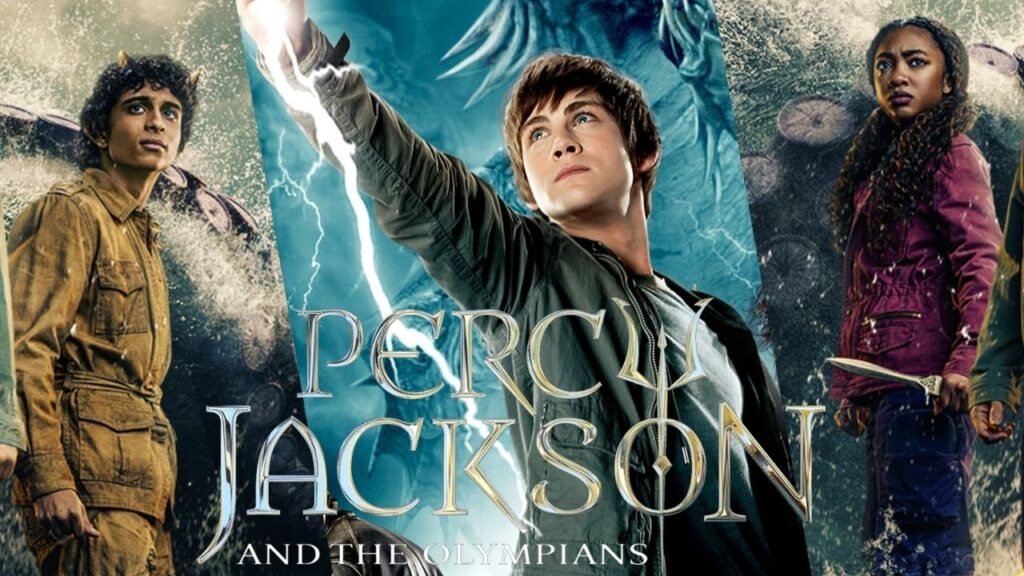
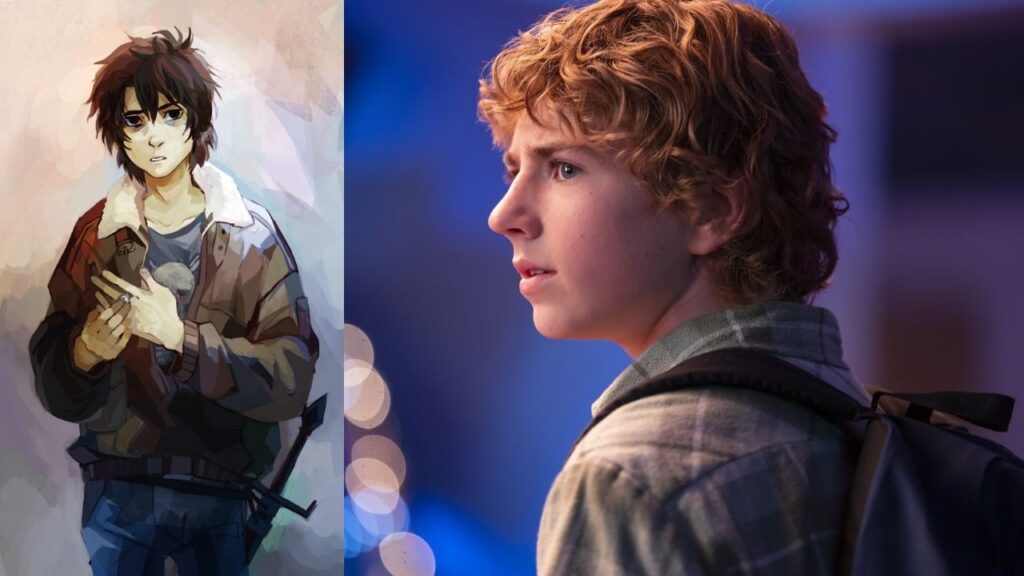
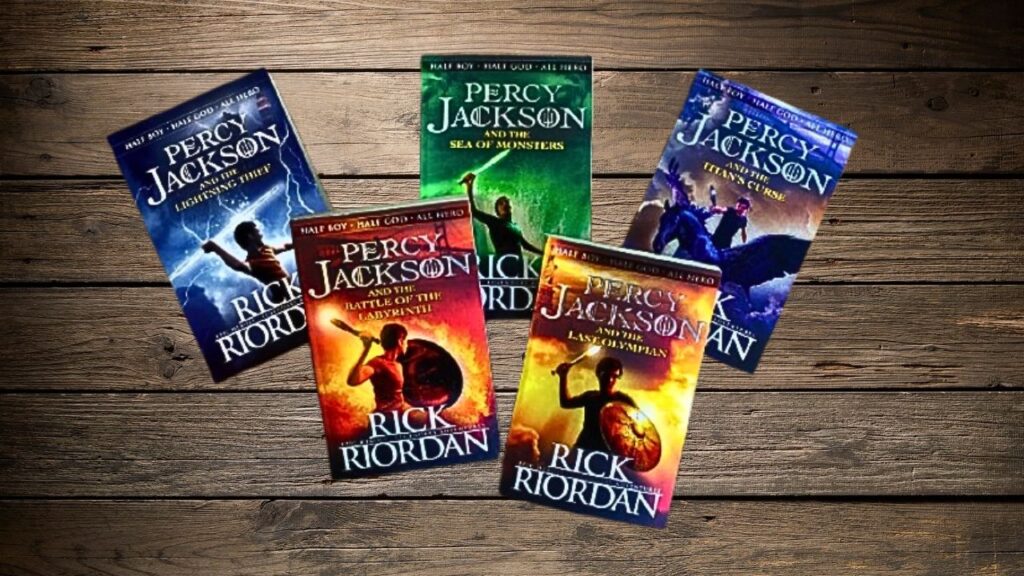
The narrative terrain that Rick Riordan lays out is a tremendous shift in modern mythic storytelling particularly in its portrayal of the “Hero’s Journey” as an experiential, unfolding psychological journey. As opposed to classical mythology where heroes are often static and embody a single pillar of virtue, Riordanverse characters such as Perseus Jackson, Annabeth Chase, and Nico di Angelo are the quintessential definition of “upgradation.”
This evolution is more than just a tit for tat accumulation of supernatural talents, but instead engulfs a radical transfiguration of their psychic constructs, social stations, and metaphysical essences. Venturing from the foundational Percy Jackson and the Olympians (PJO) saga to the Heroes of Olympus (HoO) cycle and then the “Senior Year Adventures,” we detect a systematic shift in reflections of what it means to be a hero, how traumatization impacts this, and moving into “adulthood.”
The Escalation of Perseus Jackson
The power scaling in this universe is based on the main character Perseus Jackson. He evolves from unthinking, and frequently uncontrollable, bursts of power into a sophisticated, telekinetic control of the hydrosphere. Originally portrayed as a 12-year-old with ADHD and dyslexia — qualities that were later reframed as “battle reflexes” and a natural inclination toward the Ancient Greek language — Jackson performed early feats that were localized and reactive.
The Kinematics of Power
A thorough check on both Jackson’s physical feats and metaphysical ones show a consistent growth. In the earliest (PJO) books he used his hydrokinesis mainly for he and his friends’ protection. By the end of the PJO series, he had reached ”Building Level” power.
A notable “buff” to his baseline power occurred in the transition to the Heroes of Olympus series. His battle with the storm goddess Kymopoleia, which involved the formation of watery fists 150 meters tall— towering among current day skyscrapers.
Developmental Phase
Notable Feat
Scale Measurement
Early PJO
Summoning a wave from 0.5 miles away
Sub-Building
Late PJO
Williamsburg Bridge Destruction
Building Level (8-C)
Early HoO
Shaking Hubbard Glacier (75×7 miles)
Mountain/Island Level
Late HoO
Skyscraper-sized watery fists (150m)
City Block (8-B)
Senior Year
Controlling millions of tons of river water
Continental/High-Scale
The escalation has caused “Westernization Theory,” which means that demigod powers in the Riordanverse are simply a product of today’s culture obsessed with superheroes. The theory suggests that as humanity’s view of what constitutes a “hero” has changed to incorporate the “super-person” mythos, the gods have given their children increasingly elaborate and destructive powers to reflect this cultural evolution.
The Restructuring of Annabeth Chase
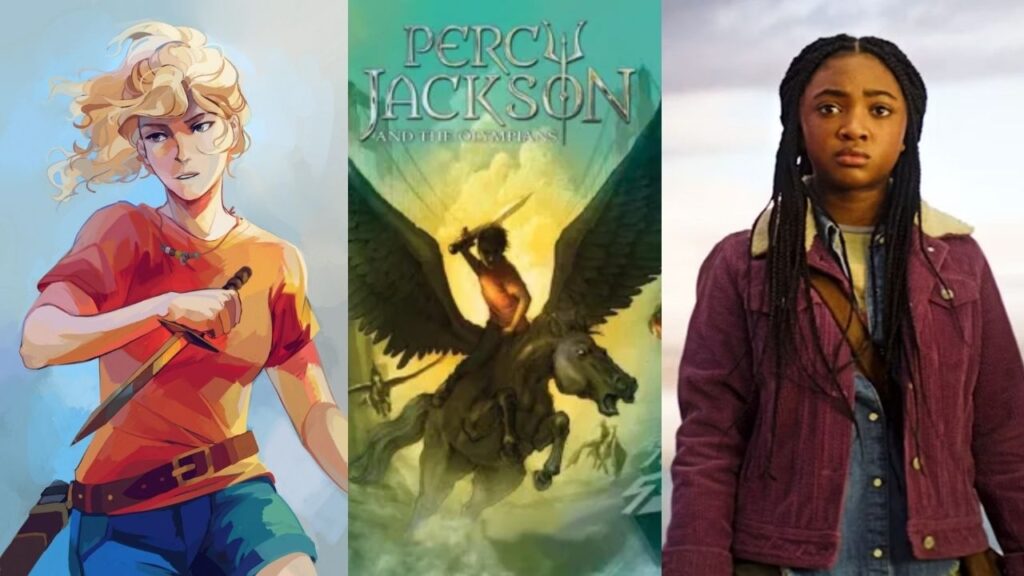
Annabeth Chase is a conceptual shift that tips more toward intellectual and psychological terms rather than pure kinetic ones. Her “upgrades” are determined by how she navigates and ultimately balances her fatal flaw: hubris.
From Architect to “Administrative” Wisdom
Over the course of the PJO series, Chase’s growth is focused on her conviction that she’s capable of “doing things better than anyone else.” Yet the Battle of the Labyrinth was a crucial developmental choke point. She couldn’t solve the Labyrinth with Raw Logic, and she had to face the boundaries of her divine nature.
In the most recent installments – including The Chalice of the Gods – Chase’s character has become controversial. Though she is still the “wise strategist,” her character has been recast as a more homebound, “administrative” figure. Some say it’s “one-dimensionalised” her, but psychologically, this is the “Shadow of Athena” taking shape as a yearning for order and stability in the aftermath of two world wars.
The Growth of Nico di Angelo
Nico Di Angelo’s story arc is the most incisive trauma and identity in the Riordanverse. It progresses from “Mythomagic-obsessed” child to grim necromancer and then to a hero who has embraced his “shadow.”
The Integration of the Cacodemon
A significant upgrade takes place as Nico descends into Tartarus. On this quest, he must face the “cacodemons” — physical representations of his worst fears and guilt. Instead of trying to kill these demons, di Angelo makes the radical move to “embrace and release them” — in other words, to live with his past trauma. It’s a “power-up” for the mind, and superior to any new necromantic talent.
The “Senior Year” Metamorphosis: Themes of Aging
The current stage of the Riordanverse, colloquially referred to as the “Senior Year Adventures,” is a thematic evolution from “Cosmic Conflict” to “Existential Maturation.” The central conflict has ceased with Titans war —-now a mortal world.
The Denial of Mortality
Immortality is explicitly turned down as a motif that is revisited. Jackson, now eighteen, is challenged by gods, such as Ganymede and Hebe, who are “disgusted by the idea of growing old.” The growth of Jackson’s character is solidified on his understanding that ”living one full complete life is better than an eternity stuck in one place.”
The narrative shift in these new titles is that mundane objectives — such as securing letters of rec for New Rome U. act as the basis for mythic adventures.
Ganymede’s Chalice: The burden of eternal youth.
Hecate’s Pets: The “haunted” quality of history.
Letters of Recommendation: Institutional validation vs. individual value.
To be sure, there is a unique and necessary “upgradation” in the series, which is the explicit naming of mental health problems. Although earlier books alluded to trauma in demigod existence, the newest series names particular mental health disorders.
The Diagnosis of the Seven: The impact of the “Great Prophecy” on mental health is a significant motif. These ”involuntary dreams” that demigods have are now interpreted as a form of intrusion, one of the symptom clusters of PTSD.
For those such as Nico di Angelo, trauma generates empathy. This “psychological upgrade” moves the hero archetype away from brute strength and toward resiliency and the power of choice.
Conclusion
The development of these personas is indicative of myth’s continual evolution in relation to the human situation. From the early 2000s “Building Level” combatants to the 2025 “Trauma-Informed” adults, the shifts undergone by these characters are overwhelmingly centered on emotional intelligence in place of divine invulnerability.
Jackson’s decision to embrace the god of old age, and di Angelo’s accepting his inner demons, mark a final “upgradation”: the understanding that a hero’s greatest strength is his or her ability to evolve, transform, and, ultimately, grow old. This keeps the Riordanverse as a “living mythology,” and role models a generation that values empathy and the bravery to confront the mundane in a chaotic world.
Fandomfansis a platform where you can find details on deep theories behind the legendary characters.
Alpana
Articles Published :
156
Alpana is Fandomfans Senior Editor across all genres of entertainment. She evolved in the media industry since a very long time, she manages the content strategy and editing of all the blogs. Her focus on story development, review analysis, and research is well-equipped that ensures every article meets the standards of accuracy and depth.
Sidelined 2: Intercepted hits you out of nowhere before you even know what’s going on. What seems like a bumpy, dumb college kid romance on the surface quietly morphs into a sharper, more self-conscious follow-up — one that knows exactly what it wants to do with Noah Beck, with Tubi’s brand, with its Gen Z audience. This isn’t a movie aspiring to be high-brow; it’s a movie knowing what kind of movie it is and playing to those strengths.
From the willfully chaotic emotions to its influencer-driven star power, Sidelined 2 straddles the line between melodrama and digital-era escapism, establishing a larger, more audacious universe that could (please!) continue on in Sidelined 3. It’s loud, it’s flawed, it’s melodramatic—and for some reason, that’s exactly what makes it work. The ambiguous ending of Sidelined 2 is a blatant strategic set up for a third movie. By keeping Dallas in New York and Drayton in L.A., this franchise provides a “reunion” hook for Sidelined 3.
Image credit: IMDb
The performance of Sidelined 2, is also a good way to Tubi’s brand enhancement. It shows the platform can grow a franchise, hold onto talent (like Van Der Beek and Beck), and create original buzz on social media. This begins to separate Tubi from the blight of the “digital discount bin” and towards being a destination for certain demographic groups.
A Deep Dive into Sidelined 2
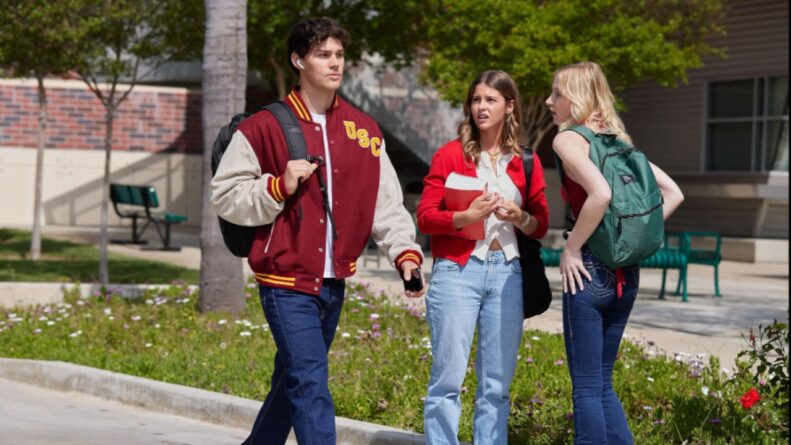
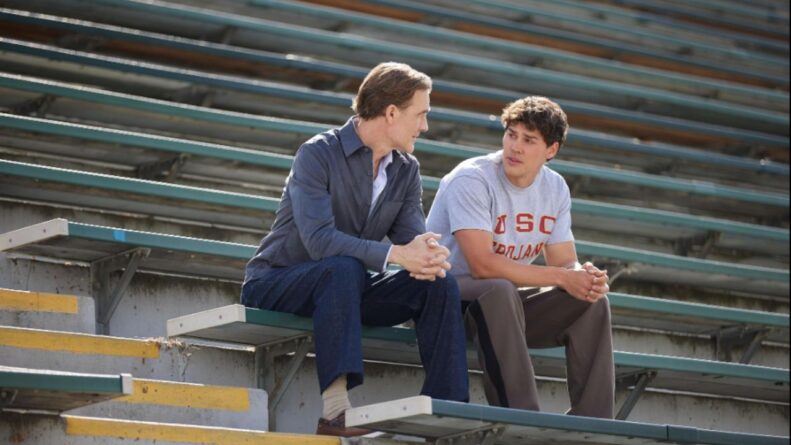
Life After High School is what the film opens with. Dallas and Drayton are now three different men, in two different places, physically and emotionally. Dallas, a third-generation navy dancer, is attending dance school on a partial scholarship at CalArts and dealing with hard classes, self-doubt and financial woes. Drayton, on the other hand, is at USC as a highly recruited freshman quarterback, cloaked in anonymity as he prepares for the NFL.
Image credit: IMDb
The physical separation of their campuses in Los Angeles becomes a metaphor for the emotional rift between them. With busy college schedules, their biggest hurdle is just making time to meet up. This sets up a believable and relatable conflict, moving the story beyond high school angst to a realistic exploration of how young adults juggle priorities, responsibility, and relationships.
The final act is the biggest departure from the standard rom-com template, in which reality—not romance—wins. Dallas comes to Drayton’s first game post-injury to root for him one last time, and voilà, the audience gets the emotional sports moment they’ve been waiting for. But after the match, instead of rekindling their relationship or committing to making a long-distance relationship work, they just share one last kiss and decide to go their separate ways — Dallas is headed to New York with her career, while Drayton intends to stay put in L.A.
Image credit: IMDb
Their conversation about being “the right person at the wrong time” is what holds the film, and Drayton’s line about fate leaves the door slightly ajar for what comes next without obligating a false happy ending.
This down-to-earth ending have generated a lot of chatter and both Noah Beck and Siena Agudong have commended it for being authentic to their characters. The movie aligns with the “realistic romance” trend of late a la La La Land, where personal growth and career aspiration come before staying together, a message that strongly resonates with Gen Z.
Noah Beck— Influencer-Actor Paradigm
Noah Beck’s spin on the world Sidelined is built around is, obviously, its biggest draw, with 33 million TikTok followers making him one of the biggest names in the creator world and his transition into acting indicative of the industry trend of casting stars with established online audiences. His reviews were mixed but getting better – some reviewers think he looks “too nice” to be the bad boy, while others say his natural TikTok charm translates well to screen, particularly in the lighter moments. The film also taps into his real-life persona by including footage of him exercising, shirtless and acting flirty in a way that mimics TikTok thirst traps. It’s a kind of fan service – and the film never pretends its audiences aren’t as interested in watching Noah Beck as they are in watching Drayton.
Image credit: IMDb
Meanwhile, Siena Agudong is the “working actor” type. Coming from Nickelodeon and Disney, she has the technical ability to handle the emotional weight of the film. It is her performance that grounds Beck’s more raw presence. Their chemistry is part acting technique, part influencer collaboration—it seems engineered to be clipped, shared and memed by fans.
Sidelined 2 takes place somewhere between the wholesomeness of Prom Pact and dramatic chaos of After. It doesn’t have the graphic nature of After or the budget of The Kissing Booth, but it makes space for itself by being, arguably, more “realistic” about the jump from high school to college than either.
Conclusion
Sidelined 2: Intercepted is a victory of utility over polish. It is a “mindless dose of Tubi entertainment,” much like a Big Mac is a “mindless meal” – it has been designed, is predictable, and resembles what the customer expects. That tells us that the movie of the future is going to be not just about the art on the screen but about the ecosystem surrounding it: ads, apps, influencers and the holiday weekends when we all want something to watch that doesn’t require us to think too much.
It ends with Dallas and Drayton walking away from each other, their futures unwritten. But for Tubi, the future is written in code, and looks a lot like this: bright, loud, free, and endless.
Mariyam
Articles Published :
76
Mariyam Khan is Fandomfans Content Writer and providing reports and reviews on Movie Celebrities, and Superheroes particularly Marvel & DC. She is covering across multiple genres from more than 4+ years, experience in delivering the timely updates.