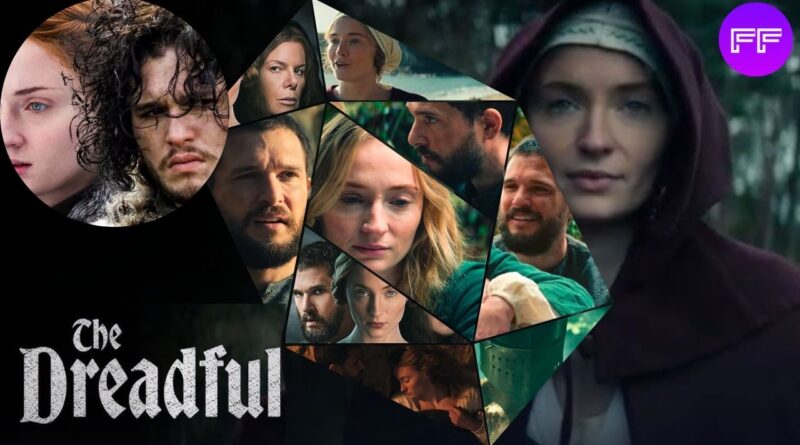
The Dreadful Movie in 2026 has witnessed a resurgence of the Gothic mode, with one of its leading exponents emerging as a project that promises to be as unsettling as it is historic. The Dreadful isn’t your typical horror flick; it’s an elegant meeting point between period drama and supernatural terror. Drawing on the immense cultural capital of its legendary leads, the film plunges into the murkier realms of human survival and moral complexity.
For fans of prestige television, the movie marks a pointed and bold next step for Sophie Turner and Kit Harington. Departing from the sprawling, high-fantasy politics of Westeros, they have swapped iron thrones for the claustrophobic, psychologically crushing domain of “misty forests and crushing dread.” This is a tale in which the mood is as leaden as the secrets its players harbour.
The Vision: From Japanese Masterpieces to English Soil
The metaphysical core of The Dreadful is based upon a wish to orient the themes of classic international cinema in the savage reality of English history. Writer-director Natasha Kermani is inspired by Kaneto Shindō ’s 1964 Japanese cult classic, Onibaba. In the process, she has created a storytelling model around a small, isolated community with its members’ interrelations just as deadly as the supernatural elements hiding in the forest.
This is in keeping with the “folk horror” motif, where the land becomes a sort of other foe. The film, meanwhile, is a groundbreaking achievement for independent horror, combining the art house virtues of auteur-directed filmmaking with the marketing muscle of Lionsgate. With Sophie Turner in the lead role and also producer, there is a definite sense of creative ownership that should keep the “emotional heart” of the film beating from start to finish.
Release Date & Availability
The Dreadful release is positioned to take advantage of the early 2026 market. The Dreadful release date is perfect to capitalize on the late-winter audience that enjoys moody thrillers, and wide-release is scheduled for February 20, 2026.
Territory
Release Date
Primary Platform
Format
United States
20/February/2026
Theaters & Digital
Wide / Day-and-Date
United Kingdom
20/February/2026
Theatrical
Wide (True Brit)
India
Q1 2026
Lionsgate Play
Streaming Premiere
Global Digital
20/February/2026
VOD / Amazon / Apple
Digital Purchase/Rent
A World of Roses and Regret: Genre, Theme & Setting
The Dreadful’s aesthetic is dominated by its 15th-century setting: the Wars of the Roses. This period of English history (1455–1487) was marked by violent civil war between two rival houses, the House of Lancaster and the House of York.
The Wars as a Thematic Catalyst
The Red Rose–White Rose rivalry is more than mere window dressing; it drives the characters to desperate acts. In a world where central authority has disintegrated, people such as Anne and Morwen are abandoning the edges of civilization.
Faction / Element
Historical Basis
Narrative Implication
House of Lancaster
Red Rose Symbolism
Associated with the “war” Anne’s husband attends.
House of York
White Rose Symbolism
Represents the broader political chaos.
Ostracized Living
Outskirts of Society
Heightens the vulnerability of the protagonists.
15th Century
Transition to Tudor Era
A time of deep superstition and radical change.
The Synthesis of Gothic and Folk Horror
From both sides of the conflict, the film adopts elevated perspectives. While the film is Gothic horror at its core—defined by crumbling homes and buried family secrets—it is also very much a work of folk horror. Director Natasha Kermani delves into fear, desire, and regret through a visceral medieval aesthetic. The “English countryside,” with its mud, rain, and cold nights, becomes a character in its own right. The supernatural elements are implied to arise from the land itself, and the “curse” may be read as a projection of the characters’ moral failings.
The Creative Powerhouse: Director & Crew
The Dreadful is, brilliantly, entirely in Natasha Kermani’s hands. Known for pushing genre boundaries in films such as Imitation Girl and Lucky, Kermani applies a layered “Three Keys” approach on set: forming a trusted team, drawing on her short-film experience, and turning to classical texts.
A Collaborative Framework
The production is a partnership between the independent studios Black Magic and Redwire Pictures. Sophie Turner’s role as a producer is particularly vital, signalling a shift toward more equitable power relations among lead performers.
Director / Writer: Natasha Kermani (the visionary behind the film’s transposition of Onibaba) Director of Photography: Julia Swain (capturing the film’s “mud and rain” aesthetic) Editor: Jeff Betancourt (shaping the film’s slow-burn suspense)
The Plot: When Men Walk Like Demons
The story of The Dreadful is a brutal account of survival. We follow Anne (Sophie Turner), who lives in isolation in the countryside with her overbearing mother-in-law, Morwen (Marcia Gay Harden), as she waits for a husband taken by the wars.
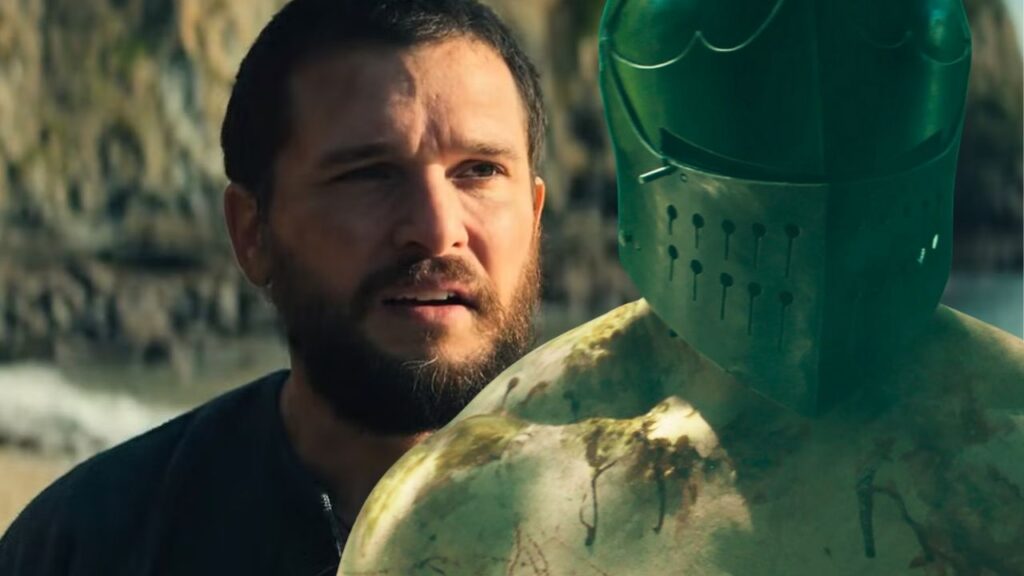
This stasis is shattered by the arrival of Jago (Kit Harington), a figure from Anne’s past. He brings news of death while reviving erotic tensions—both sexual and homicidal—that imperil the household. As Jago infiltrates their lives, a “mysterious knight” emerges: the materialization of a curse that feeds on their sin.
Cast & Characters: A Powerhouse Trio
The Dreadful movie cast is small, yet the film’s triumph lies in this tiny ensemble, which somehow carries immense psychological weight.
Sophie Turner as Anne: the film’s emotional heart. Turner portrays a woman whose strength is forged through solitude in a cruel world.
Kit Harington as Jago: a figure of ambiguity. Harington is equal parts puppy-eyed vulnerability and latent darkness.
Marcia Gay Harden as Morwen: the ruthless mother-in-law. She grounds the supernatural in a very real human desperation.
The reunion everyone is talking about
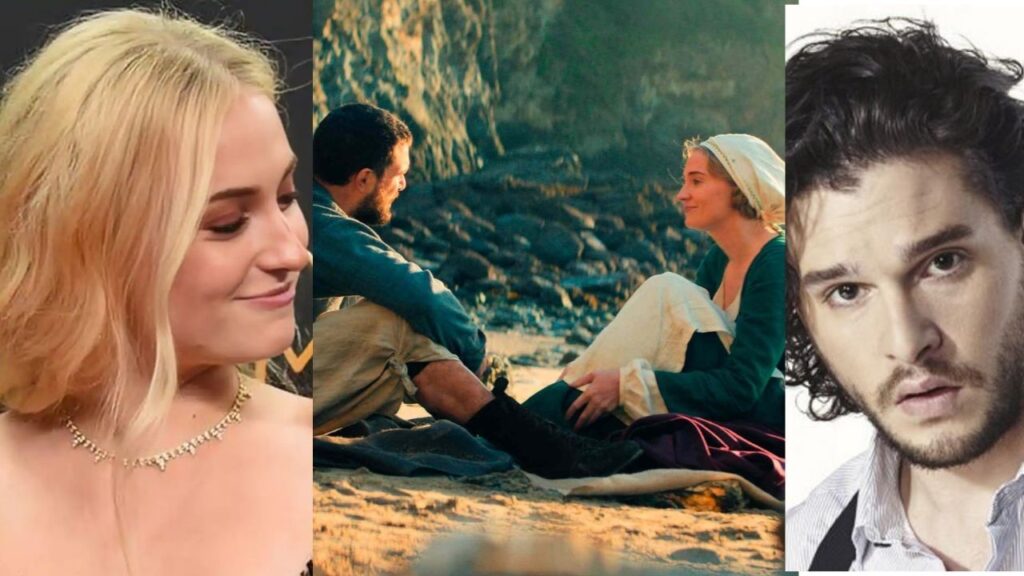
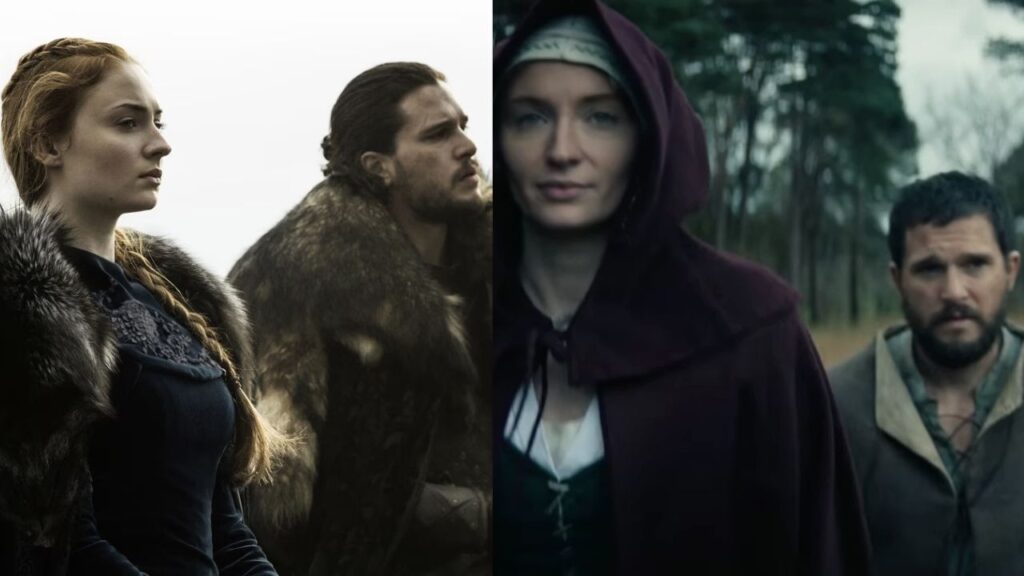
The on-screen reunion of Turner and Harington is the film’s biggest marketing hook. Having portrayed siblings for ten years, their evolution into lovers has been described by the actors as both “weird” and “igniting.” This discomforting tension feeds directly into the movie’s atmosphere of dread, allowing the audience to viscerally sense the boundary-crossing.
Production Prowess: Technical Details
Shot on location amidst the craggy hills of Cornwall, the production embodies environmental naturalism. Cinematographer Julia Swain employs a visual language reminiscent of The Green Knight, emphasizing misty and eerie hues.
The supernatural elements are deliberately restrained, designed to feel earned rather than “cheap.” The film has received an MPA-R rating for “violence, gory images, and sexual references,” a rating crucial to presenting a medieval nightmare without compromise.
The participation of Lionsgate guarantees extensive coverage, with True Brit Entertainment concentrating on the horror legacy of the UK.
What are the fans saying? The response on places like Reddit is electric. Although some are uneasy with the transition from “sibling-to-lover,” it has ignited a viral discussion that goes far beyond horror. Industry Insiders say the film is likely to become a cult hit, a consistent moneymaker that confirms that Natasha Kermani is a force to be reckoned with.
Conclusion
The Dreadful Movie isn’t just a horror movie – it’s a celebration of the Gothic tradition. It asks us to confront the demons that arise from our own histories — all the while cloaked in the lovely, horrifying mists of 15th-century England.
Fandomfans is a platform where you can find all the latest details from movies review, webseries review, and television shows that are worth watching.
Alpana
Articles Published :
156
Alpana is Fandomfans Senior Editor across all genres of entertainment. She evolved in the media industry since a very long time, she manages the content strategy and editing of all the blogs. Her focus on story development, review analysis, and research is well-equipped that ensures every article meets the standards of accuracy and depth.
The Mandalorian and Grogu Strategy: Lucasfilm’s Star Wars Is Returning to Cinema Differently
‘The Mandalorian and Grogu’ will bring Star Wars back to theaters in 2026. Discover how Lucasfilm is redefining marketing, budgeting and fan expectations.
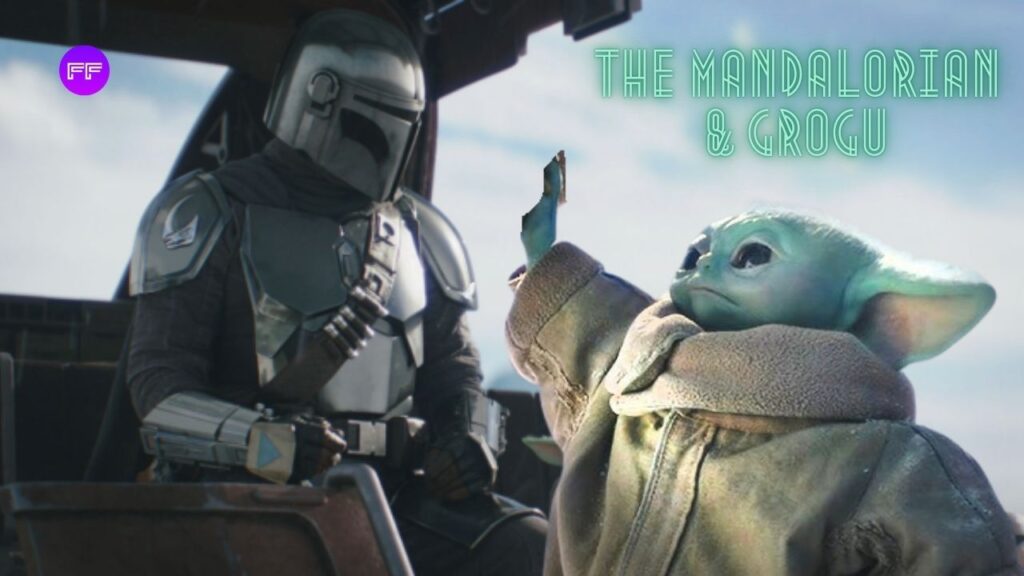
Star Wars’ return to the cinema should have felt like a galactic coronation. With the countdown to the release of The Mandalorian and Grogu (May 22, 2026) now well underway, here comes something rather unexpected — confusion.
It was a seven-year gap on the big screen, so people were expecting a “shock and awe” campaign. What they received in Super Bowl LX was a 30-second parody of a Budweiser commercial narrated by Sam Elliott’s gravelly voice that features Tauntauns pulling a sled. It was bold, it was weird, and it signaled a massive change in how Lucasfilm treats its most precious cargo.
The Super Bowl Ad That Changed Star Wars Marketing
Usually a $10 million Super Bowl spot is spent displaying “heavy artillery” — explosions, high-stakes drama and cinematic scale. Instead of a third wall-smashing joke, director Jon Favreau and new leadership team of Dave Filoni and Lynwen Brennan didn’t just shatter the mold; they pretended it didn’t exist.
Image Credit: Fandomfans
The commercial, “A New Journey Begins,” indulged full-force in “Comfort Marketing.” Rather than treating the movie as “there’s mythology behind everything, and you have to do your homework” (a common critique of the Sequel Trilogy era), the ad treated the characters as old friends. It puts its chips on the notion that Grogu is a worldwide icon who doesn’t need a plot summary to sell a ticket — he just needs to make people smile.
The “Solo” Anxiety vs. Fiscal Reality
Industry watchers have been quick to note the “Solo-esque” red flags. Like 2018’s Solo: A Star Wars Story, this movie has a May release date and a somewhat late marketing push. But the internal economics are another story:
The $166.4 Million Strategy: The Disney era live-action Star Wars movie that has been the most “fiscally responsible.”
The Efficiency Model: The film, which recycles assets from the Disney+ series and employs “The Volume” (StageCraft) technology, has a far lower break-even level than its predecessors.
Image Credit: Fandomfans
The Mandalorian and Grogu Expectations
A global take of $500 million would have made The Mandalorian and Grogu a massive success, but it would have been a flop for The Rise of Skywalker. The marketing department was allowed to be “bizarre” about the Super Bowl this year on account of the diminished financial burden.
A “Filoni-verse” Extravaganza
It’s also the creative debut for Dave Filoni. Filoni, the master of “deep cuts” into Star Wars lore, has brought a surprising cast to the table:
Image Credit: Fandomfans
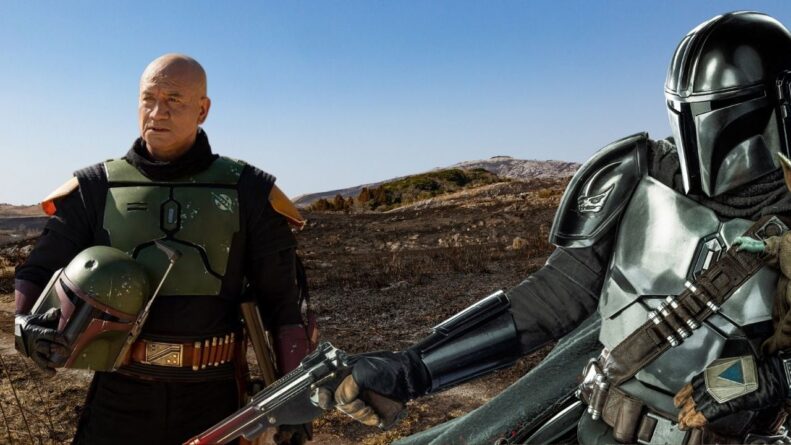
Jeremy Allen White, the protagonist of Shameless, is voicing Rotta the Hutt (the infant “Stinky” from the 2008 Clone Wars movie), now an adult and part of a “buddy-cop” dynamic with Mando.
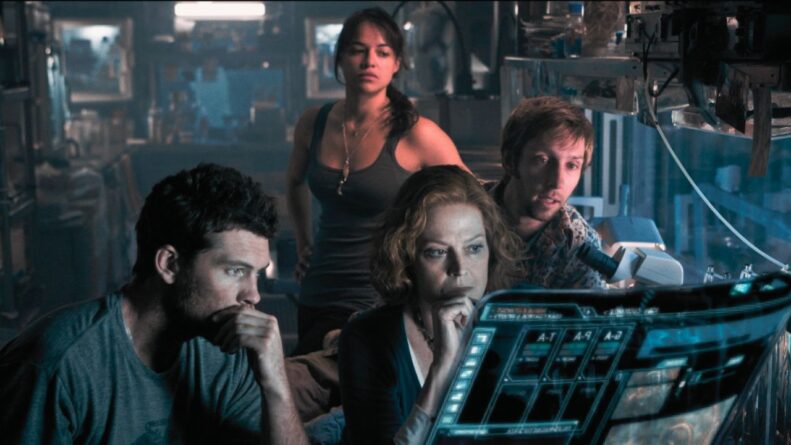
Sigourney Weaver brings cinematic weight as Sgt. Ward of the Adelphi Rangers.Zeb Orrelios and the Anzellans (Babu Frik’s species) bring us from animation to the Sequel era
The Mandalorian and Grogu Star Wars fans expecting as much darkness as Dune will probably find the “Budweiser Parody” off-key. But it is a reminder to the wider world that this franchise can be enjoyable.
Lucasfilm is betting that audiences are ready for a Space Western that values character over complexity after years of galaxy-ending crises. This May will tell if this “confusing” strategy works or ends up as a cautionary tale like Solo. With Sam Elliott narrating and a “swole” Hutt, one thing is certain: this isn’t the Star Wars of 2019. Something much more human.
Fandomfans delivers the latest updates from celebrities, movies and web series to catch up with your favorite characters.
Mariyam
Articles Published :
76
Mariyam Khan is Fandomfans Content Writer and providing reports and reviews on Movie Celebrities, and Superheroes particularly Marvel & DC. She is covering across multiple genres from more than 4+ years, experience in delivering the timely updates.
Avatar Trilogy Changed Cinema: Each Avatar Film Redefined Modern Blockbusters
Learn how James Cameron's Avatar trilogy transformed blockbuster cinema through groundbreaking technology, emotional storytelling, and franchise evolution.
There are few film franchises that work on the kind of timescale James Cameron likes to work on. Hollywood rushes to quickly churn out sequels, spin-offs and streaming extensions, the Avatar saga moves at a geological pace — slow, meditative, technologically transformative every time it arrives. With Avatar (2009), Avatar: The Way of Water (2022) and the newly released Avatar: Fire and Ash (2025), Cameron hasn’t simply made movies; he’s built cinematic milestones that push the boundaries of what is possible with each return.
What makes these films so interesting to assess is that none of the entry is “just” a sequel — they’re landmarks —- technical, narrative, commercial and even cultural. And while the first Avatar transformed global exhibition forever and the second perfected underwater storytelling, early indications are that Fire and Ash may well be the most aesthetically complete and emotionally resilient installment yet.
Let’s analyze how this legendary trilogy has progressed.
Avatar (2009): First Movie of The Different World
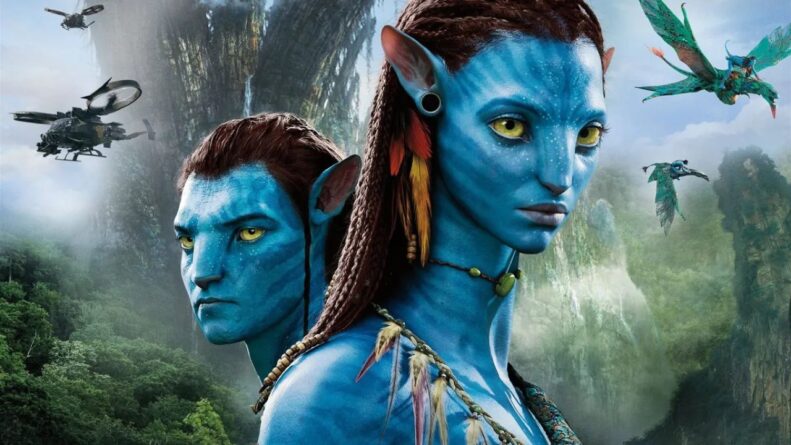
Avatar came out when cinema was about a different planet. 3D showings were scarce, digital projection was erratic, and a troupe of performance-captured aliens conveying real emotion seemed like far-off sci-fi. Cameron sat on the idea for more than a decade while waiting for technology to catch up and then invented the technology.
Image Credit: IMDb
A Technological Shockwave
The Fusion Camera System, full CGI real-time environments, and microexpression capture were not merely improvements, they were revolutions. Critics weren’t just reviewing the movie, they were reviewing the experience. Audiences were going to be able to walk into theaters and walk on to Pandora.
$2.92 billion worldwide, making it the highest-grossing film of all time.
An international release of 3D screens will follow.
A cultural phenomenon so powerful it caused the actual Earth to experience “Post-Avatar Depression” because Pandora seemed more alive than.
Image Credit: Fandomfans
Perfectly Executed Simple Storyline
Cameron deliberately employed a classical story structure, with clear stakes, emotional accessibility and mythic hero’s journey elements. It’s been criticized the screenplay for being predictable or pandering to “white savior” clichés, but it maintains that the film’s brilliance resides in its simplicity. You learn Pandora the way Jake learns it, which causes a rare emotional convergence between audience and protagonist.
Surprisingly, no cinematic “first contact” sequence has matched the wonder of that inaugural flight over the floating mountains.
Avatar: The Way of Water : Flowing With Reinvention
Now, 13 years on and many were asking if Avatar still mattered. Marvel was dominating the box office, streaming was messing with everything, and 3D was just a gimmick. Cameron defied every skepticism the way he always does: by reinventing cinema again.
Underwater Performance Capture: A New Frontier
From authentic underwater motion capture to sophisticated fluid dynamics, Cameron cracked one of the toughest problems in CGI: actual water. The visual result was stunning—critics described it as “hyper-real,” and audiences loved the immersion.
Image Credit: Fandomfans
A More Mature, Family-Driven Story
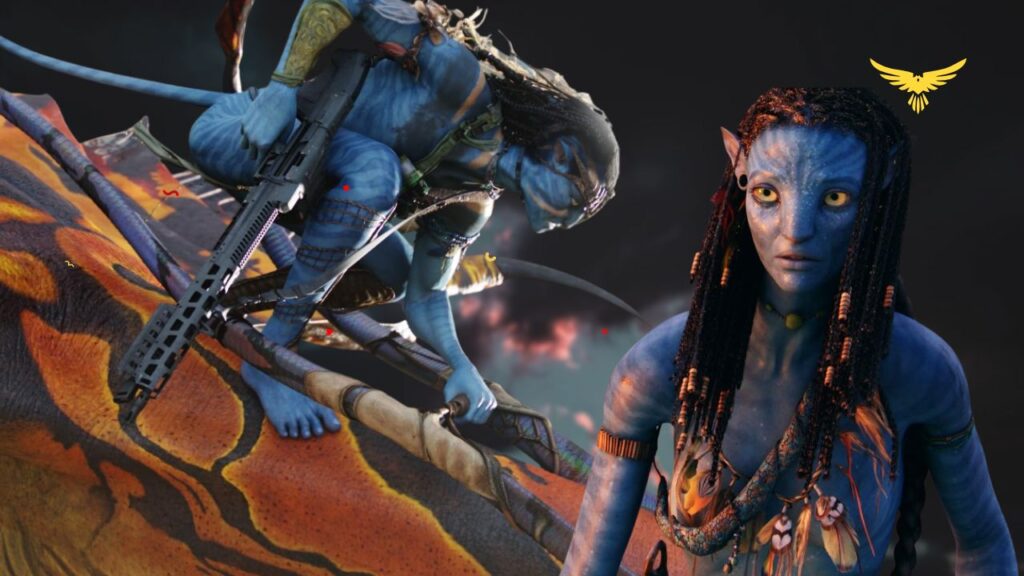
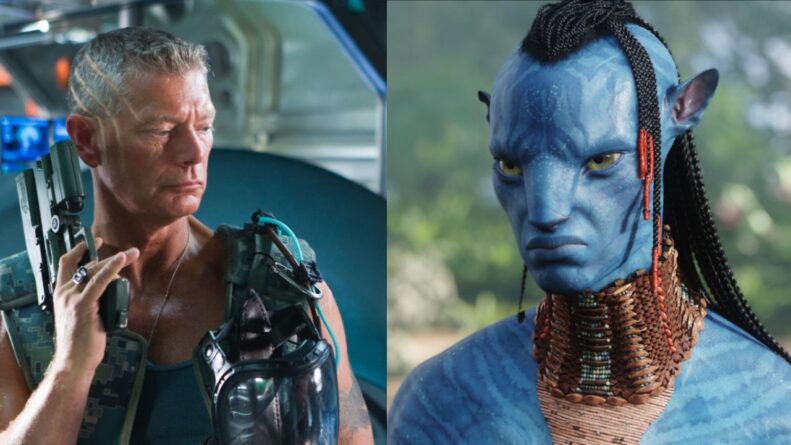
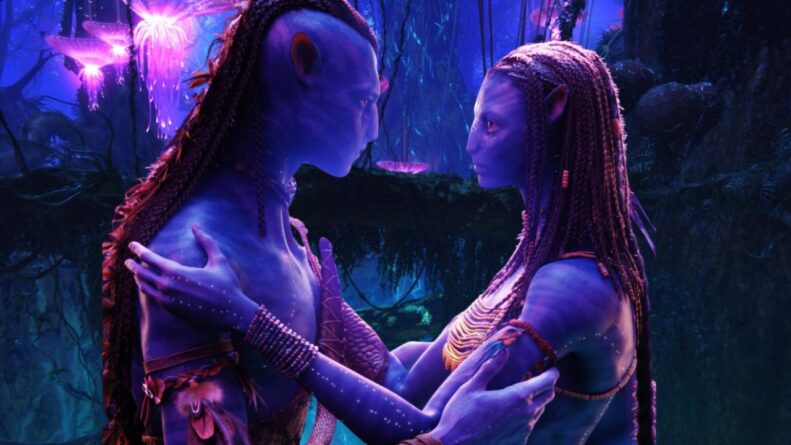
While the first movie was about discovery, the sequel was about consequence. Jake and Neytiri were no longer warriors—they were parents. Their children’s story arcs, particularly Lo’ak’s connection to Payakan, infused the narrative with emotional resonance that was absent from the first chapter.
Reviews were divided over the film’s running time and repetitive capture-rescue formula, but it was received with far greater enthusiasm by audiences, who bestowed a 90% audience score, even higher than the original.
Financially, the film made $2.32 billion, cementing its position as the third highest-grossing movie of all time.
Avatar: Fire and Ash (2025): The Beginning of the Saga’s Dark Age
Initial impressions of Fire and Ash indicate something that rarely occurs in franchise filmmaking: the third movie may be the best one.
A Bold Narrative Shift
The advent of the Ash People, a Na’vi clan forged by disaster and spiritually disconnected from Eywa, represents the largest transformation the franchise has ever undergone. Their leader, Varang, portrayed by Oona Chaplin, comes into alignment with the RDA not for avarice but for grief and fury.
For the first time, Cameron’ s realm has a crisis of conscience within the Na’vi, which responds to a nagging criticism that Pandora’s politics were too clear-cut. Echoing comparisons include this tonal turn being similar to The Empire Strikes Back — darker, more complex and emotionally heavier.
Image Credit: Fandomfans
Aesthetic and Technical Leap
If The Way of Water achieved fluidity on rendering, then Fire and Ash is certainly on its way to mastering volatility are fire, smoke, ash, and ruin. New fire simulations and improved HFR transitions deliver a more atmospheric, perilous Pandora as never before.
For the innovations: Avatar (2009) still stands alone.
For technical perfection, the crown is the Way of Water (2022).
For story and emotional depth: Fire and Ash (2025) looks poised to take the top spot.
Should Fire and Ash live up to its promise, it could be the movie that at last brings critics and fans together — delivering not only beauty and spectacle, but moral intricacy and a shattering emotional pay-off befitting a saga this ambitious.
The Avatar saga isn’t merely a franchise—it’s a cinematic era that extends with each generation of technology and storytelling. Avatar (2009) revolutionised the way the world watches movies and The Way of Water pushed emotion and technical refinement to new heights, Avatar: Fire and Ash is set to become the most ambitious chapter in the trilogy.
Featuring darker themes, complex Na’vi politics, and revolutionary fire simulation, the third may be the one that finally brings critics, fans, and industry analysts into lockstep agreement — Cameron’s slow-burn storytelling was always driving here. If early reviews are anything to go by, Fire and Ash will not only reshape Pandora, but also redefine blockbuster filmmaking itself.
The aim of fandomfansis to help readers make sense of not only the movies they watch but the shifting power structures in strategies that will dictate the future of the movie industry.
Babita
Articles Published :
25
Babita is Fandomfans Editor, experience in managing content. Her focus in general movies and web series. She is having a deep interest in TV shows and 90s movies - particularly Lord of the Rings, Harry Potter, & Rom-Com. Babita also covers psychological thrillers and major releases in current time and concern with deep interest in them.