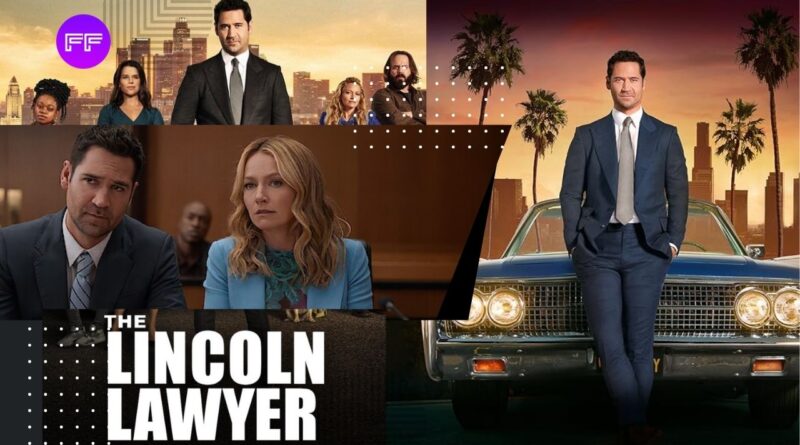
Netflix’s Early Bet on The Lincoln Lawyer: Why Season 5 Was Renewed Before Season 4 Even Aired

Netflix has already ordered The Lincoln Lawyer Season 5 before the Season 4 premiere, a big vote of confidence in the future of Mickey Haller’s legal drama.

Published: January 30, 2026, 5:28 am

The Lincoln Lawyer Season 5 : In the accelerating pace of streaming, a week can be a lifetime. But on January 28 2026, Netflix did something that spoke volumes to the industry: they renewed The Lincoln Lawyer for a fifth season a mind-boggling eight days prior to the fourth season even premiering.

For a platform that has been criticized for its ”wait and see” approach towards data, this is an enormous vote of confidence. It means Mickey Haller’s silver Lincoln isn’t just gliding along; it’s putting the pedal to the metal in a new breed of “prestige procedural.” 

The Strategy Behind the Early Renewal

Netflix is known for keeping its cards close to its chest, taking months to analyze “completion rates” before ordering more episodes. They’ve avoided a few risks by bypassing that window:

Creative momentum: Showrunners Ted Humphrey and Dailyn Rodriguez can keep the writers’ room white hot, moving directly from Season 4 fallout into The Lincoln Lawyer Season 5.

Sending the Market a Signal: It signals to the market that Season 4 (releasing February 5, 2026) is not the series finale. It’s a bridge to a much larger story.

Having been viewed more than 171 million times and sprawling across a staggering 26 weeks in the global Top 10, the “institutional logic” is clear: when you have a hit that straddles the line between high-brow drama and comfort-viewing procedurals, you don’t let the engine go cold. 

Season 4: When the Lawyer Becomes the Lead Suspect

Mickey Haller (Manuel García-Rulfo) was the defendant’s underdog defense lawyer in the first three seasons, Season 4 changes the narrative. Adapted from Michael Connelly’s The Law of the Innocence, the stakes have never been closer to home—because this time, it’s Mickey who is wearing the orange jumpsuit.
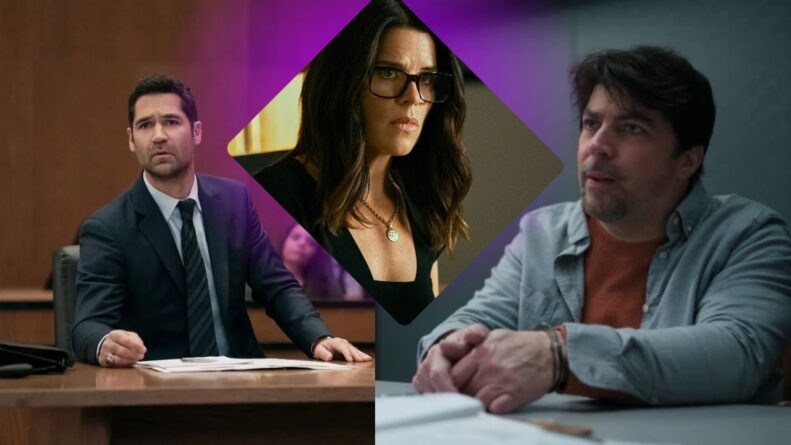
Lawyer Season 4

The inciting incident is a classic Connelly hook: a routine traffic stop leads to the “finding of a body in Mickey’s trunk.” The victim? Sam Scales, the repeat grifter who hounded Mickey for three seasons over legal fees. 

What makes The Lincoln Lawyer Season 5 different?

The Prisoned Main Character: For much of the season, Mickey is on the run inside prison walls, having to fend for himself in a whole new way. 

The Serialized Shift: It’s no longer working with a ”case-of-the-week” feel, with the entire 10-episode story arc revolving around this one, exhausting trial.

The “Shark” Antagonist: Constance Zimmer (natch) is the newly introduced lethal prosecutor Dana Berg who comes to take Haller down. 

Reinventing the Franchise Without Harry Bosch

One of the most intriguing challenges for the franchise becomes the “Bosch-shaped hole” in the narrative. Harry Bosch, Mickey’s half-brother in the books, is ever-present. But with Bosch now based at Amazon MGM Studios, Netflix has had to think outside the box.

Franchise Without Harry Bosch

For the forthcoming Lincoln Lawyer Season 5 (adapting Resurrection Walk), we anticipate more of this “narrative redistribution”. Even characters like Cisco and Lorna — who have grown from sidekicks to powerhouse investigators (and attorneys) will likely carry the brunt of the investigative heavy lifting that Bosch does in the novels

Read More 👉 Henry Cavill Plays Guy Ritchie’s ‘In The Grey’ Delivers the Ultimate Action Fix

Why The Lincoln Lawyer Hits the Legal Drama Sweet Spot

The Lincoln Lawyer has carved out a distinct space in the “Procedural Hierarchy.” It lacks the cold, emotionally detached atmosphere of Law & Order, but it also shuns the “super lawyer” gimmickry found on Suits. 

Feature The Lincoln Lawyer Suits Law & Order
Legal Accuracy High (Trial focus) Low (Drama focus) Moderate
Moral Tone Ambiguous/Gritty Stylish/Corporate Rigid/Idealistic
Character Depth Deeply Serialized Relationship-driven Procedural/Objective

The Human Core of the Lincoln Lawyer Universe

Aside from the legal jargon, it really works because we care about the “Lincoln family.” Seeing Lorna (Becki Newton) go from law school dropout to attorney, or Izzy (Jazz Raycole) go from driver to office manager, offers an emotional anchor.
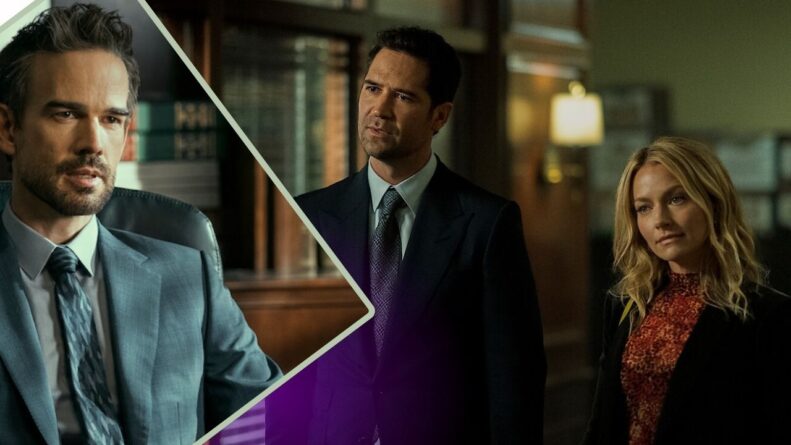
Lincoln Lawyer Universe

Mickey Haller himself — played with a soulful, layered depth by García-Rulfo — is a scoundrel with a heart of gold. 

“He’s a guy who would lie to a judge to win, but he’s lying to protect people the system would crush.”

Conclusion

So with The Lincoln Lawyer Season 5 set to air in February, the outlook is pretty bright for the Haller firm. Boasting a perfect critical score for Season 3 and a confirmed fifth season on the way, The Lincoln Lawyer has demonstrated that the legal procedural isn’t an artifact of days gone by—it’s the future of prestige television. 

Dive into the world of entertainment with Fandomfans and get latest news.

Mariyam

Articles Published : 69

Mariyam Khan is Fandomfans Content Writer and providing reports and reviews on Movie Celebrities, and Superheroes particularly Marvel & DC. She is covering across multiple genres from more than 4+ years, experience in delivering the timely updates.

Leave a Comment

Your email address will not be published.

‘A Knight of the Seven Kingdoms’ Episode 5 Hailed as a Masterpiece in the Game of Thrones Universe

A Knight of the Seven Kingdoms Episode 5 review: Trial of Seven, Baelor’s tragic death, Dunk’s past & why this HBO episode changes Westeros forever. Read more!

Written by: Mariyam
Published: February 16, 2026, 1:06 pm
A Knight of the Seven Kingdoms 

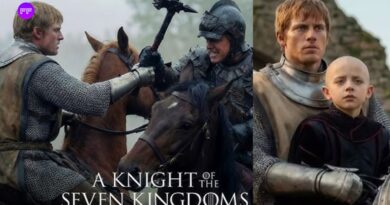
A Knight of the Seven Kingdoms Episode 5 Review makes you overwhelmed because not only did A Knight of the Seven Kingdoms offer us the episode before the last one, it ensured our heads would be lobbed off narratively. Episode 5, “In the Name of the Mother”, is already a perfect 9.8/10 on IMDb, for good reason. It successfully juxtaposed the high-stakes pageantry of the “Trial of Seven” with a dangerous, soul-crushing journey into Dunk’s history that upends everything we believed we knew about our “Lunk” of a protagonist. This is the split of why this episode is being credited for the return of the Westeros favourite series to peak TV form. 

The Structural Gamble: A Tale of Two Dunks

Typically, the penultimate episode of a season is a nothing but adrenaline shot. Owen Harris, the director, however went very much off track. Just as dunk is hit by a morningstar on the trial, the screen doesn’t go black – it goes back.

The Structural Gamble

We were in a pretty big flashback to the Battle of the Redgrass Field (yes, that’s what it was), watching a youthful, “wide-eyed” Dunk (Bamber Todd) scavenging corpses. This was more than world-building, it was a psychological autopsy. The reason is to show us Dunk in the “shadowy wynds” of Flea Bottom, and so the show tells us why he fights the way he does. He’s not a knight of the books but he’s a survivor from the gutters.

The Tragedy of Rafe in ‘A Knight of the Seven Kingdoms’

The greatest deviation was the addition of Rafe (Chloe Lea), who is Dunk’s childhood companion. Rafe is the cynicism within the smallfolk. Her philosophy is the episode “thesis statement”:

“Repayment for previous misdeeds is always repaid with compound interest… Everybody remembers shit.”

It’s the kind of classic fridging moment that Rafe’s savage murder at the hands of a city watchman is, but—executed with such raw, unglamorous violence that it feels earned. It humanizes Dunk’s fierce protectiveness over Egg. He’s not just being a good knight—he’s constantly thinking about saving the ghost of the girl he failed to protect in King’s Landing. 

The Trial of Seven: Mud, Blood and Broken Oaths

As we return to the present day and Ashford Meadow, the “Trial of Seven” is a far cry from a chivalric minuet. The game took on a “fog of war” approach to the 14-man melee, making it a nightmarish, claustrophobic experience.

The Combat Dynamics

  • The Strategy: Prince Baelor Breakspear’s superb use of his body as a shield, was fully aware that his foes, the Kingsguard (the sworn protectors of the royal family), were honor bound to refrain from striking him. Really, it was weaponizing honor at its finest.
  • Dunk vs. Aerion: This wasn’t a sword fight. Dunk took a “comical” amount of punishment, eventually slipping back into his Flea Bottom upbringing headbutting and grappling to make the arrogant Aerion give up.
  • The Sound Design: The “subjective sound” was one of the best parts. We heard what Dunk heard — indistinct screaming, ringing in his ears, and the disgusting snap of wood. 

The Heartbreak: The King That Should Have Been

The season climax is the heartbreaking departure of Prince Baelor Breakspear (Bertie Carvel). Baelor was the Platonic ideal of a Targaryen – fair, compassionate, and intelligent. His death is a “meta-tragedy” for the franchise, he was the first domino to fall in a set that culminates in the Mad King.

The Heartbreak

The stripping away of his helm is one of the most graphic and unforgettable images in the show. When the back of his head comes off with the steel, we find out that he was slain not by an enemy but by his brother Maekar, accidentally. It reaffirms the nihilistic fact of Westeros, even if you are the “best of them” you don’t get plot armor. 

The Champions Outcome
Ser Duncan the Tall Survived. Forced Aerion to retract his accusation.
Prince Baelor Breakspear Deceased. Killed by an accidental mace blow from Maekar.
Prince Aerion Targaryen Humiliated. Yielded in the mud, losing his “dragon” persona.
The Humfreys Deceased. Both Beesbury and Hardyng succumbed to wounds.

Technical Expertise: A New Type of Westeros

Whereas House of the Dragon is concerned with the scope of dragons, A Knight of the Seven Kingdoms is concerned with the texture of the world.

  • Cinematography: Eschewing artificial light and cold white skies reinforced that the mud of the meadow is a character itself.
  • The Score: Dan Romer’s jazz-inflected, “side of the road,” instrumentations bring a grounded, folk-tale feel that complements a Hedge Knight just as much as it does the tale of the Seaboard. 

Read More :- DC Film Zatanna Lost: Emerald Fennell’s Psychological Superhero Tragedy

Conclusion

In the Name of the Mother shows you can do high-stakes drama without breathing lizards or a gigantic budget. It confirmed with A Knight of the Seven Kingdoms Episode 5 that the show has produced a masterpiece by concentrating on class, memory and the “compound interest” of violence.

As Rafe warned, “NOBODY forgets.” Maekar will not forget he has killed his brother. Dunk won’t forget Rafe. And the audience won’t forget Baelor. 

Keep getting updates, plot details and reviews from the latest episodes of the shows and movies on Fandomfans.

Mariyam

Articles Published : 69

Mariyam Khan is Fandomfans Content Writer and providing reports and reviews on Movie Celebrities, and Superheroes particularly Marvel & DC. She is covering across multiple genres from more than 4+ years, experience in delivering the timely updates.

Leave a Comment

Your email address will not be published.

Welcome to Derry : Makes the Same Horror Mistake That Nearly Killed the Franchise

Derry Review assesses IT Chapter Two, in which CGI fright tactics supplant the psychological terror that rendered Pennywise so haunting and memorable.

Written by: Mariyam
Published: December 31, 2025, 4:54 am
Welcome to Derry

When IT: Welcome to Derry aired on HBO at the end of 2024, fans of the genre thought it was going to be a new version of Stephen King’s horrifying world. But in its opening episode, the series offered something else — a very familiar (and not in a good way) experience. The very thing that made IT (2017) a triumph is what turns the prequel’s opening moments into a warning: the misapplication of horror principles that plagued IT: Chapter Two. And if you’re wondering where things went haywire, strap in — because it’s a lesson the franchise should have gotten the first time around. 

The Opening That Should’ve Been Iconic

“Young Matty Clements” The Original Story begins on the night of a snowstorm, a boy called Matty Clements running from his abusive father with nothing else but hope, young Matty Clements. He is taken in by a seemingly warm family, and for a fleeting moment the audience experiences genuine relief for him. Then everything goes horribly wrong. A grotesque, computer generated, winged thing explodes out of the car in a welter of blood. It’s supposed to echo Georgie’s death in the original movie — a chilling first taste of Pennywise’s real form. But here is the problem: it couldn’t be more wrong.

The Opening That Should've Been Iconic
Image Credit: Fandomfans

Compare with Georgie’s’s iconic death in IT (2017). Director Andy Muschietti choreographed that scene with surgical precision. Bill Skarsgård’s Pennywise was this chillingly intimate, yet threateningly expansive. The Georgie and clown talk gained genuine dread through conversation and psychology rather than spectacle. Every second seemed well-earned, every shock felt intimate. Pennywise took advantage of Georgie’s particular weakness — his faith in strangers, his wish to get back his boat. That’s efficient terror.” 

The IT: Chapter Two Mistake We Should Have Seen Coming

That’s when it gets frustrating. IT: Chapter Two (2019) in particular was derided for eschewing the psychological horror that made the 1990 version so effective. The sequel padded itself out with a two-hour-and-forty-nine-minute running time, repetitive solo missions for every Loser Club member, and most damningly a dependence on cartoonish CGI monster moments. Critics were not shy about it—the attack on the Paul Bunyan statue, the grotesquerie creature designs, the visual spectacle that is not actually scary. It was like someone told the filmmakers: Bigger means better, and they darted off blindly downhill.

Two Mistake We Should Have Seen Coming
Image Credit: Fandomfans

Chapter Two’s Rotten Tomatoes rating fell 23 points from the original. Box office receipts plummeted by more than $230 million. The message from the crowd was plain: we don’t want spectacle, we want atmosphere. 

So what Welcome to Derry accomplishes in its first few minutes? It’s the exact same error. That demon baby on the fly, that horrific beast bursting out of the family vehicle, the extended gore set piece — it’s all Chapter Two’s playbook, dusted off and amazon prime-ready. The scene goes on uncomfortably long, giving up slow-building suspense for cheap scares.The winged creature reappears at the end of the episode and that moment works better narratively, though it can still not come close to the real terror of the opening of the original film. 

Read More 👉 Fallout Season 2 Episode 2 Breakdown: Shady Sands’ Death & the Mojave’s Brutal New Rules

Why This Matters Beyond the Opening

This isn’t just one badly staged scene. It’s a matter of philosophy.” IT worked because it knew something fundamental: Pennywise is scariest when horror feels close and personal. The warped Judith painting that plagues Stan, the leper that represents Eddie’s hypochondria, Georgie’s guilt-induced visions — these are mental terrors sculpted around each character’s unique fears.

This Matters Beyond the Opening
Image Credit: Fandomfans

Welcome to Derry had the formula for greatness. It was allowed to roam in the characters, new traumas, and the societal canvas of ’60s Derry, free from the constraints of a single Stephen King novel. It got a chance to fix Chapter Two’s mistakes. Instead, it fell all over itself, hurrying for a big monster moment without cultivating the mood of dread that makes Pennywise really scary. 

The Silver Lining

Welcome to Derry has already made beats of learning this lesson in later episodes. Hallucination sequences customized to characters’ fears, atmosphere-building scenes using lighting and suspense, and sequences that prey on mental fragility have far outperformed those big CGI set pieces.

The Silver Lining
Image Credit: Fandomfans

If the show continues on this path – sacrificing spectacle to pummel us with character-specific horror – maybe it’ll break its cycle for once. Because the big lesson isn’t that bigger is better. It’s that personal psychological terror will always stand the test of time over a computer-generated creature, no matter how cool it looks on screen. 

Conclusion

IT: Welcome to Derry doesn’t come up short for lack of concepts, it wavers because it abandons what made IT so terrifying to begin with. The franchise was at its weakest when Pennywise ballooned into giant CGI monstrosities; it was at its best when fear tiptoed in silently, cloaked in guilt, trauma, and anxieties so personal they couldn’t be named. Instead of building suspense, the series starts with spectacle in what briefly amounts to the exact mistake that undermined IT: Chapter Two.

That’s not to say the show is irredeemable. Its succeeding episodes point to a more comprehensive approach to psychological horror derived from building atmosphere, character-based dread and the gradual disintegration of safety. If Welcome to Derry keeps playing to those strengths, it can still do right by Stephen King’s legacy instead of watering it down. Because Pennywise, at the end of the day, does not need wings, or blood sprays, or extra run time in order to be frightening — he just needs to get close enough to whisper. 

Dive deeper into the cinematic world with Fandomfans to get all the details from your favorite genre.

Mariyam

Articles Published : 69

Mariyam Khan is Fandomfans Content Writer and providing reports and reviews on Movie Celebrities, and Superheroes particularly Marvel & DC. She is covering across multiple genres from more than 4+ years, experience in delivering the timely updates.

Leave a Comment

Your email address will not be published.