The Conjuring Last Rites opened on 5 September 2025 in theatres, earning an estimated $83 million domestically. It pulled in around $104 million internationally, which sums up a massive $187 million global opening. While the budget is about $55 million for the Last Rites for its record breaking release. It makes 44% domestic and 56% internationally which blows the previous films record. As compared to, The Devil Made Me Do It opening record is about $65.6 million domestic and $206.4 million worldwide back in 2021.
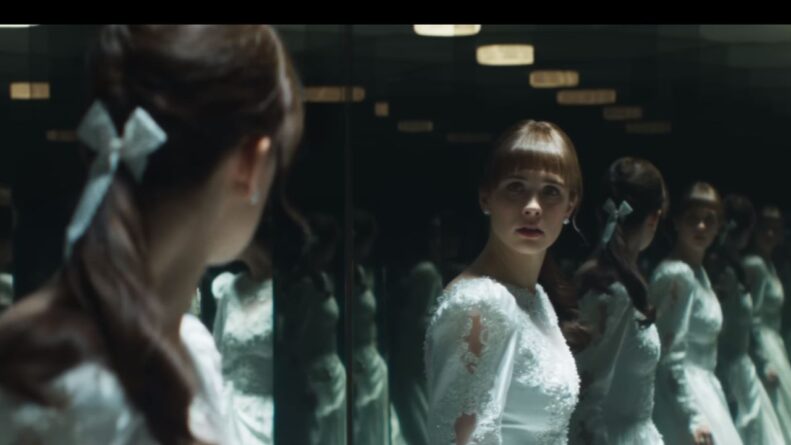
Ed and Lorrain last task in The Conjuring Last Rites
Opening Weekend Smash
The Conjuring Last Rites blows its first weekend with $83 million, marking a record for the franchise. It surpassed the $53 million record of 2018 The Nun. It became the third largest horror opening ever and expected to surpass the top two It films. Variety notes that this is Warner Bros’ the seventh successful movie with a $40 million opening in this year.
Scene outside the house in 2025 Conjuring
This part makes more money in its first weekend than previous Conjuring parts. Its $83 million opening is exceeding the previous series opening of the horror movies domestically, The Devil Made Me Do It with $65.6 million, Annabelle Comes Home ($74.1 million), The Curse of La Llorona ($54.7 million), and almost matched first Annabelle movie ($84.3 million).
Franchise Milestones
The Conjuring: Last Rites became the highest-grossing “Conjuring” franchise opening ever. Its $187 million shattered records for the franchise and pushed its universe past $2.3 billion. Analysts observed that Last Rites became the biggest blockbuster hit as it surpassed its opening record, making it the third-best horror movie. As BoxOfficePro noted, It will soon make a huge commercial win and beat other horror movies including The Devil Made Me Do It ($206.4M) and The Nun ($366M) which was franchise’s current highest earner.
The Conjuring Last Rites opening is 3X larger than the entire box office collection of The Devil Made Me Do It, about $65.6 million total in the US. it also beats other Conjuring movies like Conjuring 3 made about $206 million worldwide but Last Rites opening was much stronger. As reported in EW.
Judy was encountered by evil in The Conjuring Last Rites
The Conjuring 2025 release matches Annabelle opening record of $84 million, showing its stronger opening than the recent three movies of Conjuring Franchise. Taking a strong turn for Franchise’s box office power with this powerful debut.
Let’s Look into Critics Reviews and Audience Reception
As Hollywood Reporter notes, critics were divided on the Conjuring Last Rites film. While Rotten Tomatoes gave a 55% score for this film, audiences gave a warmer response to this film. It received a B cinemascore and critical PostTrak rating about 79%. Critics also criticized its untwisted plot that led to a lower review score but audiences enjoyed the movie as shown by CinemaScore.
Release Strategy
Warner Bros. decided to launch Last Rites only in theaters and did not follow up the last film release strategy in 2021. TheWrap reports that the film was not yet streaming but it is set to arrive later on HBO Max.
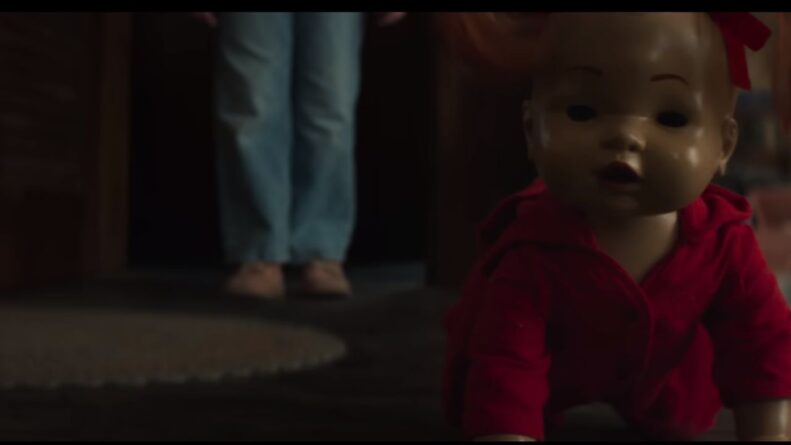
Possessed doll in The Conjuring Last Rites
The old-school theater first strategy works well to maximize the box office potential. Analysts also noted that last year’s mixed release also hurt the movie’s theater run.
The Horror Franchise Continued after Last Rites
Variety’s Rebecca Rubin noted that Last Rites fuel the box office for the movie franchise. It is expected that more movies will add up to this series even though it was called the “final” film. Warner Bros. surprised with its opening and now the Conjuring universe is worth $2.5 billion. Peter Safran sees that as a win, it also opens the door for more horror movies from Warner.
Conclusion
The Conjuring Last Rites break the opening record in its first weekend of run in theaters. Becoming the third best horror movie with audiences love while critics gave a rough rating to this film. Analysts and media were effusive about the results and also surprised Warner Bros. with its high grossing popularity.
Alpana
Articles Published :
156
Alpana is Fandomfans Senior Editor across all genres of entertainment. She evolved in the media industry since a very long time, she manages the content strategy and editing of all the blogs. Her focus on story development, review analysis, and research is well-equipped that ensures every article meets the standards of accuracy and depth.
Tron: Ares’ Box Office Failure Marks a Turning Point in Jared Leto’s Career
Tron: Ares' box office flop stuns Hollywood. Learn why Jared Leto's passion project failed, its $33 million debut, and how it changed his career forever.
The November 2025 release of Disney’s long-awaited sequel, Tron: Ares, fizzled at the box office after a gross that trade observers called a disaster and an “IP-killing event”. The Joachim Rønning directed film made a lackluster domestic debut of $33.2 million to $33.5 million, well below its estimated opening gross by $10 million or more. The opening fell just shy of $60 million worldwide, ranging from $60.2 million to $60.5 million.
Ares not hitting the $100m mark in its opening weekend against its sizable budget made for an early and likely impossible-to-recover-from financial loss for Disney. With the failure, Report said that it is very likely that Disney will “retire the franchise from the big screen” for the foreseeable future, signaling to investors a continued reluctance to finance risky.
Jared Leto’s Star Power Comes Under Fire Once Again
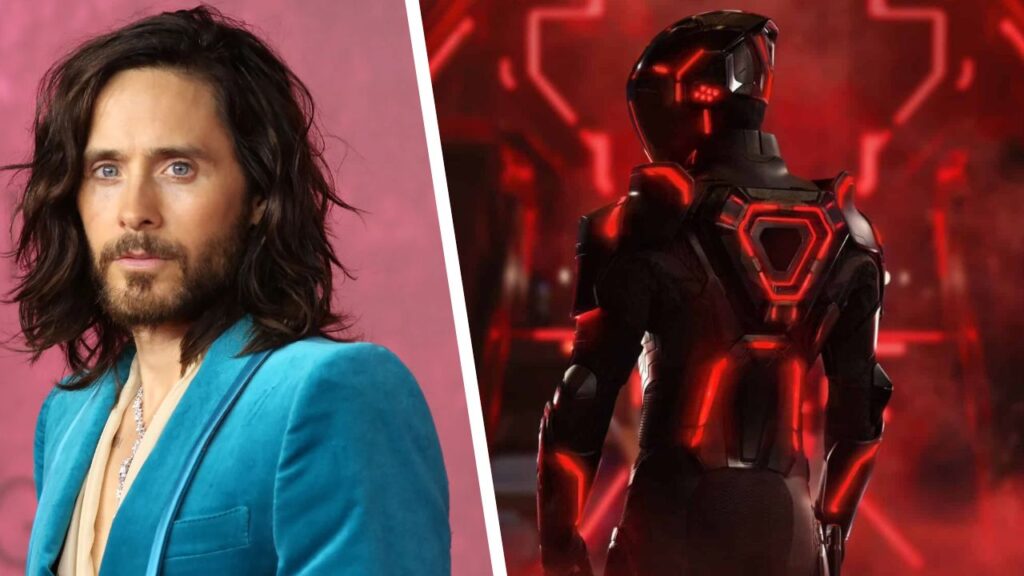
The box office doom of Tron: Ares, according to MovieWeb, once again raised and intensified doubts about Jared Leto’s bankability as a star who could anchor a major studio tentpole. The seeds for this industry skepticism were planted three years earlier with the collapse of Sony’s Morbius (2022).
This recurring pattern of financial failure has consolidated a trade consensus that sees Leto as an actor who can’t reliably bring in box office for similar big Intellectual Property (IP) tentpole projects. Industry reports have indicated that “the big paydays Leto received for Ares might well be over,” as studios are increasingly shying away from the actor as a dependable male star draw.
Controversies During the Tron: Ares Press Cycle
In today’s Hollywood, star viability is inexorably linked to public perception and promotability, more so for those who headline massive franchises for corporations like Disney. Leto also has considerable baggage, including several sexual misconduct allegations (which his representatives deny) that surfaced just prior to the Tron: Ares press cycle.
The allegations posed significant challenges for Disney’s marketing team, with industry executives wondering how the actor could “shoulder the pressure of selling two theatrical movies while dancing around the damning claims”. The controversies had an immediate effect on possible promotional opportunities, creating uncertainty as to whether prominent media outlets would allow him to participate in the usual press routines to help market a blockbuster, making him a major-risk.
Industry Frustration Over Leto’s On-Set Behavior
Industry peers is also pointed out his self-serving spectacle and unprofessional distraction after his extreme behavior on set including mailing eccentric gifts to Suicide Squad co-stars or walking around on crutches for Morbius. The perceived expense of working with the actor’s process wasn’t anymore worth the result. This professional reputation of being a “pain in the ass” who wastes time, combined with his inability to open wide films makes him a uniquely risky bet for studios that want to run-efficient production and clean PR.
According to People, The flop of Tron: Ares is far more than a box office number, it’s the shattering of an actor’s sincere passion against the cold, hard financial calculations of contemporary Hollywood. For years, Jared Leto was spearheading the movie, leveraging his celebrity and producer credit, dating back to 2017, to bring Disney’s long-dormant sci-fi franchise out of development purgatory. His commitment was authentic; he was a fan of the original film and its tech, and playing the digital warrior Ares was a very personal goal for him.
A Strategic Rebrand: From Digital Warrior to Skeletor
The broad consensus in the business is that Leto’s way out is would be to turn on a dime and not be the lead vehicle for a big-budget franchise movie. The most obvious sign of that strategic recalibration: his next role is as Skeletor in Amazon MGM’s Masters of the Universe.
Reports say, This casting is generally regarded as a potential career booster for the actor. Adopting the role of the main villain, Leto once again places the financial weight solely on the IP and the hero, enabling him to focus on crafting a memorable performance. The campy villainous role of Skeletor is a dream role for Leto, and one that lends itself perfectly to his style of transformative acting where he utilises heavy makeup and theatricality (see House of Gucci). How well this transition works will depend on his ability to strike the right balance of “menace and camp,” and keep critics away from dismissing the performance as too silly, a perception that has dogged both his Paolo Gucci and Joker performances.
Conclusion
Leto and his team’s main professional challenge is to manage the promotional risk. Any future promotions around the film will have to strategically separate the actor from the success of the project, downplaying those risky stunts or conversations about method acting that come from set, and instead just talk about the character and the spectacle of the film. The twin flop of Morbius and Tron: Ares have cemented that Jared Leto is simply no longer considered bankable enough to weather the scrutiny and controversy that comes with carrying a mega-budget franchise.
Alpana
Articles Published :
156
Alpana is Fandomfans Senior Editor across all genres of entertainment. She evolved in the media industry since a very long time, she manages the content strategy and editing of all the blogs. Her focus on story development, review analysis, and research is well-equipped that ensures every article meets the standards of accuracy and depth.
Sidelined 2: Intercepted hits you out of nowhere before you even know what’s going on. What seems like a bumpy, dumb college kid romance on the surface quietly morphs into a sharper, more self-conscious follow-up — one that knows exactly what it wants to do with Noah Beck, with Tubi’s brand, with its Gen Z audience. This isn’t a movie aspiring to be high-brow; it’s a movie knowing what kind of movie it is and playing to those strengths.
From the willfully chaotic emotions to its influencer-driven star power, Sidelined 2 straddles the line between melodrama and digital-era escapism, establishing a larger, more audacious universe that could (please!) continue on in Sidelined 3. It’s loud, it’s flawed, it’s melodramatic—and for some reason, that’s exactly what makes it work. The ambiguous ending of Sidelined 2 is a blatant strategic set up for a third movie. By keeping Dallas in New York and Drayton in L.A., this franchise provides a “reunion” hook for Sidelined 3.
Image credit: IMDb
The performance of Sidelined 2, is also a good way to Tubi’s brand enhancement. It shows the platform can grow a franchise, hold onto talent (like Van Der Beek and Beck), and create original buzz on social media. This begins to separate Tubi from the blight of the “digital discount bin” and towards being a destination for certain demographic groups.
A Deep Dive into Sidelined 2
Life After High School is what the film opens with. Dallas and Drayton are now three different men, in two different places, physically and emotionally. Dallas, a third-generation navy dancer, is attending dance school on a partial scholarship at CalArts and dealing with hard classes, self-doubt and financial woes. Drayton, on the other hand, is at USC as a highly recruited freshman quarterback, cloaked in anonymity as he prepares for the NFL.
Image credit: IMDb
The physical separation of their campuses in Los Angeles becomes a metaphor for the emotional rift between them. With busy college schedules, their biggest hurdle is just making time to meet up. This sets up a believable and relatable conflict, moving the story beyond high school angst to a realistic exploration of how young adults juggle priorities, responsibility, and relationships.
The final act is the biggest departure from the standard rom-com template, in which reality—not romance—wins. Dallas comes to Drayton’s first game post-injury to root for him one last time, and voilà, the audience gets the emotional sports moment they’ve been waiting for. But after the match, instead of rekindling their relationship or committing to making a long-distance relationship work, they just share one last kiss and decide to go their separate ways — Dallas is headed to New York with her career, while Drayton intends to stay put in L.A.
Image credit: IMDb
Their conversation about being “the right person at the wrong time” is what holds the film, and Drayton’s line about fate leaves the door slightly ajar for what comes next without obligating a false happy ending.
This down-to-earth ending have generated a lot of chatter and both Noah Beck and Siena Agudong have commended it for being authentic to their characters. The movie aligns with the “realistic romance” trend of late a la La La Land, where personal growth and career aspiration come before staying together, a message that strongly resonates with Gen Z.
Noah Beck— Influencer-Actor Paradigm
Noah Beck’s spin on the world Sidelined is built around is, obviously, its biggest draw, with 33 million TikTok followers making him one of the biggest names in the creator world and his transition into acting indicative of the industry trend of casting stars with established online audiences. His reviews were mixed but getting better – some reviewers think he looks “too nice” to be the bad boy, while others say his natural TikTok charm translates well to screen, particularly in the lighter moments. The film also taps into his real-life persona by including footage of him exercising, shirtless and acting flirty in a way that mimics TikTok thirst traps. It’s a kind of fan service – and the film never pretends its audiences aren’t as interested in watching Noah Beck as they are in watching Drayton.
Image credit: IMDb
Meanwhile, Siena Agudong is the “working actor” type. Coming from Nickelodeon and Disney, she has the technical ability to handle the emotional weight of the film. It is her performance that grounds Beck’s more raw presence. Their chemistry is part acting technique, part influencer collaboration—it seems engineered to be clipped, shared and memed by fans.
Sidelined 2 takes place somewhere between the wholesomeness of Prom Pact and dramatic chaos of After. It doesn’t have the graphic nature of After or the budget of The Kissing Booth, but it makes space for itself by being, arguably, more “realistic” about the jump from high school to college than either.
Conclusion
Sidelined 2: Intercepted is a victory of utility over polish. It is a “mindless dose of Tubi entertainment,” much like a Big Mac is a “mindless meal” – it has been designed, is predictable, and resembles what the customer expects. That tells us that the movie of the future is going to be not just about the art on the screen but about the ecosystem surrounding it: ads, apps, influencers and the holiday weekends when we all want something to watch that doesn’t require us to think too much.
It ends with Dallas and Drayton walking away from each other, their futures unwritten. But for Tubi, the future is written in code, and looks a lot like this: bright, loud, free, and endless.
Mariyam
Articles Published :
76
Mariyam Khan is Fandomfans Content Writer and providing reports and reviews on Movie Celebrities, and Superheroes particularly Marvel & DC. She is covering across multiple genres from more than 4+ years, experience in delivering the timely updates.