Home > Movies > James Cameron Revealed About Avatar: Fire and Ash..
James Cameron Revealed About Avatar: Fire and Ash Scripting Details
James Cameron reveals essential Avatar: Fire and Ash information: split script, Ash People warfare, release day updates, and holdoff for Avatar 4. Learn more !
James Cameron is all about big. Avatar: The Way of Water dominated the box office in 2022, fans naturally assumed the next sequel was right around the corner. But when we look at the release schedule, there’s a lot of confusion.
The next journey to Pandora is Avatar: Fire and Ash (aka Avatar 3), arriving in US cinemas on December 19, 2025. Avatar 4 is a whole other animal, lurking in the wings until 2029. We have to look into the Bullet Train problem before talking about its sequel.
The Two-Billion-Dollar Gamble In the beginning, Cameron intended just a straightforward trilogy. But when writing the second film, he hit a wall. The script was huge — stuffed full of world-building, character arcs and more.
“it was like a “bullet train,” so fast that viewers couldn’t even care about the characters.” —He said
So, he takes a decision to split the script in two parts:
The first part of his script is The Way of Water (2022). It was actually a single movie before splitting up.
The latter is on Fire and Ash (2025).
When the studio started to panic about the cost of this expanded roster, Cameron’s response became Hollywood legend. He reportedly inquired of the executives,
“What part of you getting another chance to make $2 billion is in question here?”
The success of Avatar’s second part,The Way of Wateris becoming the most grossed film with a $2.3 billion hit that continued to cement James Cameron status as a box office hitmaker.
What to Expect: Avatar: Fire and Ash
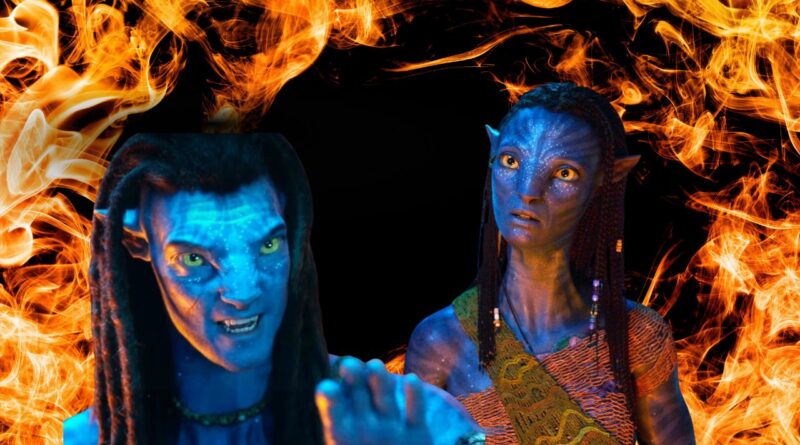
If the previous movie was about the stillness of the water, this one is about the rage of the fire. People mentioned, The Ash People (the Mangkwan Clan), led by Varang (Oona Chaplin) are introduced in Fire and Ash.
Image Credit: Fandomfans
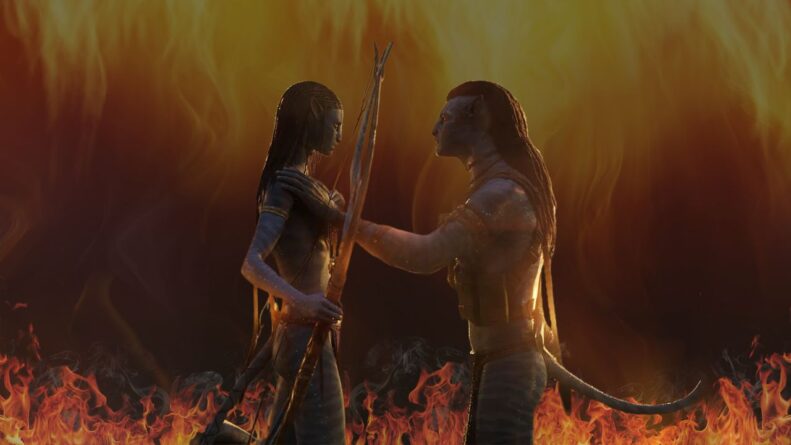
In contrast to the tranquil forest and reef tribes that we’ve seen, the Ash People are hostile and antagonistic – they have a “villainous” role. Cameron is flipping the script: instead of “Good Na’vi vs. Bad Humans,” we’re getting Na’vi antagonists. Anticipate a shift in the visual palette from cool blues to background reds, volcanic rock, and skies filled with ash.
Real-World Impact: The Hong Kong Delay
Though the US release is late in 2025, the film is encountering a unique obstacle in Hong Kong. In the wake of the tragic fire in the Wang Fuk Court in Tai Po, distributors have taken the delicate step to postpone the release to 2026.
Image Credit: Fandomfans
The subtitle (Fire and Ash) is said to be removed entirely in that region so as not to be seen as disrespectful while people are grieving. It’s a rare reminder that even massive global blockbusters must reckon with the impermanent world into which they arrive.
The Long Wait for Avatar 4 (2029)
So, why the four-year wait after Fire and Ash? That’s because Avatar 4 breaks the timeline. Cameron has said that at the 35 page mark in the script of Avatar 4 there is a huge six year time jump. The first act was shot years ago so the child actors actually look young.
Image Credit: Fandomfans
But the rest of the movie is the cast playing young adults. Production breaks also allow the actors to age naturally and the VFX team time to develop the technology necessary to bring the saga to its final act.
Cameron Received only two words in his email from the studio after submission of Avatar 4 script, ‘Holy fuck.’ and after that the question arises:
“Cameron asked, ‘So… where are the notes’? The executive said, ‘That is the note.’”
This suggests that the response was overwhelming and it was not just good – it was earthshattering and they were left speechless and in wonder at how audacious and brilliant it was. A moment that shakes up expectations and stays with you long after that.
For now, everything is about 19 December 2025. The Ash People are coming, and if history is any indicator, James Cameron is poised to prove the doubters wrong.
James Cameron isn’t putting off Avatar 4 just because — he’s working toward a decade-spanning, time leaping epic that needs both narrative room and real world aging to land its emotional punch. With ”Avatar: Fire and Ash” scheduled for release in December 2025, the franchise is on the cusp of its most intense and visually provocative chapter to date, introducing the Ash People and altering the moral compass of Pandora.
The long wait until 2029 is not a setback — it’s the strategy behind Cameron’s biggest jump. And if history teaches us one thing, it’s: never bet against James Cameron.
Fandomfans is a platform which provide every details on the movies franchise and directors deep voice during interview
Babita
Articles Published :
25
Babita is Fandomfans Editor, experience in managing content. Her focus in general movies and web series. She is having a deep interest in TV shows and 90s movies - particularly Lord of the Rings, Harry Potter, & Rom-Com. Babita also covers psychological thrillers and major releases in current time and concern with deep interest in them.
Eddie Munson Won’t Return in Stranger Things Season 5: Matt Duffer Confirms
Stranger Things creator Matt Duffer confirms Season 5 won’t bring back Eddie Munson. Find out why his story ended in Season 4. Read more visit website...!
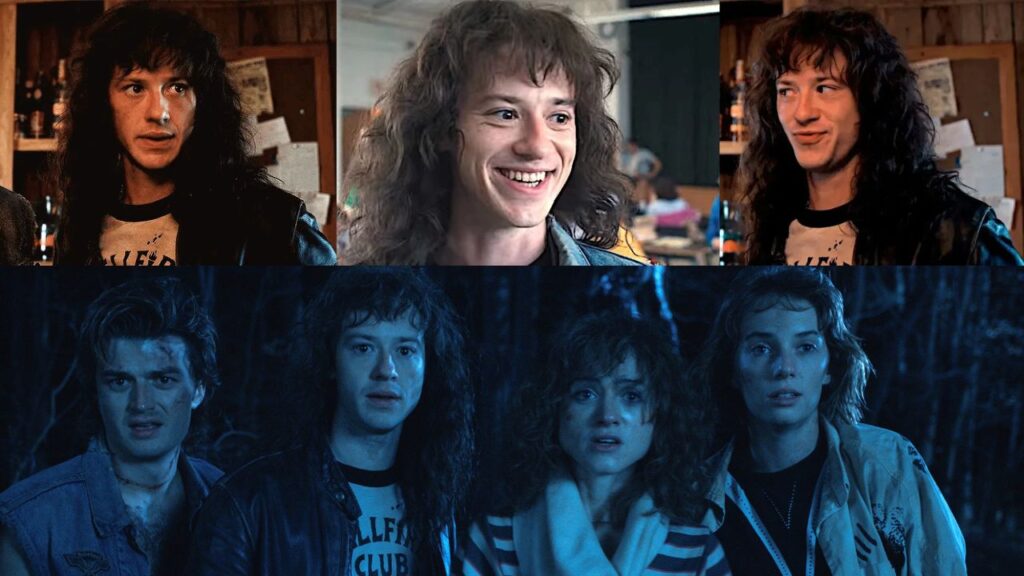
Eddie Munson (played by Joseph Quinn) is not returning for season 5, which is the final season of the series. People confirmed that, In a recent chat with Empire magazine, co-creator Matt Duffer squashed once and for all rumors that beloved character could return.
The creators (Duffer Brothers) of Stranger Things have officially confirmed, “I love that Joe Quinn is just playing with fans! But he’s dead,” he described Eddie’s fate in the interview. “Joe is so busy anyway, the world should know he’s not coming back,” he added. He’s been shot like five movies since! When the hell does he get the time to come and shoot Stranger Things? No, unfortunately, RIP. “He’s fully under that ground.”
The statement follows months of speculation stoked by Quinn himself, who at times teased fans at events about returning. At a fan con in Belgium and asked if he would reprise his role, Quinn enigmatically replied, “I do know, but I’m not telling,” fueling even more hype. After a while, Duffer brothers have publicly shared that the story of Eddie Munson was finished in Season 4.
Fans Will Remember Eddie Munson’s Heroic Sacrifice
Eddie Munson debuted in Stranger Things season 4, projecting the charm of an outcast metalhead leader at the same time as he was ruggedly told that the Dungeons & Dragons game was Just Not Cool. His arc was all the more emotional when he died in the Upside Down to protect his friends Dustin, Steve, Nancy, and Robin.
In a standout Season 4 moment, Eddie delivered a triumphant performance of Metallica’s “Master of Puppets” on guitar, drawing the demobats away from Vecna’s lair. Sadly, he didn’t make it out alive, sacrificing himself in a blaze of glory to save Hawkins – the same town that had turned its back on him.
Since leaving Stranger Things, Joseph Quinn’s star has risen exponentially. The 31-year-old British actor has joined a number of major film franchises, so a return to the Netflix series now seems all but impossible from a scheduling standpoint.
Quinn has appeared in several blockbuster projects including, A Quiet Place: Day One, Gladiator II, Warfare, The Fantastic Four: First Steps, and his upcoming project Beatles biopic where he plays a role of George Harrison.
This packed schedule, coupled with the fact that his character is dead, means Eddie’s comeback is out of the question.
Stranger Things Season 5 Release
The final season of the Stranger Things will be split into three parts during the holiday season: Volume 1 contains 4 episodes which will release on November 26, 2025, Volume 2 of 3 episodes: December 25, 2025, and Final Episode is going to air on December 31, 2025.
Who Will Return in Season 5?
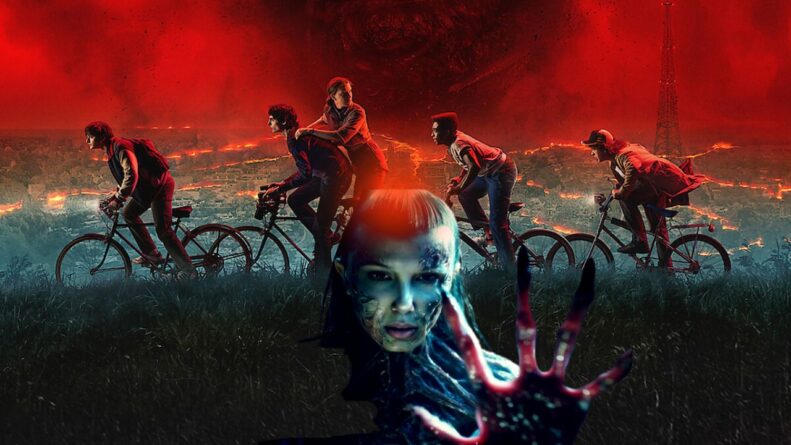
Eddie may not be coming back, but at least everyone’s favorite characters will be making their appearances for the latest look at the end-of-the-world finale. The cast is filled with familiar faces such as Millie Bobby Brown as Eleven, Finn Wolfhard as Mike, Noah Schnapp as Will, Gaten Matarazzo as Dustin, and Caleb McLaughlin as Lucas. Sadie Sink returns as Max, as does Winona Ryder as Joyce, and David Harbour as Hopper. Natalia Dyer, Charlie Heaton, Joe Keery also return as Nancy, Jonathan and Steve respectively. Maya Hawke returns as Robin, Priah Ferguson returns as Erica.. Brett Gelman returns as Murray, Jamie Campbell Bower as Vecna, Cara Buono as Karen, and Amybeth McNulty as Vickie. It’s shaping up to be an intense reunion with plenty of drama and action. There will be a void certainly for Eddie, but this cast of stars is sure to give us an ending to the story that we’ve all been addicted to. One last ride in Hawkins!
Conclusion
While it’s disappointing that Eddie Munson but his amazing character is firmly cemented in Stranger Things history. His heroic sacrifice at the end of Season 4 provided a great send off for his character. With the end of the series in sight, viewers can now turn their attention to that big showdown — and the return of characters they have loved for almost 10 years. A fight with Vecna and the secret of the Upside Down are set to come to a thrilling end, bringing the Hawkins saga to a close this holiday season.
Alpana
Articles Published :
156
Alpana is Fandomfans Senior Editor across all genres of entertainment. She evolved in the media industry since a very long time, she manages the content strategy and editing of all the blogs. Her focus on story development, review analysis, and research is well-equipped that ensures every article meets the standards of accuracy and depth.
The Batman: Part II – Matt Reeves Brings Emmy-Winning Designer Luke Hull to Rebuild Gotham
The Batman: Part II brings together Matt Reeves and Emmy-winner Luke Hull to redesign Gotham City with a darker, more realistic style starring Robert Pattinson.
Matt Reeves’ hotly anticipated The Batman: Part II has reached an exciting new high with the reveal of its production designer, an Emmy-winning artist whose lineages in cinematic world-building is unparalleled. As the city of Gotham prepares for another trip to the theater, the film’s scope has been expanded to include Luke Hull, known for his revolutionary work on Disney+’s Andor and HBO’s Chernobyl.
Bringing Hull Showrunner Matt Reeves on board to direct, Reeves looks to create more grounded and immersive Gotham. According to Collider, He’s known for his meticulous attention to large, practical sets. He built entire worlds for Andor using a blend of traditional Japanese designs, minimalist Nordic styles and rugged Scottish strongholds. This fusion breathed new life into the Star Wars landscapes. His acclaimed sets for Chernobyl constructed an entire power plant. He emphasized gritty, authentic details that would add substance to the story’s emotions and themes.
What This Means for ‘The Batman: Part II’
Fans in DC and Star Wars communities have already been singing praises of Hull’s casting. They appreciate his knack for making locations into important characters.
Gotham is at the heart of Batman’s story. It will darken and become more deeply felt inside. Hull’s previous work indicates a city that depicts Bruce Wayne’s battle against its decay and moral drop.
Returning Cast and Production Details
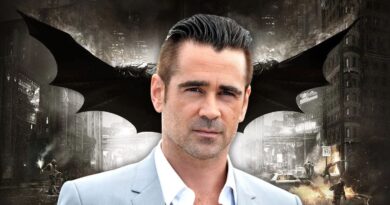
Besides this major offscreen change, the film also brings back the core cast: Robert Pattinson as Batman, Colin Farrell as Oz Cobblepot/The Penguin, Jeffrey Wright as Commissioner Gordon, and Andy Serkis. Production is set to begin in January next year. The script is done.
The story begins immediately following the hit HBO max series The Penguin. It provides a consistent pace and intensity for fans of the original film and the complete Gotham narrative.
Visual Style Differences Between The Batman and The Batman Part II
In comparing the look of The Batman to that of the forthcoming The Batman: Part II, there are notable differences in the production design, as well as in Gotham City’s artistic direction. Part II wants to take world-building even further and perhaps embrace more traditional comic book iconography while the first film is celebrated for its mood, desaturated, neo-noir look.
The Batman (2022)
The Batman: Part II (2027)
Palette of Colors and Atmosphere: Muted/desaturated to the extreme on all levels, consisting of a very limited desaturated palette composed mainly by dusty deep tones with occasional pops of red, or orange.
Color Scheme and World-Building: There will be deeper colours, with more shades, but a dark intention. This is the plain and old-fashioned places of Hull. Gotham’s architecture will be more defined: There will be windows, and roofs on some of the buildings, as CBR says.
Cinematography: A close, tactile camera feel was achieved through the use of Arri ALFA lenses. It focused on harsh reality and silhouette imagery a-la Roger Deakins.
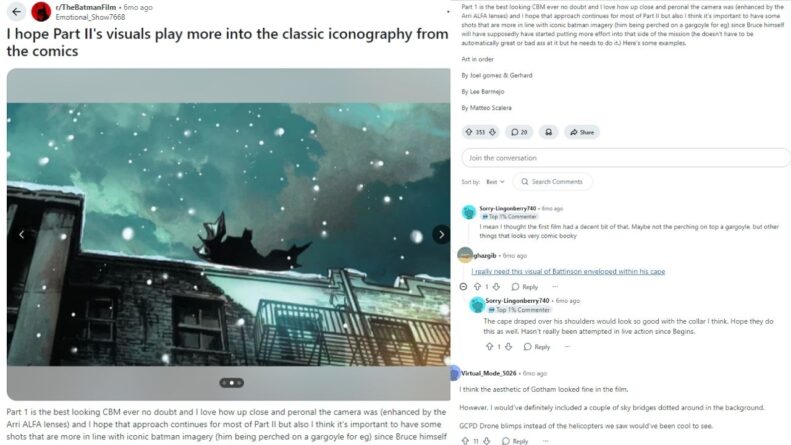
Visual Ideas: Initial discussions on Reddit are that the next movie will be even more strongly influenced by vintage Batman comics. There are also shots of him on gargoyles and grand, bold scenes. The camera is close and intimate but non-pornographic.
Urban Environment: The streets always appeared wet, to suggest perpetual rain and a somber mood. The city pressed down hard and felt harsh. Night scenes gave Gotham a gritty feel and Bruce Wayne’s secretive nature.
Production Designer Swap: Andor and Chernobyl’s Luke Hull takes over duties from James Chinlund. Everything He Touches Turns to Real, Physical Space He excels at creating real, tangible, physical worlds, with sets you can touch. This transformation gives a whole new perspective to the buildings, and overall feel, in Gotham.
Symbolism: It conveyed desolation and little optimism, at times portraying Batman as a creature of the darkness. Warm orange from the flares lightened the colors only in a few places, such as the end. This was hope arising out of loss.
Comic Tribute: Sequel looks to snatch iconic comic book panels for Batman’s look. That against the muted truth of the first film in picked classic poses.
Riffing: Some of your crew spots may change, but Matt Reeves keeps close-to-the-vest stories and tailspin tone. Hull’s elegant set pieces will elevate it.
In Short, The Batman is distinguished by its muted colors, wet surfaces, and urban stress forged in shadows.
The Batman: Part II is to expand upon Gotham’s style through Luke Hull’s immersive, practical sets. It could be a tribute to vintage comic illustrations too. This gives a fresh spin which remains just as moody for the cape-wearing hero.
Conclusion
The fact that Matt Reeves went out and hired Luke Hull means that Matt Reeves wants literally every person in Gotham to be filled with the inner pain and dark thoughts that is at the core of Batman’s world. Hull has demonstrated that he can make locations come to life on the page in stories such as Star Wars’ Chandrila or the Chernobyl plant, where setting is integral to plot.
His Gothamville is in decline and ready to roar on October 1, 2027 as the making of the film starts in 2026. The Batman: Part II holds the promise of a film trip that the long wait will make all too right.
Welcome to FandomFans — your source for the latest buzz from Hollywood’s creative underworld. Here, we explore the art of filmmaking, knowing about how visionary directors, designers, and actors shape the worlds we escape into. Today we break down Matt Reeves’ ambitious direction for The Batman: Part II, Emmy-winner Luke Hull (Andor, Chernobyl) steps in to reinvent Gotham’s shadowy skyline for its next cinematic evolution.
Alpana
Articles Published :
156
Alpana is Fandomfans Senior Editor across all genres of entertainment. She evolved in the media industry since a very long time, she manages the content strategy and editing of all the blogs. Her focus on story development, review analysis, and research is well-equipped that ensures every article meets the standards of accuracy and depth.