Home > Movies > The Hunger Games Love Birds Jennifer Lawrence and..
The Hunger Games Love Birds Jennifer Lawrence and Josh Hutcherson Are Back to Panem
The Hunger Games love birds Jennifer Lawrence and Josh Hutcherson are reunited in the new prequel Sunrise at the Reaping, which will bring fans back to Panem.
The Hunger Games’ Jennifer Lawrence and Josh Hutcherson, the iconic duo who captured our hearts as Panem’s greatest rebels, are confirmed to be coming back to the franchise with The Hunger Games: Sunrise on the Reaping and we’re just not emotionally prepared for what this means.
The revelation was made on 10 December 2025, and it reverberated across the entertainment industry like a hovercraft. For more than 10 years, we’ve seen these two gifted performers breathe life into the characters created by Suzanne Collins, and seeing them in this new prequel feels like that chance encounter with an old friend that really throws you for a loop. While Jennifer Lawrence will be reprising her role as Katniss Everdeen and Josh Hutchersonas Peeta Mellark, there is a fun twist to this - they are not the main characters in this movie.
The Hunger Games: Sunrise on the Reaping is turning out to be something I don’t think we’ve seen from the series yet. Taking place 24 years prior to the original Hunger Games trilogy, the prequel follows a young Haymitch Abernathy, the surly yet surprisingly endearing mentor we are familiar with through Woody Harrelson’s version of the character.
Image Credit: Fandomfans
To those of you who read the novelization, Lawrence and Hutcherson are set to appear in a flash forward sequence near the end of the film, showing where our favorite characters ended. It’s that perfect kind of callback that makes longtime fans feel seen and appreciated.
The Reason Behind The Excitement
The extraordinary cast lined up for this prequel is the first reason for this excitement. Joseph Zada as young Haymitch, who confronts the terrifying 50th Hunger Games(the Second Quarter Quell) — where the stakes are doubled with 48 tributes instead of 24.
Image Credit: Fandomfans
That’s right, this isn’t just any Hunger Games, it’s a barbaric, monstrous edition that will tell us exactly how Haymitch became the shattered man who then leads Katniss through her own.
Notable Star-Studded Cast
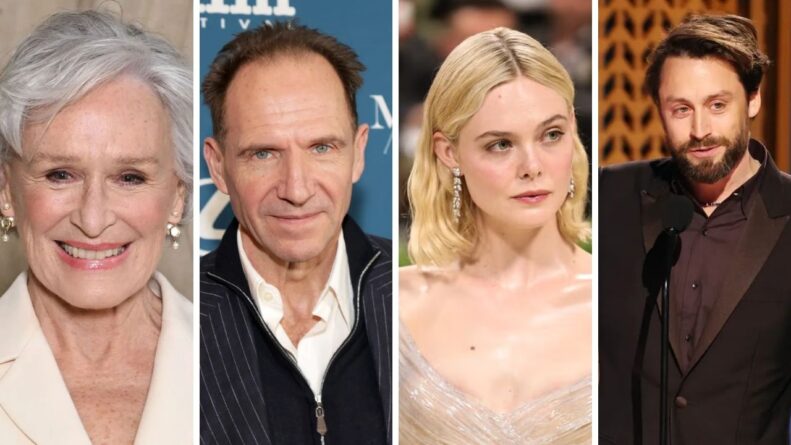
Backing up the extraordinary young talent is a star-studded cast that feels like a who’s who of Hollywood: Glenn Close, Ralph Fiennes (as a younger President Snow), Elle Fanning, KieranCulkin, Maya Hawke, and so many more incredible actors. Kieran Culkin, just coming off an Academy Award win for A Real Pain, will be taking over Stanley Tucci’s role as Caesar Flickerman, and Ralph Fiennes lends his gravitas to a youthful iteration of the tyrannical President Snow. This level of casting in this prequel is just jaw dropping.
Image Credit: Fandomfans
Francis Lawrence, having directed all but one of the Hunger Games movies since 2012, is back to lend his deft hand to this dark origin story. Billy Ray’s screenplay is a faithful, attentive adaptation of Collins’ novel, so those familiar with the books will pick out the key scenes, but the uninitiated gain a new, cinematic interpretation.
The enthusiasm What’s really exciting about this project is that it comes full circle for the Hunger Games franchise. Following the unprecedented popularity of The Ballad of Songbirds and Snakes in 2023, which gave a glimpse of a young Coriolanus Snow, Lionsgate are clearly interested in delving further back into this universe’ s past. The franchise has grossed $3.3 billion worldwide over five films, and with this star-packed cast and gripping story, Sunrise on the Reaping is set to be another blockbuster.
Image Credit: Fandomfans
The film is set to blaze its way into theaters on November 20, 2026, giving fans almost a year to speculate on what a Lawrence and Hutcherson cameo might entail, be it a fleeting appearance or a substantial chunk of the story, it’s unclear at the moment, but whatever it is: getting Katniss and Peeta back on the big screen – even in this unusual capacity, is a treat for the series’ fanatics.
To those of us who have grown up with these characters, this is like coming home. The Hunger Games world keeps expanding and surprising us, and with Lawrence and Hutcherson’s return, it’s clear why this franchise ever really captured our hearts.
Get your favorite characters and movies exciting updates on Fandomfans. Our goal is to deliver you celebrities, directors, and movie details based on deep insights.
Mariyam
Articles Published :
76
Mariyam Khan is Fandomfans Content Writer and providing reports and reviews on Movie Celebrities, and Superheroes particularly Marvel & DC. She is covering across multiple genres from more than 4+ years, experience in delivering the timely updates.
In the middle of all the superhero sequels and shadow-future tales in movies this year, Kiss of the Spider Woman lands as almost unbearably real and human. Bill Condon’s new direction wins the audience over with breathtaking visuals, emotional potential in the storyline and a new way to see how art can heal wounded souls. Jennifer Lopez shines bright here. Diego Luna and Tonatiuh both give great performances. The film is a love story. It also shouts for freedom.
A Story Behind Prison Walls
To the framework of Argentina’s savage “Dirty War” in the ’70s and ’80s, according to LAtimes the film adds two men caught up in very different ways by the conflict. Valentín (Diego Luna) is a hardened political revolutionary, and Luis Molina (Tonatiuh) is an extravagant window dresser convicted of indecency due to his sexuality. In the beginning, their cell feels like a cage separating two different realities – worldview vs. imagination. But slowly, with shared stories and dreams, it becomes a place of transformation.
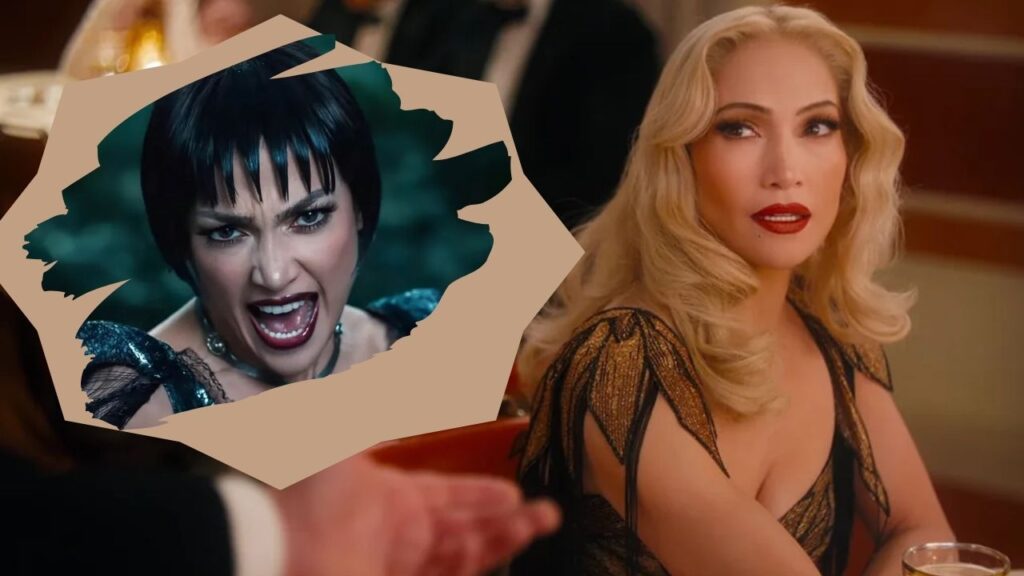
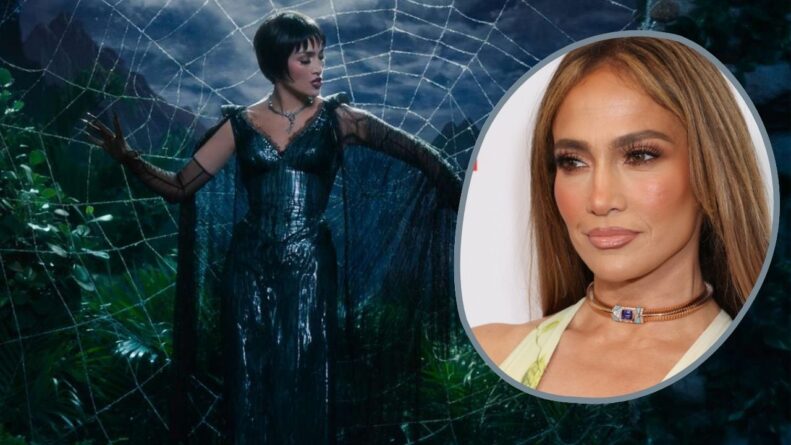
According to Rollingstone, Molina finds an escape from his bleak reality through colorful reenactments of his favourite movie scenes – especially those from the story told in Kiss of the Spider Woman, featuring Jennifer Lopez as the glamorous actress Ingrid Luna. Within these invented scenarios, Lopez is both the blindingly bright film actor and the legendary Spider Woman — a creature whose kiss delivers death, but can also liberation. Molina’s dreams empower him to see through illusions; illusions that allow him to find humanity in both men.
A Musical That Feels Like a Dream
Bill Condon (best known for Dreamgirls) makes the heartrending story of this year’s Oscar-nominated best picture into a dazzling visual and musical feast. The numbers of Lopez, in particular, sparkle with the spirit of the golden age of MGM - with sweeping camera moves and glittering costumes. Every dance, from the sultry cabaret routines to the chilling final duet, conveys desire and freedom.
Critics have noted how these musical interludes stand in stark contrast to the grim reality of the jail. The cuts are clean — we hear the clanging of prison gates; then we’re whisked into a world of color, sequins and song. It’s old hat in terms of story structure, yes, but intentionally so. The musical style is not simply an aesthetic choice, it is an analogy for survival. In a society where repression mutes uniqueness, art is both a weapon and a sanctuary.
Performances That Illuminate
Jennifer Lopez’s turn as Ingrid Luna/Spider Woman is easily the most thrilling thing she’s done in years. Dressed in sequined gowns, blonde waves and bold red lipstick, she is the image of a woman whose beauty conceals a tragic life. Her show isn’t only a look to behold — it’s emotionally infused, making us feel the pain behind the glitz. Critics have described her musical sequences as “transcendent,” highlighting her growth not only as a performer, but as a storyteller.
Diego Luna adds a softer depth to Valentín, portraying a man caught between idealism and fragility. Meanwhile, in a breakout performance, Tonatiuh is brilliant as Molina — warm, comical, and devastatingly courageous. Their chemistry anchors the film, turning it from a tale about two inmates to a ballad for acceptance, bravery, and love.
The film confidently tackles issues of identity, gender and desire and yet remains emotionally truthful. This theme set an absolute new era in cinema history which shows Kiss of the Spider Woman escapism not as denial but escapism as resistance to reality.
It offers a challenge to the spectators, asking how much reality is within fantasy. For Molina, narrating is a means of survival in a system that would rather not see him. For Valentín, fantasy is a newly discovered language of empathy. As a result, they learn from each other that to imagine is to be alive — even in a cell.
Why the Buzz Feels Earned
This film created excitement well in advance of its release, and with good reason. Its Sundance premiere resulted in standing ovations, and each and every screening since has left audiences buzzing. Some of the excitement comes from Lopez’s much-anticipated comeback to musical film, but beyond star wattage is the film’s emotional scope.
John Kander and Fred Ebb’s score is full of sweeping dramatic crescendos and heartfelt melodies that express the desires of the characters. The blend of Tobias Schliessler’s rich cinematography to Condon’s empathetic direction gives Kiss of the Spider Woman new turn that makes it more than just a movie.
Conclusion
Ultimately, Jennifer Lopez’s new movie Kiss of the Spider Woman just created a hype among the fans and received critics praise for its achievement of delivering an iconic and unique storyline to audiences. It just proved beauty and suffering go side-by-side. Jennifer Lopez shines as the spirit and specter. Diego Luna and Tonatiuh bring heart and truth, and the three of them forge something hauntingly unforgettable.
Alpana
Articles Published :
156
Alpana is Fandomfans Senior Editor across all genres of entertainment. She evolved in the media industry since a very long time, she manages the content strategy and editing of all the blogs. Her focus on story development, review analysis, and research is well-equipped that ensures every article meets the standards of accuracy and depth.
Star Wars Character Kylo Ren’s Iconic Line That Changed the Skywalker Legacy Forever
Kylo Ren's memorable The Last Jedi line changed Star Wars, upending the Skywalker legacy and how fans would engage with the franchise moving forward. Read more!
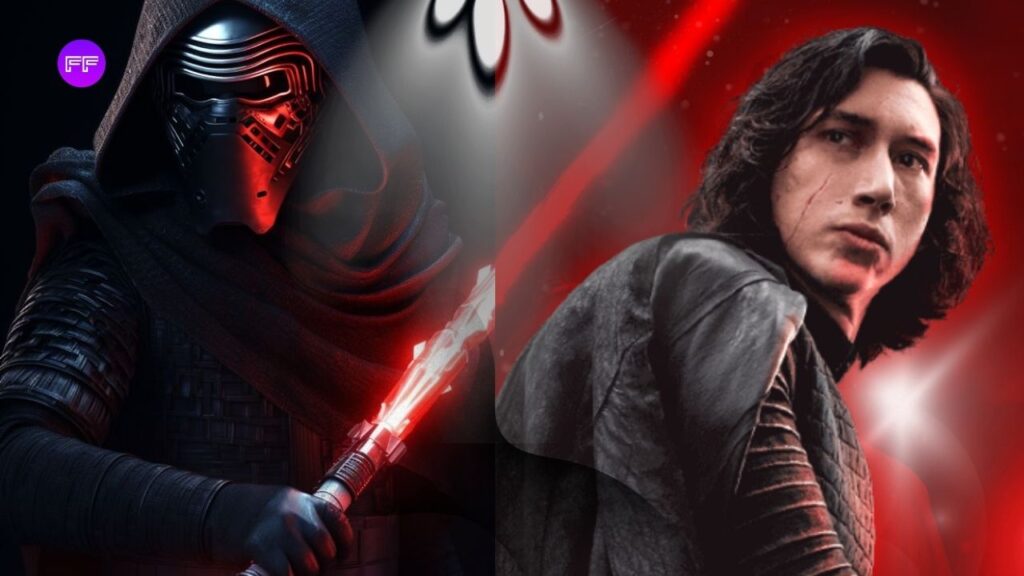
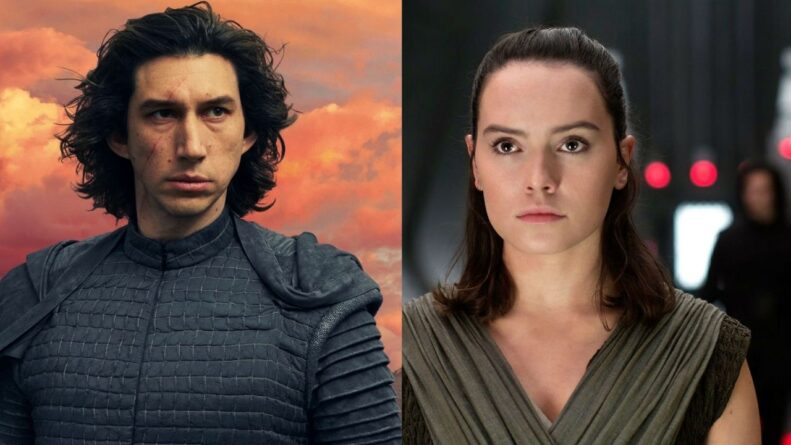
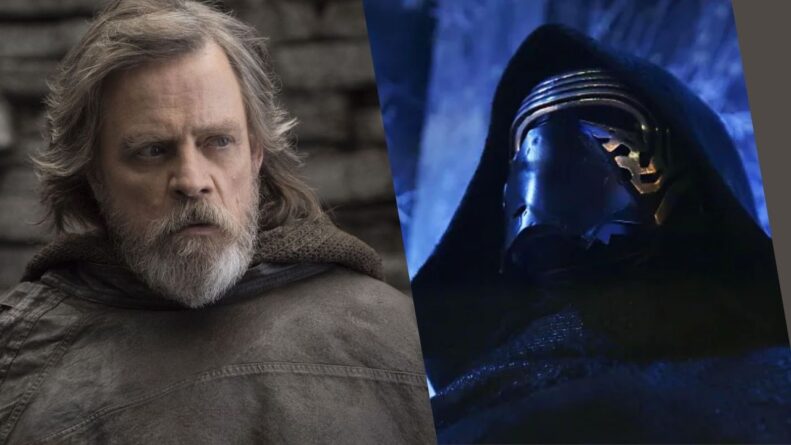
Kylo Ren uttered a line in 2017 that still makes the fan community go berserk: “Let the past die. Hide it under a rock, if that’s what you need to do. That’s the only way to become what you are meant to be.” We thought he was just a broody dark-sider having a mid-thirties crisis. Looking back on how the Star Wars sequels flailed their way to solid footing, it turns out Ben Solo wasn’t just a villain — he was a saving grace for the franchise.
For nearly half a century, the Star Wars “Skywalker Saga” has been the gravity well of Star Wars. But if it’s going to survive for another half-century, the franchise will need to get away from this Earth. We’re finally coming into an age where movies and games aren’t just ‘side stories’ to Luke’s lineage — they’re a statement of independence.
When Star Wars Skywalker Legacy Becomes Limitation
The sequel trilogy needed to push the continuity forward; yet it found itself anchored all too firmly to the Original Trilogy (OT). This isn’t to say legacy characters are bad; instead, narratives can’t lean on them as a primary structural crutch.
Image Credit: Fandomfans
Reaction to Luke Skywalker showing up in the Mandalorian wasn’t universally positive, among fans. A lot of people embraced it, while others dismissed it as “nostalgia bait” — a digital mask to hide an absence of narrative risk. Box office sales wise, playing it safe by making movies about known IP is a guaranteed winner for studios: 100% of the 10 highest grossing Star Wars films have a Skywalker, or a tie to the 1977-1983 era. But the critical exhaustion is tangible. For Star Wars to expand, it has to show it can be without a Skywalker on the credits.
Star Wars’ Big-Screen Escape from the Skywalker Era
The new film slate marks the most significant departure in franchise history. While The Mandalorian & Grogu will certainly placate the “Filoni-verse” fans with some familiar faces, the real meat is in the unknown:
Image Credit: Fandomfans
A Galaxy Without Legends
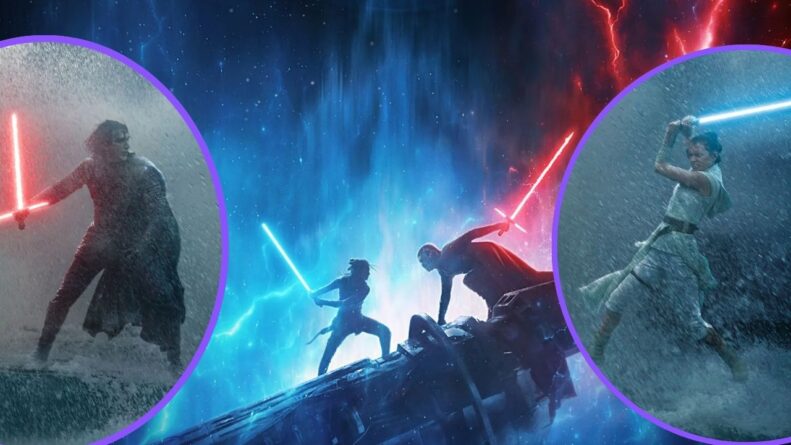
It’s been five years since the chapter (Rise of Skywalker) ends, and now here we are. Rumors are that there is no legacy character. If it gets that lived-in feel just right — without a single lightsaber ignite or a “hello there” — it could very well shift what the industry thinks Star Wars is.
Before Jedi, Before Sith: The Birth of the Force
Mangold is skipping ahead 25,000 years, so by doing so he’s not only stepping around legacy characters, he’s stepping around the entire notion of the Force as we understand it. No Sith, no Jedi Council—just the raw excavation of the galaxy’s mystic energy. This is the “Godfather of the Force” story we’ve been waiting for.
Rebuilding Without Repeating
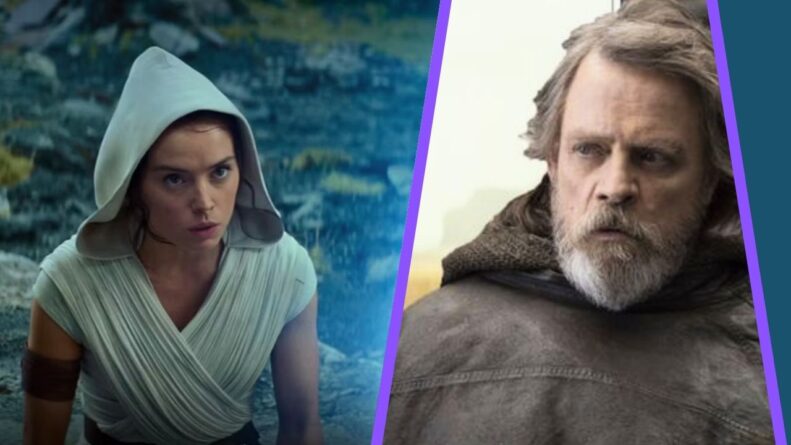
This is the precarious balancing act. Rey may have assumed the Skywalker name, but in order for the franchise to grow, she needs to construct something that isn’t just a mirror image of the failed Academy of the past. If she’s for the entire film talking to Luke’s Force Ghost, we haven’t gotten anywhere, we’ve just switched out the window dressing.
Image Credit: Fandomfans
The Soul of Star Wars Without the Surnames
Waititi has said he wants to “broaden out” the world. If his film evokes the cheerful, “used-future” style of the OT without relying on a single legacy cameo, it will demonstrate that the feeling of Star Wars is more powerful than the names in Star Wars.
Beyond Films: How Games Are Redefining the Star Wars Universe
The films have been wary, but Star Wars games have long been the point of experimental narrative storytelling. The future roadmap indicates a full separation from the “Vader-era” crutch:
Project
Era
Legacy Risk
Star Wars: Zero Company
Late Clone Wars
Moderate. Anakin and Rex are still active here.
Star Wars: Galactic Racer
Post-OT
Low. Focused on the underworld and speed.
Star Wars: Eclipse
High Republic
Low. Set 200 years before The Phantom Menace.
Fate of the Old Republic
Old Republic
Zero. More than a millennium before the films.
When the Force Becomes a Cage
Star Wars Jedi Fallen is the offender right now for taking “Vader-as-a-boogeyman.” For the third game to really connect, Cal Kestis needs to stop being a footnote in the Rebellion’s shadow. He needs a destiny that doesn’t finish with him being “too busy” to give Luke a hand in Episode IV.
How Real Storytelling Saves a Galaxy: The “Andor” Blueprint
If there is one thing the new age should learn, it is the Andor Lesson. Andor showed you can have legacy characters (Mon Mothma, Saw Gerrera, K-2SO) without them feeling like cameos. They didn’t exist because the marketing department wanted a trailer clip, they existed because the plot needed them there.
Star Wars, to its credit, has sometimes been skewered for having precisely no diversity of viewpoint, concerned consistently with a fantasy 1% of the galaxy (the Jedi and the High Command).
Image Credit: Fandomfans
In fact the Star Wars audience is diverse: roughly 40% of the active fanbase is female, and international audiences now represent more than half of the box office. Stepping away from the Skywalkers, the saga can tell stories that speak more to this broad, modern audience: tales about smugglers and soldiers and civilians who just happen to not have magic coursing through their veins.
Kylo Ren was right, but with a caveat: we don’t owe the past “killing,” we just have to stop residing in its basement. As it jets to the High Republic, the distant future, and the distant past, Lucasfilm is at last giving the galaxy some room to breathe. Star Wars’ Future Begins Where the Skywalkers (Masterpiece) End.
Dive into the world of entertainment with FandomFans to get every update from your favorite franchise.
Alpana
Articles Published :
156
Alpana is Fandomfans Senior Editor across all genres of entertainment. She evolved in the media industry since a very long time, she manages the content strategy and editing of all the blogs. Her focus on story development, review analysis, and research is well-equipped that ensures every article meets the standards of accuracy and depth.