‘The Mandalorian and Grogu characters’: Mandoverse Steps Into Cinema Differently with Mercenary Guard Droid

The Mandalorian and Grogu characters introduces the Mandoverse to the big screen with the Mercenary Guard Droid, Rotta the Hutt & stakes that shift the galaxy.

Published: February 18, 2026, 7:55 am

The Mercenary Guard Droid is foreshadowed as a primary catalyst and menace in the next Star Wars film recently revealed in merchandise at Toy Fair 2026. The May 22, 2026 theatrical debut of ‘The Mandalorian and Grogu characters’ is not just another ‘Star Wars’ release date – it’s a turning point. Yet it will shortly be the first time since The ‘Rise of Skywalker’ wrapped the Skywalker Saga in 2019 that Lucasfilm has brought Star Wars back to the big screen. The pressure on this movie is immense.

The Mandalorian and Grogu characters is not just a movie but a test. A test to see if a streaming-churned universe, neatly constructed on Disney+, can be extended to the wider cinematic space. “Mandoverse” has thrived in episodic form, but said the big screen requires more: scale, spectacle and emotional weight. And all the signs out of this project indicate that the move to theaters is being considered a strategic progression, not just a format change. 

Cinema, Not Streaming: A Different Kind of Storytelling

Jon Favreau, the director, has been clear that transitioning from series television to film is more than just a matter of larger screens. It applies to the size of the language, visual and narrative.
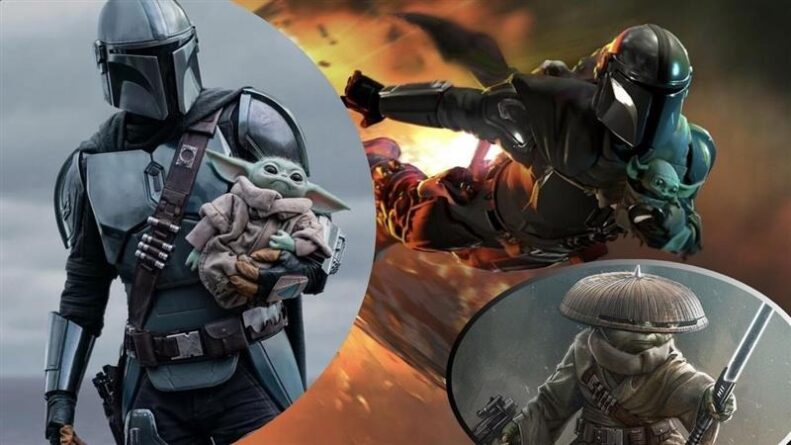
A Different Kind of Storytelling

The tightly controlled environments of StageCraft (“the Volume”) that have come to define the series are now being replaced with IMAX-scale compositions, vast landscapes, and cinematic movement. This is Star Wars turning back into spectacle.

Star Wars Strategic Storytelling Transformation

The marketing distilled that dichotomy perfectly. The playful Super Bowl spot stole the show, but a more serious teaser featuring X-Wings, an R2 unit and the gritty Razor Crest refocused expectations. It was a very nuanced but clear signal: The Mandalorian and Grogu characters is not a parody of Star Wars. That’s the western-in-space motif, tuned up for the movies. 

The Rise of a New Kind of Enemy

One of the more intriguing revelations didn’t come from trailers, it came from toys. Toy Fair 2026 brought us a “Mercenary Guard Droid” character. And while most background droids are generic, this one was differentiated by special packaging, multiple versions and exclusive collectibles. In Star Wars-speak merchandising, that means “important.

Why is the Mercenary Guard Droid so Important?

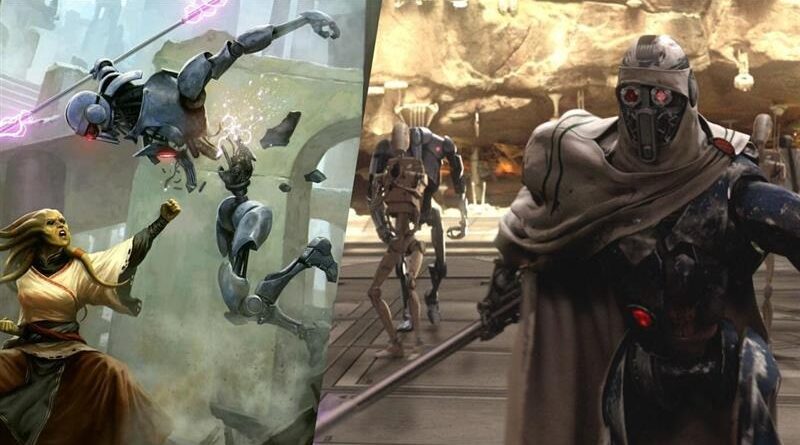
 Mercenary Guard Droid is not a robot with a mind of its own. It’s a survivor. Developed using Clone Wars-era technology, its form is reminiscent of B1 and BX-Commando Droid models were droids crafted en masse for warfare. But take the word mercenary and put it front and center. This droid isn’t following orders. It’s deciding. 

And this is hugely devastating – psychologically for Din Djarin.

The “Perfect Rival” Theory

Din is a child of the Clone Wars. He was scarred by trauma starting when battle droids bombed his home and slaughtered his family. For years he despised droids—not as tools, but as monsters. The things he experienced later softened that hatred, but the scar remains. And now he’s up against a sentient droid antagonist who bears the physical legacy of the very machines that made him an orphan. This droid isn’t just some physical link to his past, but its malevolent consciousness and warmaking decisions make the emotional stakes even higher. 

  • Din is a man in armor.
  • The droid is a machine about life.
  • A human encased in metal and an emulated human in metal. 

So even the combat design borrows from that. The droid’s combination with a STAP (Single Trooper Aerial Platform) establishes vertical fighting parity with Din’s jetpack—making the skies a battleground. This isn’t merely narrative conflict. It’s Binford Choreography, a big screen spectacle. 

Embo: The Professional Threat

Along with the psychological antagonist lurked another kind of threat: Embo.

The Kyuzo bounty hunter, familiar in animated canon, is the definition of professional. No armor. No Mandalorian tech. It’s precision, discipline, and lethal skill. His iconic hat, his bowcaster, and his stature make him a walking antithesis to Din Djarin’s encased presence.

The presence of Dave Filoni, Embo’s original voice makes his live action debut all the more real. Filoni has been known to bring animated characters into live canon and Embo is just that. 

Embo and the droid represent opposing energies, their each unique facet of discord. Embo is the embodiment of calculated precision and lethal professionalism, and the droid is burdened with psychological depth and the ghost of what has passed. 

Their upcoming battles with Din represent an age-old battle: brawn versus brains, crude technology versus refined technique. This play of light and shadow right here evokes the spirit of the samurai film, which is at the core of Star Wars’ storytelling DNA. 

Rotta the Hutt: The Story Catalyst

Rotta the Hutt has gone through an amazing evolution from the weak infant dubbed “Stinky” to a sinister gladiator. Scarred from his battles and now armed and physically menacing, this Rotta played by Jeremy Allen White represents not only personal growth but a shift in who holds the power.

As Jabba’s heir, Rotta’s very existence is a major political threat. In a galaxy filled with chaos and uncertainty, he represents the promise of uniting the scattered Hutt Cartel. This accumulation of power is alarming, but also brings about enemies who want to stand in his rise. 

Each Character Related to Rotta

The Mandalorian and Grogu characters structure serves to emphasize the function of each character, all of whom revolve around Rotta, in which the plot revolves around a single mission. Din Djarin assumes the mantle of protector, shielding Rotta from danger. Rotta itself is the linchpin, the center-piece of the mission stakes. Embo becomes the merciless predator, hunting Rotta to the ends of the earth. 

The droid, on the other hand, the personal nightmare becomes an element of fear and nerve-racking suspense. All of this is focused on one try: the attempt to control, protect, or eliminate Rotta, driving the story forward with purpose and intensity.

Order vs Chaos: The New Republic and the Remnant

Among the underworld intrigue is the New Republic, headed by Colonel Ward (Sigourney Weaver), and its bureaucracy that must confront reality. Her part mirrors a classic conflict: bureaucracy against reality. The New Republic craves stability but does not have the stomach for it — so it employs the likes of Din Djarin to carry out what it cannot put on any official paperwork.

Below them is the Imperial Remnant — warlords, walkers, and regimented militarized entities for the unfinished business of the Empire. AT-ATs, snow troopers, and mechanized units tell you this isn’t just bounty hunting anymore but it’s war-scale fighting. 

The Emotional Core of the Film

The Mandalorian and Grogu characters is at the heart of the narrative and embodies hope, purity, and the promise of a brighter future. His very existence, however, is a direct antithesis in opposition to Din Djarin’s past filled with trauma and hardship. The emotional core they share allows the story to transcend the action and explore deeper themes of maturation, connection and fear of loss. 

Pedro Pascal anchors this emotional journey as Din Djarin — Din’s evolution from a solitary fighter to a wryly devoted but still reluctant father is a sweeping tale of redemption, where the odds they face not only forge them together, but transform their very fate. 

Read More 👉  Outlander Star Rosie Day Directing One Hundred and Fifty-Two Days with The Night Manager star Alistair Petrie

Mandoverse Stepping Into Mythic Scale Storytelling

The Mandalorian and Grogu characters is a pivotal chapter that takes its story to a place far beyond a simple episodic journey. It accepts a deep change, and provides a cinematic view that combines symbolism and politics with mythic storytelling and stakes that are highly personal.

Legacy at Its Stake

Now, instead of just enemies, the antagonists are themes unto themselves. The stakes are not just survival, but also legacy and power. It’s all grandiose action, but the emotional core is petite and potent.

The Mandalorian and Grogu characters story is both introspective and far-reaching. The Mandalorian and Grogu characters is more than a foundling, and Din Djarin is more than a lone bounty hunter. They carried fate and memory and history together. Their enemies are now echoes of trauma and survival, not shadows to be scrubbed clean. 

Star Wars Narrative Transformation

The Mandalorian and Grogu characters isn’t simply a matter of surviving hardships — it’s about seeing what there is to see after survival. It’s about the decisions, the consequences, the transformations that craft what it means to safeguard, guide, and mend. The Mandoverse boldly carves out a territory where screen size matches not just visual scale but narrative ambition.

Conclusion

‘The Mandalorian and Grogu characters’ is more than the Mandoverse making its theatrical debut, it’s Mandoverse birthed into true cinematic myth. Symbolic antagonists, greater emotional stakes, and a plot rooted in legacy rather than spectacle for the sake of spectacle transform the film’s Star Wars from episodic adventure to mythic storytelling.

Din Djarin and Grogu are at the center, but they’re not just survivors, they’re protectors of a future defined by memory, responsibility, and purpose.

No, this time it’s not just Star Wars coming back to the big screen, it is Star Wars ushering in a new age. 

Fandomfans deliver updates and theories from movies and series, and catch up to get interesting stories.

Mariyam

Articles Published : 53

Mariyam Khan is Fandomfans Content Writer and providing reports and reviews on Movie Celebrities, and Superheroes particularly Marvel & DC. She is covering across multiple genres from more than 4+ years, experience in delivering the timely updates.

Leave a Comment

Your email address will not be published.

The Gosling Effect in Star Wars Starfighter – A New Era for Space Opera

Gosling joins Star Wars Starfighter Obey your thirst. Discover how the Gosling-Levy pairing might reshape the genre of space opera when it arrives in 2027. 

Written by: Alpana
Published: March 6, 2026, 10:45 am
Star Wars Starfighter

There is a strange buzz that fills the air when Ryan Gosling appears on set. It’s not the orchestrated buzz of a marketing strategy, it’s the quiet assurance of a performer who knows that film is as much about what you don’t say as what you do. When Gosling was officially announced to be joining Star Wars Starfighter with Shawn Levy at Star Wars Celebration Tokyo in April 2025, the news was more than a simple casting win for Lucasfilm. It was something far more fragile: a possible course correction for a franchise that’s been failing for focus for the better part of a decade.  

The Rise of Skywalker ended the Skywalker Saga, and since then, Star Wars has felt less like one shared universe and the galaxy has become multiple tossed captains in the ship. But “The Mandalorian and Grogu” restored faith and The Book Boba Fett got things all mixed up, Andor demonstrated maturity and seriousness in Star Wars storytelling, and The Acolyte explained how far off that can fly. 

Through it all, one question looms over Kathleen Kennedy’s leadership: what the hell is Star Wars Starfighter in 2027?

Now, enter the Gosling–Levy pair — not so much a studio double feature as two filmmakers connected by the same childhood dreams and creative vision, returning with something that actually feels personal once again. 

Family Dynamics Might Save Star Wars

Here we’re getting into speculation, Star Wars Starfighter focuses on Gosling as not a smuggler, not a Jedi, but a very real trader in an uncle outraged into protecting his Force-sensitive nephew from dark side hunters in a galaxy still recovering from Palpatine’s final death, in which Amy Adams is said to be the boy’s mother, and possibly a Jedi herself who gives her brother (Gosling) the son’s protection as she goes to meet the galactic threats elsewhere. 

Starfighter 2027 movie

If this is the case and screenwriter Jonathan Tropper has been as characteristically tight-lipped as always then this setup is genius in its simplicity. For four decades, Star Wars has weighed fathers and sons, masters and apprentices, the burden of blood and destiny. An uncle-nephew relationship allows for a genuinely horizontal dynamic: chosen responsibility as opposed to inherited burden. Gosling wouldn’t be wrestling with the sins of his father—he’d be leaping into danger for love of his sister and her child.

This turns the whole hero’s journey on its head. Luke Skywalker became a legend because of who his father was. Gosling’s character, let’s call him Kael for the sake of our theory, would be a hero for who he chooses to be. That has a very modern ring to it, in a time when a found family often trumps blood ties. 

The “Bokken Jedi” Connection: Why Gosling’s Character Breaks the Mold

There’s another theory made that mentioned by CBR that’s worthy of your attention, one which links Star Wars Starfighter to the wider weave of today’s Star Wars narrative. 

Baylan Skoll references the Bokken Jedi in Ahsoka, Force users who trained outside of the Now I’m watching Ahsoka. They are survivors, self-made warriors who cobbled together knowledge from legends, ancient holocrons, and fragments of lore rather than being expert practitioners. Crude, authentic, and defined by loss rather than tradition. 

But what if Baylan is one of them? A former student of Luke Skywalker’s temple who escaped Ben Solo’s massacre — someone who saw friends die, chose survival over heroism, and vanished rather than standing and fighting. That kind of background would explain everything about who he is now. Five years post-Exegol, the galaxy doesn’t need another chosen one. It needs a broken man who relearns how “to be whole” by protecting someone else.

That would explain the “Star Wars Starfighter” titles even better than a simple aesthetic reason. He is flying a starfighter, literally, because he is on the run. Now action sequences become character beats — every evasive dive through an asteroid field isn’t just spectacle, it’s a man dodging his past until he can no longer. The ship becomes a metaphor: run-down, cobbled together, but still capable of amazing things when properly captained. 

The Shawn Levy Contribution also Effects Star Wars Starfighter

Shawn Levy, the director of the new Star Wars movie is really important to this equation. Levy is not a visionary auteur in the conventional sense. He’s not Denis Villeneuve drawing with shadows and silence, or Christopher Nolan stretching time like taffy.

Levy’s talent is subtler, and perhaps more challenging: He makes tentpole movies feel intimate. Free Guy shouldn’t have worked as a comedy about an NPC gaining self-awareness in a video game that sounds like algorithmic nightmare fuel. And yet Levy injected it with such happy earnestness that even Ryan Reynolds’ blue-shirted everyman seemed worth rooting for. 

Ryan Gosling Star Wars

Then there was Deadpool & Wolverine, and that could’ve been a cynical IP soup concoction.  But Levy approached Wolverine’s mourning with sincere respect all the while delivering the R-rated mayhem fans desired. He understands that the most successful blockbusters function on two or three different frequencies simultaneously: the visual, emotional and, in the case of the sense of irreverent humor. 

For Star Wars Starfighter, this approach is just right - it’s fun without feeling like a drag and you get a sense of accomplishment for each stage you complete. The sequel series always felt embarrassed to be Star Wars, constantly trying to upend expectations until there were none left to upend.

Levy is not a subversion, he is an embrace. He’ll give us the trench run homage, the cantina scene, the binary sunset moment – he’ll give us all of those things, but he’ll earn them through character work rather than nostalgia triggers. 

The Five Years Timeline Tightrope

Star Wars Starfighter movie appearance five years after The Rise of Skywalker is something that builds hope to open up interesting story possibilities while closing others. 

This is a galaxy being rebuilt. The New Republic that was decapitated by the destruction of Hosnian Prime that the First Order killed is either in the process of rebuilding or has fractured into various regional powers. The First Order’s remnants haven’t simply vanished but they’ve likely sprouted as warlords, marauders, or desperate holdouts.

And the Jedi? Rey is probably off training her first students somewhere, but the Force-sensitive populace hasn’t suddenly exploded in size. If anything, parents are likely keeping their children’s talents under wraps, taking heed of how the last regime treated “Force-wielding terrorists. 

Star Wars Skywalker

As IGN mentioned, This adds poignancy to Gosling’s role as the overprotective uncle. He’s not just running from dark side hunters, he’s trying to navigate a hideous bureaucratic system in which signing up a Force-sensitive kid for school could very well be handing him or her over to a government that wants to stop another Palpatine. The film might delve into the paranoia of the post-war generation, the way its trauma reverberated through organizations even after it won.

There’s also the prospect of legacy characters turning up that don’t overwhelm the story. Daisy Ridley’s Rey makes a cameo not as a savior, but as a distant hope, a legend that Kael doesn’t believe in until she sees for herself. The Starfighter vs. the sequel trilogy, however, would be scale: Rey is not the main character in this one, She’s not in this world, She’s is in another dimension, a parallel story. 

Why This Matters for Gosling’s Legacy

What interesting is about the path Ryan Gosling’s career has taken. He’s also one of the few actors to flex his star power between indie bona fides (The Nice Guys, Blade Runner 2049, First Man) and blockbuster draw (Barbie, La La Land) without ever really feeling like he’s slumming in either realm. He has never led a franchise this large, this culturally laden.

There’s danger here. Star Wars has chewed up bright futures before, just look at the Solo cast, or the skilled actors buried beneath sequel trilogy exposition. But there’s also an unprecedented opportunity. If Starfighter works, Gosling doesn’t just get one big movie, he gets ownership of a new corner of the galaxy. 

Gosling is the right age for this at 46 as he can convey gravitas, yet be around for multiple films, and is savvy enough to know when to fight for creative input.

But more than that, he adds an element of the audience that doesn’t usually think about Star Wars. The Barbie crowd, the Drive lovers, the Oscar-season crowd who tip it to his nominations, they will come to this galaxy, enlarging the base beyond the faithful who gauge midi-chlorian counts on Reddit. 

“No Legacy Characters” Is Actually Revolutionary

In January 2026, screenwriter Jonathan Tropper made a comment that should have attracted more attention: 

“Star Wars Starfighter is truly standalone, there are no secret cameos from legacy characters. Interview In a day and age where all blockbusters are secretly backdoor pilots for ten other projects, this is radical.”

No Legacy Characters

What that means is the film has to be able to stand on its own. You don’t just play John Williams’ Force Theme to make you cry, you have to earn it through new themes. It can’t just take the outline of Darth Vader to create menace — it must introduce new villains (Matt Smith and Mia Goth, according to casting rumours) that feel as iconic. This is Lucasfilm betting on storytelling over brand recognition, and that confidence is contagious. 

It’s not trying to sound legendary — it’s practical, almost humble. A name that can function as a job, a vehicle, and just a way to get around, instead of a symbol burdened with the weight of mythology. It implies a movie about people at work—hazardous, urgent work rather than destiny congealing in the veins. 

Conclusion

If Star Wars Starfighter is successful as early executive reactions indicate that it could rewrite the Star Wars rule book entirely. No more trilogies in the works before the first film debut. No more mystery boxes that go nowhere. Just filmmakers with passion projects, actors with real chemistry, and stories that just happen to take place in space. 

For Ryan Gosling, success means showing that he can bear the impossible load of fan expectations and still come out on the other side as a fully realised artist. For Shawn Levy, it’s proof that his particular brand of warm-hearted blockbuster filmmaking can survive in the most closely parsed sandbox in cinema. What they really want is for the original 1977 Star Wars to feel real again — not because of twists or surprises or retcons, but because that film had heart. And it made people feel, and that’s what we haven’t had.

Speculation, set visits and Star Wars Starfighter trailer dissections over the past 18 months have been propelled by that one hope that Star Wars will discover its soul again. Release was then scheduled for May 28, 2027, for the new film. But in years now, that excitement really does feel deserved rather than manufactured. Because somewhere in a London editing suite, Ryan Gosling is learning to fly, and the galaxy is at last becoming large enough for new stories once again. 


Dive into the world of cinema with Fandomfans to get deeper updates from upcoming movies, series and celebrities.

Alpana

Articles Published : 94

Alpana is Fandomfans Senior Editor across all genres of entertainment. She evolved in the media industry since a very long time, she manages the content strategy and editing of all the blogs. Her focus on story development, review analysis, and research is well-equipped that ensures every article meets the standards of accuracy and depth.

Leave a Comment

Your email address will not be published.

Avatar: Fire and Ash Review: Becoming the Lowest Rating Film of The Franchise

Avatar: Fire and Ash review explores James Cameron’s bold visuals, divisive story, critical backlash, and why it’s the lowest-rated film in the franchise.

Written by: Mariyam
Published: December 17, 2025, 8:32 am
Avatar Fire and Ash Review

The release of Avatar: Fire and Ash is an intriguing if somewhat chaotic, chapter in the career of James Cameron. Opening in theaters onDecember 19, 2025, the film is in an odd place: it’s both the most visually audacious entry in the series and the most critically divisive.

Although the technological crowd-pleasing remains unmatched, the “Pandora fatigue” some warned about seems to be setting in. The franchise is, for the first time, confronting the prospect of diminishing returns – not necessarily at the box office, but with the critics, who are starting to wonder, “Is spectacle enough?” 

A High-Stakes Strategy

James Cameron isn’t merely making a movie, he’s defending an empire. With a mind-boggling $400 million budget, the film has to do more than just “well” — it has to dominate.

Premium Format Dominance: The film is designed for IMAX 3D and Dolby Cinema. In a streaming world, Cameron is betting everything on the ‘theatrical event,’ recouping sky-high production costs with now-higher ticket prices.

A High-Stakes Strategy

The Marvel Synergy: The cynical-looking (but actually rather smart) marketing move that Disney is rotating four different trailers for Avengers: Doomsday exclusively with Fire and Ash screenings. It’s a transparent play to encourage repeat viewings by exploiting the MCU’s “completionist” fanbase. 

The Visuals: From Lush Jungles to Brutalist Ash

If the first Avatar was a dream and the second was a dive, Fire and Ash is a scorched-earth reality check. With the introduction of the Mangkwan (Ash People) the look shifts from bioluminescent wonder to something much more “brutalist.”

The Visuals From Lush Jungles to Brutalist Ash
Image Credit: Fandomfans

The Ash Biome: The conjugated neons are gone. Rather, smoke-soaked oranges and greys are layered over rugged volcanic stone.

The Design: The Ash People are a spiritual defeat. Their buildings and “soot-stained” clothing imply a society that has distanced itself from the peaceful ways of Eywa and embraced the industrial and hostile. 

The Critical Schism: Immersion vs. Innovation

The reception to Fire and Ash has been polarizing. It is now Cameron’s lowest rated film on aggregators, trending at a 61 on Metacritic.

The Spectacle Faction: Reviewers from such publications as Empire are enamored with the movie, calling it a “sensory feast” and the most “nakedly emotional” film yet. They consider it a film of both grief and world-making.

The Critical Schism Immersion vs. Innovation
Image Credit: Fandomfans

The Redundancy Faction: But also savage critics like The Guardian are a different story. The main gripe? It’s too much of a rip off of The Way of Water. The “run off to a new tribe, pick up their customs, fight a final fight” pattern is beginning to look like a plot template, rather than a story. 

Narrative Risks and Character Hurdles

The storytelling framework of the film’s seems to try and reject then repeat the “noble savage” cone tropes, by having a Na’vi antagonist: Varang (Oona Chaplin), who leads his own group of hunters who persecute the people of Pandora. Her performance is universally praised as the film’s best — a “witchy,” feral ruler who negotiates a dark pact with Quaritch.

But the movie still has to grapple with “the Spider problem.” The persona of Miles Spider Socorro is still a source of contention. Many consider his arc to be underwritten and the romantic tension that develops between him and Kiri (Sigourney Weaver) has been noted as “creepy” as the latter is quite a few years older and is an alien in the show.  

Read More 👉 James Bond Movies: Legendary Fight Scenes of All Time

Conclusion

Avatar: The Fire and Ash is a huge paradox. It’s a movie about environmental conservation that uses up more computer power than the equivalent of thousands of cars. It’s a story that seems to be stuck in the past, told through technology from the future.

Whether this franchise “middle child” can carry the weight for Avatar 4 and 5 is yet to be seen. But this much is clear: If a James Cameron movie turns out to be “formulaic,” it’s still far more ambitious than 90 percent of what gets made. 

Fandomfans provide you with the latest updates on your favorite franchise and overall reviews conclusion.

Mariyam

Articles Published : 53

Mariyam Khan is Fandomfans Content Writer and providing reports and reviews on Movie Celebrities, and Superheroes particularly Marvel & DC. She is covering across multiple genres from more than 4+ years, experience in delivering the timely updates.

Leave a Comment

Your email address will not be published.