Latest Hollywood Movies to Binge Watch in 2026
Explore new latest Hollywood movies to binge watch in 2026, including big blockbusters, independent jewels, thrillers, sci-fi and dramas that could earn Oscars.
Published: February 5, 2026, 9:34 am
Explore new latest Hollywood movies to binge watch in 2026, including big blockbusters, independent jewels, thrillers, sci-fi and dramas that could earn Oscars.
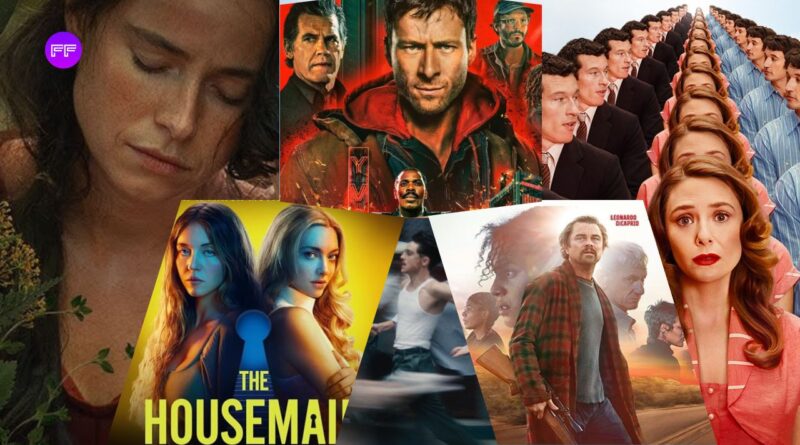
Hollywood Movies: As we head into early 2026 the streaming and cinema slates are full of bonkers big budget spectacle, grim returns to form and those “is this real” biopics that everyone is arguing about online. There are long-awaited follow ups that did live up to the hype, and also indie surprises that just came out of nowhere.
This is your expertly curated guide to all the greatest and Latest Hollywood Movies that are worth your binge-watching hours right now.
Exhausted (in the best way) and tearful. After a career thrilling chase as Ethan Hunt, Tom Cruise has at last crossed the finish line, and honestly, he went out with a bang. This is not merely an action movie, it’s a victory lap.
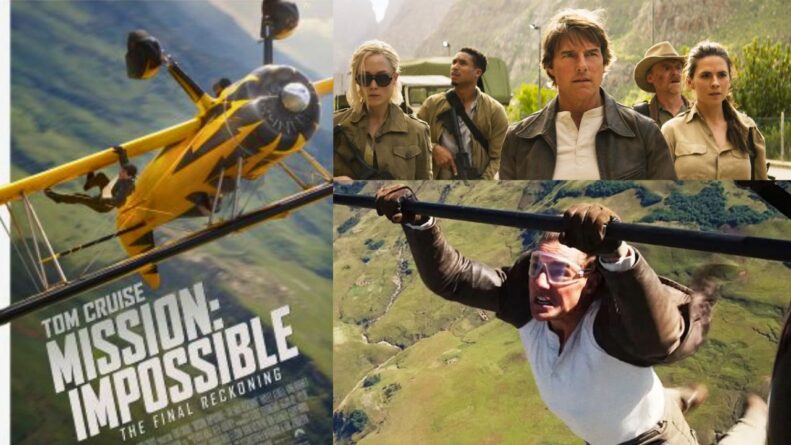
The stunts are predictably insane — hold your breath for five minutes-level tension but what really sticks with you is the emotional punch of seeing this team for the last time. It’s the perfect movie to kick off a weekend marathon.
Stunning to look at, evocative, and very much of its unique Ryan Coogler spirit. Returning after conquering the Marvel universe, Coogler comes back with an original blockbuster that’s been racking up critical awards.
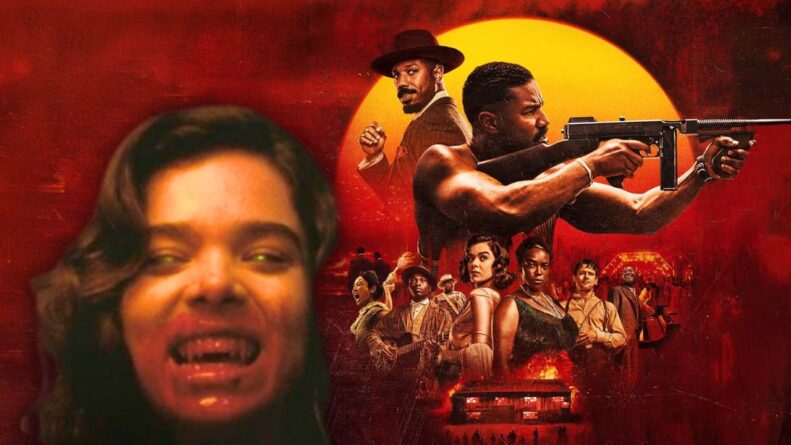
Featuring Michael B. Jordan (because of course), this genre-bending thriller plays like a classic while looking like the future. If you like your movies served with a heavy dollop of “What the hell did I just watch?” then this is best for you to watch.
Just raw, soy and existential dread adrenaline. Danny Boyle and Alex Garland are back to show that the “zombie” genre still has teeth.
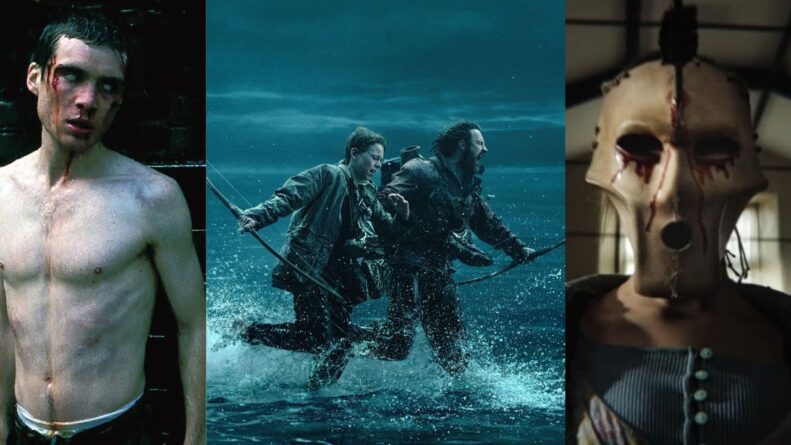
This isn’t simply a sequel; it’s a reworking of the world they created in 2002. Gritty, it moves at breakneck pace and it’s truly scary in a way that a lot of modern horror forgets to be.
Rian Johnson transports Benoit Blanc (Daniel Craig) to a cult for the third Knives Out movie. It’s less “wacky satire” and more “introspective whodunit,” delving into the tension between strict dogma and true faith.
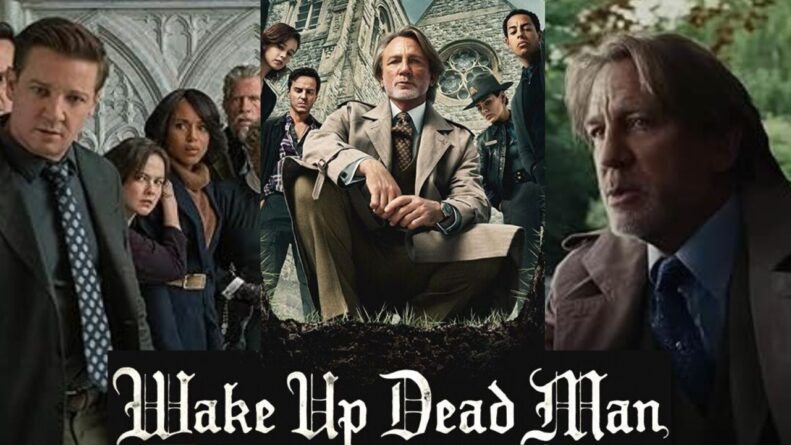
The dynamic between Blanc and Josh O’Connor’s “boxer-priest,” is the emotional pulse of the film.
The Safdie Brothers co-director’s first solo feature is a tense plunge into the realm of competitive ping-pong. Timothée Chalamet’s performance as Marty Reisman is being praised as the best of his career.
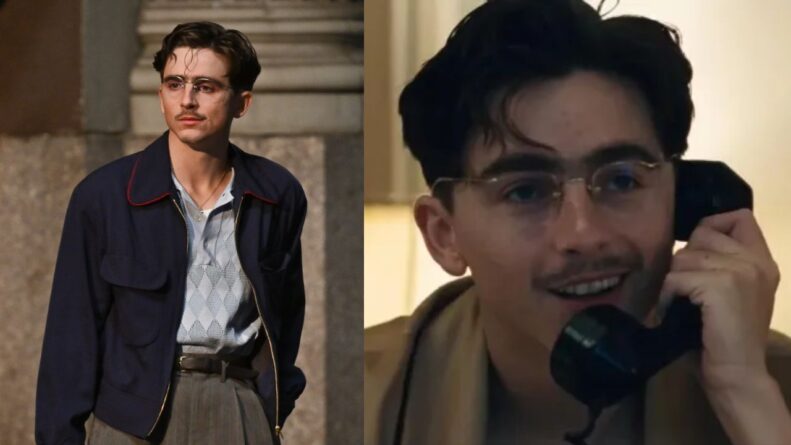
A24’s viral marketing (like turning the Vegas Sphere into a giant ping-pong ball) successfully converted a niche biopic into a “must-see” event.
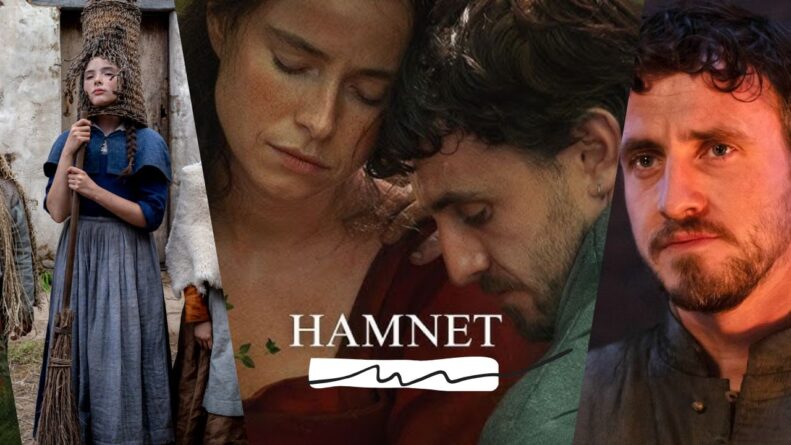
Chloé Zhao offers a searing reflection on mourning. While the pacing is considered slow by some, Buckley’s portrayal of Agnes Shakespeare is an “emotional hammer blow” and the actress seems to have a Best Actress award waiting for her.
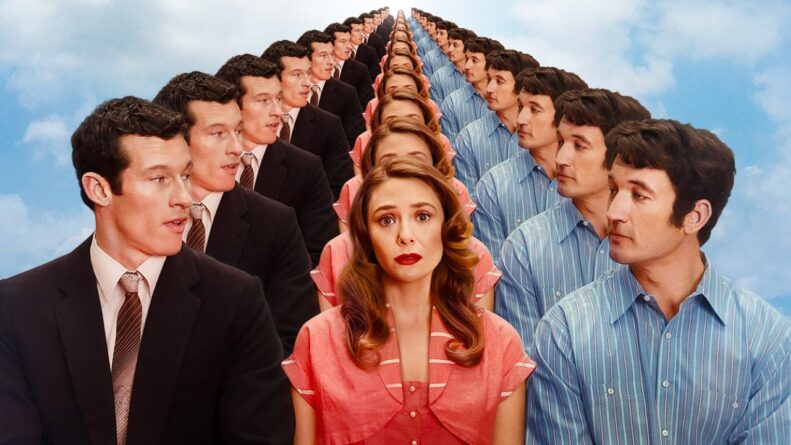
Just in time for the holiday, this movie poses the question: If you could pick one person to be with forever in the afterlife, who would that person be? It’s bureaucratic and romantic and “funny as hell.”
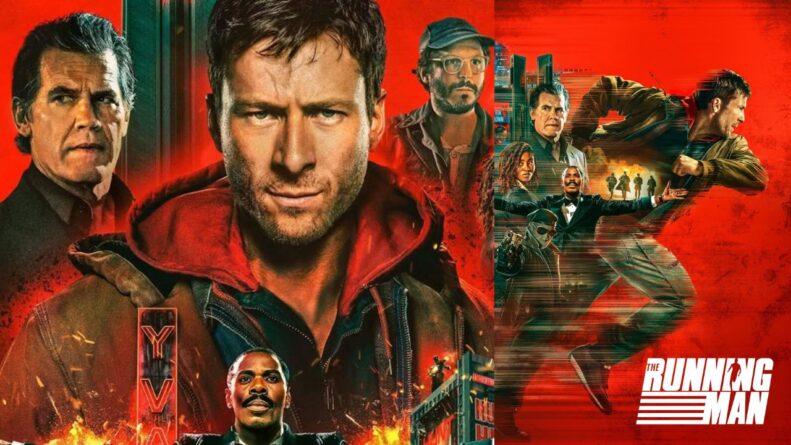
Edgar Wright has abandoned the Schwarzenegger side for Stephen King’s original bleak dystopia. Glen Powell, a charismatic leading man in his own right, stars in a world that doesn’t feel too far removed from our own surveillance-state reality.
“One Battle After Another” is a tough, suspenseful military simulation and strategy sub-genre that has found new life on the 2026 game and entertainment market.
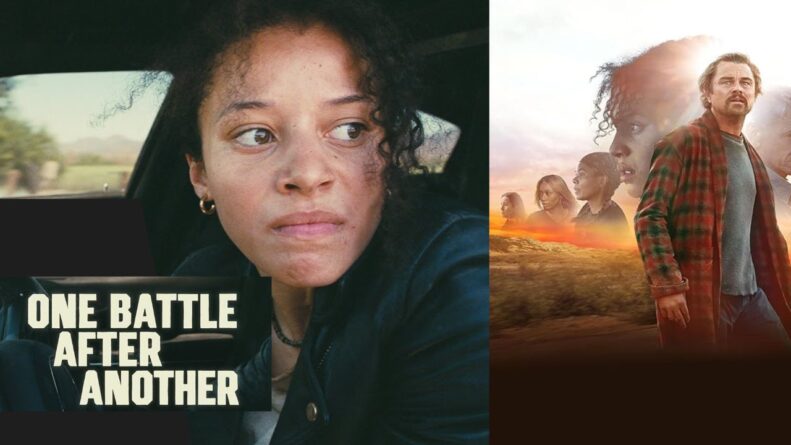
As a current trend, this is a war-themed design ideology, in which narrative is relayed through constant conflict instead of cutscenes.
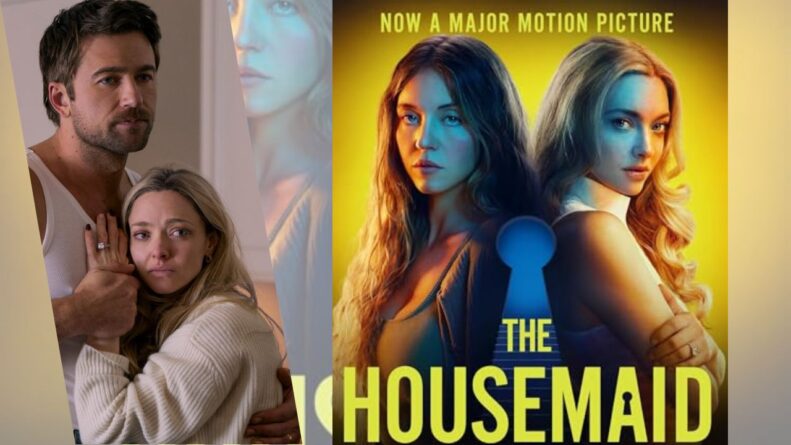
The Housemaid is the psychological fixation that has fully commandeered the digital charts. Coming off a theatrical release December 2025 and PVOD/Digital release on February 3, 2026, the “erotic thriller” based on Freida McFadden’s mega-bestseller has not only proven that the genre isn’t dead — it’s a box office powerhouse.
Read More:- Fallout Season 2 Ending Explained: How It Sets the Stage for Fallout Season 3
Early 2026 is shaping up to be one of those rare sweet spots where everything clicks. The blockbusters provide genuine spectacle and emotional payoffs, the auteurs are swinging for the fences with audacious ideas, and even niche concepts are finding huge audiences. From Ethan Hunt’s impeccably timed farewell to Ryan Coogler’s genre-bending reach, from existential horror to personal grief dramas and binge-worthy thrillers, this slate demonstrates that Hollywood Movies isn’t solely chasing algorithms — it’s still chasing stories that linger.
If you want jaw-dropping action, brainy mysteries, unsettling dystopian worlds, or quietly heartbreaking character studies, there’s something on this list for you (and for everyone arguing in your group chats). Delete your watchlist, cancel a few plans, and get comfortable — because 2026 is already shaping up to be a landmark year for Hollywood Movies.

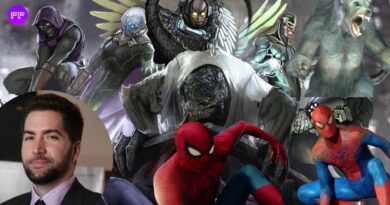
Find out why the 2014 Sony hack resulted in the cancellation of Drew Goddard's Sinister Six and ended the possibilities for future Spider-Man spinoff films.
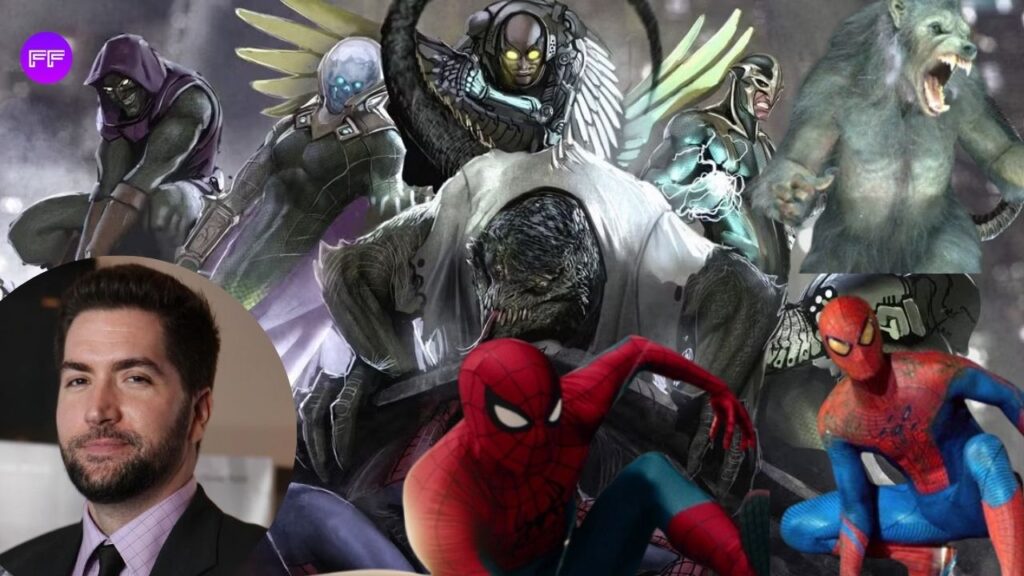
There is a strange kind of sadness in learning that films once existed which never did. Not the kind of ones that died in development hell after years upon years of false starts, or the ones that crashed under the weight of their own ambition but the ones that were this close to actually happening. The ones where the script was written, the director was hired, the studio was on board, and then something completely beyond the realm of filmmaking blew them out practically.
Drew Goddard’s Sinister Six movie has long been one of those ghost projects. And until very lately, the complete explanation as to why this soaring Spider-Man spin-off never took flight was enveloped in the type of mystery that inspires internet speculation. Bad test screenings? Creative differences? The complex Sony/Marvel rights dance?
The reality, as Goddard recently disclosed, was much more dramatic – and far more mundane in its corporate callousness. It was killed by a cyberattack. Specifically, the notorious Sony hack of 2014, a breach that reverberated throughout Hollywood and, as it turns out, right into Goddard’s office window.
To grasp what we lost, you need to know who Drew Goddard was in 2014. This wasn’t some studio hack getting handed a franchise because he knew how to meet deadlines. Drew Goddard became famous for his hard work and creative talent as a writer with real genre cred. He maintained his directing work successful with The Cabin in the Woods, and many others like Buffy the Vampire Slayer, Angel, Lost, and Alias.
He was a writer-director who knew mythology, played fan service and actual emotional stakes, and had a bit of a gift for telling stories about ensembles. In other words, he was the ideal man for Sinister Six — Spider-Man’s most infamous group of villains, a revolving door of baddies who have been teaming up to take down the web-slinger since 1964.
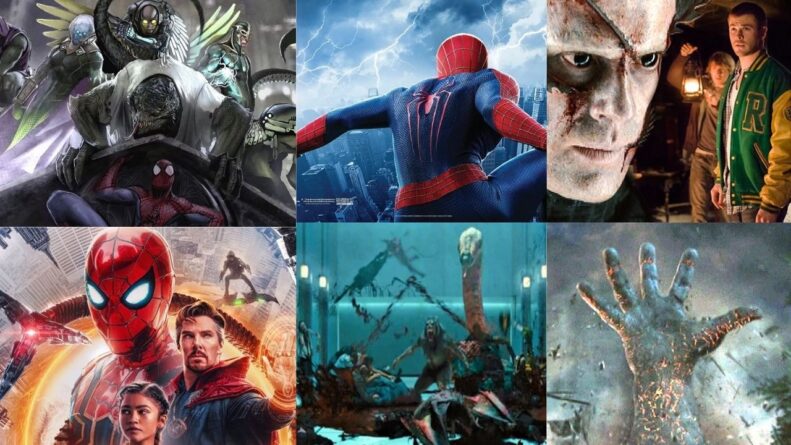
The six legendary storyline line-up including Doctor Octopus, Electro, Sandman, Mysterio, Vulture and Kraven the Hunter are the, changes depending on the era you’re reading but Sinister Six was a nod to comic book readers. This ultra-high-concept crossover makes studio execs’ heads spin in the post-“Avengers” era, where shared universes are the Zenith of Franchise Filmmaking.
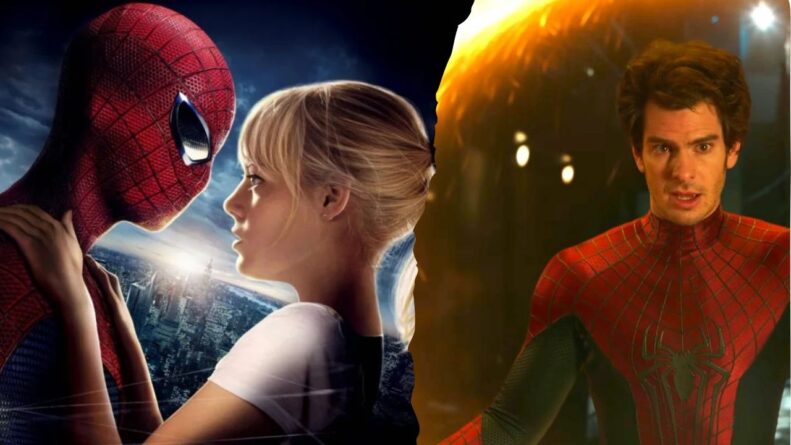
Sony, which owns the rights to the film version of Spider-Man and was eager to construct its own cinematic universe akin to Marvel’s, revealed plans for a Sinister Six movie in 2013. Goddard was set to write and direct. The project was developed as a spin-off of the Andrew Garfield-led The Amazing Spider-Man series, with the second film in particular establishing the villain team-up. Remember that shot of the man in the hat who mysteriously walks by the Vulture’s wings and Doctor Octopus’s tentacles? That was supposed to be the connective tissue leading to Goddard’s film.
Everything was moving forward. The script was being written but there was a breach by ‘Guardians of Peace’ on Sony’s computer systems and wreaked havoc on 24 Nov, 2014 that jeopardized Sinister-Six that were in Pre-Production Phase.
Goddard’s recent comments to Variety describe a scenario that is somewhat cinematic in its surreal intensity.
“I had a really big Spider- Man movie that was sort of Sinister Six-based that I had planned, but none of that went through because of the Sony hack, My office was right there on the lot, so I watched it all happen — the FBI storming in and helicopters hovering over the studio. It was bizarre.” —he said.
Just be in that office. You are someone who can shape the entire storyline, character development and make absolute narrative arcs. Your biggest professional dream is so close you can taste it— you’re going to make a Spider-Man movie, you’re going to bring these iconic villains to life, you’re going to leave your mark on one of pop culture’s most enduring mythologies. Then you look outside and see feds running onto the studio lot with helicopters overhead like it’s the climax of an action movie.
But this isn’t a movie. This is real life, and the film studio that should have been guiding your movie out into the world is instead scrambling for survival.
The hack on Sony was unparalleled in humiliation and scale. The attackers, who were later attributed to North Korea (although that is disputed), released a trove of sensitive emails, employee social security numbers, unreleased films and business documents. Private correspondence among studio executives was made public. Comp s and salary data leaked online. Hollywood’s deal-making was exposed to the world, warts and all.
For Sony, the problem wasn’t merely technical—a full-blown crisis was under way. The leadership was rattled, and Amy Pascal ultimately resigned from Sony Pictures Entertainment. It cost a lot of money for close coordination with the main Spider-Man franchise and long-term strategic planning might have been an easy casualty.
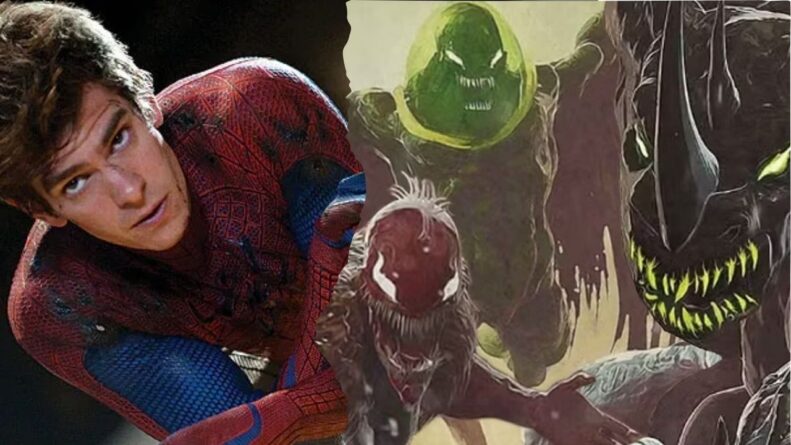
What makes the Sinister Six cancellation particularly tragic is that it wasn’t just one movie dying – it was the collapse of a whole interconnected universe before it got off the ground. Sony had big plans for its Spider-Man properties beyond the core series. In addition to Sinister Six, there was the notion of a Venom movie (which eventually came to pass, years later, separated from the Spider-Man narrative) and other offshoots to keep the franchise rolling even when not telling a Peter Parker story.
The hack did more than kill Goddard’s film, it changed the way Sony handled the Spider-Man property. The studio, reeling and desperate, ultimately made the unprecedented deal with Marvel Studios that brought Spider-Man into the Marvel Cinematic Universe, beginning with Captain America: Civil War. Tom Holland replaced Andrew Garfield. The “Amazing Spider-Man” timeline was right out.
Goddard’s Sinister Six was of a particular time—a time when Sony was attempting to create its own thing, its own line that could exist without the crutch of Marvel. The hack shattered that moment, and when the dust cleared, the terrain had shifted so dramatically that there was no turning back.
“I was sad about it, but there was literally nothing I could do to change the course of events,” —Goddard said.
There’s a hint of resignation in that—that at times you are simply swept up in something bigger than yourself, no matter how talented, prepared, or dedicated you are to that cause. Her narrative, casting, and look are in the director’s hands. They have no say in international cyberwarfare, which is above them.
To be sure, the compelling question is: what would Goddard’s Sinister Six be? We do know a few things from a number of interviews and leaks over the years. Goddard called the picture a “big movie,” and that it would be a heist movie with a large budget and scope. The filmmaker had previously said that he wanted to make something different from the typical superhero movie template, where the villains are the lead characters as opposed to being social menaces for Spider-Man.
There are a few things we can reasonably deduce about Goddard’s take on The Cabin in the Woods from both his earlier work on The Cabin in the Woods and his subsequent success with Daredevil (he is the creator of the Netflix series and wrote its first two episodes). Entirely too much pick-me-up energy here to realistically expect he wouldn’t enjoy all these characters genuinely weird powers and motivations, tragic pasts and grand delusions. A Goddard Sinister Six could have looked, structurally, punched up creatively and humorously in weird ways, and emotionally moving under the spectacle.
Would it have been good? We’ll never find out. But the lineage implied it would have been, at least, interesting— which is more than can be said for a lot of the superhero films that do get made.
Casting is also an issue. The Amazing Spider-Man 2 had already announced Dane DeHaan already casted as Harry Osborn/Green Goblin and Jamie Foxx as Electro for the Amazing Spider-Man 2 movie. The film teased Vulture’s wings and Doctor Octopus’s tentacles. Goddard’s film presumably would have featured some elements of these performers, and possibly included new individuals to complete the group. It’s a cast that, looking back, seems almost unbelievably packed with talent.
Post Sinister Six debacle, and Drew Goddard didn’t disappear on the contrary, he has been busier than ever. He also penned Ridley Scott’s film version of Andy Weir’s best-selling novel The Martian, which was a financial and critical success and won him a nomination for an Academy Award for Adapted Screenplay.
Michael Schur and he also co-executive produces The Good Place, from which he is co-creator. His own smart, philosophical comedic voice is overt.
After the cult success of his neo-noir Bad Times at the El Royale, he’s now heading back into mind-bending sci-fi for Project Hail Mary. The new adaptation of Andy Weir’s novel will star Ryan Gosling in a blend of intriguing personas and tales that evolve imagination, a concoction that fans of both Goddard and Weir will undoubtedly look forward to.
The plot revolves around an amnesiac astronaut who might be the last best chance for humanity, and it’s a return to the kind of audacious, imaginative sci-fi moviemaking that some think Hollywood has strayed from in recent years.
In a way, it’s appropriate that Goddard has returned to big-screen spectacle via an entirely different route. Sinister Six door closed, but other doors opened. That’s the nature of the business, especially for a guy with Goddard’s range and name.
But the Spider-Man movie stands as a singular pet project “what if” in his filmography—and testament to how fleeting even the most high-potential productions can be.
“It’s probably better than them not liking the script,” said Drew Goddard
Attempting to find a small glimmer of a silver lining in the situation. In a strange way, it softened the blow — not because the project crumbled for reasons entirely outside his control and because no one believed in his vision.
Since the demise of the Sinister Six, we’ve had other tries for villain-centric superhero narratives. Suicide Squad (in its various versions) established that people would come to see villain team-ups, for bad guy team-ups, no matter how mixed the reaction was. Sony ended up making their Venom movies, which have been money-makers despite the meh critical responses. The animated Spider-Verse films have proven that Spider-Man adjacent properties can truly transcend when given to the right creative teams.
Best of all, Spider-Man’s rogue gallery has materialized in some shape or form throughout the MCU. Michael Keaton’s Vulture from Homecoming. Jake Gyllenhaal’s Mysterio in Far From Home. The multiverse-bending No Way Home even brought back previous cinematic iterations of villains, including Alfred Molina’s Doctor Octopus and Willem Dafoe’s Green Goblin, as a sort of cosmic analog for all the team-ups we never got to see in standalone films.
These, however, are not Goddard’s Sinister Six. None of them have the particular auteurist DNA of a filmmaker with something to prove and a distinctive way of doing so.
The 2014 Sony hack has been all but forgotten by the public, superseded by more recent scandals and crises. The movie business, as ever, has moved on. But for enthusiasts who track such things, who care about where commerce meets creativity, who know that films are the products of particular moments and particular people, the tale of Drew Goddard’s cancelled Spider-Man movie still makes for a compelling case study.
Read More:- ‘High Potential Season 2’ Episode 15 Pie in the Sky High Stakes Review
Acclaimed directors don’t always get to helm their passion projects. Sometimes, it’s not the quality of the script, or the enthusiasm of the fans — it’s whether a studio’s email servers are hacked by a particularly vengeful group of cyberterrorists.
Drew Goddard seems to have made peace with it. He has found his own way, establishing a very good career telling the sorts of stories that genuinely interest him without having to twist his arm to take on big franchise expectations. Up until now, it is for him in 2014, when helicopters buzzed over the Sony lot and his Spider-Man dreams evaporated like so many deleted files, that he has to remind himself when he looks out the window, now from whatever office he is occupying.
The Sinister Six will eventually pop up in a movie, probably. Hollywood has an insatiable appetite for known IP, and the concept is just too tempting to be allowed to languish for ever. But it will not be Goddard’s version. It won’t be the movie that almost was, the one that died not of creative failure but of corporate chaos.
And that’s the true tragedy not only that we never got to see a film but the fact that it was a particular vision and a certain way of looking at these characters through the lens of a director who really got them. In the age of algorithm-based content and safe bets, the loss of something risky and personal is keenly felt.
Drew Goddard’s Sinister Six now lives only on hard drives and in memories, in the “what if” conversations of fans and the odd wistful interview. It is a ghost movie, lurking at the edges of superhero cinema history, a reminder that even in the era of the never-ending franchise, there are stories that are stubbornly, eternally untold.
Dive into the world of entertainment with Fandomfans to get details from the movies and series which makes you forget the real world.

Discover the best horror movies 2025, from award-nominated thrillers to scares, prestige cinema and storytelling indie nightmares.
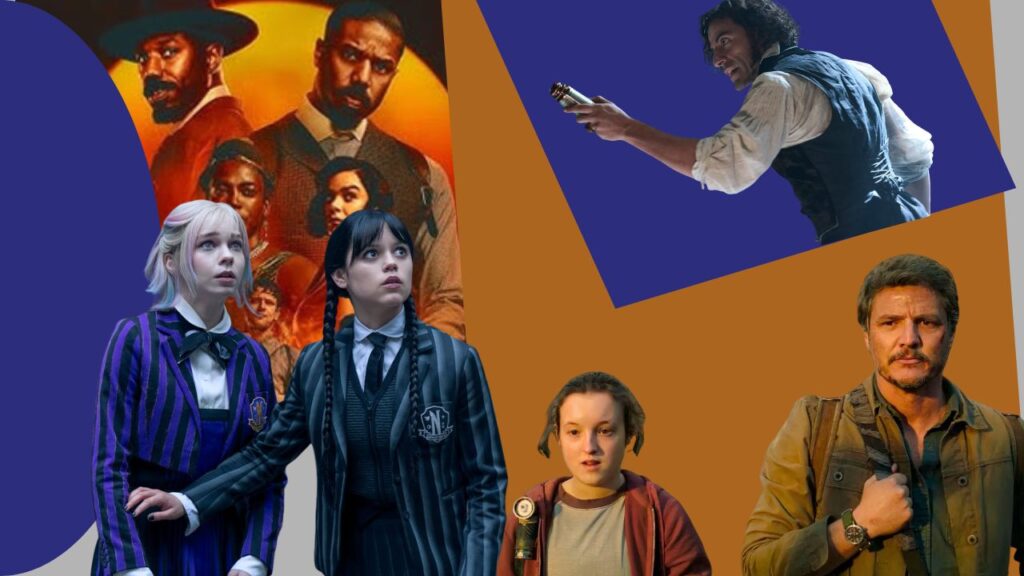
For decades now, horror has existed a bit on the margins of awards season — the darling of the audience but the red-headed stepchild of the institutions. But 2025 completely twists that narrative on its head. The horror genre has been conspicuously absent from Golden Globe nominations in recent years, but a blood-soaked drama here, classic monsters there, and some nerve-shredding indie scares for good measure proves that horror is now officially in the prestige spotlight. From Ryan Coogler’s bold Sinners to Guillermo del Toro’s soulful Frankenstein, this year offers ample proof that fear, when honed through vision and thoughtfulness, can hold its own with the most lauded cinematic storytelling.
The 2026 Golden Globes nominations was recently released, and the lead is not one of the usual biopics or oscarbaits. It’s blood, guts, and monsters. With major nods for Ryan Coogler’s Sinners and Guillermo del Toro’s Frankenstein, Screenrant has just spoken the quiet part out loud: 2025 is definitely the Year of Horror.
The jaw-dropper was not just that horror movies got nominated—it’s where they got nominated. Over the years, if a horror film managed to creep its way up the awards chat, it would usually be shafted to the technical side of things, or weirdly, “Musical or Comedy” (remember Get Out?).
But this year, two of the six slots for the Best Motion Picture – Drama are bona fide horror films.
First, we have “Sinners“. It was always going to be an event when Ryan Coogler re-teamed with Michael B. Jordan, but I don’t think anyone was ready for this level of acclaim. A period vampire thriller set in the Jim Crow South? It seemed risky on paper, but the execution was perfect.
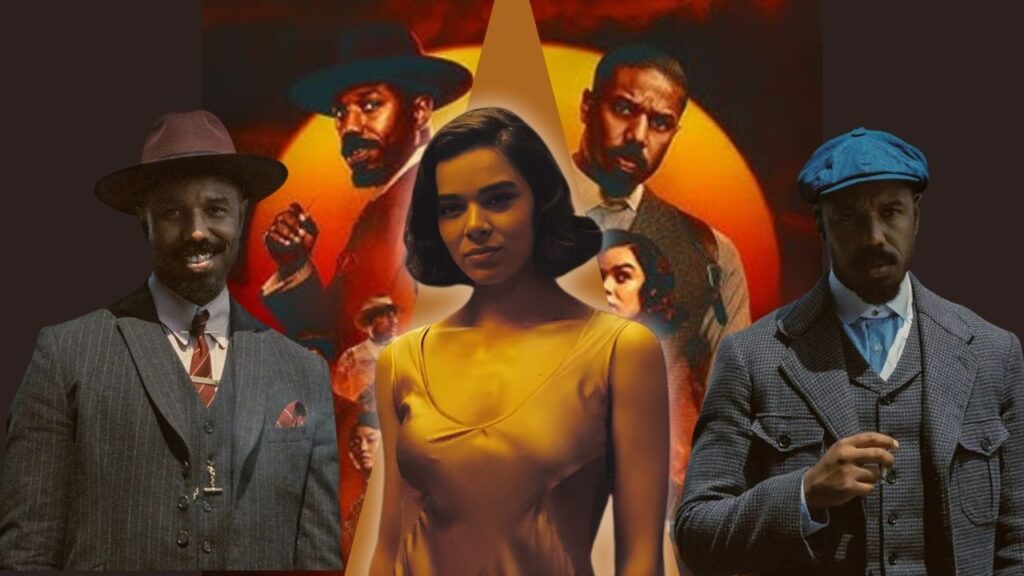
With seven nominations, Sinners is both leading the pack and the only one with the majority of the votes. It combines high-brow historical drama with old-school, monster-movie terror in a way we haven’t seen since maybe Interview with the Vampire, but with more bite (pun intended).
Then there’s “Frankenstein.” Guillermo del Toro has long been our advocate when it comes to monsters, but his version of the Mary Shelley staple for Netflix feels like his magnum opus. Taking five nominations, it shows that classic monsters never go out of style – they just need a master’s touch.
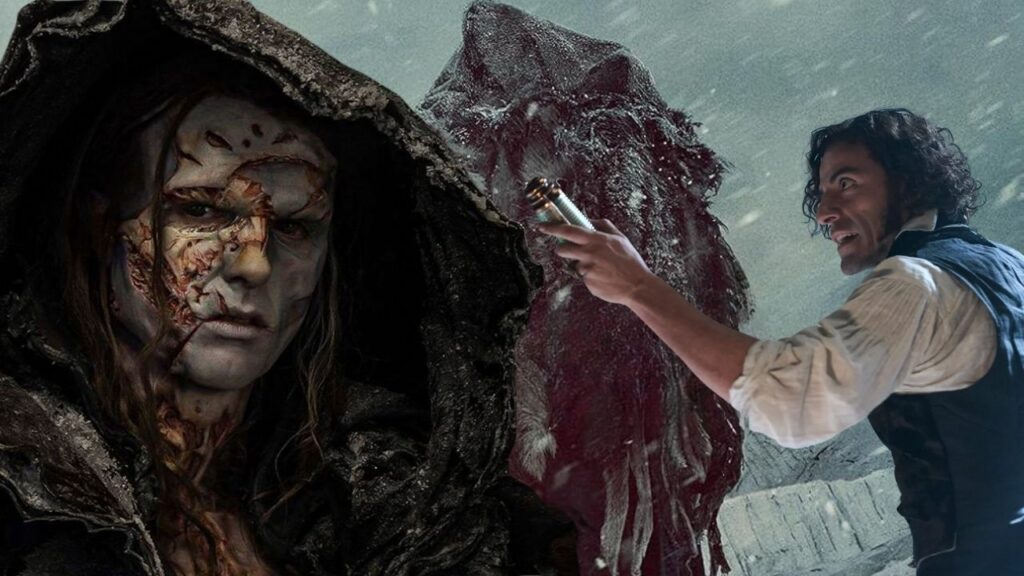
Oscar Isaac (as the Doctor) and Jacob Elordi (as the Monster) being in the acting conversations at all is a sign that voters are finally looking beyond the prosthetics and seeing the soul beneath.
It’s not just the gargantuan applicants to the studio system getting the love. The indie community, who’d been holding the horror torch aloft for years, eventually was given its seat at the table.
Zach Cregger’s “Weapons”—his follow-up to Barbarian that’s highly anticipated—squeaked in a nomination for Amy Madigan as Supporting Actress. If you’ve watched the film, you know exactly why. What she did as Aunt Gladys was nightmare fuel, and she went right into the “Horror Hall of Fame.” To have a performance that is frighteningly recognized by a major voting body is a huge win for all of us who make the case that scaring an audience is just as hard a task as making them cry.
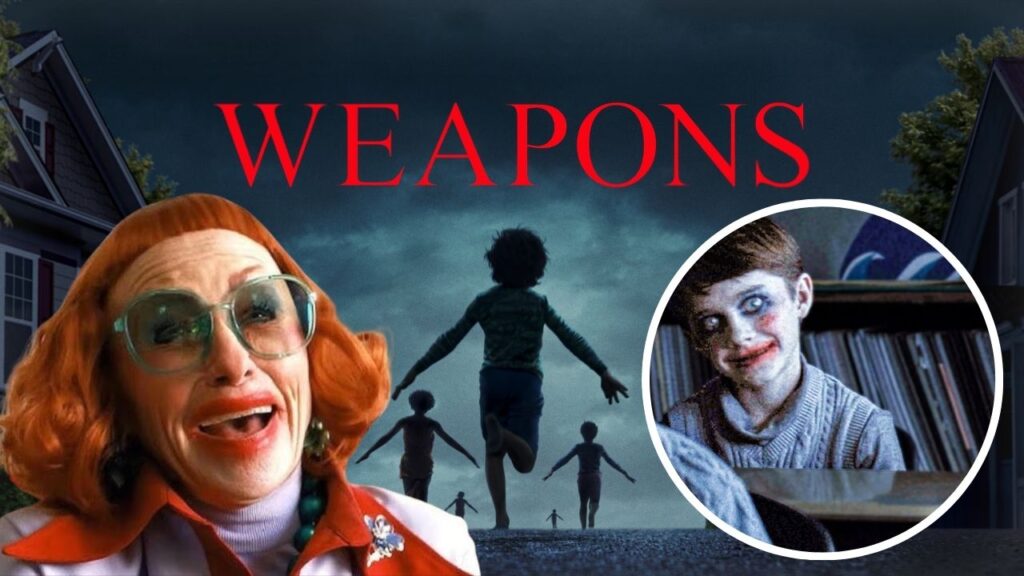
This round of accolades feels like a direct sequel to the proving ground of 2024. Remember when Demi Moore took home the Globe for The Substance? That felt like a fluke, we thought — “lifetime achievement” type deal for a body horror shocker. But in retrospect it was the crack in the dam. That victory sent a message to the industry that “weird” and “gross” could also be “prestige.”
The Last of Us Season 2 expands on the show’s haunting world, turning its focus from survival to the emotional toll of violence and revenge. With higher stakes, darker themes, and increasingly active threats, the season examines how love, loss, and trauma transform its characters in a vicious post-pandemic world.
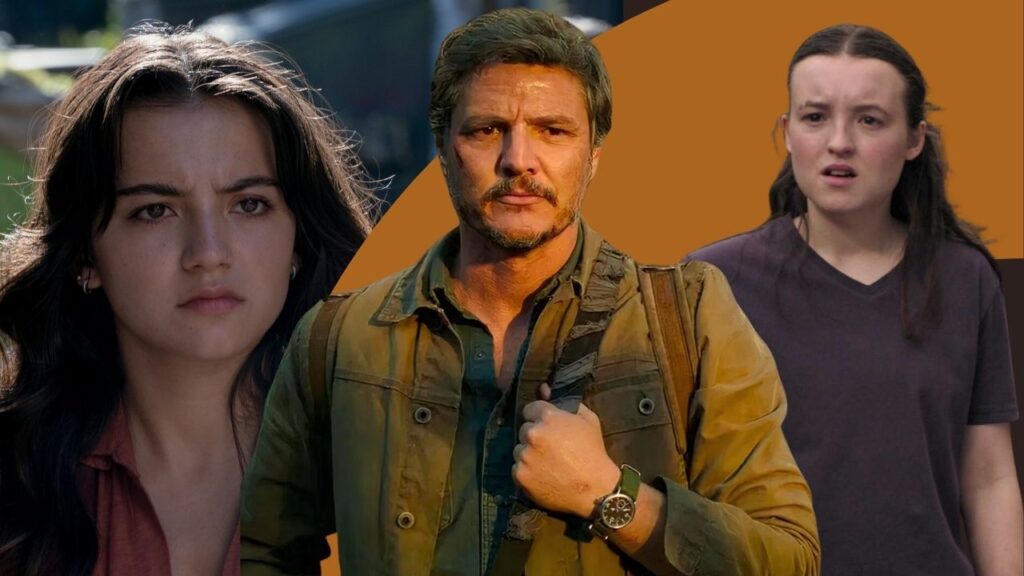
Bella Ramsey’s nomination is a testament that the series still packs a punch emotionally even as the clickers grow more terrifying.
Then there’s Season 2 of “Wednesday” and “Monster: The Ed Gein Story,” both of which earned nominations for Jenna Ortega and Charlie Hunnam. It’s a media environment that implies dark audiences want darkness, and dark creators are catering to their tastes in high end packaging.
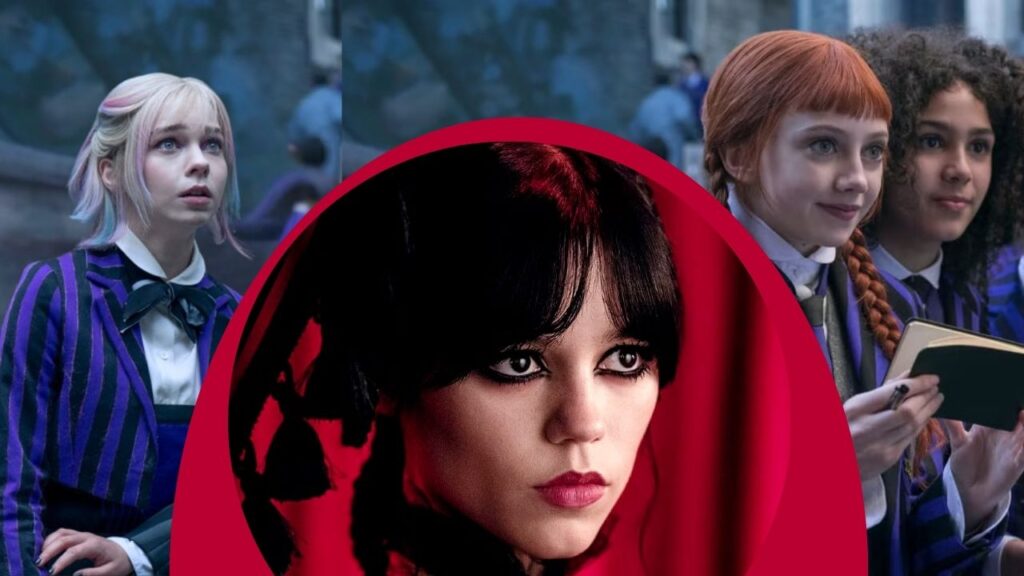
Wednesday Season 2 broadens the strange and disturbing world of Nevermore Academy. It throws Wednesday Addams into more lethal riddles and more challenging personal battles. The danger mounts with scarier scares, more warped laughs, and ever changing bonds. The program maintains its gothic, grim allure.
Read More 👉 Spider-Man: Brand New Day Explained – How Marvel Reset Peter Parker’s Life
We no longer need to call it “elevated” to be allowed to enjoy it. Sinners is simply an excellent film. Frankenstein is a tragedy and a masterpiece. Weapons are a roller coaster of anxiety. They aren’t “good for horror movies”—they’re just really good films, full stop.
The stigma against what some call “left-of-center” storytelling is dissipating. A generation of filmmakers raised on Carpenter, Craven and Romero are now making movies with A-list budgets and A-list stars. And obviously, the electorate wants to get on board for the ride.
What really makes 2025 feel like we’re standing at the cliff edge of a new era isn’t just the nominations themselves—it’s the mindset behind them. Best Horror Movies 2025 is no longer being praised simply for being horror but it’s being celebrated as powerful cinema. Studio-backed blockbusters, audacious independents and genre-heavy television racing to dominate in major categories: the implication is clear, horror has grown up, and the awards bodies are perhaps ready to acknowledge that. The monsters were always meaningful— we just needed the industry to stop looking away.
Fandomfans is focusing on delivering real insights and a list of A-list movies with full details.