Die My Love: Jennifer Lawrence & Robert Pattinson’s New Film
Jennifer Lawrence and Robert Pattinson star in Die My Love, a haunting new film exploring love, madness, and emotional intensity on screen.
Published: November 3, 2025, 11:42 am

Jennifer Lawrence and Robert Pattinson star in Die My Love, a haunting new film exploring love, madness, and emotional intensity on screen.
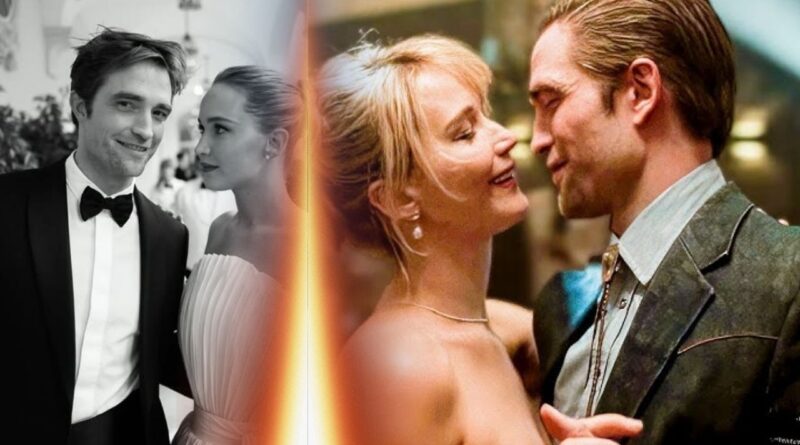
Buzz builds for Die My Love. This is mind-bending dark drama duo’s first pairing. It is directed by Lynne Ramsay. She got an Oscar nom for We Need to Talk About Kevin. Ramsay and playwright Enda Walsh, along with Alice Birch, co-wrote the screenplay. The narrative is adapted from the Argentinean novel by Ariana Harwicz Die, My Love. It follows Grace, played by Jennifer Lawrence. She writes and is a new mother. Her psychosis disintegrates when she and her husband Jackson (Robert Pattinson) move out of New York City to his childhood home in rural Montana. In the film, Grace suffers from postpartum blues and madness. These things begin to crack her marriage. There’s heat building in the desolate rural location, too. Reports by Mubi. The company describe it as Ramsay’s razor-sharp perspective on a woman consumed by love and wild thoughts.
Die My Love is a celebrity-powered indie. Besides starring, Jennifer Lawrence is producing through her banner Excellent Cadaver and Martin Scorsese is producing via his Sikelia company. Scorsese, in fact, backed the project after he read the book as part of a book club, he recommended it to Lawrence. The two even passed on adapting another classic book because it presented a tougher role. Lawrence fought for it despite Ramsay’s initial hesitation (she’d just done a similar motherhood movie). One version has it that Lawrence was determined to have a go at working on Die My Love as a team and talked Ramsay into turning it from a straightforward depression narrative into a “bonkers, crazy love story.”
Jennifer Lawrence and Robert Pattinson are headlining the film’s ensemble. Lawrence plays Grace, a mother and wife about to break. Pattinson is Jackson, her husband. LaKeith Stanfield has been cast as Grace’s forbidden love interest. Legendary actors Nick Nolte and Sissy Spacek star as Jackson’s parents. Grace and Jackson are said to be relishing their new beginning, via People. They have a good time with sex and crazy dances. But once the baby arrives, Grace’s isolation and mental illness strain their relationship.
Read More 👉 The Conjuring’s Next Prequel: A Fresh Scare With Award-Winning Director Rodrigue Huart
This Lawrence–Pattinson chemistry is what makes this especially exciting to fans. Lawrence, an Oscar winner for Silver Linings Playbook, is known for dramatic as well as blockbuster roles Hunger Games, while Pattinson went from being a teen heartthrob Twilight to an indie darling Good Time, High Life, and now, Batman. The two actors have praised each other’s performances and Lawrence has joked in interviews that starring opposite Pattinson at last is total revenge after her failed Twilight audition.

They were reported to have gotten close off-screen during the film’s premiere in Cannes. Lawrence joked that having kids changes everything and Pattinson added that becoming a father has provided him with the biggest trove of energy and inspiration to work. (Lawrence has also said that playing Grace added another layer for her by drawing on her own difficult postpartum experience).
The excitement ran high as Die My Love made its Cannes Film Festival debut in 2025. The critical response was overwhelmingly positive. Lawrence’s acting received an “award-worthy” standing ovation for around nine minutes, according to People. The MUBI buyout campaign draws attention to this praise. Trailers show Lawrence in wild dance, fight and fierce growl sequences deep in emotion. It is this hard edge that Ramsay can do so well.
Ramsay, who refers to the film as a dark comedic love story about insanity, Pattinson joked some moments are “hilarious” in a twisted way, she said.
Die My Love is a relentless, unsettling drama — a peek at a marriage disintegrating under the pressure of new parenthood. Ramsay directs the film, with Walsh and Birch as co-writers, with major producers attached (including Lawrence and Scorsese). Jennifer Lawrence is Grace and also produces through Excellent Cadaver, while Robert Pattinson is her husband Jackson.

The film is slated to be released in U.S. cinemas on 7 November 2025 after premiering at Cannes on 17 May. This pairing of acting titans both heavy Oscar front-runners has the fans talking, in part because reports have them pushing one another on set. Ramsay calls the completed film a really dark love story that’s also funny, and Lawrence gives what some are already calling the most riveting performance of her career.
The unrated My Love is becoming one of the most awaited movies of 2025 — an unrefined, haunting, and passionate exploration of love, insanity, and motherhood. With Lynne Ramsay’s distinctive intensity leading the way and Jennifer Lawrence and Robert Pattinson delivering powerhouse performances, the film will no doubt be both visually breathtaking and psychologically enthralling. Lawrence’s performance as Grace has already earned early Oscar buzz, and Pattinson’s reserved yet multifaceted portrayal provides a tether for her spiraling descent.

Explore the ultimate list of the top 32+ Dwayne Johnson movies! Action, comedy, and drama collide as we highlight The Rock’s most iconic performances.
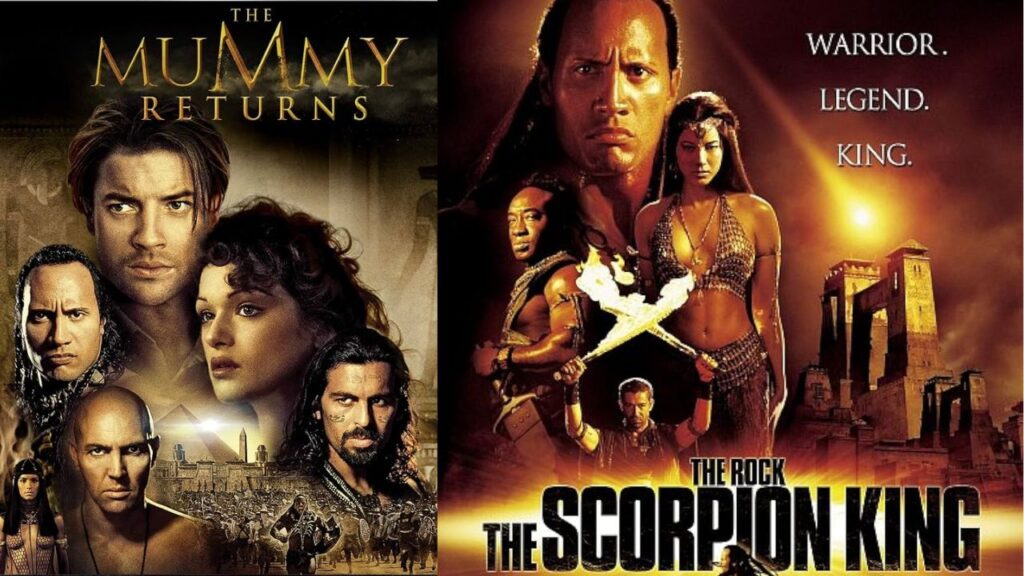
Dwayne “The Rock” Johnson is without a doubt high up on the list of the most bankable stars in Hollywood. The Rock has one of the most successful and diverse film careers in recent memory, going from an explosive breakout in action blockbusters to unexpected turns in comedy and family films. Here’s the definitive guide to the Top 32+ movies in which he demonstrates his stunning range as an actor and performer, whether you’ve been a fan for years or are just discovering his catalogue.
Dwayne Johnson was not a household name when he first got his start in Hollywood. Though his first feature film part was in 1997, in The Mummy Returns (2001) as the Scorpion King, a brief but impactful role that introduced him to mainstream audiences. That moment was pivotal, and then he had his first leading role a mere one year later in The Scorpion King (2002), which solidified him as an action superstar.
The Rock, meanwhile, solidified his status with The Rundown (2003), which remains one of his finest action-comedies. Co-starring with Christopher Walken and an early blend of comedy/action, the film gave Johnson a chance to display his charisma and potential as a leading man. As one of Johnson’s earliest films, The Rundown is a risky gamble, but it really pays off, as he portrays Beck, a taciturn bounty hunter who is sent to apprehend his boss’s son, who has been hunting for treasure in Central America.
As Johnson found his niche in Hollywood, he was offered an array of different roles. Walking Tall (2004) was the respectable action film of the bunch, and Doom (2005) was the most ambitious albeit least successful adaption of a video game craft so far. The same year saw Johnson donning his comedic flair in Be Cool (2005).
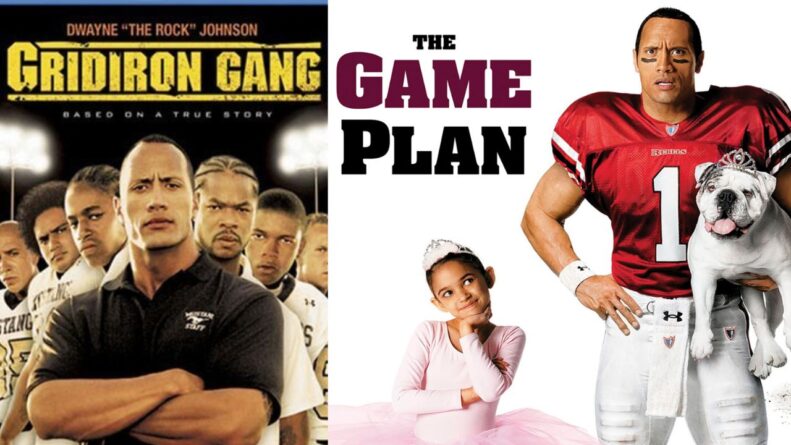
A guy who never limited himself to one genre, Johnson caught people off guard with Gridiron Gang (2006), a dramatic sports film in which he is a rehabilitation counselor employed by a juvenile detention center. This showcased his range as an actor and demonstrated that he could do more than just act in pure action movies. Family audiences started to become aware of him with The Game Plan (2007), while Reno 911!: Miami (2007) proved that he was a tour de force in comedic support roles.
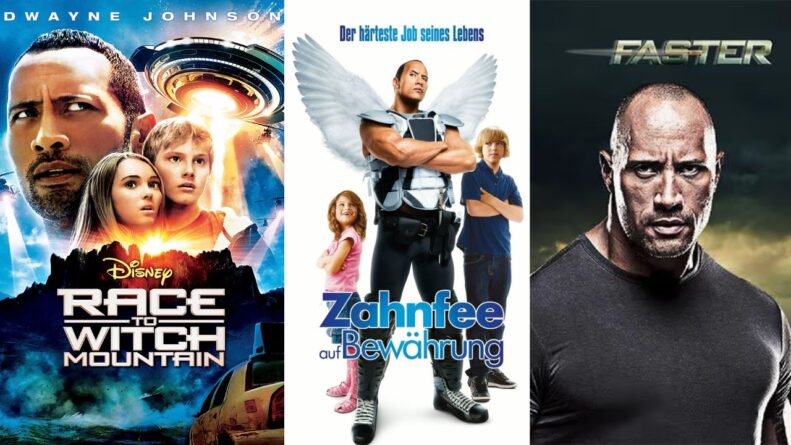
Get Smart (2008) put him opposite Steve Carell in a secret agent-comedy schtick that favored action over humor. He added voice acting to his credits in Planet 51 (2009) when he provided the voice for astronaut Chuck Baker and Race to Witch Mountain (2009) once again took him to the family movie field. The decade concluded with Tooth Fairy (2010), a quirky kids movie that had Johnson actually turning into a tooth fairy. The film was savage but showed a performer ready to make wildly unconventional gambles. The same year, he made a return to his action roots with the more hard-edged thriller, Faster (2010), as a vengeful man.
All that changed when Johnson entered the Fast Five (2011) stable as brutal enforcer Luke Hobbs. That’s the turning point that made The Rock a megastar. His chemistry with Vin Diesel and the rest of the cast and crew, as well as the sheer physical comedy and action prowess he brings, revitalized the franchise.
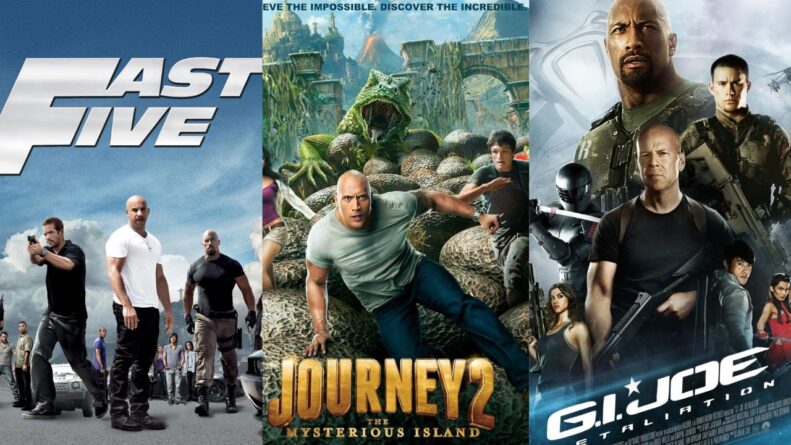
After this breakthrough, Johnson was more selective about his parts. Journey 2: The Mysterious Island (2012) saw him get into family adventure material, taking on one of the genres with more long term potential. Fast & Furious 6 (2013) continued his momentum in the franchise, and Pain & Gain (2013) afforded him an opportunity to demonstrate his dramatic abilities in a true crime action film with Mark Wahlberg and Anthony Mackie.
Snitch and G.I. Joe: Retaliation were also out in the busy 2013 year. Empire State (2013) gave him the opportunity to extend his menacing presence as an NYPD officer with a vendetta. Hercules (2014) was another turn towards mythological adventure based storytelling, with Johnson playing the Greek demigod as he faces his mythic twelve labors. San Andreas (2015) turned out to be a turning point, demonstrating Johnson could lead a big disaster movie and become a worldwide mega-star who could open films on his own merits.
Furious 7 (2015) cemented his position as the franchise’s biggest earner, grossing over $1.5 billion and containing some of the series’ most memorable action scenes.
Johnson became one of the highest-grossing box office draws beginning in 2016. He teamed up again with Kevin Hart for the 2016 film Central Intelligence, and their comedic chemistry endured. Johnson made a multi-layered, vulnerable comedic and physical performance in Jumanji: Welcome to the Jungle (2017) a magnificent reboot of the franchise.
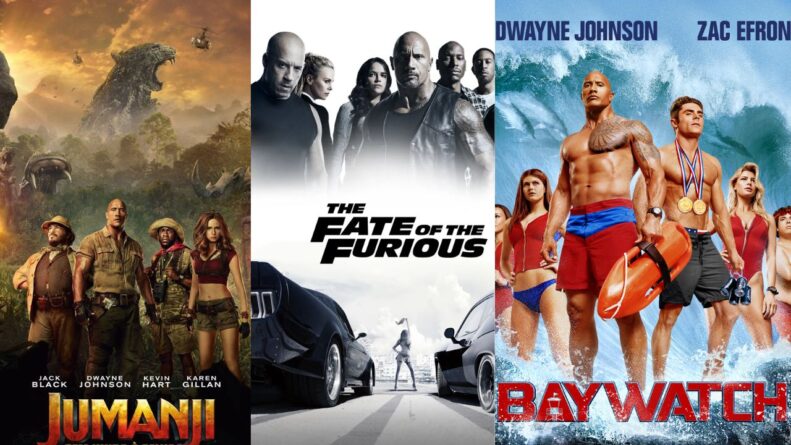
Also that year was The Fate of the Furious, yet another Fast & Furious installment that brought in more than $1.2 billion globally. Baywatch (2017) was a more frivolous affair, although it was almost universally panned by critics – but audiences turned out to see Johnson in that red lifeguard suit.
Skyscraper (2018) is vulnerable — Johnson playing a lame one-legged FBI agent who has to risk everything to save his family in a burning skyscraper. Rampage (2018) saw him furthering his action dominance with taking on mutants alongside a super-sized ape.
Jumanji: The Next Level (2019) brought back the enchanted game world, plucking players into even more chaotic, wilder adventures, with Johnson offering comedic narration as he pretended to be Danny DeVito as he took over his game avatar. Hobbs & Shaw (2019) gives the fans what they want—Johnson and Jason Statham finally getting their own spin-off, and finally teaming up, giving them a chance to demonstrate their comedy timing as well as their action chops.
The Rock has also undergone the voice over and producing process. He was in the heist comedy Red Notice (2021), alongside Ryan Reynolds and Gal Gadot. In the Disney adventure Jungle Cruise (2021), Johnson and Emily Blunt are joined by Dwayne Johnson as Frank Wolff, a steamboat captain who agrees to unwillingly escort Dr. Lily Houghton down a perilous river in search of secrets.
Fighting with My Family (2019), about a wrestler’s rise to prominence, showcased his knack for serious supporting roles. He was afforded the chance to lend his voice to Krypto the Super-Dog in DC League of Super-Pets (2022), showcasing his talent to captivate spectators in animated movies. He received a Teen Choice Award for his role as the charming and lovable demigod Maui in the 2016 film Moana.
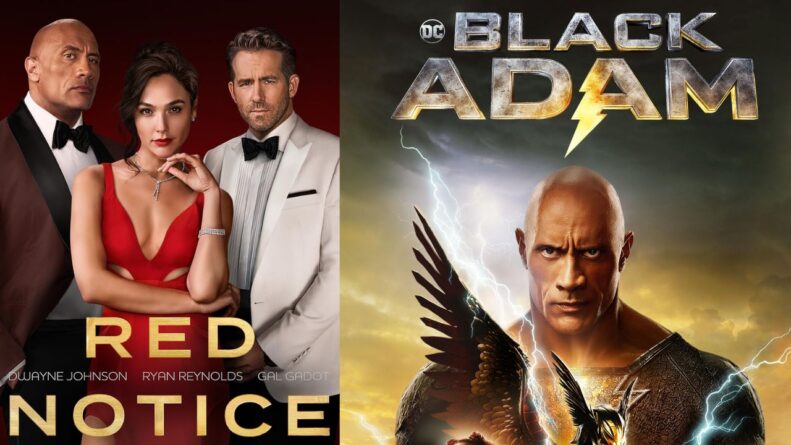
(2022) was his debut foray into DC as the Egyptian mythological anti-hero, unleashing a formidable Kahlid who ascends as the ancient Egyptian magic avatar. This high-profile superhero venture, which was ambitious, had a budget of $250 million and grossed $393 million globally, demonstrating his capacity to lead big studio tentpoles.
A pattern is evident in all these 32+ movies. Johnson’s desire to do comedy and still be believable as an action hero makes him unique among action stars. He’s at ease being vulnerable — be it as a one-legged FBI agent or a demigod struggling with self-doubt. His work ethic and down to earth charm make him have on screen chemistry with all his co-stars and he has done just as well in family films, drama and blockbuster ensemble films.
From doubters questioning his talent as an actor to one of Hollywood’s highest paid stars, Dwayne Johnson’s filmography is a master class on how to have a sustainable career in the business. Whether you’re looking for action excitement, comedy laughs, family fun, or some real dramatic moments, his body of work has a little something for everyone. And that all makes going through his top 32 movies not only entertaining — it’s actually instructive on how to make a Hollywood career with a little authenticity and versatility.
Dwayne Johnson’s bankability and versatility is on full display across these top 32+ movies, proving why he’s one of Hollywood’s most powerful stars. Action packed, heart warm family film, comedy wise The Rock pumps charisma, commitment and authenticity in every role he plays. Not only is his filmography entertaining — it’s an education in how to craft a career that lasts and spans genres in the film industry.
Fandomfans is a platform where you can get your favorite celebrity blockbuster movies, journey details, early life in detail.
The next prequel to The Conjuring is coming from director Rodrigue Huarte, which will explore the origins of evil in the Conjuring universe.
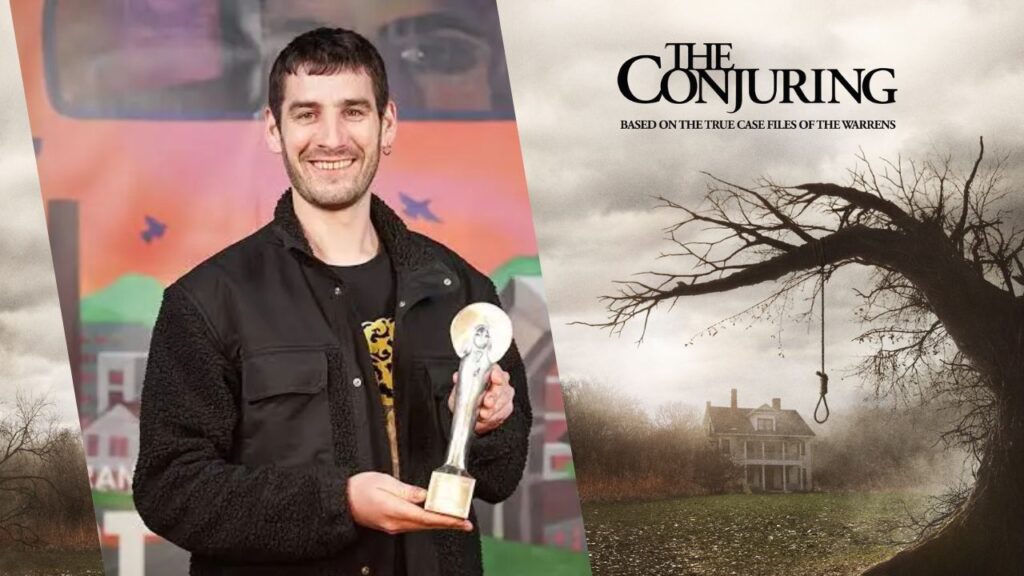
The horror realm which has captivated audiences for over a decade is nowhere near leaving. The Conjuring: Last Rites was set to be the final film in paranormal detectives Ed and Lorraine Warren’s arc, but the franchise’s immense financial success has breathed new life into the supernatural qua-machine. This time, a terrifying world from The Conjuring will be revealed in a bold new prequel.
For the fans of horror, it was news to shake the skies. A New Conjuring Universe Prequel Has Officially Risen from the New Line Cinema, via Borys Kit of The Hollywood Reporter. The green light came after The Conjuring: Last Rites smashed box office records around the world. The 2025 film grossed a staggering $84 million domestically and $194 million globally in its opening weekend, firmly establishing it as the horror genre’s highest-grossing film.
The franchise’s parent studio couldn’t say no to expanding after raking in nearly half a billion dollars at the worldwide box office. The largest question mark looming over the series had, in a sense, been answered by this financial success: Would The Conjuring series continue? The answer was a resounding “yes.”
Short film director and winner of several awards, Rodrigue Huart, is in talks to direct this untitled prequel. It is the first ever big studio feature film for Huart, a big jump from his praised horror short film work.
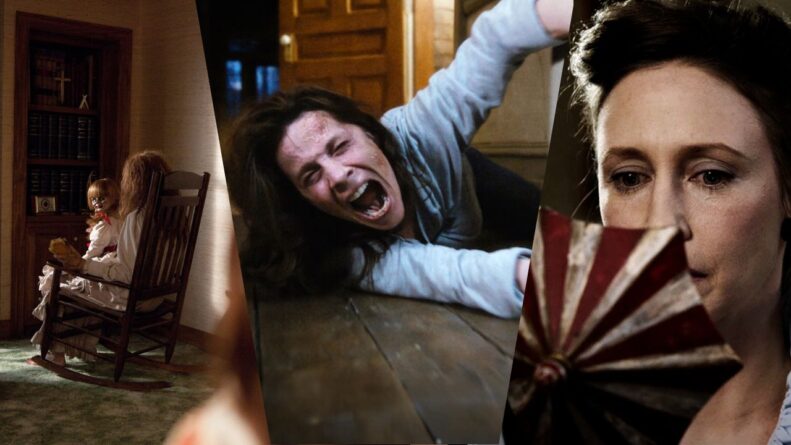
The Conjuring universe could definitely benefit from his unique creative perspective. This will mark the first creative turn for a different director since Annabelle Comes Home (2019) following a series of productions led by Michael Chaves.
Huart is connected to the wider Conjuring universe via a curious thread. Huart’s script for the modern day take on the much loved 1976 Spanish horror Who Can Kill a Child? Paramount Pictures picked up Huart’s screenplay for “Suffer Little Children,” an updated version of the popular 1976 Spanish horror Who Can Kill a Child? Huart met Walter Hamada, a veteran executive and producer in the horror genre, through this project.
Along with serving as executive producer on the biggest hits of the universe, including The Conjuring, Annabelle, The Nun, and multiple sequel entries, Hamada’s involvement with the franchise is that much more notable here. The choice to bring on the rising helmer for this major studio prequel may have been related to his continued partnership with Huart. This consider treating the established lore of the franchise prequel while also allowing Hamada to pursue creative decisions that lead to tried-and-true fear tactics might permit this business relationship.
The Conjuring: The Devil Made Me Do It, a Michael Chaves film that brought the Warren family storyline to a close, ended on a particularly strong note in the box office and storytelling sense. The ebb and flow of The film’s director, Chaves, has also made it clear that this was absolutely the end of the original saga, said that It is done. The title, Last Rites was intentionally chosen to signify the formal ending of a certain chapter.
The Warrens’ story may be finished, but the world they lived in still has a lot of unexplored potential to explore, as the prequel announcement goes to show. Instead of direct sequels, the franchise has taken the form of prequels and spinoffs that explore its mythology by going back to the origins of its demonic entities.
The title of the prequel is yet unknown and the plot is currently under wraps. However, the project is expected to go back to the origins of the supernatural power that has plagued the Warren cases across the franchise’s history. Reports has it that the movie could be related to one of the greatest (and earliest) hauntings in the series.
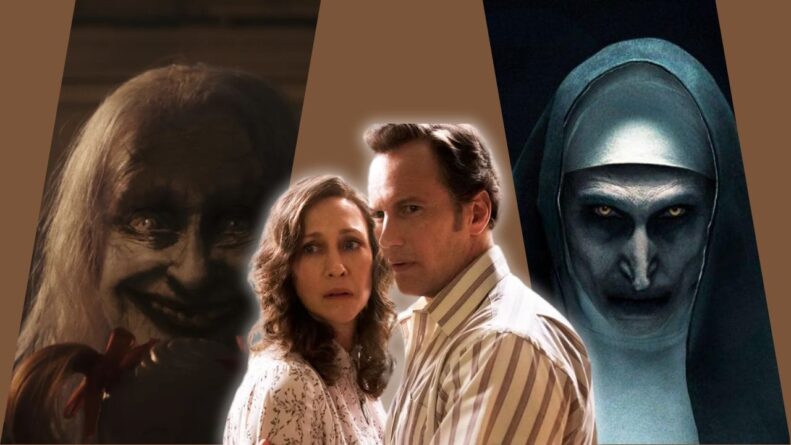
If Rodrigue Huart is officially confirmed as director, it will be a new creative vision for the brand while still maintaining the unique fear that has always been the hallmark of The Conjuring. Combining found-footage style with digital narratives, he also has the potential to give horror aficionados a somewhat new angle on this beloved franchise that’s both frightening and futuristic.
A billion-dollar franchise isn’t finished freezing audiences in terror. It’s just getting ready to frighten them in new and surprising ways.
As The Conjuring universe moves into a new era with Rodrigue Huart at the helm, the franchise definitely has more terror in store for its audience. Last Rites was the emotional conclusion to the Warren saga, but this prequel is said to explore further into the terrifying source of evil that began everything. If Huart applies his iconic vision and storytelling skill to the material, fans will be in for a brand-new horror age that pays homage to the legacy of The Conjuring while reimagining its scares for a new generation. The haunting, it would seem, is still to come.