The beginning of Spider-Man’s “Brand New Day,” starting at the top of The Amazing Spider-Man #546 in January 2008, was a clean slate for the character. Following “One More Day,” this era re-envisioned Peter Parker’s life by moving him from his married adulthood back to his origins as a single man and an aspirant. This contentious choice was taken in order to make the character more relatable and timeless for future generations.
Though they were out to make the character viable for at least the next few decades, how they went about doing so provides a textbook example of both imaginative thinking and the dangers of heavy-handed editorial mandates.
The Devil in the Details: The OMD Foundation
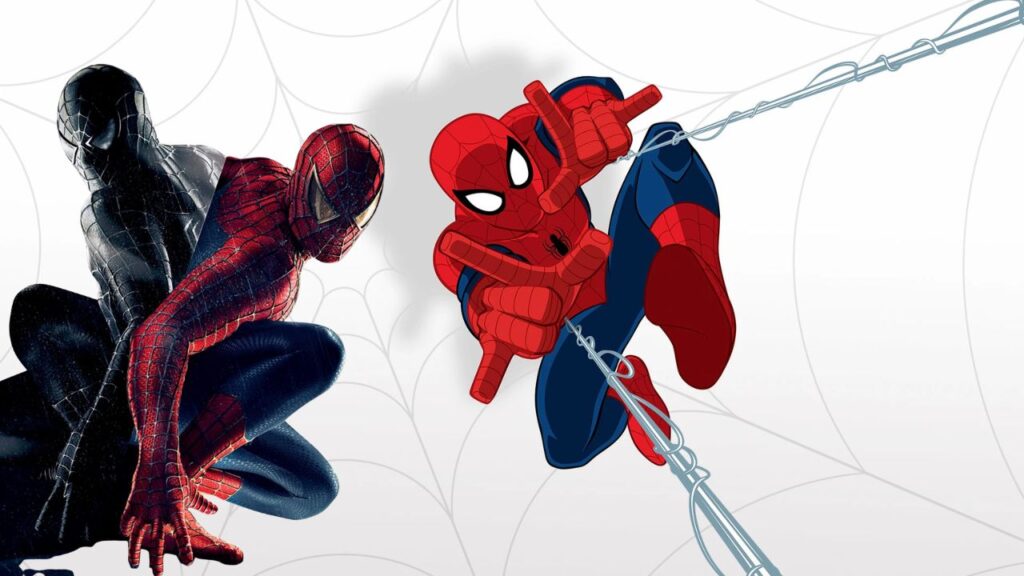
To get “Brand New Day,” you have to start with the ruins of “One More Day” (OMD). To fix Peter’s public unmasking during Civil War, Marvel had Peter literally make a “deal with the devil.” To save Aunt May’s life, the demon Mephisto wiped out Peter’s marriage to Mary Jane Watson from history.
Image Credit: Fandomfans
This “Devil’s Bargain” erased two decades of continuity. For his part, Editor in Chief Joe Quesada has said that an older married Peter is too “aged” and in that sense less relatable. But it’s a forced regression — and it’s unearned, too. It was like a supernatural “undo” key, rather than traditional character development, and many fans felt it discounted their long-term investment in the series.
Innovation Through the “Brain Trust”
The most interesting thing about BND was not just the story, but the logistics. Marvel dropped several Spider-Man books to concentrate on one flagship title, The Amazing Spider-Man, three times monthly.
Image Credit: Fandomfans
This necessitated a “brain trust” of rotating writers (such as Dan Slott, Mark Waid and Zeb Wells) and artists. This method enabled the book to mimic the speed of serialized television. They could sow “slow-burn” seeds — such as the mystery of the ‘Spider-Tracer Killer’ that would pay off months or even years down the road.
A New (But Old) Supporting Cast
BND, however, also devoted a lot more attention to Peter’s life without the mask. Moving him back in with Aunt May and making him a freelance photographer once again Marvel played up “humanizing” the hero through urban hardship.
Return of Harry Osborn: Resurrecting Harry reintroduced a social mooring and a “best friend” dynamic that had been missing for years.
Image Credit: Fandomfans
New Rogues: The era was prolific in new villains. Mister Negative was the breakout, presenting a stark visual “negative” of the Peter/Spidey duality.
New Faces: New characters Carlie Cooper (a CSI forensics expert) and Vin Gonzales (Peter’s Spider-Man-hating roommate) were also added to capture a contemporary, pan-op/NYC feel.
Transmedia Legacy and the MCU
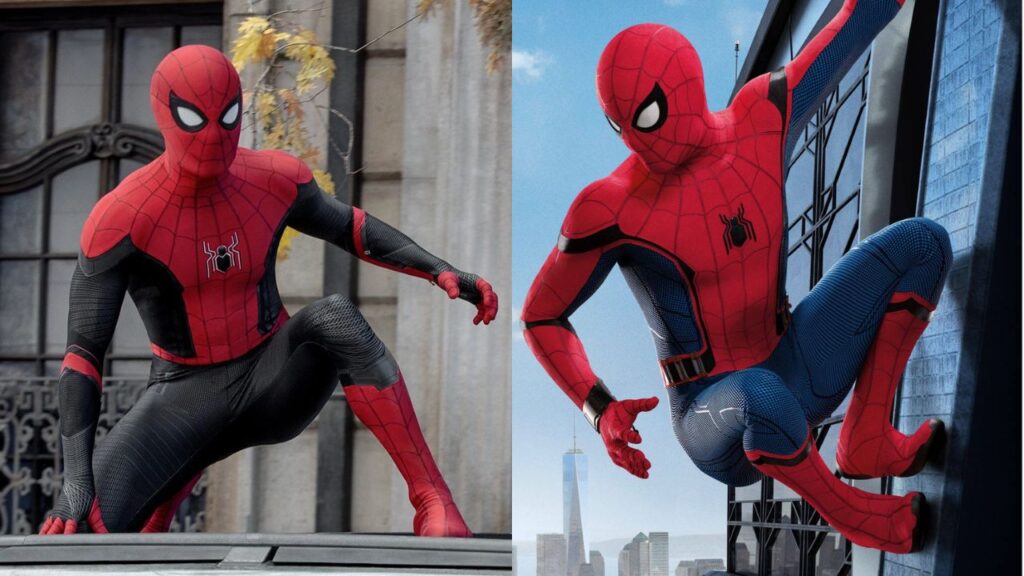
Controversial as it always was, BND’s DNA is stamped on everything today. The 2018 Marvel’s Spider-Man game took a lot of cues from this period, including Mister Negative and the F.E.A.S.T. shelter.
Image Credit: Fandomfans
More importantly, the BND model is what the MCU is now following. Tom Holland’s Peter is, by the end of No Way Home, living in a small apartment, unknown to the world and devoid of his Stark tech. The 2026 film, apparently titled Spider-Man: Brand New Day, heralds a “fresh start” much like the 2008 relaunch – though presumably with a more heroic justification than a deal with Mephisto.
Conclusion
“Brand New Day,” was a radical rewrite designed to update the character by returning to his roots. Though it led to some of the best single stories in the character’s history, it also demonstrated that “narrative debt” is real. You can reset a character’s clock, but you can’t always reset the reader’s memory.
Fandomfansis a platform where you can find every update on movies, series, and celebrities. Our goal is to focus on deep concepts and character arcs.
Mariyam
Articles Published :
76
Mariyam Khan is Fandomfans Content Writer and providing reports and reviews on Movie Celebrities, and Superheroes particularly Marvel & DC. She is covering across multiple genres from more than 4+ years, experience in delivering the timely updates.
Tron: Ares’ Box Office Failure Marks a Turning Point in Jared Leto’s Career
Tron: Ares' box office flop stuns Hollywood. Learn why Jared Leto's passion project failed, its $33 million debut, and how it changed his career forever.
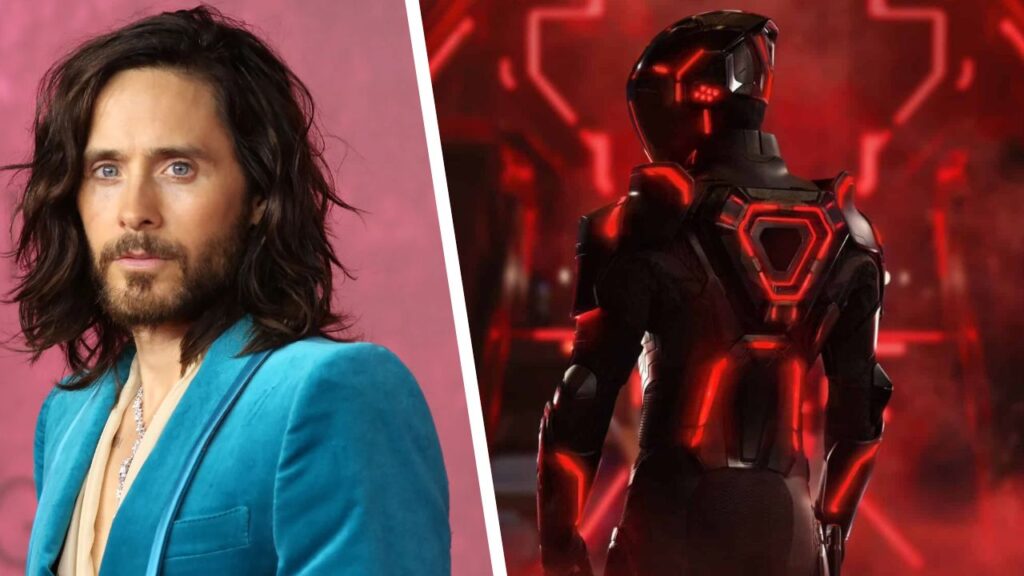
The November 2025 release of Disney’s long-awaited sequel, Tron: Ares, fizzled at the box office after a gross that trade observers called a disaster and an “IP-killing event”. The Joachim Rønning directed film made a lackluster domestic debut of $33.2 million to $33.5 million, well below its estimated opening gross by $10 million or more. The opening fell just shy of $60 million worldwide, ranging from $60.2 million to $60.5 million.
Ares not hitting the $100m mark in its opening weekend against its sizable budget made for an early and likely impossible-to-recover-from financial loss for Disney. With the failure, Report said that it is very likely that Disney will “retire the franchise from the big screen” for the foreseeable future, signaling to investors a continued reluctance to finance risky.
Jared Leto’s Star Power Comes Under Fire Once Again
The box office doom of Tron: Ares, according to MovieWeb, once again raised and intensified doubts about Jared Leto’s bankability as a star who could anchor a major studio tentpole. The seeds for this industry skepticism were planted three years earlier with the collapse of Sony’s Morbius (2022).
This recurring pattern of financial failure has consolidated a trade consensus that sees Leto as an actor who can’t reliably bring in box office for similar big Intellectual Property (IP) tentpole projects. Industry reports have indicated that “the big paydays Leto received for Ares might well be over,” as studios are increasingly shying away from the actor as a dependable male star draw.
Controversies During the Tron: Ares Press Cycle
In today’s Hollywood, star viability is inexorably linked to public perception and promotability, more so for those who headline massive franchises for corporations like Disney. Leto also has considerable baggage, including several sexual misconduct allegations (which his representatives deny) that surfaced just prior to the Tron: Ares press cycle.
The allegations posed significant challenges for Disney’s marketing team, with industry executives wondering how the actor could “shoulder the pressure of selling two theatrical movies while dancing around the damning claims”. The controversies had an immediate effect on possible promotional opportunities, creating uncertainty as to whether prominent media outlets would allow him to participate in the usual press routines to help market a blockbuster, making him a major-risk.
Industry Frustration Over Leto’s On-Set Behavior
Industry peers is also pointed out his self-serving spectacle and unprofessional distraction after his extreme behavior on set including mailing eccentric gifts to Suicide Squad co-stars or walking around on crutches for Morbius. The perceived expense of working with the actor’s process wasn’t anymore worth the result. This professional reputation of being a “pain in the ass” who wastes time, combined with his inability to open wide films makes him a uniquely risky bet for studios that want to run-efficient production and clean PR.
According to People, The flop of Tron: Ares is far more than a box office number, it’s the shattering of an actor’s sincere passion against the cold, hard financial calculations of contemporary Hollywood. For years, Jared Leto was spearheading the movie, leveraging his celebrity and producer credit, dating back to 2017, to bring Disney’s long-dormant sci-fi franchise out of development purgatory. His commitment was authentic; he was a fan of the original film and its tech, and playing the digital warrior Ares was a very personal goal for him.
A Strategic Rebrand: From Digital Warrior to Skeletor
The broad consensus in the business is that Leto’s way out is would be to turn on a dime and not be the lead vehicle for a big-budget franchise movie. The most obvious sign of that strategic recalibration: his next role is as Skeletor in Amazon MGM’s Masters of the Universe.
Reports say, This casting is generally regarded as a potential career booster for the actor. Adopting the role of the main villain, Leto once again places the financial weight solely on the IP and the hero, enabling him to focus on crafting a memorable performance. The campy villainous role of Skeletor is a dream role for Leto, and one that lends itself perfectly to his style of transformative acting where he utilises heavy makeup and theatricality (see House of Gucci). How well this transition works will depend on his ability to strike the right balance of “menace and camp,” and keep critics away from dismissing the performance as too silly, a perception that has dogged both his Paolo Gucci and Joker performances.
Conclusion
Leto and his team’s main professional challenge is to manage the promotional risk. Any future promotions around the film will have to strategically separate the actor from the success of the project, downplaying those risky stunts or conversations about method acting that come from set, and instead just talk about the character and the spectacle of the film. The twin flop of Morbius and Tron: Ares have cemented that Jared Leto is simply no longer considered bankable enough to weather the scrutiny and controversy that comes with carrying a mega-budget franchise.
Alpana
Articles Published :
156
Alpana is Fandomfans Senior Editor across all genres of entertainment. She evolved in the media industry since a very long time, she manages the content strategy and editing of all the blogs. Her focus on story development, review analysis, and research is well-equipped that ensures every article meets the standards of accuracy and depth.
For decades now, horror has existed a bit on the margins of awards season — the darling of the audience but the red-headed stepchild of the institutions. But 2025 completely twists that narrative on its head. The horror genre has been conspicuously absent from Golden Globe nominations in recent years, but a blood-soaked drama here, classic monsters there, and some nerve-shredding indie scares for good measure proves that horror is now officially in the prestige spotlight. From Ryan Coogler’s bold Sinners to Guillermo del Toro’s soulful Frankenstein, this year offers ample proof that fear, when honed through vision and thoughtfulness, can hold its own with the most lauded cinematic storytelling.
The 2026 Golden Globes nominations was recently released, and the lead is not one of the usual biopics or oscarbaits. It’s blood, guts, and monsters. With major nods for Ryan Coogler’s Sinners and Guillermo del Toro’s Frankenstein, Screenrant has just spoken the quiet part out loud: 2025 is definitely the Year of Horror.
The jaw-dropper was not just that horror movies got nominated—it’s where they got nominated. Over the years, if a horror film managed to creep its way up the awards chat, it would usually be shafted to the technical side of things, or weirdly, “Musical or Comedy” (remember Get Out?).
But this year, two of the six slots for the Best Motion Picture – Drama are bona fide horror films.
Sinners
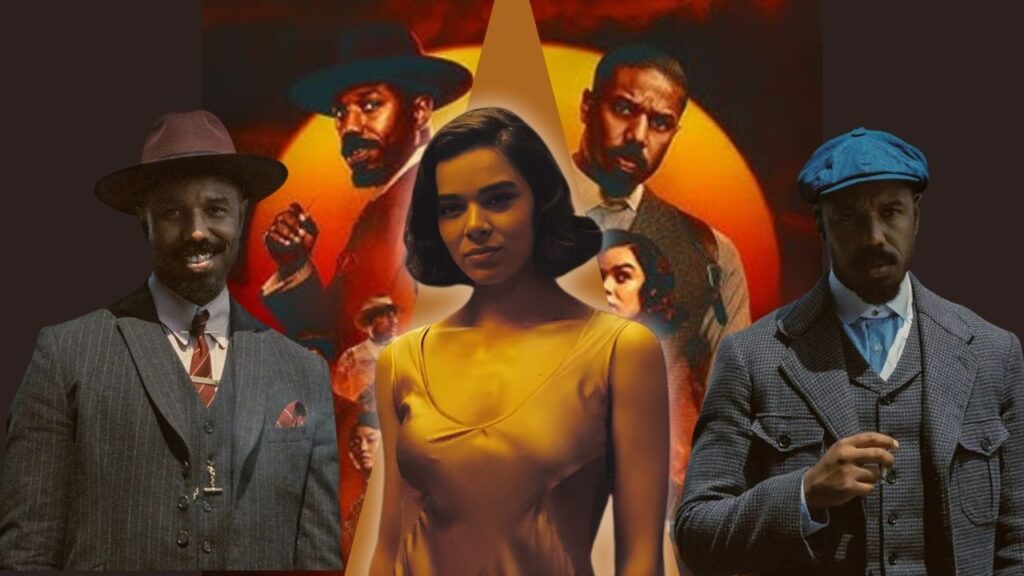
First, we have “Sinners“. It was always going to be an event when Ryan Coogler re-teamed with Michael B. Jordan, but I don’t think anyone was ready for this level of acclaim. A period vampire thriller set in the Jim Crow South? It seemed risky on paper, but the execution was perfect.
Image Credit: Fandomfans
With seven nominations, Sinners is both leading the pack and the only one with the majority of the votes. It combines high-brow historical drama with old-school, monster-movie terror in a way we haven’t seen since maybe Interview with the Vampire, but with more bite (pun intended).
Frankenstein
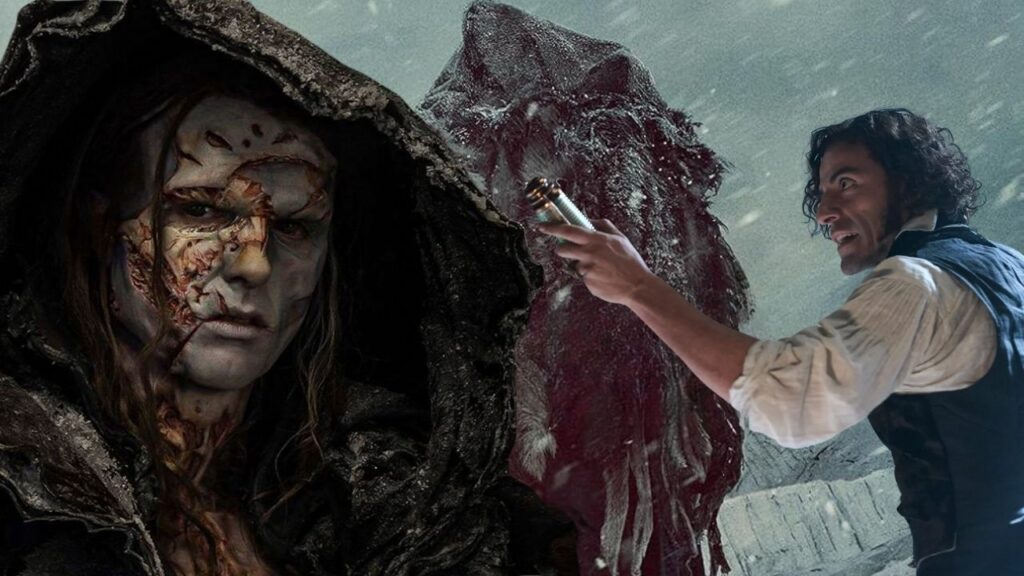
Then there’s “Frankenstein.” Guillermo del Toro has long been our advocate when it comes to monsters, but his version of the Mary Shelley staple for Netflix feels like his magnum opus. Taking five nominations, it shows that classic monsters never go out of style – they just need a master’s touch.
Image Credit: Fandomfans
Oscar Isaac (as the Doctor) and Jacob Elordi (as the Monster) being in the acting conversations at all is a sign that voters are finally looking beyond the prosthetics and seeing the soul beneath.
The “Weapons” Effect and the Indie Scares
It’s not just the gargantuan applicants to the studio system getting the love. The indie community, who’d been holding the horror torch aloft for years, eventually was given its seat at the table.
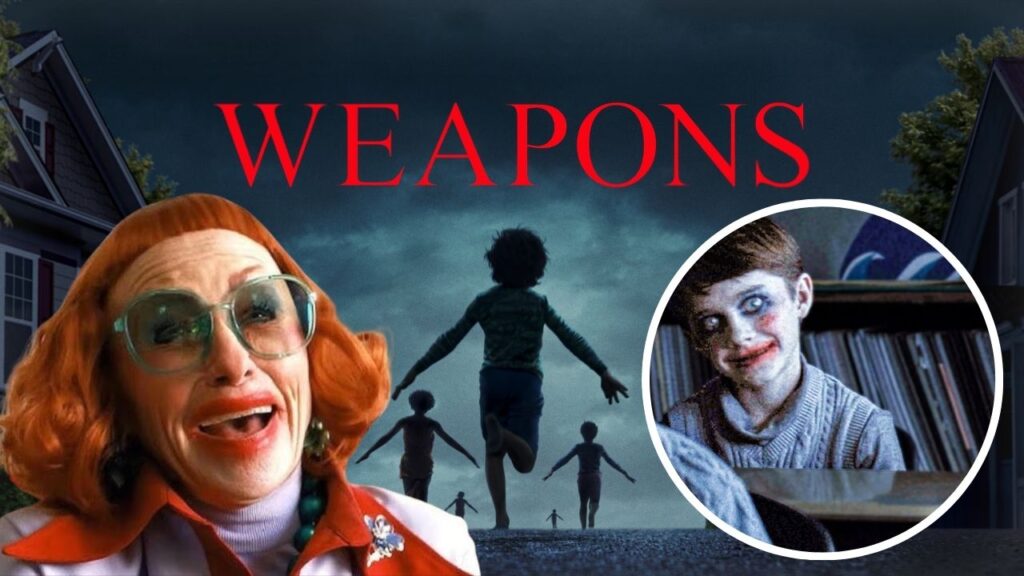
Zach Cregger’s “Weapons”—his follow-up to Barbarian that’s highly anticipated—squeaked in a nomination for Amy Madigan as Supporting Actress. If you’ve watched the film, you know exactly why. What she did as Aunt Gladys was nightmare fuel, and she went right into the “Horror Hall of Fame.” To have a performance that is frighteningly recognized by a major voting body is a huge win for all of us who make the case that scaring an audience is just as hard a task as making them cry.
Image Credit: Fandomfans
This round of accolades feels like a direct sequel to the proving ground of 2024. Remember when Demi Moore took home the Globe for The Substance? That felt like a fluke, we thought — “lifetime achievement” type deal for a body horror shocker. But in retrospect it was the crack in the dam. That victory sent a message to the industry that “weird” and “gross” could also be “prestige.”
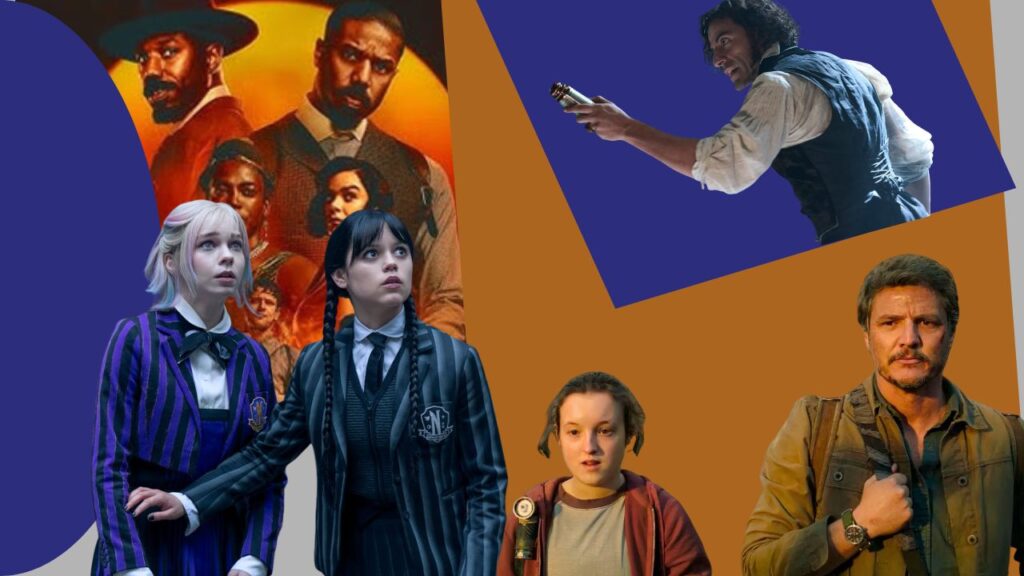
The Last of Us Season 2
The Last of Us Season 2 expands on the show’s haunting world, turning its focus from survival to the emotional toll of violence and revenge. With higher stakes, darker themes, and increasingly active threats, the season examines how love, loss, and trauma transform its characters in a vicious post-pandemic world.
Image Credit: Fandomfans
Bella Ramsey’s nomination is a testament that the series still packs a punch emotionally even as the clickers grow more terrifying.
Wednesday Season 2
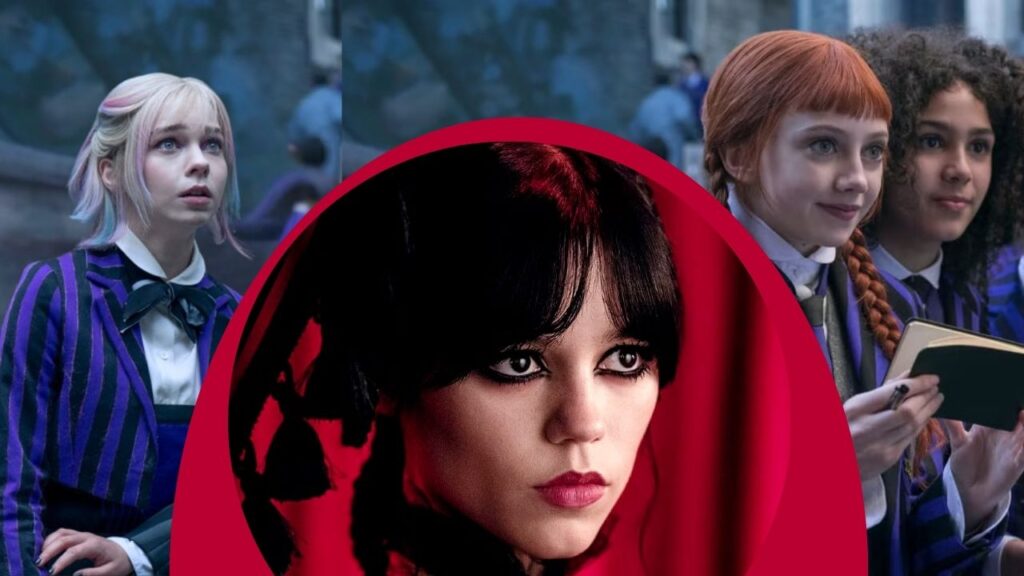
Then there’s Season 2 of “Wednesday” and “Monster: The Ed Gein Story,” both of which earned nominations for Jenna Ortega and Charlie Hunnam. It’s a media environment that implies dark audiences want darkness, and dark creators are catering to their tastes in high end packaging.
Image Credit: Fandomfans
Wednesday Season 2 broadens the strange and disturbing world of Nevermore Academy. It throws Wednesday Addams into more lethal riddles and more challenging personal battles. The danger mounts with scarier scares, more warped laughs, and ever changing bonds. The program maintains its gothic, grim allure.
Why These Movies Consider the Best Horror Movies 2025
We no longer need to call it “elevated” to be allowed to enjoy it. Sinners is simply an excellent film. Frankenstein is a tragedy and a masterpiece. Weapons are a roller coaster of anxiety. They aren’t “good for horror movies”—they’re just really good films, full stop.
The stigma against what some call “left-of-center” storytelling is dissipating. A generation of filmmakers raised on Carpenter, Craven and Romero are now making movies with A-list budgets and A-list stars. And obviously, the electorate wants to get on board for the ride.
Conclusion
What really makes 2025 feel like we’re standing at the cliff edge of a new era isn’t just the nominations themselves—it’s the mindset behind them. Best Horror Movies 2025 is no longer being praised simply for being horror but it’s being celebrated as powerful cinema. Studio-backed blockbusters, audacious independents and genre-heavy television racing to dominate in major categories: the implication is clear, horror has grown up, and the awards bodies are perhaps ready to acknowledge that. The monsters were always meaningful— we just needed the industry to stop looking away.
Fandomfansis focusing on delivering real insights and a list of A-list movies with full details.
Babita
Articles Published :
25
Babita is Fandomfans Editor, experience in managing content. Her focus in general movies and web series. She is having a deep interest in TV shows and 90s movies - particularly Lord of the Rings, Harry Potter, & Rom-Com. Babita also covers psychological thrillers and major releases in current time and concern with deep interest in them.