Harlan Coben is back with a new thriller series on Netflix, and this time he’s leading you into the secret, distorted world of Run Away. ‘Run Away’ is adapted from the 2019 novel of the specified name, with a stellar cast bringing its complex characters to life. Limited to one season of eight episodes, the series has held the attention of viewers by way of compelling storytelling and performances. If you’ve already watched the show or are about to watch the show, the cast and their characters will definitely make an impact.
The Core Cast
James Nesbitt is at the forefront as Simon Greene, whose life appears perfect until his oldest daughter Paige disappears. Nesbitt, who has played winning roles in other Coben adaptations like Missing You and Stay Close, lends a remarkable depth to a desperate father. Coben also commented on Nesbitt’s versatility, saying:
“There’s a naturalness to him that comes with an ease and warmth, so that you find yourself rooting for Simon — even when you know he’s making all the wrong choices.”
Minnie Driver is Ingrid Greene, Simon’s wife, who keeps the family stable as her husband descends in peril. Driver (The Serpent Queen, the iconic Good Will Hunting) brings emotional heft to the home front chaos at the core of this thriller.
Ellie de Lange is the daughter who had runaway, now a character with addiction issues and secrets, Paige Greene. Coben personally chose de Lange from a multitude of audition tapes, and lauded her strength and vulnerability as an actress – a fine balance key to Paige’s character arc.
Ruth Jones stars as Elena Ravenscroft, an ex-cop-turned-private-eye. Her new case, a missing person, intersects with Simon’s own desperate mission and sends them both hurtling into a labyrinth of mystery and intrigue.
Alfred Enoch (Dean Thomas in Harry Potter) stars as Detective Isaac Fagbenle, who is looking into the murder of a drug dealer, Aaron Corval. When a viral video puts Simon at the center of the crime, Isaac’s pursuit gains momentum—especially as secrets from his past threaten to compromise the case.
Lucian Msamati (Conclave, Gangs of London) is Cornelius Faber, a former soldier now residing in the Marinduque Estate. Cornelius ends up becoming Simon’s friend and confidante, but the unpredictable nature of the former makes for some nervous moments. Msamati describes the character as “a storm waiting to happen.”
The Darkest Elements of ‘Run Away’ on Netflix
The show manages to bring genuinely unsettling characters to life, thanks to Jon Pointing as Ash and Maeve Courtier-Lilley as Dee Dee — two assassins who were raised in foster care and now run around the country wreaking havoc together. Coben characterizes them as
Like a couple plucked from True Romance or Bonnie and Clyde, they’re clearly off the rails — but the way they make their getaway is completely spellbinding.”
Conclusion
The ensemble is further bolstered by Tracy-Ann Oberman as Simon’s barrister Jessica Kinberg, Annette Badland as Lou, and Amy Gledhill as Detective Ruby Todd. Each character in this elaborate web of secrets and lies is needed to bring the story together in ‘Run Away’ on Netflix.
Run Away, the latest from Netflix based on the novels of Harlan Coben, shows us once again why he’s the king. With this all-star cast riveting performances, viewers are taken on an unforgettable journey into darkness and despair. The series is now available to stream on Netflix, which is ready to you keep you busy on your next binge-fest.
Dive deeper into the details of movies and series with Fandomfans. Keep connected to get the latest updates.
Alpana
Articles Published :
167
Alpana is Fandomfans Senior Editor across all genres of entertainment. She evolved in the media industry since a very long time, she manages the content strategy and editing of all the blogs. Her focus on story development, review analysis, and research is well-equipped that ensures every article meets the standards of accuracy and depth.
If you’re still recovering from the religious upheaval of Thailand in Season 3, why don’t you just pour yourself a glass of Pinot Noir and get comfortable. The information regarding The White Lotus Season 4 leaks slowly and a lot is pointing to the fact, this will be more than just another vacation gone wrong.
HBO announced the blockbuster series had been renewed for the second season in January 2025, but showrunner Mike White isn’t simply delivering more of the same. He is breaking the mold. With a confirmed Parisian location and a heavyweight behind-the-scenes change, Season 4 seems to be a radical makeover of the series.
The Vibe Shift: From Tropical Isolation to “Cultural Sublime”
We watch rich people fall apart in three seasons of tropical quarantine—Hawaii, Sicily, Thailand. Season 4 is abandoning the beach for the avenue. Production will be set in Paris and the French Riviera – swapping the “natural sublime” of the ocean with the “cultural sublime” of art and history.
Image credit: IMDb
The theme is shifting too. In the event Season 1 was about Money, Season 2 was about Sex, Season 3 was about Death/Spirituality, and Season 4 is very much about Fame, Cinema, and the Arts. Rumors are circulating that the setting may be a film festival or some other major cultural occasion. Watch for the satire to move away from tech bros and heiresses and onto an aspirational cadre of actors, pretentiously intellectual directors, and the critics who eviscerate them. And it’s a meta move for Mike White, zooming the lens back on the very industry that salutes him.
The “Four Seasons” Breakup and Sonic Risks
Probably the biggest shock to the system is the production design. The series has reportedly ended its relationship with the hotel chain Four Seasons. What this means is that the uniform, corporate luxury we’d grown used to is no longer there. Instead the show is seeking out independent, historic icons such as Le Lutetia or The Ritz. The look is going be older, grittier and more menacing.
Image credit: IMDb
If you want to know what’s even more jarring? Cristóbal Tapia de Veer, the composer of the show’s plucky, nerves-rattling “ooh-loo-loo” theme, is no longer involved, having parted ways over creative differences. The show is losing its sonic heartbeat. The score will need to spin a new wheel — maybe that includes French Yé-yé pop, baroque strings — without turning off fans who cling to that signature whiff of impending doom.
The Casting Rumors: A New Dynasty?
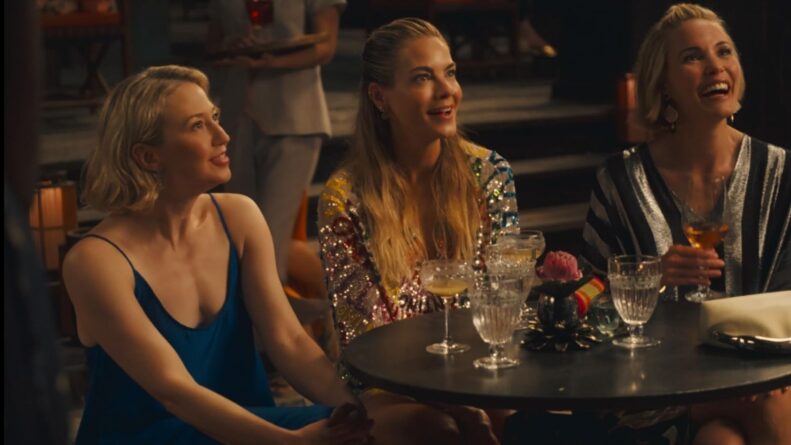
There was no way to discuss The White Lotus without discussing the guests. The Biggest Whisper In Hollywood Is Laura Dern. She previously voiced Dominic’s furious wife in Season 2, and is the perfect avatar for a season about fame – possibly as a fading star or a power-broker agent.
Image credit: IMDb
But the real narrative jolt is the arrival of Belinda (Natasha Rothwell). Having survived Tanya in Season 1 and the chaos of Season 3, word is that Belinda has “become Tanya.” She’s rich now. A once-fan-favorite employee now guest stars as an entitled snob in Paris — watching her navigate this particular first-class hypocrisy as a rich guest adds a delicious, tragicomic layer to the trip. Will the money corrupt her? Probably.
And let’s not forget Greg. The man behind Tanya’s death is still out there. The French Riviera is a natural hunting ground for a con of his caliber. A showdown between a wealthy Belinda and a lurking Greg is exactly the kind of justice we’re waiting for.
And here is the bad news— You have to be patient. Because of the complicated European shooting and the writers wanting to perfect this new “meta” direction, it seems that cameras won’t roll before mid to late 2026.
Broadcast premiere is currently scheduled for the Spring of 2027. It’s a long gap, but if this strategic pivot pays off, White Lotus won’t just be a show about a vacation anymore — it’ll be a show about the art of spectacle itself.
Conclusion
The White Lotus Season 4 is shaping up to be the most daring rewrite of the series yet— a stylized jump from tropical mayhem to the cultural inferno of Paris and the French Riviera. With a new artistic theme, a darker, grittier visual style, an entirely reimagined score, and a cast comprised of homegrown favorites and Hollywood power players, this season seems poised to shake up its own formula in the very best way.
From Belinda’s dramatic return to a possible Greg clash to whispered Laura Dern casting to the turn toward fame and film, everything indicates that Mike White is guiding the series into riskier, more self-aware terrain.
Yes, the wait will be long — all the way to Spring 2027 — but if Season 4 is indeed a delivery on this ambitious creative reset, The White Lotus won’t just be critiquing luxury vacations anymore. It’ll tear down the spectacle, ego and artistry that build the entertainment industry.
Everything you need to know about The White Lotus is here, Fandomfanswill get you all the updates regarding the series.
Babita
Articles Published :
25
Babita is Fandomfans Editor, experience in managing content. Her focus in general movies and web series. She is having a deep interest in TV shows and 90s movies - particularly Lord of the Rings, Harry Potter, & Rom-Com. Babita also covers psychological thrillers and major releases in current time and concern with deep interest in them.
Fallout Season 2 Release Date: Narrative Shifts, Cast & Behind The Scene Details
Fallout Season 2 Release Date begins December 16, 2025 on Prime Video. Check release schedule, New Vegas story twists, cast news and BTS news! visit website!
The availability of Fallout Season 2 Release Date will not only define the series, but also Amazon MGM Studios’ long-range franchise plan. Following a breakout first season that brought critical acclaim, 17 Emmy nominations and a reported audience of over 100 million viewers, the pressure is enormous on the sophomore season. Season 2 is being framed as more than a follow-up — it’s a “course correction,” doubling down on scale, ambition, and industrial intent.
Initially scheduled for December 17, 2025, the premiere has been moved up to Tuesday, December 16, 2025, 6:00 p.m. PT. While this sounds like a small change, it’s part of a strategic effort to capture the pre-holiday media cycle and ring in the most immediate eyeballs across U.S. time zones. Prime Video, meanwhile, has also shifted from releasing the entire first-season all at once to a weekly release, stretching viewer engagement until early 2026.
Amazon Revealed The New Premiere Date for Season 2
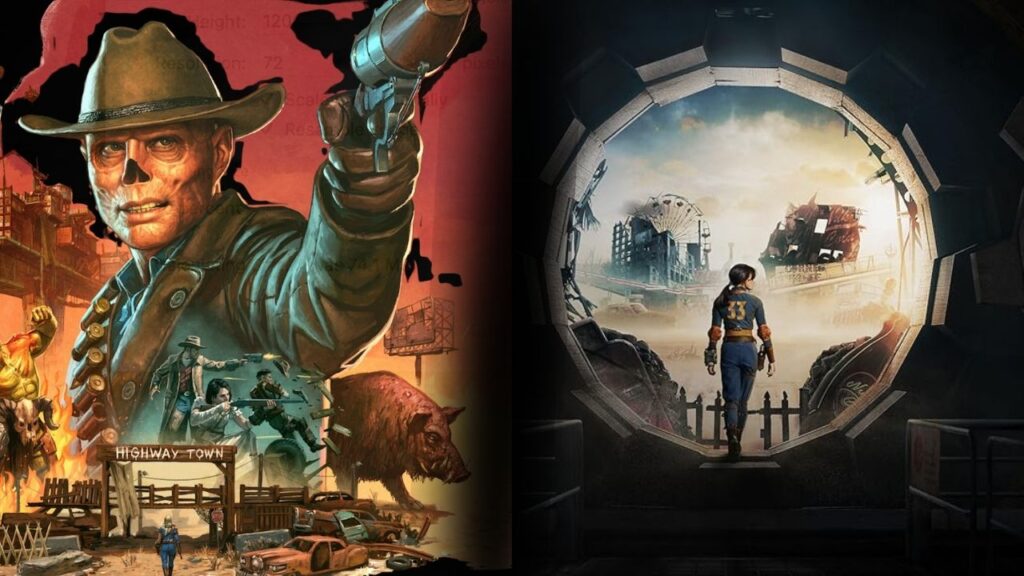
The promotional Season 2 campaign is just as brash and audacious. In a non-traditional manner, the new premiere date was announced by Amazon with a large scale activation at the Las Vegas Sphere. The building was turned into a post-apocalyptic snow globe containing Lucy MacLean, Maximus, and The Ghoul, which leads to the reveal of a massive Deathclaw and a Radscorpion swooshes away the old date and replaces it with December 16.
Image Credit: Fandomfans
The stunt accomplished a number of things, most notably that it tied the marketing directly to the show’s new New Vegas locale, generated serious social media buzz and confirmed that some of the series’ most iconic creatures are making their way back.
Fallout Season 2 Adopts a Synchronized Global Release
Distribution-wise Fallout Season 2 follows the model of global release day-and-date. The first episode will debut worldwide at the exact same time, 6:00 p.m. meaning international audiences will see the episode on December 17 due to time zone differences. After the season premieres, episodes will be made available weekly on Wednesdays through February 4, 2026, with the season consisting of eight episodes.
Image Credit: Fandomfans
In fact, Episode 2 and 3 will be released on Christmas Eve and New Year’s Eve respectively, indicating that Amazon is expecting the series to be big holiday counter-programming.
Season 2 takes a sharp turn narratively, moving from the ruins of Los Angeles to the Mojave Wasteland and New Vegas, where it confronts the legacy of Fallout: New Vegas. The designers use a “Fog of War” mentality to traverse the game’s many endings yet not negate player choice. No single faction’s triumph clearly marks the present after fifteen years following the events of the game.
Image Credit: Fandomfans
Image Credit: Fandomfans
Image Credit: Fandomfans
Ella Purnell in Fallout Season 1 | Credit: Prime Video
Rather, the Mojave is a fragmented, chaotic place where every faction imagines it has already won—and is now battling to reassert control. This setting creates an intricate political environment. Robert House, the Old World technological autocrat, is back, this time portrayed by Justin Theroux.
“That scene happened, but there’s a lot more in the pipeline from that moment until the bombs fall.” —Wagner said
Caesar’s Legion arrives as a violent, tightly ideological force, with Macaulay Culkincast as a “mad genius” type character. Cold Fusion technology enables the Brotherhood of Steel to be torn apart by civil war, meanwhile the New California Republic is a shadow of its former glory after previous destruction.
Cast Returning With More Darker Journey
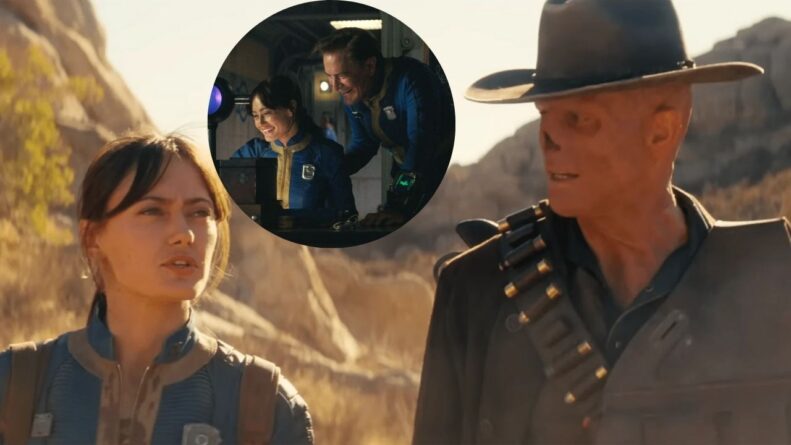
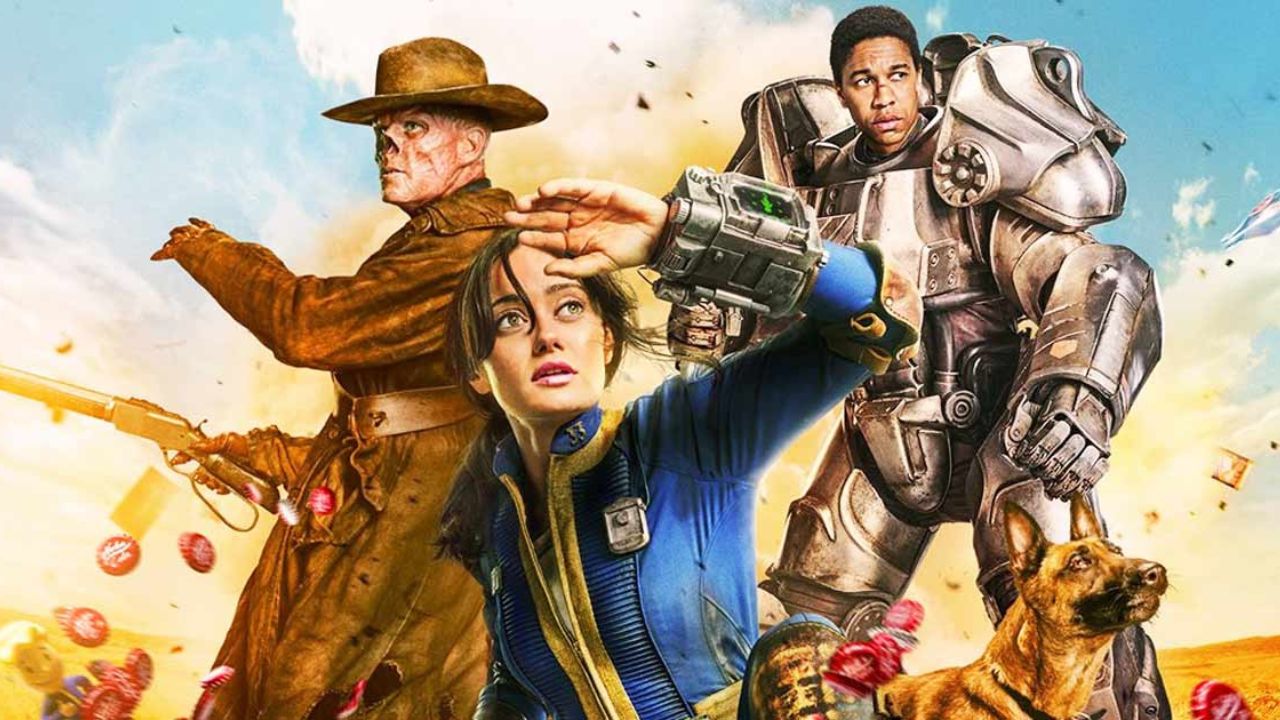
The core cast returns with evolved arcs. Lucy MacLean tries to cling to her moral “Golden Rule” in a harsher world. The Ghoul maintains a balancing act of cynicism and buried humanity, Maximus is disillusioned within the Brotherhood.
Image Credit: Fandomfans
Hank MacLean’s story line connects the Vault-Tec conspiracy directly to New Vegas, and Norm is still in Vault 31, finding deeper institutional secrets.
Manufacturing was moved to California to take advantage of tax credits and film in Mojave-like terrain for enhanced visual authenticity. Despite concerns that devastating wildfires could interrupt work, the group persevered and brought forth their most visualized effort—including the much anticipated Deathclaw.
“Showrunner Geneva Robertson-Dworet revealed that a number of crew members were displaced by the fires, but kept going to finish the season.”
Conclusion
Fallout Season 2 is a tightly controlled-event. With its savvy scheduling, brazen marketing, its weekly storytelling, and its planned grand narrative, the series has made clear that it intends to be a long-term cultural and commercial force. As the narrative progresses into New Vegas, it returns to the franchise’s central question: In a world where everyone thinks they have already won, what do survival and rebuilding mean when war never changes?
Fandomfansis focusing on series, new episodes, narrative and cast members to provide you every detail you need to know.
Mariyam
Articles Published :
77
Mariyam Khan is Fandomfans Content Writer and providing reports and reviews on Movie Celebrities, and Superheroes particularly Marvel & DC. She is covering across multiple genres from more than 4+ years, experience in delivering the timely updates.