The Conjuring’s Next Prequel: A Fresh Scare With Award-Winning Director Rodrigue Huart

The next prequel to The Conjuring is coming from director Rodrigue Huarte, which will explore the origins of evil in the Conjuring universe.

Published: October 31, 2025, 12:21 pm

The horror realm which has captivated audiences for over a decade is nowhere near leaving. The Conjuring: Last Rites was set to be the final film in paranormal detectives Ed and Lorraine Warren’s arc, but the franchise’s immense financial success has breathed new life into the supernatural qua-machine. This time, a terrifying world from The Conjuring will be revealed in a bold new prequel. 

A Blockbuster Success Greenlights New Beginnings

For the fans of horror, it was news to shake the skies. A New Conjuring Universe Prequel Has Officially Risen from the New Line Cinema, via Borys Kit of The Hollywood Reporter. The green light came after The Conjuring: Last Rites smashed box office records around the world. The 2025 film grossed a staggering $84 million domestically and $194 million globally in its opening weekend, firmly establishing it as the horror genre’s highest-grossing film. 

The franchise’s parent studio couldn’t say no to expanding after raking in nearly half a billion dollars at the worldwide box office. The largest question mark looming over the series had, in a sense, been answered by this financial success: Would The Conjuring series continue? The answer was a resounding “yes.” 

The Next Architect of Nightmares

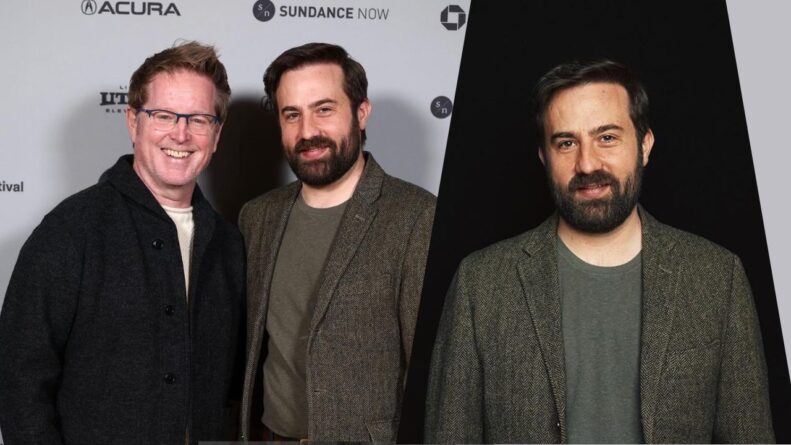
Short film director and winner of several awards, Rodrigue Huart, is in talks to direct this untitled prequel. It is the first ever big studio feature film for Huart, a big jump from his praised horror short film work. 

Conjuring Prequel 2025

The Conjuring universe could definitely benefit from his unique creative perspective. This will mark the first creative turn for a different director since Annabelle Comes Home (2019) following a series of productions led by Michael Chaves.  

Walter Hamada’s Influence

Huart is connected to the wider Conjuring universe via a curious thread. Huart’s script for the modern day take on the much loved 1976 Spanish horror Who Can Kill a Child? Paramount Pictures picked up Huart’s screenplay for “Suffer Little Children,” an updated version of the popular 1976 Spanish horror Who Can Kill a Child? Huart met Walter Hamada, a veteran executive and producer in the horror genre, through this project. 


Along with serving as executive producer on the biggest hits of the universe, including The Conjuring, Annabelle, The Nun, and multiple sequel entries, Hamada’s involvement with the franchise is that much more notable here. The choice to bring on the rising helmer for this major studio prequel may have been related to his continued partnership with Huart. This consider treating the established lore of the franchise prequel while also allowing Hamada to pursue creative decisions that lead to tried-and-true fear tactics might permit this business relationship. 

The Beginning of Another Era of Conjuring

The Conjuring: The Devil Made Me Do It, a Michael Chaves film that brought the Warren family storyline to a close, ended on a particularly strong note in the box office and storytelling sense. The ebb and flow of The film’s director, Chaves, has also made it clear that this was absolutely the end of the original saga, said that It is done. The title, Last Rites was intentionally chosen to signify the formal ending of a certain chapter.
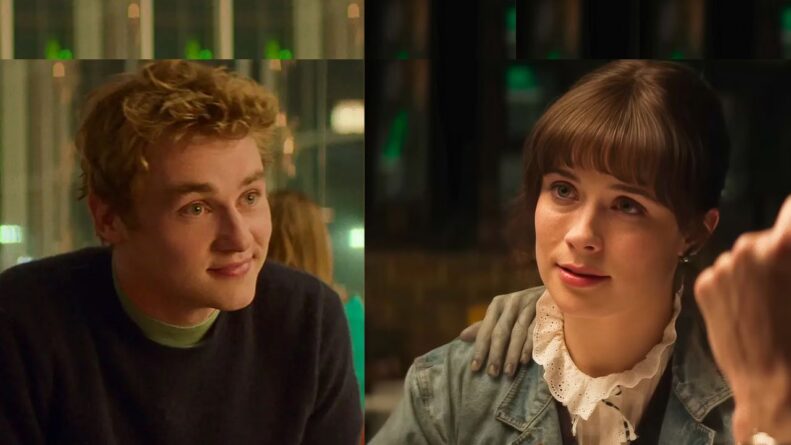
The Conjuring’s Next Prequel

The Warrens’ story may be finished, but the world they lived in still has a lot of unexplored potential to explore, as the prequel announcement goes to show. Instead of direct sequels, the franchise has taken the form of prequels and spinoffs that explore its mythology by going back to the origins of its demonic entities.  

What Lies Ahead for the Conjuring Universe?

The title of the prequel is yet unknown and the plot is currently under wraps. However, the project is expected to go back to the origins of the supernatural power that has plagued the Warren cases across the franchise’s history. Reports has it that the movie could be related to one of the greatest (and earliest) hauntings in the series. 

New Conjuring Film

If Rodrigue Huart is officially confirmed as director, it will be a new creative vision for the brand while still maintaining the unique fear that has always been the hallmark of The Conjuring. Combining found-footage style with digital narratives, he also has the potential to give horror aficionados a somewhat new angle on this beloved franchise that’s both frightening and futuristic. 

A billion-dollar franchise isn’t finished freezing audiences in terror. It’s just getting ready to frighten them in new and surprising ways. 

Conclusion

As The Conjuring universe moves into a new era with Rodrigue Huart at the helm, the franchise definitely has more terror in store for its audience. Last Rites was the emotional conclusion to the Warren saga, but this prequel is said to explore further into the terrifying source of evil that began everything. If Huart applies his iconic vision and storytelling skill to the material, fans will be in for a brand-new horror age that pays homage to the legacy of The Conjuring while reimagining its scares for a new generation. The haunting, it would seem, is still to come. 

Alpana

Articles Published : 130

Alpana is Fandomfans Senior Editor across all genres of entertainment. She evolved in the media industry since a very long time, she manages the content strategy and editing of all the blogs. Her focus on story development, review analysis, and research is well-equipped that ensures every article meets the standards of accuracy and depth.

Leave a Comment

Your email address will not be published.

Godzilla vs Kong: Hollow Earth and Axis Mundi of MonsterVerse Explained

Godzilla vs Kong delves into Hollow Earth, Axis Mundi, and Titan ancestries. Find out how the MonsterVerse fuses ancient myth with contemporary science. 

Written by: Mariyam
Published: February 27, 2026, 11:50 am
Godzilla vs Kong

Think falling down a spiral of blue, where gravity inverts and ancient titans wander through an upside down world pulled from myth — welcome to the MonsterVerse’s Hollow Earth, first revealed in Godzilla vs Kong. This subterranean world combines ancient myths like Agartha with modern science, making Godzilla vs Kong epic clash into the equivalent of doorways for deep lore. Dive in to see how this secret universe reshapes the franchise’s mythology. 

The MonsterVerse — the hugely profitable shared universe developed by Legendary Pictures and Warner Bros. has found a genuinely smart way to work its mythology. It combined two concepts that have captivated human thought for ages, the Hollow Earth idea and the notion of the Axis Mundi, and molded them into the axis of its narrative. But it didn’t just take these ideas wholesale for the story. It turned them into something different.

MonsterVerse’s Myth-to-Science Fusion

In older lore, hollow or subterranean worlds are spiritual ones meaning they’re afterlives, secret havens for the truly enlightened, or mystical planes along the lines of the fabled Agartha where timeless wisdom is maintained. 

The MonsterVerse takes out the theology and puts in biology. Its subterranean world is not a souls’ destination after death, or a place where secret masters find quiet meditation. It’s a living, breathing, wildly energetic system — the original home of the Titans, those massive beasts like Godzilla vs Kong that dwarf skyscrapers and carve coastlines simply by walking across them. 

MonsterVerse's Myth-to-Science Fusion

Within the franchise’s own internal logic, this subterranean world is more than just the monsters’ home territory. Kabbalistic perceptions describe being as layers or levels of planes of existence. The MonsterVerse does the same thing, but replaces divine judgment and mystical energy with speculative science, evolutionary biology and astrophysics. 

Three-Layered Structure of the MonsterVerse Underground World

The subterranean landscape of the MonsterVerse isn’t just one giant cavern. It’s some very specific portions of the United States divided into three zones, each with its character and function.

The Global Tunnel Network (The Caverns)

It starts with the caverns — the vast, global system of tunnels hollowed out of the Earth’s crust. In a technical sense, you could go from the surface down through these tunnels all the way to the lower regions, but it would take a very long time and push any traveler to his or her limit. They’re more like connective tissue than a thoroughfare. 

The Axis Mundi Zone 

The second layer is what Monarch: Legacy of Monsters calls the Axis Mundi and now we’re off the rails. Consider it a no-man’s-land, in between the world of the surface and the world of the true underground beneath. Gravity isn’t doing what it’s supposed to do here.

The Global Tunnel Network

Physics is contorting in ways that they shouldn’t. Time is slithering and bending all around us. It’s a volatile limbo, not really one world, not really the other, and crossing it requires that you have either special equipment or a willingness to emerge the other side quite rattled. 

Hollow Earth Core (The Titan Homeland)

The third and final layer is the Hollow Earth core itself, where the franchise takes its imagination into overdrive. It’s a reverse landscape of terrifying scope — a world upside down, with its own weather, its own ancient forests and oceans, its own prehistoric creatures, and at its core, a radiant energy source that acts like a mini sun. It’s where the Titans were born, where their ancient civilizations rose and fell, and where the deepest roots of the MonsterVerse’s world lie hidden and waiting. 

How Titans Travel Through the Planet

Travelling from the surface to the depths of the Hollow Earth is not simply a matter of excavating. The distances are immense, and the geology between is basically toxic to anything attempting to make its way through. So how do Titans the size of mountains go under the ocean and come up on the other side of the world? The MonsterVerse’s solution is simple: they don’t go through the rock. They Go Around It.

What Are Vile Vortices?

There are natural spatial rifts scattered across the earth, which the franchise terms Vile Vortices, places where spacetime itself doubles in on itself, allowing one to traverse thousands of miles in just seconds. These are not tunnels or caves. They are worm holes, geological in creation but functioning more like holes in the fabric of space. In that regard, they are the MonsterVerse’s most straightforward representation of the Axis Mundi. 

Where Eliade conceived the Axis Mundi as a spiritual pathway, a channel through which shamans can travel through time and space in trance states, the Vile Vortices take that journey literal and physical. The revered track between the worlds turns into a quantifiable, trackable, scientific classified event. 

How it Connects to Real World Geography

What makes these portal locations in particular brilliant from a narrative perspective is simply where the writers decided to locate them. Instead of creating fictional geography, the MonsterVerse embeds its gateways within real locations that have already grabbed the human imagination, if for very different reasons. 

Real-World Portal Locations in Godzilla vs Kong Lore

Bermuda Triangle — The Vortex Cluster

The Bermuda Triangle, a geographical mystery best known in pop culture, is in the MonsterVerse a region with the highest accumulation of Vile Vortices — which explains a few decades of folklore about ships and planes vanishing into thin air. 

Antarctica — Humanity’s Gateway to Hollow Earth

Antarctica, which has been linked with conspiracy theories about polar access to inner Earth and Cold War conspiracies for ages, is the primary gateway in Godzilla vs Kong that the humans first cross that line and go down to the core. 

Mariana Trench — Godzilla’s Personal Transit Route

The Mariana Trench, the deepest part of any ocean, and a location that even now feels alien to most of the people who look at it, is Godzilla vs Kong personal transit hub — the underwater gate he crosses to reach his ancient temple deep below. 

Real-World Portal Locations in Godzilla vs Kong Lore

Skull Island and Area 51 — Monarch’s Hidden Watchpost

Skull Island, which anchors Kong’s origin story, lies at the center of a web of vortices that had already begun to destabilize when the films took place. Area 51, that longstanding nexus of governmental conspiracy mythology, has been recast not as a secret hangar for alien spacecraft but as a Monarch observation post, monitoring Titan activity underground. Infant Island retains its significance from the original Toho films, effectively keeping Mothra’s mythological home intact from the original continuity within the new one. 

Global Portal Network

Egypt, Kazakhstan and Japan are added to the portal scattering across the globe, reinforcing the idea this subterranean line runs worldwide – under ancient civilizations and modern cities, alike.

The motif here is intentional. By basing its fictional geography on place people have preexisting fears of or find weird, the Monster Verse establishes a reality it seems like has just been under the surface of the real world all along. 

Axis Mundi — The Most Terrifying Place in Monarch: Legacy of Monsters

In most myths the term Axis Mundi is used to refer to a giant cosmic tree or pillar which connects various levels of the universe as a central point for the organization of the cosmos. The Apple TV+ show Monarch: Legacy of Monsters does something different. It’s using that term to designate a unique and horrible place in the Monster Verse’s subterranean landscape. In so doing, Monarch: Legacy of Monsters pulls off one of the franchise’s most intellectually daring aims: it synthesizes ancient cosmological symbolism with the actual mathematics of Einstein’s theory of relativity.

The Most Terrifying

In Monarch, the Axis Mundi, well, it’s not the luxurious, panoramic underground world reminiscent of Godzilla vs Kong. That place is the central core of Hollow Earth, with its inverted terrain and miniature sun that is a whole other ball of place, much deeper and far more stable. 

How Titans Pass Through it

The Axis Mundi is what lies between. It is a shadowy, unpredictable spate of underground pockets trapped between the surface world above and the core beneath in a gravitational standoff. Godzilla vs Kong-sized Titans consistently and seamlessly pass through it as if it were just an airport that everyone must go through like a requisite checkpoint on the journey to somewhere. But for them, that does not become a mere transit stop, it becomes much worse. 

How Beings Get Trapped in Axis Mundi

No one who goes to the Axis Mundi does so intentionally. It is what goes wrong when crossing a Vile Vortex. “The mechanics of these things, as explained by the show, are just trajectory,” to navigate a vortex successfully, you must keep moving constantly downward through the gravitational inversion at its Heart. This sustained direction is what takes you through to the other side, into the Hollow Earth core. 

But if that trajectory is disrupted, the traveler doesn’t bounce back its origin or stop, which means they are stuck there forever. They don’t come out the way they went in. Instead they get ejected sideways, spat out through a horizontal portal into the Axis Mundi instead. It’s not like there’s a dramatic warning. One second you’re plummeting down toward the core. Then all of a sudden you’re someplace else entirely, and getting out isn’t exactly straightforward.

It’s a brilliant piece of spatial storytelling. The difference between making it out safely or being trapped for all eternity is basically just a question of angle. 

Time Has No Meaning in the Axis Mundi

The worst thing about the Axis Mundi isn’t the dark or the shaking. It is what it does to time.

Since the plane is located at the center of conflicting gravitation fields of the surface Earth and the Hollow Earth core, there is a great deal of spacetime warping in that place. This is where Monarch: Legacy of Monsters plucks real physics for its scares. 

Time Has No Meaning in the Axis Mundi

Einstein’s general theory of relativity also tells us that time runs more slowly in stronger gravitational fields — the deeper you are in a gravity well, the more slowly your clock runs relative to someone in weaker gravity. The Axis Mundi takes that principle and turns it into a human tragedy.

Time within the Axis Mundi moves at a pace close to non-existence compared with the surface world. 

Time Dilation in Monster Verse Logic

The series Monarch: Legacy of Monsters actually makes this concrete with two characters whose narratives are involuntarily shattering when you discern what really is happening to them. Dr. Keiko Miura is Fallen into the Axis Mundi in 1959 on a mission that goes disastrously wrong. When she is finally located by the series’ contemporary other leads, she remains unaged. From her point of view, only a handful of weeks have elapsed. From the view of the world, almost sixty years have passed. 

They’re all old or dead. She had her era and it had moved on without her. She is physically unaltered and temporally marooned, living in the wrong era through no fault of her own.

Lee Shaw has a similar experience, believing he’s briefly visited the realm, only to reemerge to find that two decades have been wrenched from his life, transforming everything he’d left behind without his input. 

Read More:- Avengers The Kang Dynasty Not Only Changes Its Title But Also Superheroes Powers

Why Hollow Earth Doesn’t Cause Time Distortion

What makes the whole thing feel scientifically sound rather than arbitrary is that the main Hollow Earth core doesn’t do that. In Godzilla vs Kong the characters take time to explore that world for hours and come back to the surface with no temporal disturbance at all. The reason is that within the universe’s logic, gravity in the core has equalized. Encased within the Earth’s mantle on all sides, the pull of gravity cancels out and time runs at a normal rate compared to the surface.

But the Axis Mundi has no such balance. That is the uneasy midpoint, pinned between the attraction of two huge gravitational forces, and this formless tension is just what makes it so dangerous. 

Myth Meets Physics: The Old Legend of Agartha

To the effects that time dilation creates has an even mythological resonance. A place where people cease to age, where centuries pass outside as moments pass inside is the old legend of Agartha, the subterranean world where ancient, enlightened beings reside exempt from the flow of time on the surface above. 

The Old Legend of Agartha

The Monster Verse reaches that same figure through physics rather than allowed Mysticism, that’s exactly the kind of translation that makes its world-building seem genuinely layered. Godzilla vs Kong translates myth into physics. 

Conclusion

It’s a film about two giant monsters fighting it out on neon lit city streets at a quick glance. But if you look at what the Monster Verse has been quietly constructing under all the spectacle, there’s something much bigger going on here. 

Godzilla vs Kong film is what ancient myth would look like if you rebuilt it using the language of science. It’s spiritual cosmology redrawn with physics. It takes the oldest stories humanity has ever told — stories about gods, underworlds, sacred centers of the universe and reimagines them in a world where those things are real, just not in the way any religion ever told stories about them. The fantasy is still there but it’s been anchored in something that feels almost believable, a kind of speculative realism that makes the world feel simultaneously primitive and futuristic. 

What the Monster Verse has created isn’t fantasy — it’s a parallel cosmogony. Gods are made biological, myths become historical, and divinity converts to energy. The so-called “monsters” were never invaders but they were the planet’s first rulers, shaping Earth for years before humanity came into being.

And that changes everything. The difference is that the true battle in Godzilla vs Kong isn’t Godzilla and Kong — it’s humanity and the reality of who really owns this world. 

Dive into the world of the monster verse with Fandomfans to get the latest updates on theories, characters and facts from movies and series.

Mariyam

Articles Published : 69

Mariyam Khan is Fandomfans Content Writer and providing reports and reviews on Movie Celebrities, and Superheroes particularly Marvel & DC. She is covering across multiple genres from more than 4+ years, experience in delivering the timely updates.

Leave a Comment

Your email address will not be published.

Blue Moon (2025): Richard Linklater’s Poignant Masterpiece on Art, Loss & the Cruelty of Time

Explore Blue Moon (2025), Linklater's poignant film on art, loss, and time, featuring Ethan Hawke's career-defining portrayal of Lorenz Hart.

Written by: Alpana
Published: December 5, 2025, 10:31 am
Blue Moon

Richard Linklater is known for his temporal distortions, which he often varies over the course of decades, as in the Before trilogy or Boyhood. But in his 2025 magnum opus, Blue Moon, he does something radically different. He condenses the crushing burden of an entire career going down the tubes into a single confining night in the bowels of Sardi’s restaurant.

This movie is not simply a biopic, it’s a chamber piece on the brutal architecture of artistic mourning. It is March 31, 1943, and with these words the film memorializes the end of the Jazz Age, which was immediately supplanted by the “golden age” of the musical theater. 

Larry Hart’s Emotional Unraveling Inside the Walls of Sardi’s

The setup is ruinously straightforward. Lorenz “Larry” Hart (an electric Ethan Hawke), the brilliant, jaded lyricist half of the legendary Rodgers and Hart team, is holding up the bar at Sardi’s.

Blue Moon 2025
Andrew Scott, Margaret Qualley, & Ethan Hawke in Blue Moon | Image credit: Fandomfan

Just across the street, his one-time soul mate and partner, Richard Rodgers, is debuting Oklahoma! with another partner, Oscar Hammerstein II. Hart must wait in the limbo of the restaurant, the muted applause he can hear is the sound of him being made redundant. 

Linklater has said the film “Deals with a trauma that is, in a way, two-fold.” 

This is not just a business split, it’s an artistic divorce between two men who defined an era together. Rodgers, the practical puppet master, had to change in order to live, to detach himself from Hart’s chaotic alcoholism and revue-style wit to something more formal and honest. Hart, the poetic soul of the roaring twenties, was just abandoned. 

Read More 👉 Martin Gero and Amazon MGM Studios is looking for a New Cast for The Military Sci-Fi Series

Ethan Hawke’s Career-Defining Transformation as Lorenz Hart

The brilliance of Blue Moon is that it knows how to wait. According to The Guardian, Linklater and Hawke had been thinking about this film for more than ten years. Linklater famously told Hawke years ago, 

“I’ll wait 10 years,” 

Knowing the actor had to age into the role. To play the battered, gnome-like figure of the 47-year-old Hart, a guy worn down by drink and depression, he had to lose his youthful boyishness. 

Lorenz Hart
Image credit: Fandomfan

That prolonged timeline gives the film a deep, lived-in sadness. We see Hart desperately go through the motions of his old self — flirting, quipping, drinking trying to drown out the scary fact that the society he helped shape has no use for him anymore. He derides the “corny” nostalgia of Oklahoma! and cannot understand why the audience’s preference has moved away from his urbane sophistication to simple country sweetness.

Blue Moon Feels Like a Love Letter to Forgotten Artists

“We all think we’re gonna run the table forever but tastes can change,” Linklater says in the production notes. 

That is the film’s haunting thesis. Blue Moon is a monument to the “loser” of historical change. It’s a beautiful, sad recognition that sometimes even the most brilliant cultural architects find themselves trapped in the past, watching the future being built just down the street without them. 

Image credit: FandomfanEthan Hawke Lorenz Hart
Image credit: Fandomfan

Conclusion

Blue Moon isn’t merely a movie — it’s an elegy. Linklater creates a haunting reflection on change, mourning and the slow brutality of time. The film, anchored by Ethan Hawke’s brilliant performance, reminds us that even the most brilliant creative minds can quickly become relics. It’s a masterwork of stillness, sorrow and storytelling: a paean to those who made the past even as they watched the future speed by. 

Our daily coverage brings you the key takeaways, storytelling and pop-culture shifts from cinema. The Fandomfan’s mission is to assist you understand films not just as entertainment, but as cultural events that influence in the world of what we think. 

Alpana

Articles Published : 130

Alpana is Fandomfans Senior Editor across all genres of entertainment. She evolved in the media industry since a very long time, she manages the content strategy and editing of all the blogs. Her focus on story development, review analysis, and research is well-equipped that ensures every article meets the standards of accuracy and depth.

Leave a Comment

Your email address will not be published.