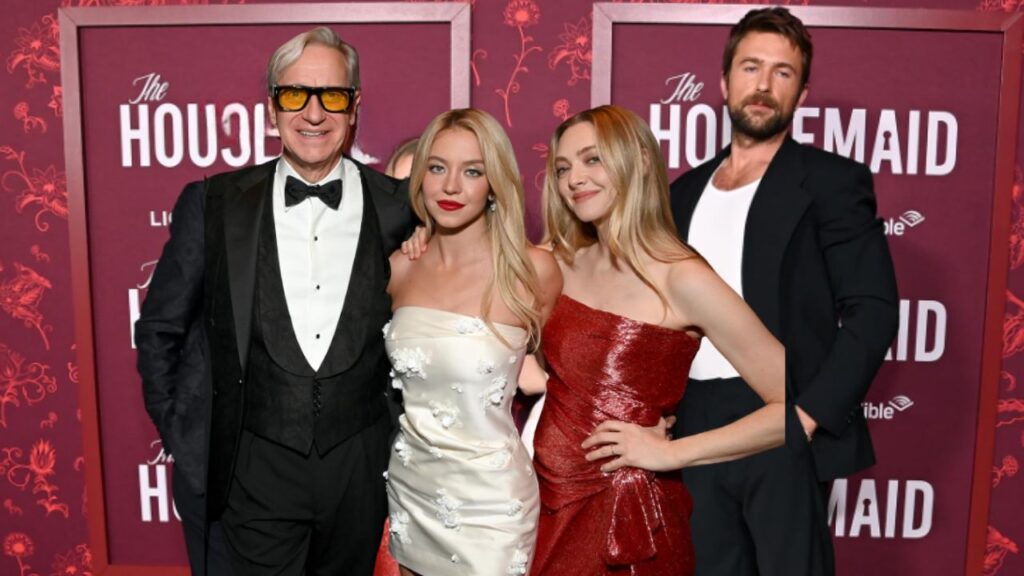
Psychological thriller The Housemaid, to be released late in 2025, is already set to define the theatrical look. Directed by Paul Feig from the 2022 literary phenomenon by Freida McFadden, the movie is a significant moment of convergence for digital-age literary culture and traditional Hollywood production values. Originating from the “BookTok” culture, where McFadden’s writing thrilled millions, the movie had to find a way to visualise internal psychological conflict.
The resulting film, produced by Hidden Pictures and released by Lionsgate, grossed an astonishing $247 million worldwide on a modest $35 million production budget, making it one of the rare R-rated thrillers to achieve major commercial success.
The Housemaid Movie Overview
Feature
Details
Director
Paul Feig
Lead Cast
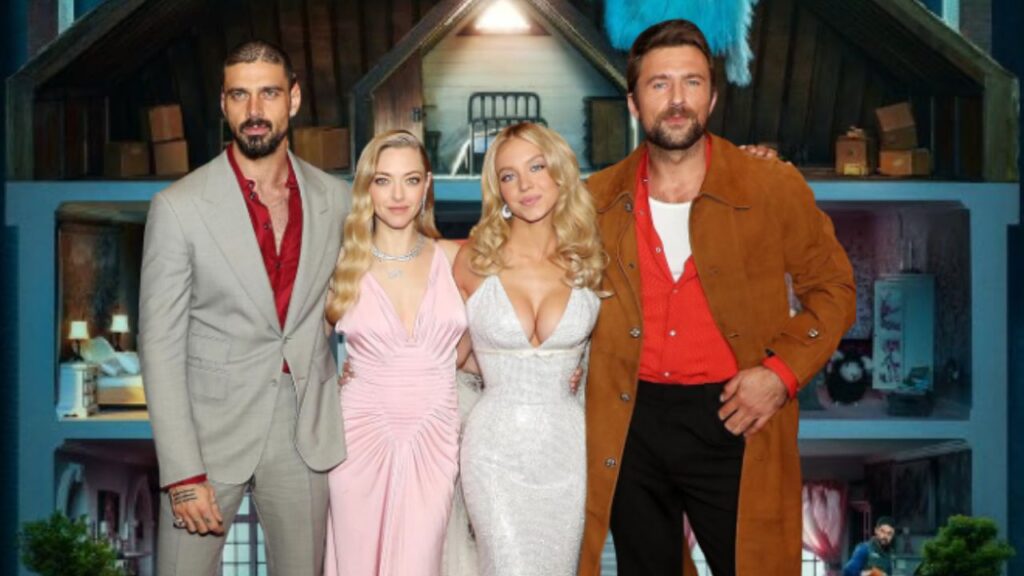
Sydney Sweeney as Millie, Amanda Seyfried as Nina, & Brandon Sklenar (Andrew)
Based On
2022 Novel by Freida McFadden
Genre
Erotic Psychological Thriller
Production Budget
$35 Million (Filming cost approx. $46M)
Box Office Collection
$247 Million Worldwide
Release Date
19/December/2025
Key Themes
Class Warfare, Psychological Manipulation, Domesticity
Primary Location
Great Neck, Long Island (Filmed in New Jersey)
Production Houses
Hidden Pictures & Lionsgate
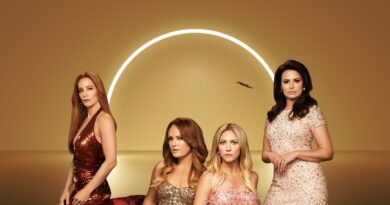
The Housemaid is an American erotic psychological thriller that doubles as a layered examination of class, power, and the performative suburban domesticity. With her eyes on the prize her daughter, Millie Calloway (Sydney Sweeney), a girl with a criminal record trying to keep her life together under the threat of parole conditions, is at the center of the story. Her path to the orbit of the extravagant Winchester family in Great Neck, Long Island, prompts a tale that methodically tears down the front of the “perfect” American home.
Director Paul Feig, best known for comedies such as Bridesmaids, gave the film a different tone, calling it a “Nancy Meyers movie that goes horribly wrong.” The treatment was influenced by luxury home imagery — a spotless, “all-Pantone-white” house followed by a turn into psychological horror.
Release Date & Availability
Release Milestone
Date
Platform/Location
World Premiere
2/December/2025
Axa Equitable Center, NYC
U.S. Theatrical Release
19/December/2025
Nationwide
Digital/PVOD Release
Jan 13 – 20, 2026
Apple TV, Prime Video, YouTube
Physical Media
17/March/2026
Blu-ray / 4K Retail
Subscription Streaming
April/2026
STARZ
Genre, Theme & Setting: The Gothic Subverted
The movie sits at an unusual crux of suburban horror and mystery. Located in Great Neck–a region known for historical American wealth–the film establishes a contemporary “Gothic” space where upper class seclusion permits the unrestrained wielding of power.
Class Warfare: Parolee Millie’s very existence makes her rare prey, and the Winchesters prey on this by way of psychological manipulation.
The Attic Symbolism: The room Millie occupies turns out to have a door that locks from the outside, she is a hidden trauma behind the “all-white” interior of the house.
The “Nancy Meyers” Look: Production designer Elizabeth Jones turned a New Jersey mansion into a “perfect white place,” which the movie gradually tarnishes, tracking the moral decay of the characters.
The Creative Powerhouse
Paul Feig’s move from comedy to thriller tapped into a “darker, mind-bending type of story telling.” He was joined by screenwriter Rebecca Sonnenshine who made the book even more shocking for the screen.
Key Creative Impact:
Paul Feig (Director) brought “wicked fun” and camp to the thriller.
Freida McFadden (author/executive producer) – A global bestseller, the novel gets a true-to-source adaptation.
John Schwartzman (Cinematography) Employing much of “90s movie lighting,” he achieved a dark, glossy effect.
Theodore Shapiro (Music) Composed a score that mixes suspenseful music with contemporary motifs of psychology.
Plot Overview: A Masterclass in the Twist
The storyline is built around a series of reversals. It opens with Millie finding live-in maid work for Nina (Amanda Seyfried) and Andrew Winchester (Brandon Sklenar).
The Descent and the Revelation
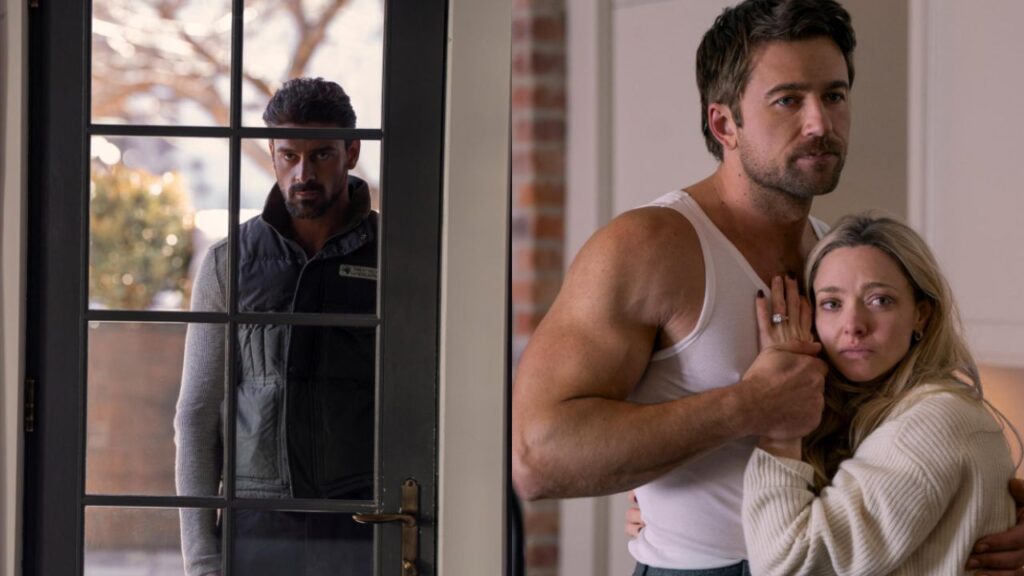
Millie, witnessing Nina become more unhinged, starts seeing the apparently perpetually put-upon Andrew. But the midpoint reveal flips the script: Andrew is the real predator. The attic suite had been built to hold women captive, and Nina wielded her “madness” as a kind of psychological armor.
In a chilling climax, Andrew tries to coerce Millie into self-mutilation. Nina comes home to save her, and eventually Millie knocks Andrew over a spiral staircase. The film closes on a cynical but uplifting note: Millie takes on yet another maid gig, this time as a silent protector for other abused wives.
The film works because its leads are playing characters whose real selves are concealed until the last act.
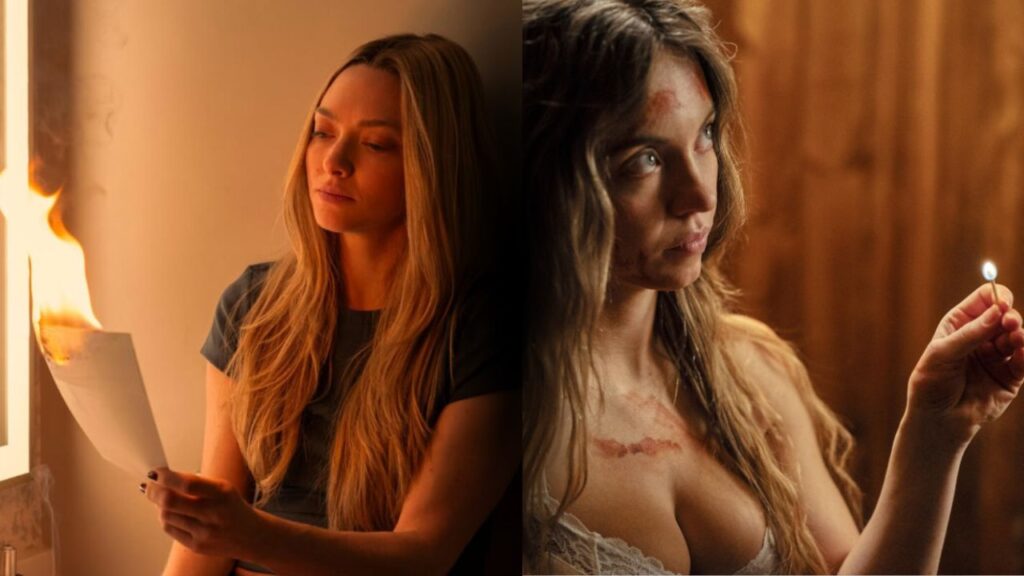
Sydney Sweeney (Millie): Instills a “panic and fear” into Millie as she transforms from a brittle survivor into a dynamic, vengeful powerhouse.
Amanda Seyfried (Nina) : This is the most positive critical reception to the film for her ‘unhinged’ turn, perfecting a “mean girl smile” to conceal her tactical mind.
Brandon Sklenar (Andrew): Tap into his imposing physical stature to genuinely make you fear this Mr. Rochester–type antagonist.
Production & Budget of The Housemaid
The series filmed around $46 million in New Jersey and used locations including the Madison Mansion and Rutt’s Hut to anchor the film in a familiar suburban reality.
Market Performance
The film’s opening weekend was $19 million via Lionsgate, however it demonstrated surprising “legs,” with a second weekend drop of just 19%. With a 7.0x return on investment (ROI), it became one of the most profitable releases of the year.
Platform
Rating/Score
Rotten Tomatoes (Audience)
92%
Rotten Tomatoes (Critics)
75%
CinemaScore
B
PostTrak
84% Positive
Conclusion
The Housemaid (2025) is a victorious updating of the erotic thriller. It was a cross between TikTok-inspired literary successes and “lurid” 90s cinematic style. With a follow-up, The Housemaid’s Secret, in the works, the home-front deception formula continues to prove a fruitful cinematic arena.
Fandomfans is a platform where you can find every detail from the blockbuster hits of your favorite stars.
Babita
Articles Published :
25
Babita is Fandomfans Editor, experience in managing content. Her focus in general movies and web series. She is having a deep interest in TV shows and 90s movies - particularly Lord of the Rings, Harry Potter, & Rom-Com. Babita also covers psychological thrillers and major releases in current time and concern with deep interest in them.
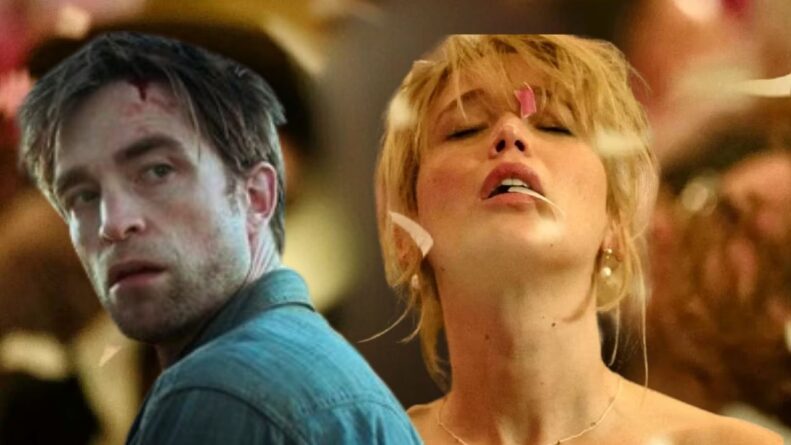
Buzz builds for Die My Love. This is mind-bending dark drama duo’s first pairing. It is directed by Lynne Ramsay. She got an Oscar nom for We Need to Talk About Kevin. Ramsay and playwright Enda Walsh, along with Alice Birch, co-wrote the screenplay. The narrative is adapted from the Argentinean novel by Ariana Harwicz Die, My Love. It follows Grace, played by Jennifer Lawrence. She writes and is a new mother. Her psychosis disintegrates when she and her husband Jackson (Robert Pattinson) move out of New York City to his childhood home in rural Montana. In the film, Grace suffers from postpartum blues and madness. These things begin to crack her marriage. There’s heat building in the desolate rural location, too. Reports by Mubi. The company describe it as Ramsay’s razor-sharp perspective on a woman consumed by love and wild thoughts.
Powerhouse Production Backed by Scorsese and Lawrence
Die My Love is a celebrity-powered indie. Besides starring, Jennifer Lawrence is producing through her banner Excellent Cadaver and Martin Scorsese is producing via his Sikelia company. Scorsese, in fact, backed the project after he read the book as part of a book club, he recommended it to Lawrence. The two even passed on adapting another classic book because it presented a tougher role. Lawrence fought for it despite Ramsay’s initial hesitation (she’d just done a similar motherhood movie). One version has it that Lawrence was determined to have a go at working on Die My Love as a team and talked Ramsay into turning it from a straightforward depression narrative into a “bonkers, crazy love story.”
Jennifer Lawrence and Robert Pattinson are headlining the film’s ensemble. Lawrence plays Grace, a mother and wife about to break. Pattinson is Jackson, her husband. LaKeith Stanfield has been cast as Grace’s forbidden love interest. Legendary actors Nick Nolte and Sissy Spacek star as Jackson’s parents. Grace and Jackson are said to be relishing their new beginning, via People. They have a good time with sex and crazy dances. But once the baby arrives, Grace’s isolation and mental illness strain their relationship.
This Lawrence–Pattinson chemistry is what makes this especially exciting to fans. Lawrence, an Oscar winner for Silver Linings Playbook, is known for dramatic as well as blockbuster roles Hunger Games, while Pattinson went from being a teen heartthrob Twilight to an indie darling Good Time, High Life, and now, Batman. The two actors have praised each other’s performances and Lawrence has joked in interviews that starring opposite Pattinson at last is total revenge after her failed Twilight audition.
They were reported to have gotten close off-screen during the film’s premiere in Cannes. Lawrence joked that having kids changes everything and Pattinson added that becoming a father has provided him with the biggest trove of energy and inspiration to work. (Lawrence has also said that playing Grace added another layer for her by drawing on her own difficult postpartum experience).
The excitement ran high as Die My Love made its Cannes Film Festival debut in 2025. The critical response was overwhelmingly positive. Lawrence’s acting received an “award-worthy” standing ovation for around nine minutes, according to People. The MUBI buyout campaign draws attention to this praise. Trailers show Lawrence in wild dance, fight and fierce growl sequences deep in emotion. It is this hard edge that Ramsay can do so well.
A Darkly Comic Love Story About Insanity
Ramsay, who refers to the film as a dark comedic love story about insanity, Pattinson joked some moments are “hilarious” in a twisted way, she said.
Die My Love is a relentless, unsettling drama — a peek at a marriage disintegrating under the pressure of new parenthood. Ramsay directs the film, with Walsh and Birch as co-writers, with major producers attached (including Lawrence and Scorsese). Jennifer Lawrence is Grace and also produces through Excellent Cadaver, while Robert Pattinson is her husband Jackson.
The film is slated to be released in U.S. cinemas on 7 November 2025 after premiering at Cannes on 17 May. This pairing of acting titans both heavy Oscar front-runners has the fans talking, in part because reports have them pushing one another on set. Ramsay calls the completed film a really dark love story that’s also funny, and Lawrence gives what some are already calling the most riveting performance of her career.
Conclusion
The unrated My Love is becoming one of the most awaited movies of 2025 — an unrefined, haunting, and passionate exploration of love, insanity, and motherhood. With Lynne Ramsay’s distinctive intensity leading the way and Jennifer Lawrence and Robert Pattinson delivering powerhouse performances, the film will no doubt be both visually breathtaking and psychologically enthralling. Lawrence’s performance as Grace has already earned early Oscar buzz, and Pattinson’s reserved yet multifaceted portrayal provides a tether for her spiraling descent.
Alpana
Articles Published :
156
Alpana is Fandomfans Senior Editor across all genres of entertainment. She evolved in the media industry since a very long time, she manages the content strategy and editing of all the blogs. Her focus on story development, review analysis, and research is well-equipped that ensures every article meets the standards of accuracy and depth.
Star Wars Character Kylo Ren’s Iconic Line That Changed the Skywalker Legacy Forever
Kylo Ren's memorable The Last Jedi line changed Star Wars, upending the Skywalker legacy and how fans would engage with the franchise moving forward. Read more!
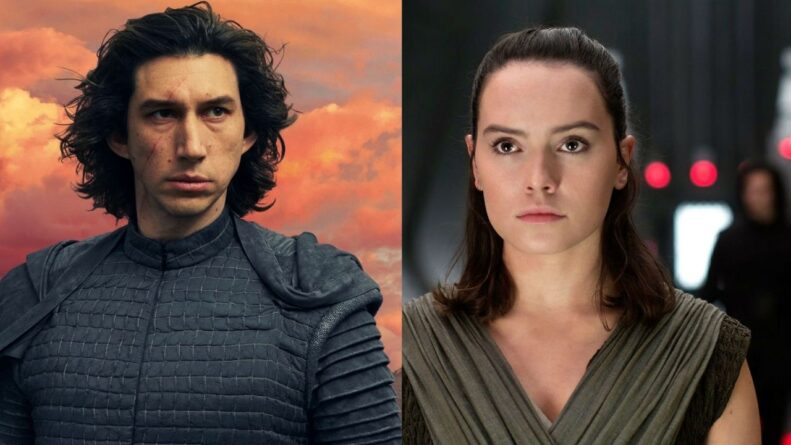
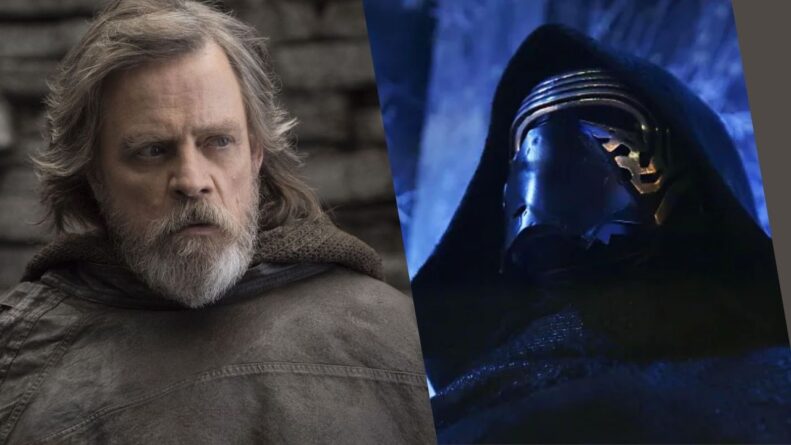
Kylo Ren uttered a line in 2017 that still makes the fan community go berserk: “Let the past die. Hide it under a rock, if that’s what you need to do. That’s the only way to become what you are meant to be.” We thought he was just a broody dark-sider having a mid-thirties crisis. Looking back on how the Star Wars sequels flailed their way to solid footing, it turns out Ben Solo wasn’t just a villain — he was a saving grace for the franchise.
For nearly half a century, the Star Wars “Skywalker Saga” has been the gravity well of Star Wars. But if it’s going to survive for another half-century, the franchise will need to get away from this Earth. We’re finally coming into an age where movies and games aren’t just ‘side stories’ to Luke’s lineage — they’re a statement of independence.
When Star Wars Skywalker Legacy Becomes Limitation
The sequel trilogy needed to push the continuity forward; yet it found itself anchored all too firmly to the Original Trilogy (OT). This isn’t to say legacy characters are bad; instead, narratives can’t lean on them as a primary structural crutch.
Image Credit: Fandomfans
Reaction to Luke Skywalker showing up in the Mandalorian wasn’t universally positive, among fans. A lot of people embraced it, while others dismissed it as “nostalgia bait” — a digital mask to hide an absence of narrative risk. Box office sales wise, playing it safe by making movies about known IP is a guaranteed winner for studios: 100% of the 10 highest grossing Star Wars films have a Skywalker, or a tie to the 1977-1983 era. But the critical exhaustion is tangible. For Star Wars to expand, it has to show it can be without a Skywalker on the credits.
Star Wars’ Big-Screen Escape from the Skywalker Era
The new film slate marks the most significant departure in franchise history. While The Mandalorian & Grogu will certainly placate the “Filoni-verse” fans with some familiar faces, the real meat is in the unknown:
Image Credit: Fandomfans
A Galaxy Without Legends
It’s been five years since the chapter (Rise of Skywalker) ends, and now here we are. Rumors are that there is no legacy character. If it gets that lived-in feel just right — without a single lightsaber ignite or a “hello there” — it could very well shift what the industry thinks Star Wars is.
Before Jedi, Before Sith: The Birth of the Force
Mangold is skipping ahead 25,000 years, so by doing so he’s not only stepping around legacy characters, he’s stepping around the entire notion of the Force as we understand it. No Sith, no Jedi Council—just the raw excavation of the galaxy’s mystic energy. This is the “Godfather of the Force” story we’ve been waiting for.
Rebuilding Without Repeating
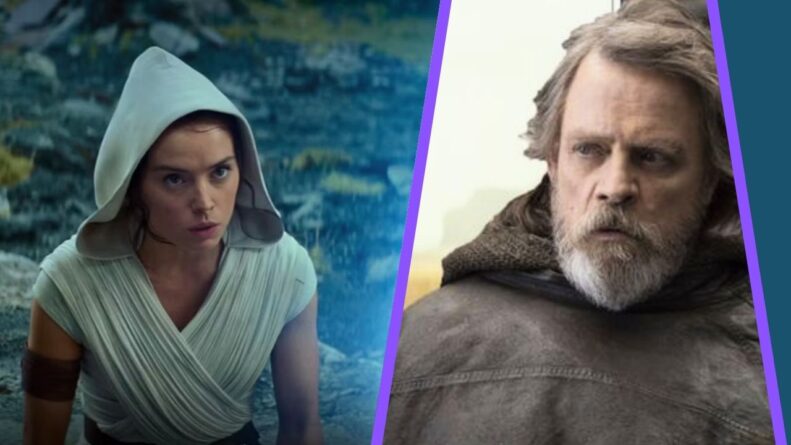
This is the precarious balancing act. Rey may have assumed the Skywalker name, but in order for the franchise to grow, she needs to construct something that isn’t just a mirror image of the failed Academy of the past. If she’s for the entire film talking to Luke’s Force Ghost, we haven’t gotten anywhere, we’ve just switched out the window dressing.
Image Credit: Fandomfans
The Soul of Star Wars Without the Surnames
Waititi has said he wants to “broaden out” the world. If his film evokes the cheerful, “used-future” style of the OT without relying on a single legacy cameo, it will demonstrate that the feeling of Star Wars is more powerful than the names in Star Wars.
Beyond Films: How Games Are Redefining the Star Wars Universe
The films have been wary, but Star Wars games have long been the point of experimental narrative storytelling. The future roadmap indicates a full separation from the “Vader-era” crutch:
Project
Era
Legacy Risk
Star Wars: Zero Company
Late Clone Wars
Moderate. Anakin and Rex are still active here.
Star Wars: Galactic Racer
Post-OT
Low. Focused on the underworld and speed.
Star Wars: Eclipse
High Republic
Low. Set 200 years before The Phantom Menace.
Fate of the Old Republic
Old Republic
Zero. More than a millennium before the films.
When the Force Becomes a Cage
Star Wars Jedi Fallen is the offender right now for taking “Vader-as-a-boogeyman.” For the third game to really connect, Cal Kestis needs to stop being a footnote in the Rebellion’s shadow. He needs a destiny that doesn’t finish with him being “too busy” to give Luke a hand in Episode IV.
How Real Storytelling Saves a Galaxy: The “Andor” Blueprint
If there is one thing the new age should learn, it is the Andor Lesson. Andor showed you can have legacy characters (Mon Mothma, Saw Gerrera, K-2SO) without them feeling like cameos. They didn’t exist because the marketing department wanted a trailer clip, they existed because the plot needed them there.
Star Wars, to its credit, has sometimes been skewered for having precisely no diversity of viewpoint, concerned consistently with a fantasy 1% of the galaxy (the Jedi and the High Command).
Image Credit: Fandomfans
In fact the Star Wars audience is diverse: roughly 40% of the active fanbase is female, and international audiences now represent more than half of the box office. Stepping away from the Skywalkers, the saga can tell stories that speak more to this broad, modern audience: tales about smugglers and soldiers and civilians who just happen to not have magic coursing through their veins.
Kylo Ren was right, but with a caveat: we don’t owe the past “killing,” we just have to stop residing in its basement. As it jets to the High Republic, the distant future, and the distant past, Lucasfilm is at last giving the galaxy some room to breathe. Star Wars’ Future Begins Where the Skywalkers (Masterpiece) End.
Dive into the world of entertainment with FandomFans to get every update from your favorite franchise.
Alpana
Articles Published :
156
Alpana is Fandomfans Senior Editor across all genres of entertainment. She evolved in the media industry since a very long time, she manages the content strategy and editing of all the blogs. Her focus on story development, review analysis, and research is well-equipped that ensures every article meets the standards of accuracy and depth.