Home > Web Series > Lambert Wilson Steps Into the Magical World as..
Lambert Wilson Steps Into the Magical World as Nicolas Flamel in HBO’s Harry Potter Series
HBO expands the Harry Potter universe with Lambert Wilson as Nicolas Flamel. Learn how this new casting brings new depth and magic to the magical world.
The Harry Potter universe is growing in exciting new directions, and the most recent casting information for HBO’s very hot Harry Potter series is exciting fans. The French actor Lambert Wilson, known for his iconic role as The Merovingian in The Matrix dystopian films, will play the legendary alchemist Nicolas Flamel. This news is a huge change from the original film series, which never actually had Flamel on screen, even though he was very important to the plot of the first book.
Collider reported, Wilson was recently seen shooting at the breathtaking Kynance Cove, Cornwall, England, with long white hair and a beard that captures the look of the ancient wizard in that cove of ageless looking black and white images. Also joining him is the renowned Swiss actress Marthe Keller as Flamel’s wife Perenelle, a role previously not seen from screen adaptations. The two were shot with John Lithgow (who portrays Hogwarts headmaster Albus Dumbledore) in what looks to be a powerful beach scene not included in J.K. Rowling’s original novel.
Why Wilson Is the Perfect Nicolas Flamel
Reports say Wilson, 67, has very impressive international credentials for the role. In addition to iconic Matrix performances, he’s known in French film for, among other acclaimed work, the award-winning Of Gods And Men. His casting is a testament to HBO’s dedication to authenticity — the real-life Nicolas Flamel was a French alchemist who lived from 1330 to 1418, and so Wilson’s native French roots make him a natural fit for the role.
What makes this casting especially exciting is the expanded arc for the Flamels that HBO is developing. Instead of the original movies, where Flamel was only referenced as the maker of the Philosopher’s Stone, the new show will delve into his wider ties to the wizarding world, such as his close friendship with Dumbledore and the bond he shared with Perenelle.Fans have speculated that the scenes at Cornwall may show Dumbledore telling the two about the choice to obliterate the Philosopher’s Stone, which would lend some emotional heft to the story’s ending.
The only earlier depiction of Flamel was by Brontis Jodorowsky in Fantastic Beasts: The Crimes of Grindelwald where he appeared as a frail elderly man. Jodorowsky kindly shared his thoughts on casting Wilson, comparing it to a baton race where you pass characters from one actor to another. He did say, however, that Harry Potter will always be Daniel Radcliffe to him.
HBO’s Bold New Take on the Wizarding World
HBO is now adapting Harry Potter into a series, suggesting the thought that it will be more than just a faithful retelling of the beloved books. Co-creators and showrunners Francesca Gardiner and successor director Mark Mylod both Emmy-winning powerhouse talent from Succession, helming the creative direction, the series is said to explore the lush mythology that the films could never fully realize in limited time.
Conclusion
With Lambert Wilson as Nicolas Flamel, HBO’s Harry Potter series is shaping up to combine the magic of nostalgia with new storytelling depth. The fans of the franchise can expect a more in-depth look into lost knowledge, nuanced characters, and the emotional core that made the series timeless. If the rumors are true, this series may not just return to the wizarding world — it may redefine it for a brand new era of viewers.
Alpana
Articles Published :
156
Alpana is Fandomfans Senior Editor across all genres of entertainment. She evolved in the media industry since a very long time, she manages the content strategy and editing of all the blogs. Her focus on story development, review analysis, and research is well-equipped that ensures every article meets the standards of accuracy and depth.
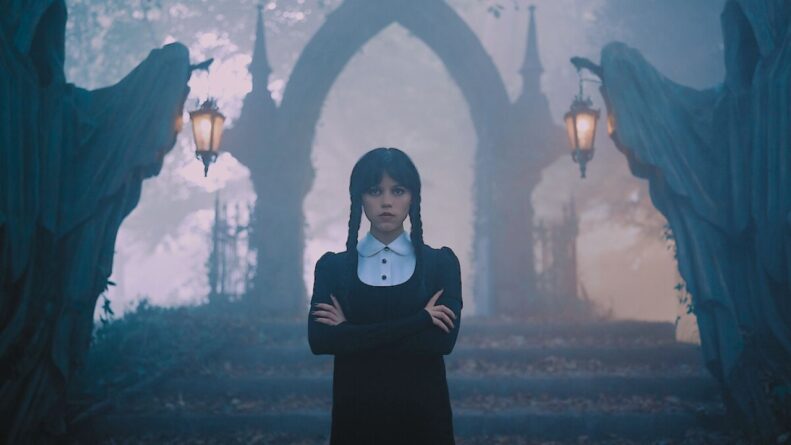
The fact that Eva Green has been cast as Aunt Ophelia Frump in season three of Netflix’s Wednesday is a huge win in the streaming giant’s content strategy and the growing creative evolution of the Addams Family franchise. The announcement was made official on 25 November 2025 through The Hollywood Reporter, putting an end to months of rampant speculation following the Season 2 cliffhanger.
Green’s addition isn’t just a casting coup, it is a clear shift towards high-stakes psychological horror given her natural and proven working relationship with executive producer Tim Burton and his gothic storytelling roots. It’s about how the popular “Lady Gaga” fan theories are being debunked, the production logistics that indicate a Summer 2027 release, and the deep lore of “Raven” psychics that implies Series 3 will be the franchise’s most intellectually daring outing yet.
The Creative Vision Of Showmaker & Eva Green’s Alignment
The decision to cast Green was accompanied by strong endorsements from the show’s creative leadership. Al Gough and Miles Millar, the creators and showrunners, issued a statement to Tudum that focused on what it is that Green brings to the role — attributes that fit with the show’s developing look and feel.
“Eva Green has always brought an exhilarating, singular presence to the screen — elegant, haunting and beautifully unpredictable, making her the perfect choice for Aunt Ophelia.” —Al Gough and Miles Millar stated
This is the key quote for understanding what Ophelia is supposed to do. The adjectives “haunting” and “unpredictable” suggest that the character will generate real narrative tension and perhaps menace rather than simply being a quirky relative.
Image credit: Fandomfans
The collaboration marks a reunion between Green and executive producer Tim Burton.Their earlier collaborations on Dark Shadows (2012), Miss Peregrine’s Home for Peculiar Children (2016) and Dumbo (2019) made Green the definitive “Burton Muse,” who could capture the director’s unique juxtaposition of the macabre and the sympathetic.
Green’s statement on being cast in the role showed a great understanding of the particular tone of the Wednesday universe—a mix of horror and satire.
“I’m excited to be a part of the haplessly warped world of ”Wednesday” as Aunt Ophelia. This is such a wonderfully dark and funny world, I am so excited to add my particular brand of cuckooness to the Addams family.” —Eva Green said
It suggests a performance that will oscillate between the comedic eccentricity traditional to the Addams Family and the “dark and twisty” depth Green is famous for.
The Evolution of Ophelia Frump
The Wednesday series has dramatically reframed Ophelia, removing all the sitcom levity for gothic tragedy.
The show draws a line between the types of psychic powers: “Doves” (such as Morticia) are gifted with positive, helpful visions, while “Davens” (such as Wednesday) are plagued by violent, bleak and isolating ones.
Ophelia is a confirmed Raven, just like her niece. And this designation is key, meaning that Ophelia’s “madness” is caused by the very same burden that Wednesday is carrying. She is a “Ghost of Christmas Future” for Wednesday—a cautionary tale of what occurs when a Raven goes “to the limit and beyond” with her gifts.
Unlike the 1964 version, Netflix’s Ophelia endured a traumatic past in and out of institutions. The story discloses that she was lobotomized at Willow Hill Psychiatric Hospital by her mother, Hester Frump (Joanna Lumley).
The Season 2 Cliffhanger: “Wednesday Must Die”
The trigger of Ophelia’s return is her journal, in possession of Wednesday, whom Morticia entrusts with it as a sign of trust. That object acts as a device, and the two women, aunt and niece (Wednesday) across time while having a vision.
According to Movieweb, The need to cast Green is so urgent because of the explosive final moments of Season 2, Ophelia (back view) in a red dress, committing “Wednesday must die” in her own blood on the cell wall. The iconic image of the finale—and the teaser for Season 3.
According to Collider, Ophelia’s statement that “Wednesday must die” makes her an immediate danger. However, given the “Raven” aspect of her abilities, she could be seeing a future in which Wednesday turns into a means to an end for potential global destruction, and her trying to kill him is a very warped form of heroism. Or, she could be affected by the madness brought on by her captivity.
Image credit: Netflix
Ophelia is more than a psychic threat, “blood on the wall” evokes a bodily threat and Wednesday has never been confronted by a relative in such a fashion.
The typical post-production schedule of 12 to 14 months for a show that relies heavily on VFX (with werewolves, hydes, and disembodied hands), Season 3’s estimated release is Summer 2027.
The Matriarchal Conflict
Hester (Joanna Lumley) is unmasked as a cold-blooded pragmatist who locked up her own child. In Season 3, Morticia (Catherine Zeta-Jones) and Wednesday face off with Hester, contesting the family pecking order.
Image credit: Fandomfans
Morticia is the “Dove” that survived by assimilating (somewhat), Ophelia is the “Raven” that was shattered. Green and Zeta-Jones together on screen is one hell of a clash of acting titans as they interrogate the guilt Morticia feels over her sister’s fate.
Conclusion
The choice of Eva Green to play Wednesday op indicates a clear rise in Wednesday’s franchise potential. In signing an actress of Green’s calibre – who is very much a face for the ‘gothic prestige’ genre – Netflix is making sure that season three has the dramatic heft to match the global phenomenon that the first two seasons have become.
Find your favorite celebrity news on Fandomfansas we are here providing breakdown of every story and casting characters with deep analysis.
Alpana
Articles Published :
156
Alpana is Fandomfans Senior Editor across all genres of entertainment. She evolved in the media industry since a very long time, she manages the content strategy and editing of all the blogs. Her focus on story development, review analysis, and research is well-equipped that ensures every article meets the standards of accuracy and depth.
Netflix’s Early Bet on The Lincoln Lawyer: Why Season 5 Was Renewed Before Season 4 Even Aired
Netflix has already ordered The Lincoln Lawyer Season 5 before the Season 4 premiere, a big vote of confidence in the future of Mickey Haller’s legal drama.
The Lincoln Lawyer Season 5 : In the accelerating pace of streaming, a week can be a lifetime. But on January 28 2026, Netflix did something that spoke volumes to the industry: they renewed The Lincoln Lawyer for a fifth season a mind-boggling eight days prior to the fourth season even premiering.
For a platform that has been criticized for its ”wait and see” approach towards data, this is an enormous vote of confidence. It means Mickey Haller’s silver Lincoln isn’t just gliding along; it’s putting the pedal to the metal in a new breed of “prestige procedural.”
The Strategy Behind the Early Renewal
Netflix is known for keeping its cards close to its chest, taking months to analyze “completion rates” before ordering more episodes. They’ve avoided a few risks by bypassing that window:
Creative momentum: Showrunners Ted Humphrey and Dailyn Rodriguez can keep the writers’ room white hot, moving directly from Season 4 fallout into The Lincoln Lawyer Season 5.
Sending the Market a Signal: It signals to the market that Season 4 (releasing February 5, 2026) is not the series finale. It’s a bridge to a much larger story.
Having been viewed more than 171 million times and sprawling across a staggering 26 weeks in the global Top 10, the “institutional logic” is clear: when you have a hit that straddles the line between high-brow drama and comfort-viewing procedurals, you don’t let the engine go cold.
Season 4: When the Lawyer Becomes the Lead Suspect
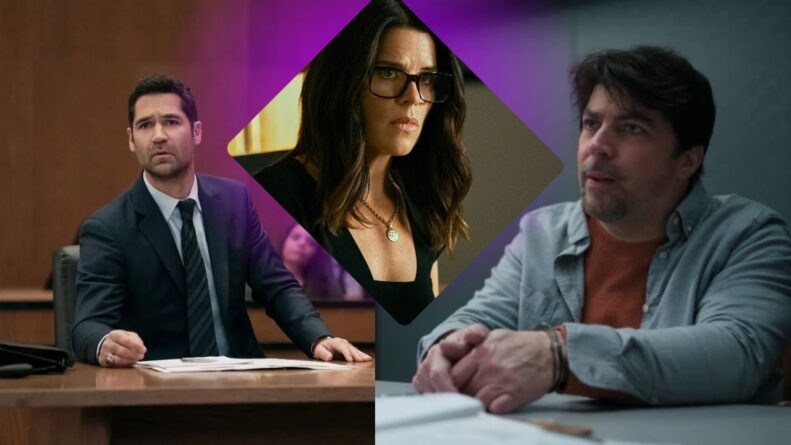
Mickey Haller (Manuel García-Rulfo) was the defendant’s underdog defense lawyer in the first three seasons, Season 4 changes the narrative. Adapted from Michael Connelly’s The Law of the Innocence, the stakes have never been closer to home—because this time, it’s Mickey who is wearing the orange jumpsuit.
The inciting incident is a classic Connelly hook: a routine traffic stop leads to the “finding of a body in Mickey’s trunk.” The victim? Sam Scales, the repeat grifter who hounded Mickey for three seasons over legal fees.
What makes The Lincoln Lawyer Season 5 different?
The Prisoned Main Character: For much of the season, Mickey is on the run inside prison walls, having to fend for himself in a whole new way.
The Serialized Shift: It’s no longer working with a ”case-of-the-week” feel, with the entire 10-episode story arc revolving around this one, exhausting trial.
The “Shark” Antagonist: Constance Zimmer (natch) is the newly introduced lethal prosecutor Dana Berg who comes to take Haller down.
Reinventing the Franchise Without Harry Bosch
One of the most intriguing challenges for the franchise becomes the “Bosch-shaped hole” in the narrative. Harry Bosch, Mickey’s half-brother in the books, is ever-present. But with Bosch now based at Amazon MGM Studios, Netflix has had to think outside the box.
For the forthcoming Lincoln Lawyer Season 5 (adapting Resurrection Walk), we anticipate more of this “narrative redistribution”. Even characters like Cisco and Lorna — who have grown from sidekicks to powerhouse investigators (and attorneys) will likely carry the brunt of the investigative heavy lifting that Bosch does in the novels.
Why The Lincoln Lawyer Hits the Legal Drama Sweet Spot
The Lincoln Lawyer has carved out a distinct space in the “Procedural Hierarchy.” It lacks the cold, emotionally detached atmosphere of Law & Order, but it also shuns the “super lawyer” gimmickry found on Suits.
Feature
The Lincoln Lawyer
Suits
Law & Order
Legal Accuracy
High (Trial focus)
Low (Drama focus)
Moderate
Moral Tone
Ambiguous/Gritty
Stylish/Corporate
Rigid/Idealistic
Character Depth
Deeply Serialized
Relationship-driven
Procedural/Objective
The Human Core of the Lincoln Lawyer Universe
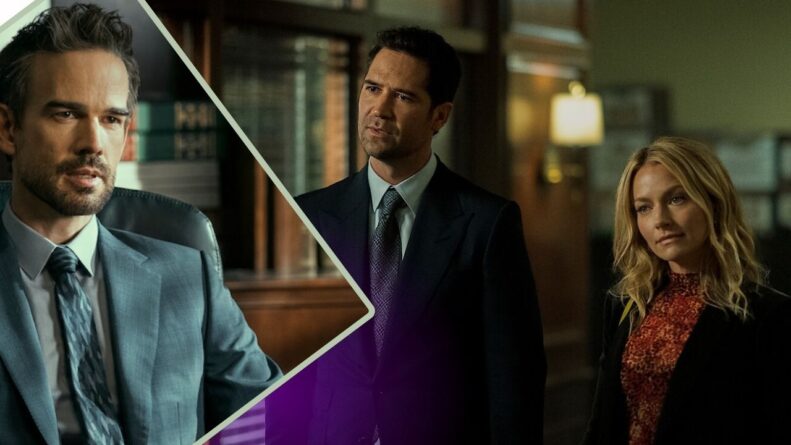
Aside from the legal jargon, it really works because we care about the “Lincoln family.” Seeing Lorna (Becki Newton) go from law school dropout to attorney, or Izzy (Jazz Raycole) go from driver to office manager, offers an emotional anchor.
Mickey Haller himself — played with a soulful, layered depth by García-Rulfo — is a scoundrel with a heart of gold.
“He’s a guy who would lie to a judge to win, but he’s lying to protect people the system would crush.”
Conclusion
So with The Lincoln Lawyer Season 5 set to air in February, the outlook is pretty bright for the Haller firm. Boasting a perfect critical score for Season 3 and a confirmed fifth season on the way, The Lincoln Lawyer has demonstrated that the legal procedural isn’t an artifact of days gone by—it’s the future of prestige television.
Dive into the world of entertainment with Fandomfansand get latest news.
Mariyam
Articles Published :
76
Mariyam Khan is Fandomfans Content Writer and providing reports and reviews on Movie Celebrities, and Superheroes particularly Marvel & DC. She is covering across multiple genres from more than 4+ years, experience in delivering the timely updates.