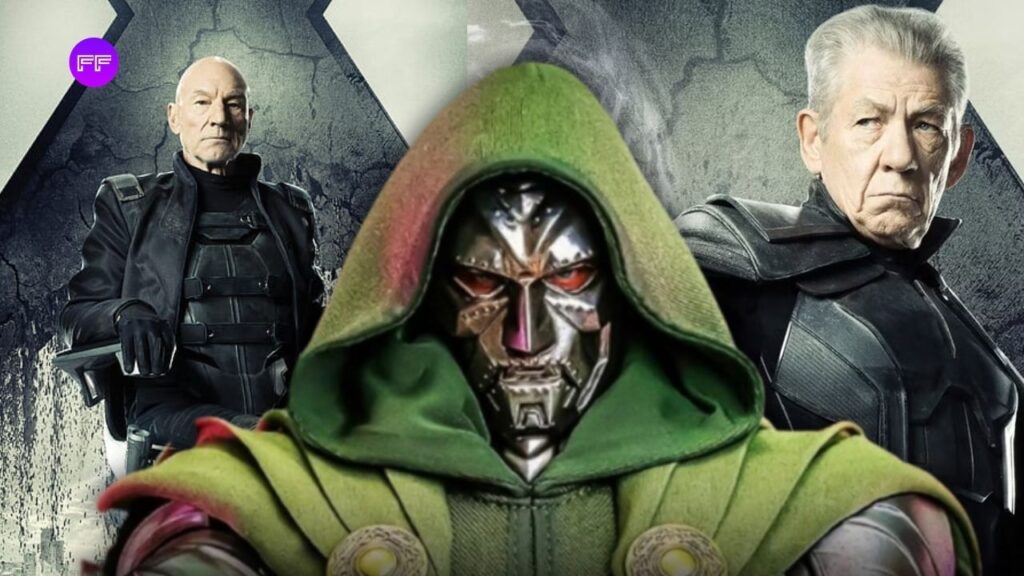
Avengers The Kang Dynasty is now Avengers: Doomsday, featuring major X-Men redesigns, Magneto getting powered up, and massive multiverse changes in the MCU.
Avengers The Kang Dynasty is now known as the upcoming biggest Marvel movie Avengers: Doomsday. The massive powers shift revelation comes from the Two Superheroes – Professor Charles Xavier (Patrick Stewart) and Erik Lehnsherr, aka Magneto (Ian McKellen) appearance with different costumes.
If you’re expecting the same X-Men mutants then forget about the mutants we met in early 2000s, Marvel Studios has engineered a radical visual and narrative redesign for these icons. Combining classic comic book flair with sharp, modern storytelling, these brand-new looks are more than just a cosmetic upgrade as they represent the characters’ psychological journeys, their crushing histories, and the strategies Avengers The Kang Dynasty adopted as they face a future of total multiversal annihilation.
After the confirmation that Doctor Doom is not coming alone in Avengers: Doomsday but gathering up legacy X-Men and Avengers for the biggest multiversal war which leads to the Avengers: Secret Wars.
What Magneto’s Kingly New Look Really Means
Magneto’s visual update in Avengers: Doomsday (Avengers The Kang Dynasty) is undoubtedly the most stunning design leap we’ve ever witnessed in superhero cinema. But for the past two decades, Magneto in live-action has been largely confined to drab tactical gear or somber armors. Doomsday throws that completely out the window. This time around, we have a fully comic-book accurate Magneto who looks equal part regal, weary, and apocalyptically scary.
Back to the Red and Purple Roots
Promotional art confirmed Magneto with classic red and purple attire for a fan and also most of it is storytelling.
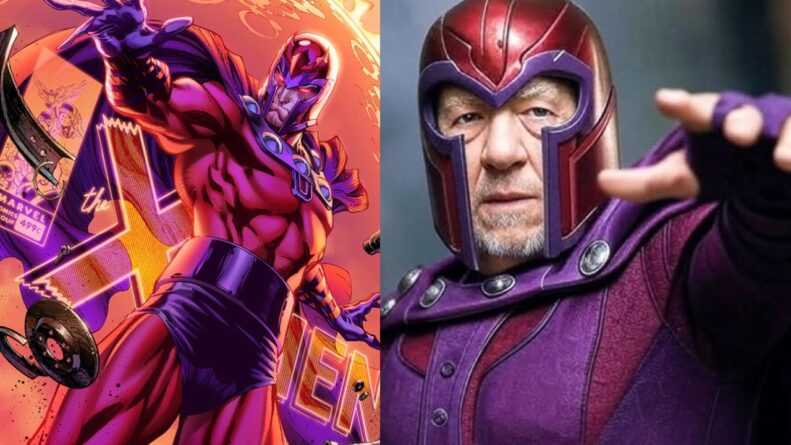
- The Armor and Cape: That streamlined red hard-shell armor looks like he’s prepared to be smacked around the universe. He’s not just a lonely fringe dweller in the shadows now: he’s a ruler — a reality-defending sovereign. Throw in that giant, theatrical purple cape and he exudes a level of imperial power that we’ve simply never seen in any of the other movies.
- The War Mask: Her new headpiece is the most eye-catching feature. It’s cleaner, heavily geometric, and borders his face with what looks like an ancient, intimidating war mask. It fully embodies his evolution from a mutant rebel to a battle-scarred king who has no interest in playing defense.
The Floating Throne of Magnetism
Want to know how the scale of Magneto’s power is now? Just watch how he moves. Concept art shows him holding court on a streamlined, high-tech floating throne emblazoned with a large “X” insignia.
It’s a great visual flex. It demonstrates his seemingly effortless mastery of magnetism in its absolute form, while lifting him above both friends and foes. It’s the ultimate power move but he’s not just destroying the system, he is ruling within it. The art’s background detail alludes to a man with a burdened past. Amid brutal and unforgiving choices to protect his species, Magneto is weighed down by the burden of his past losses.
Influence of X-Men ‘97
That’s the design being really smart. Despite his armor appearance to be very modern and futuristic looking, Magneto himself looks as though he’s been through it.
Based on the X-Men ’97 cartoon he now has long, messy white hair and a thick beard which describes him – a former warrior with years of pain, who fought battles and thinking that he left that war but only to be pulled back in for one last war.
That contrast is brought home with chilling effect by his haunting monologue in the teaser trailer:
“Death comes for us all.. It’s the only thing I know for sure… The question isn’t “Are you ready to die?” The question is “Who will you be when you close your eyes?”
A slop of unkempt hair resting atop the immaculate armor makes a striking and tragic dichotomy. Erik Lehnsherr, meanwhile, is completely drained inside. But on the outside? A very brief shout out to this unyielding force of nature.
What Makes Erik Lehnsherr in Avengers: Doomsday
In order to know what makes Magneto so intense and behave in the way he does in Avengers: Doomsday you need to know what’s holding inside his head. Although the comics didn’t add that detail until 1981, it is now the defining factor for Magneto in the films. His powerful character is shaped by an extraordinary amount of personal tragedy: he survived the Holocaust.
The Promise of “Never Again”
Magneto’s views were not just acquired from reading—it was forged in the heart of a nightmare. Having lived through the horrors of the concentration camp, he knows how cruel people can be and how fast a government can move to exterminate a people. That experience left him with one simple, ironclad rule that he abides by every day: “Never Again.”
That makes his response to the threat in Doomsday (also known Avengers The Kang Dynasty) completely predictable and terrifying. In the latest teaser, the X-Mansion is attacked by Sentinels — titanic, robotized extermination units built to hunt mutants. (If you noticed the giant Sentinel foot crushing the earth behind a screaming Cyclops, then you know Earth-10005 is living an apocalyptic dream). When you point extermination machines at Magneto’s people, his answer isn’t diplomacy; it is ruthless, deadly force.
From Separatism to Survival
Pop culture has long adored equating the ideological conflict of Professor X and Magneto with Dr. Martin Luther King Jr. and Malcolm X. While comic historians will undoubtedly tell you that is an imperfect, somewhat reductive comparison—Magneto’s comic-book extremes go far beyond Malcolm X’s actual historical platform, the films have very much played up this peaceful integration vs. militant separatism dynamic.
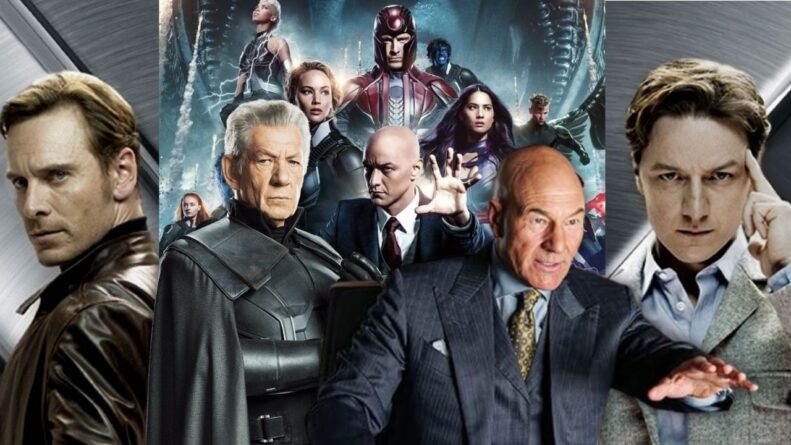
But Doomsday changes the game. We’re no longer talking about simple earth politics, we’re talking about the end of the multiverse. In this film, Magneto isn’t simply the “villain” because he’s trying to stay alive. The reason is he’s been through, his instinct is to hit first, get his people out of danger. To him, the Avengers are not heroes but rather a menace to his world. It’s a grim state of affairs when he’s willing to make himself the bad guy if that’s the price to pay to keep mutants surviving.
Professor X’s Radical New Vibe in Avengers The Kang Dynasty
If the new look for Magneto is just preparing to wage war on the planet, Professor Charles Xavier’s redesign is doing something much more subtle and, at the risk of sounding disrespectful, a bit more rebellious.
Patrick Stewart’s comeback to Professor X is giving the “stiff academic” look we’ve gotten since the early 2000s the boot. Instead we’re getting a Charles who ditches his suits for something that looks like a mix of utter comfort, and high-tech wizardry born out of the current Krakow era of the comics.
Why Professor Charles Xavier is ditching the “Respectability” look
Just think of all those X-Men films—Charles was nearly always dressed to the nines in that perfectly tailored business suit. That was more than a fashion statement but it was a statement of politics. He was attempting to appear “respectable” to humans, to make the case that mutants were not a danger and had a place in the boardroom.
In Avengers: Doomsday, that’s over. Charles is now wearing a Blue and Green Soft Fabric Jacket in a Casual Style. What’s interesting is there’s a big red and black x-men logo right smack on the front.
It’s the signal of a leader that has ceased to play the “respectability politics” game. He’s not trying to blend in or apologize for being different to placate a human establishment that had let down his people. In wearing a logo previously reserved only for his students, he is expressing full solidarity with his team. He’s opting for real-world comfort and mutant pride, rather than corporate diplomacy.
Professor Charles Xavier Left The Vibranium Hoverchair
Xavier’s mobility device has also gotten a major glow-up. No more standard issue medical wheelchairs. Now, he’s rolling in an ultra-futuristic hoverchair that seems like a cross-over wish.
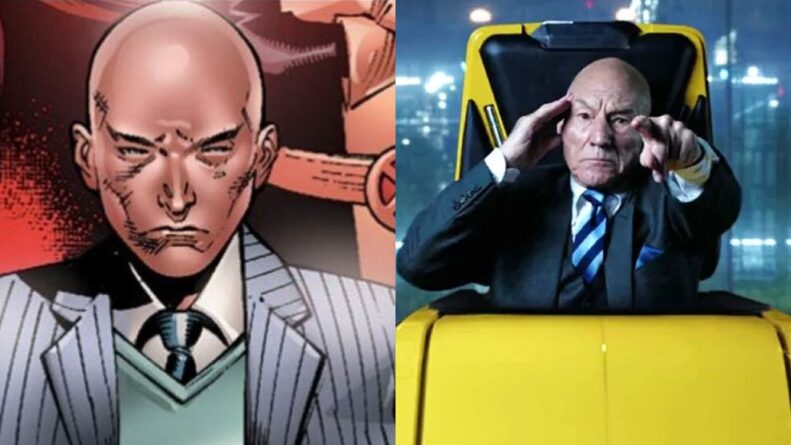
- The Tech: Designed with a Vibranium alloy shell, the gold-and-black base can… It’s a nice little nod to how technology is crossing paths in the Marvel multiverse.
- The “X” Factor: A subtle “X” on the front pulses with light whenever he taps into his telepathy so you know exactly when the most powerful mind in the world is at work.
Cerebro Goes Mobile
Finally, the redesign pulls a page directly out of the current House of X run. Charles is seen wearing a sleek silver helmet with a blue “X” visor. This is a mobile Cerebro, not an illusion.
In a film about “incursions” and universes crashing into each other, Charles has to be able to travel between dimensions. This helmet allows him to do that, but it also remains a symbolic mask. It implies the massive magnitude of what he is seeing that is the psychic equivalent of watching entire worlds confront termination.
When you watch Charles and Erik do battle across a telekinetically manipulated chess board in the promos, it’s more than just a game. They are having their final debate.
Why the New Outfits of Professor Charles Xavier and Magneto Matter for MCU
Magneto and Professor X’s new looks are not just happening in a vacuum. They are included among the many changes being made for the entire X-Men team. We’re seeing a big change in how these characters look on screen, moving from “boring and realistic,” to “bold and comic-book accurate hellish look.”
The End of the “Black Leather” Era
Back in 2000, the first X-Men film outfitted everyone the same way: head-to-toe black leather. Movie studios thought that bright superhero costumes would be perceived as “silly” or “too cartoony” by audiences at the time. They wanted the X-Men to look like they could be part of a movie like The Matrix. There’s even a classic bit where Cyclops ridicules the thought of donning “yellow spandex.”
But times have changed! So Marvel decided to upgrade these superheroes’ look as they also receive huge appreciation for Hugh Jackman in a classic yellow-and-blue Wolverine costume in Deadpool & Wolverine.
The “Doomsday” Costumes are Lit
Avengers: Doomsday (Avengers The Kang Dynasty) is, without a doubt, putting an end to the era of boring outfits. Here are the major upgraders:
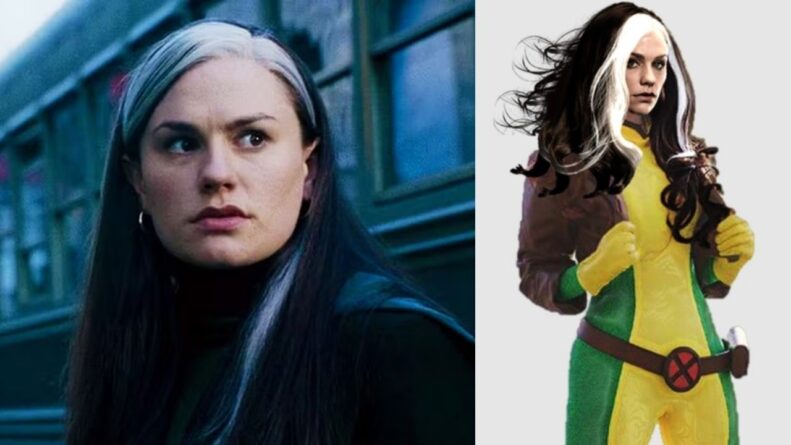
- Cyclops: In the new trailers James Marsden at long last returns to his iconic bright blue suit, complete with the giant yellow “X” chest straps. It’s a great combination of retro and contemporary.
- Rogue: She’s apparently swapping the leather for her iconic green-and-yellow costume, with her iconic white streaked hair.
- Gambit: Channing Tatum is back, in the purple pants, hooded jacket and wielding his glowing kinetic chains.
Avengers Character Look in Avengers The Kang Dynasty
| Character |
The “Old” Look (Early 2000s) |
The “New” Look (2026) |
Why it Matters |
| Magneto |
Dull grey/black suits. |
Bright red armor and a giant purple cape. |
He’s no longer hiding; he’s acting like a King. |
| Professor X |
Strict business suits. |
A casual jacket and a high-tech hoverchair. |
He’s stopped trying to “fit in” with humans. |
| Cyclops |
All-black leather. |
Bright blue suit with yellow “X” straps. |
He is finally proud to lead the X-Men as a superhero. |
| Rogue |
Dark clothes, tiny bit of white hair. |
Green and yellow clothes, bold white hair. |
She looks exactly like the fan-favorite 90s version. |
| Gambit |
Plain trench coat. |
Purple pants and a hooded blazer. |
He finally looks like the “Cajun Rogue” fans love. |
Switching outfits is not solely about making things look pretty for fans. The narrative is also changed with costumes showing that the X-Men are no longer apologizing for being mutants. It looks exactly like they changed from It’s titled — Avengers The Kang Dynasty to Avengers: Doomsday, so it’s also a matter of storytelling.
Read More 👉 Dunk and Eggs Deliver the Perfect Ending in The Morrow
Is Magneto Getting More Powers in Doomsday?
Magneto doesn’t just have a cool new look, he also has a massive power boost. In Avengers: Doomsday (Avengers The Kang Dynasty), he’s not just a guy with an opinion but he’s a “world-ender.”
The Mistake That Was Heard ‘Round the World’
We actually saw how dangerous Magneto is as a result of a comical mistake. Today Sir Ian McKellen (Magneto) was discussing how much easier it is to shoot movies with CGI now at a recent interview. He inadvertently dropped a massive spoiler when he said:
“These things now look this way – I smashed up New Jersey a couple of days ago.”
Then he realized instantly he’d messed up, but the secret was out of the bag! Magneto is going to do something so big that they “wipe out a whole American state.”
Inspired by a Dark Comic Story
Avengers The Kang Dynasty appears to be stealing elements from a well-known (and frightening) comic book story entitled Ultimatum. In that narrative, Magneto is devastated and enraged and with his magnetic powers he shifts the Earth’s poles. This results in a tsunami that floods lower Manhattan, wiping out New York City and killing millions.
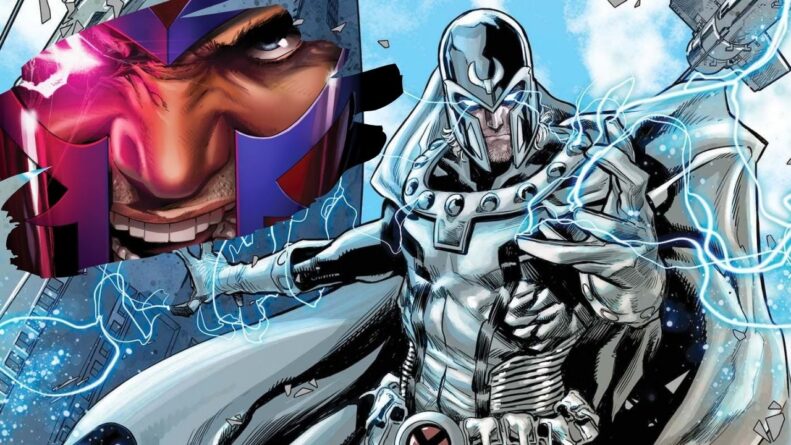
It appears the movie is doing its own spin on the “mega-disaster,” concentrating the destruction on New Jersey, not Manhattan.
How does Magneto Increase His SuperPowers?
Magneto will be more powerful than ever in Avengers The Kang Dynasty film. A wild theory has even emerged that he could use his magnetic powers to “hijack” Thor’s hammer Mjolnir. If he can manipulate the weather with the power of the hammer through magnetism, he can summon massive storms, floods and so on. So, Magneto is the greatest “wild card” in the multiverse war.
Conclusion
Avengers: Doomsday (Avengers The Kang Dynasty) is far more than a visual overhaul – it’s a narrative reset for the whole Marvel Cinematic Universe. Legendary modern-gen X icons are brought to life like never before with greater depth, comic-accurate designs and multiversal stakes, making old legends into new forces of destiny. With Robert Downey Jr.’s brilliant Doctor Doom leading the mayhem alongside the mutants of Earth-10005 who redefine heroism and survival, so it’s evolution rather than nostalgia. They’re not revisiting the past, they’re writing the future in the MCU.
Dive into the world of the Biggest movie franchise with Fandomfans, get daily updates from the movies, webseries, and celebrities news.