Home > Movies > Avatar: Fire and Ash Review: Becoming the Lowest..
Avatar: Fire and Ash Review: Becoming the Lowest Rating Film of The Franchise
Avatar: Fire and Ash review explores James Cameron’s bold visuals, divisive story, critical backlash, and why it’s the lowest-rated film in the franchise.
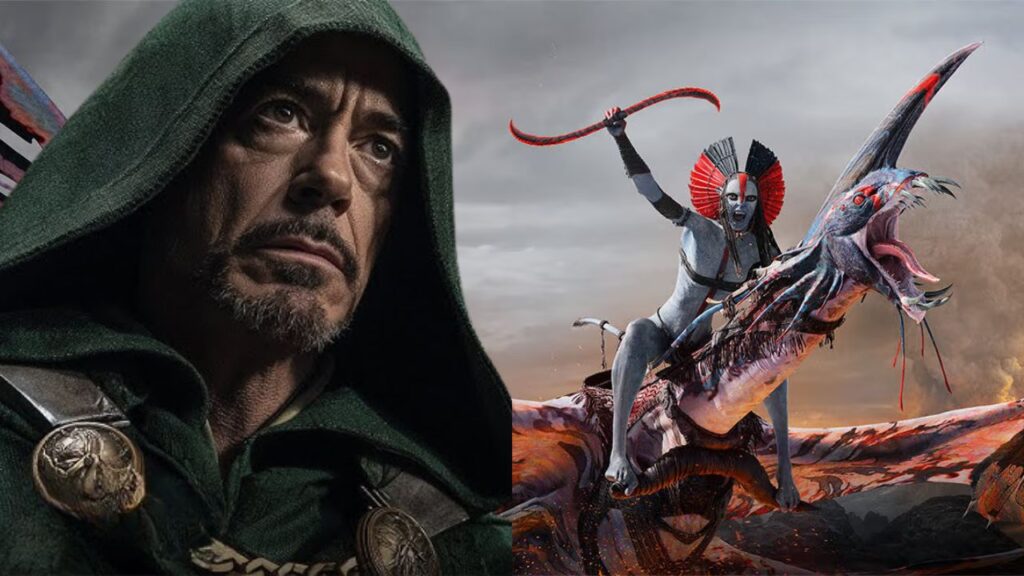
The release of Avatar: Fire and Ash is an intriguing if somewhat chaotic, chapter in the career of James Cameron. Opening in theaters onDecember 19, 2025, the film is in an odd place: it’s both the most visually audacious entry in the series and the most critically divisive.
Although the technological crowd-pleasing remains unmatched, the “Pandora fatigue” some warned about seems to be setting in. The franchise is, for the first time, confronting the prospect of diminishing returns – not necessarily at the box office, but with the critics, who are starting to wonder, “Is spectacle enough?”
A High-Stakes Strategy
James Cameron isn’t merely making a movie, he’s defending an empire. With a mind-boggling $400 million budget, the film has to do more than just “well” — it has to dominate.
Premium Format Dominance: The film is designed for IMAX 3D and Dolby Cinema. In a streaming world, Cameron is betting everything on the ‘theatrical event,’ recouping sky-high production costs with now-higher ticket prices.
The Marvel Synergy: The cynical-looking (but actually rather smart) marketing move that Disney is rotating four different trailers for Avengers: Doomsday exclusively with Fire and Ash screenings. It’s a transparent play to encourage repeat viewings by exploiting the MCU’s “completionist” fanbase.
The Visuals: From Lush Jungles to Brutalist Ash
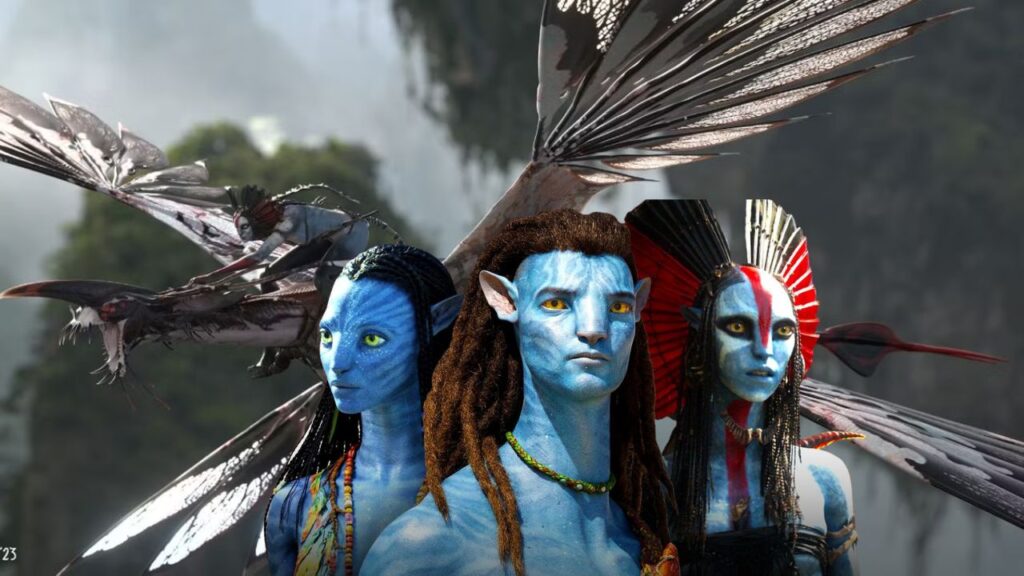
If the first Avatar was a dream and the second was a dive, Fire and Ash is a scorched-earth reality check. With the introduction of the Mangkwan (Ash People) the look shifts from bioluminescent wonder to something much more “brutalist.”
Image Credit: Fandomfans
The Ash Biome: The conjugated neons are gone. Rather, smoke-soaked oranges and greys are layered over rugged volcanic stone.
The Design: The Ash People are a spiritual defeat. Their buildings and “soot-stained” clothing imply a society that has distanced itself from the peaceful ways of Eywa and embraced the industrial and hostile.
The Critical Schism: Immersion vs. Innovation
The reception to Fire and Ash has been polarizing. It is now Cameron’s lowest rated film on aggregators, trending at a 61 on Metacritic.
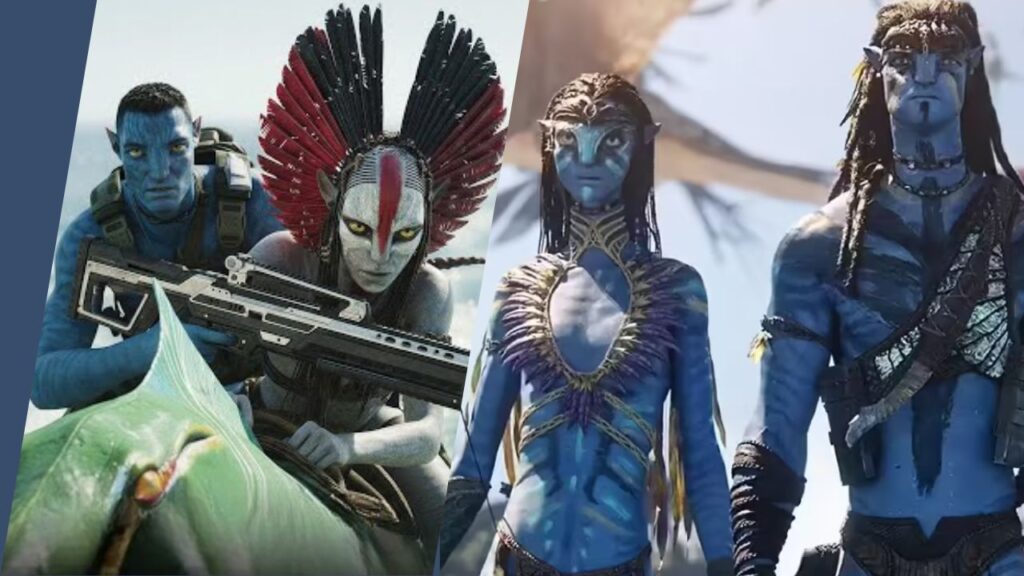
The Spectacle Faction:Reviewers from such publications as Empire are enamored with the movie, calling it a “sensory feast” and the most “nakedly emotional” film yet. They consider it a film of both grief and world-making.
Image Credit: Fandomfans
The Redundancy Faction: But also savage critics like The Guardian are a different story. The main gripe? It’s too much of a rip off of The Way of Water. The “run off to a new tribe, pick up their customs, fight a final fight” pattern is beginning to look like a plot template, rather than a story.
Narrative Risks and Character Hurdles
The storytelling framework of the film’s seems to try and reject then repeat the “noble savage” cone tropes, by having a Na’vi antagonist: Varang (Oona Chaplin), who leads his own group of hunters who persecute the people of Pandora. Her performance is universally praised as the film’s best — a “witchy,” feral ruler who negotiates a dark pact with Quaritch.
But the movie still has to grapple with “the Spider problem.” The persona of Miles Spider Socorro is still a source of contention. Many consider his arc to be underwritten and the romantic tension that develops between him and Kiri (Sigourney Weaver) has been noted as “creepy” as the latter is quite a few years older and is an alien in the show.
Avatar: The Fire and Ash is a huge paradox. It’s a movie about environmental conservation that uses up more computer power than the equivalent of thousands of cars. It’s a story that seems to be stuck in the past, told through technology from the future.
Whether this franchise “middle child” can carry the weight for Avatar 4 and 5 is yet to be seen. But this much is clear: If a James Cameron movie turns out to be “formulaic,” it’s still far more ambitious than 90 percent of what gets made.
Fandomfans provide you with the latest updates on your favorite franchise and overall reviews conclusion.
Mariyam
Articles Published :
76
Mariyam Khan is Fandomfans Content Writer and providing reports and reviews on Movie Celebrities, and Superheroes particularly Marvel & DC. She is covering across multiple genres from more than 4+ years, experience in delivering the timely updates.
The Hunger Games Love Birds Jennifer Lawrence and Josh Hutcherson Are Back to Panem
The Hunger Games love birds Jennifer Lawrence and Josh Hutcherson are reunited in the new prequel Sunrise at the Reaping, which will bring fans back to Panem.
The Hunger Games’ Jennifer Lawrence and Josh Hutcherson, the iconic duo who captured our hearts as Panem’s greatest rebels, are confirmed to be coming back to the franchise with The Hunger Games: Sunrise on the Reaping and we’re just not emotionally prepared for what this means.
The revelation was made on 10 December 2025, and it reverberated across the entertainment industry like a hovercraft. For more than 10 years, we’ve seen these two gifted performers breathe life into the characters created by Suzanne Collins, and seeing them in this new prequel feels like that chance encounter with an old friend that really throws you for a loop. While Jennifer Lawrence will be reprising her role as Katniss Everdeen and Josh Hutchersonas Peeta Mellark, there is a fun twist to this - they are not the main characters in this movie.
The Hunger Games: Sunrise on the Reaping is turning out to be something I don’t think we’ve seen from the series yet. Taking place 24 years prior to the original Hunger Games trilogy, the prequel follows a young Haymitch Abernathy, the surly yet surprisingly endearing mentor we are familiar with through Woody Harrelson’s version of the character.
Image Credit: Fandomfans
To those of you who read the novelization, Lawrence and Hutcherson are set to appear in a flash forward sequence near the end of the film, showing where our favorite characters ended. It’s that perfect kind of callback that makes longtime fans feel seen and appreciated.
The Reason Behind The Excitement
The extraordinary cast lined up for this prequel is the first reason for this excitement. Joseph Zada as young Haymitch, who confronts the terrifying 50th Hunger Games(the Second Quarter Quell) — where the stakes are doubled with 48 tributes instead of 24.
Image Credit: Fandomfans
That’s right, this isn’t just any Hunger Games, it’s a barbaric, monstrous edition that will tell us exactly how Haymitch became the shattered man who then leads Katniss through her own.
Notable Star-Studded Cast
Backing up the extraordinary young talent is a star-studded cast that feels like a who’s who of Hollywood: Glenn Close, Ralph Fiennes (as a younger President Snow), Elle Fanning, KieranCulkin, Maya Hawke, and so many more incredible actors. Kieran Culkin, just coming off an Academy Award win for A Real Pain, will be taking over Stanley Tucci’s role as Caesar Flickerman, and Ralph Fiennes lends his gravitas to a youthful iteration of the tyrannical President Snow. This level of casting in this prequel is just jaw dropping.
Image Credit: Fandomfans
Francis Lawrence, having directed all but one of the Hunger Games movies since 2012, is back to lend his deft hand to this dark origin story. Billy Ray’s screenplay is a faithful, attentive adaptation of Collins’ novel, so those familiar with the books will pick out the key scenes, but the uninitiated gain a new, cinematic interpretation.
The enthusiasm What’s really exciting about this project is that it comes full circle for the Hunger Games franchise. Following the unprecedented popularity of The Ballad of Songbirds and Snakes in 2023, which gave a glimpse of a young Coriolanus Snow, Lionsgate are clearly interested in delving further back into this universe’ s past. The franchise has grossed $3.3 billion worldwide over five films, and with this star-packed cast and gripping story, Sunrise on the Reaping is set to be another blockbuster.
Image Credit: Fandomfans
The film is set to blaze its way into theaters on November 20, 2026, giving fans almost a year to speculate on what a Lawrence and Hutcherson cameo might entail, be it a fleeting appearance or a substantial chunk of the story, it’s unclear at the moment, but whatever it is: getting Katniss and Peeta back on the big screen – even in this unusual capacity, is a treat for the series’ fanatics.
To those of us who have grown up with these characters, this is like coming home. The Hunger Games world keeps expanding and surprising us, and with Lawrence and Hutcherson’s return, it’s clear why this franchise ever really captured our hearts.
Get your favorite characters and movies exciting updates on Fandomfans. Our goal is to deliver you celebrities, directors, and movie details based on deep insights.
Mariyam
Articles Published :
76
Mariyam Khan is Fandomfans Content Writer and providing reports and reviews on Movie Celebrities, and Superheroes particularly Marvel & DC. She is covering across multiple genres from more than 4+ years, experience in delivering the timely updates.
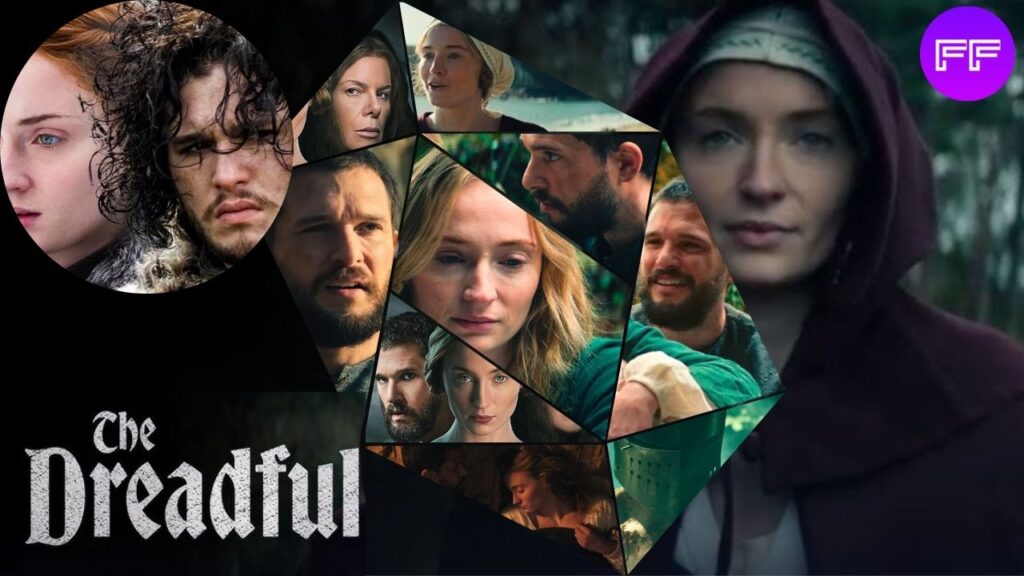
The Dreadful Movie in 2026 has witnessed a resurgence of the Gothic mode, with one of its leading exponents emerging as a project that promises to be as unsettling as it is historic. The Dreadful isn’t your typical horror flick; it’s an elegant meeting point between period drama and supernatural terror. Drawing on the immense cultural capital of its legendary leads, the film plunges into the murkier realms of human survival and moral complexity.
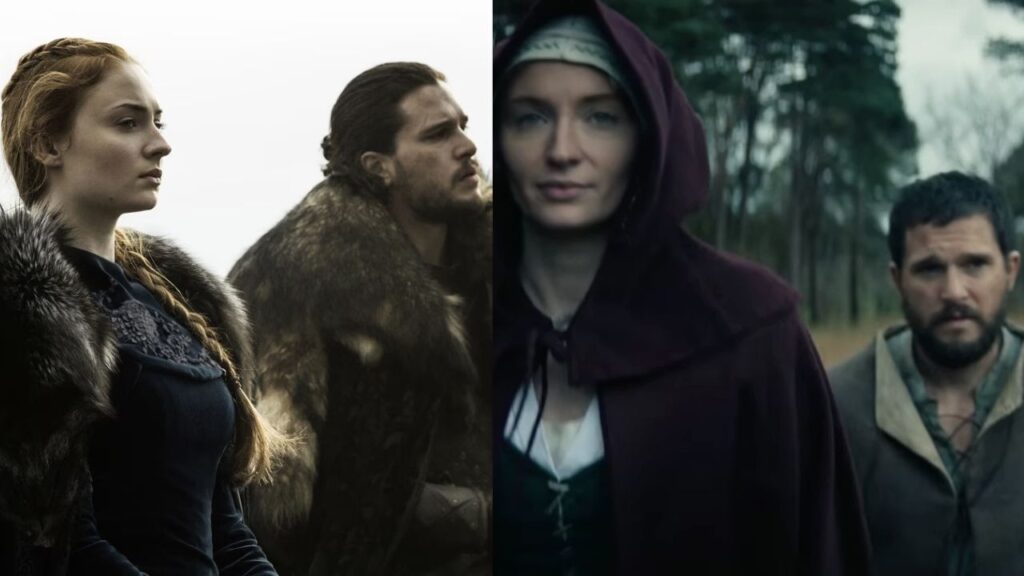
For fans of prestige television, the movie marks a pointed and bold next step for Sophie Turner and Kit Harington. Departing from the sprawling, high-fantasy politics of Westeros, they have swapped iron thrones for the claustrophobic, psychologically crushing domain of “misty forests and crushing dread.” This is a tale in which the mood is as leaden as the secrets its players harbour.
The Vision: From Japanese Masterpieces to English Soil
The metaphysical core of The Dreadful is based upon a wish to orient the themes of classic international cinema in the savage reality of English history. Writer-director Natasha Kermani is inspired by Kaneto Shindō ’s 1964 Japanese cult classic, Onibaba. In the process, she has created a storytelling model around a small, isolated community with its members’ interrelations just as deadly as the supernatural elements hiding in the forest.
This is in keeping with the “folk horror” motif, where the land becomes a sort of other foe. The film, meanwhile, is a groundbreaking achievement for independent horror, combining the art house virtues of auteur-directed filmmaking with the marketing muscle of Lionsgate. With Sophie Turner in the lead role and also producer, there is a definite sense of creative ownership that should keep the “emotional heart” of the film beating from start to finish.
Release Date & Availability
The Dreadful release is positioned to take advantage of the early 2026 market. The Dreadful release date is perfect to capitalize on the late-winter audience that enjoys moody thrillers, and wide-release is scheduled for February 20, 2026.
Territory
Release Date
Primary Platform
Format
United States
20/February/2026
Theaters & Digital
Wide / Day-and-Date
United Kingdom
20/February/2026
Theatrical
Wide (True Brit)
India
Q1 2026
Lionsgate Play
Streaming Premiere
Global Digital
20/February/2026
VOD / Amazon / Apple
Digital Purchase/Rent
A World of Roses and Regret: Genre, Theme & Setting
The Dreadful’s aesthetic is dominated by its 15th-century setting: the Wars of the Roses. This period of English history (1455–1487) was marked by violent civil war between two rival houses, the House of Lancaster and the House of York.
The Wars as a Thematic Catalyst
The Red Rose–White Rose rivalry is more than mere window dressing; it drives the characters to desperate acts. In a world where central authority has disintegrated, people such as Anne and Morwen are abandoning the edges of civilization.
Faction / Element
Historical Basis
Narrative Implication
House of Lancaster
Red Rose Symbolism
Associated with the “war” Anne’s husband attends.
House of York
White Rose Symbolism
Represents the broader political chaos.
Ostracized Living
Outskirts of Society
Heightens the vulnerability of the protagonists.
15th Century
Transition to Tudor Era
A time of deep superstition and radical change.
The Synthesis of Gothic and Folk Horror
From both sides of the conflict, the film adopts elevated perspectives. While the film is Gothic horror at its core—defined by crumbling homes and buried family secrets—it is also very much a work of folk horror. Director Natasha Kermani delves into fear, desire, and regret through a visceral medieval aesthetic. The “English countryside,” with its mud, rain, and cold nights, becomes a character in its own right. The supernatural elements are implied to arise from the land itself, and the “curse” may be read as a projection of the characters’ moral failings.
The Creative Powerhouse: Director & Crew
The Dreadful is, brilliantly, entirely in Natasha Kermani’s hands. Known for pushing genre boundaries in films such as Imitation Girl and Lucky, Kermani applies a layered “Three Keys” approach on set: forming a trusted team, drawing on her short-film experience, and turning to classical texts.
A Collaborative Framework
The production is a partnership between the independent studios Black Magic and Redwire Pictures. Sophie Turner’s role as a producer is particularly vital, signalling a shift toward more equitable power relations among lead performers.
Director / Writer: Natasha Kermani (the visionary behind the film’s transposition of Onibaba) Director of Photography: Julia Swain (capturing the film’s “mud and rain” aesthetic) Editor: Jeff Betancourt (shaping the film’s slow-burn suspense)
The Plot: When Men Walk Like Demons
The story of The Dreadful is a brutal account of survival. We follow Anne (Sophie Turner), who lives in isolation in the countryside with her overbearing mother-in-law, Morwen (Marcia Gay Harden), as she waits for a husband taken by the wars.
This stasis is shattered by the arrival of Jago (Kit Harington), a figure from Anne’s past. He brings news of death while reviving erotic tensions—both sexual and homicidal—that imperil the household. As Jago infiltrates their lives, a “mysterious knight” emerges: the materialization of a curse that feeds on their sin.
Cast & Characters: A Powerhouse Trio
The Dreadful movie cast is small, yet the film’s triumph lies in this tiny ensemble, which somehow carries immense psychological weight.
Sophie Turner as Anne: the film’s emotional heart. Turner portrays a woman whose strength is forged through solitude in a cruel world.
Kit Harington as Jago: a figure of ambiguity. Harington is equal parts puppy-eyed vulnerability and latent darkness.
Marcia Gay Harden as Morwen: the ruthless mother-in-law. She grounds the supernatural in a very real human desperation.
The reunion everyone is talking about
The on-screen reunion of Turner and Harington is the film’s biggest marketing hook. Having portrayed siblings for ten years, their evolution into lovers has been described by the actors as both “weird” and “igniting.” This discomforting tension feeds directly into the movie’s atmosphere of dread, allowing the audience to viscerally sense the boundary-crossing.
Production Prowess: Technical Details
Shot on location amidst the craggy hills of Cornwall, the production embodies environmental naturalism. Cinematographer Julia Swain employs a visual language reminiscent of The Green Knight, emphasizing misty and eerie hues.
The supernatural elements are deliberately restrained, designed to feel earned rather than “cheap.” The film has received an MPA-R rating for “violence, gory images, and sexual references,” a rating crucial to presenting a medieval nightmare without compromise.
The participation of Lionsgate guarantees extensive coverage, with True Brit Entertainment concentrating on the horror legacy of the UK.
What are the fans saying? The response on places like Reddit is electric. Although some are uneasy with the transition from “sibling-to-lover,” it has ignited a viral discussion that goes far beyond horror. Industry Insiders say the film is likely to become a cult hit, a consistent moneymaker that confirms that Natasha Kermani is a force to be reckoned with.
Conclusion
The Dreadful Movie isn’t just a horror movie – it’s a celebration of the Gothic tradition. It asks us to confront the demons that arise from our own histories — all the while cloaked in the lovely, horrifying mists of 15th-century England.
Fandomfans is a platform where you can find all the latest details from movies review, webseries review, and television shows that are worth watching.
Alpana
Articles Published :
156
Alpana is Fandomfans Senior Editor across all genres of entertainment. She evolved in the media industry since a very long time, she manages the content strategy and editing of all the blogs. Her focus on story development, review analysis, and research is well-equipped that ensures every article meets the standards of accuracy and depth.