James Bond Movies: Legendary Fight Scenes of All Time
Explore all James Bond movies in order, iconic fight scenes, unforgettable villains, and how 007 evolved across six decades of cinema.
Published: December 16, 2025, 12:26 pm

Explore all James Bond movies in order, iconic fight scenes, unforgettable villains, and how 007 evolved across six decades of cinema.
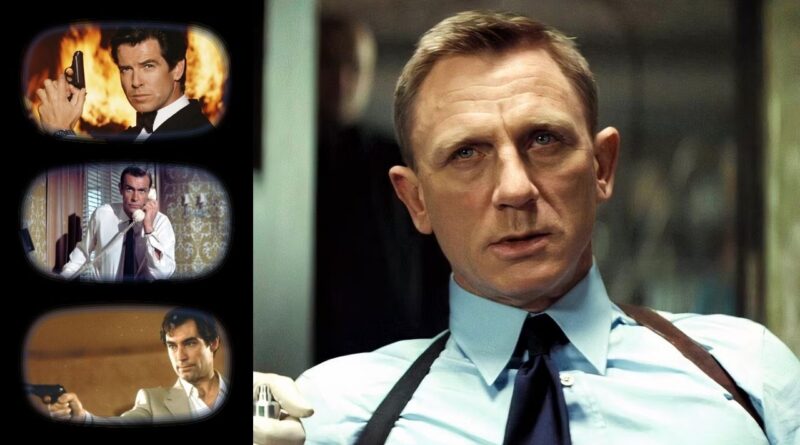
James Bond fighting is so much more than flashy action sequences. It is a six-decade journey through the evolution of fight choreography on film, changing global attitudes toward violence and the increasing complexity and artifice of stunt choreography in the movies. Ian Fleming once described Bond as a “blunt instrument” of the state—a man made to achieve results, not to be elegant while doing so.
It prefers its action to be muscled, aggressive, and violently blunt rather than graceful or theatrical. While Bond in Fleming’s novels was taught boxing and judo to mirror commando skills of the Second World War, cinematic 007 has evolved into more of a living painting, adapting to the martial philosophies, political climates and cultural sensibilities of the era.
The best fight scene in No Time to Die is the punishing stairwell brawl in Safin’s lair, where Bond is up against three armed adversaries in a narrow slab of concrete. Filmed in long, fluid shots, the scene is relentless and tiring, highlighting Craig’s older, injured Bond relying on instinct on the battlefield.
There’s a weight behind each punch, every gunshot is earned, and being in a tight space doesn’t bring with it any glitz. It’s Bond the hardened survivor, not the dazzling hero—pragmatic, efficient, and potently human. This moment perfectly embodies the movie’s themes of sacrifice, perseverance and the physical toll of being 007.
Spectre contains a loving nod to the From Russia With Love train fight, with Bond facing off against Mr. Hinx (Dave Bautista). It’s destructive, shattering several train cars. Bautista was starting to be “gentle,” but Craig told him to be more brutal.
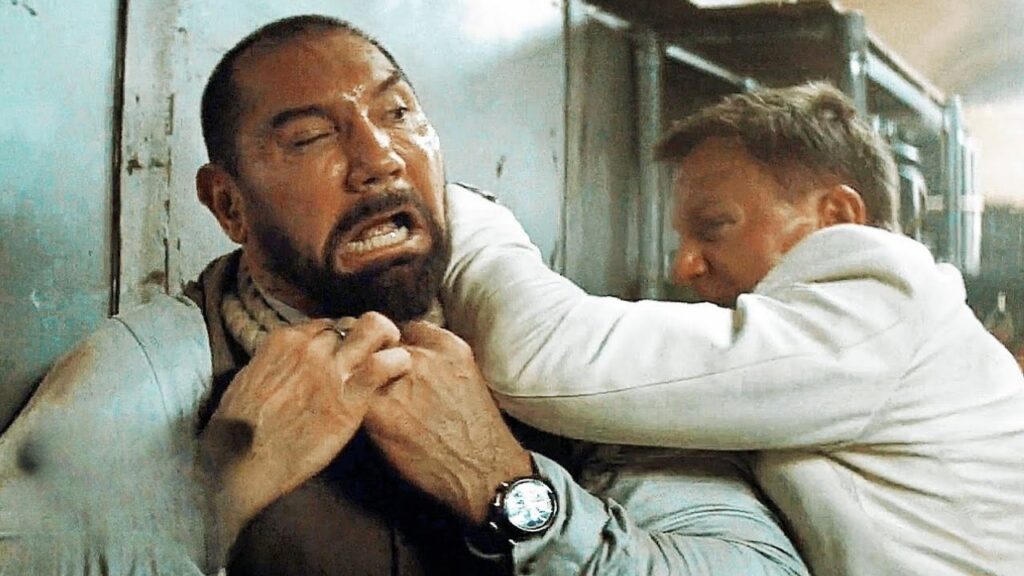
Bautista complied, hurling Craig so violently that he left the actor with a serious knee injury (meniscus tear), forcing him to wear a brace for the rest of the shoot and ultimately having surgery. This fight, then, features real pain and injury from both players.
“Casino Royale” jolted the audience with its unsentimental brutality right from the start of the film. Shot in high-contrast grainy black & white the fight isn’t clean, it is chaotic and crude and Bond ends the fight bleeding. Bond attempts to drown his quarry, Fisher, in a sink, the quarry fights back. There is no elegance here.
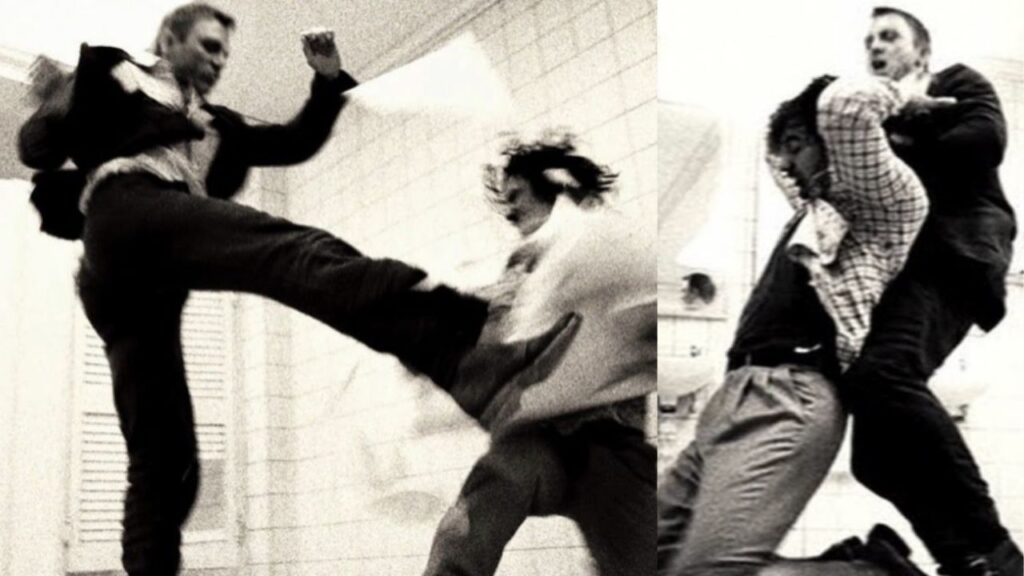
The cinematography is in keeping with Cold War noir and spy fare such as The Ipcress File while confirming that this Bond is a “blunt instrument” and implying that he’s still coming to terms with the emotional cost of killing. The scene was intentionally to feel unchoreographed, to ball the struggle and the fatigue of taking a life.
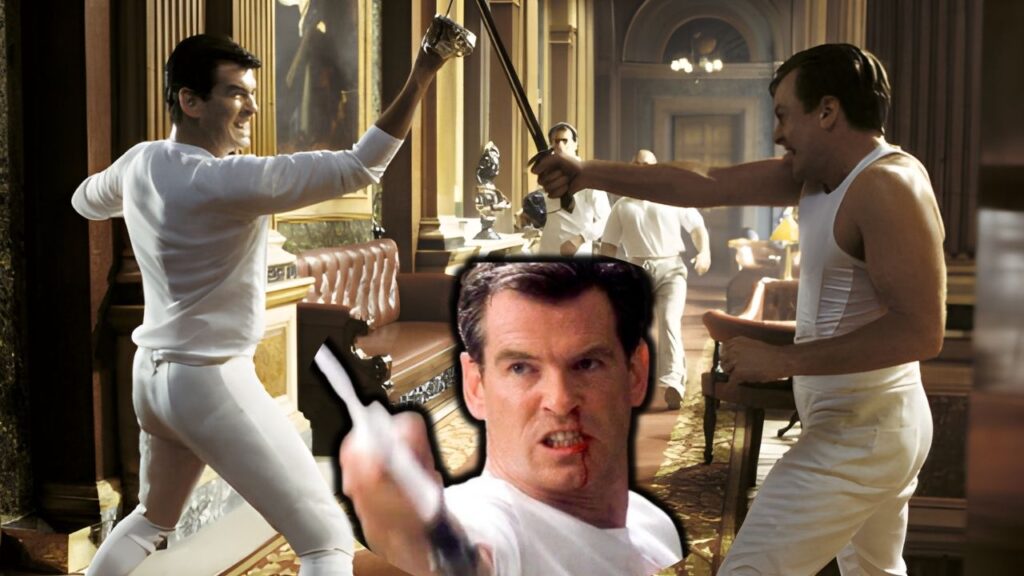
Die Another Day is widely derided for its use of terrible CGI (the invisible car, the tsunami surfing, etc.), but the fencing match between Bond and Gustav Graves (Toby Stephens) at the Blades Club is a rare moment of hands-on stunt work. It begins as a civilized fencing bout and ends with a full-on broadsword brawl, wrecking the club set.
Trevelyan is Bond’s equal—a fellow “00” agent with the same training. The battle is a mirror match. Most importantly, the sequence mutes out the bombastic score and all we can hear is the metallic thuds, the heavy breaths and the wind. This sound design decision highlights the brutal intimacy of two friends attempting to kill each other.
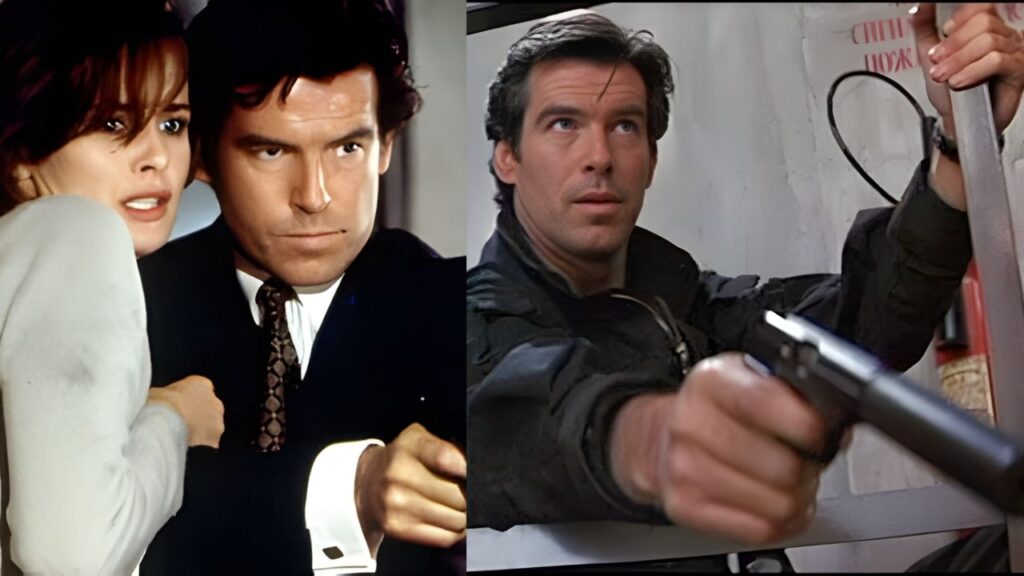
The fight is a combination of technical grappling and dirty fighting (headbutts, biting), Bond finally throwing Trevelyan to his death. The classic line “For me” in response to Bond’s “For England, James?” that he answers shortly after meeting Trevelyan, signals a personal change in Bond’s motivation.
In The Living Daylights, the tussle between Bond and Necros clinging to the outside of a cargo plane is a marvel of aerial stunt work. Withstood the strain Unlike the green-screen-laden sequences of later times, this was shot with stuntmen (BJ Worth and others) actually hanging from a plane over the Mojave Desert.
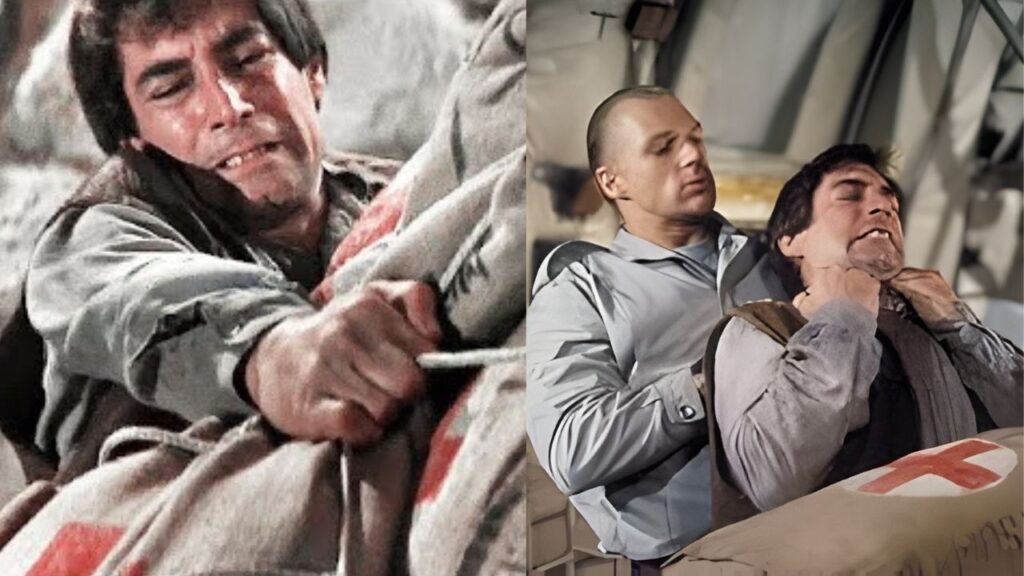
The physical struggle, as well as the roaring wind (sound design has a significant role in that), make it all very disorienting and high-risk. It’s a battle dominated by gravity, not martial arts moves.
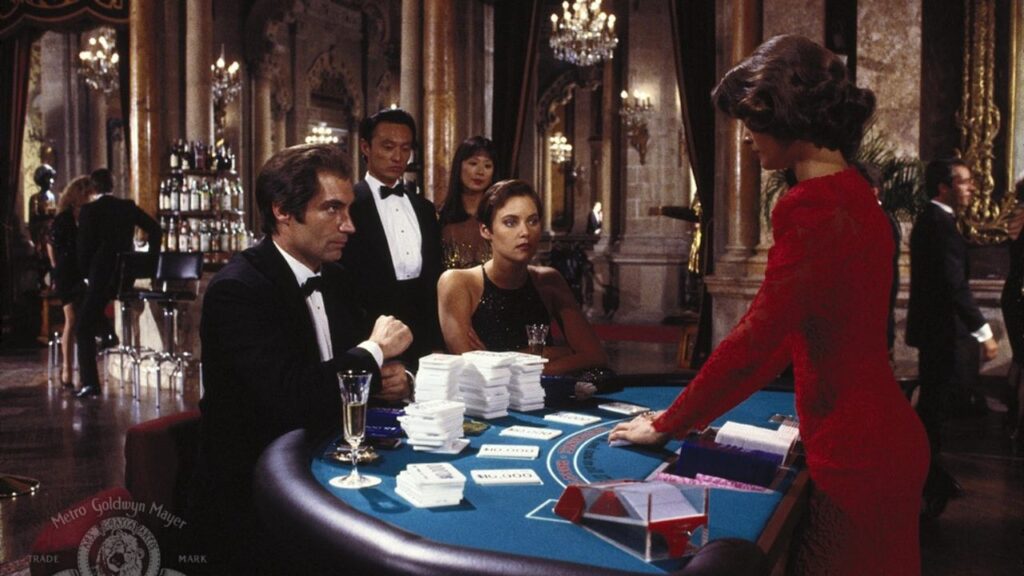
Licence to Kill is the bloodiest of the pre-Craig Bond films, and was the first to be given a 15 rating in the United Kingdom. The Bimini barrelhouse brawl is a highlight for its raw brutality. Bond isn’t trying to get away as he fights; He’s trying to do as much damage as possible. They refer to pool cues, broken bottles and a brawl that seems more at home in a western saloon than a spy movie.
The scene is staged and lit to highlight the fearsome Jaws, playing with shadows (the train closet) and jump scares. Bond is completely physically impotent; he punches Jaws in the jaw and breaks his hand — a world away from Connery’s crushing blows to Grant’s neckline. This makes Jaws a supernatural entity.
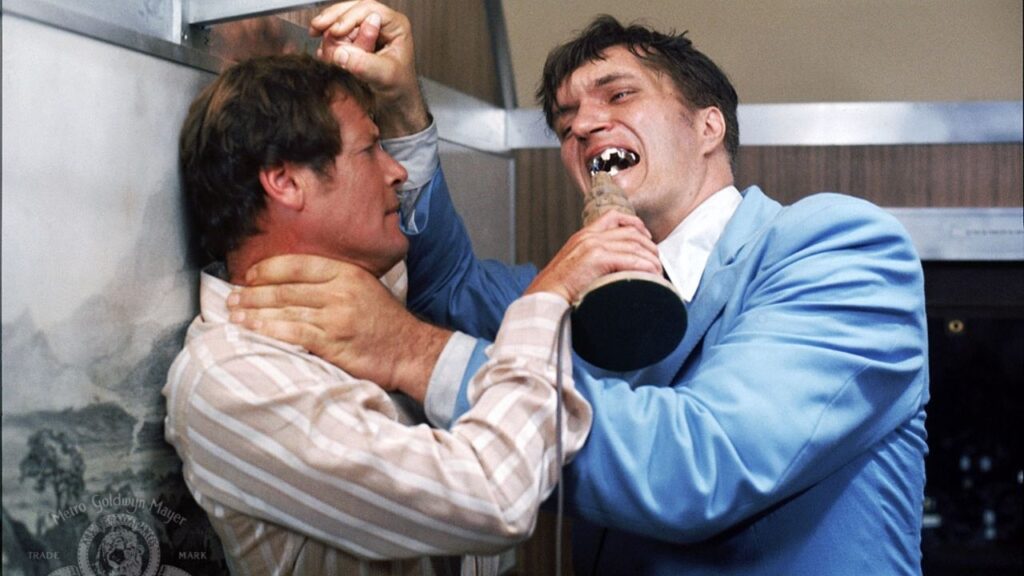
The resolution Bond stabs Jaws with a jagged lamp, delivering an electric shock is a variation on the Oddjob demise that includes a comic bounce, as Jaws endures and then departs. The sequence was choreographed by Bob Simmons, maintaining the trilogy of train fight masterpieces.
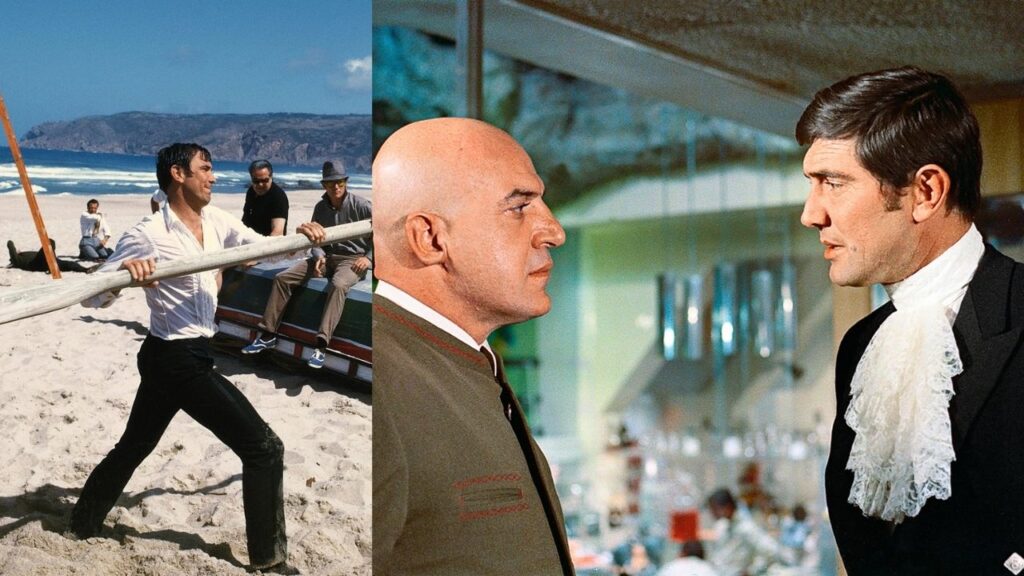
The beach fight and the hotel room brawl with Draco’s men reveal a new editing philosophy employed by director Peter Hunt. Hunt used quick cuts, jump cuts and a little bit of speeded up footage to make the fights more energetic. This gave the film a visceral, almost frenzied feel that anticipated the “shaky cam” mode of the Jason Bourne series by several decades.
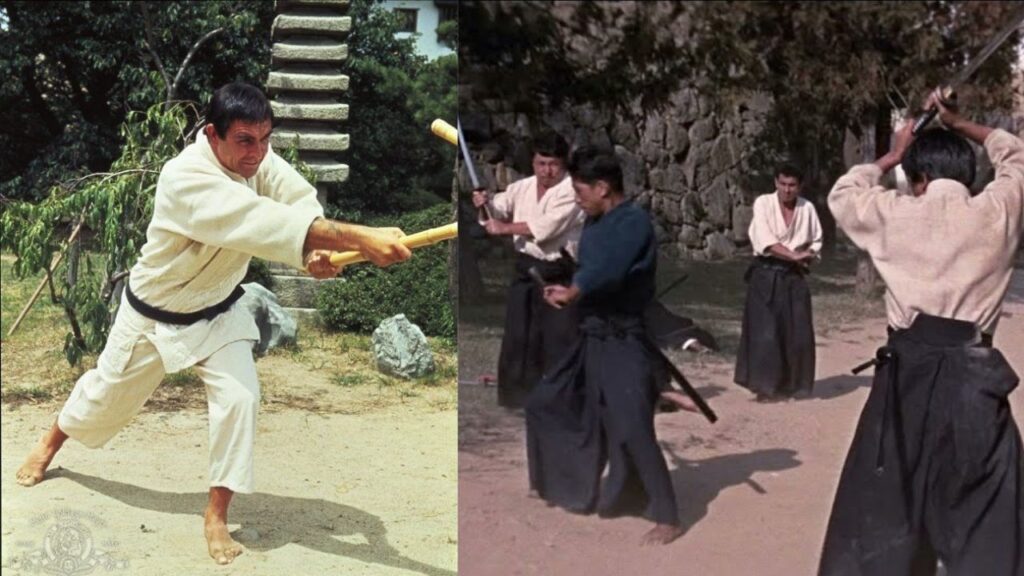
The brawling judo fight is a demonstration of this transition from the chaotic to the slightly more stylized fighting in Dr. No. Bond uses the environment, a sofa, and a large statue to fend off the sumo’s size, continuing the message that Bond has to change his fighting style to whatever culture he’s invading.
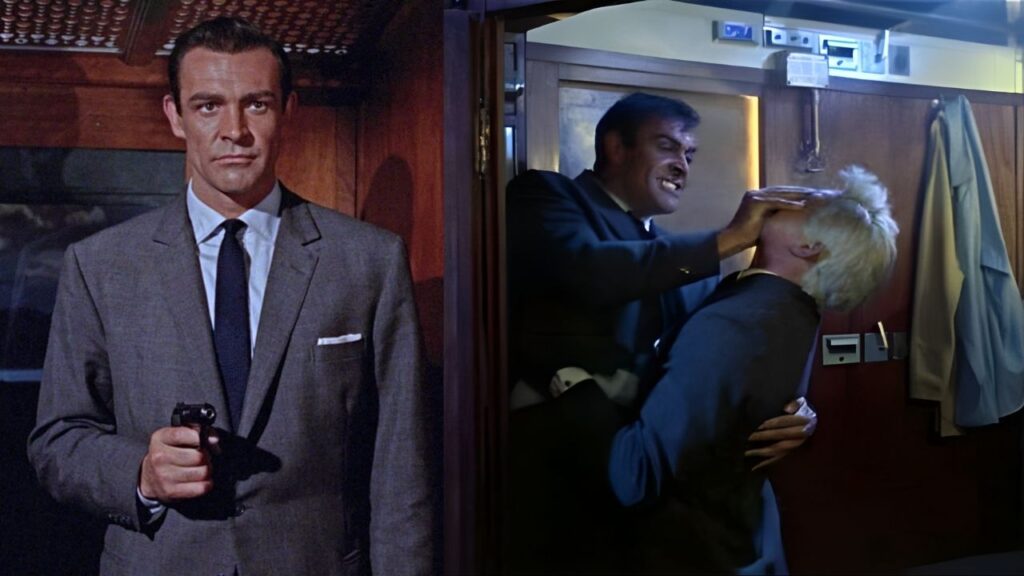
When you ask people who know what they are talking about when it comes to the Bond movie library what the best is, it’s almost always From Russia With Love that is named, the duel between Bond and Donald “Red” Grant (Robert Shaw) on the Orient Express stands as a cornerstone moment in action movie history. It took the genre away from the bloodless fisticuffs that defined 1950s action films to a more visceral, claustrophobic reality.
The development of James Bond’s style of fighting is indicative of a narrative that’s about more than just choreography or spectacle. Every punch, wrestle, and fight for life is a product of the time it was made, informed by global politics, shifting definitions of masculinity and what audiences want to see in it. From Connery’s primal, rough-and-tumble fights to Craig’s brutal, Krav Maga–inflected efficiency, Bond’s battles have always stripped away the suave disguise of the gentleman spy to expose the lethal truth beneath.
Fandomfans is focusing on delivering movie details from old to new, stay connected for more updates.

Jennifer Lawrence and Robert Pattinson star in Die My Love, a haunting new film exploring love, madness, and emotional intensity on screen.

Buzz builds for Die My Love. This is mind-bending dark drama duo’s first pairing. It is directed by Lynne Ramsay. She got an Oscar nom for We Need to Talk About Kevin. Ramsay and playwright Enda Walsh, along with Alice Birch, co-wrote the screenplay. The narrative is adapted from the Argentinean novel by Ariana Harwicz Die, My Love. It follows Grace, played by Jennifer Lawrence. She writes and is a new mother. Her psychosis disintegrates when she and her husband Jackson (Robert Pattinson) move out of New York City to his childhood home in rural Montana. In the film, Grace suffers from postpartum blues and madness. These things begin to crack her marriage. There’s heat building in the desolate rural location, too. Reports by Mubi. The company describe it as Ramsay’s razor-sharp perspective on a woman consumed by love and wild thoughts.
Die My Love is a celebrity-powered indie. Besides starring, Jennifer Lawrence is producing through her banner Excellent Cadaver and Martin Scorsese is producing via his Sikelia company. Scorsese, in fact, backed the project after he read the book as part of a book club, he recommended it to Lawrence. The two even passed on adapting another classic book because it presented a tougher role. Lawrence fought for it despite Ramsay’s initial hesitation (she’d just done a similar motherhood movie). One version has it that Lawrence was determined to have a go at working on Die My Love as a team and talked Ramsay into turning it from a straightforward depression narrative into a “bonkers, crazy love story.”
Jennifer Lawrence and Robert Pattinson are headlining the film’s ensemble. Lawrence plays Grace, a mother and wife about to break. Pattinson is Jackson, her husband. LaKeith Stanfield has been cast as Grace’s forbidden love interest. Legendary actors Nick Nolte and Sissy Spacek star as Jackson’s parents. Grace and Jackson are said to be relishing their new beginning, via People. They have a good time with sex and crazy dances. But once the baby arrives, Grace’s isolation and mental illness strain their relationship.
Read More 👉 The Conjuring’s Next Prequel: A Fresh Scare With Award-Winning Director Rodrigue Huart
This Lawrence–Pattinson chemistry is what makes this especially exciting to fans. Lawrence, an Oscar winner for Silver Linings Playbook, is known for dramatic as well as blockbuster roles Hunger Games, while Pattinson went from being a teen heartthrob Twilight to an indie darling Good Time, High Life, and now, Batman. The two actors have praised each other’s performances and Lawrence has joked in interviews that starring opposite Pattinson at last is total revenge after her failed Twilight audition.

They were reported to have gotten close off-screen during the film’s premiere in Cannes. Lawrence joked that having kids changes everything and Pattinson added that becoming a father has provided him with the biggest trove of energy and inspiration to work. (Lawrence has also said that playing Grace added another layer for her by drawing on her own difficult postpartum experience).
The excitement ran high as Die My Love made its Cannes Film Festival debut in 2025. The critical response was overwhelmingly positive. Lawrence’s acting received an “award-worthy” standing ovation for around nine minutes, according to People. The MUBI buyout campaign draws attention to this praise. Trailers show Lawrence in wild dance, fight and fierce growl sequences deep in emotion. It is this hard edge that Ramsay can do so well.
Ramsay, who refers to the film as a dark comedic love story about insanity, Pattinson joked some moments are “hilarious” in a twisted way, she said.
Die My Love is a relentless, unsettling drama — a peek at a marriage disintegrating under the pressure of new parenthood. Ramsay directs the film, with Walsh and Birch as co-writers, with major producers attached (including Lawrence and Scorsese). Jennifer Lawrence is Grace and also produces through Excellent Cadaver, while Robert Pattinson is her husband Jackson.
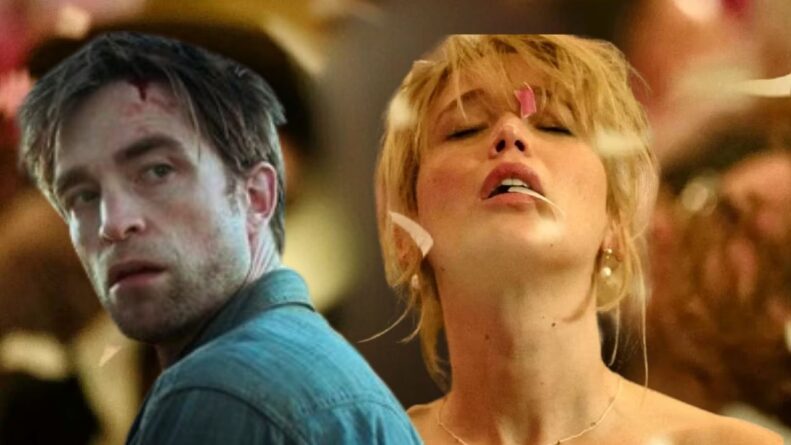
The film is slated to be released in U.S. cinemas on 7 November 2025 after premiering at Cannes on 17 May. This pairing of acting titans both heavy Oscar front-runners has the fans talking, in part because reports have them pushing one another on set. Ramsay calls the completed film a really dark love story that’s also funny, and Lawrence gives what some are already calling the most riveting performance of her career.
The unrated My Love is becoming one of the most awaited movies of 2025 — an unrefined, haunting, and passionate exploration of love, insanity, and motherhood. With Lynne Ramsay’s distinctive intensity leading the way and Jennifer Lawrence and Robert Pattinson delivering powerhouse performances, the film will no doubt be both visually breathtaking and psychologically enthralling. Lawrence’s performance as Grace has already earned early Oscar buzz, and Pattinson’s reserved yet multifaceted portrayal provides a tether for her spiraling descent.

Spider-Man: Brand New Day explained with comic history, One More Day fallout, Peter Parker's reset, and how Marvel reshaped the character's future.

The beginning of Spider-Man’s “Brand New Day,” starting at the top of The Amazing Spider-Man #546 in January 2008, was a clean slate for the character. Following “One More Day,” this era re-envisioned Peter Parker’s life by moving him from his married adulthood back to his origins as a single man and an aspirant. This contentious choice was taken in order to make the character more relatable and timeless for future generations.
Though they were out to make the character viable for at least the next few decades, how they went about doing so provides a textbook example of both imaginative thinking and the dangers of heavy-handed editorial mandates.
To get “Brand New Day,” you have to start with the ruins of “One More Day” (OMD). To fix Peter’s public unmasking during Civil War, Marvel had Peter literally make a “deal with the devil.” To save Aunt May’s life, the demon Mephisto wiped out Peter’s marriage to Mary Jane Watson from history.
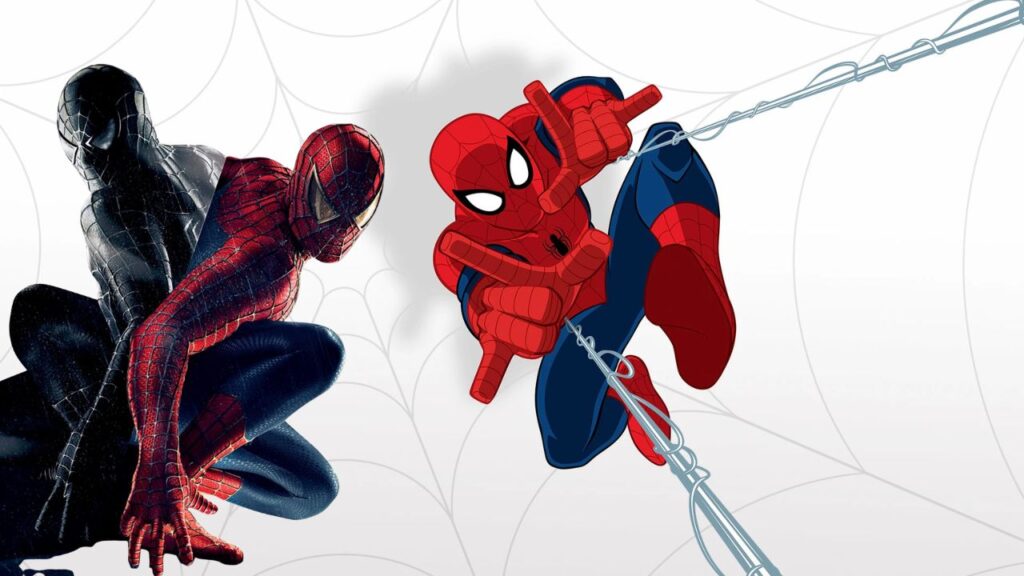
This “Devil’s Bargain” erased two decades of continuity. For his part, Editor in Chief Joe Quesada has said that an older married Peter is too “aged” and in that sense less relatable. But it’s a forced regression — and it’s unearned, too. It was like a supernatural “undo” key, rather than traditional character development, and many fans felt it discounted their long-term investment in the series.
The most interesting thing about BND was not just the story, but the logistics. Marvel dropped several Spider-Man books to concentrate on one flagship title, The Amazing Spider-Man, three times monthly.

This necessitated a “brain trust” of rotating writers (such as Dan Slott, Mark Waid and Zeb Wells) and artists. This method enabled the book to mimic the speed of serialized television. They could sow “slow-burn” seeds — such as the mystery of the ‘Spider-Tracer Killer’ that would pay off months or even years down the road.
BND, however, also devoted a lot more attention to Peter’s life without the mask. Moving him back in with Aunt May and making him a freelance photographer once again Marvel played up “humanizing” the hero through urban hardship.
Return of Harry Osborn: Resurrecting Harry reintroduced a social mooring and a “best friend” dynamic that had been missing for years.

New Rogues: The era was prolific in new villains. Mister Negative was the breakout, presenting a stark visual “negative” of the Peter/Spidey duality.
New Faces: New characters Carlie Cooper (a CSI forensics expert) and Vin Gonzales (Peter’s Spider-Man-hating roommate) were also added to capture a contemporary, pan-op/NYC feel.
Controversial as it always was, BND’s DNA is stamped on everything today. The 2018 Marvel’s Spider-Man game took a lot of cues from this period, including Mister Negative and the F.E.A.S.T. shelter.
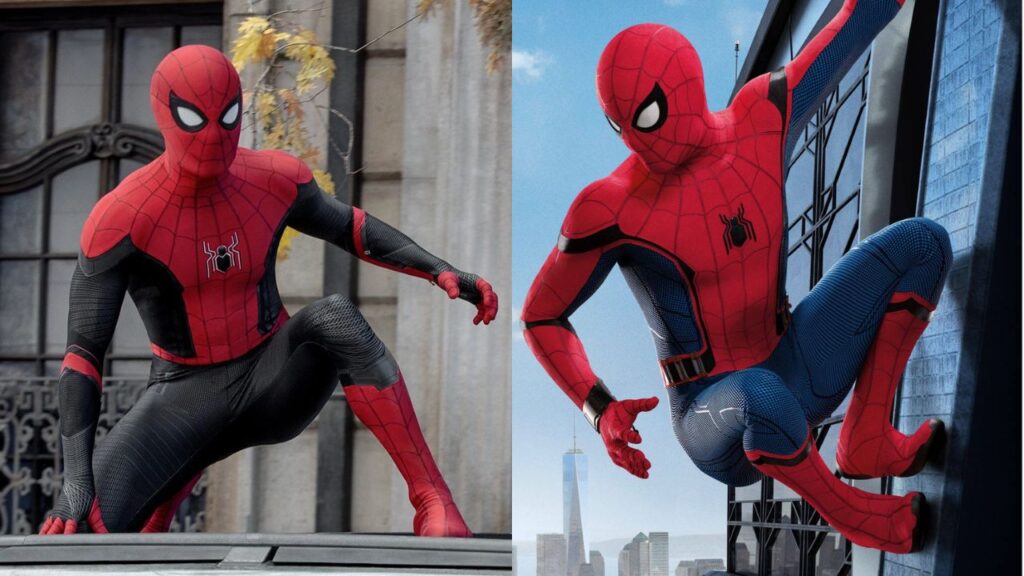
More importantly, the BND model is what the MCU is now following. Tom Holland’s Peter is, by the end of No Way Home, living in a small apartment, unknown to the world and devoid of his Stark tech. The 2026 film, apparently titled Spider-Man: Brand New Day, heralds a “fresh start” much like the 2008 relaunch – though presumably with a more heroic justification than a deal with Mephisto.
“Brand New Day,” was a radical rewrite designed to update the character by returning to his roots. Though it led to some of the best single stories in the character’s history, it also demonstrated that “narrative debt” is real. You can reset a character’s clock, but you can’t always reset the reader’s memory.
Fandomfans is a platform where you can find every update on movies, series, and celebrities. Our goal is to focus on deep concepts and character arcs.