Home > Web Series > Star Trek Strange New Worlds: Jess Bush Breaks..
Star Trek Strange New Worlds: Jess Bush Breaks Down the End of Spock & Chapel
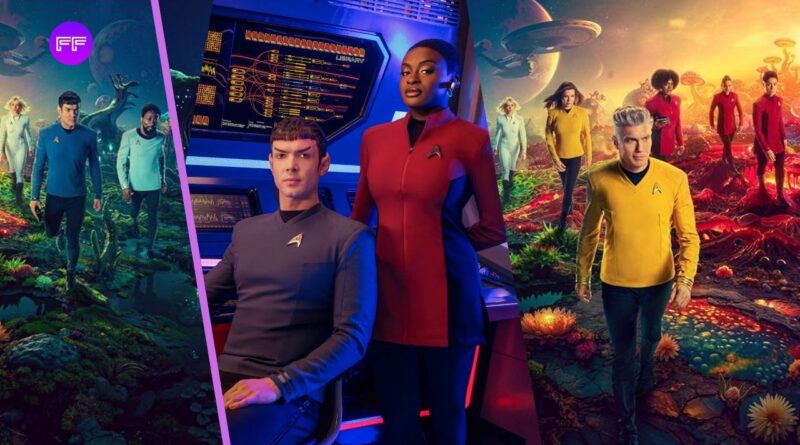
Star Trek Strange New Worlds : explores the emotional breakup of Spock and Chapel, revealing how their split reshapes relationships and future storylines.
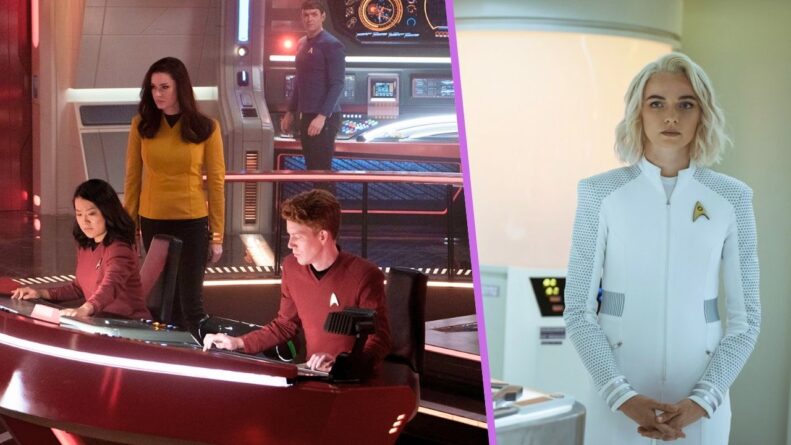
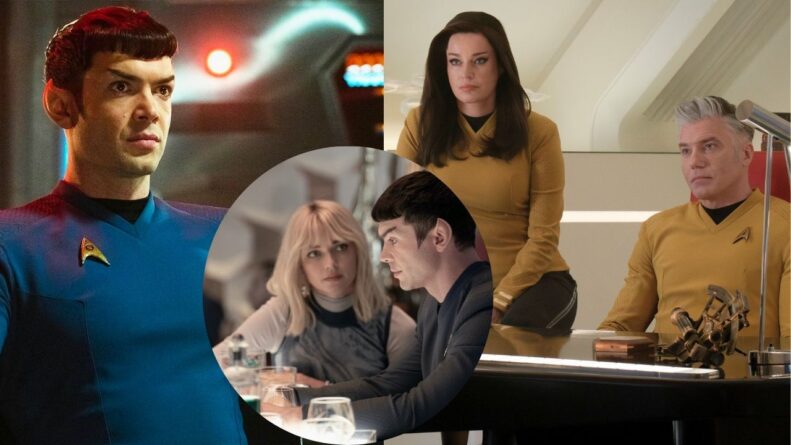
If you have been watching the bridge of the USS Enterprise of late, then you are well aware that the halls of Star Trek Strange New Worlds have been a bit more “emotional” than your typical starship. Nurse Christine Chapel and Lieutenant Spock—the couple that fans cheered for, sobbed over, and then witnessed come apart in a way that is only describable as “peak awkward” was at the center of that cyclone.
At Farpoint 2026, however, Brock had to finally come to terms with the elephant in the room: that musical breakup. And her impression is just as brutally honest as the character she portrays.
The Musical Breakup That Shook the Enterprise
We all know the scene. This season in the K/S musical “Subspace Rhapsody,” Christine Chapel not only ended it with Spock, she did so in a choreographed song-and-dance routine at work with their colleagues as backup dancers. It was tactile, it was rhythmical, and Spock was crushed by it.
When it came to the scene at Farpoint, Bush had no qualms, laughing and telling the audience:
“Look, I didn’t write it. I’ve gotta be honest, when I read the script for the musical, I was like, ‘Bill [Wolkoff], this is brutal. Like, what?”
This feeling is prevalent within a majority of the Trek fanbase. Watching Spock, a man who exemplifies the struggle of balancing logic and emotion receive his heart on a silver platter in an electrifying musical extravaganza is definitely a “a moment too agonizing to look at, too overwhelming to dismiss” moment of the ages. Bush said she was just as surprised as the fans when she initially viewed where the writers were going.
The Reality of Modern Trek Storytelling
One of the greatest obstacles to the Spock–Chapel romance (often referred to as “Spapel” by fans) was the reality of modern television production. Strange New Worlds, on the other hand, has a slimmed down 10-episode schedule compared to the 26-episode seasons that were packaged in the 90s.
Image Credit: Fandomfans
Due to this shortened format, their dating had to move from “will-they-won’t-they” to “full-blown romance” to “heartbreaking breakup” faster than the speed of light. Although Bush and Ethan Peck had undeniable chemistry, the narrative weight of the musical episode drove a wedge between them that seemed sudden to many.
Where They Stand Now
Star Trek Strange New Worlds on Season 3 finds the dust settled but the terrain different:
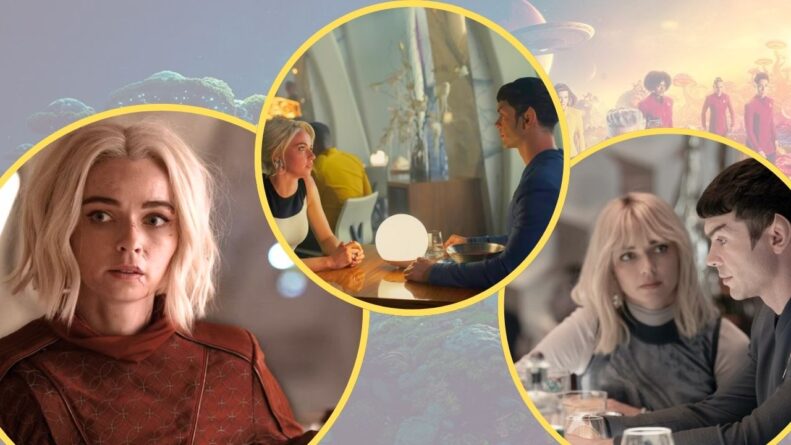
Dr. Roger Korby: Chapel has progressed to her canonical future with the arrival of Dr. Korby (Cillian O’Sullivan).
La’an Noonien-Singh: Spock has uncovered a surprising new link with the Enterprise’s security chief.
Image Credit: Fandomfans
Cherry on the cake: chaos in ‘Wedding Bell Blues’ with the impish Trelane.
Closure: The pair eventually received some much-needed closure at the end of the (infamous) ‘Wedding Bell Blues’ episode featuring the now-Trelane (Kirk’s nemesis as Starfleet Junkie) – but perversely tied up and almost undone in the process.
Is This Really the End for Spock & Chapel?
Jess Bush at the pity party her commentary on the breakup really wasn’t the most exciting part of her appearance at the con was that it turned to what’s to come.
The series ended shooting its fifth and final series in December 2025, but Bush teased there could be more to the story.
Bush alluded to the thought, “I think it was a very bad end, but maybe it is not the end.”
With Season 4 and 5 yet to premiere on Paramount+, the question remains for fans of what “not the end” truly means. We know where these characters end up, eventually, in The Original Series—they’re still close colleagues, but the romantic flame seems to have waned into a mutual, if occasionally painful, respect.
Can these last 16 episodes close the gap, or is there one more twist in the stars for the nurse and the Vulcan?
Jess Bush has been a standout in the Star Trek Strange New Worlds, making a character that was routinely sidelined in the 60s into a juggernaut of ambition, wit, and vulnerability. Even if she believes the split was “brutal,” the fact that she could sell that pain is precisely why we’re all still talking about it years later.
If you are Team Chapel, Team La’an, or just Team “Let Spock Have a Nap,” there’s one thing we can all agree on is this: Strange New World’s final two seasons are shaping up to be a real tearjerker.
Alpana
Articles Published :
160
Alpana is Fandomfans Senior Editor across all genres of entertainment. She evolved in the media industry since a very long time, she manages the content strategy and editing of all the blogs. Her focus on story development, review analysis, and research is well-equipped that ensures every article meets the standards of accuracy and depth.
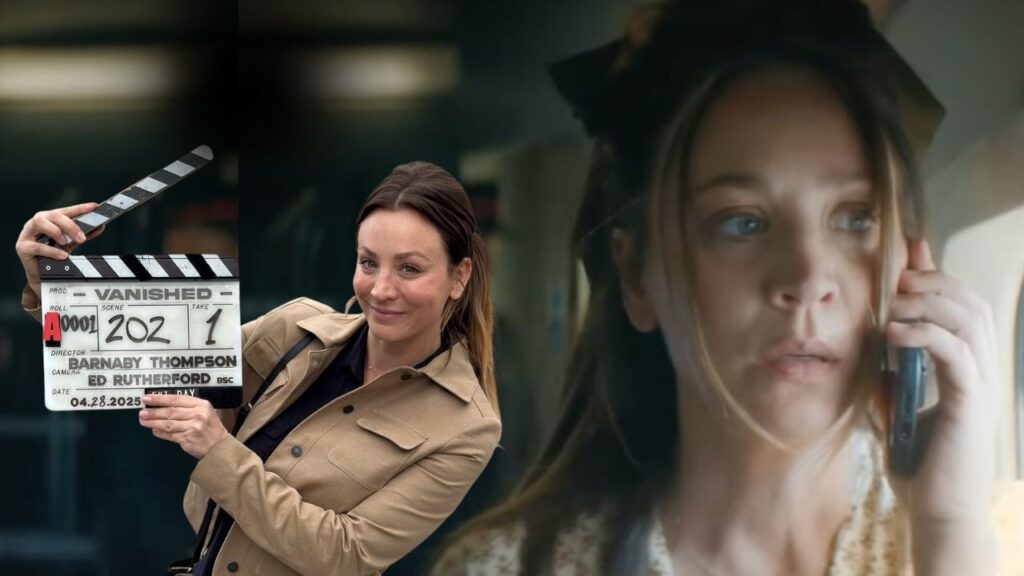
Early 2026 is already seeing the streaming market dominated by quality limited series using stunning global locations and big stars as a draw. Topping the bill for this trend is the four-part mystery thriller Vanished, from MGM+ and Prime Video, which is a co-production. Starring Kaley Cuoco, Sam Claflin, the series is the ideal combination of American star power with a European cinematic sensibility.
Introduction to Vanished 2026
The Vanishing is a strong Euro-thriller, mixing psychological tension with international flavour. This is a defining change for Cuoco as she is definitely leaving her comedic roots for more dramatic, intense roles. Alongside her is Sam Claflin, who is also excellent as a mysterious figure at the heart of the plot – a sudden and baffling disappearance on a romantic jaunt to France.
The initial trailer which was released on 13 January 2026 featured a “beautiful but deadly” appearance. The plot centres around Alice Monroe (Cuoco) hunting for Tom Parker (Claflin) when he disappears. But it soon turns into more than a rescue operation: It examines how well we really know those we love.
Feature
Specification
Title
Vanished
Format
Four-part Miniseries
Lead Cast
Kaley Cuoco, Sam Claflin
Production Studios
AGC Studios, Fragile Films, Slow Burn Entertainment
Primary Platforms
MGM+ (US), Prime Video (International)
Filming Locations
Paris and Marseille, France
Release Date & Availability
The show is scheduled to air on February 1, 2026, with the date strategically set to boost ratings after the winter holiday break. The delivery schedule will be different, depending on the audience’s preference.
United States & Select Regions: On MGM+, episodes will drop weekly every Sunday starting February 1. This builds social media buzz over a month.
International Markets (UK, Canada, Australia, etc.): On Prime Video, all four episodes will be released at once on February 27, 2026. This “binge” model is very popular for short series in these regions.
Region
Platform
Debut Date
Release Model
United States
MGM+
1/Feb/2026
Weekly (Sundays)
UK / Canada / Australia
Prime Video
27/Feb/2026
Full Binge
Genre & Theme of the Series
Without giving away plot points, Vanished also feels like a romantic drama, and not in a bad way. It’s in the “Euro-noir” tradition, where stunning views conceal place sinister secrets.
Thematic Foundations: The main theme is the “unknown intimate.” It asks the scary question: Is the person you love actually a stranger?
Setting – The Dual Nature of France:
Paris: Represents the romantic “dream” phase of the relationship.
The South (Marseille/Arles): This is where the story turns dangerous. Tom disappears from a moving train—a classic mystery setup—turning a holiday into a nightmare.
Director, Writer & Creative Team
The series contains an extraordinary group of creators committed to the aim of making engaging character based stories. Under the direction of Barnaby Thompson, who maintained a uniform visual and emotional sensibility throughout the four episodes, the series is a masterful synthesis of style and substantial character study.
Written by Preston Thompson, the film strives to create a feeling of “creeping dread,” making audiences feel what Alice experiences in her loneliness as she hunts for the truth in a strange country. From AGC Studios, the series is also enhanced by the participation of Kaley Cuoco as an executive producer, bringing even more layer of proficiency to the production.
Plot Overview
The story is a tight, four-episode journey:
The Setup: Alice and Tom are on a dream trip through France, but small hints suggest their relationship isn’t perfect.
The Incident: On a train to Arles, Tom vanishes. Because the train is moving, it creates an “impossible” mystery.
The Search: Alice travels through Marseille to find him. She discovers “shocking secrets” about Tom’s past, realizing his whole identity might be a lie. Promotional photos showing Alice with different hair colors suggest she might go undercover or that the story jumps through time.
Cast & Characters
The cast is a combination of big Hollywood stars and very talented French actors.
Kaley Cuoco (Alice Monroe): The emotional core of the series. She is a woman driven to the edge.
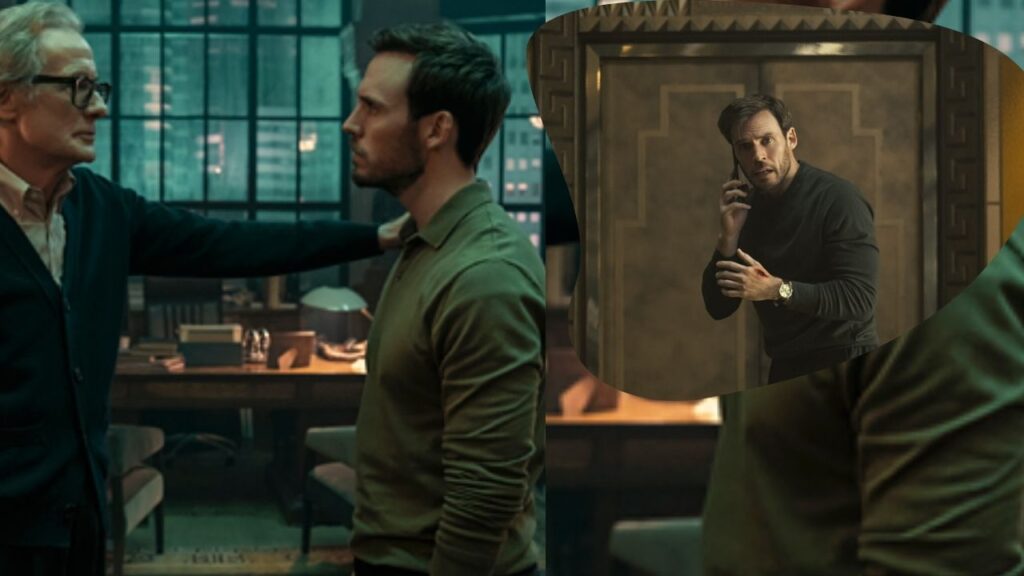
Sam Claflin (Tom Parker): The boyfriend with a secret, possibly dark past, and a charming demeanor.
International Supporting Ensemble:
Actor
Character
Background
Karin Viard
Hélène Lando
Famous French actress.
Matthias Schweighöfer
Alex Durand
German star (Oppenheimer).
Simon Abkarian
Gaspard Drax
Known for Casino Royale.
Key Highlights & Collaborations
The MGM+ & Prime Video Alliance: The deal exemplifies how Amazon is leveraging MGM+ for prestige US content and Prime Video for global distribution.
Star Chemistry: Producers say the chemistry between Cuoco and Claflin is ”magical,” and it makes the stakes that much higher when Tom goes missing.
Visuals: Shot in France, the series eschews shoddy “green-screen” techniques and achieves a high-end, movie-like look.
Rating & Certification
The series is anticipated to be rated TV-MA in the US, or 15/18 for international viewers, subject to local rating systems. It has psychological tension and adult betrayal themes swirling in a gritty, intense thriller ambience (comparable to contemporary thrillers). Although it’s not all action-driven, the emphasis on those aspects winds up a pretty interesting and adult story.
Audience Expectations
There are a lot of expectations for a lot of different reasons:
Cuoco’s Transformation: Her followers are eagerly waiting to see her darkest, most serious role to date.
The “Enigma”: Fans are wondering if Sam Claflin’s character is a victim, or a villain.
Quick Pace: With only four episodes to tell its story, the tale ought to be stripped of “filler” and driving toward a startling end.
Conclusion
Vanished is being positioned as the television event of 2026. Combining a classic “who-done-it” storytelling with deep emotional issues around trust, it has a little bit of everything for the thriller enthusiast. With its stunning French locale and A-list cast, it dares the viewer to play detective in a place where “nothing is what you think.
Mariyam
Articles Published :
77
Mariyam Khan is Fandomfans Content Writer and providing reports and reviews on Movie Celebrities, and Superheroes particularly Marvel & DC. She is covering across multiple genres from more than 4+ years, experience in delivering the timely updates.
The Aisle: Where West Wing Idealism Meets the Cruel Intentions of Gen Z –D.C.
Discover The Aisle, a Netflix political drama exploring Gen Z drive, pandemonium, and personal strife as idealism confronts the realities of D.C. bomb.
For a generation that grew up on the high idealism of rush-walking courtiers of The West Wing, the prospect of a new political drama — The Aisle is in making at Netflix, is enough to make any TV buff muster a moment of excitement. But this is more than just a nostalgic return to D.C. policy wonkery and impassioned monologues.
Netflix’s new series, guided by seasoned hand The West Wing’s Executive Producer John Wells along with the unique, contemporary sensibility of writer/showrunner Phoebe Fisher, is positioned to be something quite different. It promises to be a ruthless and stunning mash-up of political pedigree meets Gen Z disbelief and the show that could reinvent the D.C. drama for a new era.
Why This Story of D.C. Feels Different From Anything We’ve Seen
The central creative tension is the collision of these two powers. While the details exclusively comes from the Deadline, John Wells has the DNA of a romanticized Washington, with existential stakes and staffers (while flawed) usually believe in the system they work for. His participation confers upon The Aisle a legitimacy and framework based on the finest political fiction of the past 25 years.
Viewers have faith that he can bring them the intricate gears of government, the manic circuitry of the Oval Office’s sphere, and the pure brain power needed to nudge the legislative dial. But the world That The Aisle is meant to live in is not the world of the Bartlet administration.
Enter Phoebe Fisher who co-showruns the most recent Cruel Intentions series and has a background in snappy, character-driven YA writing, bringing in the vital, humanizing grit. The heart of The Aisle is more obviously the baby political operatives — the 20-somethings who are as obsessed with policy as they are crippled by ambition and lost in their personal lives.
The Young People at the Heart of The Aisle — Flawed, Driven, and Trying to Survive
The title, The Aisle, plays off the obvious political divide, but the real idea is the moral aisle that every young staffer has to hustle down. These characters aren’t policy wonks yet, they’re the assistants, interns, junior press secretaries burning out on caffeine and cutthroat drive. The sense of ethics, throw away relationships, and sometimes even your mind is what can be lost in the cost of entering this field is something they understand.
Fisher’s writing is also expected to infuse the necessary grittiness into this world of workplace intrigue, secret romances and savage rivalries that typically don’t survive the policy-centric episodes of traditional D.C. dramas.
The outcome, as reports have suggested, is a concoction being billed as “The West Wing meets HBO’s Industry.” Wells serves as the majestic backdrop and the six-day-a-week heartbeat of the Capitol, the soaring architecture of the Capitol and the rhythm of governance that Fisher populates that space with messy, human, and often heartbroken inhabitants. The snappy, walk-and-talk idealism descends to panic attacks in the bathrooms of congressional offices.
How Personal Messiness Becomes Part of the Political Game
The series will follow how a new generation born out of political cynicism has come of age and learned to navigate a capital city where power is the only real currency and exposing one’s self is a fatal weakness.
This split attention screen allows The Aisle to tackle two important contemporary political issues. Director Balint’s second narrative feature, The Aisle is a taut, darkly humorous thriller set in the Washington D.C.
First, the generational conflict but what takes place when Gen Z staffers motivated by social justice and climate doom comes to power in the same systems constructed by Boomers and Gen X?
Second, the merciless collision of the personal and the political: the relationship that ignites during a midnight rewrite session, the betrayal that costs a staff member both a romantic partner and a job, and the soul-crushing discovery that sometimes the best thing for one’s career is also the most ethical decision.
What Makes The Aisle Hit So Close to Home for Today’s Audience
The Aisle is not only about saving democracy, it’s about saving yourself from the machine. Combining Wells’s structural brilliance with Fisher’s unsparing gaze into the inner lives and emotional compromises of young professionals, the series could become the defining political drama for a world where idealism is more often a stepping stone to cutthroat ambition.
It’s a show about the grind, the glamour and the ethics-defying run of hell that is a job in the most powerful city in the world.
The Aisle works because it knows something that most political dramas forget: the people scurrying around Washington aren’t superheroes, they’re humans trying not to break apart. John Wells provides the framework and the classic D.C. storytelling heart, but Phoebe Fisher populates that world with real, chaotic, incredibly flawed young adults who are still trying to make sense of who they are while the nation looks on.
In a town where power means everything, the show lets us see what the pursuit of power, even its sacrifice, does to us, to our relationships, to our ideals, and in this case, to our very ideas of who we are. And that’s what makes The Aisle so honest. It’s more than just politics. It’s the emotional burnout of wanting to matter in a world that keeps demanding more.
Alpana
Articles Published :
160
Alpana is Fandomfans Senior Editor across all genres of entertainment. She evolved in the media industry since a very long time, she manages the content strategy and editing of all the blogs. Her focus on story development, review analysis, and research is well-equipped that ensures every article meets the standards of accuracy and depth.