Lord of the Flies Explained: Themes & Summary
Discover Lord of the Flies by William Golding—complete summary, key characters, themes, and analysis of survival, power, and human nature.
Published: May 9, 2026, 12:17 pm

Discover Lord of the Flies by William Golding—complete summary, key characters, themes, and analysis of survival, power, and human nature.

The new Lord of the Flies 4-part series on BBC/Netflix throws out the rulebook and critics can’t agree on whether that’s brilliant or a big mistake. If you have started watching this mini-series, you probably noticed that there is no main character. Still, the show received huge appreciation and 96% rating on rotten tomatoes for its bold storyline.
Famous William Golding’s 1954 novel showed Ralph as the main lead, he is a kind and honest kid who is trying not to lose its moral compass while everything falls apart. But the TV adaptation, written by screenwriter Jack Thorne, adds an impressive shift in the story where all four different boys get equal time and equal amount of potential in the series.
Old readers who read the original story and the new viewers of the film debate on this change and receive mixed reviews from critics. Let’s understand the narrative of the story and Jack Thorne’s bold move.
If you haven’t read the book, you never got the chance to know the original story. The story is about four schoolboys, their plane got crashed and the next minute, they get stranded on a remote jungle island. Left without adult supervision and no rescue on sight.
They started to build civilized society by making shelters, keeping an eye on signal fire and voting for a leader. But fear clouded their trust and turned them against each other. A civilized society fades away, tribal violence takes place. By the end, boys are being hunted and killed by other boys.
The story was simple and thrilling from Golding’s perspective, darkness in human nature exists in everyone, just wanting to come out and for that we don’t need someone to teach us to be cruel.
Lord of the Flies is a British mini series directed by Marc Munden and written by Jack Thorne with a unique aspect in story structure. You can watch it in the UK on BBC One and BBC iPlayer on February 8, 2026.
It became accessible globally later and received huge ratings after its release on Netflix on May 4, 2026.
Each 60 minute episode shifts perspective in Jack Thorne’s adaptation to focus on the inner life and viewpoint of a different core character rather than one continuous story told from a single point of view:
See Also: Landman Season 3
This setup changes the entire view of the story as we get to see the island’s slow drop into chaos through four entirely different sets of eyes. At the end, Island collapses through three other pairs of eyes. The sadness and grief of Ralph which comes from his failure of civilized society hits differently.
Lord of the Flies is not a surprise as Thorne previous shows also hit differently for their unique aspects. Other thrillers like His Dark Material also deliver a fascinating story, co-wrote Harry Potter and the Cursed Child for the stage.
The pattern is the same for his projects, even Enola Holmes films are also as fascinating as others are. His work is outstanding and focuses on why people do what they do, not just what they do.
He perfectly defines the line — No one is born evil; they become it. He rarely writes a villain who is simply evil for no reason, there’s always a wound underneath the bad behaviour. The trauma that triggers evilness can be anything including the fear, the childhood hurt, the moment when things went wrong.
Splitting the story into four character studies is the most “Jack Thorne” thing Thorne could possibly have done.
Jack Thorne writes the character’s depth so well that it puts you into their shoes and see through their viewpoint. Piggy’s episode feels like being the last kid picked at school with its innocent glance.
Then intoxicating jack which starts as powerful and then right up until the moment it curdles into cruelty.
This series received mixed reviews from critics, some of them are impressed and the others are disappointed for altering the original story.
| What People love | What People Criticise |
| It’s cinematography and an outstanding performance by the cast. A fresh perspective with every episode so it becomes unpredictable for book readers too. | Fading Golding’s point by adding backstories for the boys. The story stops being as warning for their cruelty and becomes a social work case study instead. |
Golding’s original novel does not explain why the boys become violent. It showed people can do horrible things without any reason just by fearing to lose power and control. Evil does not happen because of something hit and causes to trigger evilness, it just happens to be there in everyone, even in the good ones too.
The 2026 Lord of the Flies shows the evilness in boys pushed by the experience in their actual life before the island. The show highlights everyone’s past flashbacks — Jack’s controlling father, of Piggy’s loneliness at home. But those who love the original story of the book argued about the shift that Thorne made because it seems smaller and less thrilling than Golding’s whole point was that there is no comfortable explanation in evilness.
Those who like Tv adaptation say that this is a perfect narrative for modern audiences, no one wants to take guidance. And spending real time inside each boy’s head showed everybody’s own perspective, making the story more devastating.
The 2026 Lord of the Flies is one of the best adaptations of the year, you can watch the show and never forget about it. The storyline keeps the viewers consumed in every character’s evilness and causes a bold shift from Golding’s novel. Whether it captures the book’s darkest idea, or quietly steps back from it, is the debating topic after the huge hit of the series.
Fandomfans deliver deep theories from movies, series, and celebrities, our focus is to provide you accurate and fact based theories in a simple way.

Love The Pitt? Discover the best medical drama series like The Pitt to binge in 2026, with intense hospital stories and realistic, high-pressure cases.
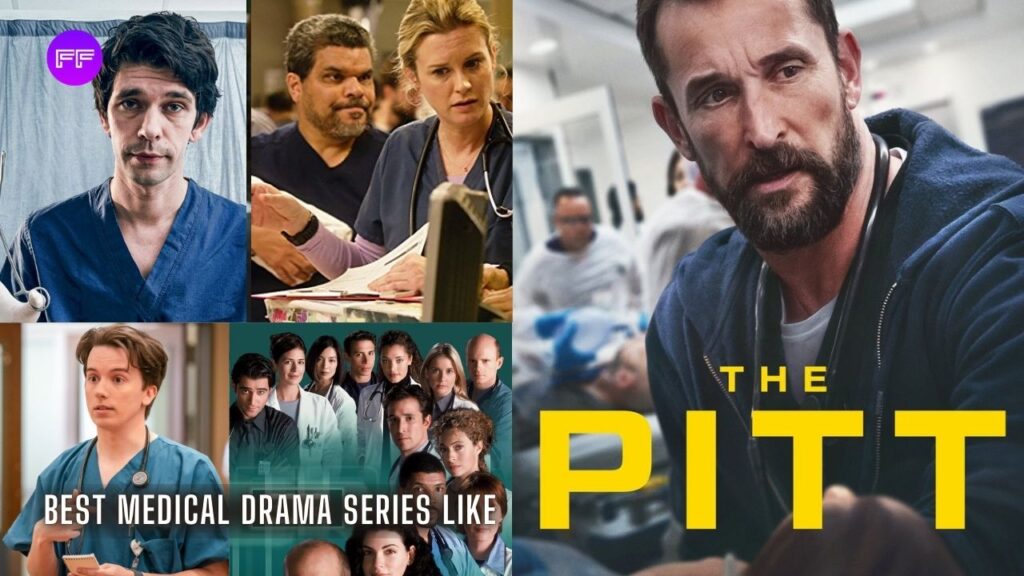
The Best Medical Drama Series like The Pitt has found its time in the sun again, late January 2026. This type of programming has historically been our group therapy — a place to examine our fears around our own health, our mortality and the organizations that are meant to save us. At the forefront of this revival is HBO Max’s The Pitt, an adaptation that has not only revived Noah Wyle’s career but shattered the conventions of the genre.
Now in the second series with the harrowing fourth episode, “Code Black,” just aired last night – it has clearly captured our attention by virtue of its “real-time” approach and uncompromising view of a medical system in chaos. But there is a catch. The very structure which makes The Pitt so exhilarating — its weekly Thursday release creates a breaking-point for contemporary viewers conditioned to the “binge” model. We want to get lost in it, uninterrupted.
If the countdown to next Thursday has you climbing the walls, you’re in good company. You want Best Medical Drama Series Like ‘The Pitt’ that mimics that particular pressure in the air, complexity in the ethics and energy in the kinetics. The following guide is a handpicked rundown of the best streaming services that are currently available that will analyze the “DNA” of medical TV to help you find your ideal match.
To find an alternative, we must begin by asking ourselves what we are substituting. The Pitt isn’t just a series about doctors, it’s a survival horror tale taking place in a hospital.
Any good alternative has to tick these boxes: high velocity, flawed heroes, and systemic realism.
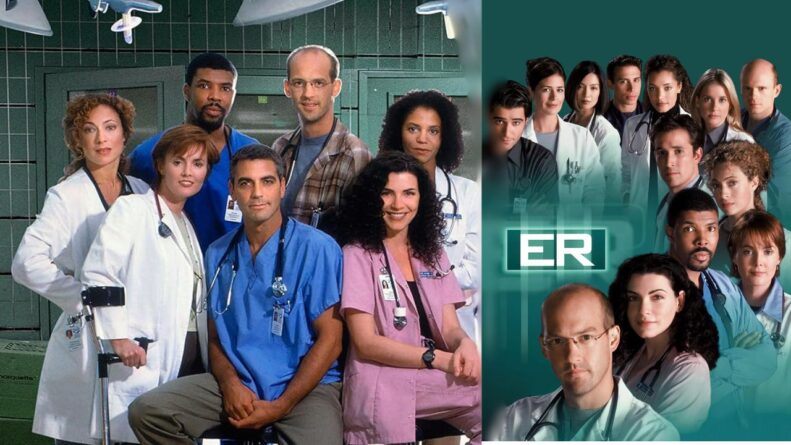
If The Pitt represents the modern masterpiece, ER is the gospel. Any fan of the present show needs to watch ER, as nothing is quite mandatory enough for a television show still in production. It is the genetic progenitor, with the same creators, producers, and, naturally, its leading star.
The Genealogical Connection: The Pitt is in many ways a spiritual successor — what critics have dubbed “ER: Pittsburgh.” It borrows the visual language ER created: the walk and talk, the Steadicam whizzing down corridors, the overlapping dialogue that assembles into a symphony of chaos.
Watching ER in 2026 provides a unique meta-experience. You get to see the origin story of the actor behind Dr. Robby. In ER, Wyle is John Carter, who begins as a novice doubling over at the sight of blood and matures into a seasoned commander. Catching the ghosts of John Carter in Robby’s tired eyes adds a layer of meaning to your viewing experience.
Where to Watch: ( Seamless switching between The Pitt and ER) HBO Max.
Plan/Approach: Concentrate on the “Golden Age” (S1-8) to discern the blueprint The Pitt is constructed on.
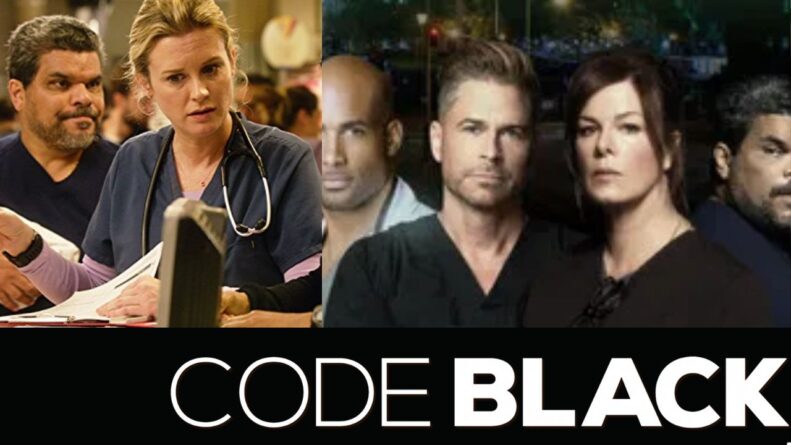
If ER is the father, Code Black is the sibling separated at birth. If you find ER a bit old-fashioned, this is your high-octane contemporary option.
The Concept: The name is a nod to a condition in which patient intake overwhelms resources — the same “Code Black” crisis we witnessed earlier in The Pitt. Both series are fixated on the physics of overcrowding: hallway medicine, no beds, and savage triage.
Visual Chaos Code Black sets its action in “Center Stage,” a trauma zone that replicates the “fishbowl” experience of The Pitt’s trauma bays. The camera spins around the doctors, providing a 360 theater of trauma. She also has a powerful mentor figure in Dr. Leanne Rorish (Marcia Gay Harden), who is a mirror to Robby’s role as the rule-breaking, intense leader.
Where to Watch: Prime Video.
Commitment: 3 Seasons (47 Episodes). Great for a quick binge.

If The Pitt is about the floor chaos, The Resident is about the boardroom corruption that leads to it.
The Corporate Villain Set at Chastain Park Memorial, this program overtly positioning hospital management as the villains. It is perfectly in keeping with The Pitt’s obsession with quantifiable medicine. Despite the melodramatic nature of The Resident—sometimes slipping into thriller-type suspense—it does offer a rewarding “hero vs. suit” dynamic. One of the most fascinating arcs in recent TV history is that of Dr. Bell’s transformation from villain to patient advocate.
Where to Watch: Hulu and Disney+.
Vibe: Darker, conspiratorial and cynical.
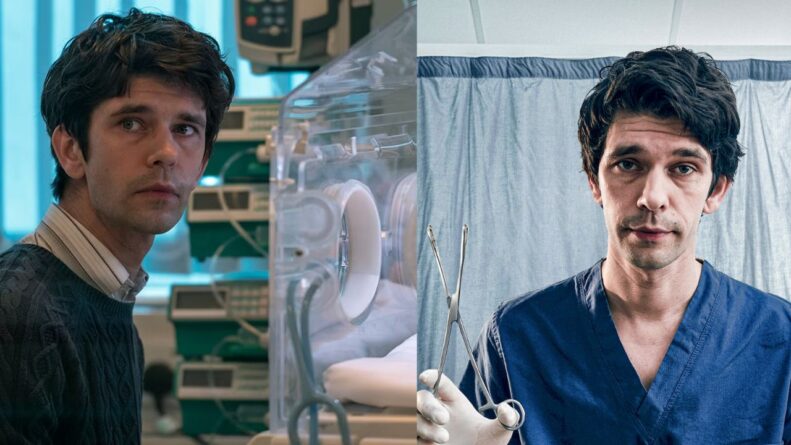
For the viewer who says they watch The Pitt “for the realism” and emotional sincerity, this British miniseries is the best they’ll get.
The Anti-Glamour Drawing on Adam Kay’s memoirs, this series strips off the adrenaline to reveal the fatigue. Taking place in an NHS maternity ward, it shows the immense pressure of responsibility within a failing system. The hero isn’t a superhero, he’s exhausted, prickly, and makes mistakes. It’s a tougher watch often referred to as “brutal” — but that mental-health crisis among medical workers is portrayed more powerfully than anywhere else on TV.
Available on: AMC+ and Apple TV.
Commitment: Only 7 episodes.

But even at its most punchy, fiction can’t always capture the power of real life. The Pitt, for all its documentary feel, Lenox Hill is the real thing.
Actual Doctors, Actual Patients All Four Doctors are Real followed four real doctors in NYC, offering insight into the realities of patient care without that old standby, manufactured drama. The standalone ninth episode, “Pandemic,” chronicles the onset of COVID-19 in NYC. It is a prequel to the world of The Pitt and reveals the precise moment the system broke, as well as the events that led to the cynicism that fictional doctors assume today.
Watch here: Netflix.
Today’s trauma needs you to be looking after you, too.
St. Dennis Medical (2024–Current): The Office meets an under-resourced hospital in Oregon. (It validates the frustrations of the system — bureaucracy, burnout, lack of resources but plays them for laughs.) A necessary release valve. (Streaming on Peacock).
Nurse Jackie (2009–2015): Edie Falco’s Jackie Peyton is the quintessential flawed protagonist. She’s excellent at her job but addicted, and she reflects Dr Robby’s “risky behavior” but from the perspective of the nurses who conduct the ground war. (Streaming on Netflix)
| If you want… | Watch this… | Streaming On |
| The Direct Ancestor | ER (Seasons 1-8) | HBO Max |
| Pure Adrenaline | Code Black | Prime Video |
| Systemic Conspiracy | The Resident | Hulu |
| Brutal Realism | This Is Going to Hurt | AMC+ |
| The True Story | Lenox Hill | Netflix |
The dominance of The Pitt in 2026 is a sign that the comfort-food style of glossy medical dramas is no longer enough to satisfy viewers. We want intensity and truth, and stories that recognize those systems of life-saving have cracks in them. The Pitt treats the hospital as a pressure cooker — ethical, emotional, and institutional — and that clearly has resonated.
Until the next episode drops, these alternatives don’t just help pass the time; they expand the experience. Through the foundational chaos of ER, the relentless velocity of Code Black, the corporate warfare of The Resident, the bruising honesty of This Is Going to Hurt, or the rawness of Lenox Hill, each series reveals a different shade of the same reality: medicine is heroics in an environment that makes it unsustainable.
Binge-watching The Best Medical Drama Series Like The Pitt in 2026 doesn’t make The Pitt seem smaller, it makes it seem bigger. They show us that terror, fatigue and ethical degradation aren’t tricks of genre. They’re byproducts of a system that’s always teetering.
Find the best dramas list from Fandomfans to make your weekends entertaining and happy.

Discover where to watch Dancing With the Stars 2026 live, check DWTS cast, premiere times, voting info, and streaming options. Don’t miss any dance action!

Catch Dancing With the Stars season 34 live, this new season created a buzz among the dance lovers with its premiere on September 16, 2025. This 20th-anniversary season will air at 8 pm on ABC and later available on Disney+ and new episodes drop every Tuesday at 8 p.m. ET. Pacific viewers can watch at 8 pm and Central viewers catch it at 7 pm local time. Its premier performances are featuring classic dances including tango, salsa and cha-cha while all the 28 contestants compete for the Mirrorball Trophy.

There are several platforms to catch Dancing With the Stars 2025. You can watch it on official channel ABC at 8 pm and 7 pm Central. You can stream this show on Disney+ as it airs concurrently on it. For a live streaming, use ABC app, Hulu Live TV, Fubo TV to watch your favorite dance show.
All the episodes are available of the entire season on Disney+ and Hulu to catch it later. But if you are interested in a live show then watch it right away on Disney+ and catch the premiere of 16th September on Hulu to watch your favorite celebrities in their dance forms. It means the premiere is available on 17th September on Hulu.
Dancing With The Stars season 34 cast announced on Good Morning America September 3, 2025. There are 14 couples – celebrities with professional partners including Hilaria Baldwin author and business owner, teamed up with Gleb Savchenko & actor and musician Corey Feldman dances with Jenna Johnson. There are more celebrity-dancer pairs listed below noted by the ABC.
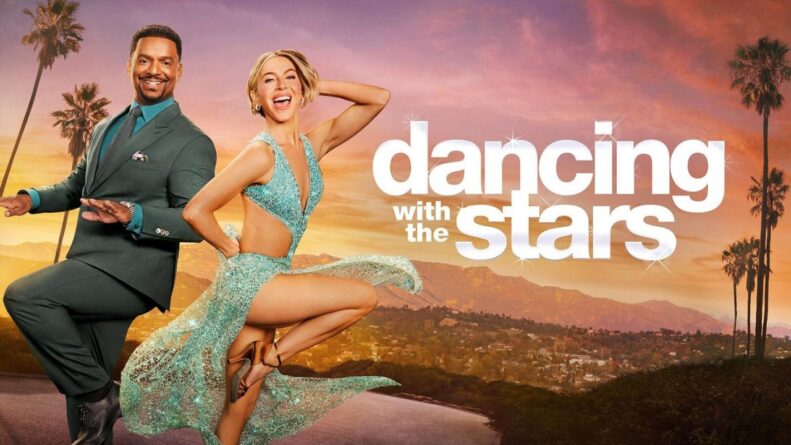
The DWTS season 34 is back with the familiar faces including Carrie Ann Inaba, Bruno Tonioli, and Derek Hough will judge again. Performances are scored by these judges every week and the show co-host by Julianne Hough and Alfonso Ribeiro again. The competition will also get tricky because viewers can vote for their favorite couple.
| Celebrity | Professional Partner | Celebrity background |
| Jen Affleck | Jan Ravnik | Influencer and reality star (star of The Secret Lives of Mormon Wives) |
| Hilaria Baldwin | Gleb Savchenko | Wellness entrepreneur and author (host of TLC’s The Baldwins and lifestyle author) |
| Jordan Chiles | Ezra Sosa | Olympic gymnast (silver & gold medalist) |
| Baron Davis | Britt Stewart | NBA All-Star and entrepreneur. |
| Alix Earle | Val Chmerkovskiy | Leading social media personality (lifestyle/fashion content) |
| Dylan Efron | Daniella Karagach | Producer and content creator (co-star/producer of Netflix’s Down to Earth with Zac Efron) |
| Corey Feldman | Jenna Johnson | Child-actor turned musician (star of The Goonies, Gremlins; celebrating 50-year career) |
| Danielle Fishel | Pasha Pashkov | Actress (best known as Topanga on Boy Meets World) and TV director |
| Elaine Hendrix | Alan Bersten | Actress (The Parent Trap, Dynasty), model, and singer |
| Scott Hoying | Rylee Arnold | Grammy-winning singer (member of Pentatonix, win more than one Grammy Awards) |
| Robert Irwin | Witney Carson | Wildlife conservationist and TV presenter (son of Steve Irwin) |
| Lauren Jauregui | Brandon Armstrong | Singer-songwriter |
| Whitney Leavitt | Mark Ballas | Reality star (Secret Lives of Mormon Wives) and social media personality |
| Andy Richter | Emma Slater | Comedian/actor (longtime sidekick on Conan) |
The new addition to this season is Jan Ravnik who danced with Taylor Swift in her tour era. This season’s backup dancers are Carter Williams, Onye Stevenson, Jaxon Willard, Hailey Bills.
Read More 👉 Most Beautiful Hollywood Actresses: See Who Tops the List in 2025!
It’s the 20th anniversary of Dancing With The Stars but there is nothing new or surprising. It returns as in its usual format, judges will score weekly on the dancer’s performance and elimination by audience vote. So, it’ll be the DWTS you know and love.
The Dancing With The Stars dancing show is returning with new faces and talent, fans will be excited to see their favorite stars on a live show. This dance show will air on ABC and Disney+ and you can also catch it later on the ABC, Disney+, Hulu app. Viewers can vote during the live broadcast via online on the ABC site or SMS with the celebrity’s first name to 21523 ( U.S., U.S. territories, or Canada).