Home > Movies > The Mandalorian and Grogu Strategy: Lucasfilm’s Star Wars..
The Mandalorian and Grogu Strategy: Lucasfilm’s Star Wars Is Returning to Cinema Differently
‘The Mandalorian and Grogu’ will bring Star Wars back to theaters in 2026. Discover how Lucasfilm is redefining marketing, budgeting and fan expectations.
Star Wars’ return to the cinema should have felt like a galactic coronation. With the countdown to the release of The Mandalorian and Grogu (May 22, 2026) now well underway, here comes something rather unexpected — confusion.
It was a seven-year gap on the big screen, so people were expecting a “shock and awe” campaign. What they received in Super Bowl LX was a 30-second parody of a Budweiser commercial narrated by Sam Elliott’s gravelly voice that features Tauntauns pulling a sled. It was bold, it was weird, and it signaled a massive change in how Lucasfilm treats its most precious cargo.
The Super Bowl Ad That Changed Star Wars Marketing
Usually a $10 million Super Bowl spot is spent displaying “heavy artillery” — explosions, high-stakes drama and cinematic scale. Instead of a third wall-smashing joke, director Jon Favreau and new leadership team of Dave Filoni and Lynwen Brennan didn’t just shatter the mold; they pretended it didn’t exist.
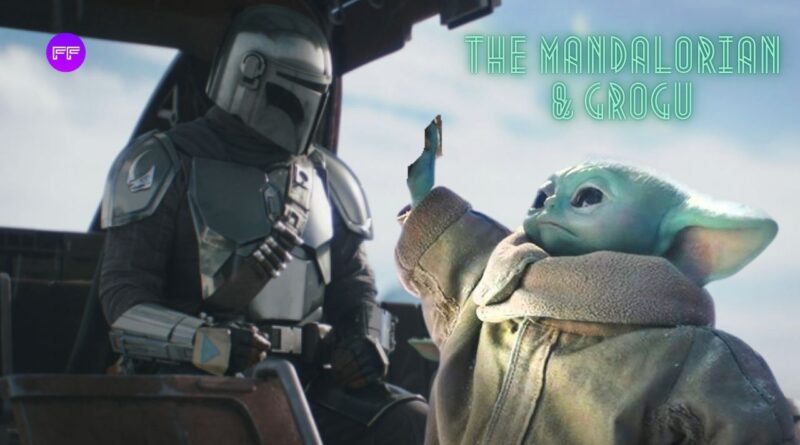
Image Credit: Fandomfans
The commercial, “A New Journey Begins,” indulged full-force in “Comfort Marketing.” Rather than treating the movie as “there’s mythology behind everything, and you have to do your homework” (a common critique of the Sequel Trilogy era), the ad treated the characters as old friends. It puts its chips on the notion that Grogu is a worldwide icon who doesn’t need a plot summary to sell a ticket — he just needs to make people smile.
The “Solo” Anxiety vs. Fiscal Reality
Industry watchers have been quick to note the “Solo-esque” red flags. Like 2018’s Solo: A Star Wars Story, this movie has a May release date and a somewhat late marketing push. But the internal economics are another story:
The $166.4 Million Strategy: The Disney era live-action Star Wars movie that has been the most “fiscally responsible.”
The Efficiency Model: The film, which recycles assets from the Disney+ series and employs “The Volume” (StageCraft) technology, has a far lower break-even level than its predecessors.
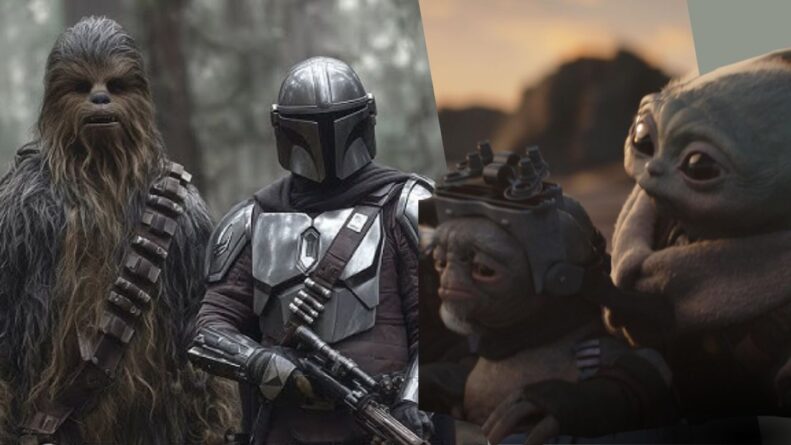
Image Credit: Fandomfans
The Mandalorian and Grogu Expectations
A global take of $500 million would have made The Mandalorian and Grogu a massive success, but it would have been a flop for The Rise of Skywalker. The marketing department was allowed to be “bizarre” about the Super Bowl this year on account of the diminished financial burden.
A “Filoni-verse” Extravaganza
It’s also the creative debut for Dave Filoni. Filoni, the master of “deep cuts” into Star Wars lore, has brought a surprising cast to the table:
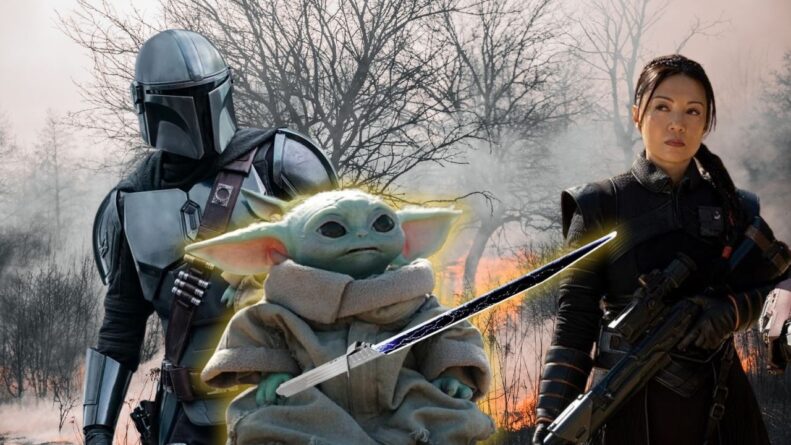
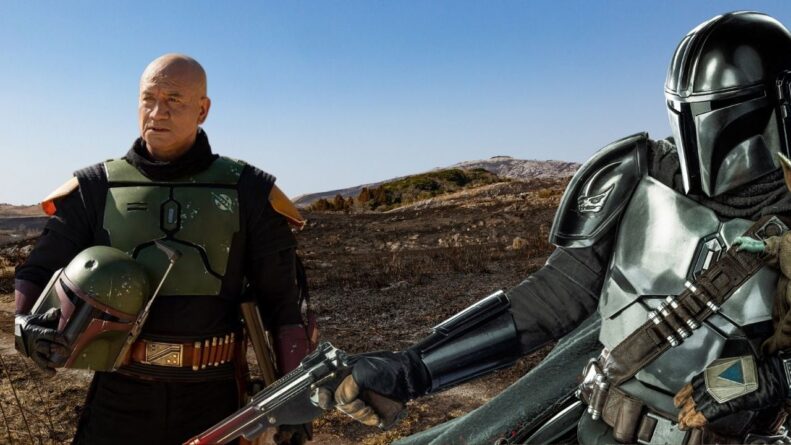
Image Credit: Fandomfans
Jeremy Allen White, the protagonist of Shameless, is voicing Rotta the Hutt (the infant “Stinky” from the 2008 Clone Wars movie), now an adult and part of a “buddy-cop” dynamic with Mando.
Sigourney Weaver brings cinematic weight as Sgt. Ward of the Adelphi Rangers.Zeb Orrelios and the Anzellans (Babu Frik’s species) bring us from animation to the Sequel era
The Mandalorian and Grogu Star Wars fans expecting as much darkness as Dune will probably find the “Budweiser Parody” off-key. But it is a reminder to the wider world that this franchise can be enjoyable.
Lucasfilm is betting that audiences are ready for a Space Western that values character over complexity after years of galaxy-ending crises. This May will tell if this “confusing” strategy works or ends up as a cautionary tale like Solo. With Sam Elliott narrating and a “swole” Hutt, one thing is certain: this isn’t the Star Wars of 2019. Something much more human.
Fandomfans delivers the latest updates from celebrities, movies and web series to catch up with your favorite characters.
Mariyam
Articles Published :
77
Mariyam Khan is Fandomfans Content Writer and providing reports and reviews on Movie Celebrities, and Superheroes particularly Marvel & DC. She is covering across multiple genres from more than 4+ years, experience in delivering the timely updates.
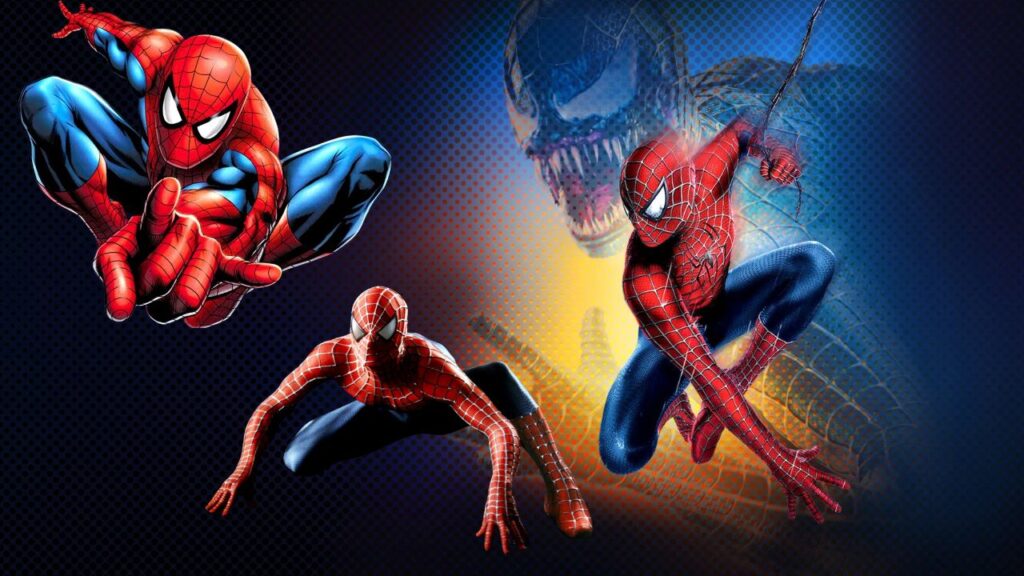
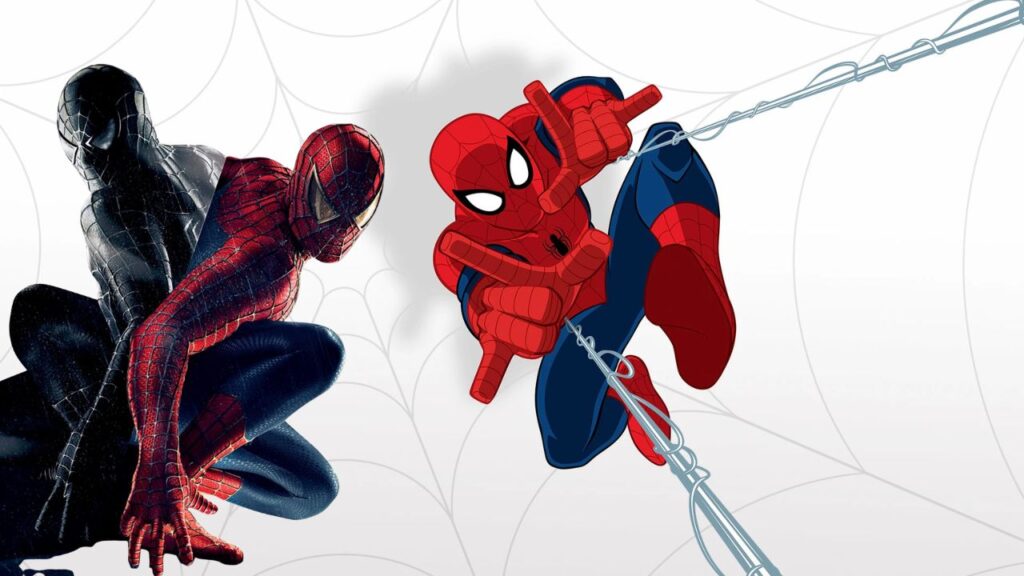
The beginning of Spider-Man’s “Brand New Day,” starting at the top of The Amazing Spider-Man #546 in January 2008, was a clean slate for the character. Following “One More Day,” this era re-envisioned Peter Parker’s life by moving him from his married adulthood back to his origins as a single man and an aspirant. This contentious choice was taken in order to make the character more relatable and timeless for future generations.
Though they were out to make the character viable for at least the next few decades, how they went about doing so provides a textbook example of both imaginative thinking and the dangers of heavy-handed editorial mandates.
The Devil in the Details: The OMD Foundation
To get “Brand New Day,” you have to start with the ruins of “One More Day” (OMD). To fix Peter’s public unmasking during Civil War, Marvel had Peter literally make a “deal with the devil.” To save Aunt May’s life, the demon Mephisto wiped out Peter’s marriage to Mary Jane Watson from history.
Image Credit: Fandomfans
This “Devil’s Bargain” erased two decades of continuity. For his part, Editor in Chief Joe Quesada has said that an older married Peter is too “aged” and in that sense less relatable. But it’s a forced regression — and it’s unearned, too. It was like a supernatural “undo” key, rather than traditional character development, and many fans felt it discounted their long-term investment in the series.
Innovation Through the “Brain Trust”
The most interesting thing about BND was not just the story, but the logistics. Marvel dropped several Spider-Man books to concentrate on one flagship title, The Amazing Spider-Man, three times monthly.
Image Credit: Fandomfans
This necessitated a “brain trust” of rotating writers (such as Dan Slott, Mark Waid and Zeb Wells) and artists. This method enabled the book to mimic the speed of serialized television. They could sow “slow-burn” seeds — such as the mystery of the ‘Spider-Tracer Killer’ that would pay off months or even years down the road.
A New (But Old) Supporting Cast
BND, however, also devoted a lot more attention to Peter’s life without the mask. Moving him back in with Aunt May and making him a freelance photographer once again Marvel played up “humanizing” the hero through urban hardship.
Return of Harry Osborn: Resurrecting Harry reintroduced a social mooring and a “best friend” dynamic that had been missing for years.
Image Credit: Fandomfans
New Rogues: The era was prolific in new villains. Mister Negative was the breakout, presenting a stark visual “negative” of the Peter/Spidey duality.
New Faces: New characters Carlie Cooper (a CSI forensics expert) and Vin Gonzales (Peter’s Spider-Man-hating roommate) were also added to capture a contemporary, pan-op/NYC feel.
Transmedia Legacy and the MCU
Controversial as it always was, BND’s DNA is stamped on everything today. The 2018 Marvel’s Spider-Man game took a lot of cues from this period, including Mister Negative and the F.E.A.S.T. shelter.
Image Credit: Fandomfans
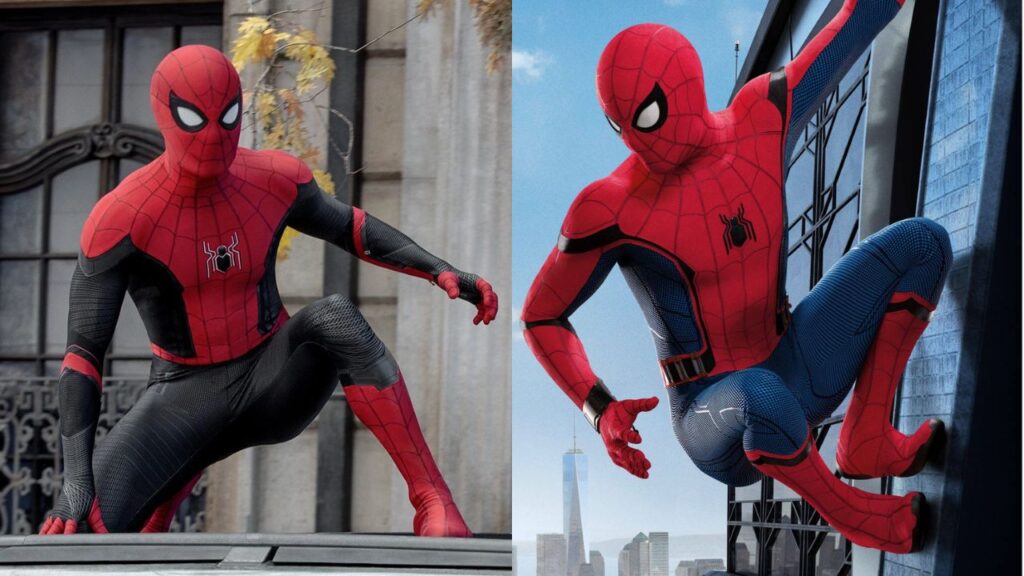
More importantly, the BND model is what the MCU is now following. Tom Holland’s Peter is, by the end of No Way Home, living in a small apartment, unknown to the world and devoid of his Stark tech. The 2026 film, apparently titled Spider-Man: Brand New Day, heralds a “fresh start” much like the 2008 relaunch – though presumably with a more heroic justification than a deal with Mephisto.
Conclusion
“Brand New Day,” was a radical rewrite designed to update the character by returning to his roots. Though it led to some of the best single stories in the character’s history, it also demonstrated that “narrative debt” is real. You can reset a character’s clock, but you can’t always reset the reader’s memory.
Fandomfansis a platform where you can find every update on movies, series, and celebrities. Our goal is to focus on deep concepts and character arcs.
Mariyam
Articles Published :
77
Mariyam Khan is Fandomfans Content Writer and providing reports and reviews on Movie Celebrities, and Superheroes particularly Marvel & DC. She is covering across multiple genres from more than 4+ years, experience in delivering the timely updates.
Kenan & Kel Meet Frankenstein Returns ’90s Nostalgia to the Big Screen
Kenan and Kel Reunion Mitchell are back together for a Gothic horror comedy, Meet Frankenstein, which mixes ’90s nostalgia with comfort horror. Learn more..!
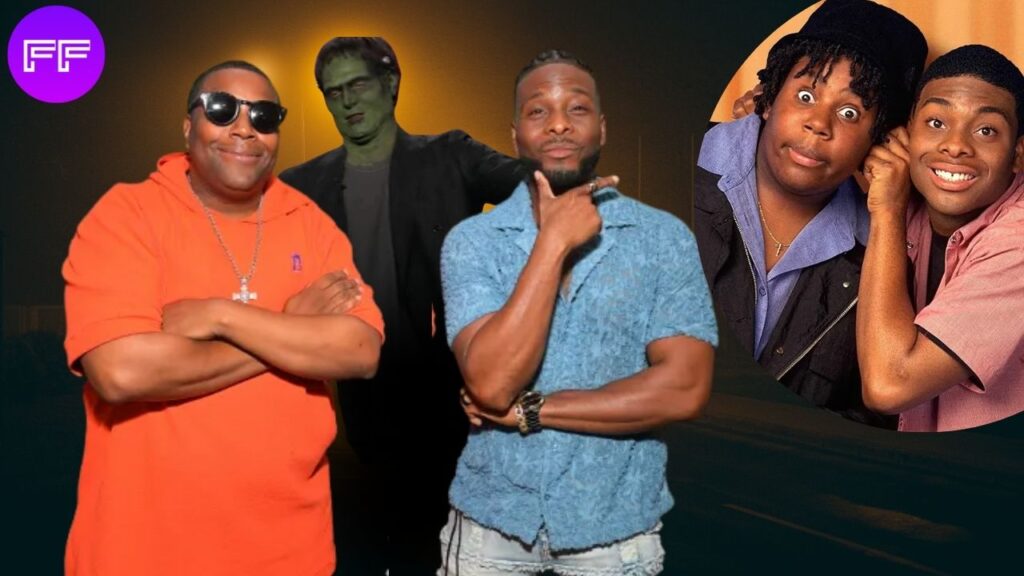
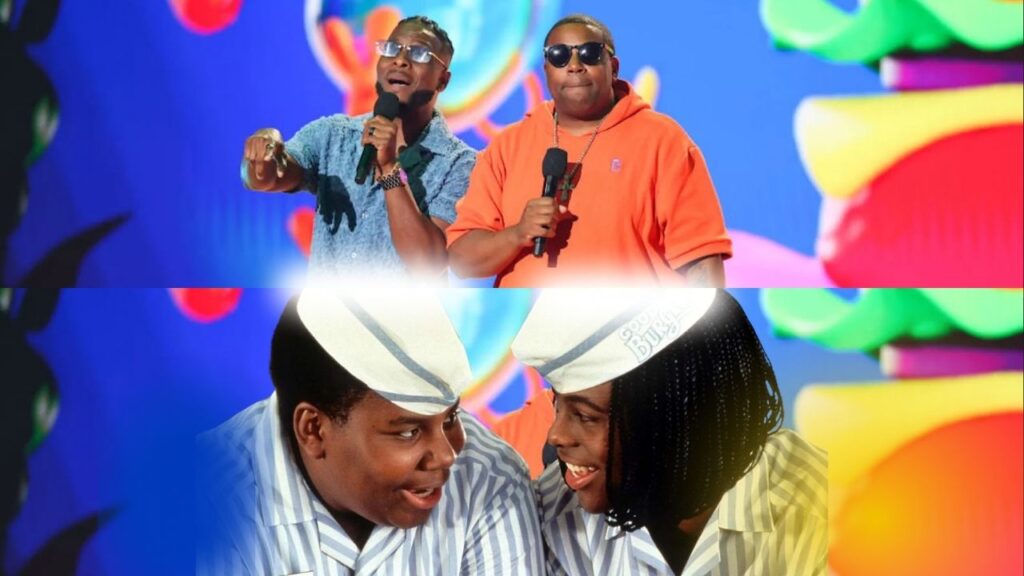
Kenan and Kel Reunion: A wave of nostalgia washed over the entertainment world when Kenan Thompson and Kel Mitchell announced their reunion on a Good Sports episode on Prime Video, announcing a new feature film: Kenan & Kel Meet Frankenstein.
Filming is set to take place in summer 2026, and this is not simply a follow-up to their recent Good Burger 2 success, it’s a calculated bringing-back of a 77-year-old cinematic template. By situating the quintessential ’90s pair in the world of Gothic horror, producers are tapping into a burgeoning “Gothic Renaissance” and the popularity of “Comfort Horror.”
A Contemporary Interpretation of a Classic Form
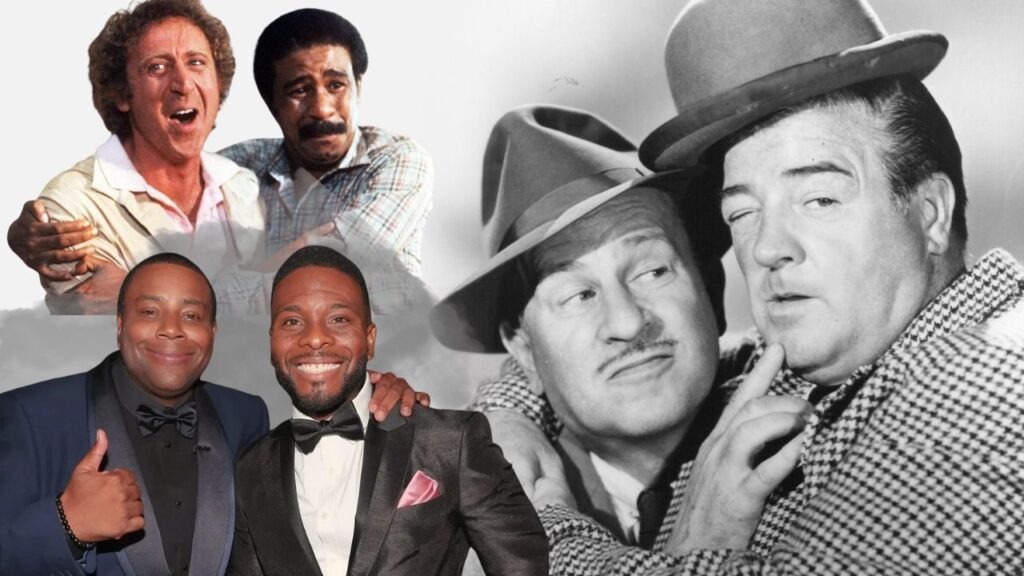
The entire film is set in a building that’s a straight-up homage to the 1948 Abbott and Costello Meet Frankenstein.” In those days, Universal Pictures revitalized its fading monster franchise by infusing it with high-octane comedy. Kenan and Kel are now following suit with the streaming age.
Ryan Jr. stated, “First it was Abbott and Costello, then Pryor and Wilder—and now it’s Kenan and Kel.”
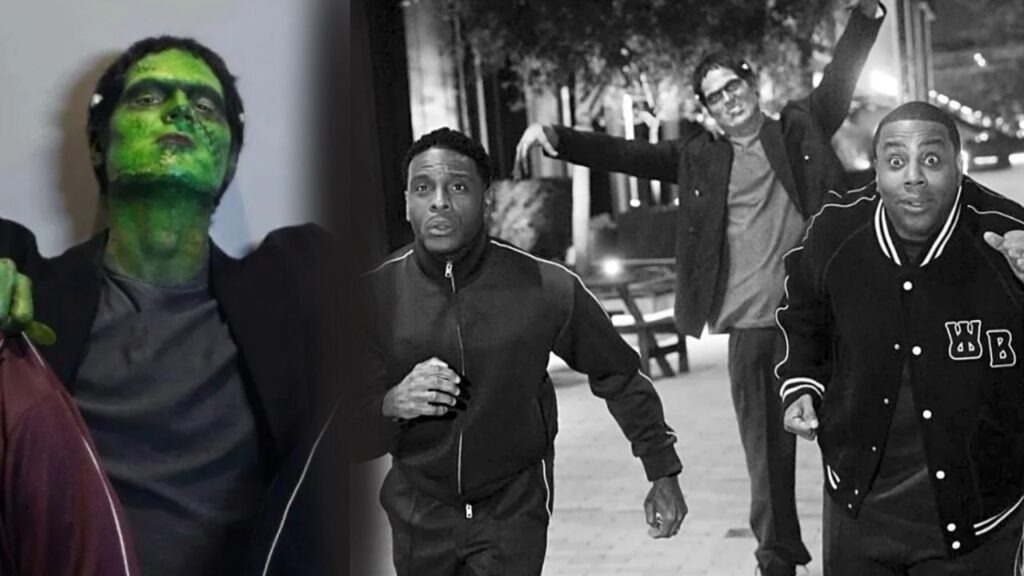
It’s a familiar “wrong place, wrong time” plot device, but one that’s easy to relate to: Thompson and Mitchell are delivery drivers working in the modern gig economy. A routine delivery at a secret, out-of-place castle results in the accidental reactivation of Frankenstein’s monster.
Creative Leadership: Washed in Doom and Whimsy
Jonah Feingold, who brings grounded human emotion to ”magical realism,” is helming the project. Producer John Ryan Jr. has described the look of the film as “Shaun of the Dead meets Scooby-Doo.”
So it’s looking like this won’t be a dumb parody – it’ll be a “straight” horror comedy where the stakes feel genuine, even if the heroes are hilarious.
The “Comfort Horror” Playbook
Why Now? The late 2020s are all about the “war of the Frankensteins.” With Guillermo del Toro’s bleak The Witches and Maggie Gyllenhaal’s stylistic The Bride! opening in theatres, viewers are hungry for a palate cleanser.
For Millennials, it’s a return to the “Aw, here it goes!” energy of their youth. For Gen Z, it’s two industry legends including Kenan Thompson, the longest-tenured SNL cast member taking a stab at a new genre.
“It’s exciting to take a classic monster story and turn it on its head, and have fun doing it.”
–said Thompson
Anticipating a “Monster Universe”
This film represents a shift from “reboot culture” to “genre homage.” If it is successful, it paves the way for a possible “Kenan & Kel Monster Universe,” in which the duo could cross paths with the Mummy or the Wolf Man in future films.
By owning their production via Thompson’s Artists for Artists banner, the pair is not only pursuing nostalgia — they are establishing a permanent comedy institution. As we approach the 2026 production cycle, one thing is certain: the “schemer” and the “innocent” are introducing themselves anew, and this time, the monsters should be the ones fearing.
Conclusion
Kenan and Kel Reunion Frankenstein isn’t returning ’90s nostalgia but the gothic horror genre that makes comfort to the audience who love these kinda silly monsters.
Restitching strands of millennial nostalgia and “comfort horror,” the film touts itself as the antithesis of that era’s darker, prestige monster films. Given a wide canvas to tell their own story and an angle that nods to classic Hollywood storytelling, Kenan Thompson and Kel Mitchell aren’t just looking back — they’re ensuring their past holds up over time.
If the bet pays off, this may lead to an endlessly silly monster age where comedy, instead of terror, reigns in the night—and the monsters finally have something to fear.
Fandomfansis a platform where you can come and pick up the latest news on upcoming movies.
Alpana
Articles Published :
160
Alpana is Fandomfans Senior Editor across all genres of entertainment. She evolved in the media industry since a very long time, she manages the content strategy and editing of all the blogs. Her focus on story development, review analysis, and research is well-equipped that ensures every article meets the standards of accuracy and depth.