Home > Web Series > Fallout Season 2 Ending Explained: How It Sets..
Fallout Season 2 Ending Explained: How It Sets the Stage for Fallout Season 3
Fallout Season 2 ending explained with Enclave reveal, Hank’s fate, Liberty Prime Alpha and how it sets up a darker Fallout Season 3. Read more visit website!
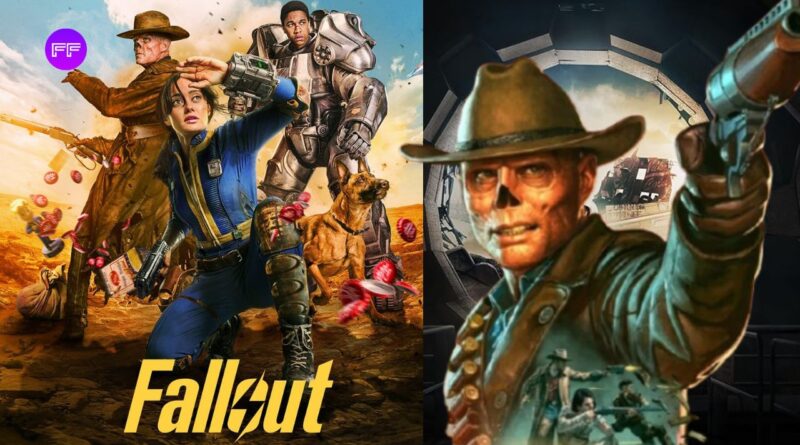
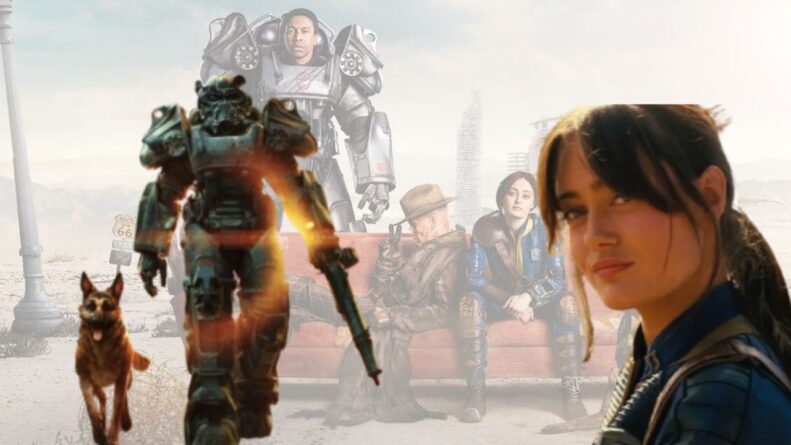
If Fallout season 1 was a siren wailing, Fallout season 2 ending explainedwas a giant bomb that exploded across the wasteland. Its story doesn’t end so much as transform, adding layers of vault politics, estranged families, and secretive syndicates to a brutal, unforgettable ride. When the finale ends, you’ll know Season 2 isn’t simply an end, but a jumping-off place. With revelations, long-teased game lore coming into play, and a post-credits scene that screams escalation, Fallout Season 2 sets the stage for an even darker, deadlier Fallout Season 3.
The MacLean Family Tree Just Got Weird
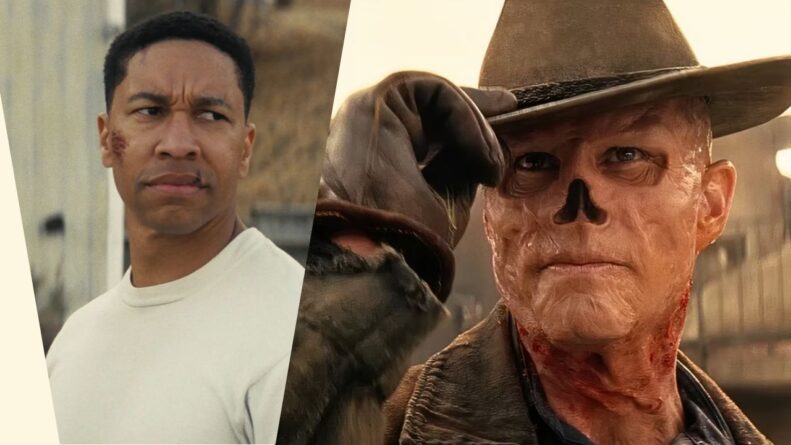
Hank MacLean (Kyle MacLachlan) wasn’t really the “Father of the Year,” but the pleasure ended with a final shock: Steph Harper is his wife. In the prewar Vegas days, Hank was head over heels and they married on a processed-meat-catered journey to the altar.
Image Credit: Fandomfans
Because of the unusual physics of cryo-stasis, Hank was defrosted long before Steph, allowing him to live in Vault 33 while his real wife was still on ice. It seems it explains a lot of the power plays we have witnessed in vault this season —- turns out “management” is literally a family affair.
Hank’s “Hard Reset”
In a moment of pure poetic justice, Lucy finally gets the drop on her father. She attempts to make use of a Vault-Tec implant to make him submissive, basically trying to make the “Company Man” into a marionette.
Image Credit: Fandomfans
But Hank, from the loyal corporate soldier standpoint, opts for a literal mind-wipe instead of betrayal. He initiates a manual override in his suit, erasing his memories and preserving his “loyalty to the mission.” He’s still a threat, but the man Lucy once called Dad is essentially gone, replaced by a blank slate programmed for Vault-Tec’s endgame.
The Real Big Bad: The Enclave
After two seasons spent lobbing stones at Vault-Tec, the finale reveals they were just the middle managers. The Enclave—the shadowy traces of the pre-war government—are the real puppeteers.
They’re responsible for the Forced Evolutionary Virus (FEV). They engineered the Deathclaws.
They are the ones Hank truly answers to. And now, all of a sudden, the world feels so much smaller and so much more frightening.
Where in the World is Cooper Howard?
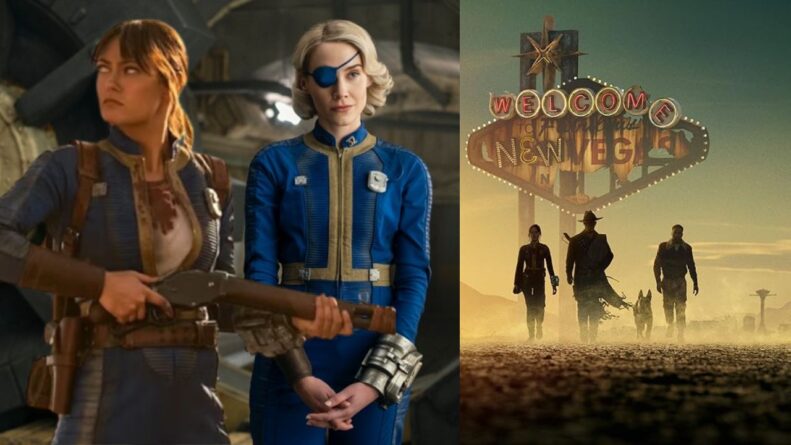
The Ghoul’s two-century hunt for his kin came up against a heartbreaking dead end when he located their cryo-pods… and found them empty.
Image Credit: Fandomfans
However a postcard from “Colorado” with a note from his wife Barbara implies that his family is still out there. Season 3 looks to be a cross-country road trip, as Cooper heads for the Rockies to locate what’s left of his heart.
Robert House: The Ghost in the Machine
The legendary Robert House was never dead; he was just… digital. Carried in a Pip-Boy by The Ghoul, House’s consciousness is now back on the “cloud.” When Lucy and Maximus get to his penthouse and see the “Signal Lost” message, don’t be deceived. That small flicker on screen confirms that the smartest man in the wasteland is still playing the long game.
The Post-Credits Scene: Liberty Prime Alpha
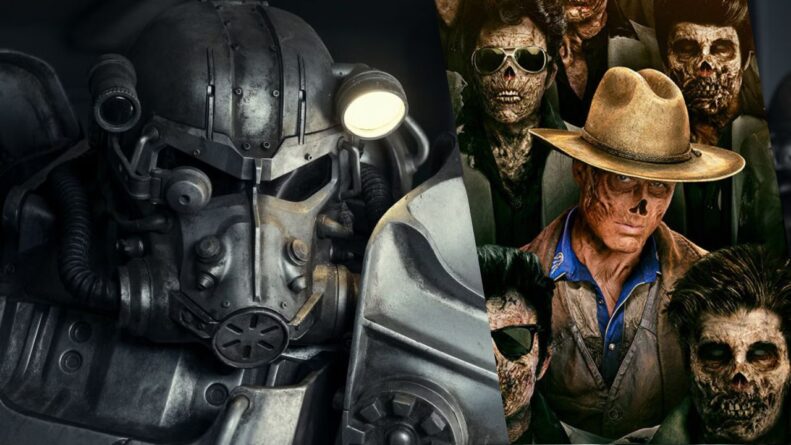
If you sat through the credits, you were treated to a chilling turn for the Brotherhood of Steel. Quintus has now completely turned his back on the notion of “saving” the Brotherhood. He wants to be a destroyer.
Image Credit: Fandomfans
He unveils blueprints for Liberty Prime Alpha. For those who don’t know: that’s a skyscraper-size, communist-hating, laser-shooting mega-robot. If Quintus makes this machine, the balance of power in the Wasteland will not merely shift – it will be smashed under a giant metal boot.
Get Ready For Fallout Season 3
Amazon Prime Video had already greenlit a Fallout Season 3 several months before Fallout Season 2 ending explained was even released. So the streamer is already committed to continuing the story beyond this season. The storylines and shocks at the end of Series 2 (including massive world-shocking revelations) are rumoured to be leading into Series 3 as a bigger narrative chapter.
Fallout Season 2 ending explained doesn’t just raise the stakes—it resets the stakes, and invites Fallout Season 3 to play the game with the ruins of civilization as its makeshift board. Family secrets blast apart for good, erstwhile allies become weapons, and every key faction is shown to be a pawn in a grander final game.
Enclave daringly returns to the limelight, Robert House quietly reactivates his long game, Cooper Howard literally searches for hope outside the Mojave, and Liberty Prime Alpha threatens to deliver mechanized cataclysm—never before has the wasteland been quite so shaky, or so stirring. Survival is no longer enough. Fallout Season 3 is coming into view as a full scale struggle for the future of humanity, and as every Fallout fan knows, clean is not how you finish.
Dive deeper into the world of your favourite series with Fandomfans to know about new seasons and their details.
Mariyam
Articles Published :
77
Mariyam Khan is Fandomfans Content Writer and providing reports and reviews on Movie Celebrities, and Superheroes particularly Marvel & DC. She is covering across multiple genres from more than 4+ years, experience in delivering the timely updates.
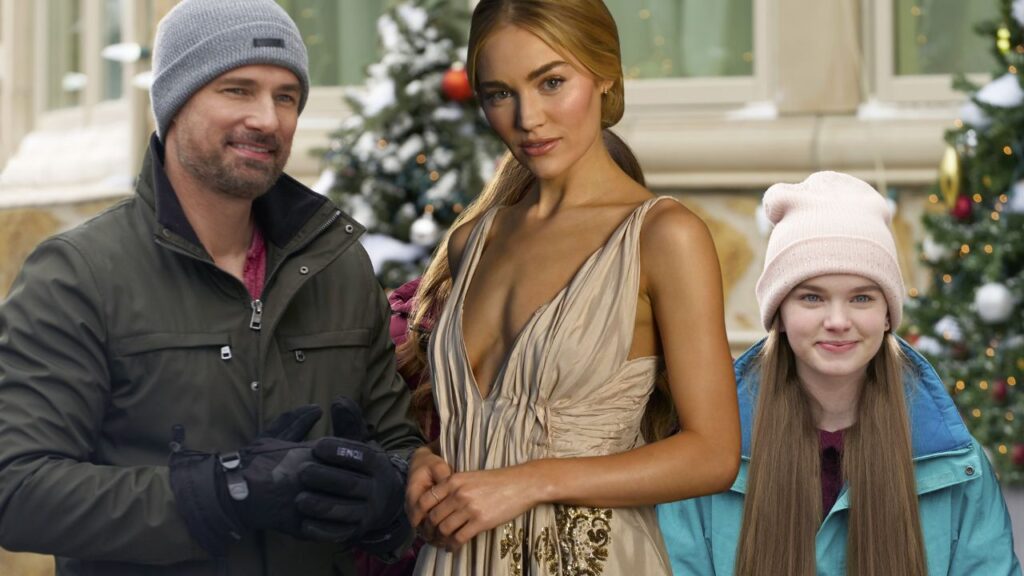
Michelle Randolph is officially stepping into the light. After making a name for herself with her breakout roles in Taylor Sheridan’s hit dramas, the up-and-coming actress has been cast as the female lead in Amazon MGM Studios’ holiday rom-com, Clashing Through the Snow. She stars opposite The Summer I Turned Pretty favorite Christopher Briney in her first major feature film role. This is a major career moment for Randolph and fans can’t wait to see what she does next.
Michelle Randolph’s Rise Through Taylor Sheridan’s Prestige TV Universe
When Randolph made a splash in 1923, a spinoff of Yellowstone, opposite Hollywood legends Harrison Ford and Helen Mirren, she was an unknown herself. Her performance as a determined young woman finding her way through the social-political landscape of the post-war era won her critical praise and a devoted following.
That success led directly to her booking Landman-here she’s the rebellious, beguiling Ainsley Norris, the daughter of the character played by Billy Bob Thornton. The series became Paramount+’s largest global premiere week for originals, with Randolph’s character becoming an instant fan favorite.
Michelle Randolph Opens Up About Impostor Syndrome
The thing that’s most incredible about Randolph’s journey isn’t even the roles she’s landed, it’s the confidence she’s gotten along the way. She’s also been refreshingly candid in recent interviews about battling impostor syndrome while appearing alongside some of Hollywood’s most venerable veterans.
“I have worse imposter syndrome,”
—she confessed
Though she’s getting better about being less hard on herself when she sees that actors whose work is the most celebrated in this industry have doubts like hers. This vulnerability is one of the reasons she has gone on to be beloved by viewers who find her refreshingly real in a business often characterized by meticulously constructed personas.
Clashing Through the Snow Plot, Director, and Creative Team
Directed by Carlson Young (the lovely rom-com Upgraded), the film is set to give you a treat. Amazon is presenting Clashing Through the Snow as Planes, Trains and Automobiles for the new age—a contemporary take on the classic 1987 John Hughes film that starred Steve Martin and John Candy. Written by Love Hard’s Daniel Mackey and Rebecca Ewing, the script combines smart, relatable banter with genuine feeling, all framed by a festive holiday setting.
‘The Summer I Turned Pretty’ Impacted Christopher Briney’s Role
Christopher Briney is at a turning point in his career with the age-appropriate lead role, after breaking through as Conrad Fisher in the hit series The Summer I Turned Pretty. After enchanting young viewers for three seasons, Briney is now taking on different projects, eager to prove his versatility outside of the darling teen romance series. His casting opposite Randolph has also created a buzz, with fans looking forward to their on-screen chemistry.
Production will begin in February for a planned holiday 2026 release ― which is just right for audiences looking for some good vibes around the winter holidays. This is a big step career-wise for both leads, but especially for Randolph, whose trajectory from unknown to co-starring in a major streaming holiday movie demonstrates the power of steady, captivating work.
As the landscape of entertainment shifts, Michelle Randolph is a testament to the fact that those performers who are truly able to be both strong and vulnerable will eventually have their moment. Crashing Through the Snow seems to belong to her.
Conclusion
The path Randolph’s taken seems less like a sudden ascendant storyline, and more the culmination of an incredible amount of hard work. From competing with iconic attorneys in 1923 to becoming a Landman favorite, she has earned straight-faced, hardened, and genuine connections with audiences.
Clashing Through the Snow is more than just another holiday rom-com—it’s a pointed signal that Randolph can carry a story, not just support one.
Dive into the cinema world with Fandomfans to get the latest update from your favorite celebrities.
Mariyam
Articles Published :
77
Mariyam Khan is Fandomfans Content Writer and providing reports and reviews on Movie Celebrities, and Superheroes particularly Marvel & DC. She is covering across multiple genres from more than 4+ years, experience in delivering the timely updates.
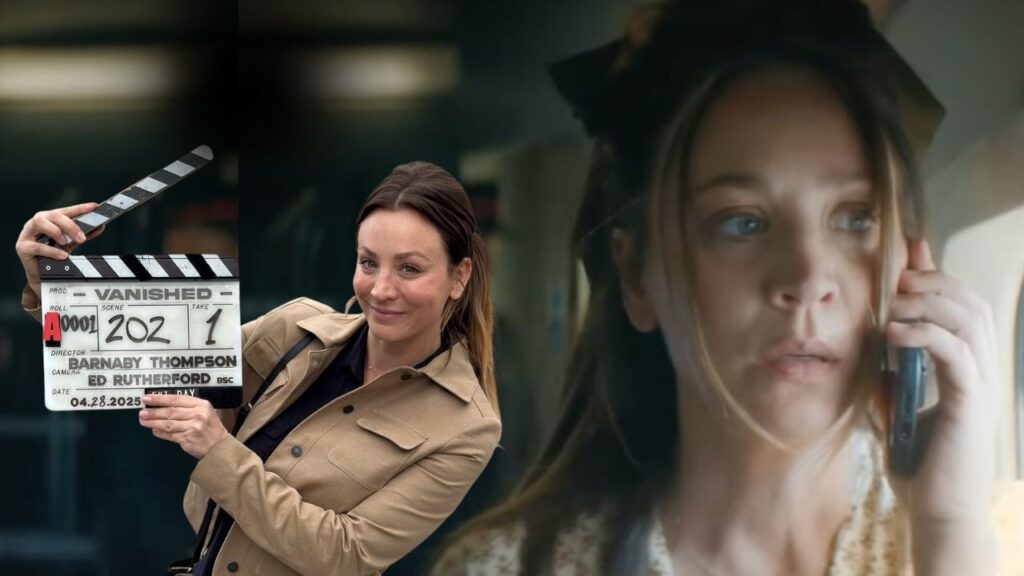
Early 2026 is already seeing the streaming market dominated by quality limited series using stunning global locations and big stars as a draw. Topping the bill for this trend is the four-part mystery thriller Vanished, from MGM+ and Prime Video, which is a co-production. Starring Kaley Cuoco, Sam Claflin, the series is the ideal combination of American star power with a European cinematic sensibility.
Introduction to Vanished 2026
The Vanishing is a strong Euro-thriller, mixing psychological tension with international flavour. This is a defining change for Cuoco as she is definitely leaving her comedic roots for more dramatic, intense roles. Alongside her is Sam Claflin, who is also excellent as a mysterious figure at the heart of the plot – a sudden and baffling disappearance on a romantic jaunt to France.
The initial trailer which was released on 13 January 2026 featured a “beautiful but deadly” appearance. The plot centres around Alice Monroe (Cuoco) hunting for Tom Parker (Claflin) when he disappears. But it soon turns into more than a rescue operation: It examines how well we really know those we love.
Feature
Specification
Title
Vanished
Format
Four-part Miniseries
Lead Cast
Kaley Cuoco, Sam Claflin
Production Studios
AGC Studios, Fragile Films, Slow Burn Entertainment
Primary Platforms
MGM+ (US), Prime Video (International)
Filming Locations
Paris and Marseille, France
Release Date & Availability
The show is scheduled to air on February 1, 2026, with the date strategically set to boost ratings after the winter holiday break. The delivery schedule will be different, depending on the audience’s preference.
United States & Select Regions: On MGM+, episodes will drop weekly every Sunday starting February 1. This builds social media buzz over a month.
International Markets (UK, Canada, Australia, etc.): On Prime Video, all four episodes will be released at once on February 27, 2026. This “binge” model is very popular for short series in these regions.
Region
Platform
Debut Date
Release Model
United States
MGM+
1/Feb/2026
Weekly (Sundays)
UK / Canada / Australia
Prime Video
27/Feb/2026
Full Binge
Genre & Theme of the Series
Without giving away plot points, Vanished also feels like a romantic drama, and not in a bad way. It’s in the “Euro-noir” tradition, where stunning views conceal place sinister secrets.
Thematic Foundations: The main theme is the “unknown intimate.” It asks the scary question: Is the person you love actually a stranger?
Setting – The Dual Nature of France:
Paris: Represents the romantic “dream” phase of the relationship.
The South (Marseille/Arles): This is where the story turns dangerous. Tom disappears from a moving train—a classic mystery setup—turning a holiday into a nightmare.
Director, Writer & Creative Team
The series contains an extraordinary group of creators committed to the aim of making engaging character based stories. Under the direction of Barnaby Thompson, who maintained a uniform visual and emotional sensibility throughout the four episodes, the series is a masterful synthesis of style and substantial character study.
Written by Preston Thompson, the film strives to create a feeling of “creeping dread,” making audiences feel what Alice experiences in her loneliness as she hunts for the truth in a strange country. From AGC Studios, the series is also enhanced by the participation of Kaley Cuoco as an executive producer, bringing even more layer of proficiency to the production.
Plot Overview
The story is a tight, four-episode journey:
The Setup: Alice and Tom are on a dream trip through France, but small hints suggest their relationship isn’t perfect.
The Incident: On a train to Arles, Tom vanishes. Because the train is moving, it creates an “impossible” mystery.
The Search: Alice travels through Marseille to find him. She discovers “shocking secrets” about Tom’s past, realizing his whole identity might be a lie. Promotional photos showing Alice with different hair colors suggest she might go undercover or that the story jumps through time.
Cast & Characters
The cast is a combination of big Hollywood stars and very talented French actors.
Kaley Cuoco (Alice Monroe): The emotional core of the series. She is a woman driven to the edge.
Sam Claflin (Tom Parker): The boyfriend with a secret, possibly dark past, and a charming demeanor.
International Supporting Ensemble:
Actor
Character
Background
Karin Viard
Hélène Lando
Famous French actress.
Matthias Schweighöfer
Alex Durand
German star (Oppenheimer).
Simon Abkarian
Gaspard Drax
Known for Casino Royale.
Key Highlights & Collaborations
The MGM+ & Prime Video Alliance: The deal exemplifies how Amazon is leveraging MGM+ for prestige US content and Prime Video for global distribution.
Star Chemistry: Producers say the chemistry between Cuoco and Claflin is ”magical,” and it makes the stakes that much higher when Tom goes missing.
Visuals: Shot in France, the series eschews shoddy “green-screen” techniques and achieves a high-end, movie-like look.
Rating & Certification
The series is anticipated to be rated TV-MA in the US, or 15/18 for international viewers, subject to local rating systems. It has psychological tension and adult betrayal themes swirling in a gritty, intense thriller ambience (comparable to contemporary thrillers). Although it’s not all action-driven, the emphasis on those aspects winds up a pretty interesting and adult story.
Audience Expectations
There are a lot of expectations for a lot of different reasons:
Cuoco’s Transformation: Her followers are eagerly waiting to see her darkest, most serious role to date.
The “Enigma”: Fans are wondering if Sam Claflin’s character is a victim, or a villain.
Quick Pace: With only four episodes to tell its story, the tale ought to be stripped of “filler” and driving toward a startling end.
Conclusion
Vanished is being positioned as the television event of 2026. Combining a classic “who-done-it” storytelling with deep emotional issues around trust, it has a little bit of everything for the thriller enthusiast. With its stunning French locale and A-list cast, it dares the viewer to play detective in a place where “nothing is what you think.
Mariyam
Articles Published :
77
Mariyam Khan is Fandomfans Content Writer and providing reports and reviews on Movie Celebrities, and Superheroes particularly Marvel & DC. She is covering across multiple genres from more than 4+ years, experience in delivering the timely updates.