Home > Movies > ‘Undertone’ Will be Biggest Psychological Horror Backed by..
‘Undertone’ Will be Biggest Psychological Horror Backed by A24
undertone Review: A24’s chilling psychological horror turns silence, family, and familiarity into fear, resulting in one of the studio’s most unsettling films.
The majority of us thought the lockdown years were pretty exhausting, but director Ian Tuason made that isolation a nightmare—the good kind. His new film, Undertone, is currently the buzz at Sundance, and it’s easy to understand why. It’s a scary, sound-centered psychological horror that came from real-life anxiety and a house that could possibly be haunted now.
The Horror of Moving Back Home
We’ve all been there—crashing at your parents’ place is not whatever you’re picturing it’s going to be. But for Tuason, it was a necessity so he could tend to his ailing parents.
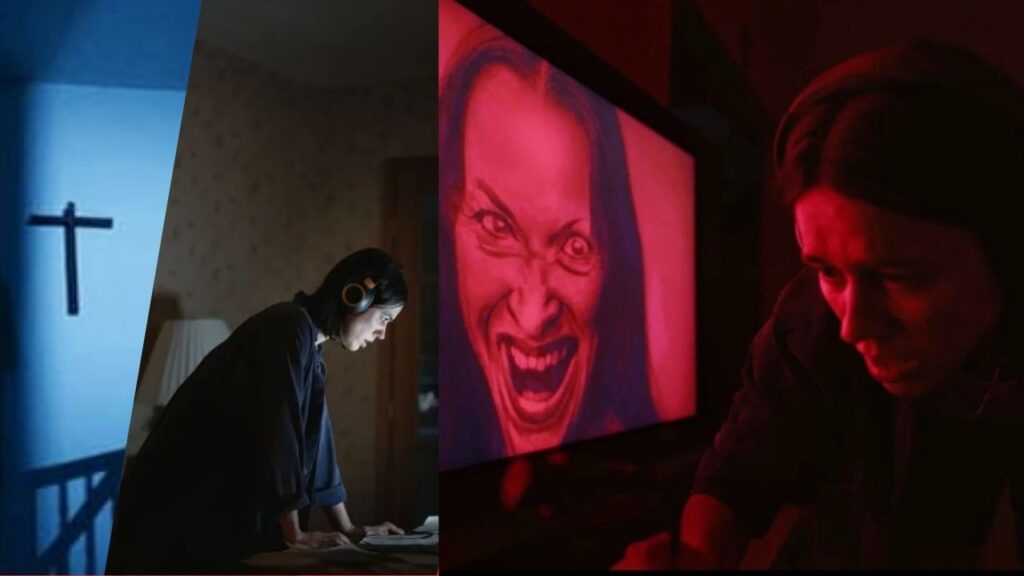
In an interview with Variety, he shared his experiences of where he got the idea. While he was there, he began to consider what makes us feel safe —and what happens when you flip that on its head. The Exorcist concept (taking a “safe” daughter and making her scary) and applied it to his own life.
“My mind is stuck on ‘The Exorcist’, how it scared me so much when I was a kid.”
–He said
He wondered, What if my mom, who relies on me, starts speaking in a different voice? That dark thought transformed a simple podcast script into a feature film. He even shot it in his parents’ house to save money, but it came at a price. Living on your own horror set meant he never felt truly alone, and he said the house began feeling “haunted” well after the cameras stopped rolling.
Why You Should Watch With Your Headphones On
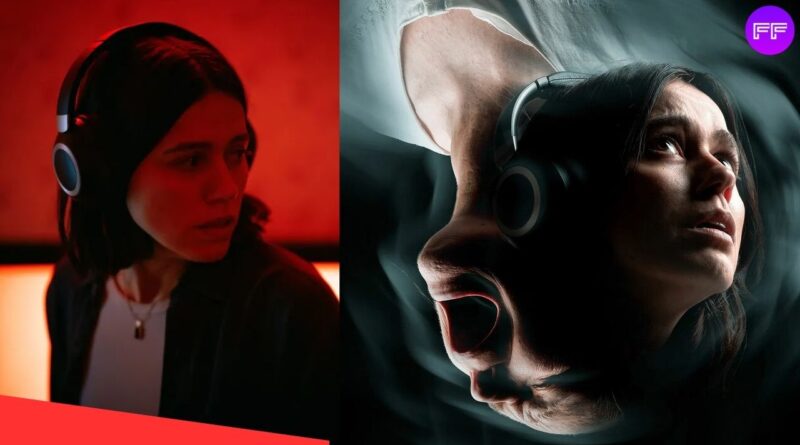
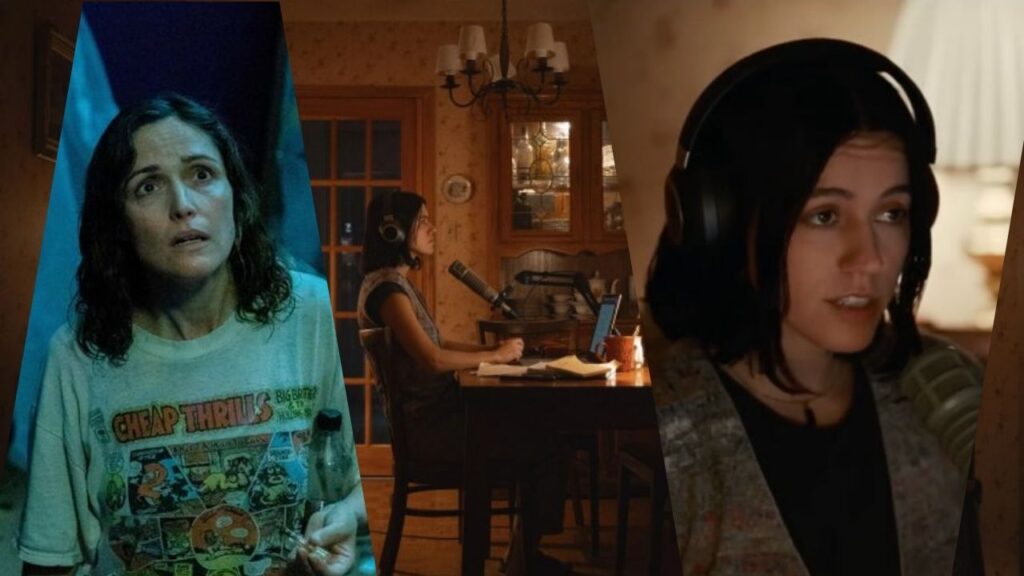
Undertone is distinguished by its sound. The lead, Evy, is the host of a podcast, and the film plays with your ears. Tuason engineered the sound as if you are wearing noise-cancelling headphones.
“Do you know that weird silence level where you have no clue what’s happening in the room behind you?”
–He said
That’s precisely what he employs to frighten you. The film oddballed the sounds that Evy hears on her tapes and the sounds that are really in her hallway.
Catching the Eyes of the Giants
The hype around Undertone is deafening and it seems like the biggest names in horror are officially placing their bets on Tuason. That’s just the beginning: A24 has already acquired the film and scheduled a March 13 release.
The legends behind Blumhouse and Atomic Monster (the producers of Insidious and The Conjuring) are the ones who brought in Tuason to give the Paranormal Activity franchise a revamp. It’s a complete full circle moment for a guy who started out recording spooky noises in his childhood bedroom. If he can make a DIY movie at his parents’ house this scary, then we can’t wait to see what he does with a Hollywood budget and the keys to one of the biggest horror series in history.
Undertone confirms the greatest horror has never been monsters or jump scares—it’s familiarity. By weaponizing a childhood home, a parent’s voice, and silence itself, Ian Tuason crafts a deeply personal and unsettling journey. Its choreography of sound is so perfect that it’s a movie to watch with headphones, each whisper feeling invasive and intimate.
With Sundance buzz, an A24 release, and major horror studios lining up to back Tuason’s next project, Undertone is not just a powerful first feature—it’s the introduction of a filmmaker who gets that the real horror is right at home.
With Fandomfans, you can find all the latest details and behind the scenes of movies and series.
Mariyam
Articles Published :
76
Mariyam Khan is Fandomfans Content Writer and providing reports and reviews on Movie Celebrities, and Superheroes particularly Marvel & DC. She is covering across multiple genres from more than 4+ years, experience in delivering the timely updates.
Galactus and Lady Death: The Collision That Could Redefine the MCU Forever
Learn how Galactus and Lady Death could reshape the MCU with a cosmic Gothic era leading to Secret Wars, redefining Marvel's future beyond traditional villains.
If you feel the Marvel Cinematic Universe (MCU) was a bit all over the place lately, well, you’re not alone. With multiverse shenanigans, quantum realms and whatnot, things have become a bit messy. But there’s a pattern if you look at the Phase Six schedule along with Fantastic Four: First Steps and the latest spoilers in Agatha All Along. Marvel is turning its back on political thrillers and sci-fi brawls to focus on high-concept metaphysics and passion plays.
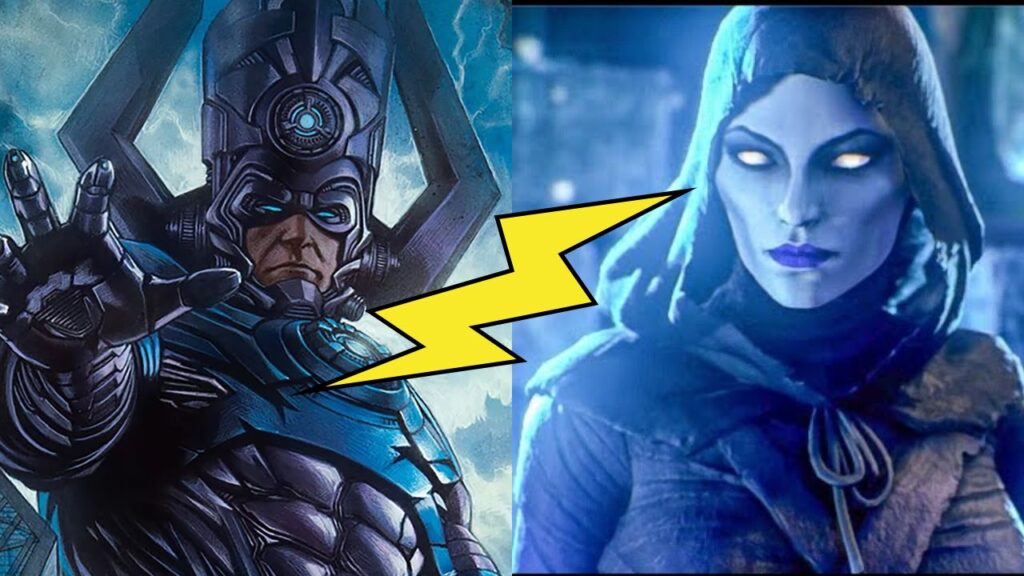
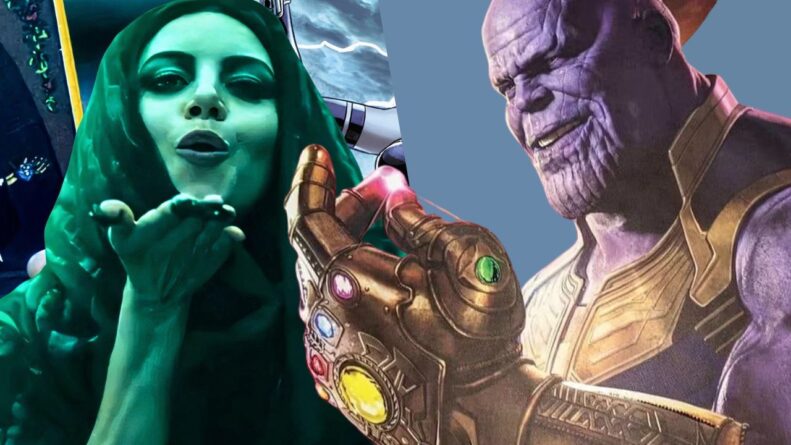
The two players at the center of this shift? Galactus, the Devourer of Worlds, and Mistress Death, now unveiled as the fierce and compelling Rio Vidal.
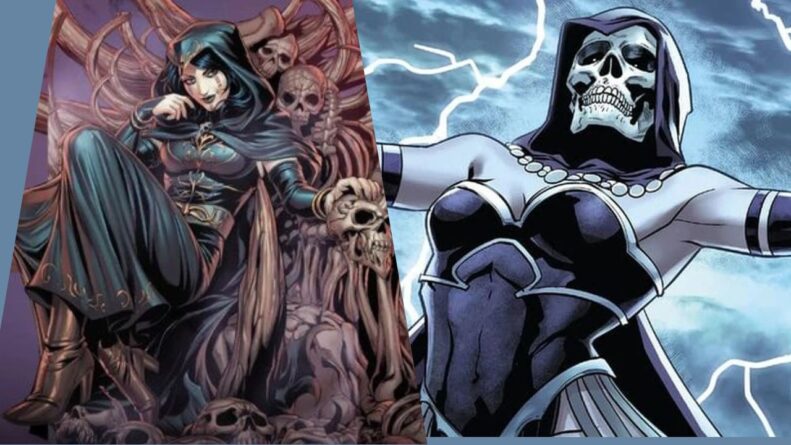
Casual fans might view them as two separate “Big Bads” (the first a sci-fi giant, the second a supernatural weird witch), but comic history and deep lore reports tell us they are really the “parents” of the next cosmic saga. If you want to know why their eventual encounter is going to change everything, read on!
Galactus & Death is More Than Just Villains
In order to understand why this matters, we need to examine the source material. Comics-wise, particularly the legendary Fantastic Four — the relationship of Galactus and Death is described in terms that boggle the mind.
Death refers to Galactus as her “husband and father, brother and son.”
It seems like a contradiction, but it’s a statement of cosmic truth. They’re not enemies; they’re symbiotic. Galactus is the “Great Filter” of the universe. He isn’t randomly demolishing worlds because he’s malevolent; he’s doing it to tend the cosmic garden, so that life does not turn into a cancer on the face of existence.
Image credit: Fandomfans
He makes the nutrition that feeds Death’s being. In an eternal, symbiotic dance, his job is to create and hers is to eat. They form a deep, quasi-sacred union, vastly more complex and profound than Thanos’s adolescent crush on Death that can best be described as a momentary juvenile fantasy.
The “Cosmic Gothic” Aesthetic
The MCU seems to be aiming for a particular aesthetic in this union: “Cosmic Gothic.” For one, we’ve got Ralph Ineson cast as Galactus. Known for his bone-chilling, folk horror work in The Witch, Ineson lends a weight that implies that Galactus will be more of an Old Testament god than a mechanical antagonist.
Image credit: Fandomfans
Then there’s Aubrey Plaza’s Rio Vidal. Rather than being the quiet skeleton featured in the comics, Plaza’s Death is loquacious, possessive, and chaotic. She is rooted in “Green Witch” tradition, seeing death as a natural return to the earth. When you combine Ineson’s golden, high-tech horror and Plaza’s rotting, totemic witchcraft, you end up with a cinematic mood we’ve never seen in Marvel.
The Franklin Richards Sparks This Theory
So how do they come together? The latest rumors about The Fantastic Four: First Steps suggest a particular catalyst: Franklin Richards.
Galactus is arriving on Earth not for a bite but to enslave the reality-warping son of Reed and Sue Richards as a long-term power source, according to leaks. The speculation is that Sue Storm dies to stop Galactus and then that Franklin uses his god-like powers to bring her back to life.
Image credit: Youtube
This is where Rio Vidal enters the chat. As established in Agatha All Along, Rio hates when people cheat death. If Franklin tears a soul back from her domain, he is an enemy of nature. So you’ve got a really interesting three-way battle forming here: Galactus wants the boy for energy, Death wants the boy stopped for violating her rules, and the Fantastic Four are in the middle.
From Fantastic Four To Secret Wars
In the end, the union of Galactus and Death is what leads to Avengers: Secret Wars. As the multiverse shatters through “incursions,” the universe requires a means by which to cull expiring timelines in order to preserve others. Galactus and Death are more than villains to beat up, they’re the cosmic immune system.
We’re beyond the age when heroes battled to save a city. We are now living in a time of modern mythmaking where the basic drivers of reality, Hunger and Entropy have faces, names and story lines. When Ralph Ineson’s Galactus and Aubrey Plaza’s Death at last share the screen, it won’t just be a crossover, it will be the pulse of the new Marvel Universe.
Lady Death and Galactus are far from just two scary forces – they are the core of what Marvel’s next cosmic era is going to be. Their clash lays the groundwork for a deeper, darker and more mythic MCU, one in which the fabric of reality bends, souls are traded, and the heroes we know go toe-to-toe with adversaries older than time itself. If Marvel honestly commits to this “Cosmic Gothic” era, the MCU could finally begin telling the ambitious, cohesive stories fans have been clamoring for.
Fandomfanskeep your energy exciting with your favorite movie characters’ breakdowns of the biggest moments in movies, TV, and pop culture.
Mariyam
Articles Published :
76
Mariyam Khan is Fandomfans Content Writer and providing reports and reviews on Movie Celebrities, and Superheroes particularly Marvel & DC. She is covering across multiple genres from more than 4+ years, experience in delivering the timely updates.
Netflix February 2026 Releases: Full Movies & Series List
Explore the best of Netflix February 2026 releases: movies, web series, documentaries, reality shows, and what’s retiring from the platform. Learn more...!
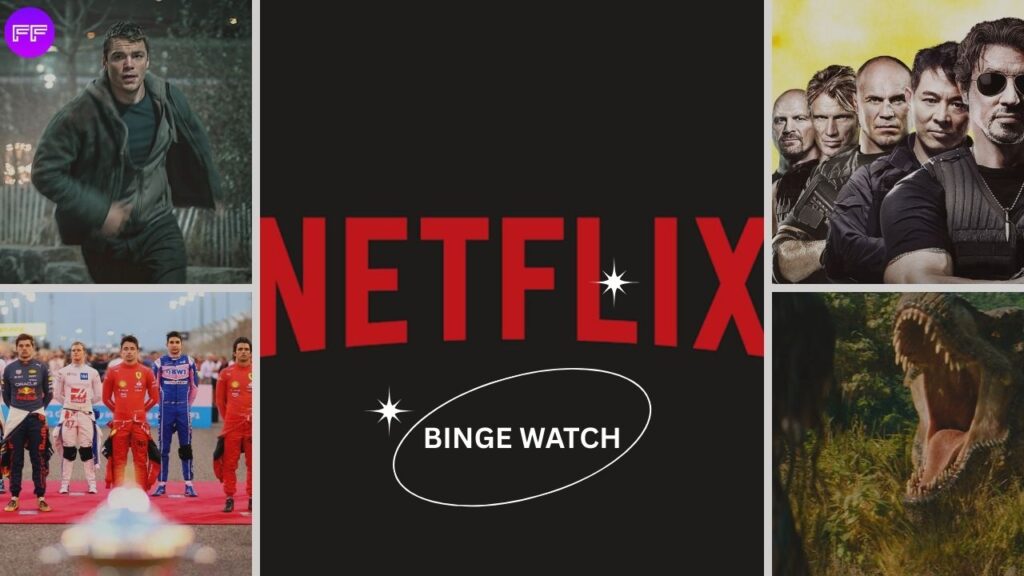
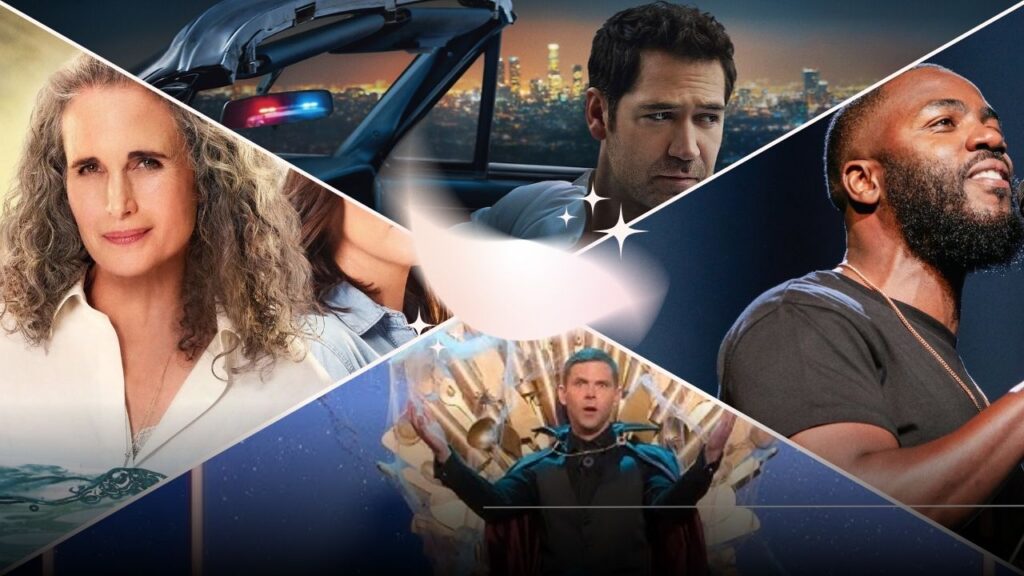
Take a bucket of popcorn and be ready to binge watch, the February Netflix lineup is looking so good! Expect romance, action, laughs and a couple of thrillers. Family dramas, big movies and reality shows galore to binge. I’ve selected a few highlights to discuss — let’s look into the list of Netflix February 2026 Releases.
Open Feb 1st Glitter & Gold: Ice Dancing, a Duck team Presents doc about ice skaters pursuing dreams. There are shiny costumes, harsh training and big feelings. And then there’s The Way Home Season 3 which returns to that sweet family tale with time travel twists — ideal for cozy nights.
Love comedy? Feb 3rd has Mo Gilligan: In The Moment, where the comedian discusses life and love. Super relatable laughs! On Feb 4th, Is It Cake? Valentines returns with bakers crafting fake sweets that look real—perfect for Valentine’s vibes.
Series superfans, save the date: The Lincoln Lawyer Season 4 on Feb 5th Lawyer Mickey takes on the bad guys, so expect some surprises. The same day, Cash Queens, from France, follows tough women making money in dirty ways. Cool and stylish!
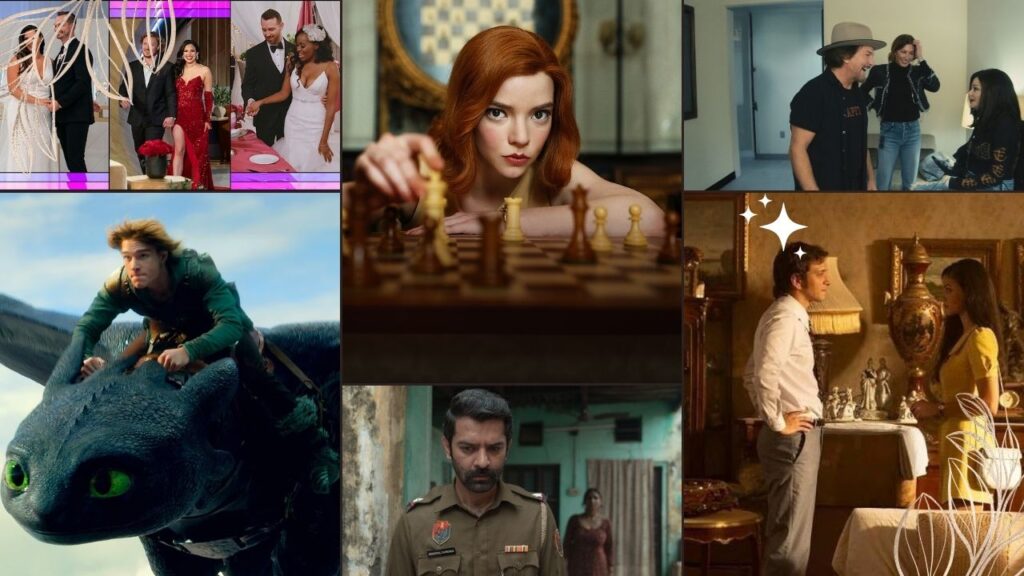
Feb 6th: “The Queen’s Gambit” is a doc about a girl rising to the top in the male-dominated world of chess. Motivating stuff – Feb 9th, Matter of Time (Life and Time in your Hands) profound, but OK.
Movie time! On 10th Feb, you can watch How to Train Your Dragon—dragons and adventure for all ages. 11, Feb has Love Is Blind Season 10 (insane love experiments) and Kohrra Season 2 (spooky Indian mystery—love the Punjab feel!).
More on 13, Feb: Museum of Innocence (Turkish romance with secrets) and Tyler Perry’s Joe’s College Road Trip (hilarious dad-daughter road trip). 17, Feb – Star Search Finale—talent show excitement!
18, Feb provides a glimpse into Being Gordon Ramsay—the chef’s wild life. Thrill seekers, The Night Agent Season 3 releases 19, Feb — spy action wakes up and never sleeps. 20, Feb comes with The Expendables 1-4 (explosions galore) and Strip Law (silly animated lawyer strippers).
24, Feb laughs his way through Taylor Tomlinson: Prodigal Daughter. Bridgerton Season 4 Part 2 Come 26, Feb —steamy balls and drama! Racing fans get Formula 1: Drive to Survive Season 8 on 27, Feb. Concludes with Jurassic World: Rebirth on 28, Feb —dinos on the loose!
Here’s The Full List of Netflix February 2026 Releases at a Glance
Date
Title
Format/Origin
1, Feb
Glitter & Gold: Ice Dancing
Documentary
1, Feb
The Way Home (Season 3)
Series (Licensed)
3, Feb
Mo Gilligan: In The Moment
Comedy Special
4, Feb
Is It Cake? Valentines
Series (Original)
5, Feb
The Lincoln Lawyer (Season 4)
Series (Original)
5, Feb
Cash Queens
Series (France)
6, Feb
Queen of Chess
Documentary
9, Feb
Matter of Time
Documentary
10, Feb
How to Train Your Dragon
Movie (Licensed)
11, Feb
Love Is Blind
Series (Original)
11, Feb
Kohrra (Season 2)
Series (India)
13, Feb
Museum of Innocence
Series (Turkey)
13, Feb
Tyler Perry’s Joe’s College Road Trip
Movie (Original)
17, Feb
Star Search (Live Finale)
Live Event
18, Feb
Being Gordon Ramsay
Documentary
19, Feb
The Night Agent (Season 3)
Series (Original)
20, Feb
The Expendables 1-4
Movie Collection
20, Feb
Strip Law
Animated Series
24, Feb
Taylor Tomlinson: Prodigal Daughter
Comedy Special
26, Feb
Bridgerton
Series (Season 4)
27, Feb
F1: Drive to Survive (Season 8)
Documentary
28, Feb
Jurassic World: Rebirth
Movie (Licensed)
Notable Departures to Watch Before They’re Gone
Departure Date
Title
Its Significance
1, Feb
Parasite
Oscar winner for Best Picture; a cornerstone of prestige world cinema
1, Feb
28 Days Later
Defined the modern zombie genre; departure precedes theatrical sequels
1, Feb
Groundhog Day
A high-concept comedy classic and Bill Murray standout
5, Feb
Mean Girls
A foundational teen comedy that frequently rotates between streamers
21, Feb
She-Ra (S1-5)
A rare departure of a “Netflix Original” due to DreamWorks licensing
Dive deeper into the world of entertainment with Fandomfans to get a full list of Netflix’s shows and movies to binge watch.
Mariyam
Articles Published :
76
Mariyam Khan is Fandomfans Content Writer and providing reports and reviews on Movie Celebrities, and Superheroes particularly Marvel & DC. She is covering across multiple genres from more than 4+ years, experience in delivering the timely updates.