Michael B. Jordan and Ryan Coogler’s ‘Sinners’ Lands Historic Grammy Nods
Michael B. Jordan and Ryan Coogler’s latest project is making headlines with major cultural and cinematic impact.
Published: November 8, 2025, 10:48 am

Michael B. Jordan and Ryan Coogler’s latest project is making headlines with major cultural and cinematic impact.
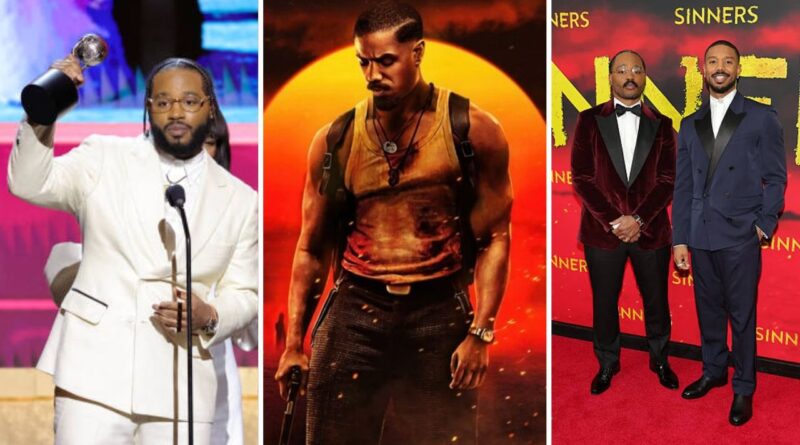
The narrative of ‘Sinners,’ a supernatural Southern Gothic tale from Michael B. Jordan and Ryan Coogler, is evolving further, and now, the hype is surrounding the music. The movie, which has already broken box office records and received high praise for its fearless delving into Black horror and spirituality, just managed to snag a historic five nominations at the 68th Annual Grammy Awards, solidifying its position as one of the most-nominated films in Grammy history.
This isn’t just about counting awards; it is a strong statement about the film’s sound ambition and how the music is integrated in the story telling of the film. The Grammy nods celebrate ‘Sinners’ in key visual media categories, showing that its influence goes well beyond the silver screen.
“Ryan and I, from the very beginning, wanted Sinners to sound like the South remembers — the pain, the hope, the hymns in the dark. These Grammy nods aren’t just for us; they’re for the generations whose voices built that sound. ”
— Michael B. Jordan, in an interview with Variety.
Behind this achievement is the film’s music department, spearheaded by composer Ludwig Göransson. Göransson (who has worked with Coogler previously on Black Panther and Creed) also scored an individual nomination for Best Score Soundtrack for Film/TV. His work on Sinners has been called “haunting” (featuring a desperate gospel sound in the background connecting you into the 1930s Mississippi environment and channeling faith, sin, and survival with every note)The background music isn’t listening noise — it’s emotional, music character that defines the film.
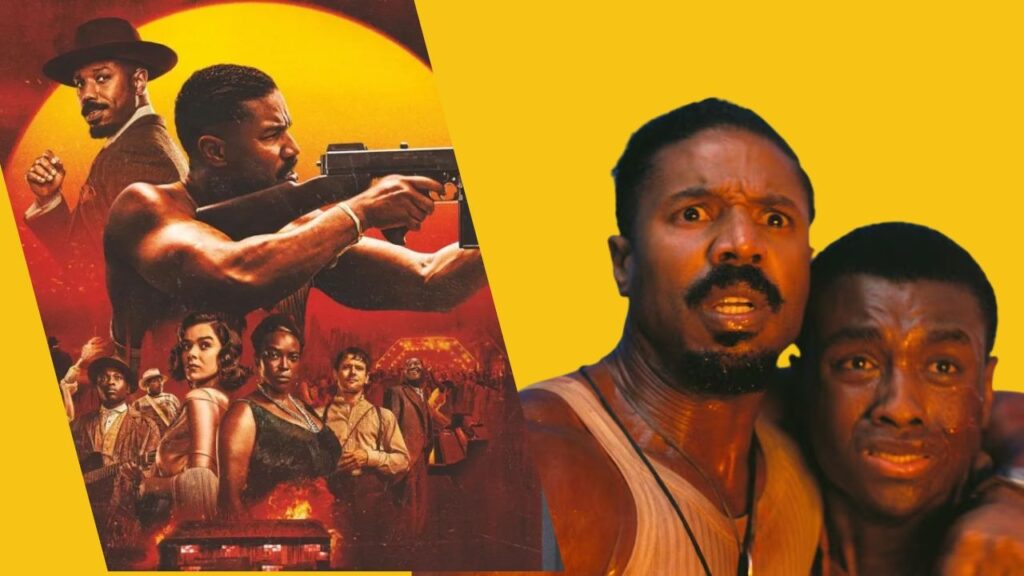
Impact the film had on music is underscored further with three nominations for Best Song Written for Film/TV. The nominations highlight the extraordinary range of the soundtrack, which transitions seamlessly from raw, confessional spiritual blues to cinematic anthems and even poignantly emotional ballads such as I Lied to You.
This hat-trick of awards is a strong indication that the individual songs are connecting with audiences and critics both, and that they capture both the heart and feel of the film.
Read More:- Death by Lightning Review: A Brilliant Yet Hollow Historical Drama That Ends Too Soon
Also on the list is a nod for Best Compilation Soundtrack for Film/TV. This album is a powerful, generational statement that fuses traditional Southern music, gospel, blues, and contemporary voices.It’s a musical extension of the film’s world, providing a unique, culturally definitive sound rooted in the Black southern experience.

The blockbuster Grammy acknowledgement rounds out an amazing run for Sinners, which has effectively reimagined contemporary Black horror space and showcased where music, identity, and storytelling converge. It joins the ranks of legendary movies such as The Bodyguard and Purple Rain whose music outgrew their medium to become cultural landmarks.

With the 68th annual Grammy Awards coming up on 2/1/26, the pressure is all on Coogler and Jordan’s searing drama. No matter how many golden gramophone trophies it gathers, the film has already established itself as one of the sonically most ambitious and culturally significant works of its era.
At FandomFans, we believe ‘Sinners’ has done more than redefine horror and spirituality on screen — it’s transformed the way we hear them. With Ludwig Göransson’s hauntingly soulful score and a soundtrack that dares to blend genres, the film resonates with emotion and cultural depth far beyond the cinema. Its five Grammy nominations aren’t just recognition; they mark a shift in how Black narratives and music intertwine to express identity, struggle, and faith. Win or lose, ‘Sinners’ has already earned its place among culture-shaping films — one whose sound will echo long after the lights fade.

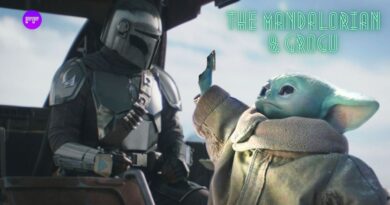
The Mandalorian and Grogu characters introduces the Mandoverse to the big screen with the Mercenary Guard Droid, Rotta the Hutt & stakes that shift the galaxy.
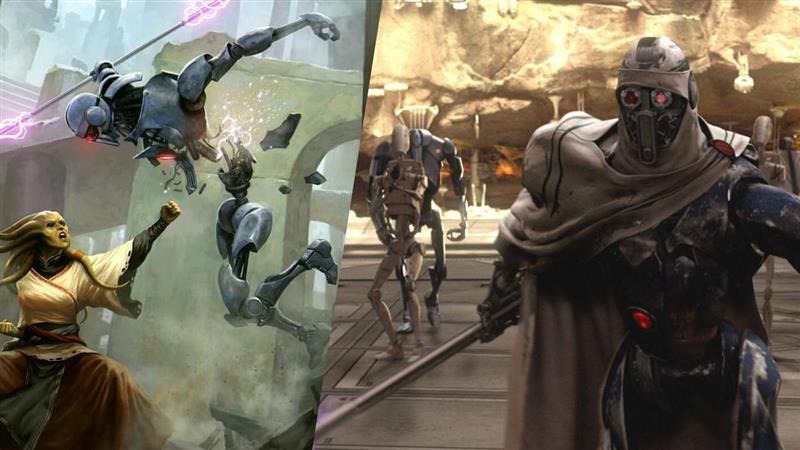
The Mercenary Guard Droid is foreshadowed as a primary catalyst and menace in the next Star Wars film recently revealed in merchandise at Toy Fair 2026. The May 22, 2026 theatrical debut of ‘The Mandalorian and Grogu characters’ is not just another ‘Star Wars’ release date – it’s a turning point. Yet it will shortly be the first time since The ‘Rise of Skywalker’ wrapped the Skywalker Saga in 2019 that Lucasfilm has brought Star Wars back to the big screen. The pressure on this movie is immense.
The Mandalorian and Grogu characters is not just a movie but a test. A test to see if a streaming-churned universe, neatly constructed on Disney+, can be extended to the wider cinematic space. “Mandoverse” has thrived in episodic form, but said the big screen requires more: scale, spectacle and emotional weight. And all the signs out of this project indicate that the move to theaters is being considered a strategic progression, not just a format change.
Jon Favreau, the director, has been clear that transitioning from series television to film is more than just a matter of larger screens. It applies to the size of the language, visual and narrative.

The tightly controlled environments of StageCraft (“the Volume”) that have come to define the series are now being replaced with IMAX-scale compositions, vast landscapes, and cinematic movement. This is Star Wars turning back into spectacle.
The marketing distilled that dichotomy perfectly. The playful Super Bowl spot stole the show, but a more serious teaser featuring X-Wings, an R2 unit and the gritty Razor Crest refocused expectations. It was a very nuanced but clear signal: The Mandalorian and Grogu characters is not a parody of Star Wars. That’s the western-in-space motif, tuned up for the movies.
One of the more intriguing revelations didn’t come from trailers, it came from toys. Toy Fair 2026 brought us a “Mercenary Guard Droid” character. And while most background droids are generic, this one was differentiated by special packaging, multiple versions and exclusive collectibles. In Star Wars-speak merchandising, that means “important.
Mercenary Guard Droid is not a robot with a mind of its own. It’s a survivor. Developed using Clone Wars-era technology, its form is reminiscent of B1 and BX-Commando Droid models were droids crafted en masse for warfare. But take the word mercenary and put it front and center. This droid isn’t following orders. It’s deciding.
And this is hugely devastating – psychologically for Din Djarin.
Din is a child of the Clone Wars. He was scarred by trauma starting when battle droids bombed his home and slaughtered his family. For years he despised droids—not as tools, but as monsters. The things he experienced later softened that hatred, but the scar remains. And now he’s up against a sentient droid antagonist who bears the physical legacy of the very machines that made him an orphan. This droid isn’t just some physical link to his past, but its malevolent consciousness and warmaking decisions make the emotional stakes even higher.
So even the combat design borrows from that. The droid’s combination with a STAP (Single Trooper Aerial Platform) establishes vertical fighting parity with Din’s jetpack—making the skies a battleground. This isn’t merely narrative conflict. It’s Binford Choreography, a big screen spectacle.
Along with the psychological antagonist lurked another kind of threat: Embo.
The Kyuzo bounty hunter, familiar in animated canon, is the definition of professional. No armor. No Mandalorian tech. It’s precision, discipline, and lethal skill. His iconic hat, his bowcaster, and his stature make him a walking antithesis to Din Djarin’s encased presence.
The presence of Dave Filoni, Embo’s original voice makes his live action debut all the more real. Filoni has been known to bring animated characters into live canon and Embo is just that.
Embo and the droid represent opposing energies, their each unique facet of discord. Embo is the embodiment of calculated precision and lethal professionalism, and the droid is burdened with psychological depth and the ghost of what has passed.
Their upcoming battles with Din represent an age-old battle: brawn versus brains, crude technology versus refined technique. This play of light and shadow right here evokes the spirit of the samurai film, which is at the core of Star Wars’ storytelling DNA.
Rotta the Hutt has gone through an amazing evolution from the weak infant dubbed “Stinky” to a sinister gladiator. Scarred from his battles and now armed and physically menacing, this Rotta played by Jeremy Allen White represents not only personal growth but a shift in who holds the power.
As Jabba’s heir, Rotta’s very existence is a major political threat. In a galaxy filled with chaos and uncertainty, he represents the promise of uniting the scattered Hutt Cartel. This accumulation of power is alarming, but also brings about enemies who want to stand in his rise.
The Mandalorian and Grogu characters structure serves to emphasize the function of each character, all of whom revolve around Rotta, in which the plot revolves around a single mission. Din Djarin assumes the mantle of protector, shielding Rotta from danger. Rotta itself is the linchpin, the center-piece of the mission stakes. Embo becomes the merciless predator, hunting Rotta to the ends of the earth.
The droid, on the other hand, the personal nightmare becomes an element of fear and nerve-racking suspense. All of this is focused on one try: the attempt to control, protect, or eliminate Rotta, driving the story forward with purpose and intensity.
Among the underworld intrigue is the New Republic, headed by Colonel Ward (Sigourney Weaver), and its bureaucracy that must confront reality. Her part mirrors a classic conflict: bureaucracy against reality. The New Republic craves stability but does not have the stomach for it — so it employs the likes of Din Djarin to carry out what it cannot put on any official paperwork.
Below them is the Imperial Remnant — warlords, walkers, and regimented militarized entities for the unfinished business of the Empire. AT-ATs, snow troopers, and mechanized units tell you this isn’t just bounty hunting anymore but it’s war-scale fighting.
The Mandalorian and Grogu characters is at the heart of the narrative and embodies hope, purity, and the promise of a brighter future. His very existence, however, is a direct antithesis in opposition to Din Djarin’s past filled with trauma and hardship. The emotional core they share allows the story to transcend the action and explore deeper themes of maturation, connection and fear of loss.
Pedro Pascal anchors this emotional journey as Din Djarin — Din’s evolution from a solitary fighter to a wryly devoted but still reluctant father is a sweeping tale of redemption, where the odds they face not only forge them together, but transform their very fate.
The Mandalorian and Grogu characters is a pivotal chapter that takes its story to a place far beyond a simple episodic journey. It accepts a deep change, and provides a cinematic view that combines symbolism and politics with mythic storytelling and stakes that are highly personal.
Now, instead of just enemies, the antagonists are themes unto themselves. The stakes are not just survival, but also legacy and power. It’s all grandiose action, but the emotional core is petite and potent.
The Mandalorian and Grogu characters story is both introspective and far-reaching. The Mandalorian and Grogu characters is more than a foundling, and Din Djarin is more than a lone bounty hunter. They carried fate and memory and history together. Their enemies are now echoes of trauma and survival, not shadows to be scrubbed clean.
The Mandalorian and Grogu characters isn’t simply a matter of surviving hardships — it’s about seeing what there is to see after survival. It’s about the decisions, the consequences, the transformations that craft what it means to safeguard, guide, and mend. The Mandoverse boldly carves out a territory where screen size matches not just visual scale but narrative ambition.
‘The Mandalorian and Grogu characters’ is more than the Mandoverse making its theatrical debut, it’s Mandoverse birthed into true cinematic myth. Symbolic antagonists, greater emotional stakes, and a plot rooted in legacy rather than spectacle for the sake of spectacle transform the film’s Star Wars from episodic adventure to mythic storytelling.
Din Djarin and Grogu are at the center, but they’re not just survivors, they’re protectors of a future defined by memory, responsibility, and purpose.
No, this time it’s not just Star Wars coming back to the big screen, it is Star Wars ushering in a new age.
Fandomfans deliver updates and theories from movies and series, and catch up to get interesting stories.

Godzilla vs Kong delves into Hollow Earth, Axis Mundi, and Titan ancestries. Find out how the MonsterVerse fuses ancient myth with contemporary science.
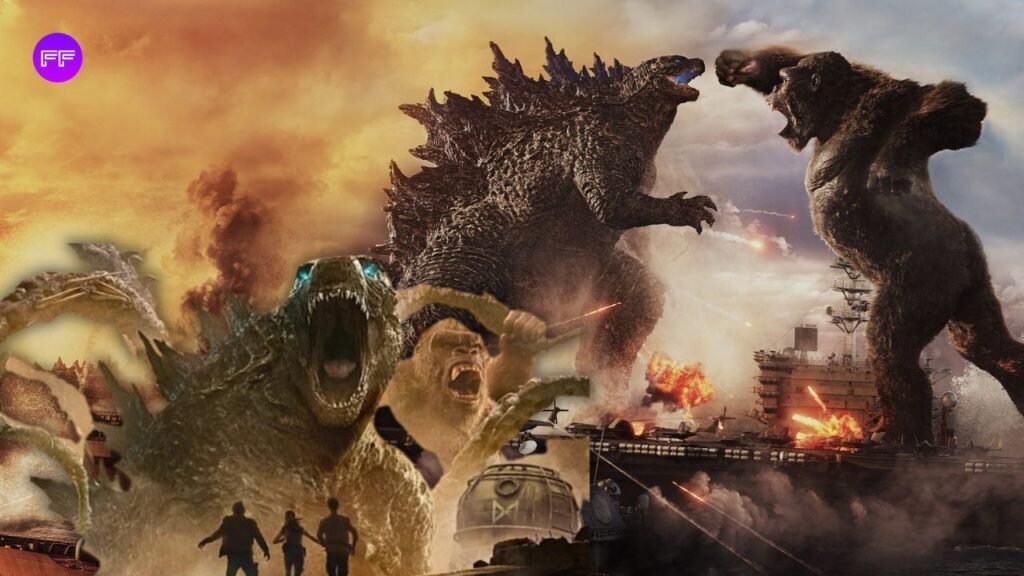
Think falling down a spiral of blue, where gravity inverts and ancient titans wander through an upside down world pulled from myth — welcome to the MonsterVerse’s Hollow Earth, first revealed in Godzilla vs Kong. This subterranean world combines ancient myths like Agartha with modern science, making Godzilla vs Kong epic clash into the equivalent of doorways for deep lore. Dive in to see how this secret universe reshapes the franchise’s mythology.
The MonsterVerse — the hugely profitable shared universe developed by Legendary Pictures and Warner Bros. has found a genuinely smart way to work its mythology. It combined two concepts that have captivated human thought for ages, the Hollow Earth idea and the notion of the Axis Mundi, and molded them into the axis of its narrative. But it didn’t just take these ideas wholesale for the story. It turned them into something different.
In older lore, hollow or subterranean worlds are spiritual ones meaning they’re afterlives, secret havens for the truly enlightened, or mystical planes along the lines of the fabled Agartha where timeless wisdom is maintained.
The MonsterVerse takes out the theology and puts in biology. Its subterranean world is not a souls’ destination after death, or a place where secret masters find quiet meditation. It’s a living, breathing, wildly energetic system — the original home of the Titans, those massive beasts like Godzilla vs Kong that dwarf skyscrapers and carve coastlines simply by walking across them.
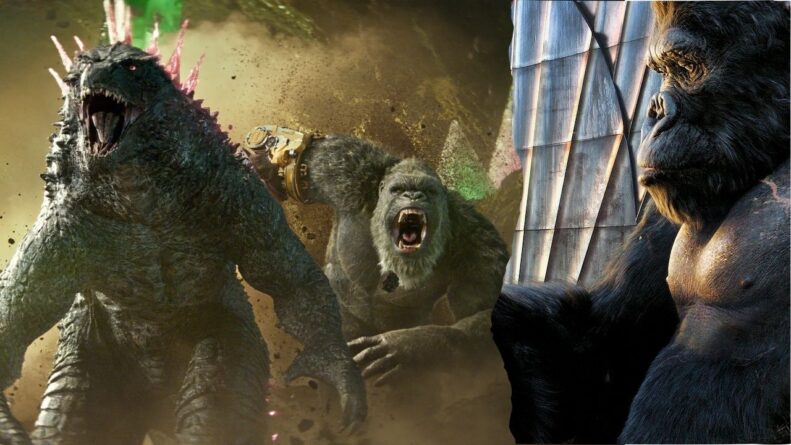
Within the franchise’s own internal logic, this subterranean world is more than just the monsters’ home territory. Kabbalistic perceptions describe being as layers or levels of planes of existence. The MonsterVerse does the same thing, but replaces divine judgment and mystical energy with speculative science, evolutionary biology and astrophysics.
The subterranean landscape of the MonsterVerse isn’t just one giant cavern. It’s some very specific portions of the United States divided into three zones, each with its character and function.
It starts with the caverns — the vast, global system of tunnels hollowed out of the Earth’s crust. In a technical sense, you could go from the surface down through these tunnels all the way to the lower regions, but it would take a very long time and push any traveler to his or her limit. They’re more like connective tissue than a thoroughfare.
The second layer is what Monarch: Legacy of Monsters calls the Axis Mundi and now we’re off the rails. Consider it a no-man’s-land, in between the world of the surface and the world of the true underground beneath. Gravity isn’t doing what it’s supposed to do here.
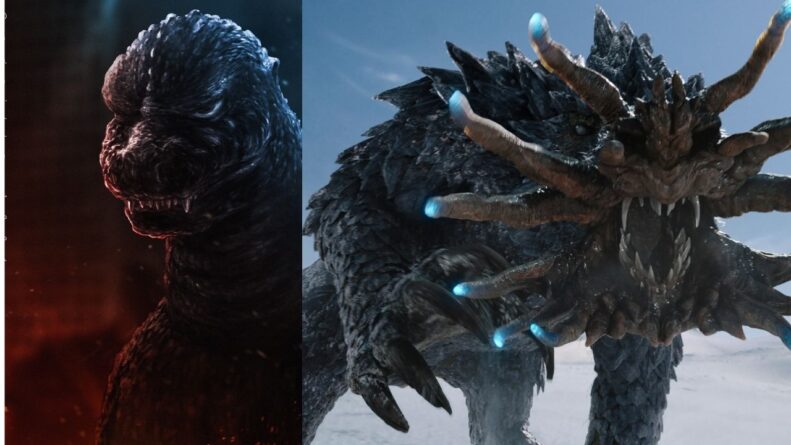
Physics is contorting in ways that they shouldn’t. Time is slithering and bending all around us. It’s a volatile limbo, not really one world, not really the other, and crossing it requires that you have either special equipment or a willingness to emerge the other side quite rattled.
The third and final layer is the Hollow Earth core itself, where the franchise takes its imagination into overdrive. It’s a reverse landscape of terrifying scope — a world upside down, with its own weather, its own ancient forests and oceans, its own prehistoric creatures, and at its core, a radiant energy source that acts like a mini sun. It’s where the Titans were born, where their ancient civilizations rose and fell, and where the deepest roots of the MonsterVerse’s world lie hidden and waiting.
Travelling from the surface to the depths of the Hollow Earth is not simply a matter of excavating. The distances are immense, and the geology between is basically toxic to anything attempting to make its way through. So how do Titans the size of mountains go under the ocean and come up on the other side of the world? The MonsterVerse’s solution is simple: they don’t go through the rock. They Go Around It.
There are natural spatial rifts scattered across the earth, which the franchise terms Vile Vortices, places where spacetime itself doubles in on itself, allowing one to traverse thousands of miles in just seconds. These are not tunnels or caves. They are worm holes, geological in creation but functioning more like holes in the fabric of space. In that regard, they are the MonsterVerse’s most straightforward representation of the Axis Mundi.
Where Eliade conceived the Axis Mundi as a spiritual pathway, a channel through which shamans can travel through time and space in trance states, the Vile Vortices take that journey literal and physical. The revered track between the worlds turns into a quantifiable, trackable, scientific classified event.
What makes these portal locations in particular brilliant from a narrative perspective is simply where the writers decided to locate them. Instead of creating fictional geography, the MonsterVerse embeds its gateways within real locations that have already grabbed the human imagination, if for very different reasons.
The Bermuda Triangle, a geographical mystery best known in pop culture, is in the MonsterVerse a region with the highest accumulation of Vile Vortices — which explains a few decades of folklore about ships and planes vanishing into thin air.
Antarctica, which has been linked with conspiracy theories about polar access to inner Earth and Cold War conspiracies for ages, is the primary gateway in Godzilla vs Kong that the humans first cross that line and go down to the core.
The Mariana Trench, the deepest part of any ocean, and a location that even now feels alien to most of the people who look at it, is Godzilla vs Kong personal transit hub — the underwater gate he crosses to reach his ancient temple deep below.
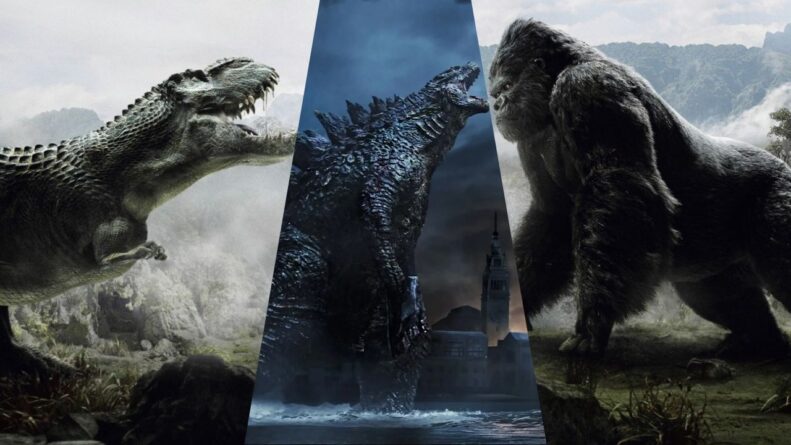
Skull Island, which anchors Kong’s origin story, lies at the center of a web of vortices that had already begun to destabilize when the films took place. Area 51, that longstanding nexus of governmental conspiracy mythology, has been recast not as a secret hangar for alien spacecraft but as a Monarch observation post, monitoring Titan activity underground. Infant Island retains its significance from the original Toho films, effectively keeping Mothra’s mythological home intact from the original continuity within the new one.
Egypt, Kazakhstan and Japan are added to the portal scattering across the globe, reinforcing the idea this subterranean line runs worldwide – under ancient civilizations and modern cities, alike.
The motif here is intentional. By basing its fictional geography on place people have preexisting fears of or find weird, the Monster Verse establishes a reality it seems like has just been under the surface of the real world all along.
In most myths the term Axis Mundi is used to refer to a giant cosmic tree or pillar which connects various levels of the universe as a central point for the organization of the cosmos. The Apple TV+ show Monarch: Legacy of Monsters does something different. It’s using that term to designate a unique and horrible place in the Monster Verse’s subterranean landscape. In so doing, Monarch: Legacy of Monsters pulls off one of the franchise’s most intellectually daring aims: it synthesizes ancient cosmological symbolism with the actual mathematics of Einstein’s theory of relativity.
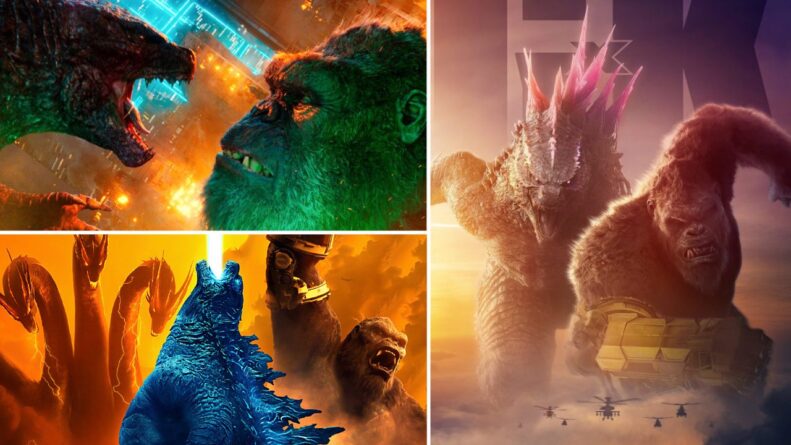
In Monarch, the Axis Mundi, well, it’s not the luxurious, panoramic underground world reminiscent of Godzilla vs Kong. That place is the central core of Hollow Earth, with its inverted terrain and miniature sun that is a whole other ball of place, much deeper and far more stable.
The Axis Mundi is what lies between. It is a shadowy, unpredictable spate of underground pockets trapped between the surface world above and the core beneath in a gravitational standoff. Godzilla vs Kong-sized Titans consistently and seamlessly pass through it as if it were just an airport that everyone must go through like a requisite checkpoint on the journey to somewhere. But for them, that does not become a mere transit stop, it becomes much worse.
No one who goes to the Axis Mundi does so intentionally. It is what goes wrong when crossing a Vile Vortex. “The mechanics of these things, as explained by the show, are just trajectory,” to navigate a vortex successfully, you must keep moving constantly downward through the gravitational inversion at its Heart. This sustained direction is what takes you through to the other side, into the Hollow Earth core.
But if that trajectory is disrupted, the traveler doesn’t bounce back its origin or stop, which means they are stuck there forever. They don’t come out the way they went in. Instead they get ejected sideways, spat out through a horizontal portal into the Axis Mundi instead. It’s not like there’s a dramatic warning. One second you’re plummeting down toward the core. Then all of a sudden you’re someplace else entirely, and getting out isn’t exactly straightforward.
It’s a brilliant piece of spatial storytelling. The difference between making it out safely or being trapped for all eternity is basically just a question of angle.
The worst thing about the Axis Mundi isn’t the dark or the shaking. It is what it does to time.
Since the plane is located at the center of conflicting gravitation fields of the surface Earth and the Hollow Earth core, there is a great deal of spacetime warping in that place. This is where Monarch: Legacy of Monsters plucks real physics for its scares.
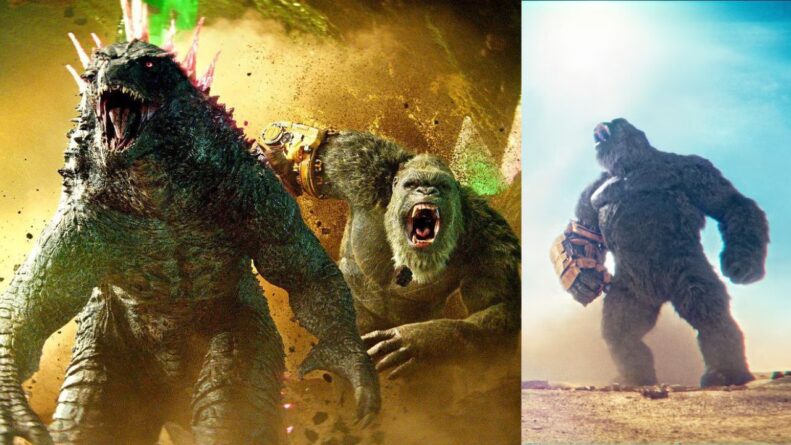
Einstein’s general theory of relativity also tells us that time runs more slowly in stronger gravitational fields — the deeper you are in a gravity well, the more slowly your clock runs relative to someone in weaker gravity. The Axis Mundi takes that principle and turns it into a human tragedy.
Time within the Axis Mundi moves at a pace close to non-existence compared with the surface world.
The series Monarch: Legacy of Monsters actually makes this concrete with two characters whose narratives are involuntarily shattering when you discern what really is happening to them. Dr. Keiko Miura is Fallen into the Axis Mundi in 1959 on a mission that goes disastrously wrong. When she is finally located by the series’ contemporary other leads, she remains unaged. From her point of view, only a handful of weeks have elapsed. From the view of the world, almost sixty years have passed.
They’re all old or dead. She had her era and it had moved on without her. She is physically unaltered and temporally marooned, living in the wrong era through no fault of her own.
Lee Shaw has a similar experience, believing he’s briefly visited the realm, only to reemerge to find that two decades have been wrenched from his life, transforming everything he’d left behind without his input.
Read More:- Avengers The Kang Dynasty Not Only Changes Its Title But Also Superheroes Powers
What makes the whole thing feel scientifically sound rather than arbitrary is that the main Hollow Earth core doesn’t do that. In Godzilla vs Kong the characters take time to explore that world for hours and come back to the surface with no temporal disturbance at all. The reason is that within the universe’s logic, gravity in the core has equalized. Encased within the Earth’s mantle on all sides, the pull of gravity cancels out and time runs at a normal rate compared to the surface.
But the Axis Mundi has no such balance. That is the uneasy midpoint, pinned between the attraction of two huge gravitational forces, and this formless tension is just what makes it so dangerous.
To the effects that time dilation creates has an even mythological resonance. A place where people cease to age, where centuries pass outside as moments pass inside is the old legend of Agartha, the subterranean world where ancient, enlightened beings reside exempt from the flow of time on the surface above.
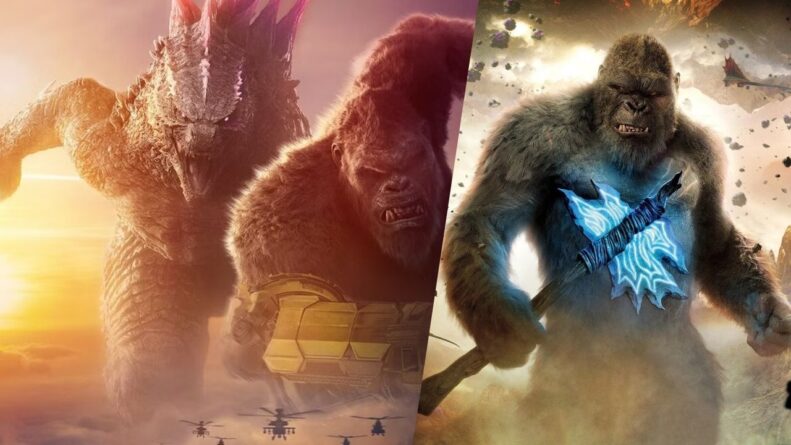
The Monster Verse reaches that same figure through physics rather than allowed Mysticism, that’s exactly the kind of translation that makes its world-building seem genuinely layered. Godzilla vs Kong translates myth into physics.
It’s a film about two giant monsters fighting it out on neon lit city streets at a quick glance. But if you look at what the Monster Verse has been quietly constructing under all the spectacle, there’s something much bigger going on here.
Godzilla vs Kong film is what ancient myth would look like if you rebuilt it using the language of science. It’s spiritual cosmology redrawn with physics. It takes the oldest stories humanity has ever told — stories about gods, underworlds, sacred centers of the universe and reimagines them in a world where those things are real, just not in the way any religion ever told stories about them. The fantasy is still there but it’s been anchored in something that feels almost believable, a kind of speculative realism that makes the world feel simultaneously primitive and futuristic.
What the Monster Verse has created isn’t fantasy — it’s a parallel cosmogony. Gods are made biological, myths become historical, and divinity converts to energy. The so-called “monsters” were never invaders but they were the planet’s first rulers, shaping Earth for years before humanity came into being.
And that changes everything. The difference is that the true battle in Godzilla vs Kong isn’t Godzilla and Kong — it’s humanity and the reality of who really owns this world.
Dive into the world of the monster verse with Fandomfans to get the latest updates on theories, characters and facts from movies and series.