Real Reason Critics Are Split on Christian Bale’s ‘The Bride’ R-Rated Monster Film

Christian Bale’s R-rated monster film The Bride! sparks major debate among critics. Explore Rotten Tomatoes scores, controversy, & why the movie is so divisive.

Published: March 11, 2026, 11:39 am

Maggie Gyllenhaal’s The Bride! has produced one of the most wildly divided critical responses in recent memory. Arriving in theaters in March 2026, the movie was supposed to be a daring feminist reworking of the iconic Bride of Frankenstein tale and, well, it certainly got that. Whether that something is brilliant or catastrophic is entirely dependent on who you ask.

Raving fans hail it as a “fantastical creative outburst” and “bold reclamation of a beloved monster mythology.” On the other, it has been deemed a “howling failure” and one of the worst movies various veteran critics have ever seen. That is not a minor gap to fill, you know. 

The fundamental problem is execution falling short of aspiration. Gyllenhaal crammed a vast amount of story into one two-hour film — 1930s gangster noir, gothic sci-fi, punk feminist revenge fantasy, detective procedural and high-camp musical theater all jostle for space in the same frame. For fans of maximalist, mash-up genre films — that has a nice ring to it. For people who thought it could be a little bit more coherent and tonal, they’re saying it’s like whiplash.

The film, too, came at an inopportune cultural time. Guillermo del Toro also brought out his own critically acclaimed Frankenstein adaptation in 2025, so The Bride! was released already being compared to a beloved, critically acclaimed interpretation of the very same text — a comparison it was never meant to win by those standards.

There is also the question of how explicitly the film flaunts its themes. Reviewers who found the feminist themes too heavy handed described the film as preachy; those who embraced the film’s confrontational virility found it energizing in the very same way.

In the end, The Bride! is one of those rare movies that doesn’t simply break audiences — it reveals what each audience fundamentally wants movies to do. That sort of polarization is in its way a sign that there is something genuinely interesting on the screen. 

By the Numbers: How Divided Are Critics Really?

The statistics tell the whole story, The Bride! is a movie that genuinely fractures opinion. It’s around 60-62% more or less fresh on Rotten Tomatoes, which is a pass but barely. The film received 55/100 on Metacritic. Verified Audience Scores are 74% and 67% of the general audience holds this opinion, indicating that viewers might be more lenient than critics. 

The film came out the same weekend as Pixar’s Hoppers and was soundly beaten, and was said to be “on life support” financially. Going into a weekend for family audiences isn’t a good start for an R-rated experimental horror—romance sort of story.

Divided Are Critics Really

Then, there’s the question of del Toro’s Frankenstein (2025), which landed at 85% and also received a Best Picture nod. The critics had just seen a gorgeously classical, emotionally rich version of the same story — which made Gyllenhaal’s ascertain something anarchic and punk jarring. Arguably, that timing cost The Bride! more goodwill than the film itself deserved to lose.

In light of previous Frankenstein debacles such as I, Frankenstein (5%) or Victor Frankenstein (26%), this movie is actually something of a success for Gyllenhaal. But “less bad” is not a ringing endorsement when the bar has just been set so high. 

Mixed-up Film’s Theme 

After her hushed, personal debut The Lost Daughter, Gyllenhaal swung to the other extreme and that swing is at the center of all that divisive energy in The Bride!

There’s too much to take in just in the storyline. A 1930s Chicago gun moll is possessed by Mary Shelley’s spirit, she is murdered, buried, then exhumed and brought back to life by Frankenstein’s monster (Christian Bale). It then turns into a fugitive road movie, a detective thriller, a class-uprising parable, and a feminist revolution narrative — all of it, all of a sudden, all fighting for the front seat.

The fans liked this movie because of its daring, brash and wildly imaginative narrative style that keeps someone trying to keep too many plates spinning on sticks at once, and all of them come tumbling down. 

The theatricality takes things even further. There’s an elaborate song-and-dance routine to the “Puttin’ on the Ritz” number, a do-nothing subplot involving a fake film star played by Jake Gyllenhaal, and whimsical camp moments juxtaposed with trauma and body horror. Some considered that contrast charming and bold. At some moments it gets really confusing as viewers couldn’t make up their mind to laugh or scare. 

The most damaging was that of the Independent, which declared that Gyllenhaal “she conducts a bit of Frankenstein experimentation with all those ideas, but they haven’t quite stitched together”. There is genuine aspiration. Men differ only in means of execution. 

The R-Rating War and the Anatomy of Violence

One of the film’s raw, uncompromising aspects of which contributed both to this reception and was largely thanks to its brutal depiction of violence and the behind-the-scenes war over its R-rating. The Bride! is rated R for intense and bloody violent content, sexual content, nudity, and strong language. Yet the inclusion of these taboo themes was the subject of a battle with the studio in post-production, exposing an intriguing tension between Gyllenhaal’s auteur vision and the risk averse mentality of contemporary corporate moviemaking. 

The “Black Vomit” Controversy

During the test screening phase, a furious backlash from Warner Bros. was generated by the film’s most extreme images. The most famous dispute between them is over an eerily unsettling scene where Christian Bale’s Frankenstein is instructed to “lick black vomit off the Bride’s neck”. Warner Bros. executive Pam Abdy is said to have been involved and told Gyllenhaal: 

“Maggie, I get it with the creative vision but what if we did the scene a little less intense?”

The very notion of that visceral, grotesque romanticism communicates the film’s refusal to bow down to the polished, mass-market Hollywood dictates, even if Gyllenhaal did make a few concessions and back off considerably from the original, unrated cut of the film. Horror’s terrifying intimacy made the genre loyalists who praised it as a stunning, punk-rock dissection of genre sing, but it alienated mainstream critics who were expecting it to happily spoon-feed them a conventional gothic romance. 

The Bride! Reimagining the Monster 

To understand the extent of the cinematic outrage that The Bride! has sparked, it’s necessary to look at the particular characterizations of its leads. Both Christian Bale and Jessie Buckley give performances that in their very core dismantle what history has meant when it comes to the Frankenstein mythos, pushing audiences to reconsider their relationship to these century+ old archetypes. 

Christian Bale’s “Earnest” Frankenstein

Christian Bale had to find a route for Frank that respected the immense, oppressive tradition surrounding that 1931 visual template established by Boris Karloff, yet modernised the character for the newest generation. Knowing that a straight copy was impossible, Bale took a completely different approach in his reading. Bale’s Monster is neither blindly furious nor innately terrifying, but rather possesses an “engaging earnestness” and a deeply moving, excruciating century-long solitude. When he pleads with Dr. Euphronious for a mate, her first retort—

“Just Hold on, Frank… nobody is cheerful but lonely —Bale 

underscores the tragic mundanity of his life. Bale infuses Frank with what one critic accurately described as “golden retriever energy,” making him a “big softie” who’s spent much of his life as a popular TV host and who loves watching movie musicals as a way to avoid thinking about his life. 

In terms of physicality, Bale went for a different look from the traditional neck bolts and flat-top flysch, popularised by pop culture, instead opting for a “sticky and fleshy” look, like a drunk boxer. 

Bale’s legendary commitment to method acting in the role is indicative of the ferocity of the production. To embrace the sheer physical and emotional pain of the character, Bale invited nearly 30 members of the crew to accompany him in bizarre daily rituals of “screaming like crazy” and howling, making his exhausting makeup process a ballistic, group catharsis of primal energy. 

The internet also fueled exaggerations that Bale had “sewed himself” for the role, testament to his notoriety for radical body transformations beginning with The Machinist.This reading of the Monster is deeply moving, as it is wholly concerned with the universal human concern of loneliness. 

Asked about the character’s motivations, Bale said in a press interview, at the heart of the character is the notion that 

“Connecting with each other is a necessity but it is really difficult. Maybe the only thing you need is someone to be with in silence, just breathe for some time.” 

Critics Agrees On The Production Design of The Bride!

If there is one thing on which pretty much everyone agreed about The Bride!, it was the production design. The ’30s Chicago world that Karen Murphy created is stunning — a steampunk Depression-era cityscape that is gritty and realistic yet gothic and surreal. It’s the sort of cinematic artistry whose strength doesn’t depend on whether you liked the film. 

Sandy Powell’s costumes are equally celebrated. She brings together punk rock and 1930s glamour as if they were always natural companions, and Buckley’s iconic look — inky black lips, wild hair, decaying elegance is an instantly recognisable image. So the film looks extraordinary. The trouble is how it was shot. 

The Production Design of The Bride

Gyllenhaal took a bold step to film a section of the movie in IMAX and focused on the emotional shifts. The moments of feel huge and overwhelming when Ida’s death and Frank’s meeting with the bride, the frame literally swells, creating an extremely powerful effect. 

But aside from the big set pieces, the movie spends a lot of time shaking, handheld close-ups and that’s when things get a little off for a lot of viewers. Reviewers called the event at best “disorienting” and at worst “physically sickening.” All that beautiful production design is lost beneath a volatile, claustrophobic camera.

The irony is that the visual tension of grand IMAX scale versus queasy handheld frenzy, mirrors the narrative tension of the film. Whether that’s high art or undisciplined film making is, like everything else with The Bride!.

Audience Discourse of Cult Classic

The chatter outside the chamber of the formal critics might in fact be more interesting than the reviews themselves.

On Reddit it stays more focused on how well it represents Mary Shelley’s original vision. A section of the fandom are convinced Jake Gyllenhaal rewrote Shelley’s intentions, making her a “vindictive monster” in a modern feminist narrative that the source material never harboured. It’s become revisionism rather than a terrifying narrative to them.

Meanwhile, young viewers on TikTok have embraced its visual rebellion and frantic energy, with videos going viral telling people to ignore the critics altogether. The look, the tone, the downright temerity of it that’s what they wanted from a monster movie in 2026. 

That two generation divide is all you need to know about where this movie is going. 60% sounds like a mediocre score, but it isn’t really, it’s just the mathematical outcome of some people loving it unreservedly and some hating it with unbridled fury. There is a tiny gap between this The Bride! and that’s actually the thing that kills a film’s legacy. 

The imagery, the taboo violation, the performance art, and the absolute refusal to bow to commercial viability all shout cult classic. It’s just blindly chaotic, obnoxiously over-the-top and ultimately deeply polarizing. But it’s an undeniable monster movie that made everyone love it.

Read More:- Daredevil Born Again Marks a New Era for Daredevil in the MCU

Conclusion

After all, The Bride! is the type of movie that was always going to be divisive. Maggie Gyllenhaal went for glitz and gloom, a fusion of genres and weighty themes that looks like pure nightmare fuel. To some critics, that reach-and-grab audacity makes the film thrilling and new. To others, it seems chaotic and intimidating.

What most agree on, however, is that the film sticks with you. Along with the eye-popping visuals and Christian Bale’s unorthodox portrayal of the Monster, the film provokes strong reactions on both sides. And sometimes, the films that divide most are the ones we find ourselves still talking about long after the credits roll. 

Fandomfans is a platform to deliver latest updates and authentic theories from your favorite movies, series, and celebrities.

Mariyam

Articles Published : 53

Mariyam Khan is Fandomfans Content Writer and providing reports and reviews on Movie Celebrities, and Superheroes particularly Marvel & DC. She is covering across multiple genres from more than 4+ years, experience in delivering the timely updates.

Leave a Comment

Your email address will not be published.

You Shouldn’t Miss To Rewatch ‘Kill Bill’ Because of These Legendary Moments

Rewatch 'Kill Bill' to rediscover the iconic fights, hidden details and cinematic homages that shaped Tarantino's masterpiece. Explore the moments. Learn more!

Written by: Alpana
Published: December 3, 2025, 1:01 pm
Rewatch ‘Kill Bill’

Among the records of 21st-century film, very few works can claim the unparalleled position held by Kill Bill Vol. Ostensibly a revenge thriller, the film functions less as a story and more as a spirited look back at film history: a “curated museum” whose high art and exploitation cinema boundaries dissolve. 

Seeing a film like Kill Bill is to see a dervish at work—homing in on a “roaring rampage of revenge” to examine how genre works, the aesthetics of violence, and the lasting power of the screen image. If volume 1 is a blistering tribute to Eastern cinema (wuxia, samurai chanbara, and anime), volume 2 makes a sudden shift to the West, adopting the dry tempos of the Spaghetti Western.

This article unpacks the minuscule details — from cereal brands to philosophical monologues which elevate Kill Bill from a film to a masterpiece. 

The Genesis: From “Q & U” to the Silver Screen

The Genesis
Image Credit: IMDb

Tarantino and Thurman conceived “The Bride” in casual conversations while life mimicked art in the six years it took to write. When Thurman got pregnant before shooting, Tarantino delayed production instead of recasting, saying

“If Josef Von Sternberg is planning to make Morocco and Marlene Dietrich gets pregnant, he waits for Dietrich!” 

It indicates the character Bride is not just a simple role but a specifically designed around Thurman’s physicality.

Casting Counterfactuals

The movie might have been very different. The part of Bill was first written for Warren Beatty, as a suave, Bond-villain kind of guy. When David Carradine was cast, the character shifted to a tough martial arts icon, drawing on Carradine’s background as the lead of Kung Fu, which originally aired in the early 1970s. 

Character Actor Cast Original Choice Impact of Change
Bill David Carradine Warren Beatty / Bruce Willis Shifted Bill from a suave suit to a rugged, flute-playing martial arts legend.
O-Ren  Lucy Liu Generic Japanese Actress Rewritten as Chinese-Japanese-American to accommodate Liu, adding racial tension to her Yakuza rise.
Budd Michael Madsen Robert Patrick Madsen’s weary persona perfectly suited the “loser” brother living in a trailer.
Johnny Mo Gordon Liu Michael Madsen Gordon Liu (he is a Shaw Brothers legend) was given the opportunity to take on two roles (Johnny Mo and Pai Mei), connecting the two volumes. 

Revenge is a Dish Best Served Cold

Bloodied, terrified, and immobilized, The Bride has a stark black-and-white close-up of her face. This decision to film the slaughter aftermath in black and white has several reasons. While this is mostly justified as an homage to 70s TV censorship of kung fu movies, it is also an aesthetic choice. It creates a detachment, and the violence is transformed into nightmarish and abstract rather than realistic. 

Revenge is a Dish Best Served Cold
Image Credit: IMDb

The needle drop of Nancy Sinatra’s “Bang Bang (My Baby Shot Me Down)” is among the most iconic musical cues in cinema history. The song is also used as a literal narration: 

“Bang bang, he shot me down… bang bang, that awful sound.” 

The sad tremolo guitar establishes a mood of tragic inexorability. Instead of a regular action flick beginning with high-octane stunts, Kill Bill begins with failure and grief, laying out the emotional deficit The Bride needs to replenish with vengeance. 

The Bride is creating her own future nemesis

The battle concludes at the death of Vernita Boreas, observed by her four-year-old daughter, Nikki. The Bride’s line here is an important one: 

“It was not intentional and for that I am sorry. But you can take my word for it, your momma had it comin.” 

Then she provides the child with a future means for vendetta: “When you get a little older, if you still feel raw about it, I’ll be waiting”.This is at least an acknowledgement that revenge is cyclical. 

Read More  👉  ‘God of War’ Live-Action Series: Amazon’s Adaptation Could Be the Next Prestige TV Phenomenon

The “sniper shot” of O-Ren

The “sniper shot,” as O-Ren kills a politician, is a highlight in visual storytelling. The space, the quiet, the abrupt violence all serve to define O-Ren as an emotionally cold, remote character. The return to live action O-Ren’s single tear, bridges the stylized animated trauma and the real life villain The Bride will take on. 

The Brides Blue Leaves Disguise 

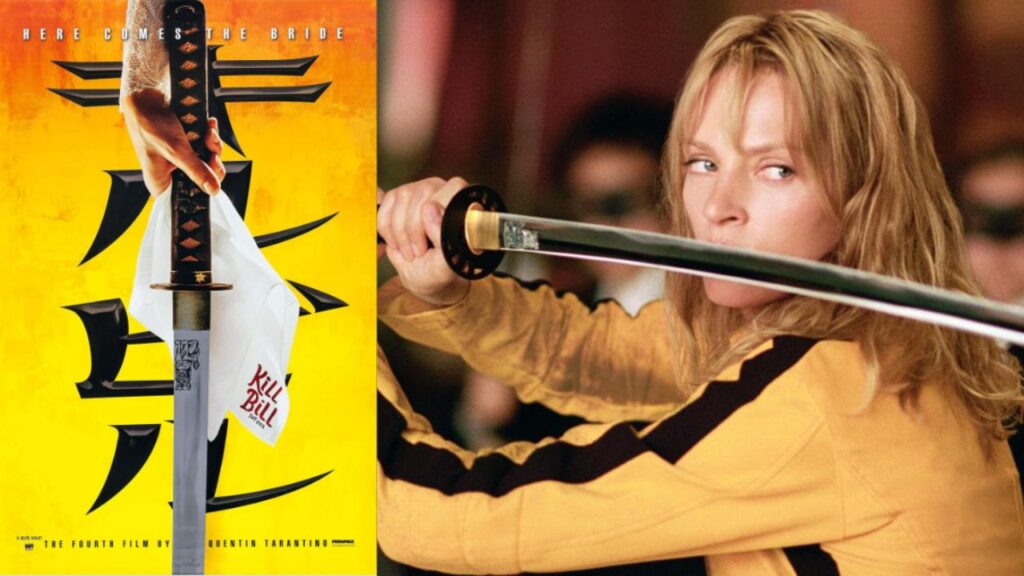
The Bride’s yellow tracksuit with black stripes is the film’s most obvious visual nod, an homage to Bruce Lee’s outfit in Game of Death (1978). This wardrobe choice places The Bride among the martial arts greats. But she is armed with a katana, so that visually she blends the Chinese kung fu tradition with the Japanese samurai tradition. 

Gogo Yubari and the Meteor Hammer

The battle with Gogo Yubari (Chiaki Kuriyama) alters the “schoolgirl” cliché. Gogo is a cruel murderer who uses a ”meteor hammer” (a form of the flying guillotine weapon).

Gogo Yubari and the Meteor Hammer
Image Credit: IMDb

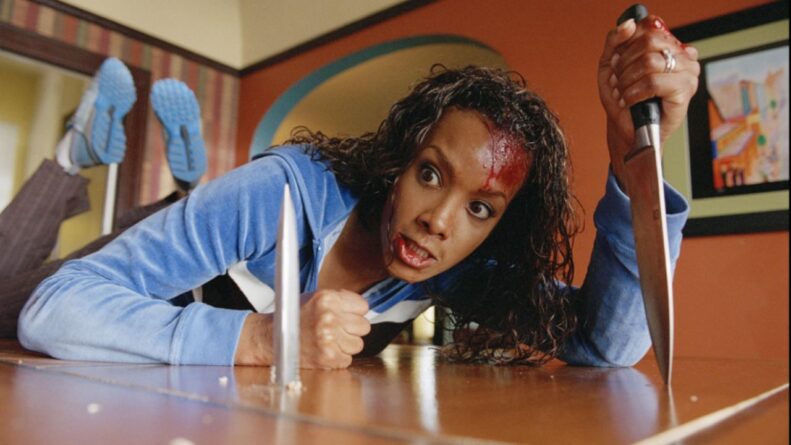
The sound here is fastidious; When Gogo, is defeated and lands on a table, the crash has the sound of bowling pins being knocked over quietly layered in – a sonic joke to the violent absurdity. 

Lady Snowblood is the spiritual mother of Kill Bill

The fight ends with a moment of grisly precision — The Bride cuts off the top of O-Ren’s head. Inversion of a usual decapitation. It exposes O-Ren’s brain, making her vulnerable both literally and figuratively. 

“I sincerely apologize for my haste in judgment and for trivializing the circumstances in not knowing the full case.”  

Are O-Ren’s final words and a return to the samurai code of honor. It elevates the action from a simple kill to a shared moment of warrior respect. 

The death of Budd at the hands of Elle Driver is ironic

Elle brings a Black Mamba snake, The Bride’s codename in Kill Bill vol to kill him. The scene in which she reads trivia about the snake from a notepad 

“The amount of venom… can be gargantuan”

Is a moment of dark humor. Elle makes the link between the reptile and the woman, essentially informing Budd that “The Bride” has already killed him, even if she wasn’t physically there. 

The Cruel Tutelage of Pai Mei

Gordon Liu, who portrayed Johnny Mo in Volume 1, reprises his role as Pai Mei. This double casting is an homage to Liu’s stature as a martial arts legend, Screenrant mentioned. The lesson is on the “Three-Inch Punch,” a variant of Bruce Lee’s “One-Inch Punch.” 

The Cruel Tutelage of Pai Mei
Image Credit: IMDb

This method is the narrative key to The Bride’s escape from the casket. In having so much of the film be taken up with the repeating of this movement. The bloody knuckles and fatigue of The Bride — Tarantino “earns” the improbable act of punching through a coffin lid two-thirds of the way through. 

Conclusion

Kill Bill is a celebration of how cinema can consume itself and regenerate. It’s the film about two lovers of movies telling the story with the language of movies. The “legendary moments” discussed here, reveal a level of precision and attention that makes the movie more than just a pastiche.

Watching Kill Bill again is like reading a text that is constantly opening up. It is also a tale of identity, The Bride’s view that identity is mutable (she moves from killer to mother). It is a tale about the “forest” of revenge — A place that has been known to disorient travelers. 

Alpana

Articles Published : 94

Alpana is Fandomfans Senior Editor across all genres of entertainment. She evolved in the media industry since a very long time, she manages the content strategy and editing of all the blogs. Her focus on story development, review analysis, and research is well-equipped that ensures every article meets the standards of accuracy and depth.

Leave a Comment

Your email address will not be published.

Kenan & Kel Meet Frankenstein Returns ’90s Nostalgia to the Big Screen 

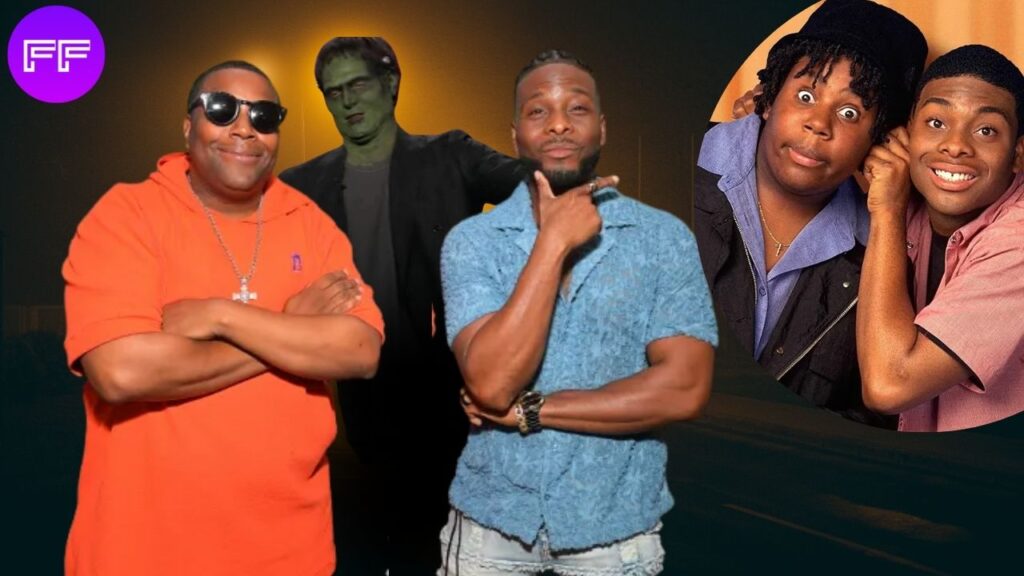
Kenan and Kel Reunion Mitchell are back together for a Gothic horror comedy, Meet Frankenstein, which mixes ’90s nostalgia with comfort horror. Learn more..!

Written by: Alpana
Published: January 23, 2026, 5:29 am
Kenan and Kel Reunites

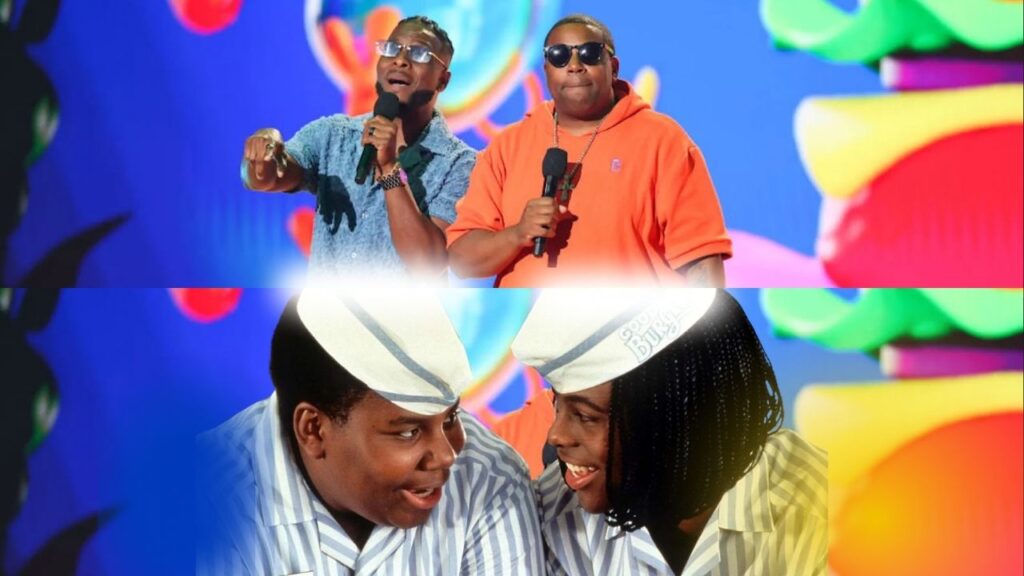
Kenan and Kel Reunion: A wave of nostalgia washed over the entertainment world when Kenan Thompson and Kel Mitchell announced their reunion on a Good Sports episode on Prime Video, announcing a new feature film: Kenan & Kel Meet Frankenstein. 

Filming is set to take place in summer 2026, and this is not simply a follow-up to their recent Good Burger 2 success, it’s a calculated bringing-back of a 77-year-old cinematic template. By situating the quintessential ’90s pair in the world of Gothic horror, producers are tapping into a burgeoning “Gothic Renaissance” and the popularity of “Comfort Horror.” 

A Contemporary Interpretation of a Classic Form

A Contemporary Interpretation of a Classic Form

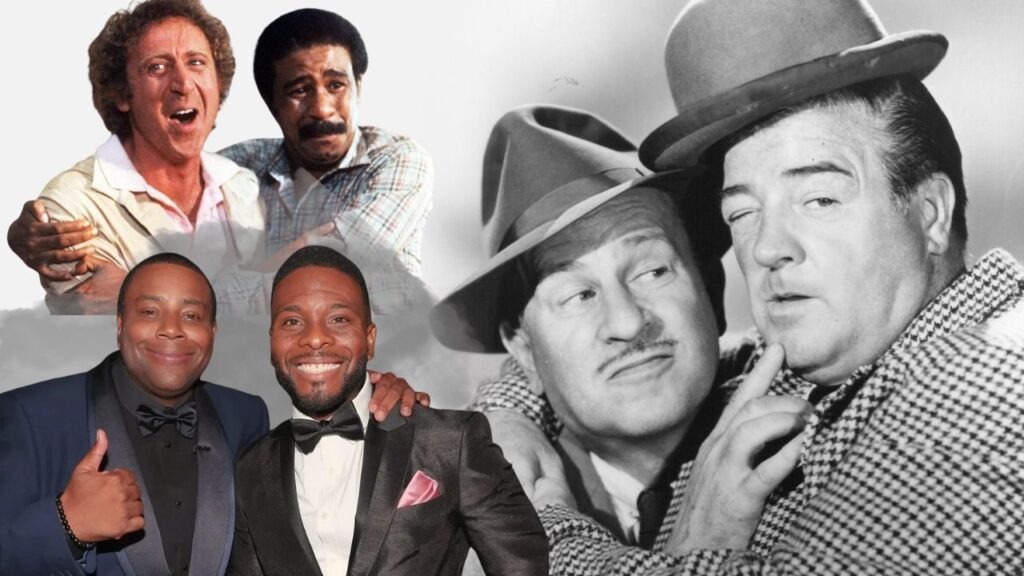
The entire film is set in a building that’s a straight-up homage to the 1948 Abbott and Costello Meet Frankenstein.” In those days, Universal Pictures revitalized its fading monster franchise by infusing it with high-octane comedy. Kenan and Kel are now following suit with the streaming age.

Ryan Jr. stated, “First it was Abbott and Costello, then Pryor and Wilder—and now it’s Kenan and Kel.” 

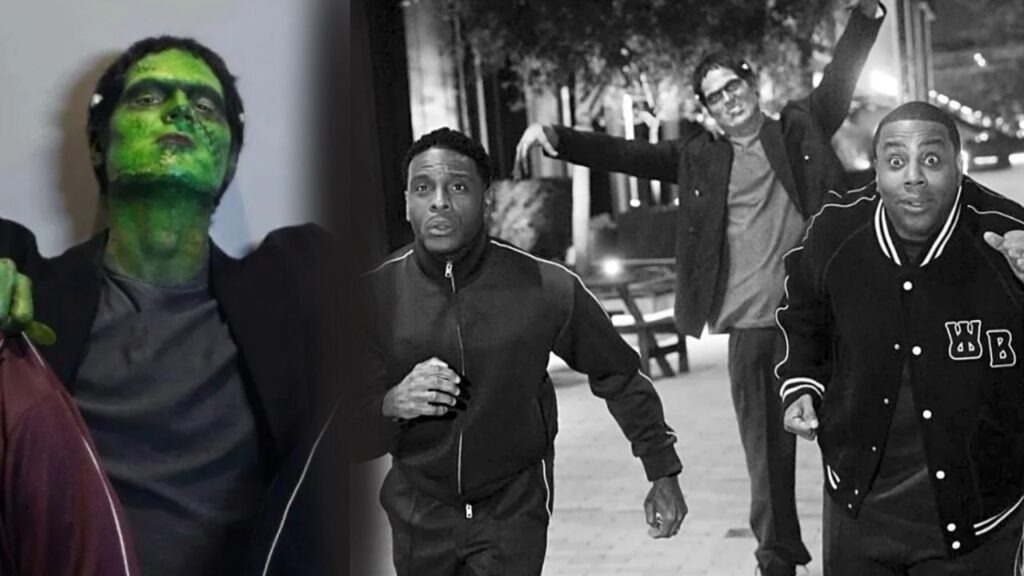
It’s a familiar “wrong place, wrong time” plot device, but one that’s easy to relate to: Thompson and Mitchell are delivery drivers working in the modern gig economy. A routine delivery at a secret, out-of-place castle results in the accidental reactivation of Frankenstein’s monster. 

Creative Leadership: Washed in Doom and Whimsy

Jonah Feingold, who brings grounded human emotion to ”magical realism,” is helming the project. Producer John Ryan Jr. has described the look of the film as “Shaun of the Dead meets Scooby-Doo.”

Creative Leadership

So it’s looking like this won’t be a dumb parody – it’ll be a “straight” horror comedy where the stakes feel genuine, even if the heroes are hilarious. 

The “Comfort Horror” Playbook

Why Now? The late 2020s are all about the “war of the Frankensteins.” With Guillermo del Toro’s bleak The Witches and Maggie Gyllenhaal’s stylistic The Bride! opening in theatres, viewers are hungry for a palate cleanser.

Read More 👉 Yellowjackets: A Gritty ’90s Survival Thriller That Redefines Trauma, Sisterhood, and the Wilderness

Kenan & Kel has “comedy comfort food.” 

For Millennials, it’s a return to the “Aw, here it goes!” energy of their youth. For Gen Z, it’s two industry legends including Kenan Thompson, the longest-tenured SNL cast member taking a stab at a new genre. 

“It’s exciting to take a classic monster story and turn it on its head, and have fun doing it.”

–said Thompson

Anticipating a “Monster Universe”

This film represents a shift from “reboot culture” to “genre homage.” If it is successful, it paves the way for a possible “Kenan & Kel Monster Universe,” in which the duo could cross paths with the Mummy or the Wolf Man in future films.

Monster Universe

By owning their production via Thompson’s Artists for Artists banner, the pair is not only pursuing nostalgia — they are establishing a permanent comedy institution. As we approach the 2026 production cycle, one thing is certain: the “schemer” and the “innocent” are introducing themselves anew, and this time, the monsters should be the ones fearing. 

Conclusion

Kenan and Kel Reunion Frankenstein isn’t returning ’90s nostalgia but the gothic horror genre that makes comfort to the audience who love these kinda silly monsters.

Restitching strands of millennial nostalgia and “comfort horror,” the film touts itself as the antithesis of that era’s darker, prestige monster films. Given a wide canvas to tell their own story and an angle that nods to classic Hollywood storytelling, Kenan Thompson and Kel Mitchell aren’t just looking back — they’re ensuring their past holds up over time. 

If the bet pays off, this may lead to an endlessly silly monster age where comedy, instead of terror, reigns in the night—and the monsters finally have something to fear. 

Fandomfans is a platform where you can come and pick up the latest news on upcoming movies.

Alpana

Articles Published : 94

Alpana is Fandomfans Senior Editor across all genres of entertainment. She evolved in the media industry since a very long time, she manages the content strategy and editing of all the blogs. Her focus on story development, review analysis, and research is well-equipped that ensures every article meets the standards of accuracy and depth.

Leave a Comment

Your email address will not be published.