Zach Cregger’s Weapons Redefines Modern Horror
Weapons Redefines Modern Horror brings a fresh wave to modern horror with methodical tension, psychological depth and bold storytelling mastery.
Published: October 30, 2025, 11:21 am

Weapons Redefines Modern Horror brings a fresh wave to modern horror with methodical tension, psychological depth and bold storytelling mastery.

Zach Cregger’s Weapons Redefines Modern Horror, writer-director of the excellent first solo feature The Package, proves himself once again with Weapons in that it is one essential element that separates this film from the majority of horror movies and that is methodical, merciless dread building leading up to the shock moment. The critical consensus largely agrees that none of the film’s intensity is down to any cheap, jarring jump scares, but rather lies in the bravura skill of maintaining such high levels of tension for so long – a style that packs a real punch on screen.
Zach Cregger’s Weapons Redefines Modern Horror ability to slowly ratchet up tension has garnered him much acclaim. It’s psychological manipulation by way of infrastructure, rather than merely a stylistic maneuver. The jump scare, a device that’s often dismissed as cliche, is intentionally employed in Weapons. A “release of all the tension that has been ratcheted up to this point” is how analysis characterises shock, which is experienced as an earned narrative climax and not a cheap jolt. This careful timing makes the scare seem inevitable, thematically significant, and according to him forever tied to the technique of building up tension.
The film’s critical acclaim becoming evident in its high scores including a 96% rating from the critics on Rotten Tomatoes is naturally associated with the way such a cliché like the jump scare has been converted into an intellectual and emotional climax. The shock is completely justified because you need a long, often five-minute buildup before the scare, and that builds its thematic punch way beyond its passing visceral wallop.
Weapons owes much of its place in the vanguard of contemporary genre criticism to this method. This is a wildly satisfying antidote to the last 10 years of horror movies about grief and trauma, critics have lauded. Cregger channels the genre toward an externalized terror that is viscerally immediate and relevant in today’s world by focusing its horror apparatus on urgent, collective, and existential thematic drama, as opposed to simply resting on metaphorical grief.
Zach Cregger’s Weapons Redefines Modern Horror buildup is a deliberate act of mind games, using tools meant to train the audience to expect something non-stop. The director takes advantage of multiple fakeouts before the real scares, which are described as the warm up.
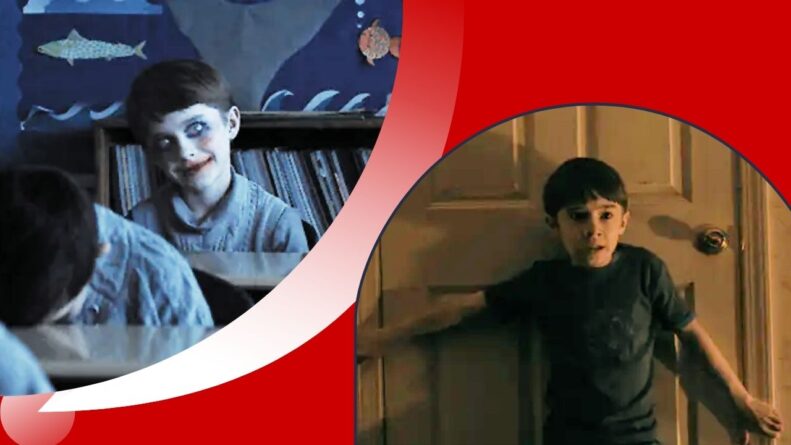
Zach Cregger’s Weapons Redefines Modern Horror, in particular, parallels the characters’ emotional vulnerability with this physical immersion. The camerawork emphasizes the isolation and paranoia of Justine. Following a harrowing and emotional monologue in which he is sorry for his failings as a dad, Archer then gets a jump scare. In this way, the camera work upholds the movie as a cerebral, meticulously rendered drama in which technical fear serves thematic purposes by mutating the shock of a conventional fright into a highly personal violation of an aspect of the character’s internal struggle.
The horror works because it stems from a mass psychological unraveling, which also offers an explanation for the movie’s endless sense of dread. Cregger’s eye is on the resulting disintegration and decay of the social order, how the town breaks apart and goes on witch hunts against suspects, including the teacher Justine Gandy. The complete isolation endured by Justine, with no community to back her up, offers a powerful exemplification of the film’s main thesis: isolation can drive people mad, and the communal response to trauma is where a second round of horror arises.
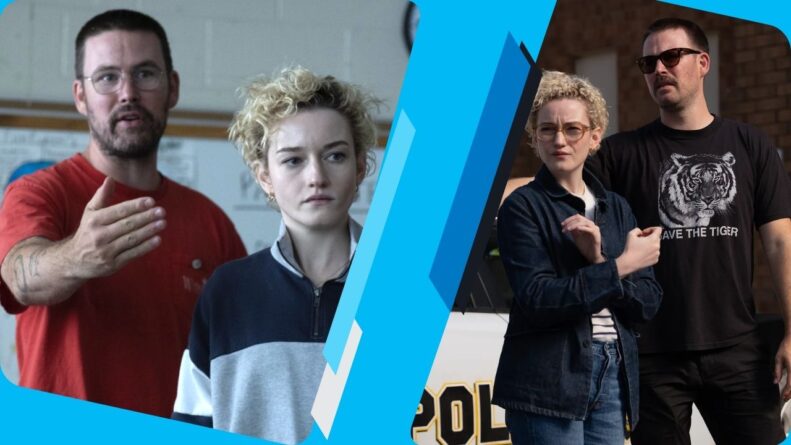
By frequently changing perspectives and depicting the menace as having an impact on several, diverse individuals, Cregger maintains the audience’s engagement with the trauma experienced by the town as a whole, allowing tension to be drawn out during the length of the movie. Terror is thus understood as a society-wide infectious disease, which is far more disconcerting than a regional monster.
The origin of the supernatural horror is none other than Aunt Gladys (Amy Madigan), who orchestrates the weaponization of the children. Amy Madigan’s performance has garnered critical acclaim, with some critics lobbying for award recognition. That’s partly because her performance is so effective that the villain isn’t just a monster, but a searing, shockingly tangible instrument for psychological torment.
Read More:- What Brings Colin Farrell Back to Matt Reeves’ Batman Universe
Domestic terror Weapons gets an even better kind of shock because Zach Cregger purposefully creates and maintains an intense sense of dread until he wields the jump scare like a precision instrument. The film’s scare factor is born of its method, not its madness.
Weapons confirms Zach Cregger’s Weapons Redefines Modern Horror as a powerhouse voice in horror whose brilliance comes from his dedication to inserting deeply emotional relationships into terrifying survival and mystery narratives that makes the genre feel both immediate and intelligent. The film’s strong business and critical success, as a big-budget, original outing by a major studio, demonstrates that this intellectual, meticulously paced brand of horror is not only sustainable, but perhaps a major new template for top-notch, high-budget event horror pics going forward.

undertone Review: A24’s chilling psychological horror turns silence, family, and familiarity into fear, resulting in one of the studio’s most unsettling films.
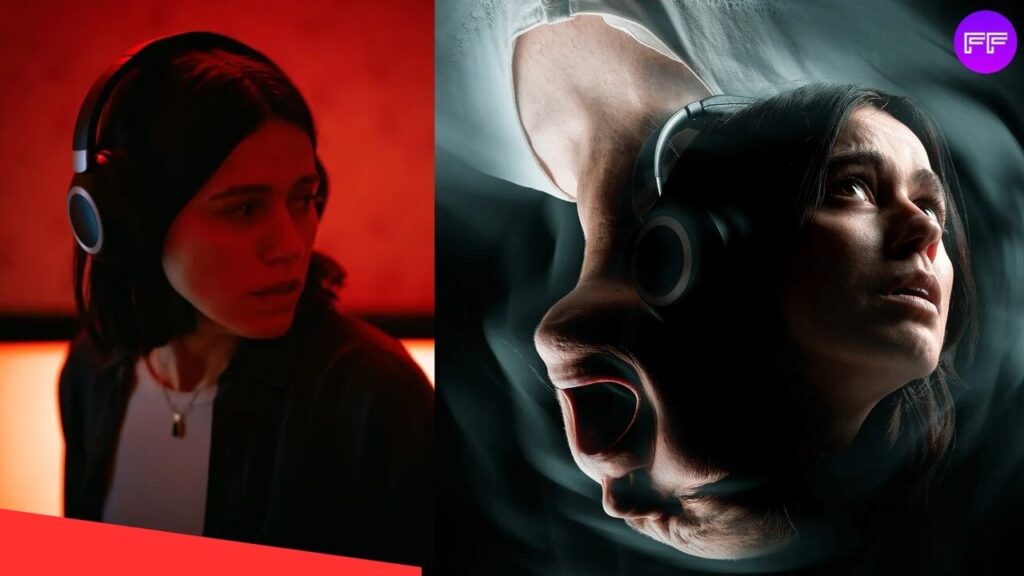
The majority of us thought the lockdown years were pretty exhausting, but director Ian Tuason made that isolation a nightmare—the good kind. His new film, Undertone, is currently the buzz at Sundance, and it’s easy to understand why. It’s a scary, sound-centered psychological horror that came from real-life anxiety and a house that could possibly be haunted now.
We’ve all been there—crashing at your parents’ place is not whatever you’re picturing it’s going to be. But for Tuason, it was a necessity so he could tend to his ailing parents.
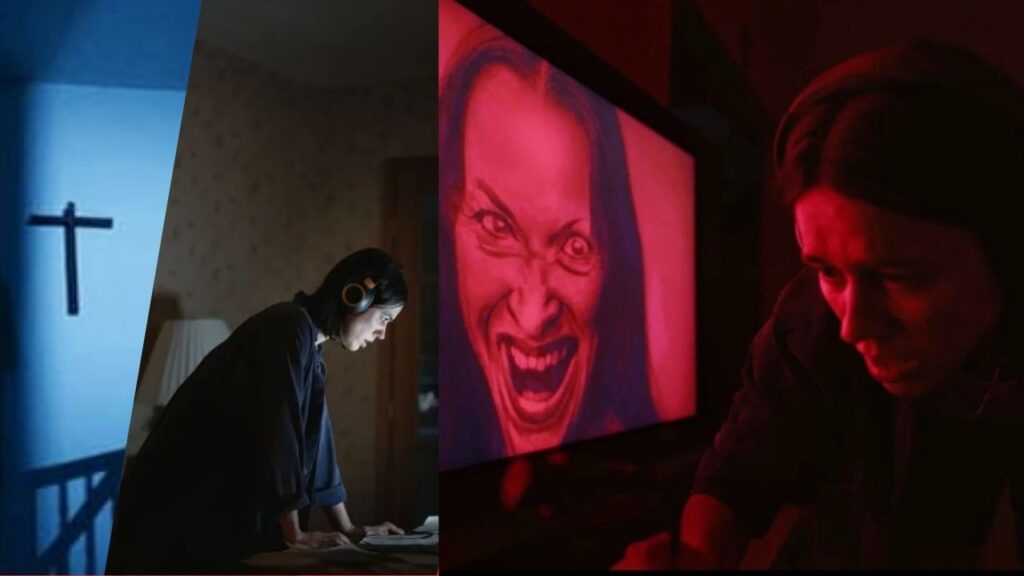
In an interview with Variety, he shared his experiences of where he got the idea. While he was there, he began to consider what makes us feel safe —and what happens when you flip that on its head. The Exorcist concept (taking a “safe” daughter and making her scary) and applied it to his own life.
“My mind is stuck on ‘The Exorcist’, how it scared me so much when I was a kid.”
–He said
He wondered, What if my mom, who relies on me, starts speaking in a different voice? That dark thought transformed a simple podcast script into a feature film. He even shot it in his parents’ house to save money, but it came at a price. Living on your own horror set meant he never felt truly alone, and he said the house began feeling “haunted” well after the cameras stopped rolling.
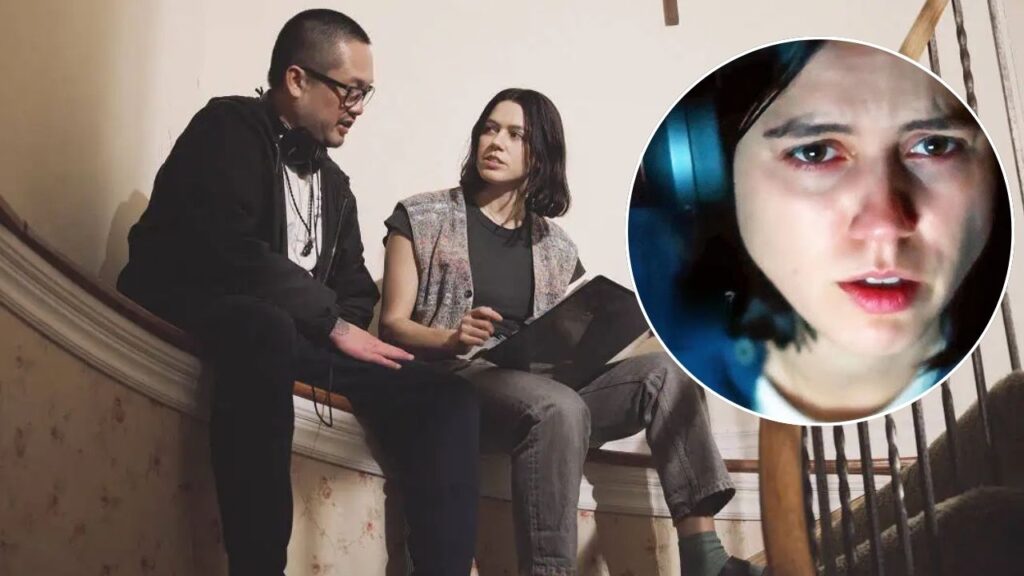
Undertone is distinguished by its sound. The lead, Evy, is the host of a podcast, and the film plays with your ears. Tuason engineered the sound as if you are wearing noise-cancelling headphones.
“Do you know that weird silence level where you have no clue what’s happening in the room behind you?”
–He said
That’s precisely what he employs to frighten you. The film oddballed the sounds that Evy hears on her tapes and the sounds that are really in her hallway.
The hype around Undertone is deafening and it seems like the biggest names in horror are officially placing their bets on Tuason. That’s just the beginning: A24 has already acquired the film and scheduled a March 13 release.
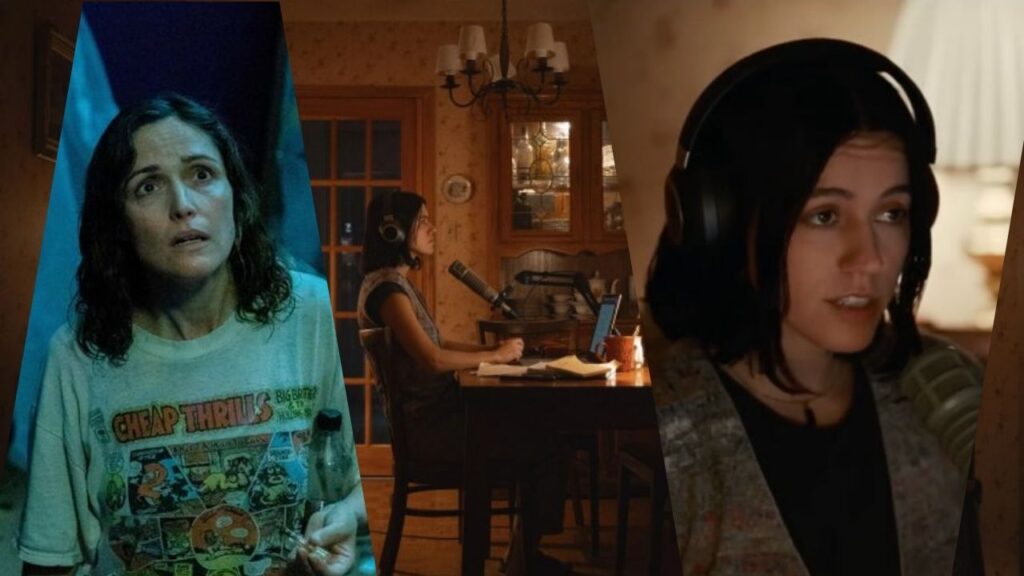
The legends behind Blumhouse and Atomic Monster (the producers of Insidious and The Conjuring) are the ones who brought in Tuason to give the Paranormal Activity franchise a revamp. It’s a complete full circle moment for a guy who started out recording spooky noises in his childhood bedroom. If he can make a DIY movie at his parents’ house this scary, then we can’t wait to see what he does with a Hollywood budget and the keys to one of the biggest horror series in history.
Read More:- Lyonel Baratheon and Tyrion Lannister: How Westeros Repeats the Same Character
Undertone confirms the greatest horror has never been monsters or jump scares—it’s familiarity. By weaponizing a childhood home, a parent’s voice, and silence itself, Ian Tuason crafts a deeply personal and unsettling journey. Its choreography of sound is so perfect that it’s a movie to watch with headphones, each whisper feeling invasive and intimate.
With Sundance buzz, an A24 release, and major horror studios lining up to back Tuason’s next project, Undertone is not just a powerful first feature—it’s the introduction of a filmmaker who gets that the real horror is right at home.
With Fandomfans, you can find all the latest details and behind the scenes of movies and series.

Jennifer Lawrence and Robert Pattinson star in Die My Love, a haunting new film exploring love, madness, and emotional intensity on screen.

Buzz builds for Die My Love. This is mind-bending dark drama duo’s first pairing. It is directed by Lynne Ramsay. She got an Oscar nom for We Need to Talk About Kevin. Ramsay and playwright Enda Walsh, along with Alice Birch, co-wrote the screenplay. The narrative is adapted from the Argentinean novel by Ariana Harwicz Die, My Love. It follows Grace, played by Jennifer Lawrence. She writes and is a new mother. Her psychosis disintegrates when she and her husband Jackson (Robert Pattinson) move out of New York City to his childhood home in rural Montana. In the film, Grace suffers from postpartum blues and madness. These things begin to crack her marriage. There’s heat building in the desolate rural location, too. Reports by Mubi. The company describe it as Ramsay’s razor-sharp perspective on a woman consumed by love and wild thoughts.
Die My Love is a celebrity-powered indie. Besides starring, Jennifer Lawrence is producing through her banner Excellent Cadaver and Martin Scorsese is producing via his Sikelia company. Scorsese, in fact, backed the project after he read the book as part of a book club, he recommended it to Lawrence. The two even passed on adapting another classic book because it presented a tougher role. Lawrence fought for it despite Ramsay’s initial hesitation (she’d just done a similar motherhood movie). One version has it that Lawrence was determined to have a go at working on Die My Love as a team and talked Ramsay into turning it from a straightforward depression narrative into a “bonkers, crazy love story.”
Jennifer Lawrence and Robert Pattinson are headlining the film’s ensemble. Lawrence plays Grace, a mother and wife about to break. Pattinson is Jackson, her husband. LaKeith Stanfield has been cast as Grace’s forbidden love interest. Legendary actors Nick Nolte and Sissy Spacek star as Jackson’s parents. Grace and Jackson are said to be relishing their new beginning, via People. They have a good time with sex and crazy dances. But once the baby arrives, Grace’s isolation and mental illness strain their relationship.
Read More 👉 The Conjuring’s Next Prequel: A Fresh Scare With Award-Winning Director Rodrigue Huart
This Lawrence–Pattinson chemistry is what makes this especially exciting to fans. Lawrence, an Oscar winner for Silver Linings Playbook, is known for dramatic as well as blockbuster roles Hunger Games, while Pattinson went from being a teen heartthrob Twilight to an indie darling Good Time, High Life, and now, Batman. The two actors have praised each other’s performances and Lawrence has joked in interviews that starring opposite Pattinson at last is total revenge after her failed Twilight audition.

They were reported to have gotten close off-screen during the film’s premiere in Cannes. Lawrence joked that having kids changes everything and Pattinson added that becoming a father has provided him with the biggest trove of energy and inspiration to work. (Lawrence has also said that playing Grace added another layer for her by drawing on her own difficult postpartum experience).
The excitement ran high as Die My Love made its Cannes Film Festival debut in 2025. The critical response was overwhelmingly positive. Lawrence’s acting received an “award-worthy” standing ovation for around nine minutes, according to People. The MUBI buyout campaign draws attention to this praise. Trailers show Lawrence in wild dance, fight and fierce growl sequences deep in emotion. It is this hard edge that Ramsay can do so well.
Ramsay, who refers to the film as a dark comedic love story about insanity, Pattinson joked some moments are “hilarious” in a twisted way, she said.
Die My Love is a relentless, unsettling drama — a peek at a marriage disintegrating under the pressure of new parenthood. Ramsay directs the film, with Walsh and Birch as co-writers, with major producers attached (including Lawrence and Scorsese). Jennifer Lawrence is Grace and also produces through Excellent Cadaver, while Robert Pattinson is her husband Jackson.
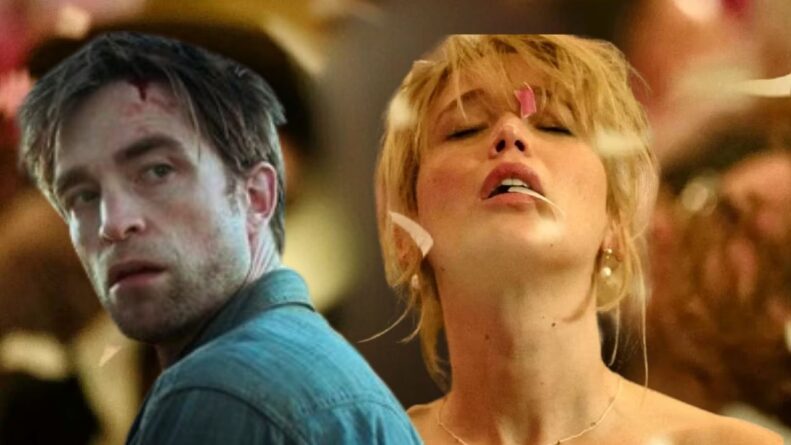
The film is slated to be released in U.S. cinemas on 7 November 2025 after premiering at Cannes on 17 May. This pairing of acting titans both heavy Oscar front-runners has the fans talking, in part because reports have them pushing one another on set. Ramsay calls the completed film a really dark love story that’s also funny, and Lawrence gives what some are already calling the most riveting performance of her career.
The unrated My Love is becoming one of the most awaited movies of 2025 — an unrefined, haunting, and passionate exploration of love, insanity, and motherhood. With Lynne Ramsay’s distinctive intensity leading the way and Jennifer Lawrence and Robert Pattinson delivering powerhouse performances, the film will no doubt be both visually breathtaking and psychologically enthralling. Lawrence’s performance as Grace has already earned early Oscar buzz, and Pattinson’s reserved yet multifaceted portrayal provides a tether for her spiraling descent.