Home > Movies > Andrew Stanton’s ‘In the Blink of an Eye’..
Andrew Stanton’s ‘In the Blink of an Eye’ Might Be the Most Important Sci-Fi Film of the Decade
At Sundance 2026, Andrew Stanton’s In the Blink of an Eye debuts with a bold multi-timeline sci-fi tale examining human emotion in the past, present and future.
If you have been keeping up with the Sundance Film Festival 2026, you may have found yourself wondering what Andrew Stanton is doing these days. The Whiz behind Wall-E has at long last arrived back on live-action soil and he is doing so with uncertainty, not caution. His new film In the Blink of an Eye is not only a return to form it is a high concept, mindbending thrill ride.
In the Blink of an Eye at a Glance
Feature
Details
Movie Title
In the Blink of an Eye
Director
Andrew Stanton
Writer
Colby Day
Genre
Science Fiction / Drama
Narrative Style
Triptych (3 interconnected stories)
Time Periods
45,000 BC (Neanderthals), Present Day, and Far Future
Core Theme
Human connection across time, evolution, and technology
Story Approach
Visual storytelling & behavior over heavy dialogue
Structure
Non-linear and multi-timeline
Editing Style
Using “Emotional Sync Points” to link different eras
Premiere
Sundance Film Festival 2026
Vibe
Thought-provoking, Sci-Fi With Emotional Depth
Standout Factor
Skips the “Hero’s Journey” to focus on shared human feelings
Andrew Stanton’s Bold Return to Live-Action Sci-Fi
So, what’s the deal? That’s not your average “aliens destroy the White House” science-fiction movie. It’s a triptych — which is just a fancy way of saying that it tells three separate stories that are all interconnected.
A Typical Alien Story Told Across Millennia
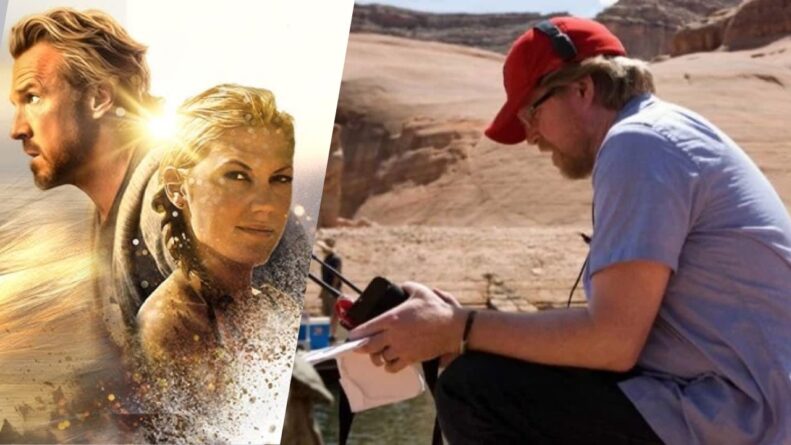
It is a narrative that leaps randomly back and forth over the course of thousands of years, from ancient Neanderthals to the current day, and then to the future.
It’s ambitious, it’s a little experimental, and it’s trying to suss out what really makes us “human” from era to era.
A Triptych Narrative That Spans From Neanderthals to the Future
Visual Storytelling Over Dialogue
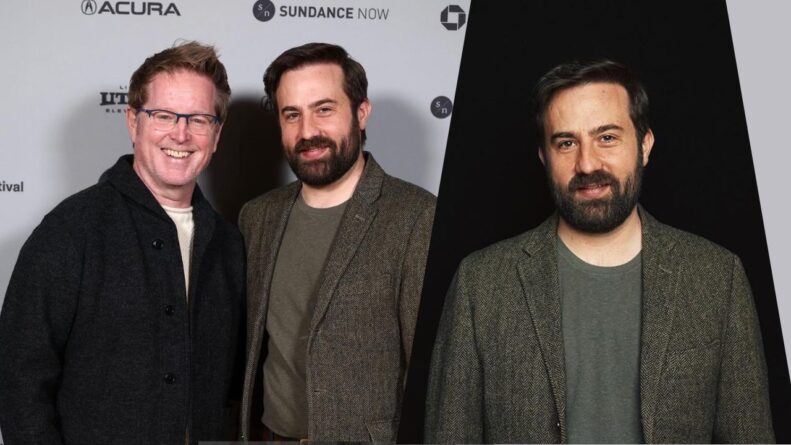
Andrew Stanton had long been working on big shows such as Stranger Things, 3 Body Problem, and he spent that time ‘hand-picking’ his dream team. He’s also leaning heavily on his animation roots.
Andrew Stanton’s biggest takeaway is the importance of imagination. He thinks the presence of a character — an expression, a movement, or maybe a choice can say more than dialogue ever could. The end product is a movie meant to make you feel first, leading emotion with images rather than explaining everything in words.
Image Credit: Fandomfans
Rejecting the Hero’s Journey for Something Riskier and Richer
The author, Colby Day, confessed he was a little tired of the typical movie structure we get applied to everything. Rather than tracking a single protagonist on a familiar trajectory, he wanted to “blow up the world” and change the rules. He was inspired by films such as Cloud Atlas — those “big swings” that might be a little messy but way more interesting than a “safe” blockbuster.
Image Credit: Fandomfans
How Editing Three Timelines Finds One Shared Human Emotion
Just think about what it would be like to edit three separate films into one. The editor Mollie Goldstein said they had to find “sync points.” They’re moments when a character in 45,000 BC is experiencing exactly what someone in the future is. It’s the emotional glue that holds the whole thing together.
Why Emotional Connection Is Replacing Spectacle in Sci-Fi
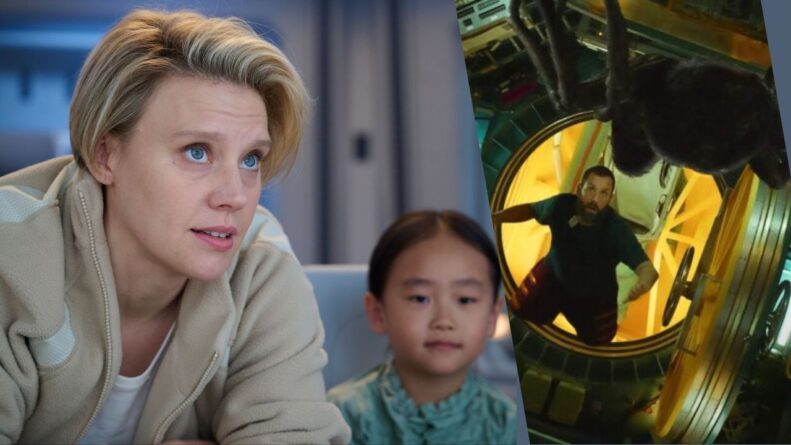
Connectedness is the new spectacle: The age of hollow, effects-laden action-movies is waning. In the Blink of an Eye caters to a burgeoning demand for narratives with emotional connections — demonstrating that no matter how far technology evolves or centuries elapse, what really resonates is how intimately we are linked to one another.
Image Credit: Fandomfans
The Comeback of Big, Risky Ideas in Modern Filmmaking
The Comeback of the “Big Idea”: For a time, it seemed like movies were made by committee. This feels like a personal project and a risk. If this works, studios will once again trust directors with strange, “unfilmable” scripts.
What the Film Says About Being Human
Universal Struggles: By featuring Neanderthals, the film makes us aware that even as our phones evolve, our hearts don’t. We’re all still coming to grips with the same primal fears and loves that people had thousands of years ago.
Darkly In The Blink of an Eye is a quiet rebellion against all the sci-fi that has played it safe for far too long. Rather than pursuing bigger explosions and louder stakes, it looks inward – across centuries, across species, across futures – to consider what actually endures.
When the film connects Neanderthals, modern humans and future societies through shared feelings, it tells us our survival is not dependent on wiping out the other; rather it magnifies our humanity. If this movie sticks the landing like it promises, it won’t just be a standout at Sundance — it may indicate a turn toward even braver, more emotionally intelligent sci-fi, where connection matters more than spectacle.
Dive into the world of entertainment with Fandomfans to get deeper details from directors, stars, and industry insiders.
Mariyam
Articles Published :
77
Mariyam Khan is Fandomfans Content Writer and providing reports and reviews on Movie Celebrities, and Superheroes particularly Marvel & DC. She is covering across multiple genres from more than 4+ years, experience in delivering the timely updates.
The Housemaid (2025) Become a Paul Feig Successful Adaptation
The Housemaid (2025) review explores Paul Feig’s chilling adaptation, powerhouse performances, BookTok success, and the film’s dark take on power and control.
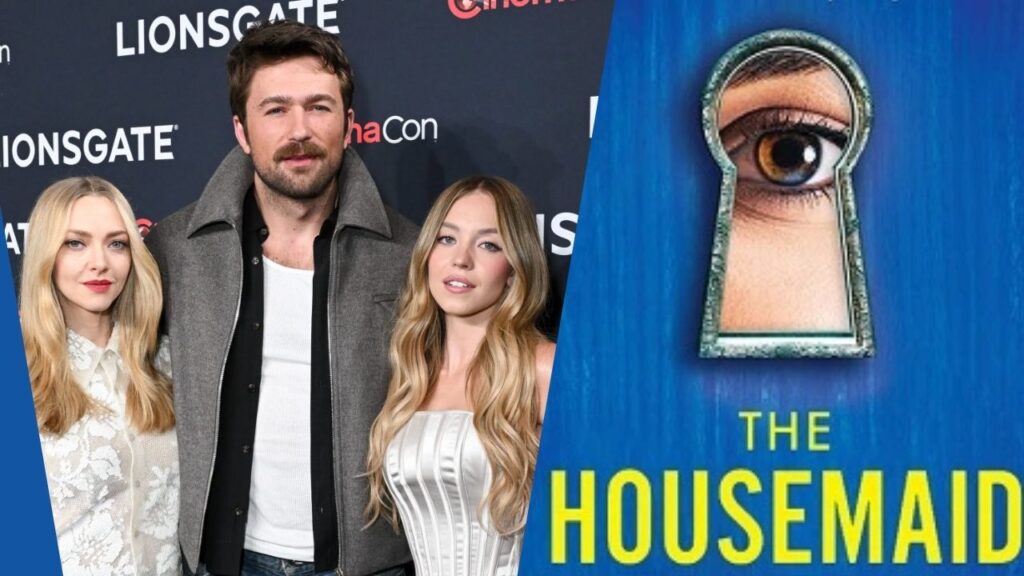
The Housemaid (2025), from director Paul Feig, channels that anxiety with laser accuracy, turning the dream of home life into a stifling mental institution. Based on Freida McFadden’s viral novel, Paul Feig’s adaptation of The Housemaid (2025) strips back the layers of wealth, beauty and privilege to reveal a much darker truth – where control, surveillance and survival intersect within the walls of an ostensibly perfect home.
Distributed in late 2025, The Housemaid, is more than just a film, it is a cultural moment. It’s the summit of the “BookTok-to-Big Screen” assembly line, adapting Freida McFadden’s viral 2022 novel into a “shlock-serious” cinematic extravaganza. Lionsgate got a desperately needed win at the box office, audiences got a deliciously dark holiday diversion that married high-brow psychological tension with the raw exuberance of a 90s erotic thriller.
A Tale of Two Cages
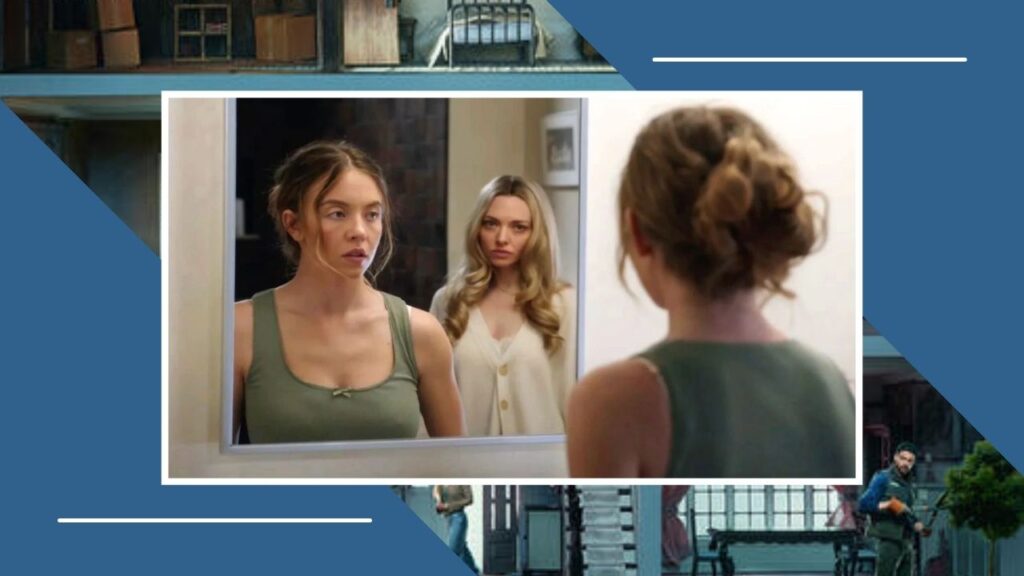
The story starts with a classic set-up: a stranger enters a closed off system. Sydney Sweeney as Millie Calloway, an ex-con who is so desperate for a job that she ends up at the Winchester estate in Great Neck, Long Island. For Millie, this isn’t just a paycheck—it’s the lifeline that keeps her out of prison.
Image Credit: Fandomfans
The Winchesters appear to be the dream employers. Nina (Amanda Seyfried) is the ethereal, if unpredictable, matriarch, and Andrew (Brandon Sklenar), the “perfect” husband who is charming, patient, and seemingly stuck in a marriage with a volatile woman. But the house itself tells a different tale. Millie is hidden away in an attic room that is the polar opposite of the mansion’s grandeur: a tiny room with a door that locks only from the outside.
What makes“ The Housemaid” so cruelly effective is its narrative architecture.
Just as we’re settling into our rhythm of feeling sorry for Andrew and being scared of Nina, Paul Feig pulls the rug out from under us. Midway through the movie, the point-of-view shift reveals that Nina’s “madness” is not a sign of instability, but a means of survival. The real monster is the one in the tailored suit and the charming smile.
Comedy director Paul Feig (Bridesmaids) demonstrates he has more strings to his bow.
It’s like “a Nancy Meyers movie that takes an unexpected dark twist” he said.
Through employing” huge rewind POV shifts”, Feig compels the viewers to question everything they know, just as we “dig deeper” into social media accounts to uncover the truth behind the filters.
Powerhouse Performances: Sweeney and Seyfried
The chemistry the two leads share, and the great contrast of their attitudes, goes a long way to making the film work.
Andrew transition from a handsome protector to a psychopathic abuser | Image Credit: Fandomfans
Sydney Sweeney achieves career-defining win as Millie. She undermines her “pinup” image, initially appearing as a defenseless girl-next-door and gradually revealing a merciless, “vigilante” streak honed in the heat of a decade-long prison term.
Amanda Seyfried is a force of nature. Moving away from her usual sympathetic roles, she embraces “female rage” with maniacal gusto. Her portrayal of Nina’s “Stepford-blond” exterior cracking under the weight of domestic terror is nothing short of hypnotic.
Brandon Sklenar provides the perfect foil as Andrew. His transition from a handsome protector to a psychopathic abuser is chilling, particularly in the film’s escalated, bloodier climax.
Character
Portrayed By
Narrative Role
Millie Calloway
Sydney Sweeney
The Protagonist, an ex-convict seeking survival.
Nina Winchester
Amanda Seyfried
The Employer; hiding trauma behind a mask.
Andrew Winchester
Brandon Sklenar
The Antagonist; a charismatic serial abuser.
From Page to Screen: Upping the Ante
Fans of the source material will be delighted that Feig didn’t shy away from the “luridly exploitative” aspects of the book. The novel’s penalties were mental, but the movie leans into bodily terror.
Rather than Millie being punished for leaving books on a table the film is focused on a broken heirloom plate, which triggers a terrifying scene of self-harm.
Sydney Sweeney, The Protagonist, an ex-convict seeking survival | Image Credit: Fandomfans
The ending, too, traded the book’s slow-burn dehydration for a high-octane staircase confrontation. And of course, there’s the “Taylor Swift factor.” Ending the film with “I Did Something Bad” wasn’t just a needle-drop, it was a manifesto of female retribution that set social media on fire.
Why It Matters
Aside from the excitement, The Housemaid delves into the “Domestic Panopticon” — the concept that our houses, which are supposed to be our safest spaces, can turn into places of total surveillance and control. It’s a razor-sharp satire of class hypocrisy, depicting how money can purchase a lovely cage, but it can’t always keep the secrets sealed up inside.
With a strong $19 million opening weekend and two sequel novels already written by McFadden, the “Millie Calloway saga” is just beginning. It’s a win for R-rated thrillers and a reminder that sometimes, the most entertaining thing you can watch is a “perfect” life falling spectacularly apart.
The Housemaid (2025) is effective when it plays on the twentieth-century fixation on façades — and then delightfully shreds them. Paul Feig adapts a viral thriller into a biting, disquieting satire of power, class and the lies we want to believe when a life looks “perfect.” Led by bold performances from Sydney Sweeney and Amanda Seyfried, the film mixes pulpy jolts with real psychological depth, showing Feig’s talent beyond comedy.
When its gore-soaked climax arrives, The Housemaid has long since made its point: behind every gleaming mansion is a locked door, behind every staged image is a truth ready to explode. It’s stylish and brutal and absolutely fun — precisely the sort of crowd-pleasing thriller that exists in your peripheral vision long after the filters come off.
Fandomfans is focusing on movies and shows deep concepts and providing you full details on your favorite entertainment.
Mariyam
Articles Published :
77
Mariyam Khan is Fandomfans Content Writer and providing reports and reviews on Movie Celebrities, and Superheroes particularly Marvel & DC. She is covering across multiple genres from more than 4+ years, experience in delivering the timely updates.
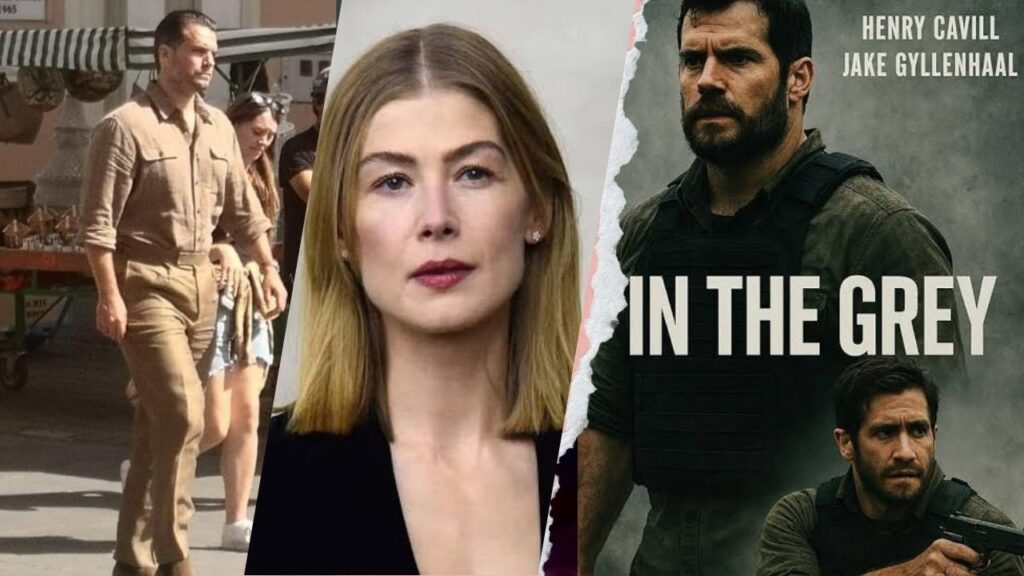
Henry Cavill Plays Guy Ritchie’s ‘In The Grey’ Delivers the Ultimate Action Fix
Henry Cavill teams up with Guy Ritchie in In The Grey, a stylish heist-war action thriller starring Jake Gyllenhaal, set to release April 2026. Read more...!
Action movies today repeat themselves, there are so many superhero sequels and recycled reboots, and much of the genre’s thrill has been sapped. The audience long for the day when movies depended on big scripts, big action and big stars that looked like they were really having fun. That’s where Guy Ritchie steps in.
On April 10, 2026, he is set to release In The Grey—a movie that’s stylish, chaotic and a departure from the usual blockbuster template. After about two years of being trapped in limbo, it’s finally ready to be seen, and early word is that it may well be the biggest action thrill spring.
Scene Behind The Early Buzz
The biggest selling point here isn’t a comic book logo, it’s the chemistry. Ritchie has, in a sense, created his own cinematic universe for a core group of actors who speak his particular language of quick bluster and sudden brutality.
Cast and Character Arc
At the center is Henry Cavill as John Grey. Forget the Man of Steel, think Cavill in the “rogue operator” mode. Eiza González is a badass agent (no damsels in distress here) and the always enigmatic Rosamund Pike, and you’ve got a cast that can make even the simplest premise a must-watch cinema. He’s teaming up with Jake Gyllenhaal, who is fresh off the visceral intensity of The Covenant.
The chemistry looks like it’d be electric: Cavill as the chilly, tactical “man in the chair” and Gyllenhaal as the kinetic wildcard who brings a rocket launcher to a puzzle.
What is it in In The Grey that makes it look like a convincing mix of both Ritchie’s styles — the stylish criminality of gangster flicks and the kinetic action of his kinetic action movies?
We may all have a soft spot for the wry, suit-clad criminals of The Gentlemen, but that gritty military accuracy of The Covenant got us too. That film is right on the line, it exists in the shadows if you will.
Plot Overview
The storyline revolves around swindling a billion-dollar fortune from an oppressor named Salazar, in the sun-bleached volcanic setting of the Canary Islands.
It begins as a high-class heist, negotiation at casinos, smoky chat in cafes — but gradually spirals into total war. It’s “extraction” & “robbery,” so you get the sniping of a chase flick and the heavy artillery of a war flick.
The Long Journey to the Screen
Production has already began in 2023, but we will going to see on the screen in 2026. That sounds risky but it’s really strategic. The film was taken off from Lionsgate to Black Bear Pictures, as the film was pulled from the “dump month” of January and repositioned as a major spring release. No disaster film — just smart timing.
Conclusion
By April 2026, In The Grey could be the “dad movie” of the decade — a throwback to star-driven, R-rated action that doesn’t require you to do your homework. It’s loud, it’s stylish and it’s counting on the basic enjoyment of seeing Henry Cavill and Jake Gyllenhaal detonate things on a pretty island.
Fandomfansdelivers latest update from movies, series, and celebrities.
Alpana
Articles Published :
160
Alpana is Fandomfans Senior Editor across all genres of entertainment. She evolved in the media industry since a very long time, she manages the content strategy and editing of all the blogs. Her focus on story development, review analysis, and research is well-equipped that ensures every article meets the standards of accuracy and depth.