Home > Web Series > ‘God of War’ Live-Action Series: Amazon’s Adaptation Could..
‘God of War’ Live-Action Series: Amazon’s Adaptation Could Be the Next Prestige TV Phenomenon
Amazon’s God of War live-action series looks to be TV’s next big epic with an A-list director attached a two-season plan and huge world-building ambitions.
We live in an era of unparalleled video game movie adaptation. A live-action God of War series a few years ago would have likely been met with skepticism. After the breakthrough success of HBO’s The Last of Us and Amazon’s very own Fallout, the format has been figured out: honor the source material like it’s a Pulitzer-winning novel.
Now Amazon MGM Studios is grabbing the Leviathan Axe. The live-action adaptation of Kratos’ Norse saga has been greenlit for late 2025. And this is why the show, right now based on a close reading of the project’s stage, is poised to be the next big prestige TV event.
The “Shōgun” Connection
It’s the biggest news this week that director Frederick E.O. Toye will helm the first two episodes. Does that name ring any bells? He Platonically recently won an Emmy for directing the “Crimson Sky” episode of FX’s Shōgun.
Image credit: Fandomfans
This is a huge get. Shōgun showed Toye could manage the precise balance God of War demands and epic world-ending stakes interlaced with intimate, high-stakes drama. God of War (2018) isn’t just about killing dragons, it’s a chamber drama about a grieving father and son on a road trip. Toye’s work on The Boys and Fallout shows he has the chops when it comes to violence and “game logic,” but Shōgun proves he also has the soul.
The Narrative Architecture of dark political war drama
Perhaps the most interesting, controversial and surprising! The decision is the selection of Ronald D. Moore as showrunner. Moore is a sci-fi legend, the man who turned the cult ’70s Battlestar Galactica into a dark political war drama.
“I’m not a gamer. I knew the title but I didn’t really know what the story was, but I said, yeah, I’d love to do it.” —Moore chuckled.
Moore has admitted he isn’t a gamer. That may make armchair fans nervous, but it actually means he’s got one hell of an ear for that simple and stark it sounds to listen to, but the sonics of Vivec’s workshop managed to pierce saltwater-invoked Shellback ears.
Image credit: Fandomfans
We don’t want a showrunner who’s obsessed about making loot boxes or RPG mechanics. We need someone who understands the family of “broken” concept.
Moore’s (Outlander, For All Mankind) is a career defined by fractured families. He does not see God of War as a hack-and-slash but as a story for a widower becoming a dad. That is the right way to go.
The Two-Season Gamble
Amazon is placing a big bet. Reports confirm that there is a two-season commitment before cameras start rolling. This is unusual in the realm of streaming but it’s financially sound. Construction of the Nine Realms — including the frozen Wildwoods and fiery Muspelheim is really pricey.
They know they have two seasons, and so that gives them the ability to spread those costs out and more importantly spread the story out. It means they don’t have to cram the complicated Norse saga into mere eight hours.
Production is scheduled to start in Vancouver (which stands in for Midgard perfectly) in March 2026, and that gets us to the most important question—- Who is Kratos? The casting call for “Zion” ( which is the code name for Kratos) requests a physically imposing man who has dramatic skills. While fans want Christopher Judge (the game’s voice actor), the real-life toll of live-action TV—14-hour days and hard stunt work, makes casting a 60-year-old with a history of back surgeries a pretty big insurance risk.
Image credit: Fandomfans
Reported shortlists reportedly include the powerhouse Winston Duke, but Amazon appear to be trying to find that elusive combination of “action star physique” and “prestige drama acting.”
Even more telling is the casting for the part of Atreus. It is a One-Year Series Regular. This strongly suggests Amazon will do a time jump for Season 2, likely recasting Atreus with an older actor to match the aging process in Ragnarök, similar to how House of the Dragon handled its leads.
Release Date of God of War Amazon’s live-action series
Having said that, production on this series is scheduled to commence in the year 2026 and there will be quite a massive post-production period due to the VFX required, so we probably will not be seeing Kratos in live-action until late 2027, early 2028. It’s a long wait, but considering the talent involved and the scope of the production, Amazon isn’t just making a TV show, they’re attempting to create the next Game of Thrones.
Amazon’s live-action God of War series is more than just another video-game adaptation — it’s becoming a cinematic event. With a powerhouse director attached, an Emmy-winning showrunner, a two-season commitment, and massive world-building ambition, this is a project being developed for long-term storytelling. The wait until 2027-28 may be a bit long, but every new update indicates it’s going to be worth it.
Fandomfansbring you the latest updates about the movies, actors and directors. Keep connected to get every detail from the entertainment industries.
Babita
Articles Published :
25
Babita is Fandomfans Editor, experience in managing content. Her focus in general movies and web series. She is having a deep interest in TV shows and 90s movies - particularly Lord of the Rings, Harry Potter, & Rom-Com. Babita also covers psychological thrillers and major releases in current time and concern with deep interest in them.
The Aisle: Where West Wing Idealism Meets the Cruel Intentions of Gen Z –D.C.
Discover The Aisle, a Netflix political drama exploring Gen Z drive, pandemonium, and personal strife as idealism confronts the realities of D.C. bomb.
For a generation that grew up on the high idealism of rush-walking courtiers of The West Wing, the prospect of a new political drama — The Aisle is in making at Netflix, is enough to make any TV buff muster a moment of excitement. But this is more than just a nostalgic return to D.C. policy wonkery and impassioned monologues.
Netflix’s new series, guided by seasoned hand The West Wing’s Executive Producer John Wells along with the unique, contemporary sensibility of writer/showrunner Phoebe Fisher, is positioned to be something quite different. It promises to be a ruthless and stunning mash-up of political pedigree meets Gen Z disbelief and the show that could reinvent the D.C. drama for a new era.
Why This Story of D.C. Feels Different From Anything We’ve Seen
The central creative tension is the collision of these two powers. While the details exclusively comes from the Deadline, John Wells has the DNA of a romanticized Washington, with existential stakes and staffers (while flawed) usually believe in the system they work for. His participation confers upon The Aisle a legitimacy and framework based on the finest political fiction of the past 25 years.
Viewers have faith that he can bring them the intricate gears of government, the manic circuitry of the Oval Office’s sphere, and the pure brain power needed to nudge the legislative dial. But the world That The Aisle is meant to live in is not the world of the Bartlet administration.
Enter Phoebe Fisher who co-showruns the most recent Cruel Intentions series and has a background in snappy, character-driven YA writing, bringing in the vital, humanizing grit. The heart of The Aisle is more obviously the baby political operatives — the 20-somethings who are as obsessed with policy as they are crippled by ambition and lost in their personal lives.
The Young People at the Heart of The Aisle — Flawed, Driven, and Trying to Survive
The title, The Aisle, plays off the obvious political divide, but the real idea is the moral aisle that every young staffer has to hustle down. These characters aren’t policy wonks yet, they’re the assistants, interns, junior press secretaries burning out on caffeine and cutthroat drive. The sense of ethics, throw away relationships, and sometimes even your mind is what can be lost in the cost of entering this field is something they understand.
Fisher’s writing is also expected to infuse the necessary grittiness into this world of workplace intrigue, secret romances and savage rivalries that typically don’t survive the policy-centric episodes of traditional D.C. dramas.
The outcome, as reports have suggested, is a concoction being billed as “The West Wing meets HBO’s Industry.” Wells serves as the majestic backdrop and the six-day-a-week heartbeat of the Capitol, the soaring architecture of the Capitol and the rhythm of governance that Fisher populates that space with messy, human, and often heartbroken inhabitants. The snappy, walk-and-talk idealism descends to panic attacks in the bathrooms of congressional offices.
How Personal Messiness Becomes Part of the Political Game
The series will follow how a new generation born out of political cynicism has come of age and learned to navigate a capital city where power is the only real currency and exposing one’s self is a fatal weakness.
This split attention screen allows The Aisle to tackle two important contemporary political issues. Director Balint’s second narrative feature, The Aisle is a taut, darkly humorous thriller set in the Washington D.C.
First, the generational conflict but what takes place when Gen Z staffers motivated by social justice and climate doom comes to power in the same systems constructed by Boomers and Gen X?
Second, the merciless collision of the personal and the political: the relationship that ignites during a midnight rewrite session, the betrayal that costs a staff member both a romantic partner and a job, and the soul-crushing discovery that sometimes the best thing for one’s career is also the most ethical decision.
What Makes The Aisle Hit So Close to Home for Today’s Audience
The Aisle is not only about saving democracy, it’s about saving yourself from the machine. Combining Wells’s structural brilliance with Fisher’s unsparing gaze into the inner lives and emotional compromises of young professionals, the series could become the defining political drama for a world where idealism is more often a stepping stone to cutthroat ambition.
It’s a show about the grind, the glamour and the ethics-defying run of hell that is a job in the most powerful city in the world.
The Aisle works because it knows something that most political dramas forget: the people scurrying around Washington aren’t superheroes, they’re humans trying not to break apart. John Wells provides the framework and the classic D.C. storytelling heart, but Phoebe Fisher populates that world with real, chaotic, incredibly flawed young adults who are still trying to make sense of who they are while the nation looks on.
In a town where power means everything, the show lets us see what the pursuit of power, even its sacrifice, does to us, to our relationships, to our ideals, and in this case, to our very ideas of who we are. And that’s what makes The Aisle so honest. It’s more than just politics. It’s the emotional burnout of wanting to matter in a world that keeps demanding more.
Alpana
Articles Published :
156
Alpana is Fandomfans Senior Editor across all genres of entertainment. She evolved in the media industry since a very long time, she manages the content strategy and editing of all the blogs. Her focus on story development, review analysis, and research is well-equipped that ensures every article meets the standards of accuracy and depth.
Netflix’s ‘The Sinner’ Remains the Ultimate Binge for Existential Dread
Dive into Netflix's The Sinner– a gripping psychological thriller where the mystery is not who committed the crime, but why. A must-watch binge-watching series.
For those viewers eager for a mystery series that goes well beyond the usual forensic evidence checklist and red herring distractions, The Sinner offers four seasons of unique, unremitting psychological suspense. This show, which was a four solid season run at global Network before landing its full run on Netflix, got its ever-gripping tension by way of a key narrative inversion: it is not a “whodunit” — but a “whydunit.”
The Genius of the ‘Whydunit’ Blueprint
The suspense in The Sinner is not in the question of Who, as the culprits are usually known from the beginning. Everything else in the story machine, from beginning to end, revolves around the internal crisis of the villain and the frighteningly deep wells of motivation concealed beneath the surface.
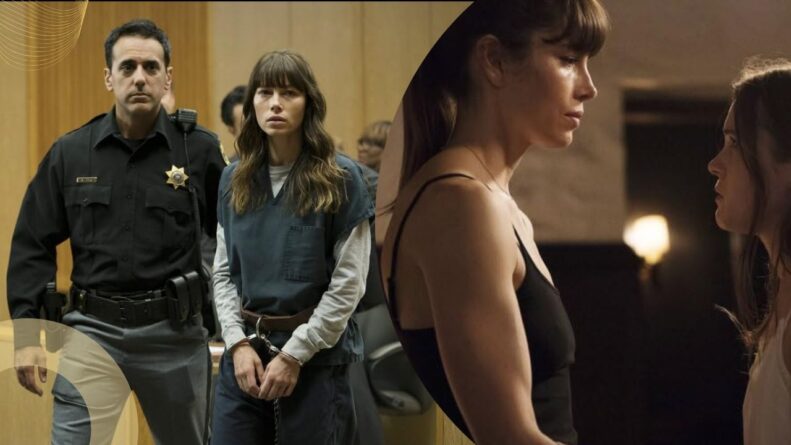
This radical construction was gallantly carried off – in season one’s very case of Cora Tannetti (Jessica Biel), a deceptively placid mother who, provoked by a song on a beach, violently stabs a stranger. The crime itself is just the finish line. That mystery itself and the source of the show’s “darkly compelling” atmosphere comes down to what Cora buried for so long in her mind.
Image Credit: Fandomfans
In intensifying its depiction of the excruciatingly disjointed process by which recollections return, the show moves the focus of the investigation out of simply a criminal case and into an increasingly fraught psychological excavation. Taken together, elements of this approach eschew most traditional genre clichés and instead immerse the viewer into a highly sympathetic and, at times, disturbing engagement with the alleged “sinner.”
Detective Harry Ambrose: The Troubled Anchor
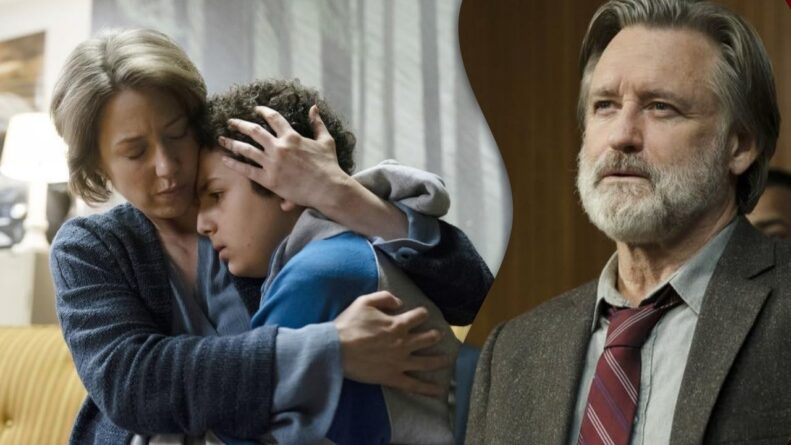
Detective Harry Ambrose (Bill Pullman) is the only constant role across all four seasons. Ambrose is instantly identifiable as the psychologically wounded detective wrestling with his own personal demons, anxiety, and taboo instincts. Yet this disturbed mindset are not intended to confuse the readers, it represents the condition for his triumph.
Image Credit: Fandomfans
Ambrose’s own profound personal trauma gives him a unique empathy with the duality he sees within the perpetrators, not simply as criminals, but as wounded individuals who want to be “found out” and understood.
“The relationship of [Detective Harry] Ambrose and Cora … I had this design of two people who are suffering from their own traumas finding this unlikely intimacy with each other and the opportunity to heal.” —Derek Simonds said
His style of investigation is highly personal, creating deep (and often morally questionable) psychological relationships that pull lines of conversation which a procedural case couldn’t. This dynamic, means that when he’s pursuing the ‘why’, he’s really pursuing himself, so every case is an act of self-therapy for him.
It is this psychology-in-perpetual-engagement – the detective trying to be saved by the subject – that drives the show’s explosive, character-centric energy throughout its entire run.
An Anthology of Existential Guilt
So The Sinner toes its momentum line fine and dandy in its use of anthology series format to consider a revolving door of high-concept philosophical/psychological dilemmas, never allowing it premise to stale up.
Image Credit: Fandomfans
The series turned its attention away from repressed childhood trauma in Season 1 to the toxic power of a cult in Season 2 (Julian Walker). This culminated in Season 3, only ever going further, into existential crisis and nihilism with Jamie Burns (Matt Bomer).
“It asked more of me, psychologically. It asked more of me, emotionally. … I was more often thinking about Jamie’s life and Jamie’s world than I was thinking about my own.” —Matt Bomer
Jamie’s destructive journey was fuelled by a philosophical wager to find meaning in confronting the meaninglessness of death – an existential challenge that put Ambrose to the test and ends with the detective facing his own potential for violence. Finally Season 4 took on issues of inherited guilt and spiritual crisis through Percy Muldoon and the exploration of perverted spirituality and human weakness.
“He’s sent down a dark rabbit hole after a missing woman.” —-Bill Pullman said
Such thematic aspiration helps to ensure that the audience’s view of the characters is always in flux, swinging them around the four corners of the victim-executioner matrix. Such intentional moral ambiguity, and the capacity to suddenly veer from psychological scarring to metaphysical terror, cements the series’ legacy as “fearless, fearless and atmospheric” and one which perpetually provides something disturbingly novel.
With all 32 episodes of The Sinner now on Netflix it makes for a perfect binge recommendation. The series was known for having superb acting and edge of your seat scripts, telling unforgettable stories that guarantee a rollercoaster of emotion that stays well beyond the end credits. For that rare mystery which plumbs the depths of the human soul—where the question of “who” is far less important than the dark, complicated answer to “why”—The Sinner delivers both immediate and deep gratification.
Fandomfansis a platform to provide quick updates on entertainment, anime, reviews & celebrity news. Our goal is to bring you valuable and accurate information on your favorite entertainment buster.
Babita
Articles Published :
25
Babita is Fandomfans Editor, experience in managing content. Her focus in general movies and web series. She is having a deep interest in TV shows and 90s movies - particularly Lord of the Rings, Harry Potter, & Rom-Com. Babita also covers psychological thrillers and major releases in current time and concern with deep interest in them.