Home > Web Series > Sam Elliott’s Arrival Sets the Emotional Tone for..
Sam Elliott’s Arrival Sets the Emotional Tone for Landman Season 2
T.L. The role of Sam Elliott as Norris Landman brings deep emotion and family drama to Season 2, shaping Tommy's journey and raising the stakes in powerful year
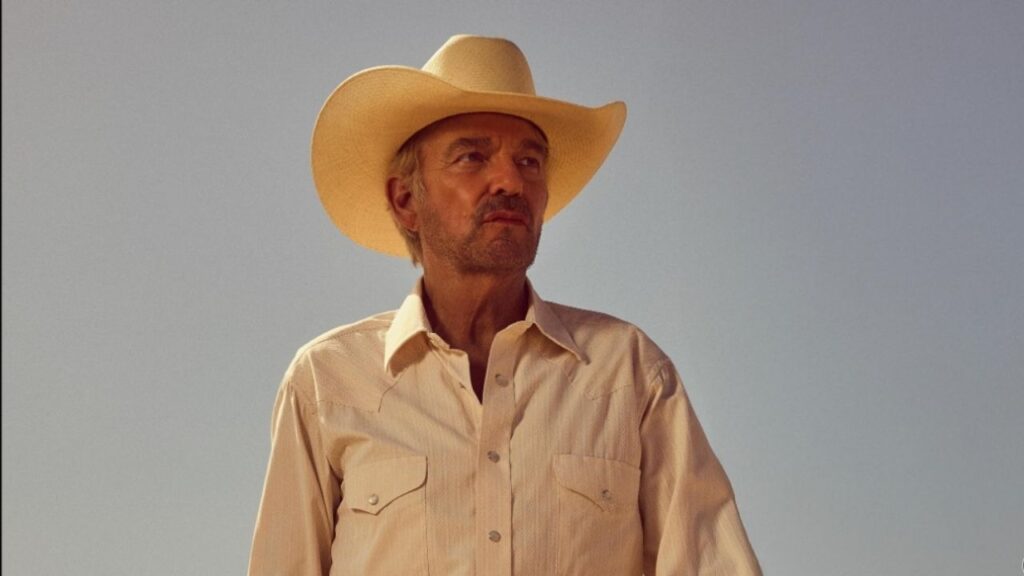
Landman’s return for Season 2 certainly promises more of that high-stakes dustbowl drama Taylor Sheridan fans have come to crave, but the real fireworks this season don’t come from a new well or a corporate takeover. It comes in the form of one man: Sam Elliott as T.L. Norris, the estranged father of Billy Bob Thornton’s explosive lead character Tommy Norris. According to Collider, “Death and a Sunset,” his debut in the premiere, makes it clear right away that the corporate endgame for the Norris family will not be itself but deeply, painfully personal.
The Weight of Grief Defines T.L. Norris’s First Scene
The introduction to Sam Elliott is a lesson in minimalism. T.L. is first shown sitting outside an assisted living home in Texas, in a wheelchair, as he watches the sun go down. This delicate pause in reflection is so different from the usual frenetic West Texas life Tommy lives and is quickly interrupted by utter despair. T.L. is informed his wife, Dorothy, passed away peacefully while in memory care.
Elliott anchors T.L.’s arrival on the scene in a gritty, bare-bones melancholy. The iconic actor does not go for melodrama, he just lets the staggering weight of loss permeate the scene. At one point, an employee offers a platitude that Dorothy is in a “better place,” and T.L.’s response is humorously unflinching, being a window into his morose outlook on life:
“If I do, that means I’m in hell, too”.
This moment serves as an emotional anchor for the scene, signaling that Season 2 will require as much soul excavation as any drilling operation. The audience is immediately brought to a man defeated by life, proving T.L. is what broke the family, not took part in it.
Season 2 Shifts Toward Soul-Deep Storytelling and Family Trauma
Image credit: IMDb
The opening provides a trope-defining line that encapsulates the whole premise of T.L., and the thematic stakes for this season are set by it. Looking back at his life, the elder Norris laments with soul-crushing despair that,
“I wasted 60 years on hope”.
This admission is the character’s aching thesis. T.L. isn’t just rueful about a few missteps, he laments the act of having placed faith in a brighter horizon.
T.L. as a Failed Father and a Man Defined by Pain
This radical cynicism is based on well-defined, deep-lying failure. T.L. is a failed father, emotionally distant from his remaining children after losing one at a young age. He possesses both the physical limitation of the wheelchair and glimpses of a violent, wild nature, as he has been seen throwing punches.
In an era when the world cannot get enough of chasing the next great big boom, T.L. is a reminder of how hollow that chase has increasingly become. He’s not a wise sage, but an anti-mentor, someone who exemplifies the worst-case scenario, a lifetime of trying that ends with nothing but loneliness and regret.
T.L.’s presence guarantees that Tommy’s rise in the corporate world will be upended by a personal disaster. When Tommy gets the call that Dorothy has been killed just cutting off what is obviously a tender moment with Angela and the message is clear: the past is here, and it wants its due.
A Long-Avoided Father–Son Confrontation Finally Approaches
As reports suggests, The showdown between father and son is coming, and it’s been years in the making. Their relationship has been one of profound avoidance for an extended period of time, a painful dance of silence now must come to an end. The terrifying but valid honesty that is necessary Tommy himself understands the required fearsome truth:
“We’ve been lying by omission to one another for ages. Let’s not begin.”
T.L.’s Search for Redemption from Generational Truth and Reckoning
Sam Elliott confirmed that T.L. is looking for “a way back” into the family, and said his relationship with Tommy will have a “real arc”. This path to rapprochement will make Tommy face what his own ambition “really cost emotionally” and make him “make peace with the broken man that made him.”
T.L. Norris is not only a fresh face to the cast list but he’s the excruciating impetus that compels the Norris family to sever the walls they’ve built around their pain and generational trauma that’s lain buried beneath the West Texas soil.
Sam Elliott’s T.L. Norris is not a throwaway character to get some exposition or comic relief in, he is the motivating psychological centerpoint for Landman Season 2. And so Righteous Thieves takes shape, refocusing the series’ perspective, now grounding the weight of drama from all corporate survival to the toll the West Texas oil life takes on a person inside.
Representing deep regret and a generation of trauma not yet healed, T.L pushes Tommy Norris to come to terms with the fact that attaining success in the professional world means nothing if your personal life is one of emotional neglect. The M-Tex fight, in the end, is a sideshow to the real one: the painful, painstaking work it takes for father and son to finally stop running from the truth and discover, in a world defined by volatility and unforgiving landscapes, a way to come home to one another. T.L.’s presence guarantees the highest stakes in Season 2 aren’t the price of oil, but the price of the soul.
Welcome to Fandomfans — your source for the latest buzz from Hollywood’s creative underworld. Here, we explore the introduction of T.L. transforms Landman from high-stakes industry drama, into the element of generational trauma. T.L. is purpose-built to be the embodiment, physically and emotionally, of everything Tommy Norris has sought to escape.
Alpana
Articles Published :
164
Alpana is Fandomfans Senior Editor across all genres of entertainment. She evolved in the media industry since a very long time, she manages the content strategy and editing of all the blogs. Her focus on story development, review analysis, and research is well-equipped that ensures every article meets the standards of accuracy and depth.
Bridgerton Season 4 Take a Top Place on Streaming Charts
The premier of Bridgerton Season 4 Part 1 on Netflix escalated to top of global streaming charts, over-performing thriller His & Hers but with mixed reactions.
A compelling change of the guard in the streaming world happened in January 2026. Bridgerton Season 4 fell below the grim and surreal drama His & Hers, featuring Jon Bernthal and Tessa Thompson, in January 2026. The launch of Netflix’s romance juggernaut proved that old franchise loyalty games and a bit of getting away can still trump a high stakes killer thriller even if His & Hers had everyone talking.
Bridgerton Season 4 Streaming Schedule
You can watch Bridgerton season 4 Part 1 (episode 1–4) on Netflix as it was released on 29/January/2026, but the second part of this season will be released in Feb.
Following this two-part season release is a typical Netflix strategy to extend its buzz and keep subscribers a little longer at the beginning of the year, before days of bingeing off this entire season, quickly.
For contrast, His & Hers, which debuted as a full six-episode miniseries on January 8. It delivered a shadowy “slice-of-life” whodunit that felt like a complete meal, while Bridgerton is dishing out a two-course banquet.
Netflix’s Take us From Thrills to Ballrooms
Now the tone is completely different. His & Hers went inside the stifling air of Dahlonega, Ga., a town where everyone has secrets and crumbled sanity is the norm. By comparison, Bridgerton transports us to the lavish grandeur of Regency London.
Bridgerton Cinderella’s Theme
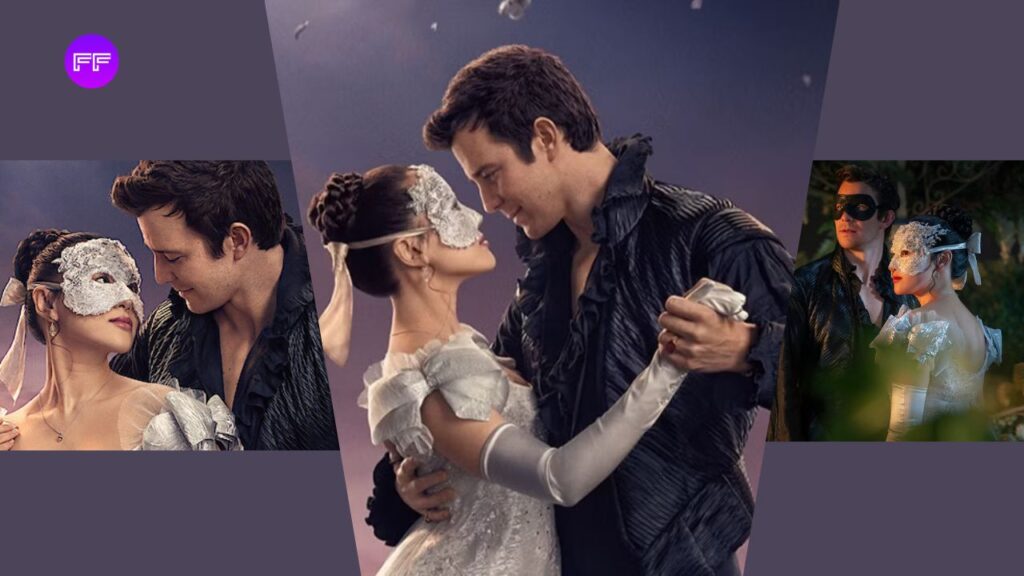
This season is the classic Cinderella fairy tale with a masquerade ball, a mysterious Lady in Silver, and the strict class divisions of British upper society. It’s comfort viewing at its best, a stark departure from the morally ambiguous murder mystery that preceded it.
Director, Writer & Creative Team
Showrunner Jess Brownell is the leader for Bridgerton Season 4, the fourth season of the Netflix series based on Julia Quinn’s book An Offer From a Gentleman. The season centers on Benedict Bridgerton (Luke Thompson) and turns its focus away from previous leads.
His & Hers was directed by William Oldroyd, who also wrote the screenplay adaptation of Alice Feeney’s 2020 best-seller and took several liberties from the source material, most notably with its polarising ending.
Plot Overview
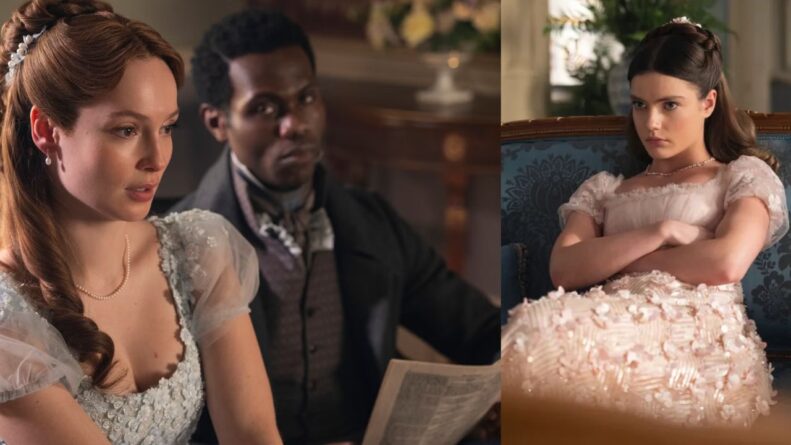
Bridgerton Season 4 focuses largely on Benedict — the Bridgerton family’s artist and its darling black sheep as he finds his life turned upside down after meeting Sophie Baek (Yerin Ha) at a dazzling masquerade ball.
Sophie is magical that night, but behind the mask she’s living a much darker life, masquerading as a servant in the home of her icy and merciless stepmother, Lady Araminta Gun (Katie Leung).
At the stroke of midnight, Sophie disappears – leaving Benedict with nothing, but a fleeting memory, a single memento, and the gut-wrenching sense that he’s just lost his soul mate. Then what unfolded was the tired but tearful image of these two spirits being brought together and torn apart by the feudal culture, class barriers and strict dictates of their country.
Luke Thompson and Yrin Ha top the season with what they call poetic chemistry.
The ensemble boasts several returning favorite Jonathan Bailey (Anthony), Simone Ashley (Kate), Nicola Coughlan (Penelope) and Luke Newton (Colin) – though their screen time is very limited.
Newcomers include Katie Leung as the evil stepmother, Michelle Mao as the plotting Rosamund Li, and Isabella Wei as the sweetest stepsister Posy Li.
Casting of Korean-Australian actress Yerin Ha lent cultural authenticity to Sophie’s reimagined as Sophie Baek rather than the book’s Sophie Beckett.
Bridgerton Season 4 Capturing Scene
Masquerade ball of this season becomes the most capturing scene for everyone where Sophie and Benedict meet for the first time. The season, however, has caused a stir because of how it looks. Entertainment Weekly’s Darren Franich and almost every critic and viewer could tell there was a strangeness to the production – perfect lighting, flawless makeup, and sets that were compared to Saturday Night Live sketches.
Fascinated “AI slop” is a surprising topic of discussion, as some argue the show’s high-gloss perfection has ventured too far into uncanny valley.
Production Details
Bridgerton Season 4 was scripted and produced as a complete eight-episode arc prior to Netflix’s decision to split the batch. The production keeps the show’s trademark hyper-saturated color palette and opulent costume design, although this season’s preoccupation with class distinctions shines a brighter light on the world than earlier seasons did.
How Bridgerton Season 4 Take Over the Platform
Bridgerton Season 4 ranked on the streaming charts right after its first part was released on Netflix this January. It has taken over 70 countries with a great achievement of 901 points compared to 676 of His & Hers. The chart dominance proves that established IP still reigns supreme in streaming even when critical and audience reception differ greatly.
Bridgerton Season 4 Receives Reaction From Critics
Bridgerton Season 4 is currently moving back and forth with mixed reviews. Although it received a decent 80% score from critics on Rotten Tomatoes, audience reception is a different matter. The season is currently sitting at just 52% for its audience score – the lowest in the franchise’s history, and a breathtaking 28 points below that of the critics.
Several complained that the Benedict–Sophie romance didn’t feel as fiery as previous seasons, while others attacked the plot as too formulaic and the visuals as needlessly lavish.
Audience Expectations
Fans are split. Seasoned viewers are nostalgic for the electric chemistry of former couples, Anthony and Kate in particular from Season 2. The instant chemistry of Benedict and Sophie seems to have moved too fast for some, and there is not enough of the slow-burn tension that has characterised previous seasons.
but despite the criticism, the viewing figures demonstrate that audiences continue to eat up the escapism which Bridgerton delivers – particularly in a world in need of comforting viewing.
The rise of streaming from His & Hers to Bridgerton Season 4 reveals a key reality about entertainment today: franchise power outperforms critical acclaim on pretty much the same level every time. Jon Bernthal’s thriller generated talk with its divisive ending, Bridgerton arrived with familiar faces, sumptuous gowns, and the promise of a fairy tale romance. It’s the classic battle between shadowy complexity and dependable prettiness in January 2026, prettiness won. How the franchise will continue to fare with such fractured audience reception is yet to be seen when Part 2 drops in late February.
Fandomfansis delivering a latest overview on new series and reboots of successful dramas.
Alpana
Articles Published :
164
Alpana is Fandomfans Senior Editor across all genres of entertainment. She evolved in the media industry since a very long time, she manages the content strategy and editing of all the blogs. Her focus on story development, review analysis, and research is well-equipped that ensures every article meets the standards of accuracy and depth.
Bel-Air Season 4: Why Its Tearjerking Finale Will Make the Dramatic Reimagining
Bel-Air Season 4 finale seals its reboot legacy with raw emotion and sharp twists. Break down Will's arc, fan buzz, and why it beats the original. Read more!
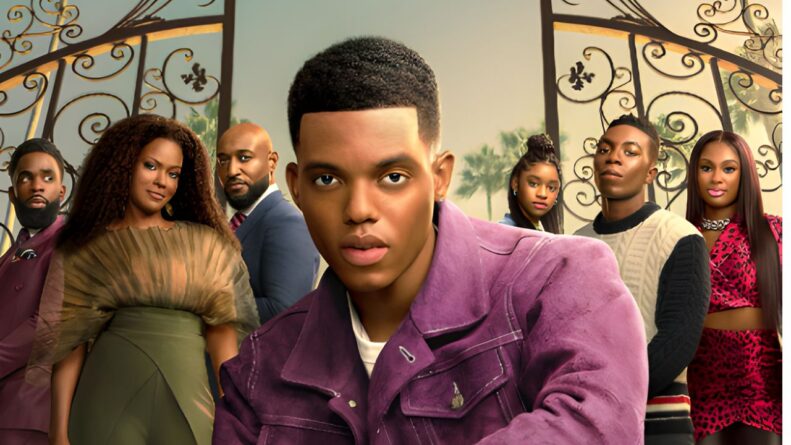
Peacock’s dramatic Bel-Air Season 4, a freshtake on the beloved 90s sitcomwill end with its final season. The series which has examined power, class and complex family dynamics over four seasons is coming back for its final eight episodes on Monday, November 24, 2025.
This purposeful conclusion is not a cancellation but a pre-meditated creative decision. Showrunner Carla Banks-Waddles and the production, including executive producer Will Smith, have promised a “purposeful and intentional ending” that comes full-circle. Thegoal is to have audiences walk away deeply satisfied, with the feeling that the creative team “put it all on the table.”
That dedication to a specific bang-up ending is essential, especially after the show’s meteoric rise, Bel-Air broke Peacock’s streaming records and landed the elusive 85% Rotten Tomatoes rating for its third season.
The Defining Moments for the Next Generation
The core of Bel-Air has always been the tense but unshakeable fraternal bond between Will and Carlton, and the final season is focused laser-like on their increasingly divergent trajectories as they approach pivotal moments in their young lives.
Will (Jabari Banks), whose journey from West Philadelphia to Bel-Air is the series’ raison d’être, has to contend with balancing the senior year excitement with the expectations that have brought him to this moment. His emotional closure depends on reconciling with his past and embracing the gift of the second chance that Uncle Phil and Aunt Viv gave him.
Image credit: IMDb
Most importantly, the last episodes need to begin by answering the shocking cliffhanger that left Will seemingly being kidnapped at the end of Season 3. How he manages to move forward from this trauma while also moving toward his future will determine his ultimate fate.
Carlton’s Resolution and the Threat to Brotherhood
Carlton (Olly Sholotan) has been the series’ lens through which to delve into complex questions of identity, insecurity, and racial legitimacy — topics seldom treated with so much intricacy in Hollywood. The finale is set to challenge his own principles while facing the consequences of some big choices that could threaten his future.
Image credit: IMDb
This tension is escalated when they are informed that an unexpected power shift threatens the brotherhood between Will and Carlton. Carlton’s character arc requires him to carve out his own sense of self-worth and success that isn’t tied to the high-pressure Banks legacy or Will’s magnetic presence.
The crux the series must decide is whether these two diametrically opposed young men can sustain a mutual, adult respect, or whether each man’s definition of Blackness and aspiration pulls them apart forever.
Vivian’s New Chapter
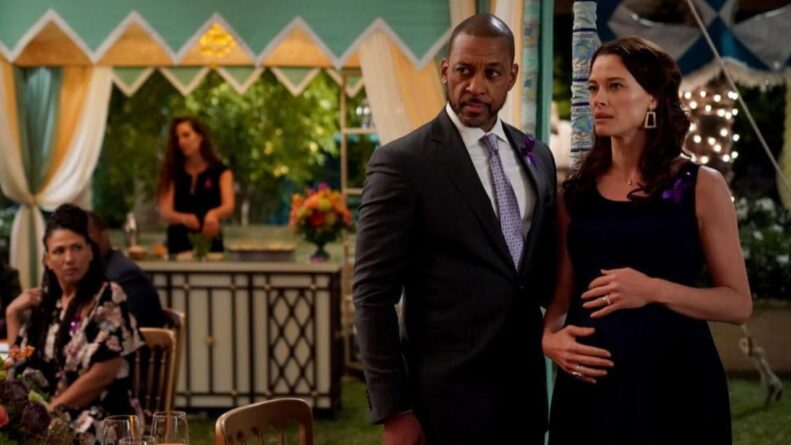
Aunt Viv (Cassandra Freeman) has spent the recent seasons rebooting her career in the cutthroat art world. Yet her career ambition is poised to come into conflict with family life, as the final episodes treat that she’s pregnant. Viv faces the challenges of new motherhood and a new career path, which comes down to a major choice about whether she can juggle her reclaimed artistic identity with the needs of family life.
Hilary (Coco Jones), the family’s social media star, is making her way in a rollercoaster, emotional journey of self-discovery. Her storyline ended on a devastating cliffhanger when her fiancé, LaMarcus, collapsed unconscious immediately following their wedding. This would-be calamity is the ultimate test for Hilary.
Image credit: IMDb
Previous reviews of her character have highlighted a tendency to give up and take the so-called “easy road” when confronted with real heartache. The final episodes push her to confront profound vulnerability, challenging her to see if she can finally transcend emotional avoidance and maybe connect on a mature, authentic level with Jazz (Jordan L. Jones).
Geoffrey’s Past Catching Up
The Banks family’s stalwart housekeeper, Geoffrey (Jimmy Akingbola), is put through the ringer when loyalty and trust that his relationship with Philip is founded upon is questioned. The arrival of Dominique Warren (Caroline Chikezie), head of Geoffrey’s ex London crew, puts a key “power shift” at risk.
This narrative has to give a definitive end to Geoffrey’s enigmatic past, establish him firmly within the Banks’ world against any external threats and by extension keep the family safe.
In a strong statement of the show’s desire to respect its origins while finding its own path, Bel-Air Season 4 not only welcomes back major characters from The Fresh Prince of Bel-Air but bolsters the cast with new faces as well.
And most-symbolically, Janet Hubert, the OG Aunt Viv, will guest star in the final season as an entirely new character whose details have yet to be revealed. With the notorious drama and tensions involved in Hubert’s exit from the original sitcom decades ago, her involvement in the reboot is a stunning meta-textual moment of reconciliation. It’s a sign of finally embracing the entire history of the franchise, with Bel-Air being the true, definitive sequel to the narrative.
Image credit IMDb
Also Tyra Banks, who portrayed Jackie Ames (Will’s friend) in OG Season 4, will return as a new character crafted to “clash with Viv” (Cassandra Freeman). Employing these nostalgic characters to fuel new dramatic conflict, the series shows a deft hand in leveraging legacy IP for meaningful narrative growth, as opposed to mere fan service.
Conclusion
That choice to grind the series to a halt after a crisp, eight-episode final season is what makes its creative legacy pristine. The show came out on top by employing the high-stakes drama template to delve into socio-economic issues and contemporary Black life with nuance and truth, providing necessary space to talk about vulnerability and mental health. The November 24 premiere is sure to provide the emotional and powerful series finale this contemporary reimagining deserves.
Fandomfanslove diving deep into the worlds that fans obsess over. We deliver breakdowns, character guides, reviews, and updates that help you stay ahead of the curve.
Emma
Articles Published :
36
Emma Miller is an entertainment enthusiast who is focusing on crafting storytelling blogs across all genres. Her special focus is build up around superheroes, thrillers, & historical dramas and movies. Her experience of delivering sharp review analysis and interview podcasts is helping fans to get transparency about their favorite cinema.