Robin Hood Season 1: Every Major Twist That Changed Sherwood Forever
Explore Robin Hood Season 1 biggest twists, from Marian’s vigilante secret to political conspiracies that reshaped Sherwood forever.
Published: December 30, 2025, 6:40 am

Explore Robin Hood Season 1 biggest twists, from Marian’s vigilante secret to political conspiracies that reshaped Sherwood forever.

Folklore is seldom static. It lives, molds, and transforms to reflect the worries of the time that is telling it. Although the middle of the 20th century produced a Robin Hood Season 1 that was more pastoral idealist, green tights and all, the 2006 BBC version – and its 2025 MGM+ follow-up – broke the mold. These versions are not simply stories; they are “revisionist mythmaking,” in which stabilizing plot twists deconstruct the hero’s journey through the lens of contemporary socio-political realities.
The fundamental transformation of the 2006 series is based in the mind of its lead character. When Robin of Locksley comes home to England in 1192, he is no hero. Played by Jonas Armstrong, he and his manservant Much are traumatised veterans of the Third Crusade.
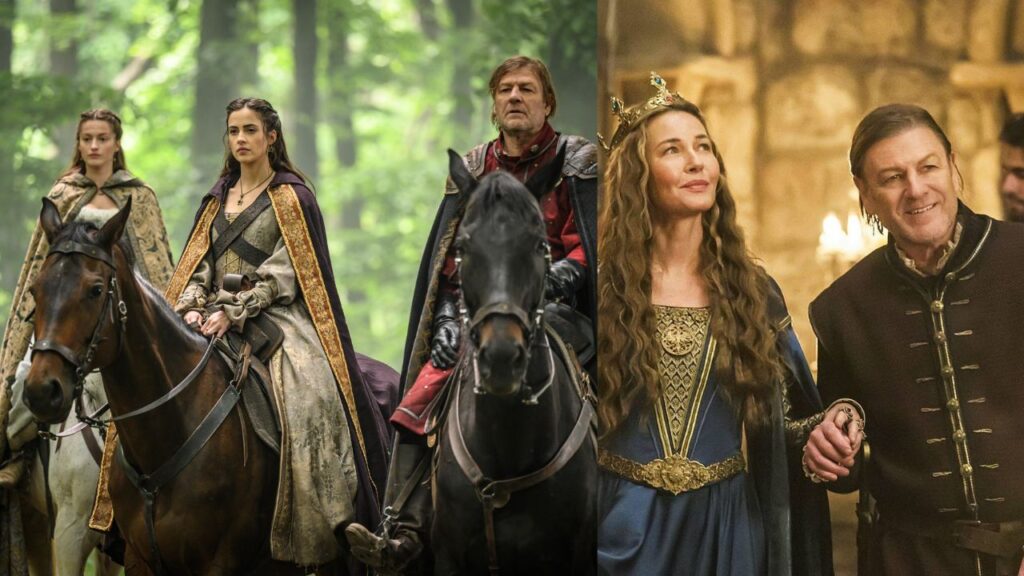
This incarnation of Robin is characterized by a renunciation of his aristocratic roots after learning that the “Holy War” he fought was less about divine justice and more about mindless killing. Adult disillusionment is set up straight away in the pilot, “Will You Tolerate This?” when Robin finds his home ruled by the “iron-fisted” Sheriff Vaisey. His decision to hit the road was an instinctive repudiation of the very systems he once worked within.
The 12th-century struggle is clearly enmeshed with 21st-century concerns in the script. Robin’s debate about whether the war is “ours” or “the Pope’s” reflected contemporary discussions about the invasion of Iraq, casting the outlaw as the tired warrior come home to a land he doesn’t know.
Maybe the biggest deviation from tradition is the character of Lady Marian. Not the “Maid” of folklore, but now a “Lady” playing a dangerous game of vigilante. The revelation in episode three that Marian moonlights as the “Night Watchman” makes her pretty much the all of the very first worldwide and medieval Batman, guarding the impoverished much prior to Robin ever rejoined with Sherwood.

In this twist, Marian has an autonomy and martial capacity to match that of Robin’s. It also leads to an interesting interpersonal conflict: she resents Robin at first because his “loud” heroics risk blowing her cover.
Socio-Political Intrigue: Marian employs her position to spy, serving as the outlaws’ chief informant.
Physical Defiance: The fact that she has a ”knuckle-buster” ring and a dagger hidden in a hair-clip denotes a move to the “Action Girl” stereotype.
The Humbling of Nobility: When the Sheriff shaves Marian’s head on the gallows, it functions as a major turning point.It was an infringement on noble privilege, meant to demonstrate that no one was beyond Vaisey’s reach.
A continuing Spy arc of season 1 is that the corruption in Nottingham is not just local — it’s a conspiracy against King Richard himself. This climax of the arc culminates with a flashback that Robin once saved the King from a Saracen assassin with a wolf’s head tattoo in “Tattoo? What Tattoo?”. The twist? Guy of Gisborne has the same tattoo.
This revelation elevates the enmity between Robin and Gisborne from a petty disagreement over territory and a woman, to one of national ideology. The “Pact of Nottingham” — signed by the “Black Knights” — winds up functioning as the series’ recurring McGuffin, which symbolizes a concerted move to place Prince John on the throne.
One of the more subtle twists is the slow-burn betrayal of Allan A Dale. As their “average joe,” Allan has his loyalty chipped away by the Sheriff’s mind games. This “Judas” arc begins when the Sheriff ruthless jumps the execution date, ensuring Robin shows up too late to save Allan’s brother.

For the audience, Allan’s eventual “Face Heel Turn” in the season finale is a heartbreak. It breaks the illusion of the “Merry Men” as a perfect brotherhood, and underscores the human toll of Robin’s unbending ideological line.
Whereas the 2006 series was concerned with the ”Crusader Sickness,” the 2025 MGM+ reimagining brings even grimmer twists, with familial betrayal taking center stage. In this odd-version the character of Huntingdon is not a mentor, but rather the main antagonist—Robin’s own father.
| Theme | 2006 BBC Twist | 2025 MGM+ Twist |
| Paternal Role | Robin’s father is a legacy/hermit. | Huntingdon is the “Big Bad.” |
| Marian’s Agency | The Night Watchman (Vigilante). | Ally/Blackmailed by Queen Eleanor. |
| The Sheriff | Mercurial monster (Vaisey). | Played by Sean Bean; a survivor. |
Read More 👉 Stranger Things Spin-Off Expanding the Horror With New Cast & Story
The inaugural seasons of these contemporary versions show that the “Major Twist” is the large mooring modern folklore spins upon. In taking the emphasis away from archery tournaments and introducing systemic corruption rather than damsels in distress versus vigilantes, these shows make Sherwood Forest a continuing site for power and reform.
By the end of Season 1, the status quo is shattered. The outlaws have become a political party, and the forest is not a refuge but a revolution headquarters. These twists remind us that the legend is made out of blood and grit — that is the real cost of defiance.
Dive into the big cinematic industry with Fandomfans for deeper details from your favorite movies, series, and celebrities.

The premier of Bridgerton Season 4 Part 1 on Netflix escalated to top of global streaming charts, over-performing thriller His & Hers but with mixed reactions.
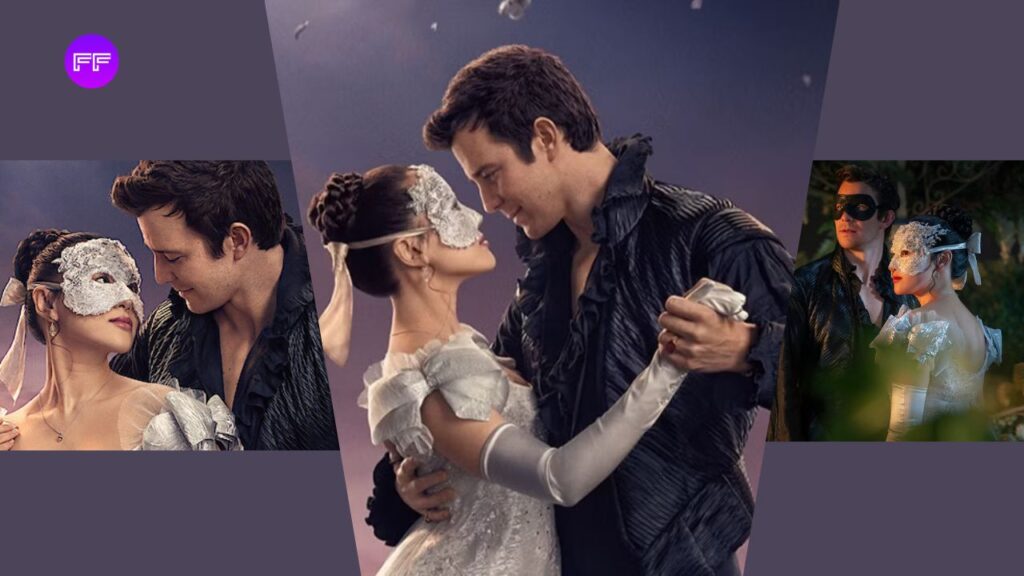
A compelling change of the guard in the streaming world happened in January 2026. Bridgerton Season 4 fell below the grim and surreal drama His & Hers, featuring Jon Bernthal and Tessa Thompson, in January 2026. The launch of Netflix’s romance juggernaut proved that old franchise loyalty games and a bit of getting away can still trump a high stakes killer thriller even if His & Hers had everyone talking.
You can watch Bridgerton season 4 Part 1 (episode 1–4) on Netflix as it was released on 29/January/2026, but the second part of this season will be released in Feb.
Following this two-part season release is a typical Netflix strategy to extend its buzz and keep subscribers a little longer at the beginning of the year, before days of bingeing off this entire season, quickly.
For contrast, His & Hers, which debuted as a full six-episode miniseries on January 8. It delivered a shadowy “slice-of-life” whodunit that felt like a complete meal, while Bridgerton is dishing out a two-course banquet.
Now the tone is completely different. His & Hers went inside the stifling air of Dahlonega, Ga., a town where everyone has secrets and crumbled sanity is the norm. By comparison, Bridgerton transports us to the lavish grandeur of Regency London.
This season is the classic Cinderella fairy tale with a masquerade ball, a mysterious Lady in Silver, and the strict class divisions of British upper society. It’s comfort viewing at its best, a stark departure from the morally ambiguous murder mystery that preceded it.
Showrunner Jess Brownell is the leader for Bridgerton Season 4, the fourth season of the Netflix series based on Julia Quinn’s book An Offer From a Gentleman. The season centers on Benedict Bridgerton (Luke Thompson) and turns its focus away from previous leads.
His & Hers was directed by William Oldroyd, who also wrote the screenplay adaptation of Alice Feeney’s 2020 best-seller and took several liberties from the source material, most notably with its polarising ending.
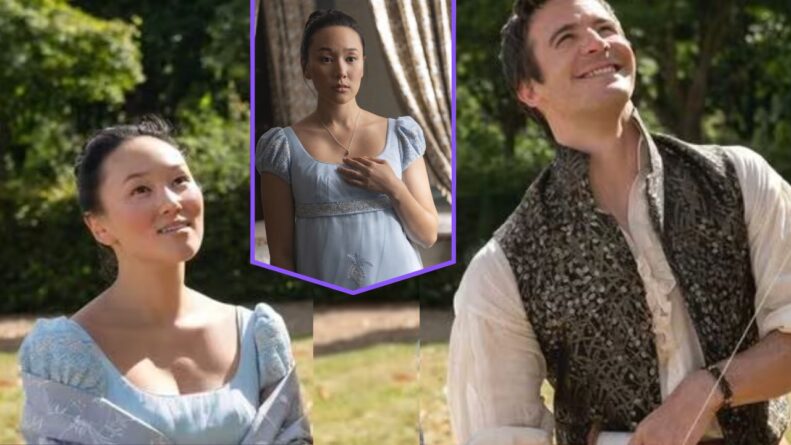
Bridgerton Season 4 focuses largely on Benedict — the Bridgerton family’s artist and its darling black sheep as he finds his life turned upside down after meeting Sophie Baek (Yerin Ha) at a dazzling masquerade ball.
Sophie is magical that night, but behind the mask she’s living a much darker life, masquerading as a servant in the home of her icy and merciless stepmother, Lady Araminta Gun (Katie Leung).
At the stroke of midnight, Sophie disappears – leaving Benedict with nothing, but a fleeting memory, a single memento, and the gut-wrenching sense that he’s just lost his soul mate. Then what unfolded was the tired but tearful image of these two spirits being brought together and torn apart by the feudal culture, class barriers and strict dictates of their country.
Read More:- Best Medical Drama Series Like ‘The Pitt’ to Binge Watch in 2026
Masquerade ball of this season becomes the most capturing scene for everyone where Sophie and Benedict meet for the first time. The season, however, has caused a stir because of how it looks. Entertainment Weekly’s Darren Franich and almost every critic and viewer could tell there was a strangeness to the production – perfect lighting, flawless makeup, and sets that were compared to Saturday Night Live sketches.
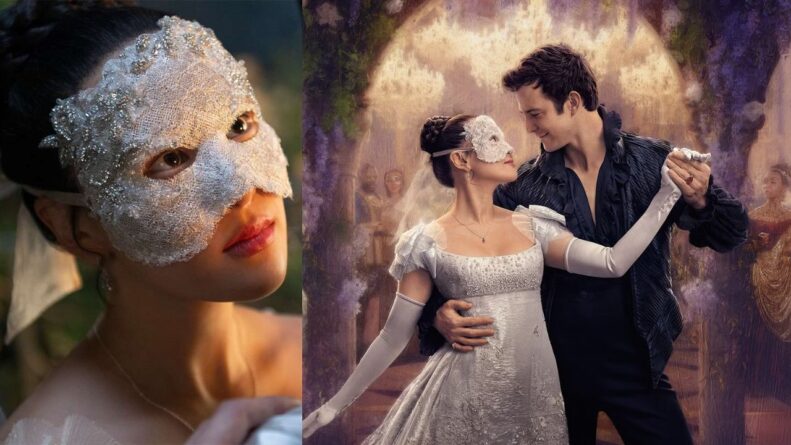
Fascinated “AI slop” is a surprising topic of discussion, as some argue the show’s high-gloss perfection has ventured too far into uncanny valley.
Bridgerton Season 4 was scripted and produced as a complete eight-episode arc prior to Netflix’s decision to split the batch. The production keeps the show’s trademark hyper-saturated color palette and opulent costume design, although this season’s preoccupation with class distinctions shines a brighter light on the world than earlier seasons did.
Bridgerton Season 4 ranked on the streaming charts right after its first part was released on Netflix this January. It has taken over 70 countries with a great achievement of 901 points compared to 676 of His & Hers. The chart dominance proves that established IP still reigns supreme in streaming even when critical and audience reception differ greatly.
Bridgerton Season 4 is currently moving back and forth with mixed reviews. Although it received a decent 80% score from critics on Rotten Tomatoes, audience reception is a different matter. The season is currently sitting at just 52% for its audience score – the lowest in the franchise’s history, and a breathtaking 28 points below that of the critics.
Several complained that the Benedict–Sophie romance didn’t feel as fiery as previous seasons, while others attacked the plot as too formulaic and the visuals as needlessly lavish.
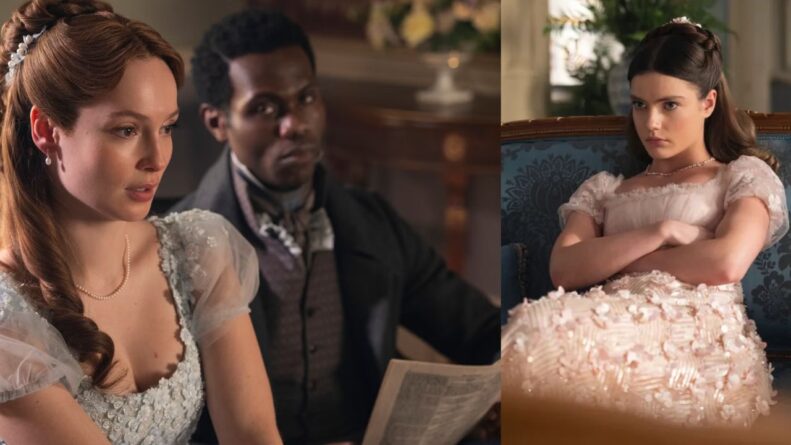
Fans are split. Seasoned viewers are nostalgic for the electric chemistry of former couples, Anthony and Kate in particular from Season 2. The instant chemistry of Benedict and Sophie seems to have moved too fast for some, and there is not enough of the slow-burn tension that has characterised previous seasons.
but despite the criticism, the viewing figures demonstrate that audiences continue to eat up the escapism which Bridgerton delivers – particularly in a world in need of comforting viewing.
Read More:- Andrew Stanton’s ‘In the Blink of an Eye’ Might Be the Most Important Sci-Fi Film of the Decade
The rise of streaming from His & Hers to Bridgerton Season 4 reveals a key reality about entertainment today: franchise power outperforms critical acclaim on pretty much the same level every time. Jon Bernthal’s thriller generated talk with its divisive ending, Bridgerton arrived with familiar faces, sumptuous gowns, and the promise of a fairy tale romance. It’s the classic battle between shadowy complexity and dependable prettiness in January 2026, prettiness won. How the franchise will continue to fare with such fractured audience reception is yet to be seen when Part 2 drops in late February.
Fandomfans is delivering a latest overview on new series and reboots of successful dramas.
Star Trek Strange New Worlds : explores the emotional breakup of Spock and Chapel, revealing how their split reshapes relationships and future storylines.

If you have been watching the bridge of the USS Enterprise of late, then you are well aware that the halls of Star Trek Strange New Worlds have been a bit more “emotional” than your typical starship. Nurse Christine Chapel and Lieutenant Spock—the couple that fans cheered for, sobbed over, and then witnessed come apart in a way that is only describable as “peak awkward” was at the center of that cyclone.
At Farpoint 2026, however, Brock had to finally come to terms with the elephant in the room: that musical breakup. And her impression is just as brutally honest as the character she portrays.
We all know the scene. This season in the K/S musical “Subspace Rhapsody,” Christine Chapel not only ended it with Spock, she did so in a choreographed song-and-dance routine at work with their colleagues as backup dancers. It was tactile, it was rhythmical, and Spock was crushed by it.
When it came to the scene at Farpoint, Bush had no qualms, laughing and telling the audience:
“Look, I didn’t write it. I’ve gotta be honest, when I read the script for the musical, I was like, ‘Bill [Wolkoff], this is brutal. Like, what?”
This feeling is prevalent within a majority of the Trek fanbase. Watching Spock, a man who exemplifies the struggle of balancing logic and emotion receive his heart on a silver platter in an electrifying musical extravaganza is definitely a “a moment too agonizing to look at, too overwhelming to dismiss” moment of the ages. Bush said she was just as surprised as the fans when she initially viewed where the writers were going.
One of the greatest obstacles to the Spock–Chapel romance (often referred to as “Spapel” by fans) was the reality of modern television production. Strange New Worlds, on the other hand, has a slimmed down 10-episode schedule compared to the 26-episode seasons that were packaged in the 90s.
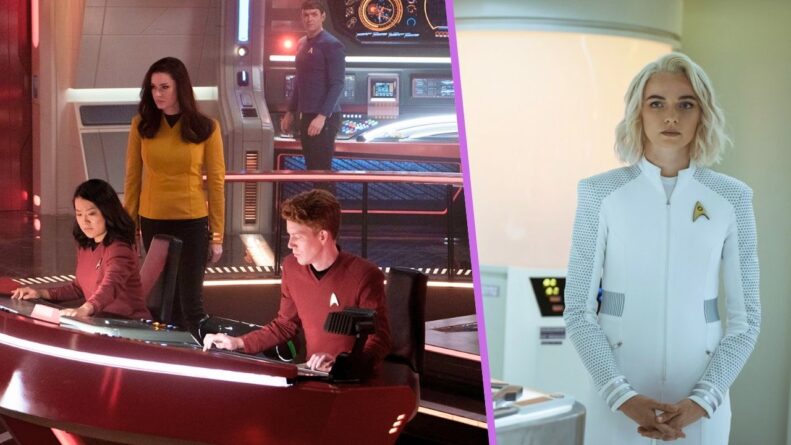
Due to this shortened format, their dating had to move from “will-they-won’t-they” to “full-blown romance” to “heartbreaking breakup” faster than the speed of light. Although Bush and Ethan Peck had undeniable chemistry, the narrative weight of the musical episode drove a wedge between them that seemed sudden to many.
Star Trek Strange New Worlds on Season 3 finds the dust settled but the terrain different:
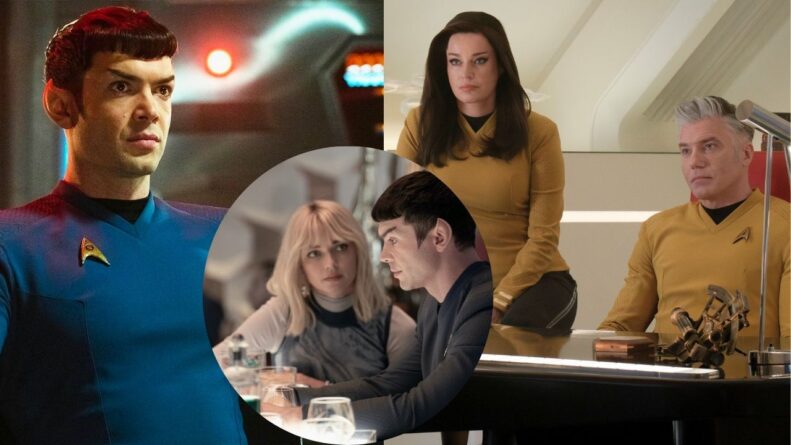
Jess Bush at the pity party her commentary on the breakup really wasn’t the most exciting part of her appearance at the con was that it turned to what’s to come.

The series ended shooting its fifth and final series in December 2025, but Bush teased there could be more to the story.
Bush alluded to the thought, “I think it was a very bad end, but maybe it is not the end.”
With Season 4 and 5 yet to premiere on Paramount+, the question remains for fans of what “not the end” truly means. We know where these characters end up, eventually, in The Original Series—they’re still close colleagues, but the romantic flame seems to have waned into a mutual, if occasionally painful, respect.
Can these last 16 episodes close the gap, or is there one more twist in the stars for the nurse and the Vulcan?
Read More 👉 The Mandalorian and Grogu Strategy: Lucasfilm’s Star Wars Is Returning to Cinema Differently
Jess Bush has been a standout in the Star Trek Strange New Worlds, making a character that was routinely sidelined in the 60s into a juggernaut of ambition, wit, and vulnerability. Even if she believes the split was “brutal,” the fact that she could sell that pain is precisely why we’re all still talking about it years later.
If you are Team Chapel, Team La’an, or just Team “Let Spock Have a Nap,” there’s one thing we can all agree on is this: Strange New World’s final two seasons are shaping up to be a real tearjerker.