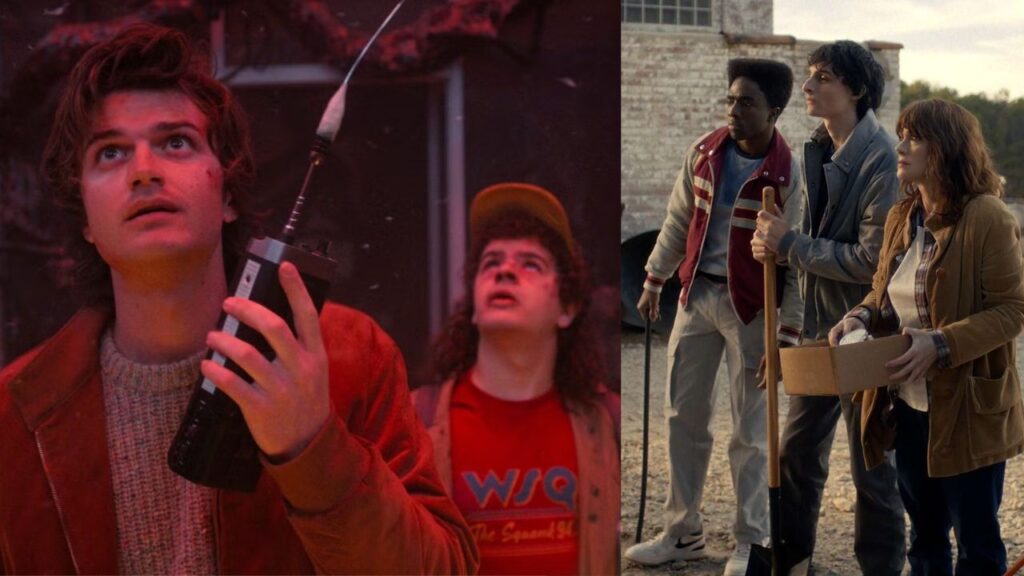
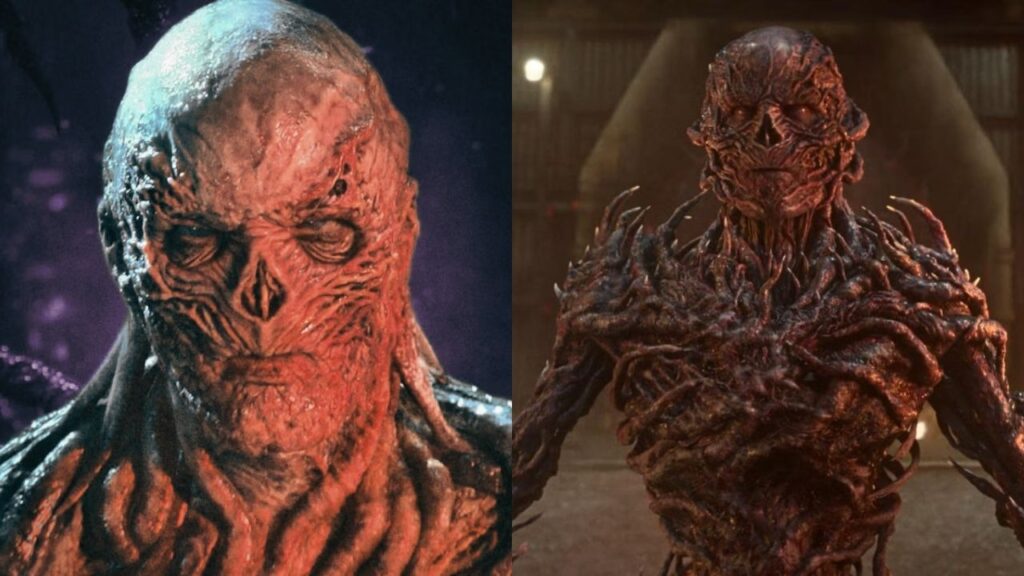
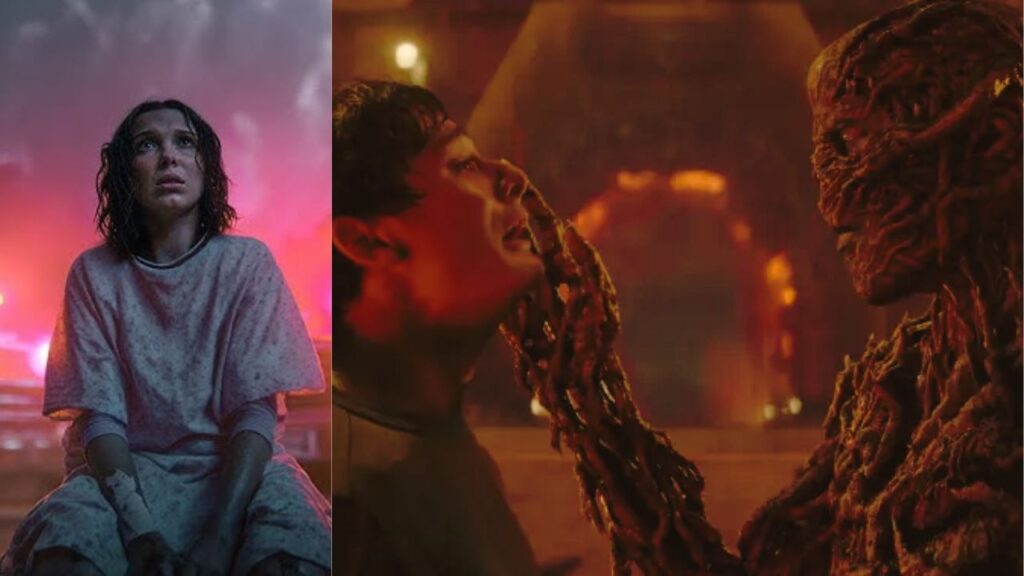
Stranger Things Spin-Off Expanding the Horror With New Cast & Story
The Stranger Things spin-off expands the universe with a new cast, darker horror and fresh storytelling as the Duffer Brothers begin a bold new era.
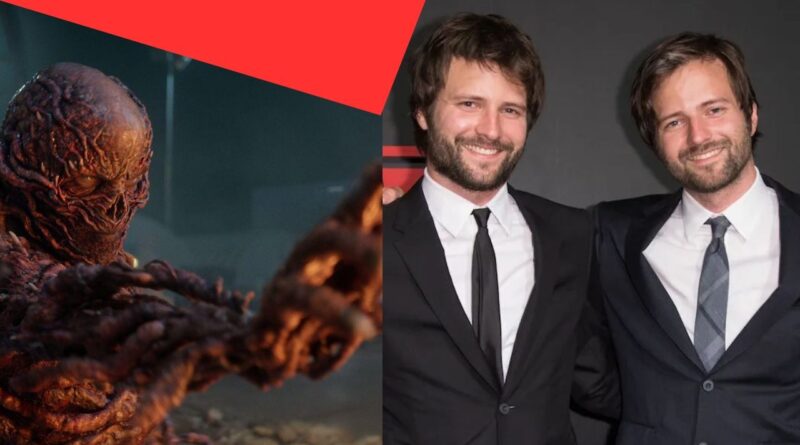
Late 2025 will mark the end for the cultural moment that is Stranger Things Spin-Off. But if you believe the Duffer Brothers are set to turn off the lights, think again. The conclusion of the Hawkins saga isn’t an ending, it is a strategic, high-risk pivot into a new era of franchise management.
Matt and Ross Duffer, through their production company Upside Down Pictures, are doing something rare in the age of sequels: they are subverting the “nostalgia trap.” Rather than give us a Steve and Dustin road-trip show or an Eleven spinoff, they are going for a “clean slate.”
First, let’s see how they wrap it up. The Duffers aren’t just dropping the season and letting us binge it over a weekend. They are orchestrating a holiday takeover to capture maximum engagement and control the massive VFX workload the 2023 strikes.
Season 5 Release Schedule:
| Release Phase | Date | Content |
| Volume-1 | 26/Nov/2025 | Episodes 1-4 (The Initial Incursion) |
| Volume 2 | 25/Dec/2025 | Episodes 5-7 (The Escalation) |
| The Finale | 31/Dec/2025 | The Series Finale (The Definitive Conclusion) |
In treating these episodes as “eight blockbuster movies,” Netflix sidesteps “churn” (where users subscribe for a month and then leave). It also means that Stranger Things is the dominant cultural talking point for all of Q4 2025.
The Duffer Brothers have revealed that their new spinoff will feature “a completely new” story, set in a “different location,” with a “completely new” cast (none of the original series actors). This ambitious leap implies that they want to take the universe to new and surprising places, while giving fans something different to enjoy.
Why ditch the characters we love?
The Budgetary Reality: The original cast are now global superstars with massively inflated market values. A new cast allows the budget to be manageable (Netflix is said to be spending $60 million per episode for Season 5).
Creative Freedom: The Duffers, as quoted, said they want to avoid getting bogged down in the “massive web of lore” that legacy characters have. A clean slate allows them to pass the baton to new creative teams without being chained to previous storylines.

The “Lightning in a Bottle” Effect: They want to recapture that feeling of discovering talent that no one knew about before, like they did in 2016.
Oddly, Finn Wolfhard (Mike Wheeler) was the sole cast member who predicted this route years ago, which means, despite the rotating faces, the storytelling DNA is still very much intact.
Since the characters are dead, what connects the universe? The answer is cosmic horror.

Through the stage play The First Shadow, the mythology has expanded beyond the Upside Down to include Dimension X (also known as “The Abyss”). This indicates that the Upside Down is not just a mirror of Hawkins, but a cosmic tunnel. This “Wormhole Theory” enables the spinoff to take place anywhere — Nevada, Russia, or even further — and still keep the signature “government conspiracy meets supernatural horror” feel.
The Duffers are also spreading the portfolio to make sure the brand can survive without them in the director’s chair.

Stranger Things: Tales From ’85: Due out in 2026, this animated series is set to act as a bridge. Crucially, it has voice actors instead of using the live-action cast. It distances the characters from the actors, an important part of turning the IP evergreen.
The Boroughs: The new series is a barometer test. Starring legends Alfred Molina and Geena Davis, it swaps the “kids on bikes” trope for a retirement home under siege from a supernatural menace. It gauges whether audiences will follow the “Duffer Vibe” into a completely different story.
Read More👉 Best TV Shows of 2025: Must-Watch Series You Shouldn’t Miss
The leap from hit show to decades-long franchise is fraught with peril (just ask the Game of Thrones team). But in slamming shut the door on Hawkins, and refusing to dilute the original story with unnecessary sequels, the Duffer Brothers are safeguarding their legacy.
When we tune in on Dec. 31, 2025, we won’t be “just watching an ending.” We’ll be viewing a Stranger Things Spin-Off carefully crafted prelude to a time of unseen faces and untold stories. The magic isn’t in the town of Hawkins any more — it’s in the brand itself.”
Fandomfans is a platform for entertainment updates, stay connected for new stories behind your favorite series and movies.
Fallout Season 2 Episode 2 breakdown explores Shady Sands’ destruction, Mojave power shifts, Brotherhood secrets, and Caesar’s Legion’s rise.

Transitioning into the Mojave for Fallout Season 2 is not just a change of scenery—it’s jumping headfirst into the high-tension, factionalized mayhem fans longed for. Episode 2, “The Golden Rule,” serves as a savage link between the naive ideals of the Vaults and the brutal, imperialistic surface world. With Episode 3, “The Profligate,” the story is drawing into a tangle involving cold fusion, aged resentments, and the frightening specter of Caesar’s Legion.
The cold open of “The Golden Rule” is a historiographical assault to the senses. The show’s loss becomes personal when it gives us Shady Sands in 2283 — not as a wreck, but as an established society with water filtration.

The fact that a mind-controlled trader carried the nuclear payload adds a layer of “Management Class” horror. It sure as hell wasn’t a war; it was an eviction. Hank MacLean, the “wholesome” father reading The Wind in the Willows to his children and committing mass murder via his Pip-Boy, is the quintessential Vault-Tec sociopath. To them, they aren’t people, they’re “assets” and “obstacles.”
While the NCR is in shambles, the Brotherhood of Steel is rising. Moving their headquarters to a buried Area 51 is a coup of ”technological archaeology.” The effect of cold fusion is a game changer.

This make for a “Power Armor Surplus”, but as Maximus we see, more power means more rot from within. His Knight promotion removed his idealism and made him a man who stabs his own brothers in the back to keep his standing.
Lucy MacLean remains the emotional core of the series, but “The Golden Rule” pushes her to her limits. Her choice to spend her last Stimpak on a stranger and not the Ghoul is pure Lucy – following her Vault born “Golden Rule.”
| Character | Philosophy | Outcome |
| Lucy | Deontological (The Golden Rule) | Captured by the Legion |
| The Ghoul | Pragmatic/Cynical | Wounded and abandoned |
| The Tunic Woman | Utilitarian/Legion Proxy | Successfully lures Lucy into a trap |
This “kindness” brings her straight to Caesar’s Legion. For Lucy, the Mojave is teaching her that playing the “Good Samaritan” too many times just makes you easier prey.
Read More 👉 Robin Hood Season 1: Every Major Twist That Changed Sherwood Forever
The wordage of “the Profligate” is a slur the group Caesar’s Legion uses when referring to those they consider barbaric or uncivilized in the old-world sense.
1. The Arrival of Macaulay Culkin It is rumored that Culkin will be portraying a ”crazy genius.” Is he Arcade Gannon, the depressed medic? Or Fantastic, the fellow with a “theoretical degree in physics”? My money is on a new character—Brutus—a top Legion scientist who will be able to help the Legion understand the cold fusion tech the Brotherhood has obtained using Lucy’s Vault-Tec knowledge.

2. The Robert House Paradox It is very likely that we will be seeing Justin Theroux as Robert House in Episode 3 “modern” first . House is going to make sure that the Brotherhood doesn’t get to hang on to cold fusion whether he’s a digital ghost or a mummified corpse. It makes his Securitron army pointless, and House never plays second fiddle.
3. The Synth Theory The entry of Paladin Xander Harkness from the Commonwealth (Boston) is a huge red flag. Since “Harkness” is a reference to a synth in Fallout 3, we could be seeing the beginning stages of an Institute infiltration.
As the series makes its way to the neon lights of New Vegas, the “Golden Rule” is being usurped by a much simpler motto: survive at any cost.
Read More 👉 Stranger Things Spin-Off Expanding the Horror With New Cast & Story
With “The Golden Rule,” Fallout Season 2 is telling you straight away that the Mojave isn’t a place thinking that you live in some sort of Vault-bred innocence. The annihilation of Shady Sands recasts wasteland politics as corporate malice rather than friendly fire, and the Brotherhood’s infiltration of Area 51 signals a frightening empowerment driven by cold fusion. Lucy’s rigid sense of right and wrong—previously her biggest asset becomes a hindrance, resulting in her capture by Caesar’s Legion and showing that compassion, in this world, is really just another resource that can be drained.
Ahead of Episode 3, “The Profligate,” all factions are converging on the same prize: the future in a box view: scavenged technology. Whether it’s the Legion’s perversion of the ideology out of domination, Robert House refusing to be outmaneuvered, or the faint suggestion of synth infiltration, the series is turning away from its idealism to focus on brutal survival. The tone is blunt and clear—New Vegas doesn’t reward virtue, it rewards adaptability, and those still playing by the old rules are already halfway to extinction.
Fandomfans is providing details from movies and shows that you love to watch, stay connected for more updates.
Explore Robin Hood Season 1 biggest twists, from Marian’s vigilante secret to political conspiracies that reshaped Sherwood forever.

Folklore is seldom static. It lives, molds, and transforms to reflect the worries of the time that is telling it. Although the middle of the 20th century produced a Robin Hood Season 1 that was more pastoral idealist, green tights and all, the 2006 BBC version – and its 2025 MGM+ follow-up – broke the mold. These versions are not simply stories; they are “revisionist mythmaking,” in which stabilizing plot twists deconstruct the hero’s journey through the lens of contemporary socio-political realities.
The fundamental transformation of the 2006 series is based in the mind of its lead character. When Robin of Locksley comes home to England in 1192, he is no hero. Played by Jonas Armstrong, he and his manservant Much are traumatised veterans of the Third Crusade.
This incarnation of Robin is characterized by a renunciation of his aristocratic roots after learning that the “Holy War” he fought was less about divine justice and more about mindless killing. Adult disillusionment is set up straight away in the pilot, “Will You Tolerate This?” when Robin finds his home ruled by the “iron-fisted” Sheriff Vaisey. His decision to hit the road was an instinctive repudiation of the very systems he once worked within.
The 12th-century struggle is clearly enmeshed with 21st-century concerns in the script. Robin’s debate about whether the war is “ours” or “the Pope’s” reflected contemporary discussions about the invasion of Iraq, casting the outlaw as the tired warrior come home to a land he doesn’t know.
Maybe the biggest deviation from tradition is the character of Lady Marian. Not the “Maid” of folklore, but now a “Lady” playing a dangerous game of vigilante. The revelation in episode three that Marian moonlights as the “Night Watchman” makes her pretty much the all of the very first worldwide and medieval Batman, guarding the impoverished much prior to Robin ever rejoined with Sherwood.
In this twist, Marian has an autonomy and martial capacity to match that of Robin’s. It also leads to an interesting interpersonal conflict: she resents Robin at first because his “loud” heroics risk blowing her cover.
Socio-Political Intrigue: Marian employs her position to spy, serving as the outlaws’ chief informant.
Physical Defiance: The fact that she has a ”knuckle-buster” ring and a dagger hidden in a hair-clip denotes a move to the “Action Girl” stereotype.
The Humbling of Nobility: When the Sheriff shaves Marian’s head on the gallows, it functions as a major turning point.It was an infringement on noble privilege, meant to demonstrate that no one was beyond Vaisey’s reach.
A continuing Spy arc of season 1 is that the corruption in Nottingham is not just local — it’s a conspiracy against King Richard himself. This climax of the arc culminates with a flashback that Robin once saved the King from a Saracen assassin with a wolf’s head tattoo in “Tattoo? What Tattoo?”. The twist? Guy of Gisborne has the same tattoo.
This revelation elevates the enmity between Robin and Gisborne from a petty disagreement over territory and a woman, to one of national ideology. The “Pact of Nottingham” — signed by the “Black Knights” — winds up functioning as the series’ recurring McGuffin, which symbolizes a concerted move to place Prince John on the throne.
One of the more subtle twists is the slow-burn betrayal of Allan A Dale. As their “average joe,” Allan has his loyalty chipped away by the Sheriff’s mind games. This “Judas” arc begins when the Sheriff ruthless jumps the execution date, ensuring Robin shows up too late to save Allan’s brother.
For the audience, Allan’s eventual “Face Heel Turn” in the season finale is a heartbreak. It breaks the illusion of the “Merry Men” as a perfect brotherhood, and underscores the human toll of Robin’s unbending ideological line.
Whereas the 2006 series was concerned with the ”Crusader Sickness,” the 2025 MGM+ reimagining brings even grimmer twists, with familial betrayal taking center stage. In this odd-version the character of Huntingdon is not a mentor, but rather the main antagonist—Robin’s own father.
| Theme | 2006 BBC Twist | 2025 MGM+ Twist |
| Paternal Role | Robin’s father is a legacy/hermit. | Huntingdon is the “Big Bad.” |
| Marian’s Agency | The Night Watchman (Vigilante). | Ally/Blackmailed by Queen Eleanor. |
| The Sheriff | Mercurial monster (Vaisey). | Played by Sean Bean; a survivor. |
Read More 👉 Stranger Things Spin-Off Expanding the Horror With New Cast & Story
The inaugural seasons of these contemporary versions show that the “Major Twist” is the large mooring modern folklore spins upon. In taking the emphasis away from archery tournaments and introducing systemic corruption rather than damsels in distress versus vigilantes, these shows make Sherwood Forest a continuing site for power and reform.
By the end of Season 1, the status quo is shattered. The outlaws have become a political party, and the forest is not a refuge but a revolution headquarters. These twists remind us that the legend is made out of blood and grit — that is the real cost of defiance.
Dive into the big cinematic industry with Fandomfans for deeper details from your favorite movies, series, and celebrities.