Eddie Munson Won’t Return in Stranger Things Season 5: Matt Duffer Confirms
Stranger Things creator Matt Duffer confirms Season 5 won’t bring back Eddie Munson. Find out why his story ended in Season 4. Read more visit website...!
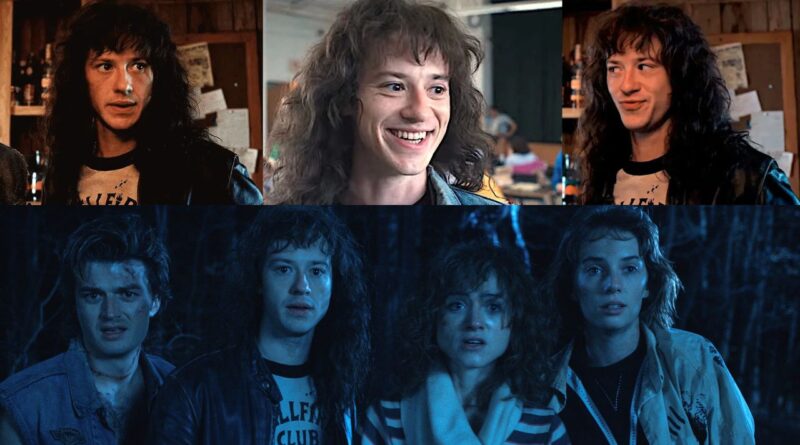
Eddie Munson (played by Joseph Quinn) is not returning for season 5, which is the final season of the series. People confirmed that, In a recent chat with Empire magazine, co-creator Matt Duffer squashed once and for all rumors that beloved character could return.
The creators (Duffer Brothers) of Stranger Things have officially confirmed, “I love that Joe Quinn is just playing with fans! But he’s dead,” he described Eddie’s fate in the interview. “Joe is so busy anyway, the world should know he’s not coming back,” he added. He’s been shot like five movies since! When the hell does he get the time to come and shoot Stranger Things? No, unfortunately, RIP. “He’s fully under that ground.”
The statement follows months of speculation stoked by Quinn himself, who at times teased fans at events about returning. At a fan con in Belgium and asked if he would reprise his role, Quinn enigmatically replied, “I do know, but I’m not telling,” fueling even more hype. After a while, Duffer brothers have publicly shared that the story of Eddie Munson was finished in Season 4.
Eddie Munson debuted in Stranger Things season 4, projecting the charm of an outcast metalhead leader at the same time as he was ruggedly told that the Dungeons & Dragons game was Just Not Cool. His arc was all the more emotional when he died in the Upside Down to protect his friends Dustin, Steve, Nancy, and Robin.
In a standout Season 4 moment, Eddie delivered a triumphant performance of Metallica’s “Master of Puppets” on guitar, drawing the demobats away from Vecna’s lair. Sadly, he didn’t make it out alive, sacrificing himself in a blaze of glory to save Hawkins – the same town that had turned its back on him.
Read More 👉 Tron: Ares’ Box Office Failure Marks a Turning Point in Jared Leto’s Career
Since leaving Stranger Things, Joseph Quinn’s star has risen exponentially. The 31-year-old British actor has joined a number of major film franchises, so a return to the Netflix series now seems all but impossible from a scheduling standpoint.

Quinn has appeared in several blockbuster projects including, A Quiet Place: Day One, Gladiator II, Warfare, The Fantastic Four: First Steps, and his upcoming project Beatles biopic where he plays a role of George Harrison.
This packed schedule, coupled with the fact that his character is dead, means Eddie’s comeback is out of the question.
The final season of the Stranger Things will be split into three parts during the holiday season: Volume 1 contains 4 episodes which will release on November 26, 2025, Volume 2 of 3 episodes: December 25, 2025, and Final Episode is going to air on December 31, 2025.
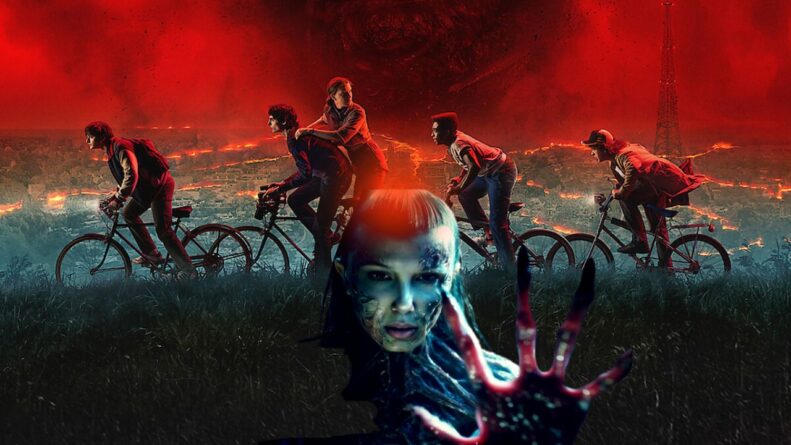
Eddie may not be coming back, but at least everyone’s favorite characters will be making their appearances for the latest look at the end-of-the-world finale. The cast is filled with familiar faces such as Millie Bobby Brown as Eleven, Finn Wolfhard as Mike, Noah Schnapp as Will, Gaten Matarazzo as Dustin, and Caleb McLaughlin as Lucas. Sadie Sink returns as Max, as does Winona Ryder as Joyce, and David Harbour as Hopper. Natalia Dyer, Charlie Heaton, Joe Keery also return as Nancy, Jonathan and Steve respectively. Maya Hawke returns as Robin, Priah Ferguson returns as Erica.. Brett Gelman returns as Murray, Jamie Campbell Bower as Vecna, Cara Buono as Karen, and Amybeth McNulty as Vickie. It’s shaping up to be an intense reunion with plenty of drama and action. There will be a void certainly for Eddie, but this cast of stars is sure to give us an ending to the story that we’ve all been addicted to. One last ride in Hawkins!
While it’s disappointing that Eddie Munson but his amazing character is firmly cemented in Stranger Things history. His heroic sacrifice at the end of Season 4 provided a great send off for his character. With the end of the series in sight, viewers can now turn their attention to that big showdown — and the return of characters they have loved for almost 10 years. A fight with Vecna and the secret of the Upside Down are set to come to a thrilling end, bringing the Hawkins saga to a close this holiday season.

Explore Blue Moon (2025), Linklater's poignant film on art, loss, and time, featuring Ethan Hawke's career-defining portrayal of Lorenz Hart.

Richard Linklater is known for his temporal distortions, which he often varies over the course of decades, as in the Before trilogy or Boyhood. But in his 2025 magnum opus, Blue Moon, he does something radically different. He condenses the crushing burden of an entire career going down the tubes into a single confining night in the bowels of Sardi’s restaurant.
This movie is not simply a biopic, it’s a chamber piece on the brutal architecture of artistic mourning. It is March 31, 1943, and with these words the film memorializes the end of the Jazz Age, which was immediately supplanted by the “golden age” of the musical theater.
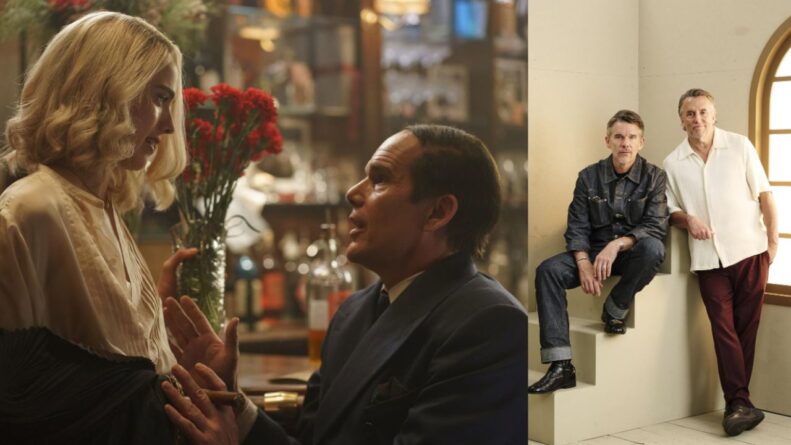
The setup is ruinously straightforward. Lorenz “Larry” Hart (an electric Ethan Hawke), the brilliant, jaded lyricist half of the legendary Rodgers and Hart team, is holding up the bar at Sardi’s.

Just across the street, his one-time soul mate and partner, Richard Rodgers, is debuting Oklahoma! with another partner, Oscar Hammerstein II. Hart must wait in the limbo of the restaurant, the muted applause he can hear is the sound of him being made redundant.
Linklater has said the film “Deals with a trauma that is, in a way, two-fold.”
This is not just a business split, it’s an artistic divorce between two men who defined an era together. Rodgers, the practical puppet master, had to change in order to live, to detach himself from Hart’s chaotic alcoholism and revue-style wit to something more formal and honest. Hart, the poetic soul of the roaring twenties, was just abandoned.
Read More 👉 Martin Gero and Amazon MGM Studios is looking for a New Cast for The Military Sci-Fi Series
The brilliance of Blue Moon is that it knows how to wait. According to The Guardian, Linklater and Hawke had been thinking about this film for more than ten years. Linklater famously told Hawke years ago,
“I’ll wait 10 years,”
Knowing the actor had to age into the role. To play the battered, gnome-like figure of the 47-year-old Hart, a guy worn down by drink and depression, he had to lose his youthful boyishness.

That prolonged timeline gives the film a deep, lived-in sadness. We see Hart desperately go through the motions of his old self — flirting, quipping, drinking trying to drown out the scary fact that the society he helped shape has no use for him anymore. He derides the “corny” nostalgia of Oklahoma! and cannot understand why the audience’s preference has moved away from his urbane sophistication to simple country sweetness.
“We all think we’re gonna run the table forever but tastes can change,” Linklater says in the production notes.
That is the film’s haunting thesis. Blue Moon is a monument to the “loser” of historical change. It’s a beautiful, sad recognition that sometimes even the most brilliant cultural architects find themselves trapped in the past, watching the future being built just down the street without them.

Blue Moon isn’t merely a movie — it’s an elegy. Linklater creates a haunting reflection on change, mourning and the slow brutality of time. The film, anchored by Ethan Hawke’s brilliant performance, reminds us that even the most brilliant creative minds can quickly become relics. It’s a masterwork of stillness, sorrow and storytelling: a paean to those who made the past even as they watched the future speed by.
Our daily coverage brings you the key takeaways, storytelling and pop-culture shifts from cinema. The Fandomfan’s mission is to assist you understand films not just as entertainment, but as cultural events that influence in the world of what we think.
At Sundance 2026, Andrew Stanton’s In the Blink of an Eye debuts with a bold multi-timeline sci-fi tale examining human emotion in the past, present and future.

If you have been keeping up with the Sundance Film Festival 2026, you may have found yourself wondering what Andrew Stanton is doing these days. The Whiz behind Wall-E has at long last arrived back on live-action soil and he is doing so with uncertainty, not caution. His new film In the Blink of an Eye is not only a return to form it is a high concept, mindbending thrill ride.
| Feature | Details |
| Movie Title | In the Blink of an Eye |
| Director | Andrew Stanton |
| Writer | Colby Day |
| Genre | Science Fiction / Drama |
| Narrative Style | Triptych (3 interconnected stories) |
| Time Periods | 45,000 BC (Neanderthals), Present Day, and Far Future |
| Core Theme | Human connection across time, evolution, and technology |
| Story Approach | Visual storytelling & behavior over heavy dialogue |
| Structure | Non-linear and multi-timeline |
| Editing Style | Using “Emotional Sync Points” to link different eras |
| Premiere | Sundance Film Festival 2026 |
| Vibe | Thought-provoking, Sci-Fi With Emotional Depth |
| Standout Factor | Skips the “Hero’s Journey” to focus on shared human feelings |
So, what’s the deal? That’s not your average “aliens destroy the White House” science-fiction movie. It’s a triptych — which is just a fancy way of saying that it tells three separate stories that are all interconnected.
It is a narrative that leaps randomly back and forth over the course of thousands of years, from ancient Neanderthals to the current day, and then to the future.
It’s ambitious, it’s a little experimental, and it’s trying to suss out what really makes us “human” from era to era.
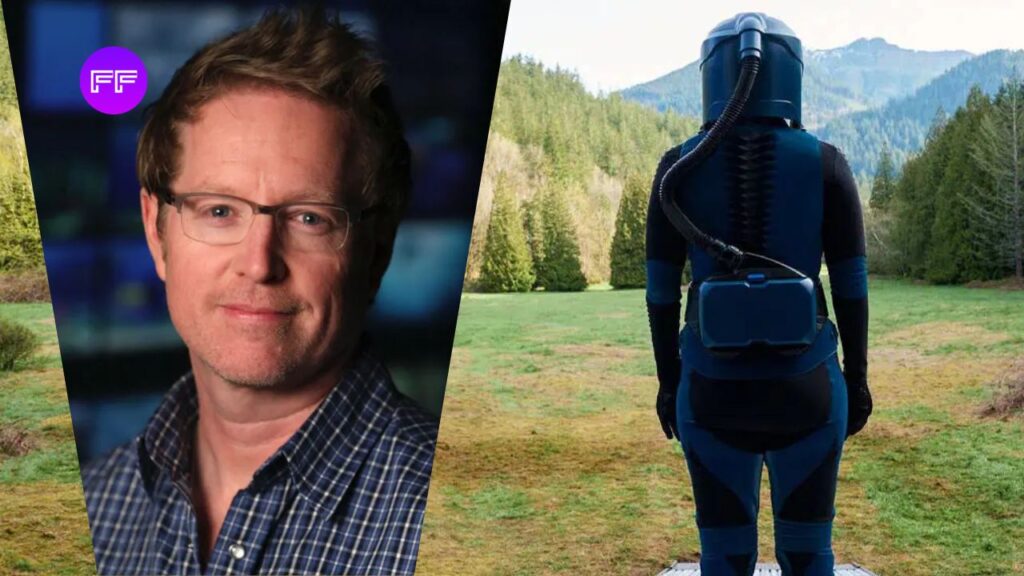
Andrew Stanton had long been working on big shows such as Stranger Things, 3 Body Problem, and he spent that time ‘hand-picking’ his dream team. He’s also leaning heavily on his animation roots.
Andrew Stanton’s biggest takeaway is the importance of imagination. He thinks the presence of a character — an expression, a movement, or maybe a choice can say more than dialogue ever could. The end product is a movie meant to make you feel first, leading emotion with images rather than explaining everything in words.

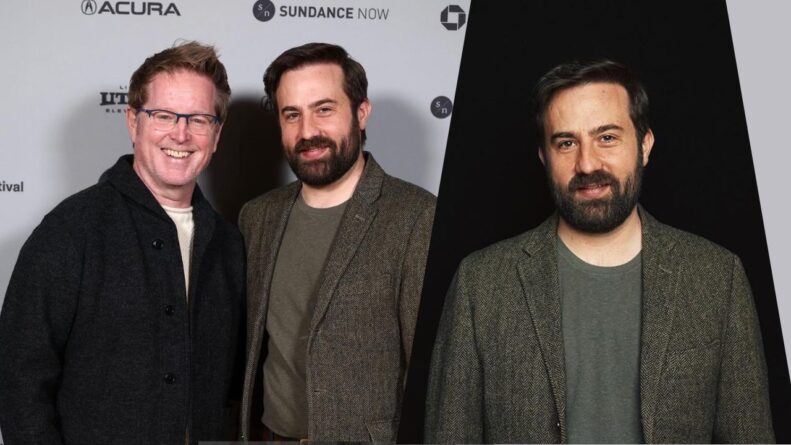
The author, Colby Day, confessed he was a little tired of the typical movie structure we get applied to everything. Rather than tracking a single protagonist on a familiar trajectory, he wanted to “blow up the world” and change the rules. He was inspired by films such as Cloud Atlas — those “big swings” that might be a little messy but way more interesting than a “safe” blockbuster.

Just think about what it would be like to edit three separate films into one. The editor Mollie Goldstein said they had to find “sync points.” They’re moments when a character in 45,000 BC is experiencing exactly what someone in the future is. It’s the emotional glue that holds the whole thing together.
Connectedness is the new spectacle: The age of hollow, effects-laden action-movies is waning. In the Blink of an Eye caters to a burgeoning demand for narratives with emotional connections — demonstrating that no matter how far technology evolves or centuries elapse, what really resonates is how intimately we are linked to one another.

The Comeback of the “Big Idea”: For a time, it seemed like movies were made by committee. This feels like a personal project and a risk. If this works, studios will once again trust directors with strange, “unfilmable” scripts.
Universal Struggles: By featuring Neanderthals, the film makes us aware that even as our phones evolve, our hearts don’t. We’re all still coming to grips with the same primal fears and loves that people had thousands of years ago.
Raed More:- Best Medical Drama Series Like ‘The Pitt’ to Binge Watch in 2026
Darkly In The Blink of an Eye is a quiet rebellion against all the sci-fi that has played it safe for far too long. Rather than pursuing bigger explosions and louder stakes, it looks inward – across centuries, across species, across futures – to consider what actually endures.
When the film connects Neanderthals, modern humans and future societies through shared feelings, it tells us our survival is not dependent on wiping out the other; rather it magnifies our humanity. If this movie sticks the landing like it promises, it won’t just be a standout at Sundance — it may indicate a turn toward even braver, more emotionally intelligent sci-fi, where connection matters more than spectacle.
Dive into the world of entertainment with Fandomfans to get deeper details from directors, stars, and industry insiders.